
Bled Island: How to Get There and What to See on Blejski Otok

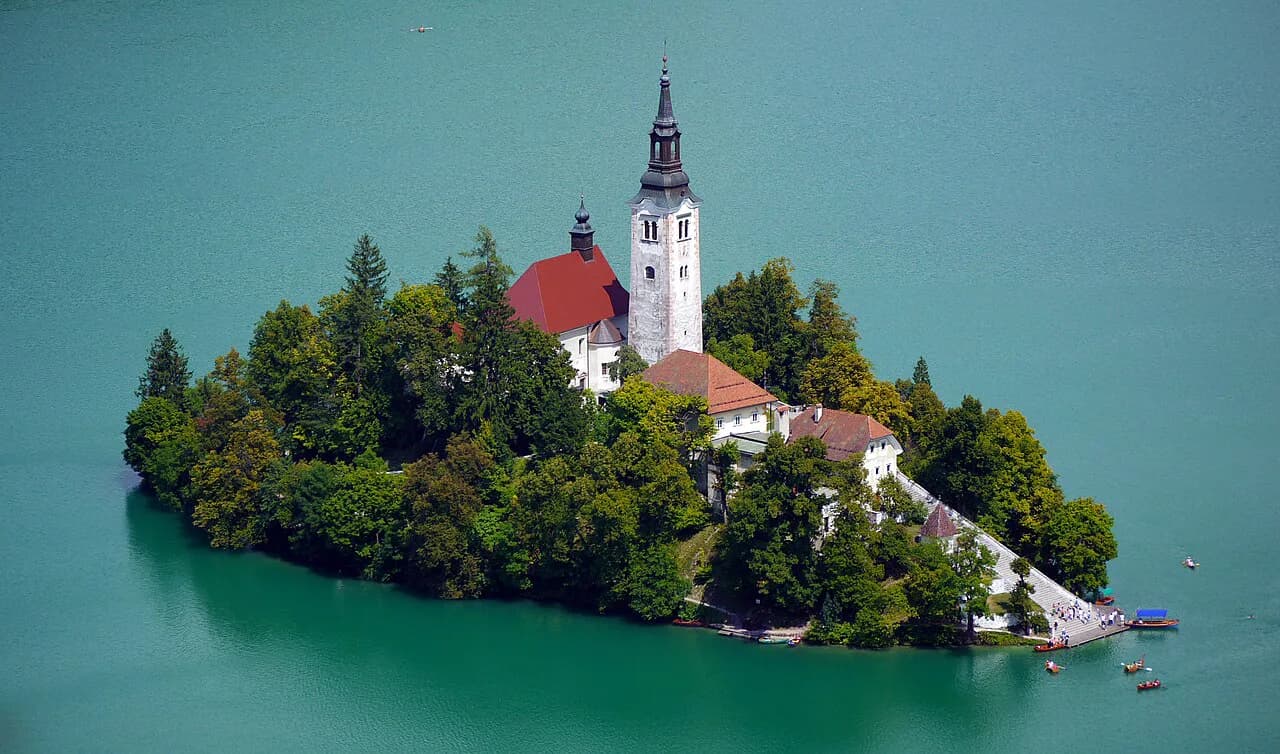
Bled Island, or Blejski otok, is the small island in the middle of Lake Bled, and you reach it by boat rather than by bridge or causeway. The usual crossing is in a pletna, a wooden boat rowed by a local oarsman, and the landing on the island is followed by 99 stone steps up to the church. This page covers the crossing, the steps, the Church of the Mother of God on the Lake and its wishing bell, how long to allow, and the castle on the cliff above.
What Bled Island is and where it sits in Lake Bled
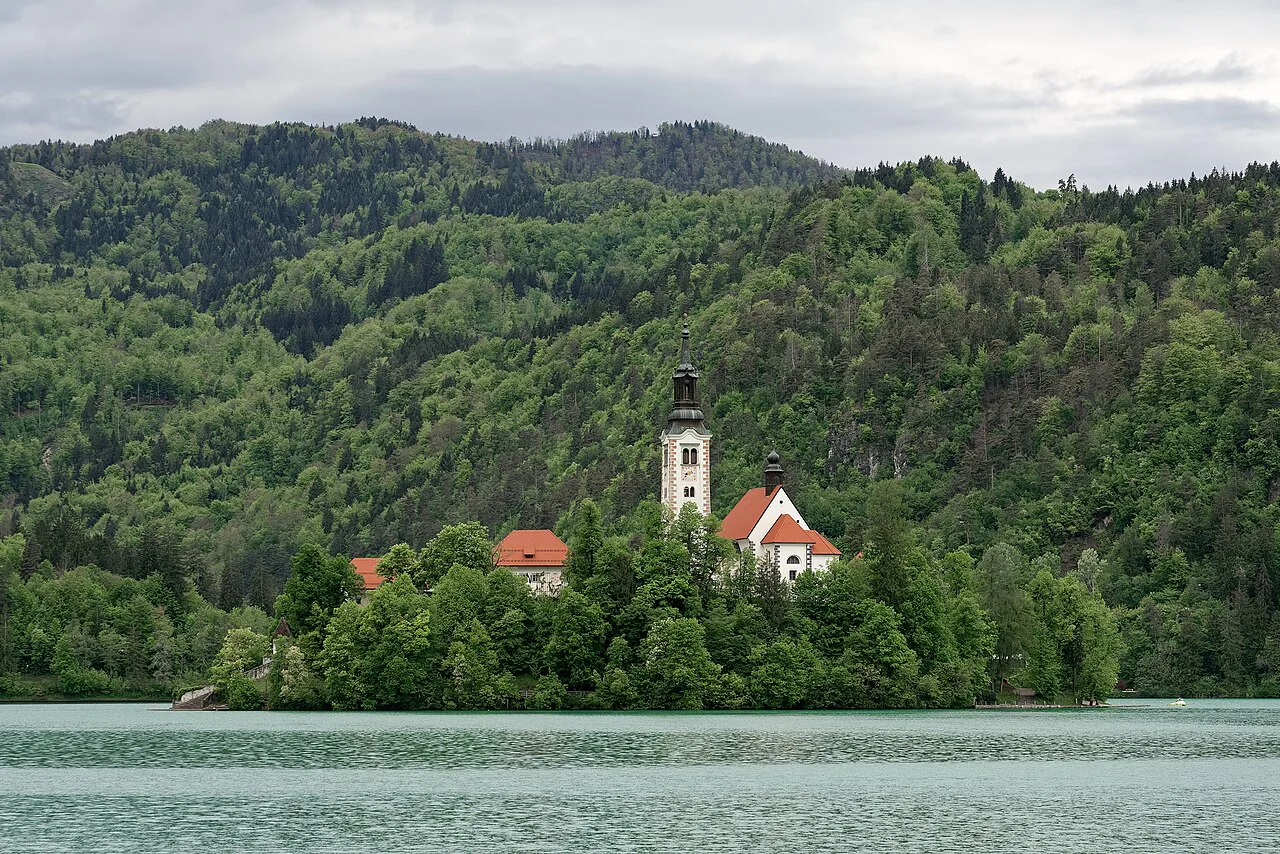
The island sits in the water in the middle of Lake Bled, below the cliff that carries Bled Castle (Blejski grad), in the Julian Alps region of northwestern Slovenia. From the shore you see the church tower rising out of the trees, with the castle on the rock face behind it. Because it is an island, the practical question is not whether to visit but which boat to take and how much of the day to give it.
Treat the island as one stop rather than a half day on its own: the church, the bell and the short paths take less time than the boat ride and the climb. The reason to go is the arrival, the view back to the shore, and the ritual at the bell rather than a long list of sights. Visitors who want more time on the water should look at the lakeside path and the swimming areas around the shore before deciding how long to stay, and the wider Bled Attractions: 4 Visitor Guides set out the other sights around the lake.

How you reach the island: the pletna boat and its oarsmen
Pletnas are wooden boats rowed by oarsmen known as Pletnarji, and they are the traditional way across to the island. You do not row yourself: the oarsman stands and rows, and the round trip includes a stop on the island. In 2015 the boats were described as about 7 meters long and 2 meters wide, with benches along both sides and a colored canopy overhead; expect a simple, open vessel rather than a covered ferry, and read more about pletna boats before you go.
Two alternatives exist for travelers who want more control over timing. You can rent a rowboat and cross under your own power, or take an electric boat that runs on a set departure schedule; the pletna is the option in between, with no rowing and no timetable to follow. The pletna trade-off is that the boat may wait at the shore until enough passengers have gathered, which is felt most around midday, so a crossing can start later than you hoped.
A Ljubljana-based excursion that includes the lake and the castle quotes €73.14 per adult and €36.57 per child aged 2 to 12, with children under 2 free; the optional return pletna ride is listed separately at €20.00 and castle admission at €19.00, paid in cash on the day. The tour runs daily at 8:00 am and lasts about 5.5 hours, with pickup from your hotel or another agreed point. That price covers transfers and guidance, not the boat or castle entry, so compare it with arranging the crossing yourself at the lake.

Where pletnas leave from around the lake
Pletnas have traditionally picked up passengers at several points on the Bled shore: in front of the Grand Hotel Toplice, at the village of Mlino about halfway along the lake, and at the bottom of the stairs leading up to Hotel Vila Bled. Each gives a slightly different crossing length and a different view of the island on approach. Mlino is the quieter choice if the town-side promenade is busy.
Boarding points and departure arrangements can change with the season, so confirm the current pickup spots and the price of the return crossing at the lake before you commit to a specific shore. Ask at the boat stands themselves rather than relying on an old schedule, and check whether the oarsman waits for a full boat before leaving.
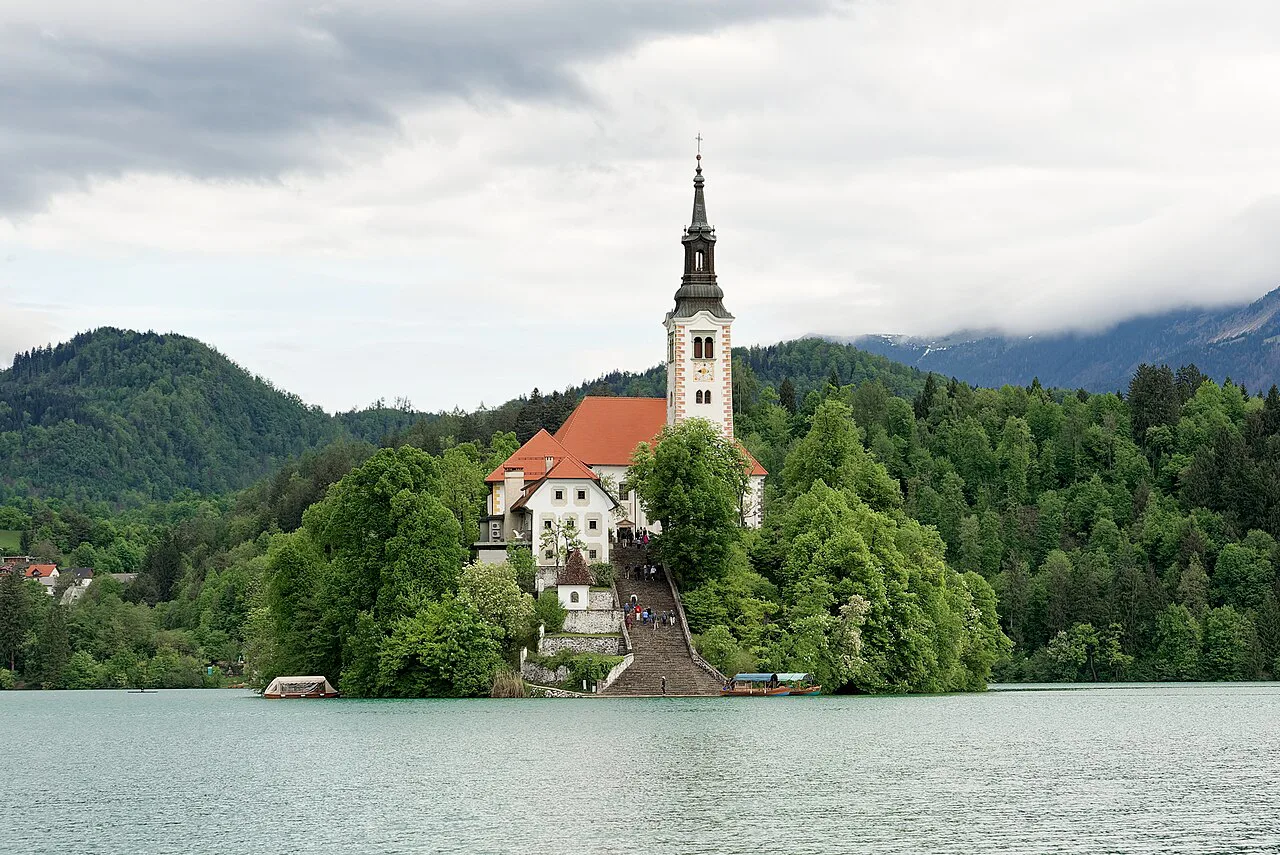
The 99 stone steps up from the landing
From the island landing, a flight of 99 stone steps climbs to the church, and it is the first fixed cost of the visit in effort rather than money. The climb is short but steady, and in summer it is exposed, so it is worth pacing yourself if you are carrying bags or traveling with older relatives. Once at the top, the ground levels out into a small cluster of buildings and paths.
The steps are the reason to think about footwear before you board: the crossing involves stepping down into a wooden boat and then climbing stone stairs on the far side. The island itself is small, so the stairs plus the church and tower fill most of a stop. Leave the rest of the lake circuit for after you return to the shore.
The Church of the Mother of God on the Lake and the wishing bell
At the top of the steps stands the Church of the Mother of God on the Lake, also called the Church of the Assumption, with a bell tower beside it. The bell is the reason many visitors make the crossing: ring it and local tradition holds that a wish will be granted. The tower rises above the church and is a landmark from every part of the lake shore.
Treat the bell as a short ritual rather than an attraction in itself, and allow time for other visitors to take their turn. Church entry is a separate cost from the boat, and you should check the current church and tower admission at the island rather than assume a figure from an older article. The island paths outside the church are short and can be walked in a few minutes.
What the island costs and how much time to allow
Budget the trip as three separate items: the return boat crossing, church admission, and anything you buy on the island. As a reference point for the boat, the Ljubljana excursion lists the return pletna ride at €20.00 per person, though that is a tour operator's add-on rather than a stand-alone fare at the lake. Children under 2 travel free on that excursion, and the tour runs with a minimum of two people.
For time, the fixed parts are the crossing, the steps and a short visit inside the church and tower. A stop of about an hour on the island fits the church and the paths, and the boat wait is the variable you cannot plan around. Build the wait into your day rather than scheduling the island tightly before another timed stop.
If you are joining the Ljubljana excursion instead of arranging the crossing yourself, the whole outing runs about 5.5 hours including the lake, the castle and free time on the promenade. That makes it a half-day commitment rather than a quick detour, and it is worth comparing against a self-arranged crossing if you only want the island.
Swimming and the lakeside path as an alternative to landing
You can see the island without landing on it: the path around the lake circles the water and gives repeated views of the church tower and the castle above. In summer the lake water warms up, and swimming is part of the lake's appeal for many visitors, with coves tucked along the shore. The island remains the focal point of the view from almost anywhere on the circuit.
The path is the low-cost option when the boat queue is long or the weather turns, and it lets you judge the crossing before committing to it. The trade-off is that you get the view of the island rather than the church, the steps and the bell. If the bell is the point of the visit, the path is not a substitute.
What is nearby: Bled Castle above the shore
Bled Castle (Blejski grad) sits on the cliff above the lake, 130 meters above the water, and the Ljubljana excursion pairs the island with a castle visit on the same half day. From the ramparts you look down on the island and across to the Alpine peaks, which is the reverse of the view from the water. Castle admission is quoted at €19.00 as an optional extra on that excursion.
Other handy reference points on the Bled side include St. Martin's Parish Church in the town and the Straža Bled slope above the shore, both visible from parts of the lake path. Neither replaces the island as the centerpiece, but they help you place yourself on the circuit.
Should you land on the island or just look at it?
Land on Bled Island if the church, the 99 steps and the wishing bell are what you came for, and accept that the pletna may wait to fill before it leaves. Stay on the shore if you mainly want the photograph and the swim, since the lakeside path delivers the view without the queue. Either way, treat the castle above as the second half of the same outing rather than a separate day.
Explore more Bled guides
Frequently Asked Questions
Can you swim to Bled Island?
Swimming in the lake is part of a summer visit, but the island is a boat destination and the crossing is normally made by pletna, rented rowboat or electric boat. If you plan to swim, stay in the areas along the shore and keep the boat crossing for the island itself.
Is Bled Island free to visit?
No. The boat crossing and church admission are separate costs, and neither is included in a walk around the lake. Check the current boat fare at the shore and the church admission at the island before you go.
What is the wishing bell on Bled Island?
It is the bell in the tower of the Church of the Mother of God on the Lake, which visitors ring with a wish in local tradition. Ringing it is a short stop, so plan the church and tower visit around other passengers rather than expecting a long queue-free window.