
Boka Waterfall (Slap Boka) near Bovec: How to See the Falls

Boka Waterfall (Slap Boka) is the 144-meter drop where the Boka stream spills off a limestone cliff into a gorge above the Soča, a few kilometers west of Bovec. It is a short roadside stop or a one- to two-hour outing if you walk to the lower observation deck.
This guide covers where Boka sits, how to reach it from Bovec, what you see from each viewpoint, when the water is strongest, and which nearby sights fit naturally into the same half-day.
What Boka Waterfall is
Boka is a karst-spring waterfall on the Boka stream, which runs less than a kilometer from the spring to its confluence with the Soča, making it one of the shortest watercourses in Slovenia. The fall drops from a limestone cliff with a total height of 144 meters and a width of 18 meters.
The Boka waterfall has a very changeable water regime. It is most powerful in springtime, when deep snow cover lying through the winter on the karst above melts and feeds the flow, and it can thin out considerably later in the year.

Where Boka Waterfall sits
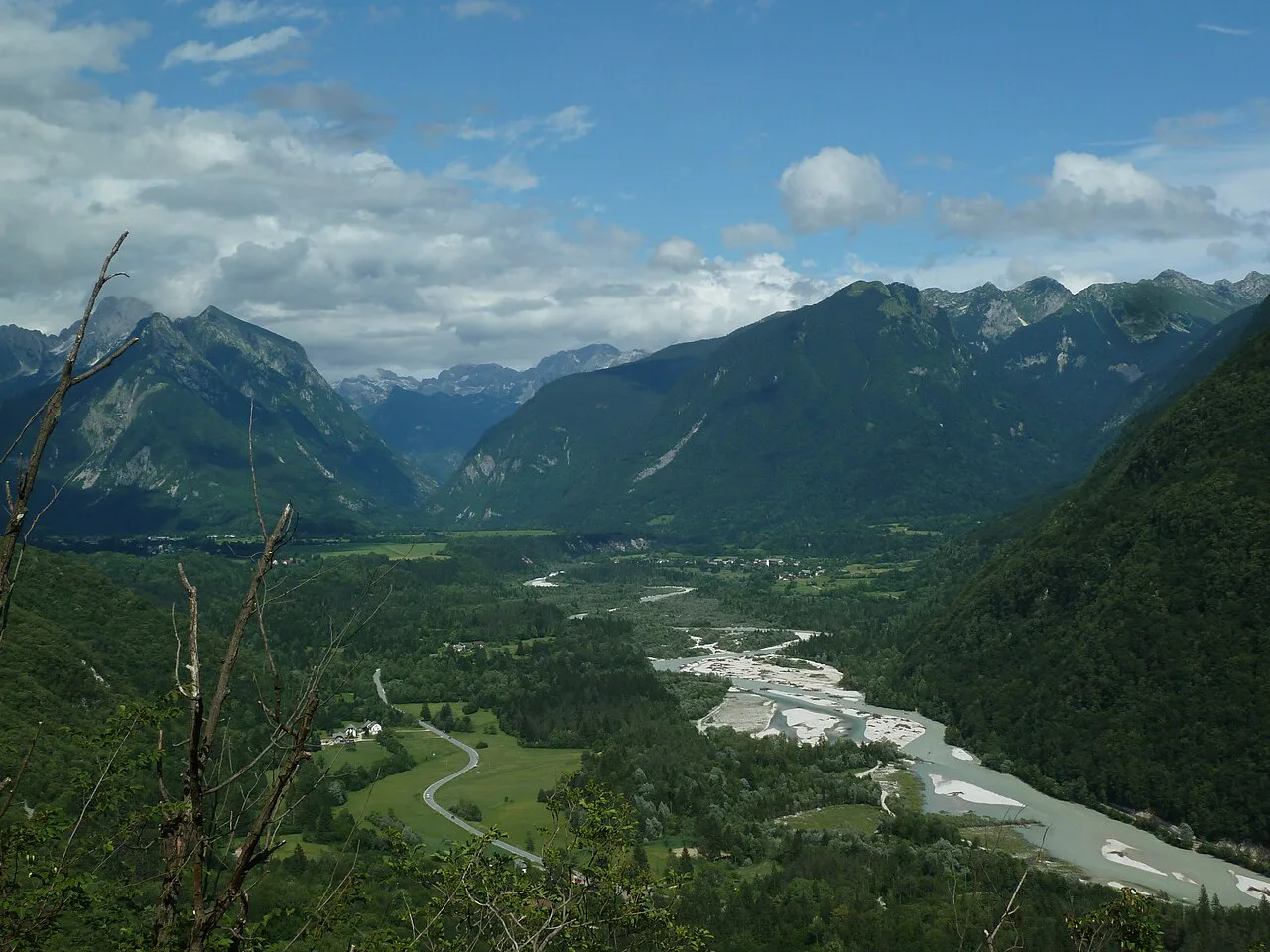
The waterfall is on the southern edge of the Julian Alps near Bovec, in the Soča Valley. The Walk of Peace lists the coordinates as 46.321978, 13.481834, which places the fall on the Boka stream above the Soča and below the slopes of Mt. Kanin.
Because the fall faces the Bovec–Kobarid road, it is visible from the roadside before you even park. That roadside view is the quick version; the forest walk to the lower deck is the version that puts you close to the spray.

Getting there from Bovec
From Bovec, drive west on the road toward Kobarid; Boka is a signed roadside stop along that route. Drivers usually park in the pull-off beside the road and walk from there, so the car is the simplest way to combine Boka with other stops in the valley.
If you are relying on public transport or want current trail and access conditions, TIC Bovec at Trg golobarskih žrtev 47 is the local information point, with phone +386 5 3029 647 and email info.bovec@dolina-soce.si. Ask there about the state of the path to the lower observation deck before setting out.
The walk to the viewing area
From the road, a short trail through forest leads to a lower observation deck with an up-close view of the power of Boka. That walk is what turns a passing roadside look into a proper visit.
Allow more time than the map suggests. The trail is short but the ground can be slick, and the deck puts you within range of spray, so a light rain shell is useful even on a dry day. Sturdy shoes are the practical choice for the forest section.
What you actually see
From the road, the full 144-meter drop reads as a white ribbon against gray limestone. Closer in, from the lower observation deck, the scale changes: the fall fills the frame, spray reaches you, and the sound of the water dominates.
In cold winters the fall can partially freeze, turning the cliff into a sheet of ice and spray. That is a seasonal possibility rather than a guarantee, so treat a winter visit as a gamble on conditions.
When the flow is strongest
Spring is the reliable season for volume. Deep snow cover lying through the winter on the karst melts and feeds the Boka's highly changeable flow, so the fall carries the most water in springtime.
Late summer and autumn are the lean months. The fall can shrink to a thin stream, and the lower deck may be drier and less dramatic; if a big cascade is the goal, plan the visit earlier in the year.
How much time to allow
A roadside stop takes 15 to 20 minutes. Add the forest walk to the lower deck and the visit stretches to roughly an hour, or closer to two if you linger at the spray line and take photos.
Boka works best as a half-day anchor rather than a full-day destination. Pair it with another short stop nearby, such as Virje Waterfall near Bovec, so the drive west from Bovec earns its time.
Nearby places to pair with Boka
Kozjak Waterfall, hidden in a gorge near Kobarid, is the natural second stop on the same drive. The approach crosses a wooden bridge through woodland before the fall appears above its emerald pool.
On the Bovec side, Kluže Fortress (Trdnjava Kluže) sits in the valley on the road toward Boka and makes a short history stop. Fort Hermann (Trdnjava Herman) above Bovec is the other fortification in the same cluster, reached from the Kluže area.
Where to confirm current access and conditions
Trail conditions and any seasonal changes around the falls are local matters. TIC Bovec at Trg golobarskih žrtev 47 in Bovec is the local information point, with phone +386 5 3029 647 and email info.bovec@dolina-soce.si, and staff there can tell you how the water is running.
The sources here give no ticket price or opening schedule for the waterfall itself, so treat Boka as an outdoor stop you plan around daylight and weather rather than a timed attraction.
Is Boka worth the stop?
Yes, if you are already driving the Bovec–Kobarid road and want a high-reward stop with modest effort. The roadside view costs almost nothing in time, and the forest walk to the lower deck is the upgrade worth making.
Go in spring for the heaviest flow, budget an hour or two, and pair Boka with Kozjak or Virje to fill a half-day. Confirm path conditions with TIC Bovec if you are visiting outside the main season.
Explore more Bovec guides
Frequently Asked Questions
How tall is Boka Waterfall?
The total height is 144 meters, with a width of 18 meters, according to The Walk of Peace. The fall drops from a limestone cliff above the Soča.
Can you see Boka Waterfall without hiking?
Yes. The fall is visible from the roadside pull-off on the Bovec–Kobarid road. A short forest trail to a lower observation deck is optional and rewards the extra walking with a closer view.
When is the best time to see Boka Waterfall?
Spring, when snowmelt feeds the karst spring and the fall runs heaviest. Late summer and autumn can leave the fall thin, and winter can bring partial freezing rather than a full cascade.