
Ravelnik Open-Air Museum: A WWI Trench Walk Above Bovec

Plan roughly one hour for the Ravelnik Open-Air Museum, an easy circular walk through the remains of the Austro-Hungarian first line of defense on a small hill just outside Bovec. The trail is short, the terrain is gentle, and the reward is a dense cluster of trenches, tunnels, caves, pillboxes, and reconstructed cabins packed into a small wooded area. This guide covers where the hill sits, how to reach the trailhead from town, what you will pass on the loop, and how to add a guide or pair the visit with nearby WWI sites.
What the Ravelnik Open-Air Museum Is
Ravelnik is not a building with display cases. It is a wooded hill where the Austro-Hungarian army dug in after the Italian occupation of Bovec in August 1915, and the surviving earthworks have been cleaned, restored, and linked by a walking path. A well-kept circular route runs along the onetime first line of defense, passing trenches and connection tunnels as well as caves, pillboxes, machine-gun emplacements, and cabins.
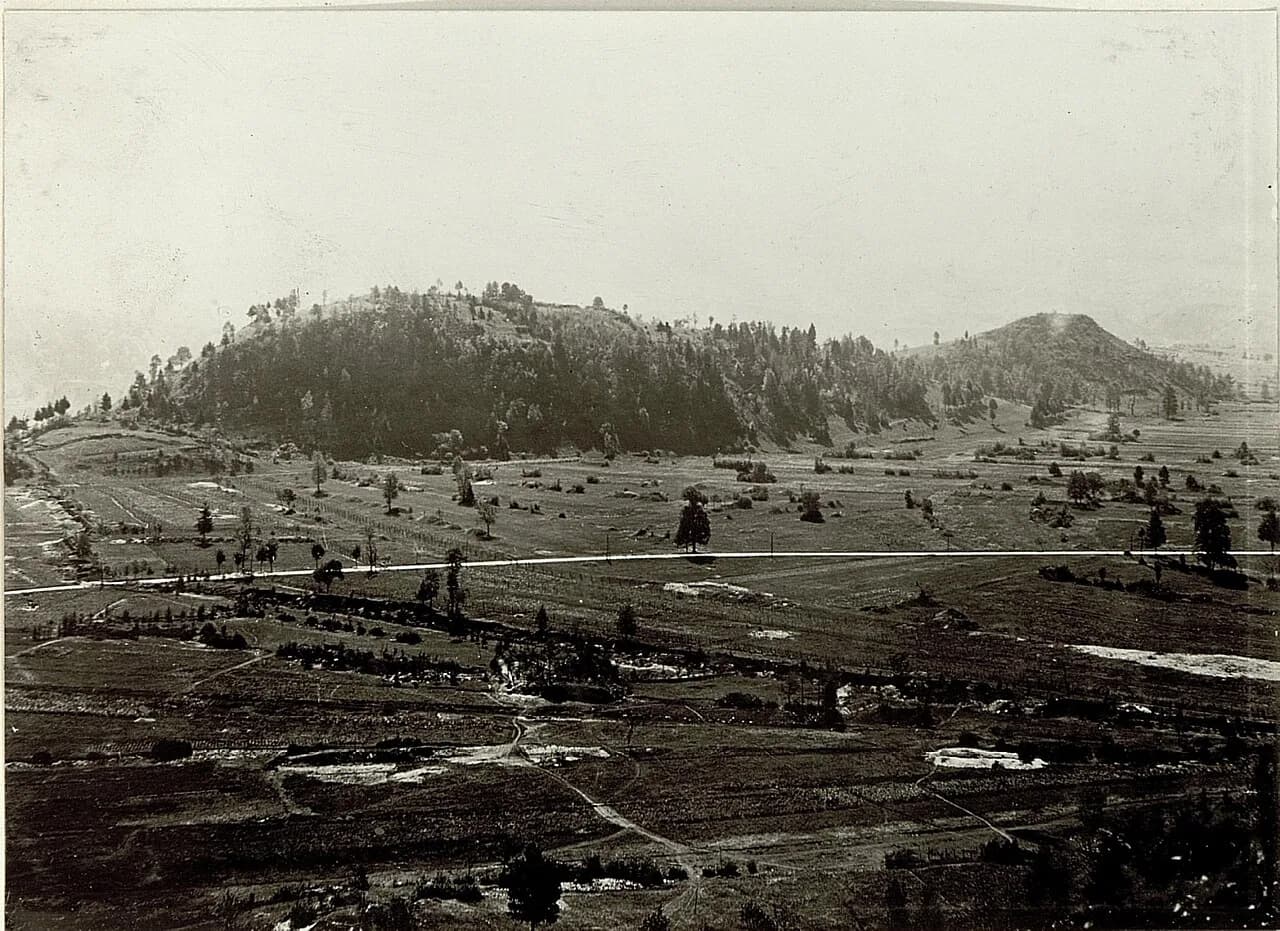
The position mattered because of what it protected. Ravelnik and the neighboring hill Stržišče form a natural blockade at the eastern rim of the Bovec basin, and together they hid the road fork where routes into the Koritnica and Soča valleys begin. The base on Ravelnik also defended the strategically important road over the Predel mountain pass, which carried ammunition, food, and medicine to soldiers on the front.
The traces survive in an unusually compact area, which is why the site works as a short stop rather than a half-day outing. Information boards mark the important points along the loop, so you can walk it without a guide and still follow what you are looking at.

Where Ravelnik Is: The Hill Above the Bovec Basin
Ravelnik is a small hill at 519 meters, standing at the eastern edge of the Bovec basin (Bovška kotlina) with Stržišče at 486 meters close by. The two elevations rise just outside town and are easy to pick out once you are on the road heading toward Predel and the Trenta Valley.
Because the hill sits right at the basin's rim, the approach from Bovec is short. You are not driving deep into the mountains to reach the trailhead; the walk in from the roadside takes only a few minutes, and the loop itself stays in the trees.

How to Get There from Bovec
Drive or walk out of Bovec on the regional road toward Predel and Trenta. Less than one kilometer from town, park on the right side of the road, then continue on foot along the marked trail, which brings you to the Ravelnik remains in about five minutes.
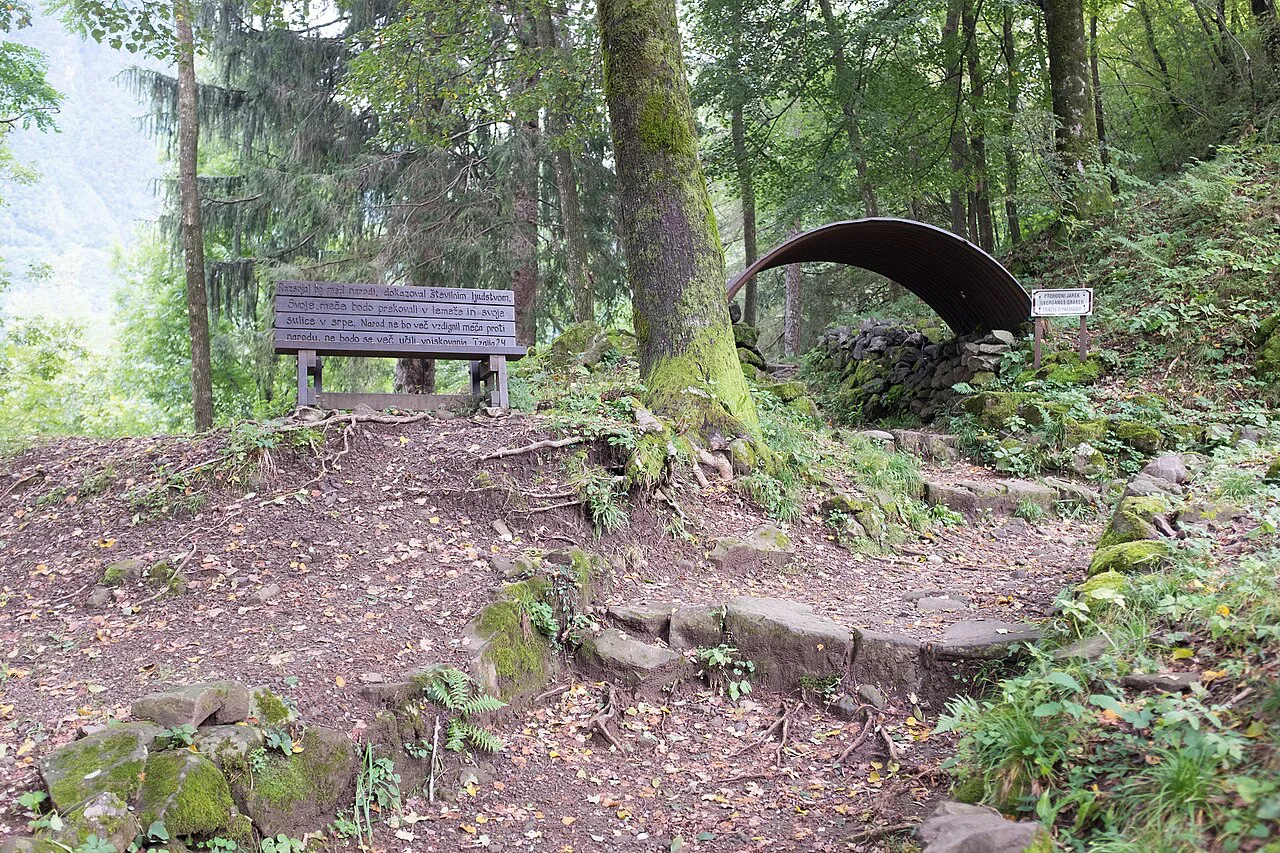
The Walk of Peace organization describes the same approach from the other direction: about 1.5 kilometers from Bovec, in the direction of Predel and the Trenta Valley, there is a World War I military cemetery. From the cemetery, continue toward Trenta for another few hundred meters, where a trail branches to the right off the main road; a few minutes of walking brings you to the information board where the circular path begins.
If you are coming from town on foot, one practical route starts in Bovec past the Polovnik Camp, crosses the road, and follows a macadam path that narrows and steepens slightly as it enters the forest. That approach is about 1.5 kilometers in one direction, and returning the same way avoids the stretch of busy local road that the full loop can include.
Walking the Circular Path: Trenches, Tunnels, and Bunkers
The loop is short but dense. On a relatively small area you can see firing and connecting trenches, caverns, bunkers, renovated shacks, and machine-gun positions, all linked by the path through the forest.
Some of the caverns can be entered, and they are dark inside, so a flashlight is part of the kit rather than an optional extra. Sturdy footwear helps on the forest ground, and the official guidance for the site lists trekking clothing, footwear, and a flashlight as the equipment to bring.
Look for the smaller details as you walk, not just the big earthworks. The site preserves pillboxes, machine-gun emplacements, and reconstructed cabins alongside the trenches, and the paths connect them in a sequence that shows how the defensive line was organized.
The Cabins and the Grenade Crater at the Top
At the top of Ravelnik, a crater remains from the one grenade that hit these positions during the war. The story attached to it is specific: the shell was fired from the village of Sella Nevea in Italy, and the defenders were in the caverns at the time.
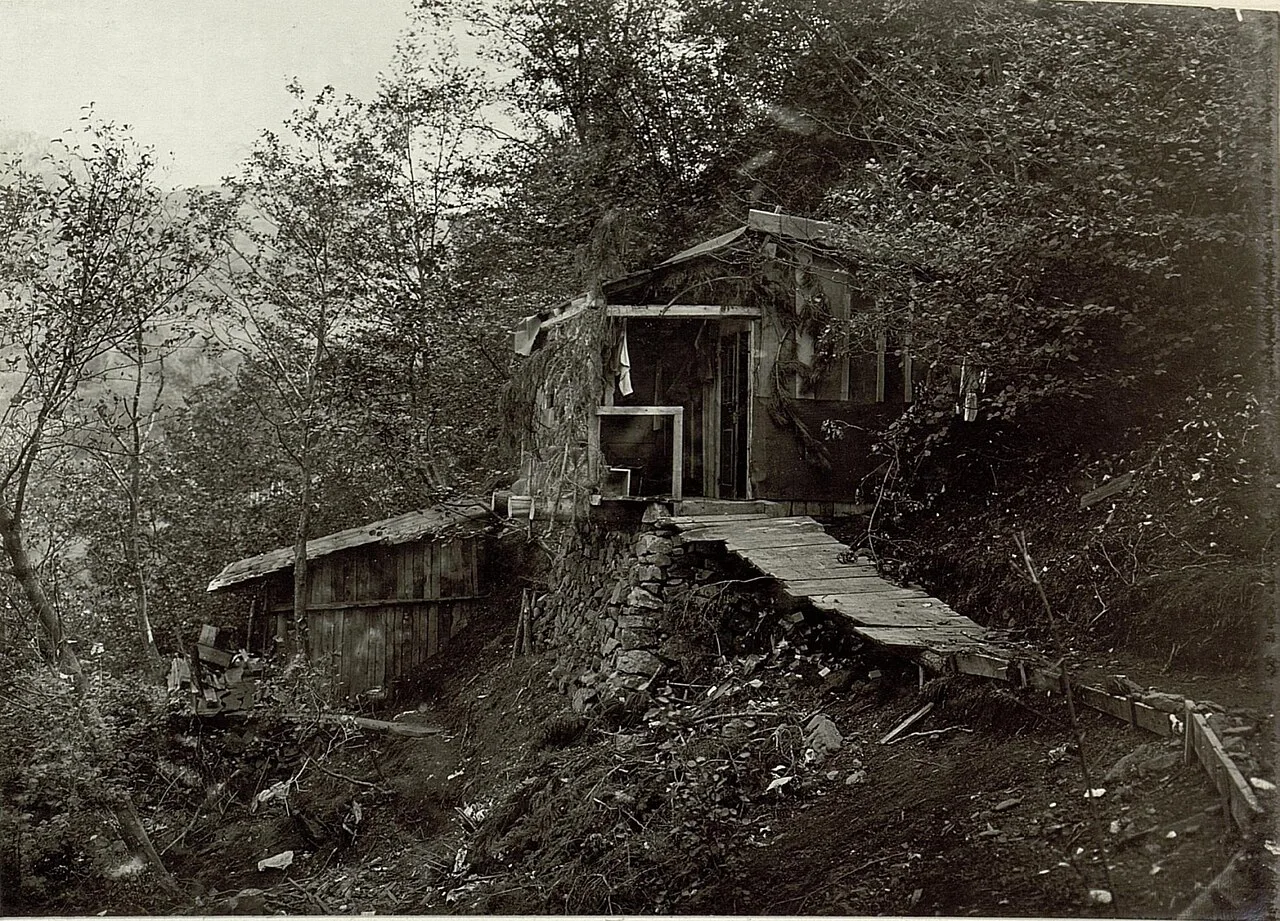
The reconstructed cabins give a sense of how the position functioned day to day. Supplies reached the settlement by a cargo cable car from the village of Koritnica, connected to an officers' cottage, and electricity lines ran to that cottage from a hydro power plant on the Koritnica river.
Near the cottage area, look for the small chapel carved into the rock, where soldiers placed a wooden cross in the niche. Under the officers' cottage there is a small kitchen, and on the plateau in front of it the soldiers arranged a dining place, details that make the hill read as a lived-in base rather than only a fighting position.
How Long the Visit Takes
Budget about an hour for the circular path itself, which is rated easy. That timing fits the site well: the walk is short, the ground is gentle, and the exhibits are close together, so you are never covering long distances between features.
Add the approach time on top of that hour if you are walking out from Bovec. A sensible half-day plan pairs Ravelnik with one other nearby site rather than treating the hill as a destination on its own.
On timing and access, the official Soča Valley tourism site lists the museum as open all year round, and you can confirm details with TIC Bovec before setting out. The Walk of Peace site lists January through December as the best time of year, with trekking gear and a flashlight as the equipment to bring.
Should You Take a Uniformed Guide?
A guide changes the visit from a walk past earthworks to a narrated account of the Isonzo Front in this valley. The recommended option is a uniformed soldier from Društvo 1313, who walks the outdoor museum with you and serves tea from cups of the kind used by soldiers on the Isonzo Front.
Book guided tours through the Walk of Peace Visitor Centre in Kobarid at Gregorčičeva ulica 8, or ask at TIC Bovec at Trg golobarskih žrtev 47. The Walk of Peace site lists a bookable guided tour for the museum and gives both offices as contacts.
If you are weighing the guide against a self-guided loop, consider what you already know about the Isonzo Front. With information boards along the path, a solo walk covers the layout and the main features; a guide adds the sequence of events and the human detail that the boards summarize.
Nearby WWI Sites to Pair with Ravelnik
Ravelnik sits inside a cluster of First World War sites in the Bovec area, so it makes sense to combine two or three in one outing. The Čelo Outdoor Museum and the Kluže Fortress (Trdnjava Kluže) position with Fort Hermann are the closest companions, and the Kobarid Museum gives the broader picture of the Isonzo Front.
Fort Hermann sits above Bovec near the Kluže position, and both are part of the same defensive system on the road out of town. If you want a break from wartime history, the Virje waterfall and the Boka waterfall are both in the same part of the valley and easy to fold into the same drive.
For a fuller day, add the Boka Waterfall (Slap Boka) near Bovec, or use the Bovec Attractions: 5 Visitor Guides overview to sequence the stops by distance.
Is Ravelnik Worth the Stop?
Yes, if you want a compact, low-effort introduction to the Isonzo Front remains around Bovec. An hour on an easy loop, with trenches, tunnels, caverns, and a handful of reconstructed buildings in the trees, fits neatly into a day that also includes Kluže or the Kobarid Museum.
Skip it as a standalone destination if you are short on time, and skip the self-guided version if you want the story told in sequence. Either way, bring a flashlight for the caverns, park on the Predel road, and confirm current arrangements with TIC Bovec before you go.