
Tonocov Grad near Kobarid: What's on the Hill Above the Soča

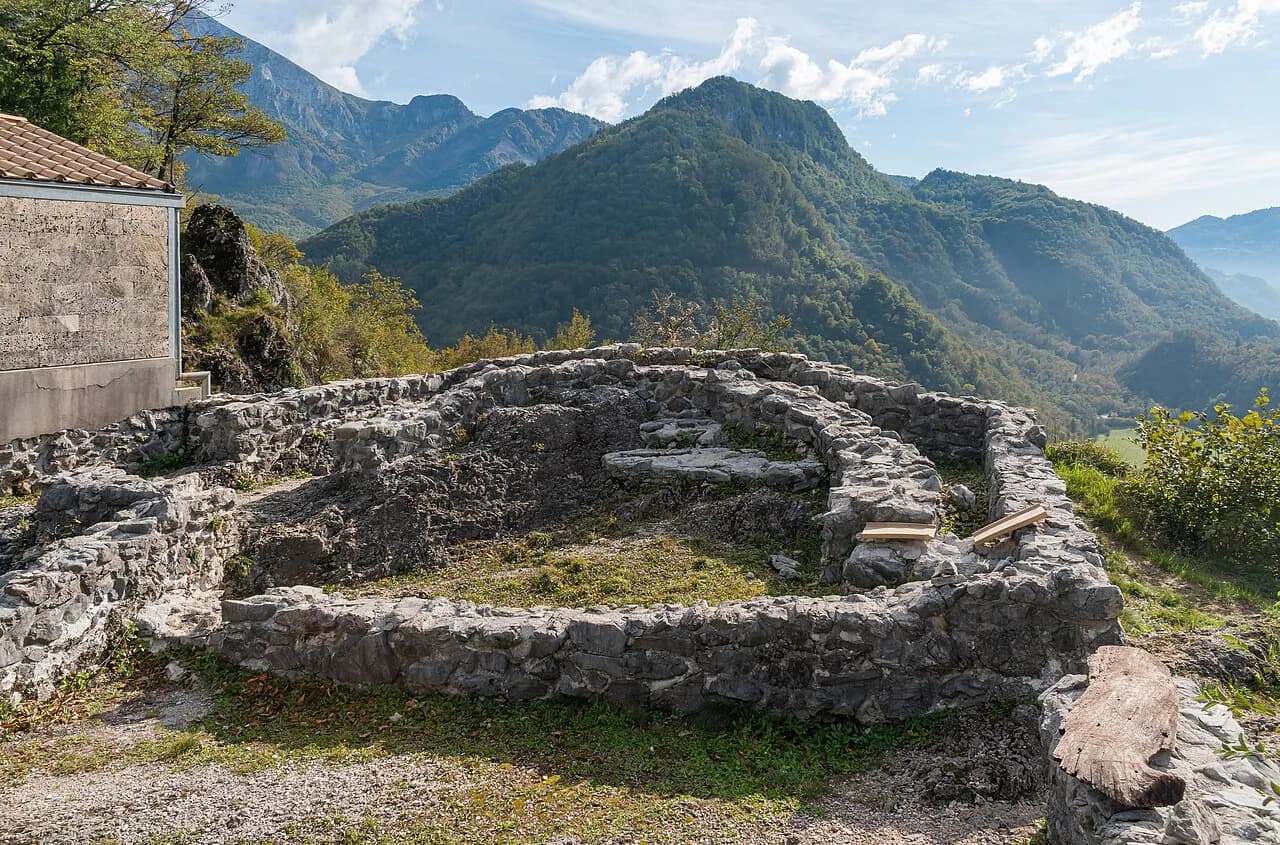
Tonocov Grad is the hilltop archaeological site on a steep rocky hill above the Soča near Kobarid, and the excavated core is a compact group of late antique church and settlement foundations rather than a standing castle. The main things to see are three early Christian churches with a baptistery, two water cisterns, and the footings of a walled settlement with more than twenty residential buildings and defensive towers. This page covers where the site sits, what the ruins contain, and what to pair with it in Kobarid, and it sorts out the name, since photo captions often call the same place Tonovc Castle.
The site is documented in a short guide by Slavko Ciglenečki, published in 1998 through the Institute of Archaeology at ZRC SAZU with the Kobarid Museum, which lays out the ruins and what each part was. Use that description to know what you are looking at, because the remains are foundations and masonry rather than reconstructed buildings. The hill is the landmark: you navigate by the town of Kobarid and the Soča below it, not by a street address.
What Tonocov Grad is
Tonocov Grad is an archaeological site, not a reconstructed fortress. Excavations on the hill turned up traces from several prehistoric periods as well as Roman, late antique and early medieval occupation, so the visible remains come from a long sequence rather than a single build. The standout phase is the fifth and sixth centuries, when a large settlement with more than twenty residential buildings and defensive towers along its wall stood on the hill.
The name is where most visitors trip. Photo captions and map pins for the hill above Kobarid render it as Tonovc Castle or Tonocov grad, while the Slovenian form used in the site literature is Tonovcov grad. Treat the variants as pointing to the same hill above the town and navigate to the hill rather than the spelling.

Where it sits above the Soča
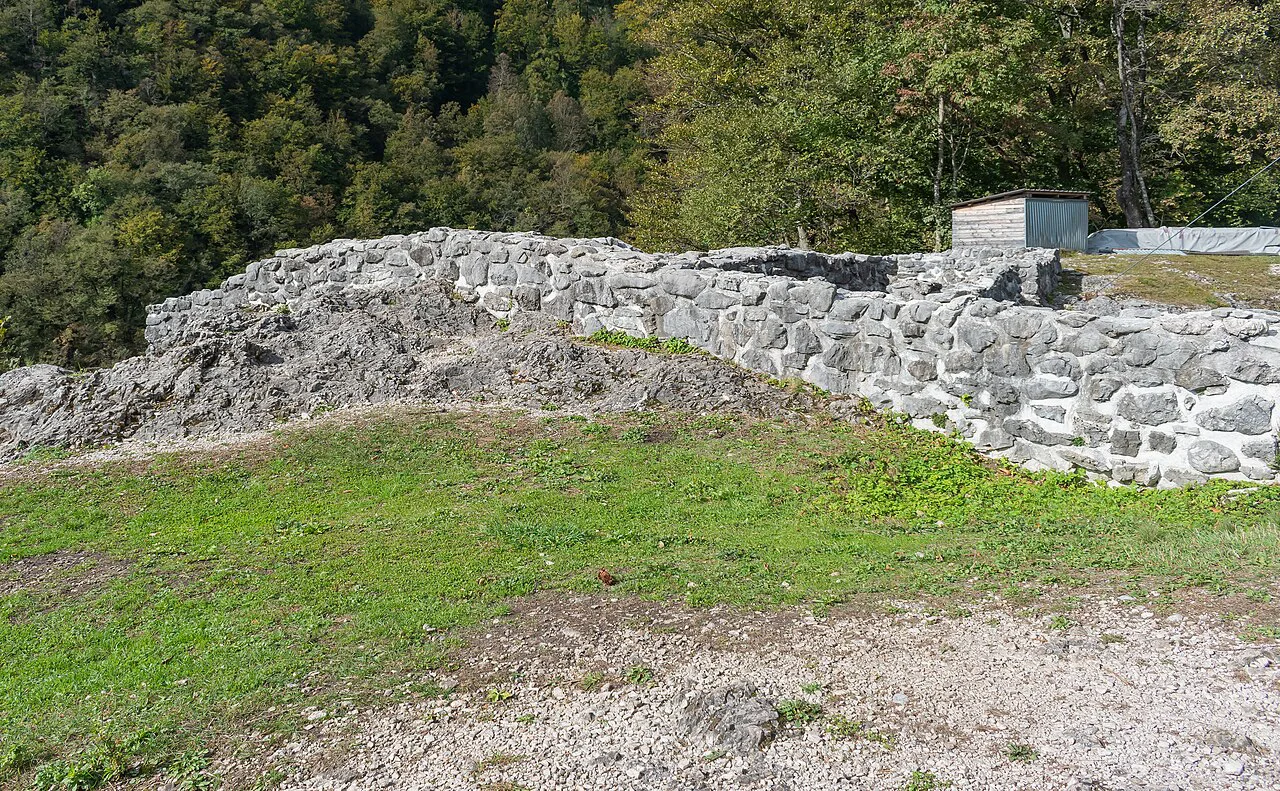
The site occupies a steep rocky hill above the Soča, with Kobarid as the reference point below. That position explains the layout: the settlement was built on high ground with a defended edge, and the elevated central part of the hill is where the religious buildings were placed. Plan your approach around the town rather than a standalone site entrance, since the hill is the destination and Kobarid is the landmark; the Kobarid Attractions: 5 Visitor Guides page sets the site alongside the town's other stops.

The late antique settlement: walls, towers and houses
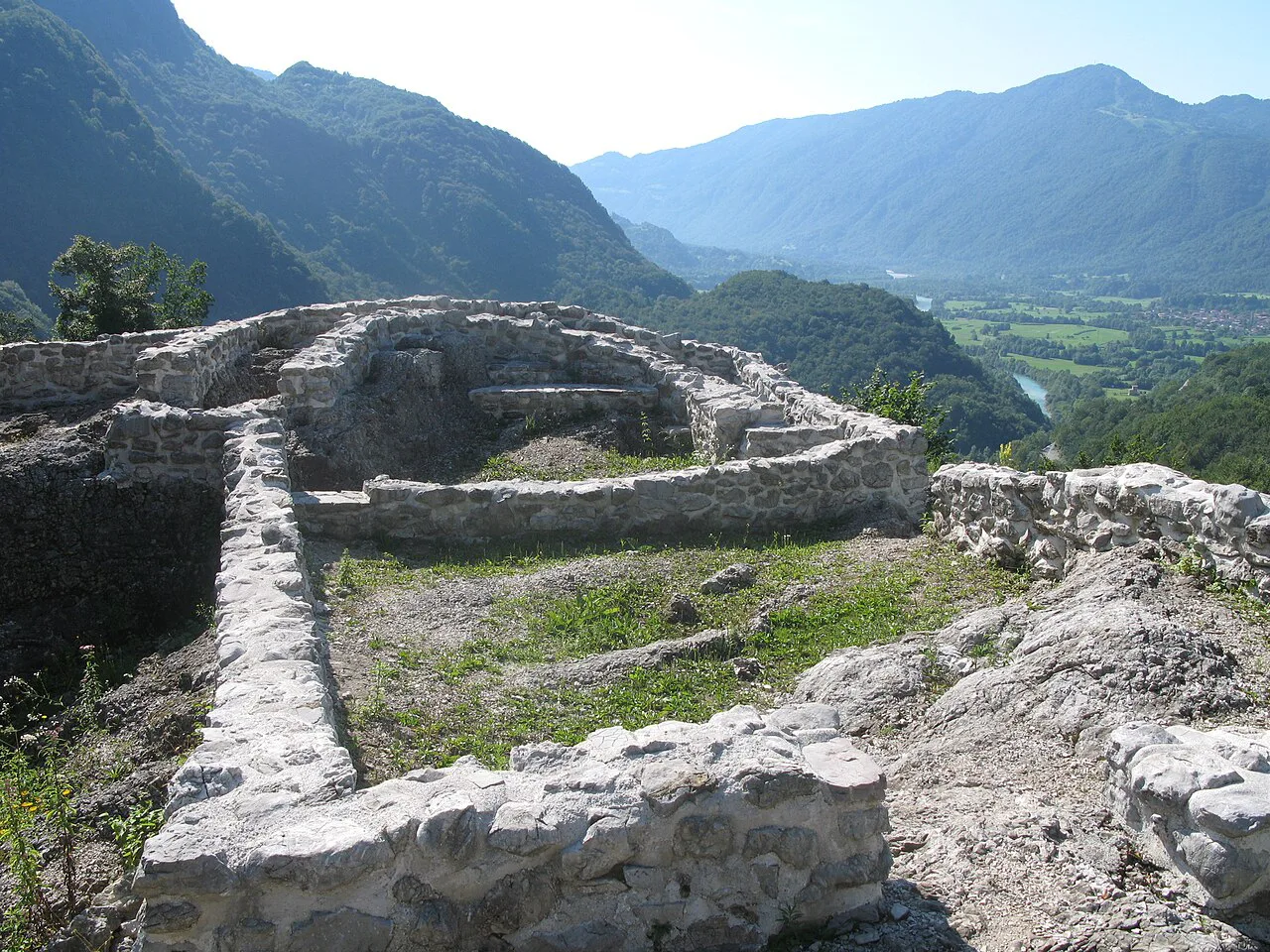
The fifth- and sixth-century settlement is the reason the hill is worth the climb. More than twenty residential buildings stood inside a wall, with defensive towers placed along the circuit, which makes the site legible as a defended late antique community rather than a scatter of unrelated ruins. Look for the line of the wall and the tower positions first; the houses read more clearly once you have the defensive outline in mind.
The published guide describes one large residential building in more detail, including an annex, a wind lobby and hearths. That level of detail is what separates Tonocov Grad from a scenic viewpoint: the interest is in how the buildings were arranged and used. Read the building descriptions before you climb, because on site the walls are low and the plan is easier to follow with the layout already in your head.
The central core: three churches, a baptistery and two cisterns
The elevated central part of the hill holds the site's most distinctive remains: three early Christian churches with a baptistery, plus two water cisterns. This is the core to prioritize if your time on the hill is short, because the churches and baptistery give the settlement its character. The cisterns are a practical reminder that a community this size on high ground depended on stored water.
The guide describes the churches as well-preserved within the excavated area, which sets expectations honestly: you are looking at preserved foundations and plan, not standing naves with roofs. Photographs of the hill show the rocky setting and exposed masonry, useful for judging whether the climb suits your group before you commit. If you want the region's archaeology and history under a roof in town, the Kobarid museum is the indoor counterpart to this outdoor site.
How the site ends and starts again
The late antique settlement was abandoned at the end of the sixth century or in the first half of the seventh, and around 800 the fortification was briefly occupied again. Those two dates frame the ruins you see: the main building phase, then a gap, then a short reoccupation. Knowing the sequence helps you read the site as a place that was left and partly reused rather than continuously inhabited.
The site guide places Tonocov Grad in the broader study of the end of antiquity and the movement of peoples, which is why the hill matters beyond its own walls; that context is the argument for reading up before you climb. The 1998 guide is historical publication information, so treat it as background rather than as a current visitor leaflet.
How much time to allow and what the climb involves
Budget for the climb plus a focused walk through the excavated core rather than a long museum-style visit. The site sits on a steep rocky hill above the Soča, so the ascent sets the pace, and the ruins themselves are foundations that reward a slow pass rather than a quick circuit. Climb with the guide's layout in mind, spend your time at the churches, baptistery and cisterns, then trace the wall and tower line on the way around.
No measured distance, duration or difficulty rating for the approach appears in the published material, so judge the climb by the terrain description and your own group. Keep the visit flexible rather than scheduling it tightly against another timed stop, and if the hill is the main event of your morning you will have room to read the ruins properly.
Opening hours, tickets and access
Opening hours, ticket prices, tour arrangements and parking rules for Tonocov Grad are not set out in the published site literature, so check with the Kobarid Museum, which co-published the site guide and is the local institution tied to the archaeology. Ask specifically about current access to the hill and any arrangements for visitors, then plan the rest of your day around the answer.
The 1998 guide is a published book, and the publisher's page lists it as out of print, so do not count on buying it on site. Look for it through a library or a secondhand seller if you want the detailed building descriptions in hand. Between the guide's layout and the map pin, you can arrive knowing what you are looking at even without on-site interpretation.
Nearby options in and around Kobarid
Tonocov Grad works best as one part of a Kobarid day rather than a standalone excursion. The town's museum gives the historical and archaeological background indoors, and the Kozjak waterfall is a well-known stop nearby for travelers who want a water feature after a hill. Pair the hill with one of those rather than trying to stack everything, since the climb itself takes energy.
Two more Kobarid stops fit neatly around the site: the Italian Charnel House in Kobarid on the town side, and the Napoleon Bridge in Kobarid over the Soča. Both are town-scale stops that do not compete with the hill for time, so they slot in before or after the climb. Use our Kobarid guide guide to order them, and keep the hill as the fixed point your day is built around.
Is the climb to Tonocov Grad worth it?
Yes, if you want to read a late antique settlement on the ground rather than look at a view. The draw is specific: three early Christian churches with a baptistery, two cisterns, and the wall-and-tower outline of a community of more than twenty houses, all on a steep hill above the Soča. If you prefer standing buildings and indoor interpretation, the Kobarid museum is the better use of an hour.
Confirm current access and any visitor arrangements with the Kobarid Museum before you go, since opening hours, tickets and parking are not published in the site literature. Then read the layout description, climb with the churches and cisterns as your priority, and leave room for the wall and tower line on the way down.
Frequently Asked Questions
Is Tonocov Grad the same place as Tonovc Castle?
Photo captions and map pins for the hill above Kobarid often use Tonovc Castle or Tonocov grad, while the Slovenian site literature uses Tonovcov grad. Match the hill, not the spelling, when you are planning the visit.
Do you need a guide to understand the ruins?
A guide helps because the visible remains are foundations rather than standing buildings. Slavko Ciglenečki's published site guide describes the churches, baptistery, cisterns, houses and defensive towers, so reading the layout before you climb makes the excavated area easier to follow on site.
Is the climb steep?
The site sits on a steep rocky hill above the Soča, so the ascent is part of the visit. No measured distance or difficulty rating is published, so judge it by the terrain description and your own group, and keep the schedule around the climb flexible.