
Bohinj Railway: A Visitor's Guide to the Route and Stations

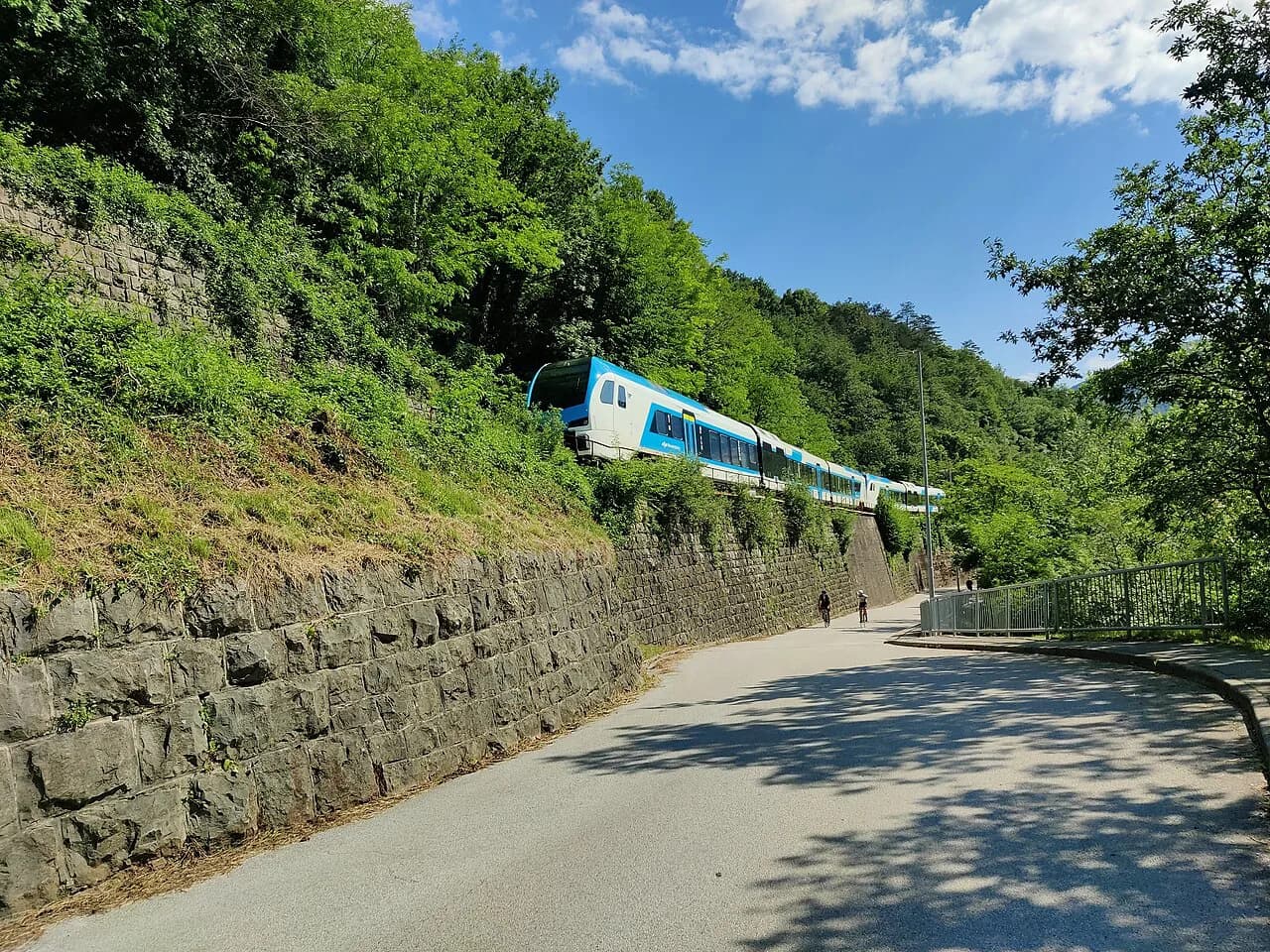
The Bohinj Railway is the scenic line that carries you from Jesenice, near Bled, through the Julian Alps to Nova Gorica near the Italian border. It is the shortest and fastest rail link between the Gorenjska and Primorska regions, and a second service on the same tracks, the car train, shuttles drivers between Bohinjska Bistrica and Most na Soči. This guide covers where the line runs, what you see from the window, how to board and buy a ticket, and how the car train differs from the full passenger route.
What the Bohinj Railway Is
The railway was built between 1900 and 1906 as part of a transalpine connection under the Austro-Hungarian Monarchy, and its stations today serve as starting points for the Julian Alps, Bled, Bohinj, the Soča valley and the Nova Gorica region. It runs from Jesenice in the north to Nova Gorica in the west, crossing the mountains rather than skirting them.
Treat it as transport first and scenery second. If you are moving between the lakes and the coast, this line is the practical way across, not a detour you take for the photographs alone.

The Route at a Glance: Jesenice to Nova Gorica
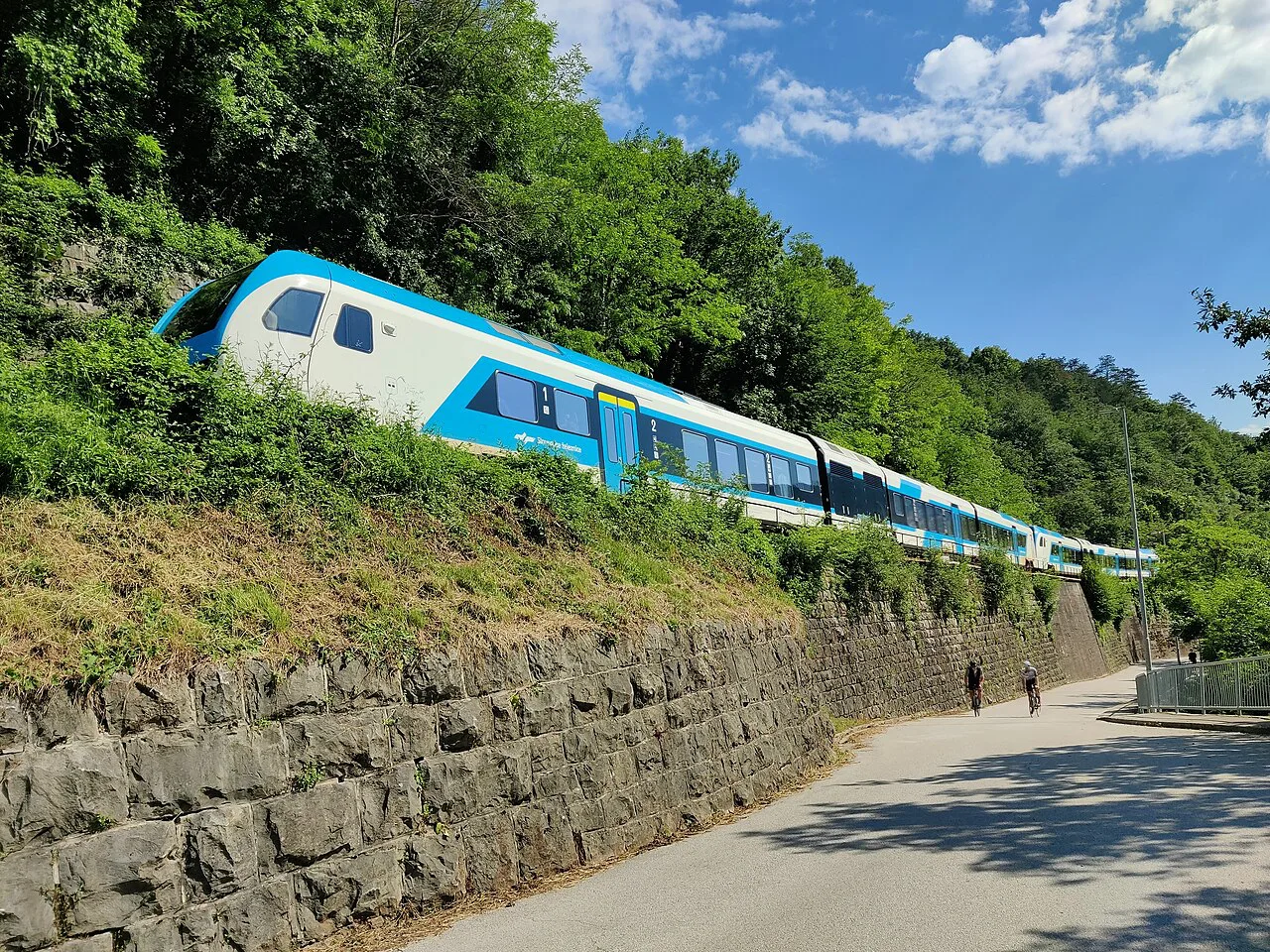
The Jesenice–Nova Gorica run covers 89 kilometers and takes about two hours, with 17 stations along the way. Passenger trains depart in both directions, so you can ride it northward toward the Alps or westward toward the Mediterranean.
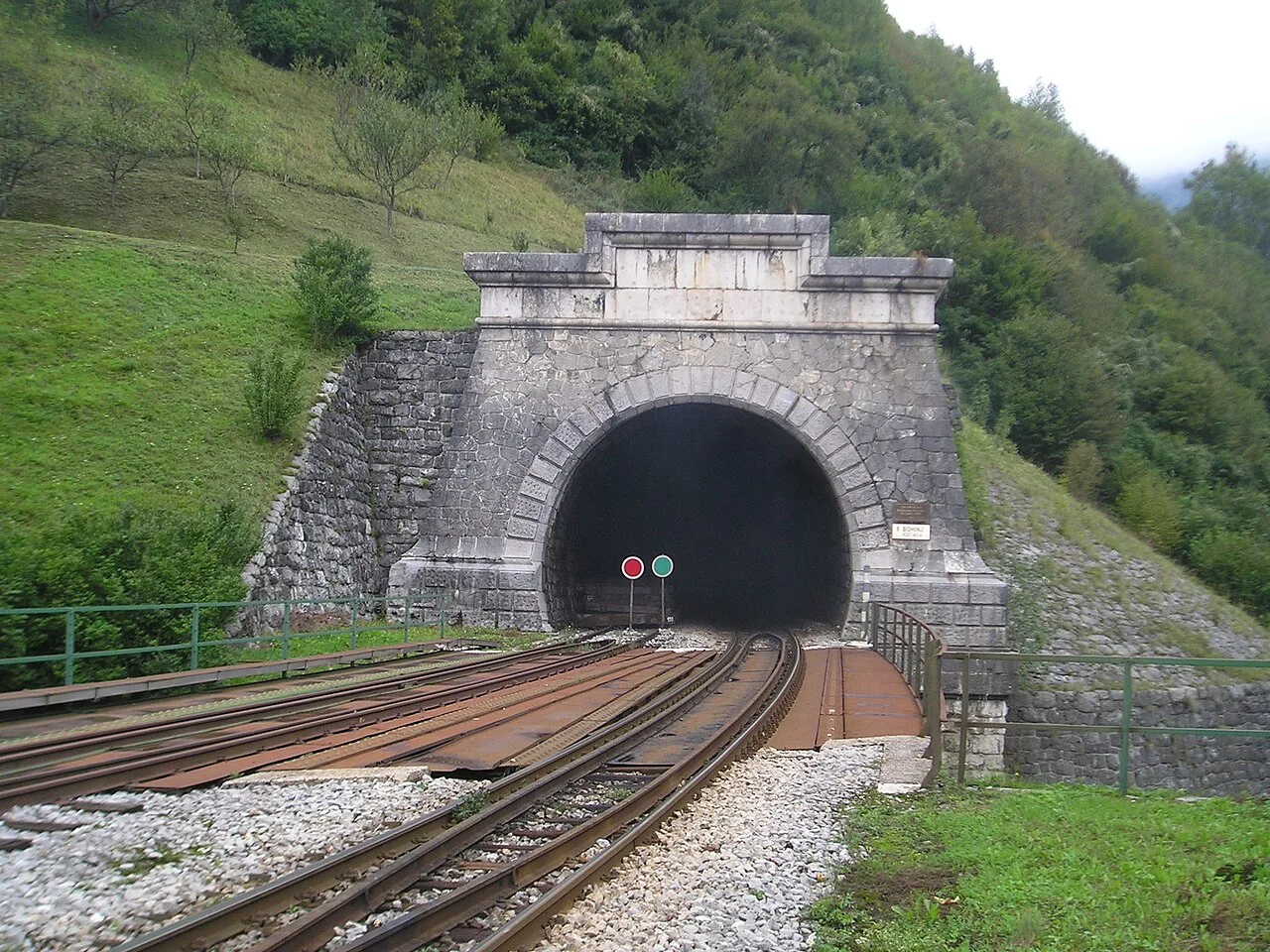
The Bohinj tunnel, 6,327 meters long, is the longest railway tunnel in Slovenia and the most technically demanding structure on the line. Whichever direction you travel, the tunnel is the point where you cross from one side of the mountains to the other.
If you look at a full route map and see a 130-kilometer figure, that is the Jesenice–Sežana stretch of the wider line, which includes 31 stations and stops and 36 tunnels. The ride most visitors take is the shorter Jesenice–Nova Gorica section, so match the length to the journey you are actually planning.
Landmarks Along the Way
The line packs in serious engineering: 28 tunnels, 65 bridges and 5 galleries sit between the alpine end and the Mediterranean end. You do not need to count them, but they explain why the ride is more varied than a typical regional train.
The bridge and viaduct over the Idrijca River at Bača pri Modreju is the longest bridging structure on the railway at 258 meters. If you ride between Most na Soči and Podbrdo, keep an eye out for it, because it is easy to miss while you are watching the valley.
At the western end, the stone arch bridge over the Soča River at Solkan is, at 85 meters, the largest stone arch among railway bridges in the world. It is the finale of the ride, and the reason many travelers choose to finish in Nova Gorica rather than turn back early.
Views from the Window
For much of the ride you look straight into the Julian Alps, past green meadows, dense forest and small villages, with glimpses of Lake Bled and the Soča River. Sit on the side facing the valley where you can, because the best stretches are short and come without announcement.
Photographers should plan for movement and glare rather than a clear view at every station; the line is single-track and trains slow through some sections but not all. If you want a comfortable window seat on a holiday weekend, board at the start of the route where the train is empty.
How to Ride It: Boarding and Tickets
Board at Jesenice if you are coming from Bled or Kranjska Gora, or at Nova Gorica if you are heading east from the coast. Tickets can be bought from the conductor on many services, or booked online through Slovenian Railways before you travel.
Tourist offices and the national tourism board publish rail itineraries for the line, which is a useful cross-check if you want to build the ride into a longer day. Timetables change seasonally, so confirm the departure you intend to take before setting out.
For a section this scenic, a one-way ticket is usually enough: ride Jesenice to Nova Gorica, or the reverse, and continue by bus or car from the far end rather than retracing the same track.
The Car Train (Avtovlak) Between Bohinjska Bistrica and Most na Soči
The Avtovlak is a separate motorail service that carries cars and their passengers through the Bohinj tunnel between Bohinjska Bistrica and Most na Soči. It saves roughly half an hour compared with driving the winding mountain road over the Soriška Planina, which is the main reason drivers use it.
It runs five times a day in each direction between Most na Soči and Bohinjska Bistrica, and once a day it starts farther south at Nova Gorica and stops at Podbrdo for passengers only. Vehicles are picked up and dropped off at Most na Soči and Bohinjska Bistrica, so plan your road route around those two points.
At Nova Gorica the car train leaves from a platform a five-to-ten-minute walk from the main station building, so allow time to find it if you are loading a vehicle there. It makes most sense if you are crossing between the lakes and the Soča valley with a car and want to skip the mountain road.
Bringing a Bike on Board
Bicycles go on the passenger trains, which makes the Bohinj Railway a practical way to link a ride on one side of the mountains with a ride on the other. Take your bike aboard and skip the climb, then cycle from the station where you get off.
Trains are usually quiet apart from holiday periods, when tourists discover the line and space for bikes gets tighter. If you are traveling with a group or an e-bike, check the current fare and rules with Slovenian Railways before the day of travel.

Stopping Off: Most na Soči, Bohinj and the Soča Valley
Most na Soči is the natural break on the western side, with the station sitting above the meeting of the Soča and Idrijca rivers and the car train terminal close by. From there you can continue toward Nova Gorica or turn north up the Soča valley.
On the Bohinj side, Bohinjska Bistrica is the station for the lake itself. From Bohinj you can add Savica Waterfall (Slap Savica) or take the Vogel Cable Car up for valley views.
The lake end of the line rewards a slower day: a walk between Ribčev Laz and Stara Fužina, a stop at the Church of St John the Baptist in Bohinj, or a short detour into the Mostnica Gorge (Korita Mostnice). Plan around the train times rather than the other way round.
How Much Time to Give the Ride
Allow half a day for the full Jesenice–Nova Gorica ride if you want to get off and look around at either end; the train itself takes about two hours. If you are combining it with the car train, add the loading time and the drive at each end.
Riders who only want the scenery should focus on the section between Bohinjska Bistrica and Most na Soči, where the tunnel, viaduct and river views cluster. The far ends are useful for connections rather than for window-gazing.
Nearby Options: Museum Train and Station Museums
The railway has a heritage side worth knowing about: there is a museum train connected with the line, and the stations at Nova Gorica and elsewhere host small railway exhibits. Check opening times with the operator or local tourist office if a museum stop is part of your plan.
Nova Gorica station has a staffed booking office, a café and a small museum, which makes it a reasonable place to wait for a connection. It also sits steps from the Italian border, so you can walk into Gorizia on the same trip.
For a full list of what to see around the lake before or after the ride, the Bohinj Attractions: 5 Visitor Guides covers the main stops on the ground.
Where the Railway Fits Your Bohinj Plans
If you are basing yourself at Lake Bohinj, the railway is best used as a one-way excursion: ride to Nova Gorica or Most na Soči for the day, then return by a different route. That gives you the scenery without a round-trip on the same track.
Drivers with a car in Bohinj should weigh the Avtovlak against the mountain road; the train saves time but ties you to a departure, while the road gives you flexibility at the cost of a slower, twistier drive.
Ride the Line or Take the Car Train?
Choose the full passenger ride from Jesenice to Nova Gorica if you want the views and the Solkan bridge, and plan around a one-way ticket. Choose the Avtovlak if you have a car and need to cross the mountains between Bohinj and the Soča valley without the winding road.
Either way, confirm the current timetable and fares with Slovenian Railways before you travel, because services and prices are set by the operator and change with the season.
Frequently Asked Questions
Does the Bohinj Railway go from Bled to Bohinj?
The line passes near Bled on its way from Jesenice, but Bohinjska Bistrica is the station that serves Lake Bohinj. From there you reach the lake by local bus, taxi or a walk of several kilometers.
Do I need to book the car train in advance?
The Avtovlak runs several times a day in each direction, but vehicle space is limited. Check with Slovenian Railways for booking rules and current departure times before you rely on it for a crossing.