Nova Gorica: What to See in Slovenia's Border Town
Nova Gorica is a planned Slovenian town beside Gorizia, Italy. Here is how the two halves connect, what to see, and how much time the town needs.
On this page
Plan on half a day for Nova Gorica itself and a full day if you want to walk both sides of the border into Gorizia, Italy. The town is small, modern and grid-planned, so sightseeing is a matter of a few streets, a castle museum and the shared border area where Slovenia meets Italy. This guide covers how the town came to be laid out the way it is, what is worth your time, and how to cross between the two countries on foot.
Know the key fact before you arrive: Nova Gorica is in Slovenia, Gorizia is in Italy, and they touch each other. Everything else about the town follows from that.
What Nova Gorica is: a planned town built after 1947
Nova Gorica is a planned town in western Slovenia, built according to modernist principles after 1947, when the Paris Peace Treaty drew a new border between Yugoslavia and Italy and left Gorizia on the Italian side. The town then took over from Gorizia as the principal urban center of the Goriška, or Gorizia, region, the northern part of the Slovenian Littoral.
That origin explains what you see: wide streets, open blocks and a layout that reads like a single design decision rather than centuries of accretion. It is also why Slovene sources call Nova Gorica the country's youngest city. Walking the center takes little time precisely because there is no old core to get lost in.
The name itself is plain enough. Nova Gorica means "new Gorizia," and locals shorten it to Gorica while calling the Italian town Stara Gorica, or "old Gorizia." That naming treats the pair as one place with two administrations.
How the town is laid out and how to walk between the two sides
Treat the two towns as one walkable area. The Slovenian grid of Nova Gorica runs up to the border, and the Italian streets of Gorizia continue on the other side, so a morning on one side and an afternoon on the other is a realistic plan rather than a transport exercise. Wear shoes you can walk in.
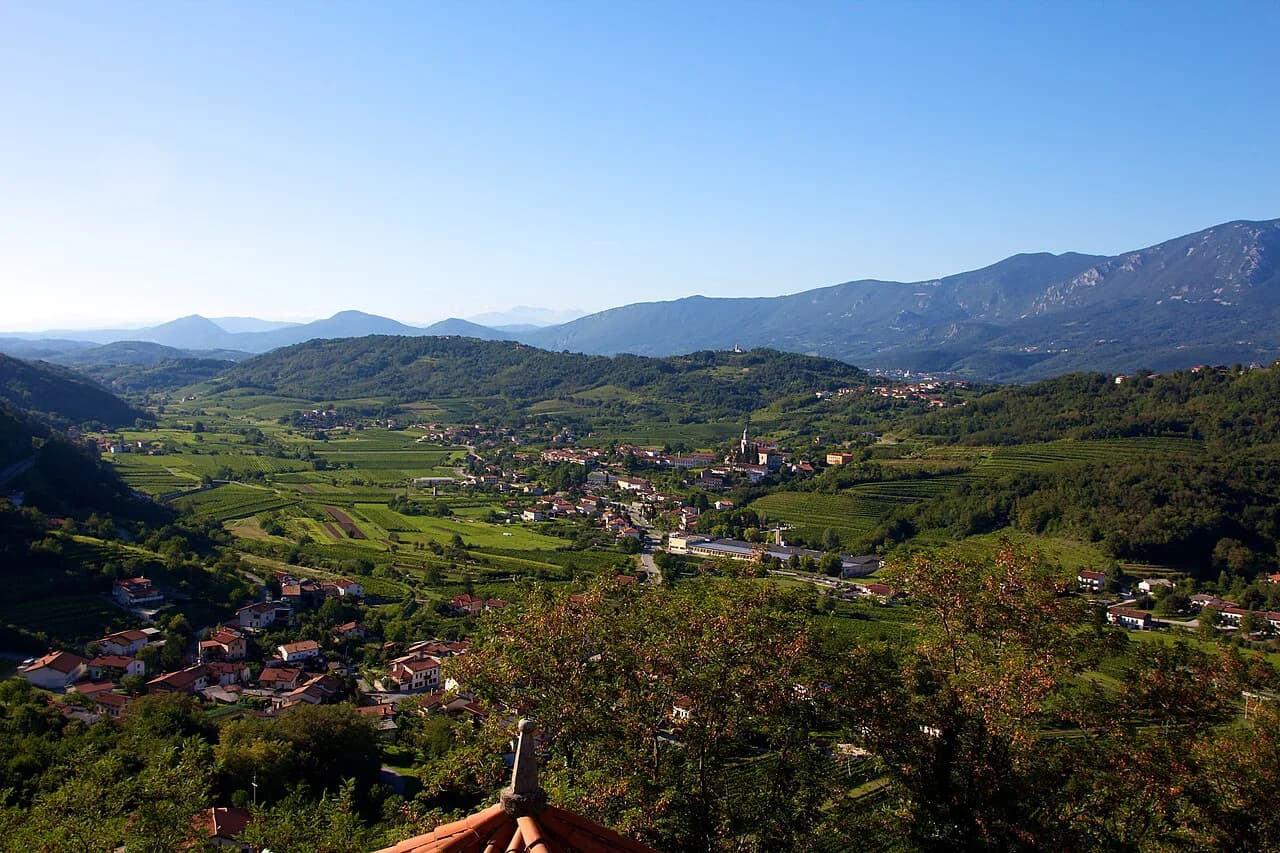
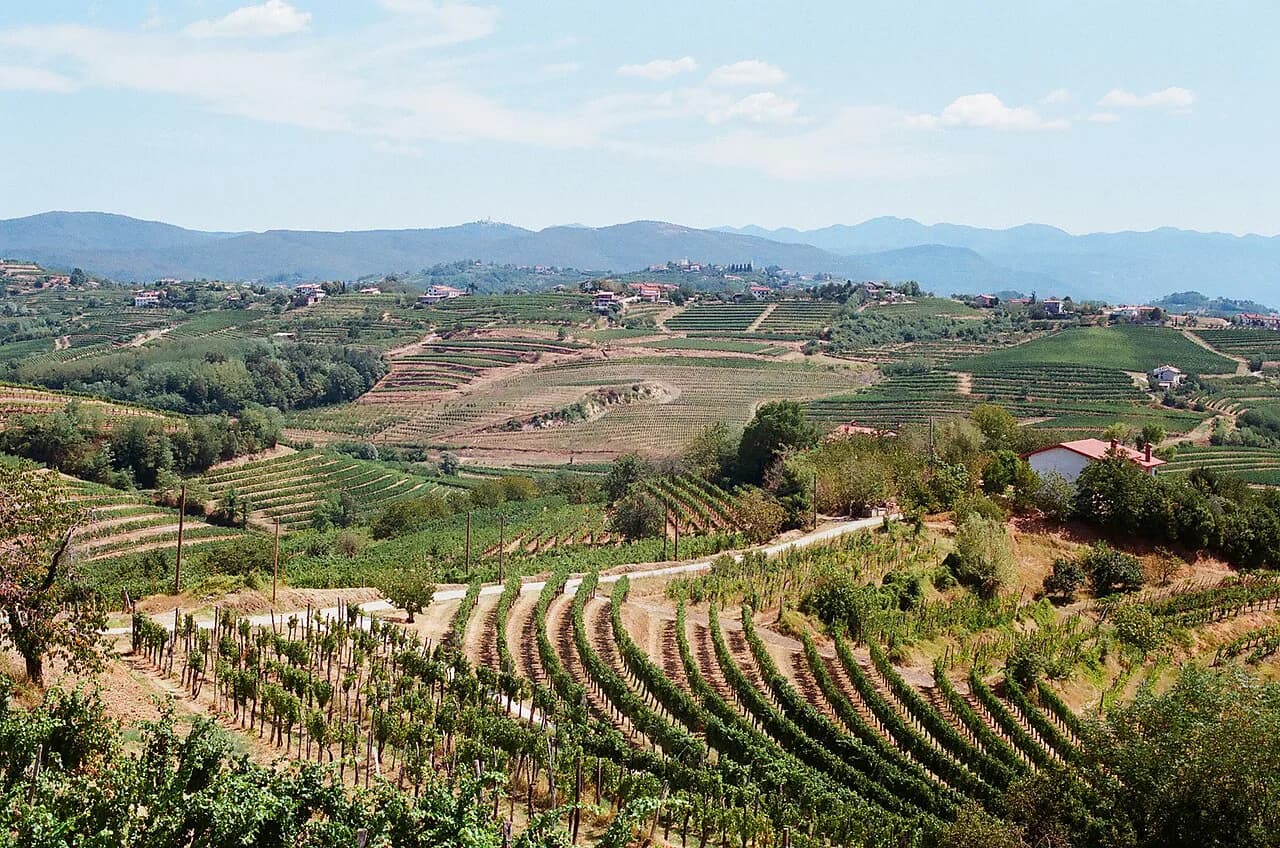
Nova Gorica sits on the edge of the Brda hills and the Vipava valley, with the Soča River, the Karst plateau and the sea all within a short drive. That position makes it a useful base for the surrounding countryside as well as a stop in its own right. If you are building a wider circuit, the terraced villages and viewpoints of Goriška Brda make the most natural next leg.
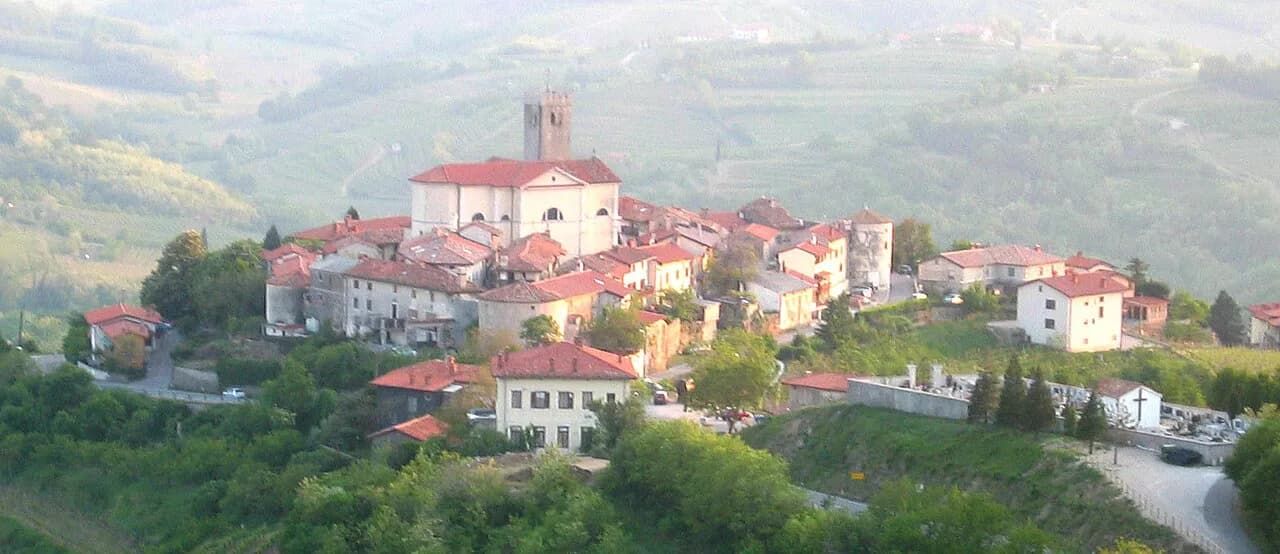
Šmartno, Slovenia is the village to aim for in those hills. Its old center is small enough to walk in an hour, which makes a clean contrast with the wide modernist grid you left in Nova Gorica.
Nova Gorica and Gorizia as European Capital of Culture
The two cities held the European Capital of Culture title together in 2025, the first time two cities from two different countries shared the designation. The program, branded GO!2025 = BORDERLESS, ran across both sides of the border rather than in one town.
The shared year closed with a ceremony from 1 to 5 December 2025, so do not plan a trip around its headline events. Slovenia's tourist board counted more than 400 events across that year, from a March for Europe to a food festival spanning both sides of the border. What lasts is the habit of joint programming and the cross-border identity the year cemented.
For a visitor, the practical legacy is simple: check what is on in both towns before you commit to a date, since a single program now serves both sides. A concert or exhibition in Gorizia is as much part of a Nova Gorica visit as anything on the Slovenian side.
Kromberk Castle and the Museum of Goriška
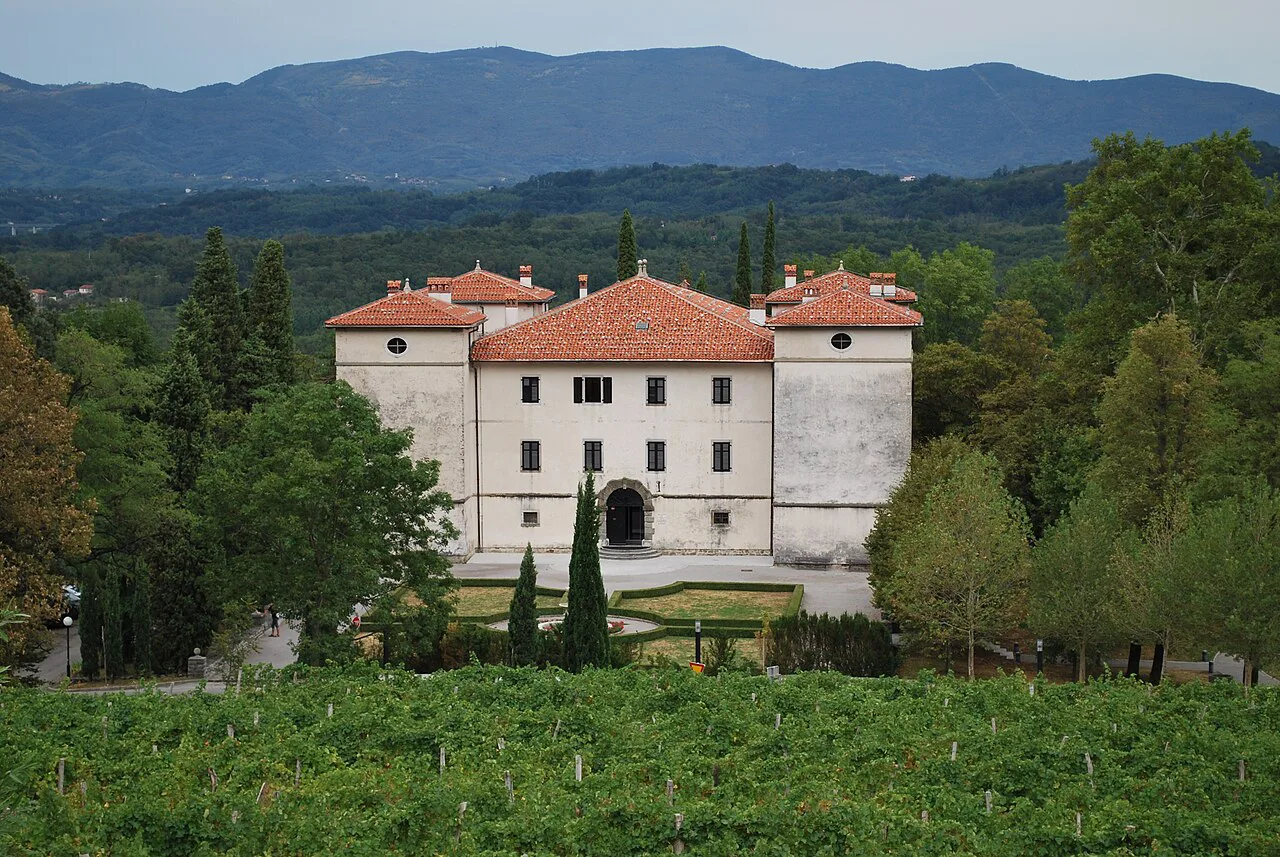
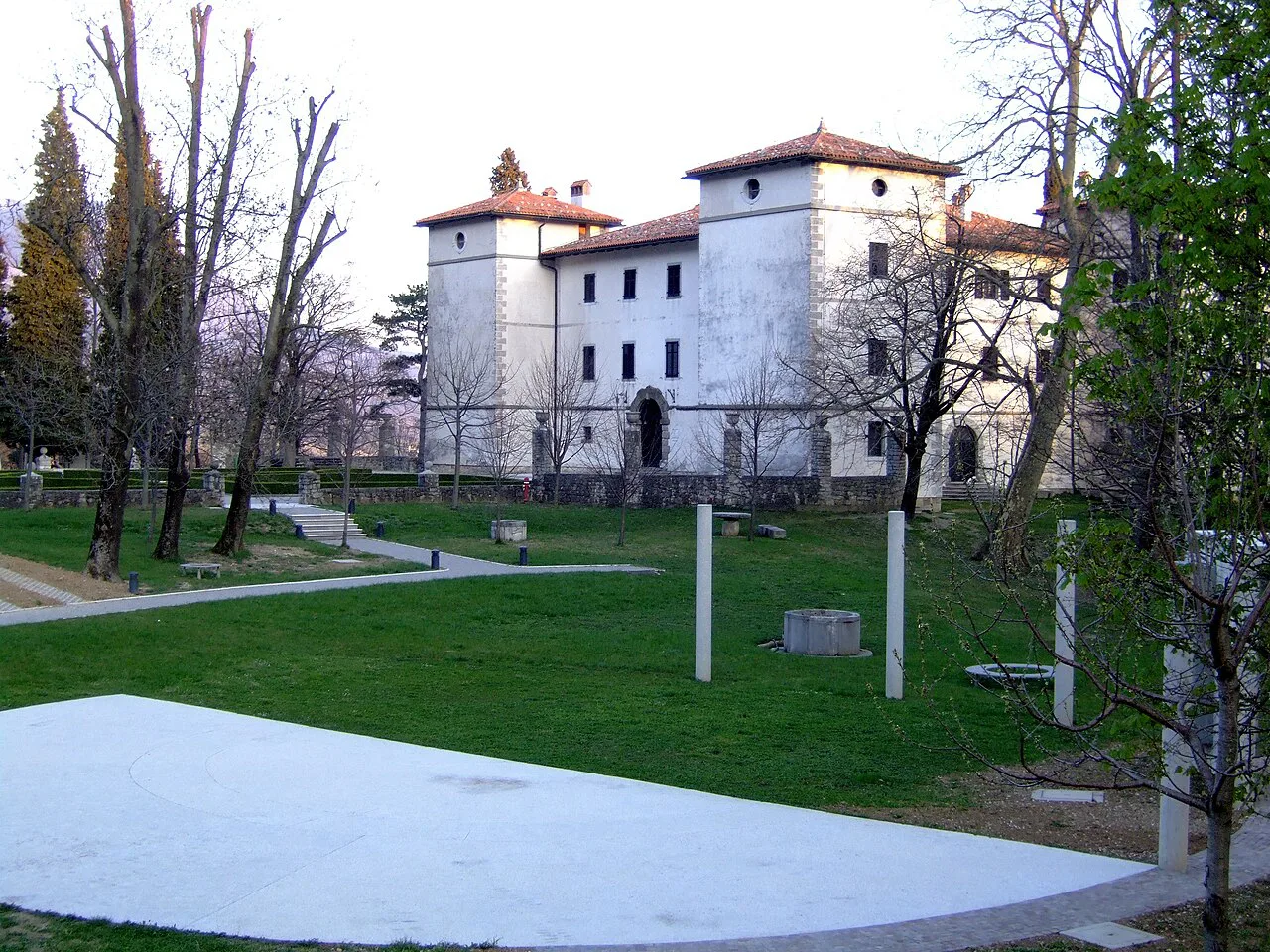
Kromberk Castle, in the Kromberk district, houses the Museum of Goriška, the regional museum covering the area's history. It is the clearest single stop for context on the border, the region and the town's postwar creation.
Do not assume a fixed schedule. Confirm current opening days and any admission charge directly with the museum, or through the tourist information service, before you build a day around it. Hours can change with the season, and the museum is the kind of place where arriving to a closed door wastes a morning.
The castle is outside the tight center, so pair it with a walk rather than treating it as a two-minute detour. Allow time to get there and back on foot, or plan it as a stop on a drive out toward the Brda hills.
The national theater and the town's cultural institutions
Nova Gorica hosts one of Slovenia's three national theaters, which gives the small town a cultural weight out of proportion to its size. Performances are likely to be in Slovene, so check the program for anything with music, dance or surtitles if language is a barrier.
Beyond the theater, the town's institutions are modest and spread out rather than clustered on a single square. That is the trade-off of a planned town: nothing is far, but nothing is concentrated either. Budget a couple of hours for the center and add the castle separately.
The setting: Brda, Vipava, the Soča, the Karst and the sea
Nova Gorica's real advantage is geography. Slovenia's official tourism site places it among the orchards and vineyards of the Brda and Vipava valleys, with the emerald Soča flowing out of the Alps nearby and the Karst plateau and the Adriatic a short distance away. The sea and the mountains are both within reach, though not comfortably on foot.
With a car, the Vipava valley is the obvious half-day extension, and its small walled towns reward a slow drive between them. Without one, the valley is harder to reach.
How much time Nova Gorica needs, and combining it with Gorizia
Give Nova Gorica half a day: the center, the theater area and a walk to the border. Add Kromberk Castle and you need most of a day. Add Gorizia's historic streets and you have filled a full day without leaving the two towns.
The efficient order is to start on the Slovenian side in the morning, cross on foot around midday, and spend the afternoon in Gorizia before returning. Remember that you are changing countries, so shop hours and everyday services may differ from one side to the other.
If you have a second day, spend it in the countryside rather than repeating the town. The Brda villages sit close enough for a relaxed loop, and they give you the vineyards and hill views that the planned town deliberately does without.
Practical notes on crossing the border on foot
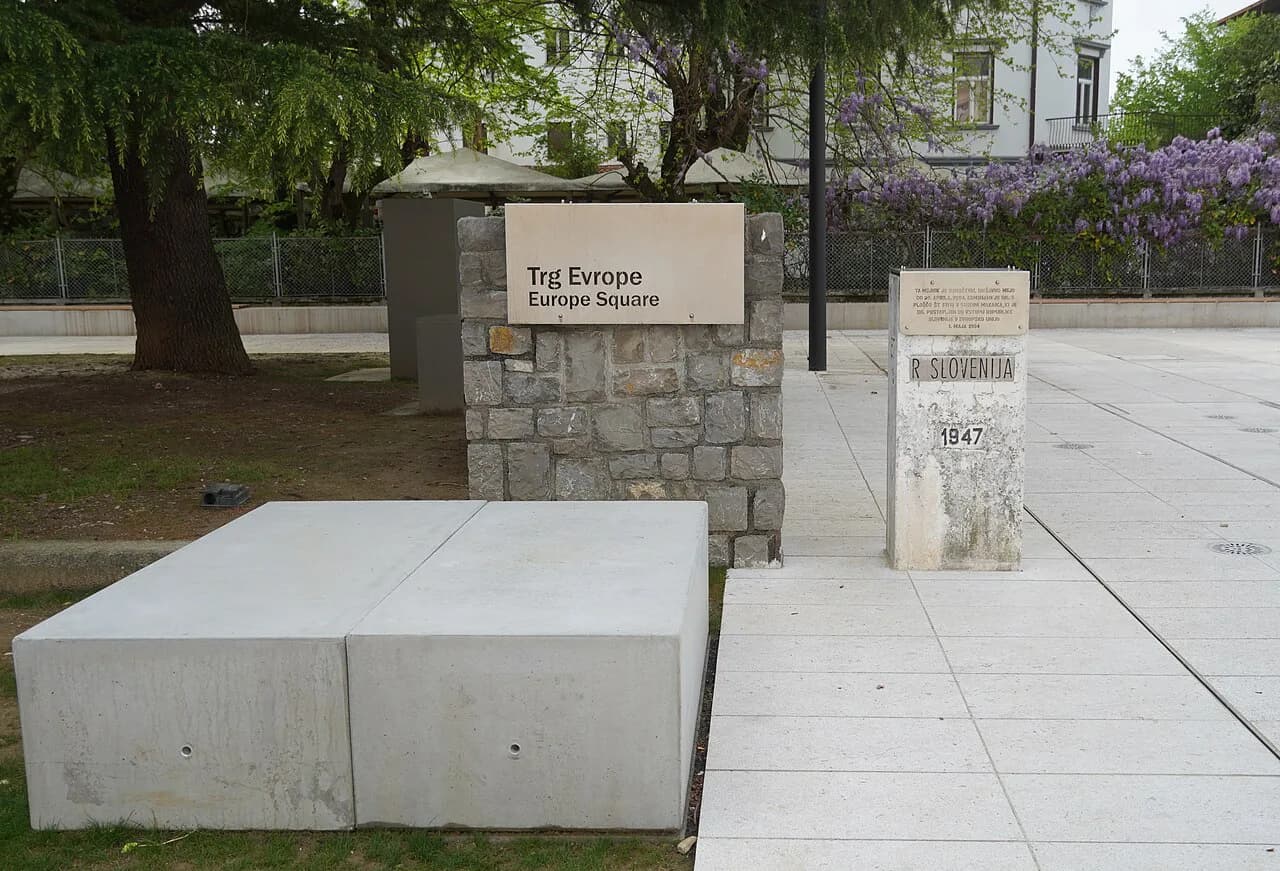
The border runs inside a built-up area, so walking between the two centers is the practical way to cross. The two centers are close enough that a car is a liability rather than a help. Park once and walk.
Slovenia uses the euro. Italy also uses the euro, so you are not changing currency as you walk across. Everyday prices, though, can differ from one side of the line to the other.
Nova Gorica's elevation is around 103 meters above sea level, and the town keeps Central European time with daylight saving observed. That matters little for a day visit but does matter if you are timing a train or an evening crossing.
Should you base yourself in Nova Gorica?
Base in Nova Gorica if you want a quiet, modern town with quick access to the Brda hills and Vipava valley, and if a walk into Italy appeals. Choose Gorizia instead if you want historic streets on your doorstep and a more traditional Italian town center.
Either way, treat the pair as one destination and give them a full day together. For the individual sights on the Slovenian side, the attraction guides cover each one in more detail.
Explore more Nova Gorica guides
Frequently Asked Questions
Is Nova Gorica in Slovenia or Italy?
Nova Gorica is in Slovenia. It sits directly against Gorizia, which is in Italy, and the two towns form a single built-up area split by the international border. You can walk from one center to the other in a few minutes.
Is Gorizia the same as Nova Gorica?
No. They are separate towns in separate countries with separate administrations. Nova Gorica was built after 1947 on the Yugoslav side of the new border, while Gorizia is the older Italian town. Locals treat them as one urban area, and the two shared the European Capital of Culture title in 2025.
What is Nova Gorica known for?
It is known as Slovenia's youngest city, a modernist planned town built after the Second World War, and for its cross-border pairing with Gorizia. It also has one of Slovenia's three national theaters and, in the Kromberk district, Kromberk Castle with the Museum of Goriška.
Sources
Notes for your Slovenia trip
Optional updates to our Slovenia place guides.
You might also like
Continue reading
More guides you'll find useful