
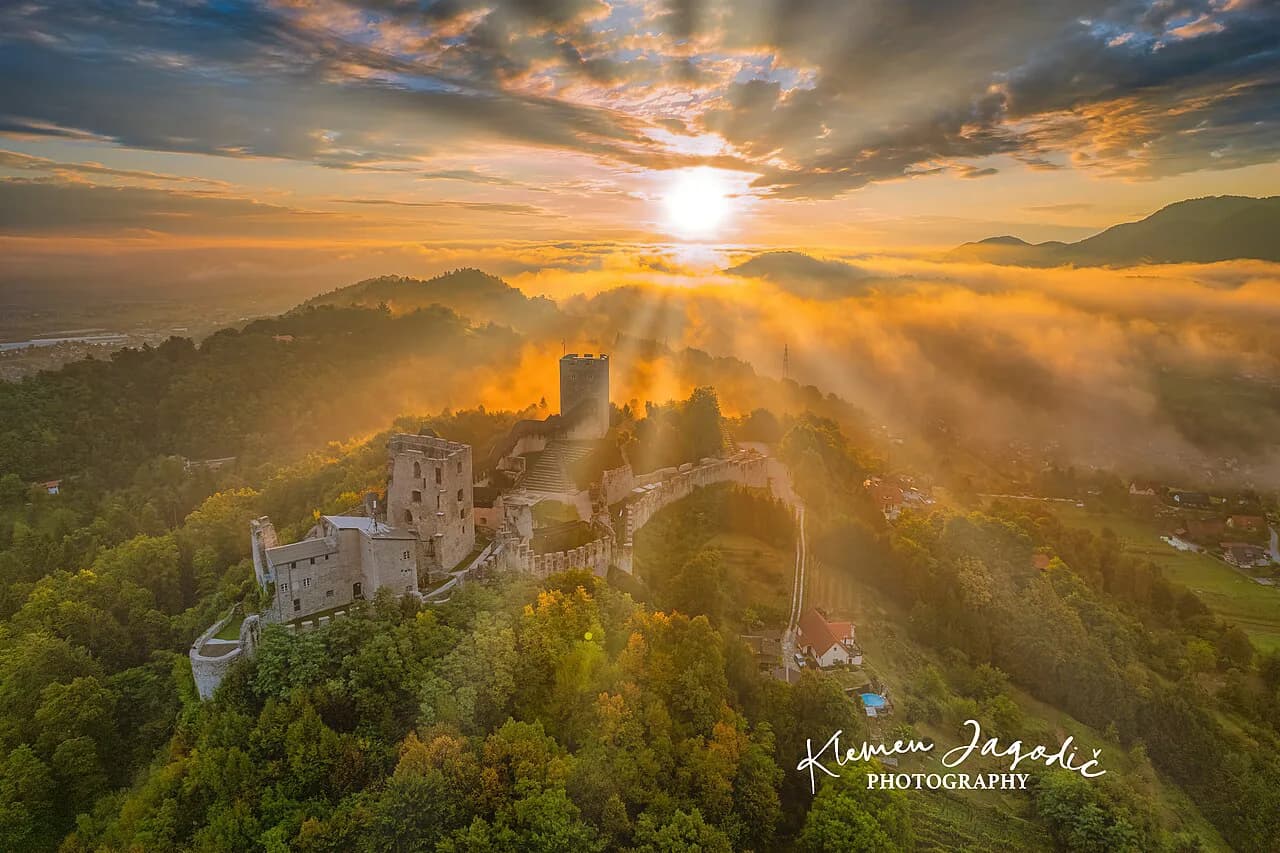
Celje Castle: How to Visit the Fortress Above Celje

Celje Castle rewards a half day, not a quick photo stop. The fortress sits on a hill above the old town, so the visit combines a climb, time on the ramparts and terraces, and the valley view from the tower, with the Savinja riverside and the central squares waiting below. This guide covers where the castle sits, the two ways up, what to see on the hilltop, and how to fit it around the rest of Celje.
Plan the day as a read from the bottom up: riverside first, then the squares, then the hill. That order keeps the steepest part of the day for when you still have energy and puts the old-town lanes within easy reach on the way back down.
What Celje Castle is and where it sits above the city
Celje Castle, known locally as Celjski grad or Stari grad Celje, stands on a hill above the city, with the Savinja River running through the valley below. The old town sits compactly between the water and the slope, so the fortress reads as the top layer of a city built in three bands: river, streets, hill. From the castle grounds the view opens over the rooftops, the river cutting through the center and the low hills beyond.
That layout is what makes the castle easy to place in a day. You are never far from the center, and the climb is the only real effort involved. Treat the hill as the anchor for orientation: when you look up from Glavni trg or the riverside bridges, you are looking at where you are headed. The Celje Attractions: 5 Visitor Guides cover the squares and city sights below the hill alongside the castle.
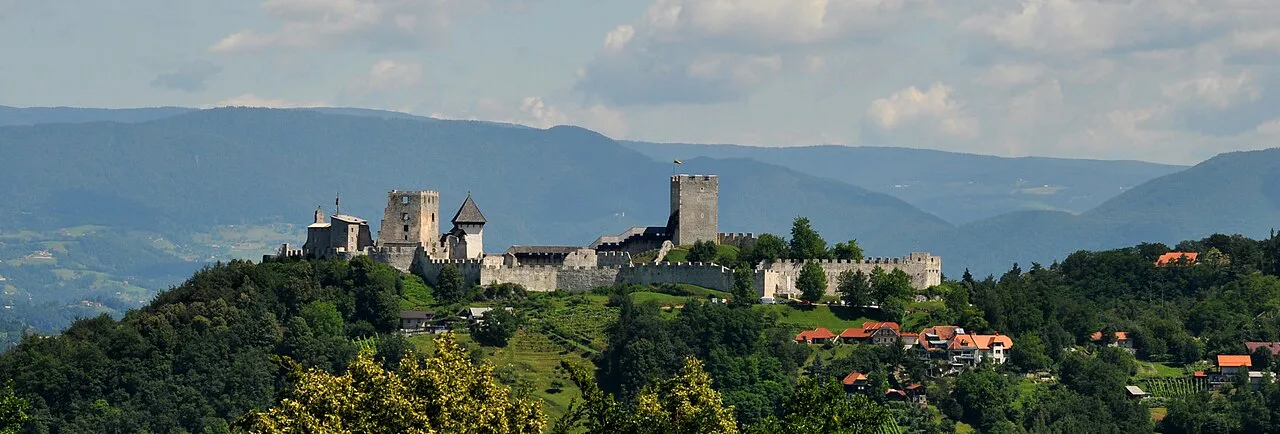

How to get up to the castle: on foot from the center or by car to the castle parking lot
Two approaches work. The first is on foot from the center, which takes roughly half an hour of walking uphill from the old town. A second option is to drive partway up the hill and walk the last stretch to the walls. The walk suits a cool morning and travelers with time; driving suits hot afternoons, limited mobility or a tight schedule.
If you walk, start from the riverside and cross the main bridges before heading up, so the climb begins after the flat part of the day. A quieter path to the castle starts east of the center and unfolds gradually, which keeps you off the most direct approach. Whichever route you choose, the hill is exposed and the terraces offer little shade at midday.
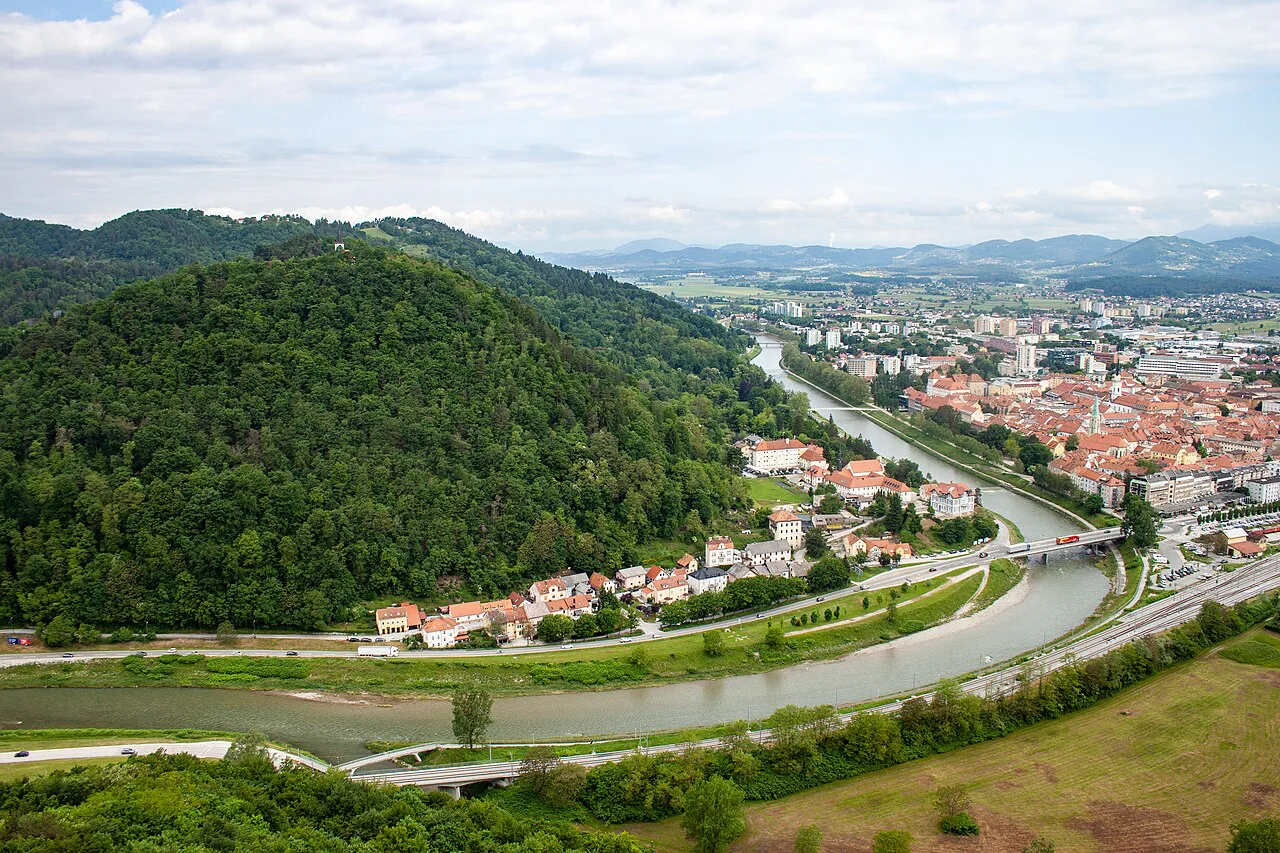

How long to allow and how the visit fits around the old town below
Set aside a half day for the castle itself once you count the climb, the tower, the ramparts and the terraces. A comfortable shape is to walk the Savinja riverside and cross the bridges in the morning, explore Krekov trg, Glavni trg and the old-town lanes late morning, then climb to the castle in the afternoon and finish on the terraces.
The old-town lanes around Gosposka and Linhartova are short blocks with arcades and small courtyards, so they take minutes rather than hours. That leaves the castle as the one element that needs a real slot in the day. If you are short on time, keep the riverside brief and spend the saved hour on the hill.
What to see on the hilltop: the defense tower, ramparts, and the valley view
The distinctive defense tower is the visual signature of the fortress, built with walls thick enough to read as fortification rather than residence, and it is nicknamed Frederick's Tower after Count Frederick II of Celje, who was imprisoned inside it. Climbing it gives a 360-degree view over the surrounding green hills. A second tower above Pelikan's Trail, built in the 16th century, holds displays.
The oldest part of the castle, with its courtyard and ramparts, is where the layered building history shows most clearly, and it also holds a medieval-themed play area and good views back over the city. Guided tours are available, and you can also explore on your own. Late afternoon brings angled light across the walls and the valley, adding depth without harsh contrast.
The Counts of Celje: the dynasty behind the walls
The Counts of Celje are the reason the fortress looks the way it does. When the castle passed to the family in the 14th century it was expanded with residential quarters, and the defense tower dates to that period. In the 15th century two Counts of Celje were elevated to the rank of Princes of the Holy Roman Empire, the peak of the dynasty's standing.
The male line ended in 1456, and the estates, castle included, passed to the Habsburgs, who continued to strengthen the fortifications with an outer wall, military facilities and trenches before the castle was eventually left uninhabited. Knowing that sequence turns the walk around the walls into something more than a viewpoint. The city below carries the same story, which is why a stop at the Celje regional museum pairs well with the hill.
Café and visitor facilities on the castle grounds
An on-site café provides refreshments on the castle grounds, which makes the hill a reasonable place to pause rather than rush back down. A modern tourist information point at the castle carries brochures and information about the castle, the city and nearby sights. Use it to confirm the day's remaining options before you descend.
Nearby in Celje: squares, the riverside, and the old-town lanes
Below the castle, Krekov trg and Glavni trg form the everyday center of town, connected squares with cafés and cultural buildings that make a natural pause between the river and the climb. The Savinja riverside, with its bridges and long sightlines, is the flat, open counterweight to the dense streets above. The small park by Miklošičeva, just outside the historic core, works as a quiet break before you return to the tighter grid.
Two city sights round out the day without another hill. The Celje Cathedral (Stolnica sv. Danijela), dedicated to St. Daniel, has historic artwork and stained glass inside, and the Old Counts' Mansion, a Renaissance structure built between 1580 and 1603, houses the Celje Regional Museum and its celebrated painted ceiling. Either one fits comfortably into the hours before or after the castle, and both are covered in the Celje Attractions: 5 Visitor Guides.
Practical points: tickets, hours, and tour slots to confirm before you go
Ticket prices, opening hours and guided tour times change by season, and the castle operator publishes the current figures on its own site. Check those before you set out, especially outside the warmer months, and buy in advance if you are visiting on a summer weekend. The same page confirms whether a guided tour is running on your date or whether self-guided wandering is the day's option.
The rest of the day needs no booking. The riverside, the squares and the old-town lanes are open to walk at your own pace, and the return downhill from the castle is quick. Pair the castle with one indoor sight, such as the cathedral or the museum, so a change in weather costs you an hour rather than the afternoon.
Is the castle climb worth your afternoon?
Yes, if you give it a proper slot. The climb takes about half an hour on foot, the tower and ramparts reward more time than a passing look, and the terraces give you the clearest reading of how Celje fits together around the Savinja. Travelers with limited time can drive partway up and keep the walking for the old town.
Build the day around the hill, not beside it: riverside and squares in the morning, castle in the afternoon, and a museum or the cathedral as your weather fallback. Confirm current hours, prices and tour times with the castle operator before you go.
Explore more Celje guides
Frequently Asked Questions
How long does it take to walk up to Celje Castle from the center?
Allow roughly half an hour of uphill walking from the old town. A quieter path beginning east of the center climbs more gradually.
Can you visit Celje Castle without a guided tour?
The castle can be explored independently, and guided tours are also offered for travelers who want the history explained. Confirm what is running on your date with the castle operator before you go.
What should you see first in Celje before the castle?
Walk the Savinja riverside and cross the bridges first, then work through Krekov trg, Glavni trg and the lanes around Gosposka and Linhartova. That leaves the climb for the afternoon, when the light on the walls and valley is at its best.