
Muda Gate in Koper: What to See and How Long to Allow

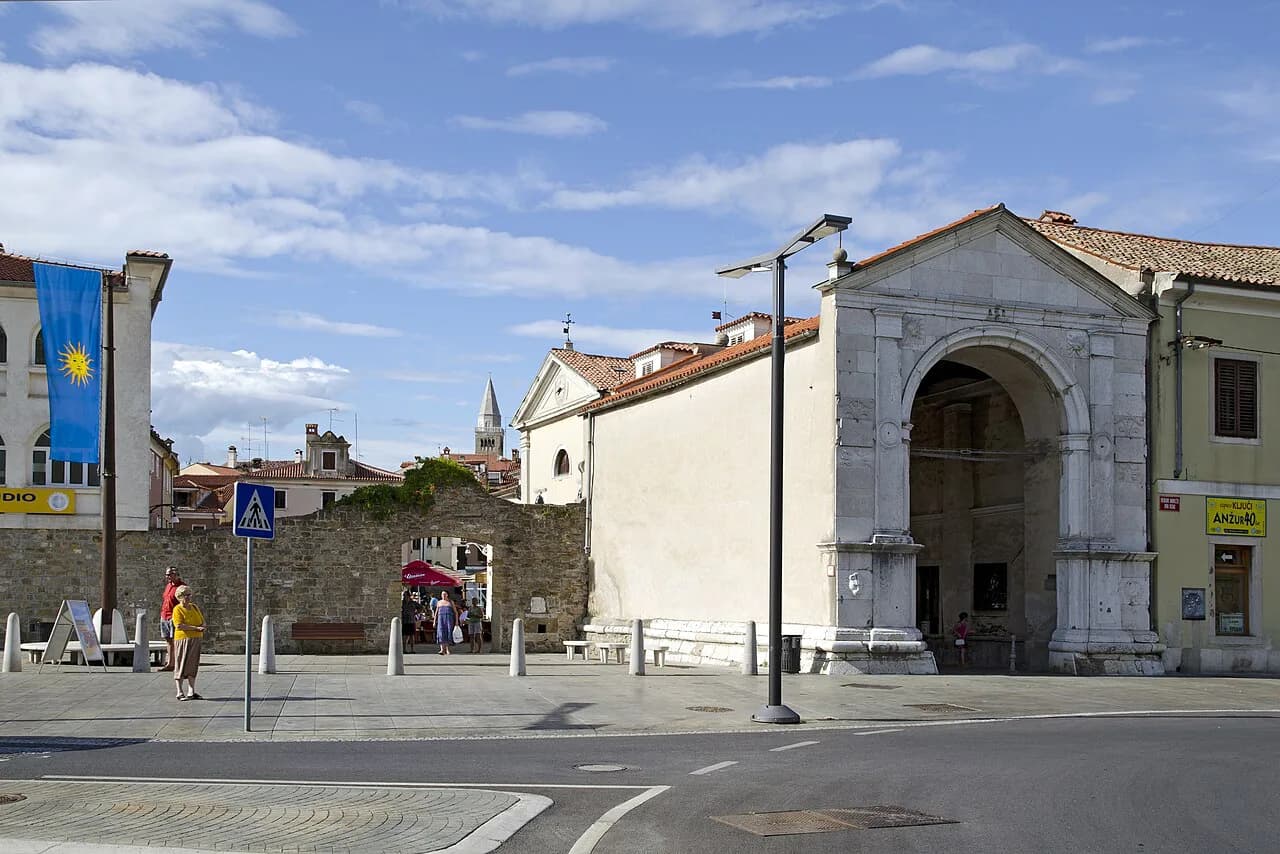
Muda Gate (Muda Vrata) needs about five to fifteen minutes of your time, and it makes sense as the start of a walk through old Koper rather than as a trip on its own. It is a single Renaissance arch with close-up stone carving, best paired with the squares and streets immediately behind it.
This guide covers where the gate stands, what to look for on the facade, the small side gate most walkers miss, and how much time to budget. It also points to the squares and buildings within a couple of minutes of the arch.
What Muda Gate is: the last of twelve outer-wall gates
Muda Gate is the only survivor of the twelve gates that once pierced Koper's outer wall. It was built in 1516 in Renaissance style, and the podestà Sebastiano Contarini had it erected; the work is attributed to the stoneworker Marin de Vedel.
The name comes from an old Italian term for the toll paid on entering the city, which fits the gate's position on the old land approach. In form the arch imitates an ancient triumphal arch, so it reads as a piece of civic display rather than plain fortification.
Understanding that role helps you read the facade: the carvings were addressed to anyone arriving from the mainland, announcing who governed Koper and which power protected it.

Where the gate stands and which square sits behind it
The gate stands on the edge of the old town, and Prešeren Square begins directly behind it. When Koper was still an island, a bridge in front of the gate linked it to the mainland, and the Venetians built a fortress called Castello Leone on that bridge to serve as a toll house.
Castello Leone was renovated in 1620 and demolished by the Austrian army in 1820, so nothing of it remains at the gate itself. The surviving relief of the Lion of St. Mark from the fortress was moved in 1924 to the Totto ex Gavardo palace on Kidričeva ulica.
That relocation matters for planning: if you want to see the lion relief that once watched the approach to Muda Gate, you look for it farther into town rather than at the arch. Kidričeva ulica is a short walk from the gate and holds the regional museum in the same palace.
What to look for on the facade
Look up rather than straight through. The heraldic decoration includes lion heads on both sides of the arch as the symbol of Venice, and a sun relief that stands for the city of Koper.
The stonework repays a slow look: the gate is described as carrying numerous carved details beyond the main reliefs, and a stretch of the former wall meets the gate perpendicularly on its western side, showing how the circuit was built.
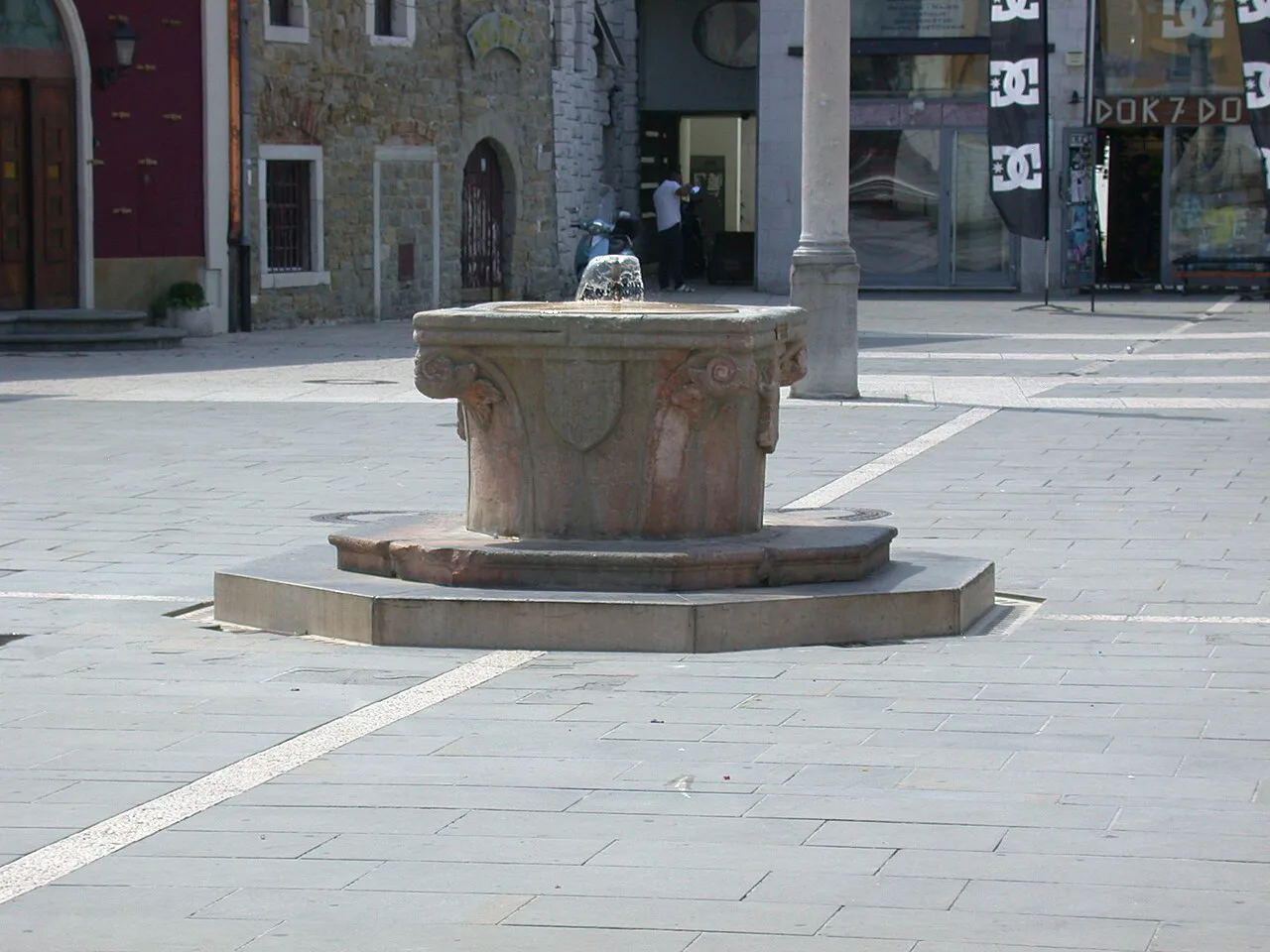
From the square side you can also pick out an old stone basin near the gate. Together with the wall fragment, it gives the arch some context instead of leaving it as an isolated monument.
The smaller side gate, Posterla, and the wall alongside
Beside the main arch is a smaller auxiliary gate known as Posterla, or Porta dei Soccorsi. It was opened to relieve pressure on the main gate once the wall's defensive role had faded and traffic through the entrance had grown.
Most walkers fix on the big arch and walk past it, so the side gate is worth a deliberate glance as you approach from the town side. The section of wall that runs at right angles from the gate is the other easy thing to miss, and it explains the gate's original setting better than the arch alone.
How to reach Muda Gate on foot from Tito Square
Old Koper is compact, and the gate is a short walk from the center. A guided walk of the city runs about an hour and a half and typically starts at Muda Gate as the former main entrance, then continues through Prešeren Square, the shoemakers street and on to Tito Square.
That sequence is the practical route even without a guide: enter through the gate, cross Prešeren Square, follow the shoemakers street into the heart of the old town, and come out at Tito Square. The street takes its name from the shoemaking workshops that once lined it and still holds small shops.
Allow a few minutes for the walk between the gate and Tito Square, more if you stop in the shops. The route is level and stays inside the pedestrian old town, so it fits easily into a morning or an afternoon.
How much time to allow and how the gate fits a short walk
Treat Muda Gate as a five-to-fifteen-minute stop: a close look at the arch and reliefs, a glance at the wall stub and the side gate, and you are ready to move on. It rewards attention to detail rather than a long stay, and there is no interior to visit.
The honest trade-off is that this is one arch, not a complex. It is worth the detour because it sits directly on the natural entry route into the old town, not because it justifies a journey of its own.
Build the stop into a loop that continues to Tito Square and the waterfront. A guided tour of Koper typically finishes by the promenade, passing the former salt warehouse Taverna and the mandracchio, the small city port.
Nearby: Prešeren Square, the shoemakers street and Tito Square
Prešeren Square sits immediately behind the gate, and the shoemakers street leads from it into the old town. Tito Square, the main square of the historic center, gathers the Praetorian Palace, the Foresteria, the Armeria, the Loggia and the cathedral in one place.
The cathedral, dedicated to St. Mary of Assumption, has been modified repeatedly over its history, and the Loggia faces the square alongside it.
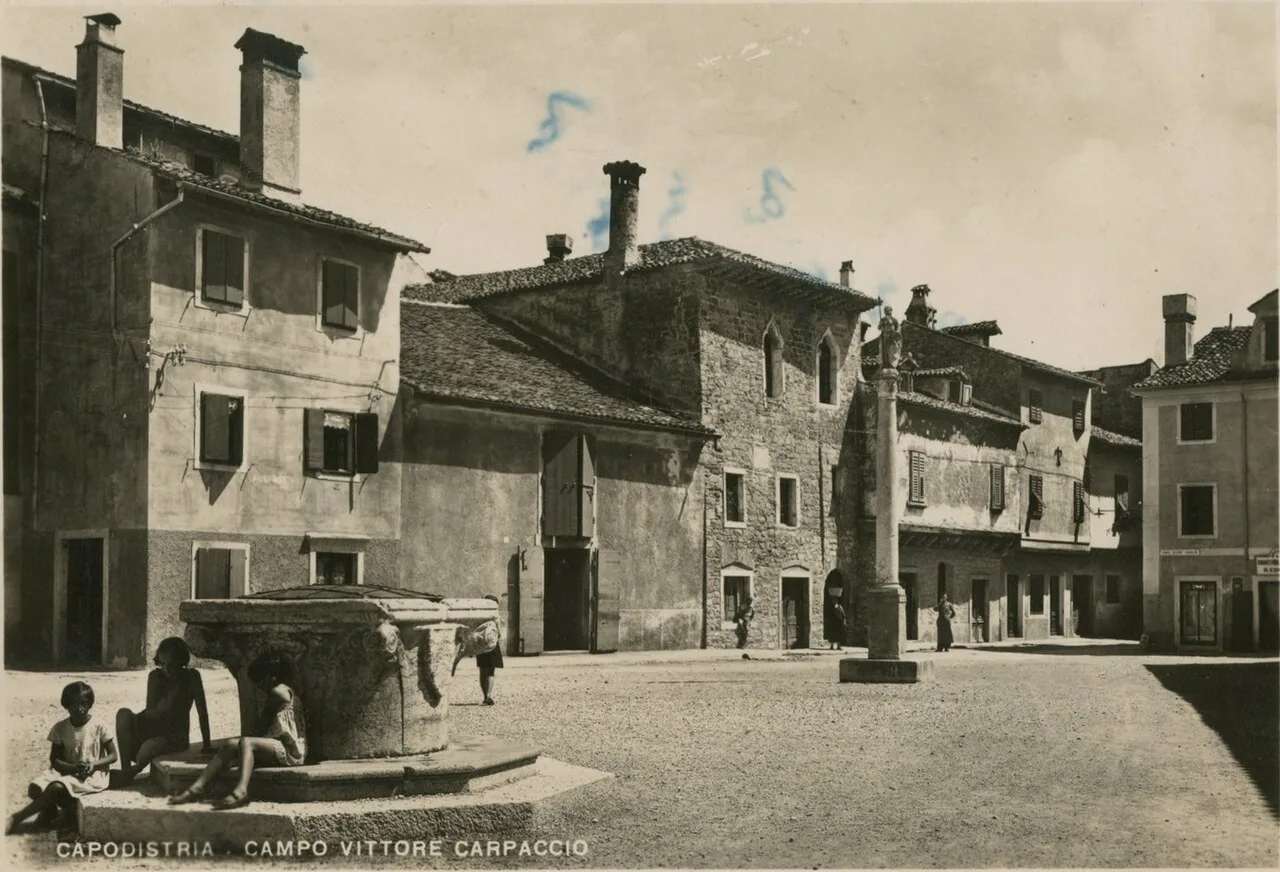
Continue past Tito Square to Carpaccio Square, named for the Venetian painter Vittore Carpaccio, who also lived in Koper; the square holds the statue of St. Justine. From there the promenade is the busiest stretch of the city.
Two large coach parking areas sit next to the train station and near the Bonifika stadium, which matters if you arrive by bus or organized group.

Where to confirm current details before you go
Muda Gate is an outdoor arch in a public street, and no source gives visiting hours or a ticket office, so there is nothing to book for the gate itself. The buildings around Tito Square keep their own hours, so confirm those with the Koper tourist information center at Titov trg 3 before you count on going inside.
Come through the gate from the mainland side and you enter Prešeren Square directly, with the shoemakers street ahead and Tito Square a few minutes on. Look up at the arch on the way in so the lion heads and sun relief are in view before you pass through.
Is Muda Gate worth the detour?
Yes, if you are already walking into old Koper, and no if it would be your only reason to come. The gate delivers a 1516 Renaissance arch, Venetian lion heads, a sun relief and a fragment of the old wall in a few minutes of looking, and it puts you at the mouth of the street that leads to Tito Square.
Start at the arch in the morning, walk the shoemakers street to the main square, and finish on the promenade. That order uses the gate as an entrance rather than a destination, which is how it works best.
Explore more Koper guides
Frequently Asked Questions
What does the name Muda Gate mean?
The name comes from an old Italian term for the toll that was paid to enter the city. The gate stood on the land approach to Koper and controlled who came in.
Is the Lion of St. Mark still on Muda Gate?
The lion relief associated with the gate belonged to Castello Leone, the fortress once built on the bridge outside it. That fortress was demolished by the Austrian army in 1820, and the surviving relief was moved in 1924 to the Totto ex Gavardo palace on Kidričeva ulica.
Who built Muda Gate?
The podestà Sebastiano Contarini had the gate erected in 1516, and the building work is attributed to the stoneworker Marin de Vedel. Its style is Renaissance, modeled on an ancient triumphal arch.