
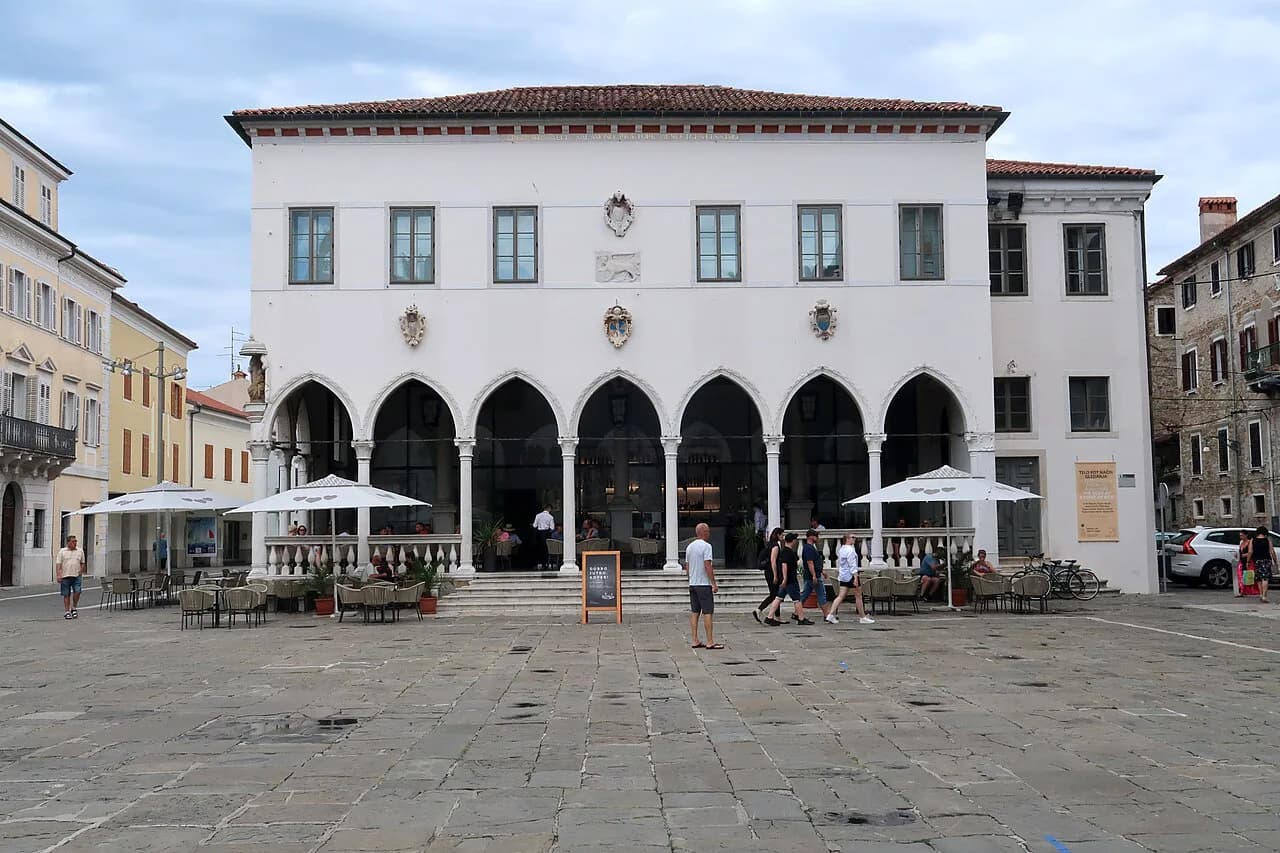
Titov trg, Koper: Tito Square and the Surrounding Buildings

Titov trg is the central square of Koper's old town, and 20 to 30 minutes is enough to walk it slowly, match each facade to its name and read the square's layered history in the street signs. Locals know it simply as Piàssa, the word used for main squares across the towns of the Venetian Republic, and the official name has changed several times. This guide covers where the square sits, how to walk in from the marina and bus station, which buildings frame it and how to read its names. For the practical details, see the Koper guide.
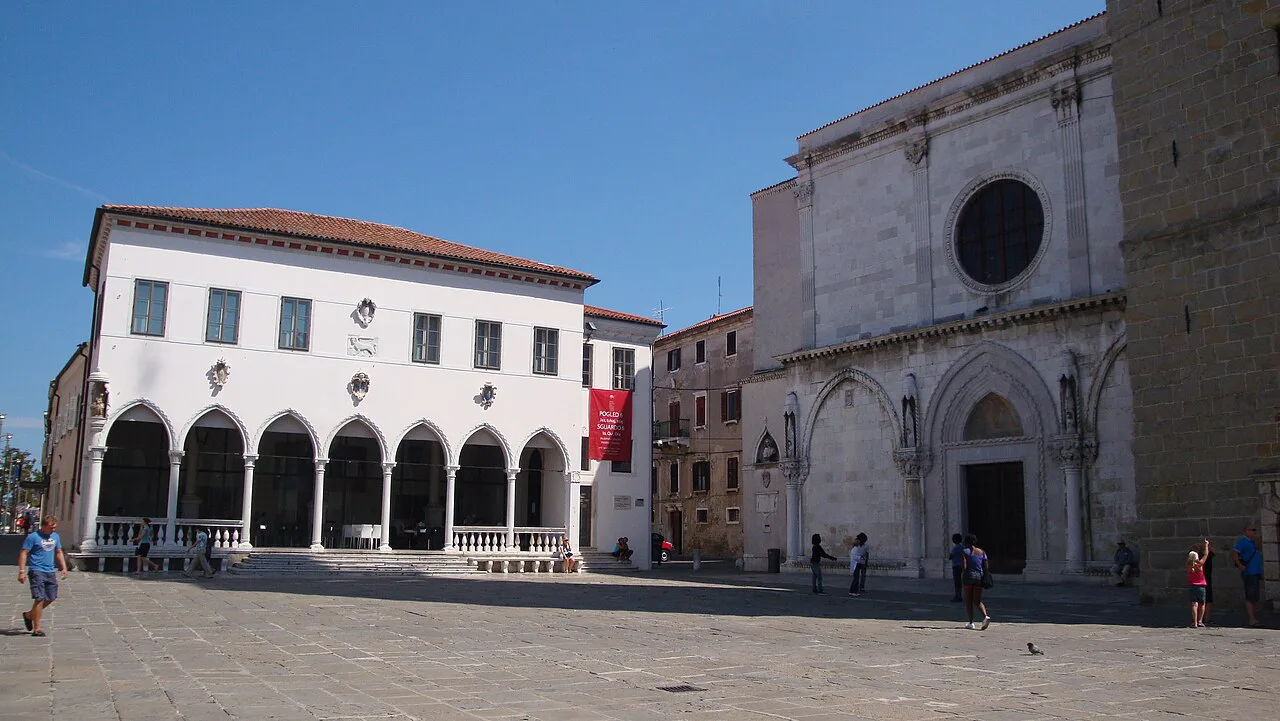
The buildings around the square are the reason to stop: the Praetorian Palace, the Loggia, the cathedral, the Armeria and the Foresteria all front the same open space, which is why the square works as a single compact sight rather than a list of separate stops. You view them from outside, and the square itself is a public open space you cross on foot.
Where Titov trg sits in Koper's old town
The square lies at the heart of the Stara mestna četrt, Koper's old town, a short walk inland from the harbor and the marina. It opens off the tangle of narrow streets that fill the former island's center, so you reach it by walking rather than by driving up to it. Treat the square as the fixed point of an old-town loop: everything else in the historic core sits within a few minutes on foot.
The square took its current official name in 1956, when it was renamed Titov trg; the same decision moved the name Trg revolucije onto Trg Brolo. Before that the central square had carried several names, including an Austrian-era one taken from Leipzig.

How to reach the square on foot from the marina and bus station
From the marina and the waterfront promenade, walk inland into the old town and follow the streets uphill; the square sits close to the top of the historic core, so any lane heading away from the sea brings you near it. From the bus station, head toward the old town and the harbor, then continue inland the same way. The whole approach is short enough to do on foot with a day bag, and you do not need a car to see the square.
If you are arriving by car, park outside the pedestrian core and walk in; the old town lanes are for foot traffic. Koper also sits on the coastal rail line, with the station on the edge of the center, which puts the square within a short walk of the platform.
The buildings that frame the square
The Praetorian Palace, Pretorska palača in Slovenian, is the tall building on the square with the outer staircase and the carved portal, and it is the first facade most visitors photograph. Stand back on the open paving to take in the whole front rather than the doorway alone. The building's history and the details worth picking out are covered in the dedicated guide to the Praetorian Palace (Pretorska palača), Koper.
The Loggia, Loža, is the open arcaded hall on the square, its arches framing a covered space that was built for public business and ceremony. Look along the row of columns and notice how the arcade creates a shaded edge to the square. The Loggia stands beside the palace and the two together form the square's most photographed corner.
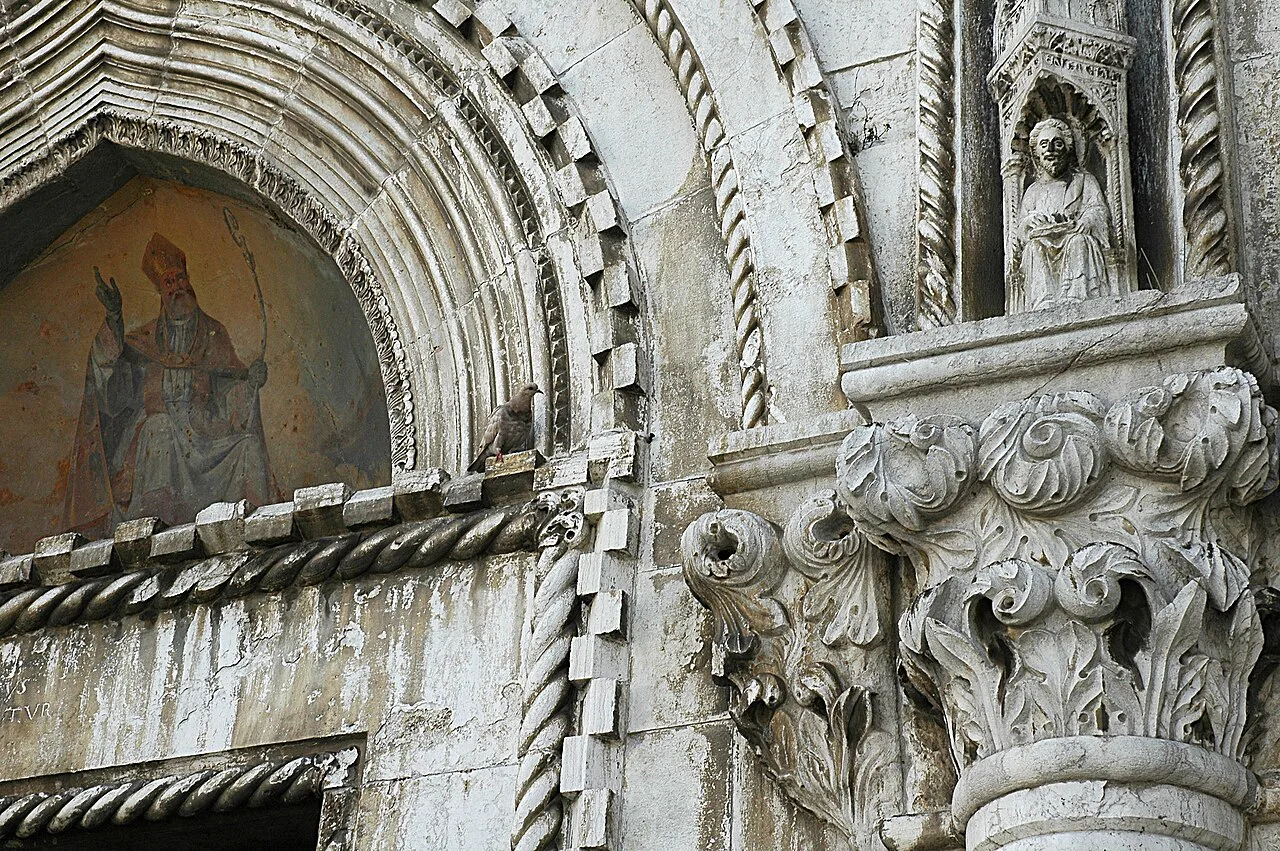
Koper cathedral, the stolnica, closes another side of the square with its facade and bell tower visible above the rooflines. The cathedral's dedication and the features to look for are set out in the separate guide to the cathedral, which is worth reading before you arrive so you know which details to seek out.
The Armeria and the Foresteria complete the ring of buildings around the open space, with the university rectorate building also fronting the square; the name plaque at the corner of the rectorate is where the historic street-sign project put one of its markers. Walk the full perimeter once with your eyes on the upper floors, where the different building periods show most clearly.
Reading the square's names: plathea comunis to Titov trg
The central square first appears in written sources as plathea comunis and plathea comunitatis, and on a 1616 map it is labeled simply as Trg, the square. In the Austrian cadastre it was named after Leipzig, the town where Napoleon's troops were defeated. A stretch of today's square between the cathedral and the bishop's palace was the part called Piazza del Duomo, and in the 1930s the square was renamed Piazza Roma.
In 1946, on Tito's birthday, a proposal was made to name the square Trg maršala Tita; a few years later it became Trg revolucije, and in 1956 it was renamed Titov trg, with the name Trg revolucije moving to Trg Brolo. After Slovenian independence it kept that name despite proposals to change it. Locals, meanwhile, have always called it Piàssa, in the way that main squares across the former Venetian territory were named.

The Piazza del Duomo plaque and the historic street-name signs
In late November 2017, a sign reading Piazza del Duomo was fixed on the wall below the official Titov trg sign at the corner of the university rectorate building. It was not an official change to the square's name and not a protest renaming: it was part of a municipal project to put up informative plaques giving the Austro-Hungarian-era names of Koper's squares and streets.
The project followed similar informational signs put up in Piran nearly a decade earlier. Read them as a layer of history rather than as a replacement of the current names. When you see a second name on a wall, the official one on the sign above still applies.
How long to allow on the square
Twenty to thirty minutes covers the facades, the arcade and a slow circuit of the perimeter; add time if you plan to read the historic name plaques along the surrounding lanes. The square is compact, so you will not need to rush between the buildings. It works best as the anchor of a longer walk through the old town rather than a destination on its own.
Midday brings the strongest light on the palace and cathedral facades, while early morning and evening leave the open paving quieter for reading the buildings. The square is a public open space, so the time you spend is set by your own pace.
Nearby: Trg Brolo and the rest of the Stara mestna četrt
Trg Brolo is the other open square in the old town, close enough to reach in a few minutes on foot, and its name was moved there in the 1956 renaming. Walk between the two squares through the lanes of the Stara mestna četrt, where the historic street-name signs appear on building corners. This short loop gives you the shape of the old town without any transport between stops.
Other old-town sights sit within the same few minutes of walking, so you can fold them into the same circuit around the square. At the edge of the historic core, the Muda Gate in Koper marks the old entrance into the town.
Is Titov trg worth a stop?
Yes: give it 20 to 30 minutes on your way through the old town, and use it as the anchor for a circuit that takes in the palace, the Loggia and the cathedral facades. The reward is not a single sight but the way five buildings and several layers of naming sit on one open space.
Come on foot from the marina or the bus station, park away from the pedestrian core if you drive, and read the extra name plaques as history rather than as the current names. Pair the square with Trg Brolo and the old-town lanes to see the historic center in one continuous walk.
Explore more Koper guides
Frequently Asked Questions
Is Titov trg the same as Piazza del Duomo?
No. Piazza del Duomo was the name of the stretch of today's square between the cathedral and the bishop's palace, and it was also used on an informational sign from a historic street-name project below the official Titov trg sign in 2017. The square itself has been officially named Titov trg since 1956.
What do people in Koper call the main square?
Locals call it Piàssa, the word used for central squares in the towns of the former Venetian Republic, rather than the official Titov trg.
Do I need a ticket to see Titov trg?
You view the surrounding buildings from outside and cross the square on foot as a public open space. For anything beyond that, check with each building directly before you go.