
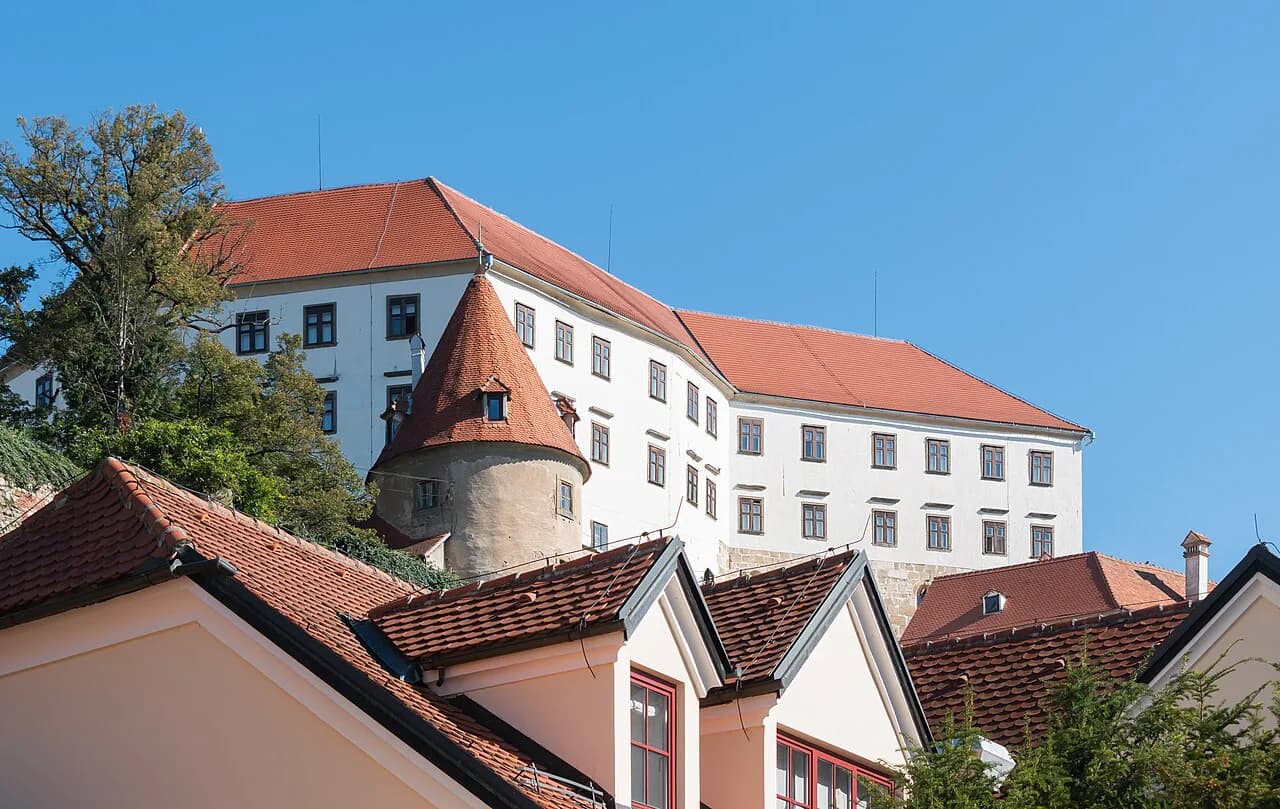
Ptuj Castle (Ptujski grad): What to See Inside and How to Visit

Ptuj Castle (Ptujski grad) is a hilltop castle above the old town of Ptuj in eastern Slovenia, at Na gradu 1, and it houses the collections of the Ptuj-Ormož Regional Museum, from arms and musical instruments to carnival masks and glass paintings. Allow about two hours for the exhibitions and the courtyard, and note the museum closes on Mondays for most of the year. This guide covers the summer and winter hours, ticket prices, guided tours and what is actually inside the castle.
Where Ptuj Castle stands
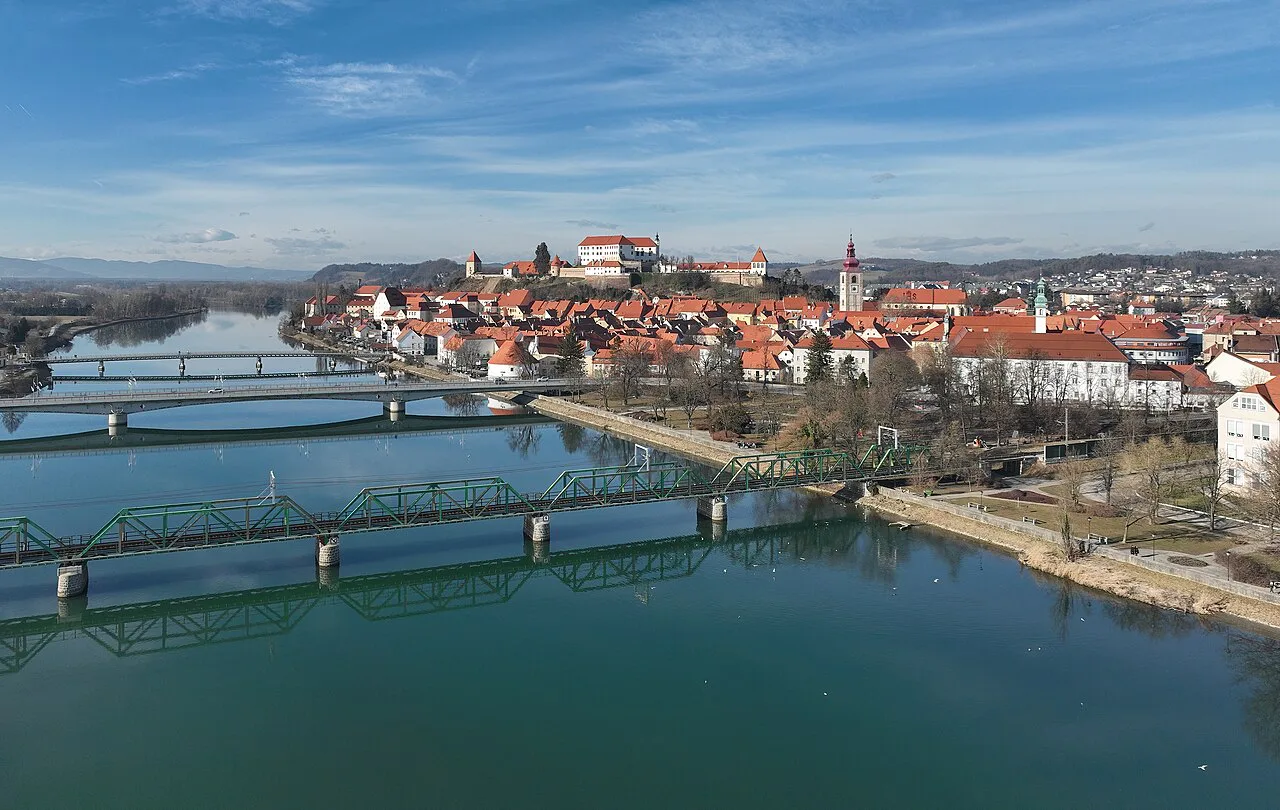
The castle stands on a hill alongside the Drava River, overlooking the tiled roofs and cobbled streets of the old town below. Its address is Na gradu 1, 2250 Ptuj, and the museum's contact number is +386 (0)2 748 03 60. The hill was settled in the 5th millennium BC and later held public buildings in the Roman town of Poetovio, so the ground under the castle is part of the archaeological story too.
The castle is the main sight in Ptuj, and it pairs naturally with the old town streets and squares below. If you are planning the rest of your time in town, the Ptuj Attractions: 4 Visitor Guides page covers the other sights in the center. The walk up from the old town is short but steep on cobblestones, so wear shoes with grip and leave the suitcase at your accommodation.

How to reach the castle and the walk up castle hill
From the old town center, the approach to the castle is a climb up cobbled lanes to the castle gate, then a short walk into the upper courtyard. The castle is signed from the town and the hill is small, so you will not get lost. If you are coming from elsewhere in Slovenia, Ptuj is connected by road and rail, and the town's own tourism site posts location and transport links.
The lower castle courtyard is open every day and stays open later than the museum itself, so you can see the castle exterior even when the exhibitions are closed. From April 15 to June 30 it stays open until 8 p.m., in July and August until 9 p.m., from September 1 to October 15 until 8 p.m., and in winter until 7 p.m. These courtyard hours make a good backup if you arrive after the museum has shut.

Opening hours: summer and winter schedules
The museum publishes two seasonal schedules, so match your visit to your dates. In summer, from April 15 to October 15, the castle is open Tuesday to Sunday 10 a.m. to 6 p.m., and in July and August it also opens on Mondays from 10 a.m. to 6 p.m. In winter, from October 16 to April 14, it is open Tuesday to Sunday 10 a.m. to 4 p.m., with shorter hours of 10 a.m. to 1 p.m. on December 24 and 31 and on Shrove Tuesday.
The castle is closed on Mondays outside July and August, and the museum closes on January 1, November 1, December 25 and Easter. That Monday closure catches out day-trippers who assume a castle is open every day, so plan around a Tuesday-to-Sunday window unless you are visiting in high summer. The museum posts its current hours on its opening-hours page, linked from the castle page.
Entrance fees for adults, youth and families
Admission to the castle's main collections costs 11 euros for adults, 10 euros for pensioners, 6 euros for students and school pupils, and 21 euros for a family ticket. Preschool children enter free, and school groups pay 3 euros per student. A separate ticket for the single-collection display, Ptuj Castle, one collection, costs 4 euros for adults and pensioners, 3 euros for students, and 1 euro for school-group students.
Guided tours in Slovenian, English or German are priced per group: 46 euros for up to 15 adults, or 4 euros per person above that, and 31 euros for youth groups, or 3 euros per person above 15. Family guided tours cost 46 euros. The museum asks for guided-tour bookings by phone at least three days before the visit, so call ahead if you want a guide rather than a self-guided walk.
What's inside: the arms collection, musical instruments and the Roman tibia
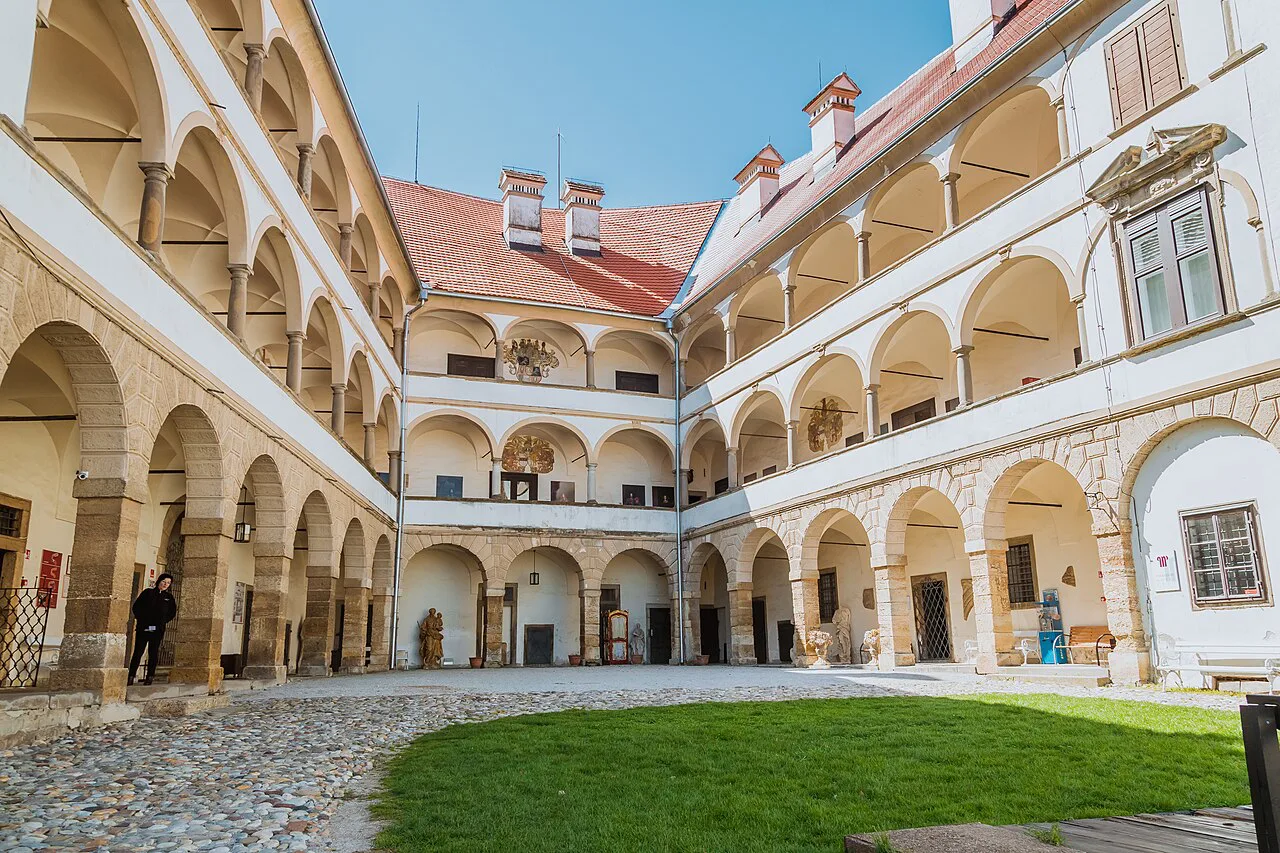
The castle holds the Regional Museum's permanent collections across several rooms: a collection of arms from the medieval and early modern periods, a collection of musical instruments, a collection of glass paintings, a castle gallery, a collection of traditional carnival masks, the Ptuj Castle Throughout the Centuries display and an exhibition of feudal dwelling culture. The musical instruments are the reason to slow down: the collection includes a Roman double flute, the tibia, made of bone and covered with thin layers of bronze and brass sheet, from the 2nd or 3rd century.
The tibia is displayed in the musical-instruments collection on the ground floor, and it is one of the castle's rare archaeological finds from Roman Poetovio. Look also for the ancient relief and inscription stones built into the castle walls, including lion-shaped crowns, a face of Serapis, and dedication stones to Jupiter and the nymphs; some were installed along the castle archway for visitors to see.
Carnival masks, glass paintings and the castle gallery
The carnival-mask collection is the castle's most distinctive room, showing the traditional masks of the Ptuj region, including the Kurenti characters associated with the town's spring carnival. The glass paintings and the castle gallery cover religious and aristocratic art, and the feudal dwelling culture exhibition shows how the castle's noble owners lived. Together these rooms give the castle more variety than a single arms hall would.
The view over Ptuj's roofs and streets
From the castle hill you look down over the tiled roofs, cobbled streets and the old town of Ptuj below. The view is the reason to climb even if you skip the museum, and the lower courtyard is open late enough for an evening look in summer. Take your photos from the terrace by the castle walls before you go back down.
How much time to allow
Budget about two hours inside the castle for the permanent collections, plus another 30 minutes for the courtyard and the view. If you add a guided tour, allow longer, since the tour covers the same rooms with commentary. The castle is compact, so you will not need a full day; pair it with a walk through the old town below.
If you are in Ptuj for a full day, the Ptuj: A Day in Slovenia's Old Town on the Drava guide helps you sequence the castle with the rest of the center. The city is small enough that the castle, the squares and the riverbank fit into one unhurried day.
Nearby: Poetovio Archaeological Park and the old town below
At the foot of the castle hill, the Poetovio Archaeological Park covers the Roman remains of the town that once stood here. The old town below has the Dominican monastery Ptuj and the Ptuj city tower as two more stops within walking distance of the castle gate. If you want more time on the water, Lake Ptuj (Ptujsko jezero) lies on the Drava outside the center and makes a different half-day from the castle.
Is Ptuj Castle worth the climb?
Yes, if you want one compact museum with real variety: arms, musical instruments including the Roman tibia, carnival masks and glass paintings in a castle that overlooks the old town. Go on a Tuesday to Sunday, check which seasonal schedule applies to your dates, and call at least three days ahead if you want a guided tour. The climb is short, the lower courtyard is open late, and the old town below fills out the rest of the day.
Explore more Ptuj guides
Frequently Asked Questions
Is Ptuj Castle open on Mondays?
The museum is closed on Mondays for most of the year, but in July and August it opens on Mondays from 10 a.m. to 6 p.m. Outside those two months, plan your visit for Tuesday to Sunday.
Do I need to book a guided tour at Ptuj Castle?
Guided tours in Slovenian, English or German are available, but the museum asks for bookings by phone at least three days before your visit. Without a booking, you can walk through the collections on your own.
How much does it cost to enter Ptuj Castle?
The museum publishes its entrance fees on its own website, with separate rates for adults, pensioners, students, school pupils, families and school groups. Check the official fee list before you go, since prices can change.