Maribor Sunset: When the Sun Sets and Where to Watch It
Maribor runs on Central European Time, so sunset shifts with the season. Here is how the evening light works and which spots suit a sunset visit.
On this page
Sunset in Maribor follows Central European Time, and the date you visit matters more than the town itself. In winter the city is on UTC+1, and from late March to late October it switches to UTC+2 for summer, so the same evening hour produces very different light in April and in November. This guide covers how the clock rules work, how day length changes through the year, and how to choose a spot along the Drava, in the old town core, or on the heights above the city.
How sunset timing works in Maribor
Maribor sits in the Europe/Ljubljana time zone. It runs on Central European Time at UTC+1 through the winter and moves to Central European Summer Time at UTC+2 for the warm half of the year, according to the time zone record for the city. Two dates drive everything: the switch to summer time in late March and the switch back to winter time in late October.
On the last Sunday of October the clock is set back one hour at 03:00 local time to 02:00, and on the last Sunday of March it is set forward one hour at 02:00 to 03:00. The practical effect is that an evening that felt bright at 19:00 in early October is dark at the same clock hour a week later. If your trip straddles a change date, plan the evening around the new clock, not the old one.
A sunset time is not a fixed feature of a place. Reading a time for Maribor in July tells you what the light does in high summer, and reading one for October tells you about autumn; neither is a year-round figure. Treat any published clock time as belonging to a specific day, and look up the day you will actually be standing outside.
How day length changes across the year
Day length swings widely between summer and winter. Published tables for Maribor break the year into months and show sunrise, sunset, and total daylight for each, with July and October set out as separate pages because the gap between them is large. That is the number worth checking before you commit an evening to a viewpoint rather than to a table indoors.
The month-by-month tables show day length for 2026 over the year, which is the format to use when you are deciding whether an after-dinner walk still has light in it. Compare the month you are visiting with the month either side, because the change accelerates around the equinoxes. A late-September evening and a late-October evening are not the same proposition even at the same clock time.
In practice, summer gives you a long, slow evening and winter closes in early. Build the day around that: in midsummer you can eat first and still catch the light, while in December the light is gone before most people have finished their afternoon coffee. If your priority is the golden hour on the water, put the walk before dinner rather than after it.
Reading a sunset time before you go
Use a date-specific source rather than a general one. The daily sun and moon page for Maribor gives sunrise, sunset, moonrise, moonset, and total daylight hours for the current day, which is the right shape of answer for planning an evening. What it does not do is tell you what next Tuesday will look like, so check again closer to the date.
The same caution applies to the numbers you find on any given day. A reading of sunrise at 7:24 am and sunset at 5:58 pm with 10 hours of daylight belongs to that particular date, not to Maribor as a rule. If you see a single figure quoted without a date attached, treat it as a snapshot and look up your own day instead.
Where to position yourself for evening light
Sunset light in Maribor is best treated as a choice between three settings: the Drava riverfront, the old town core, and the higher ground above the city. Each gives a different foreground, and the trade-off is between convenience, shelter from the wind, and how much of the sky you can actually see. Pick the setting first, then the exact spot within it.
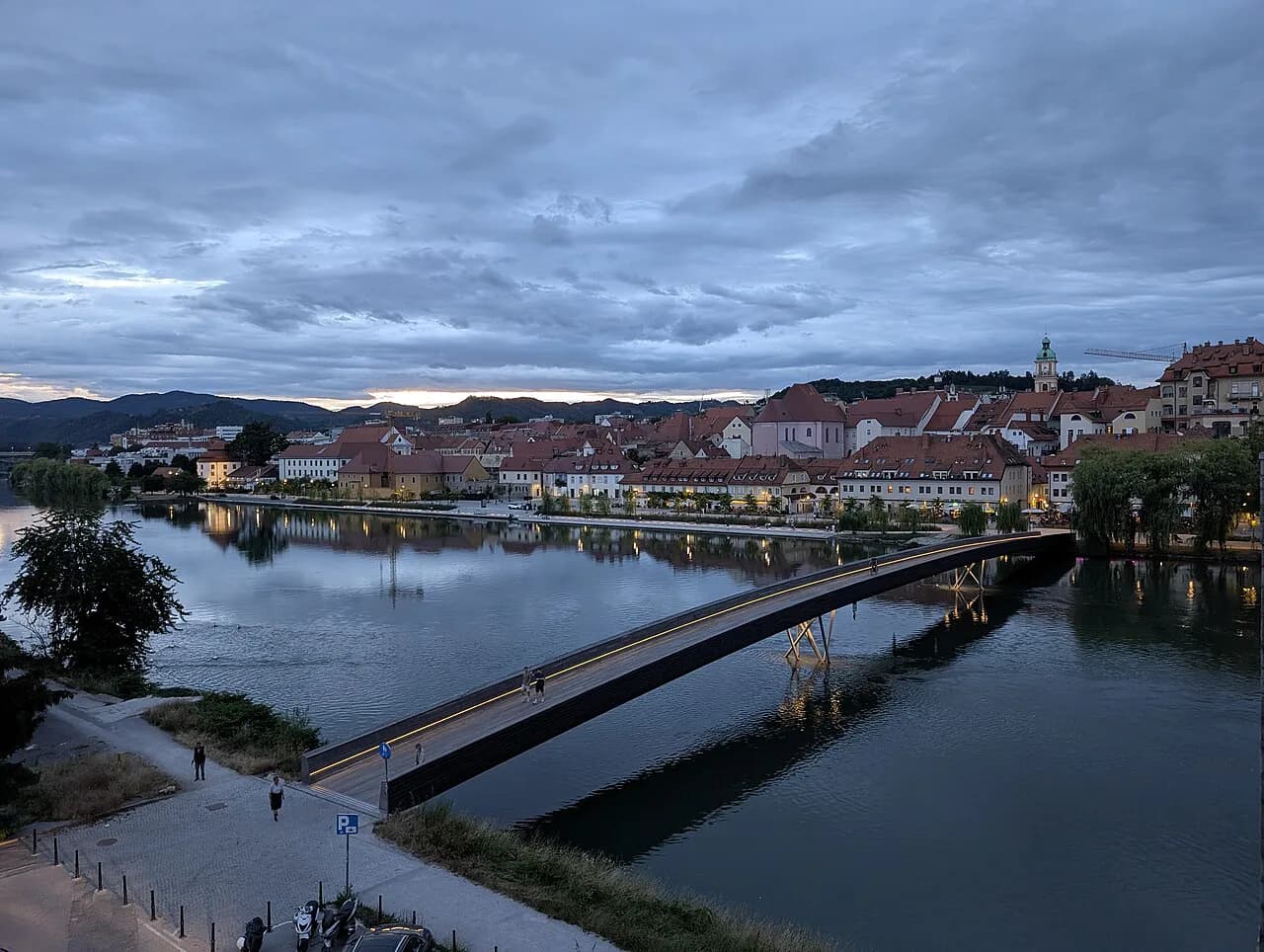
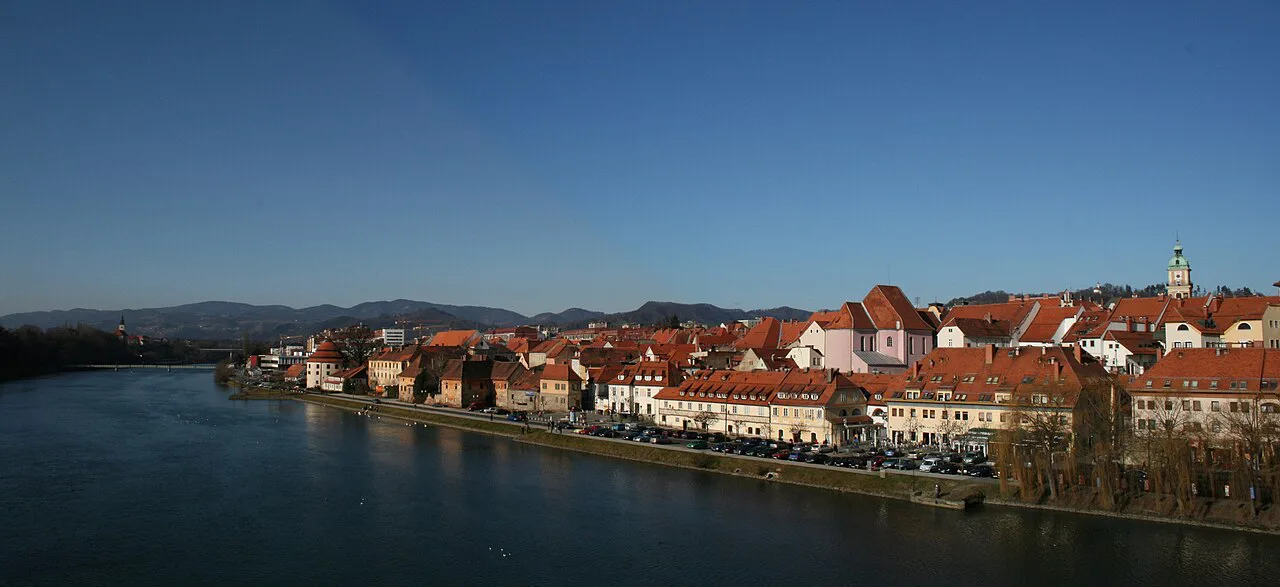
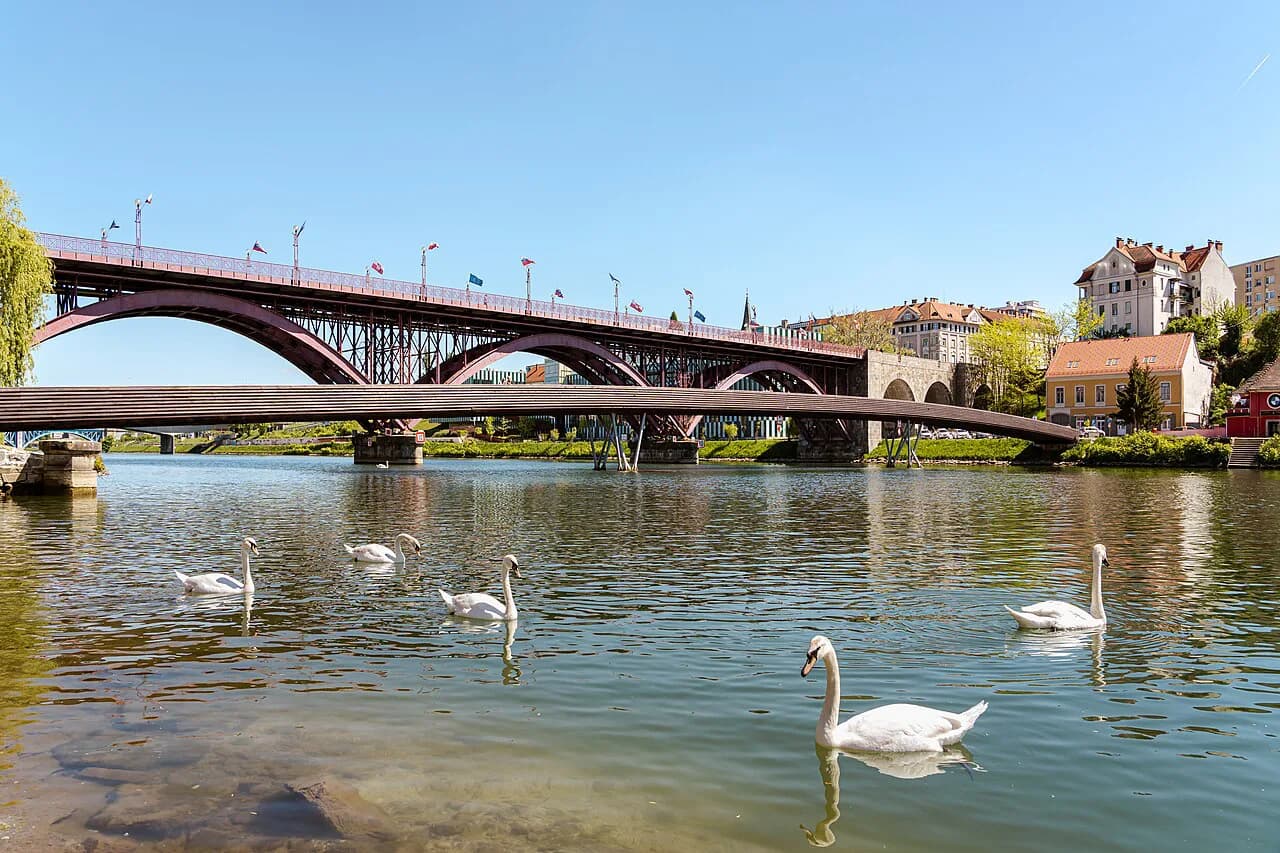
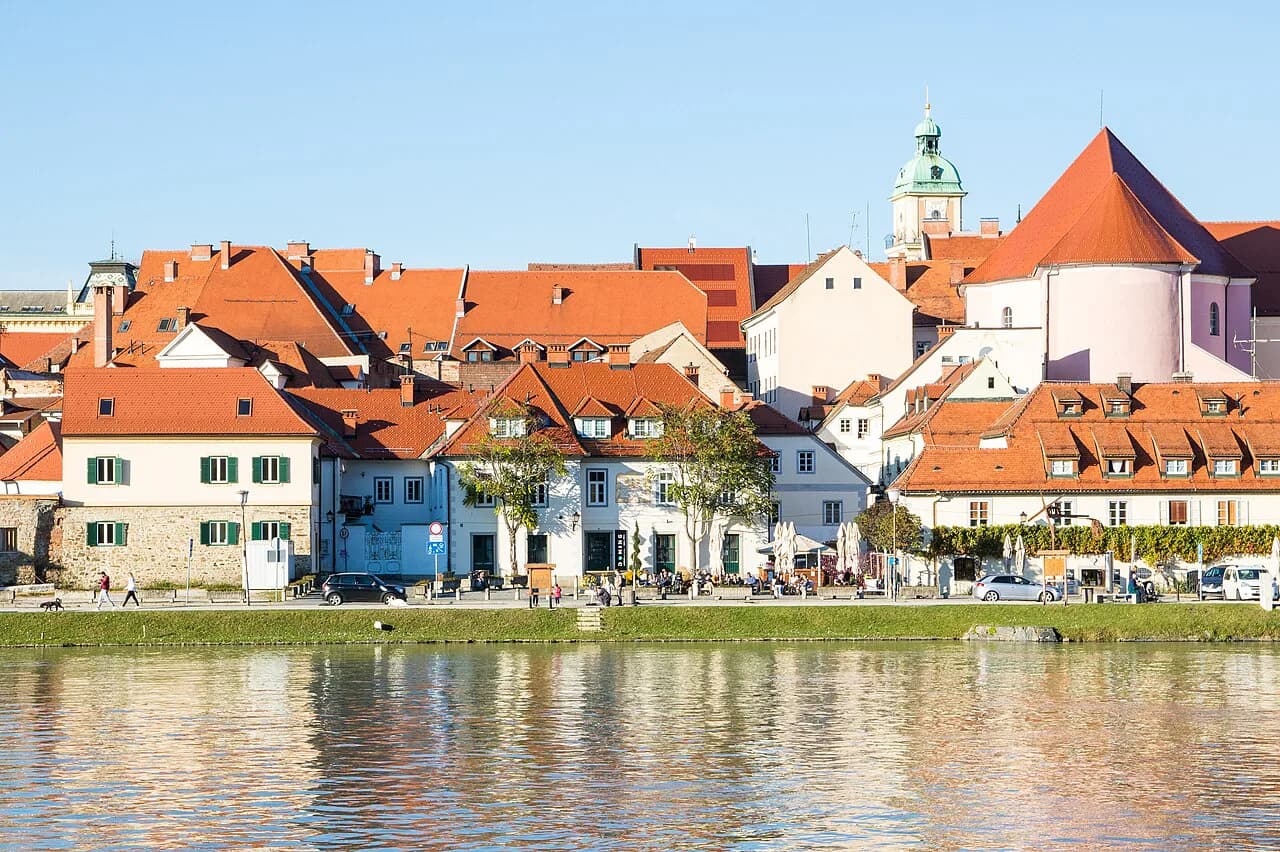
The riverfront along the Drava is the straightforward option. Water reflects the light back up, so the sky stays readable a little longer than it does between buildings. The Lent embankment is the stretch most visitors end up on, and it is where you can combine a walk with an early dinner rather than choosing between them.
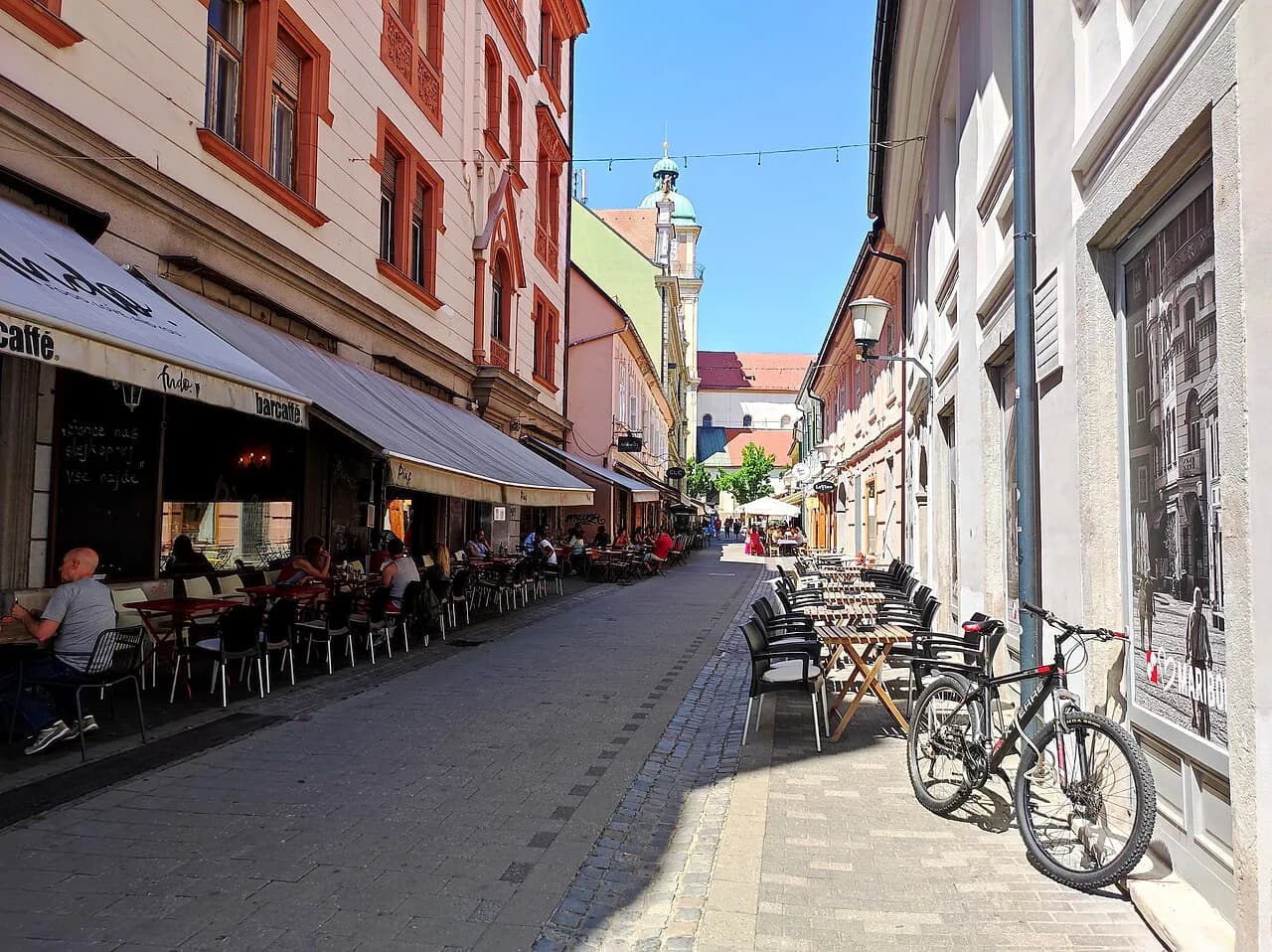
The old town core gives you a tighter frame: squares, church towers, and rooflines rather than open sky. Glavni trg and the streets around it put you among buildings that catch the last light on their upper floors while the street level goes into shade. That is a good trade in winter, when the open riverside is cold, and a less good one if you want the sky itself.
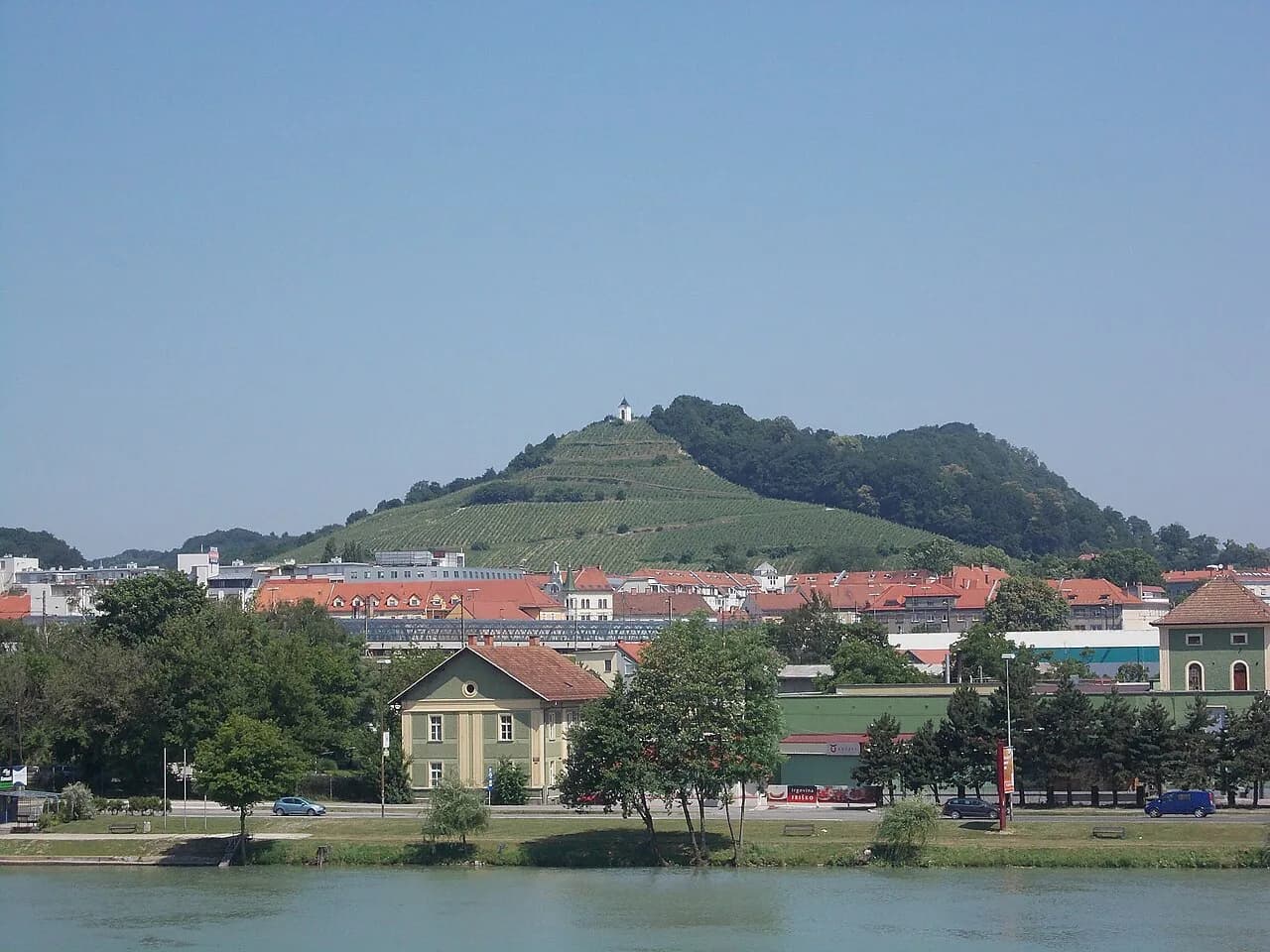
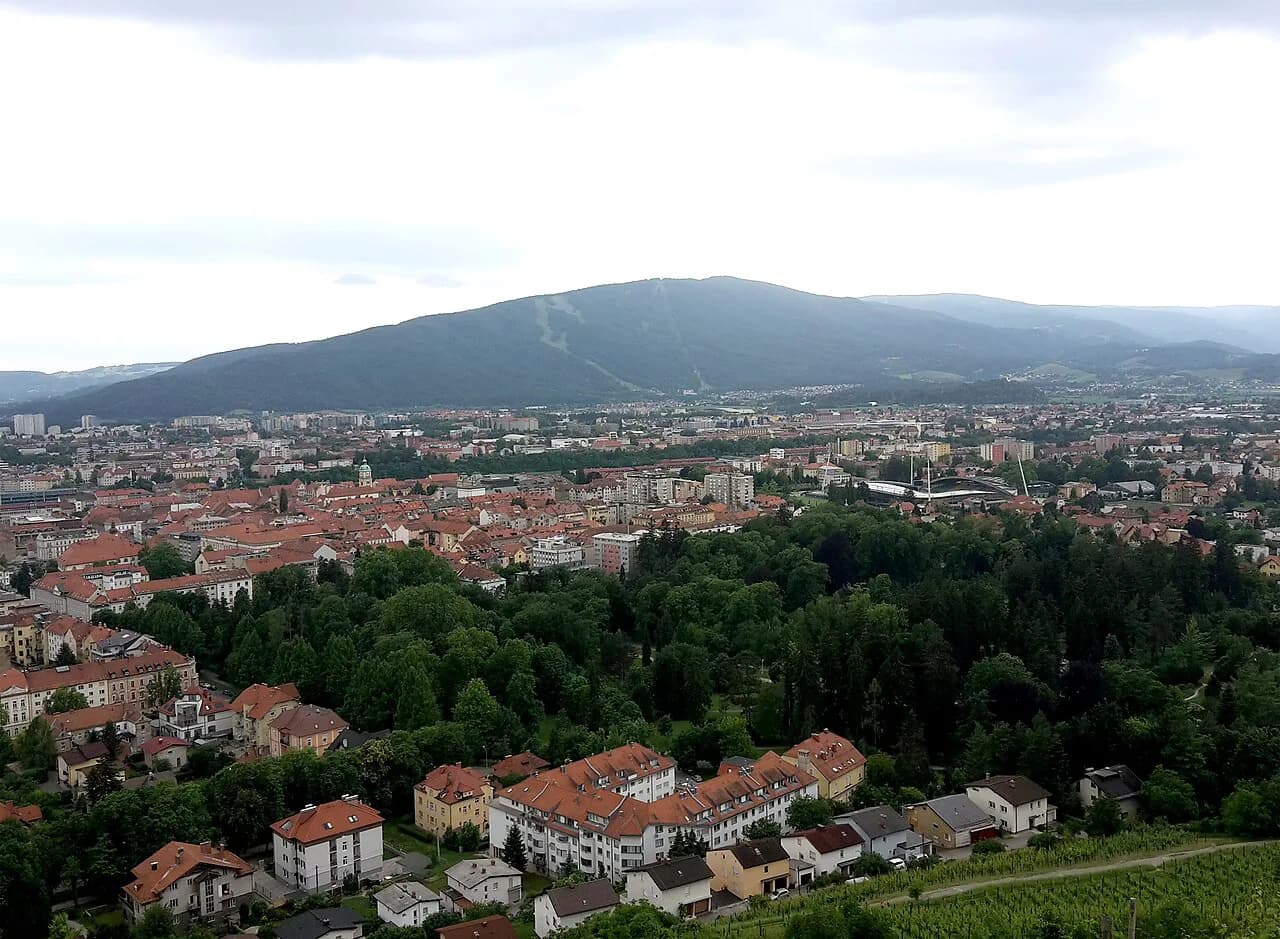
The hills above the city give the widest horizon but demand the most planning, because you need to be up there before the light goes and back down afterward. The city spreads out below with the Drava running through it and the Pohorje side rising behind, so an elevated position is the only way to see the whole basin at once. Allow real time for the descent rather than counting on a quick exit at dusk.
What to check on the day
Two things decide whether an evening is worth planning: cloud cover and the state of the western horizon. A clear west gives you a long, gradual fade; a bank of cloud sitting on the horizon cuts the light early and can leave the sky flat. Check the sky yourself in the late afternoon rather than trusting a morning forecast, and have an indoor alternative in mind if the west looks closed.
Wind matters too, especially on the riverfront, where it comes off the water. A clear evening can still be an uncomfortable one if you are standing in the open, so choose between the exposed bank and the shelter of the old town streets based on how the day actually feels. The best light is not much use if you leave after ten minutes.
Practical timing for the evening
Work backward from the sunset time for your date. Aim to arrive at your chosen spot well before sunset, because the light in the half hour before is usually the most useful and the sky takes on color before the sun is down. Arriving at the moment of sunset means you have already missed the part worth seeing.
Plan the return in daylight where you can, or at least with a clear route in mind. The clock change in late October makes this sharper: an evening that ended in light the week before now ends in darkness, and the riverside and the hill paths are less inviting after dusk. If you are staying in the old town, the walk back is short; if you went up for the view, give yourself a generous margin.
Finally, keep the two-sentence rule in mind for anything you plan around a specific spot. Opening hours, transport, and access can change, so confirm the details of wherever you settle on before you build an evening around it. The timing logic above holds regardless; the venue arrangements are what you verify.
Which Maribor evening should you plan?
If you want the simplest evening, take the Drava riverfront: you can walk, eat, and watch the light without committing to a climb or a timetable. If you want a framed, atmospheric view and it is cold or windy, the streets around Glavni trg and the old town core do the job with shelter built in, as covered in the Things to Do in Maribor guide.
Take the higher ground only when you have a clear west, a confirmed sunset time for your actual date, and enough daylight left to get back down comfortably. Whatever you choose, look up the sunset for the day rather than the season, and treat the clock change at the end of March and October as the thing most likely to catch you out.
Explore more Maribor guides
Sources
Notes for your Slovenia trip
Optional updates to our Slovenia place guides.
You might also like
Continue reading
More guides you'll find useful