Most na Soči: Slovenia's Lake Village Below Tolmin
Most na Soči is a small Soča Valley village on an emerald reservoir lake, with lakeside paths, a tourist boat, an archaeology museum and river sports.
On this page
Most na Soči is a small village in the Soča Valley built around an artificial reservoir lake, about 7 km from Tolmin. It suits travelers who want a low-key base with easy walking rather than a gorge town, and it fits neatly into a Tolmin or valley day. This guide covers how the lake came to be, how the village is laid out, the paths around the water, the train route from Ljubljana, the boat and river activities, and the two museums. For the neighboring town across the valley, see our Kobarid guide.
What Most na Soči is and where it sits
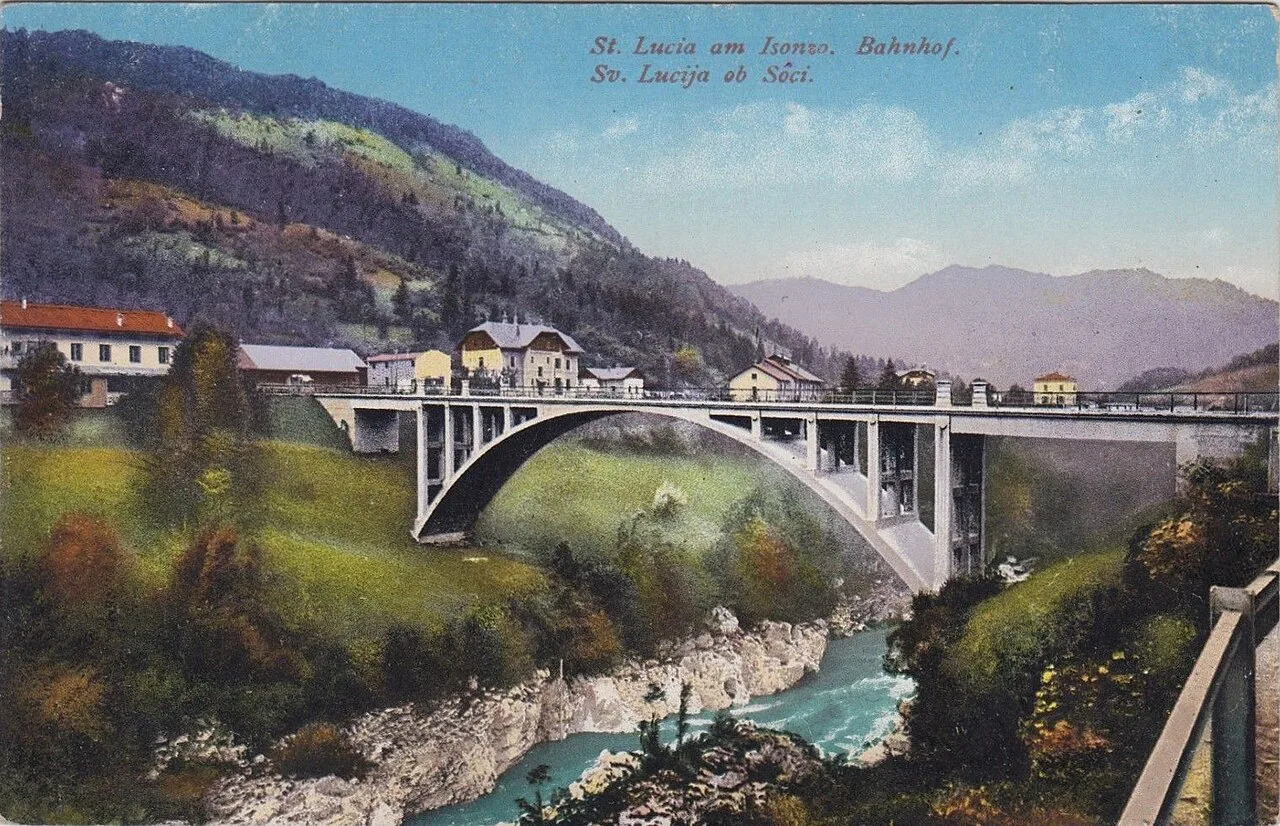
The village sits where the Soča and the Idrijca meet, roughly 7 km from Tolmin, which makes it a quieter alternative base to Bovec or Kobarid. Trains on the line from Ljubljana arrive through Jesenice, Bled, Bohinj and the narrow Baška Grapa valley, and the station leaves about 7 km to the village itself. The Soča Valley tourism board lists Most na Soči among the valley's places to explore.
Why the village has a lake
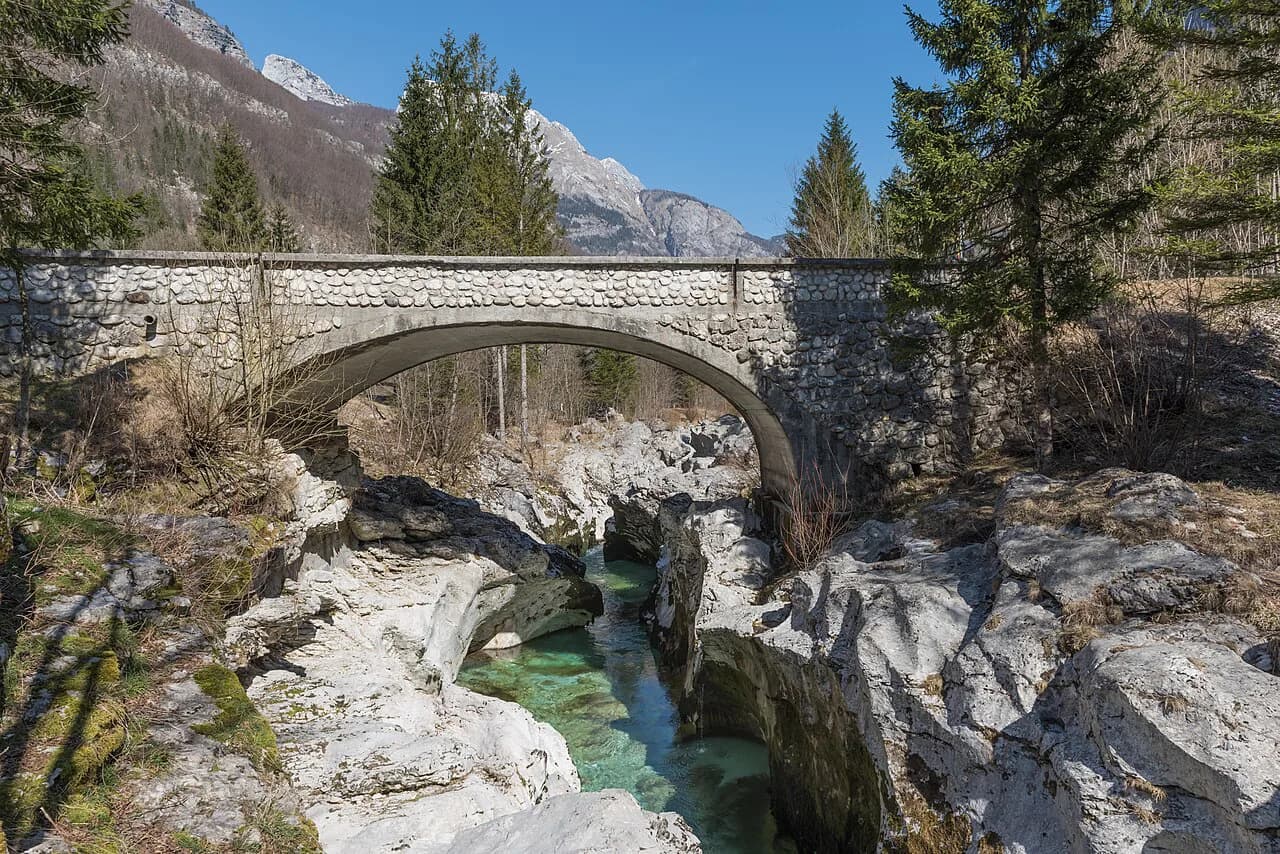
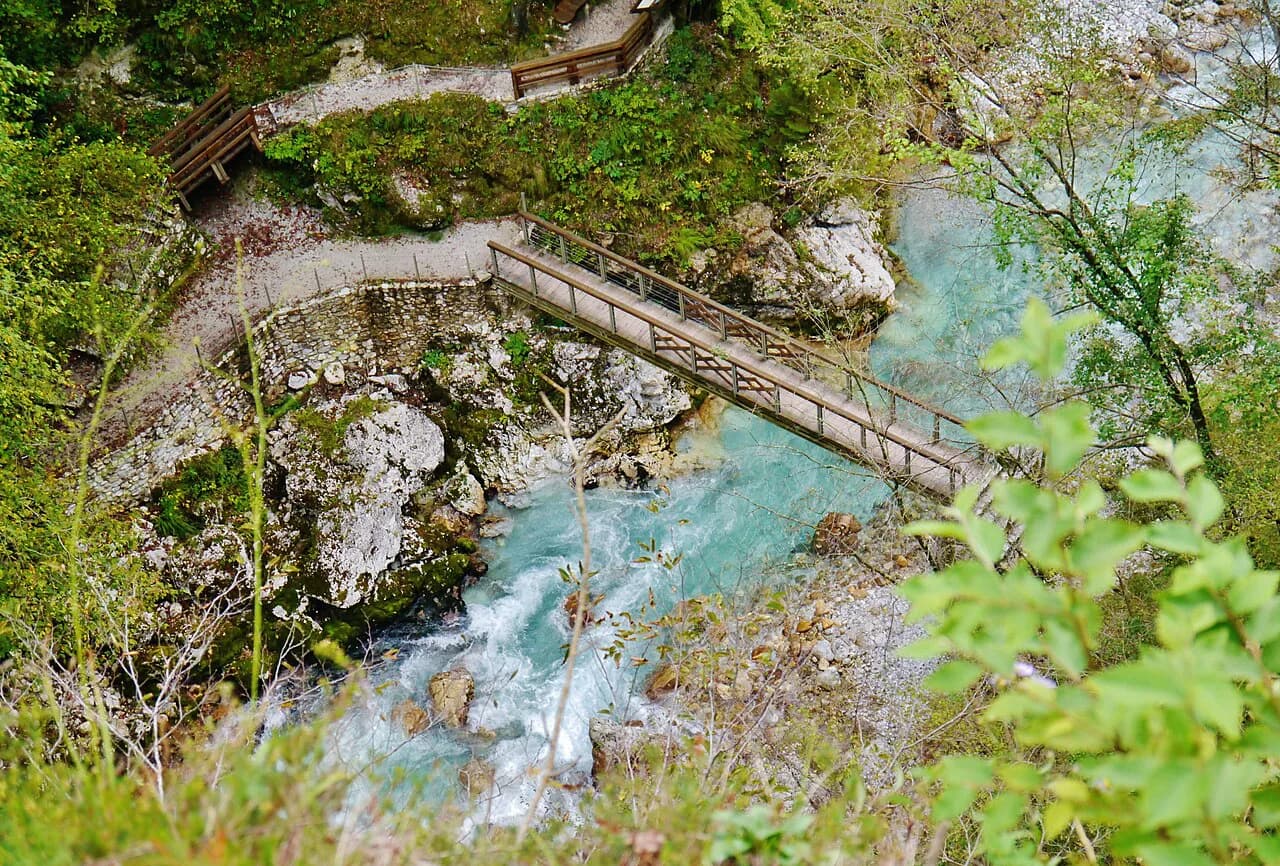
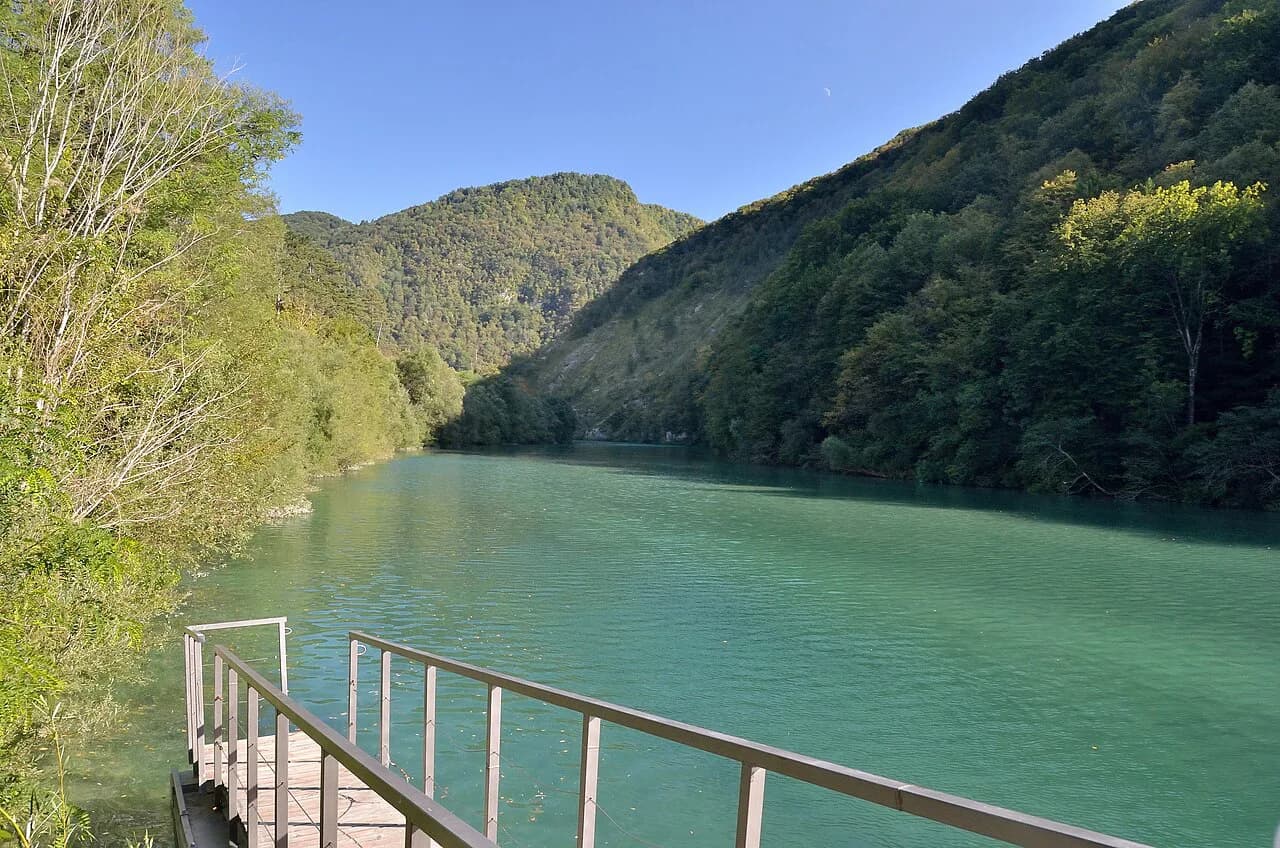
The lake is not a natural feature. It formed behind the Doblar hydroelectric plant's reservoir, and the rising water flooded the gorges below the settlement before opening into the green lake you see today. That history explains both the emerald color and the shape of the shoreline, so expect a reservoir rather than a mountain tarn.
How the village is laid out
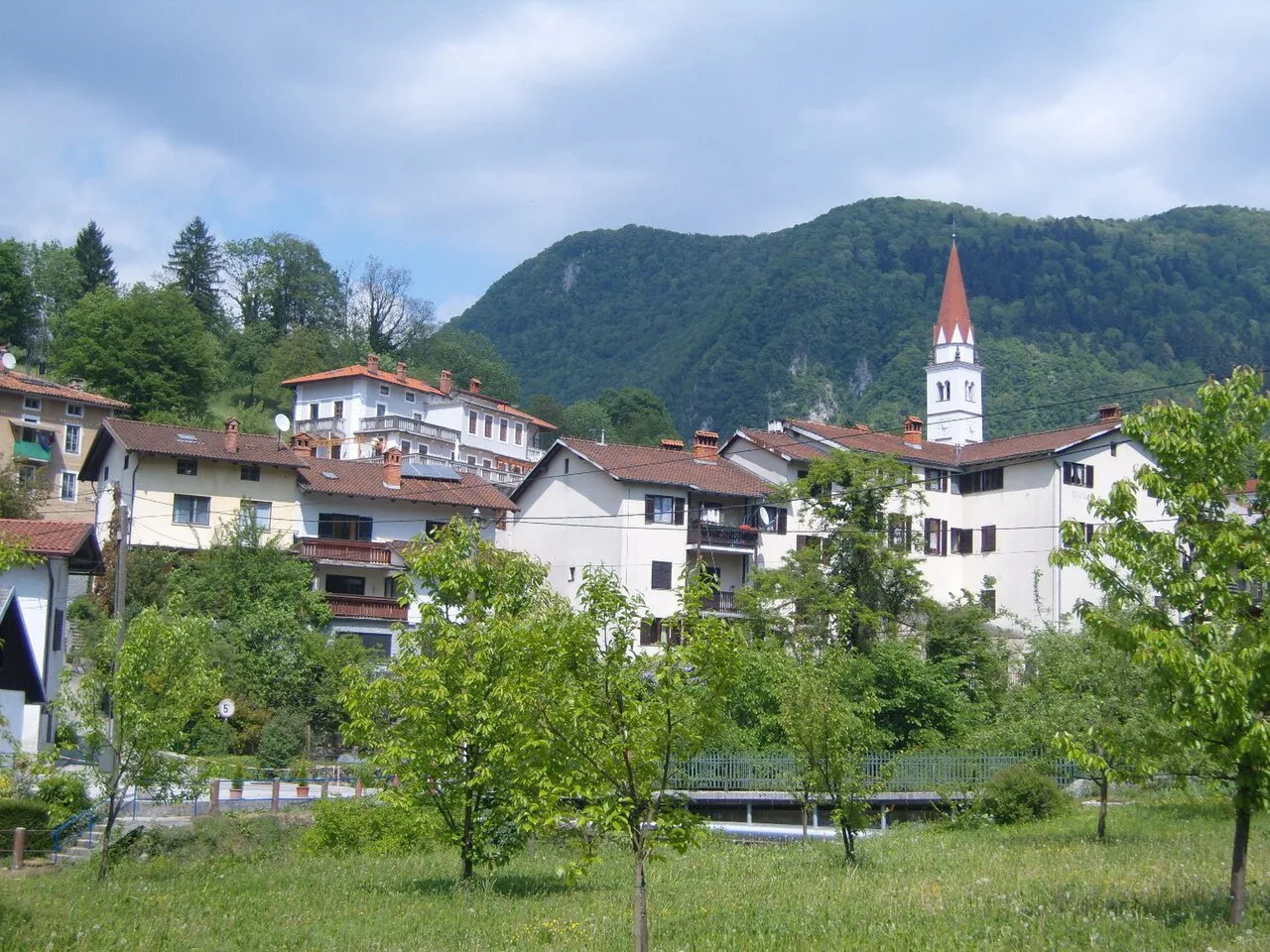
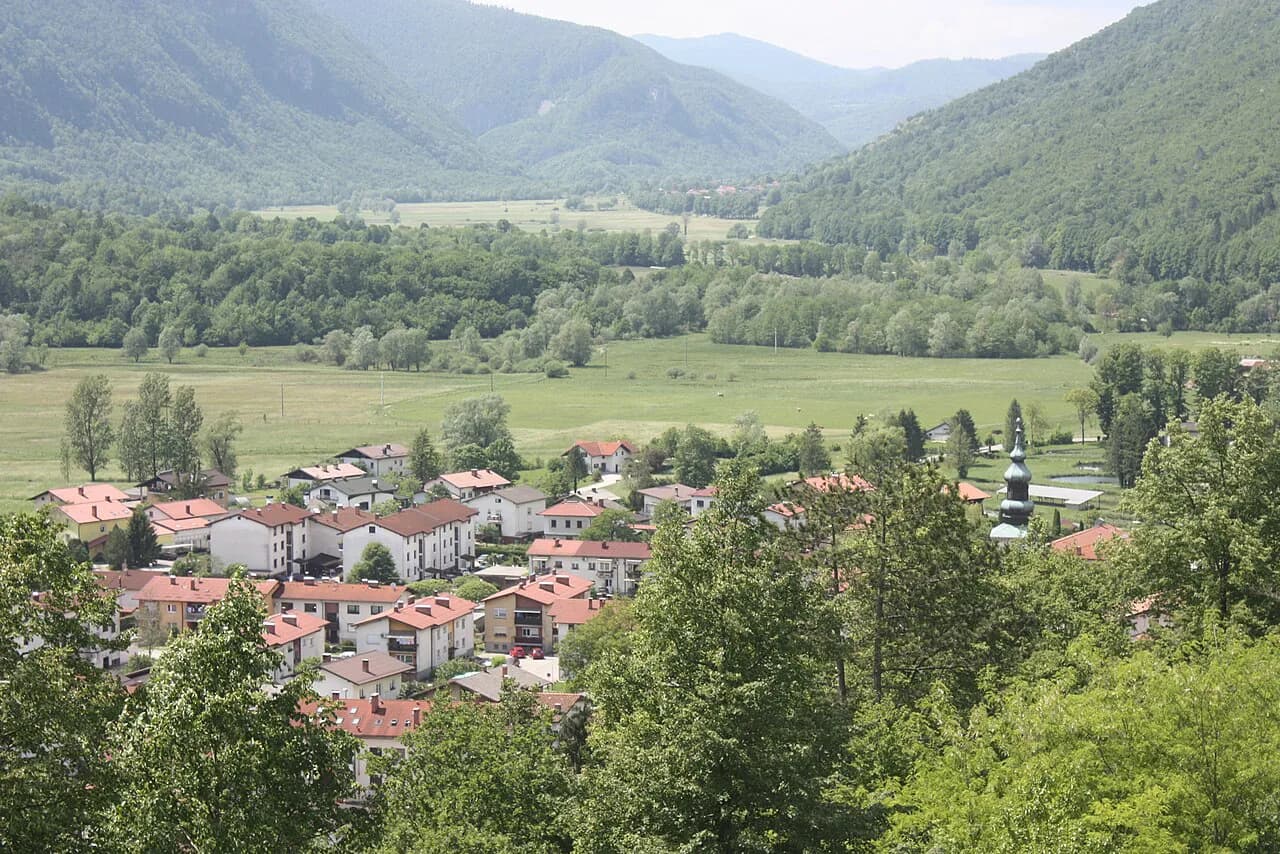
Most na Soči is compact: the settlement sits above the water, and the lake spreads out below it where the flooded gorges once ran. Tidy, well-kept walking paths loop around the reservoir with wide valley views, and the slopes above give you the best look down at the water. Plan on the lakefront as your anchor and everything else as a short walk from it.
The lakeside walks
The paths around the reservoir are easy and panoramic, which makes them the default activity here. They suit a slow hour or a longer loop if you keep following the shoreline, and they are the reason Most na Soči works well as a rest day between bigger valley stops. Path conditions change with the seasons, so check locally before committing to a long loop.
Getting there by train
The train from Ljubljana runs through Jesenice, Bled, Bohinj and along the narrow Baška Grapa before reaching Most na Soči, which makes the village reachable without a car. The station is about 7 km from the village, so sort out the final stretch in advance. Travelers arriving by road come off the Tolmin road and drop down to the lake.
On the water: boat, kayak and fly-fishing
The Soča Valley lists several ways to get onto the reservoir: the tourist boat Lucija, kayak, canoe and stand-up paddleboard, plus fly-fishing. These are seasonal outdoor activities tied to weather and water levels, so treat the boat and rentals as possibilities to confirm rather than fixed departures. Book or ask through local operators once you know your dates.
The archaeology: two museums
Most na Soči has an archaeological museum in the village and the Mengore open-air museum nearby, both listed by the Soča Valley tourism board. The archaeology reflects a long settlement history around the confluence, so the museum is a sensible stop if the weather turns. Opening arrangements vary by season, so confirm before you build a day around them.
Rivers for a swim or a riverside hour
The Soča Valley promotes the Idrijca as a clean river for swimming, and the Soča itself runs through the village. River levels and temperatures shift through the season, so use the Idrijca and Soča as a riverside break rather than a guaranteed swim. Keep clear of the reservoir's working edges near the dam infrastructure.
How long Most na Soči needs
Give Most na Soči half a day for the lakeside paths and one museum, or a full day if you add a boat trip or a river hour. It pairs well with Tolmin, which is only about 7 km away, and with the wider valley around Kobarid and Bovec. Travelers using it as a base get the calm end of the valley without losing access to the bigger sights.
Practical constraints to plan around
The boat, kayak and fly-fishing activities depend on the season, so a winter visit means paths and museums rather than time on the water. The village is small, so stock up in Tolmin if you need supplies beyond the basics. Check current details with the Soča Valley tourist information before you go.
Make Most na Soči your calm valley base
Most na Soči earns its place as a quiet alternative to Bovec or Kobarid: an emerald reservoir, easy paths, a boat, two museums and two rivers on the doorstep. Base yourself here if you want slow mornings and short drives to the rest of the valley. Pair it with Tolmin for supplies and a change of scene.
Explore more Tolmin guides
Frequently Asked Questions
Do you need a car to visit Most na Soči?
No. Trains from Ljubljana reach Most na Soči through Jesenice, Bled, Bohinj and the Baška Grapa valley, though the station sits about 7 km from the village. Sort out that final stretch in advance, whether by taxi, pickup or a local connection arranged through your accommodation.
Can you swim in the lake at Most na Soči?
The lake is a reservoir of the Doblar hydroelectric plant, not a natural swimming lake. The Soča Valley promotes the nearby Idrijca as a clean river for swimming instead. Check water levels and conditions locally before getting in.
Sources
Notes for your Slovenia trip
Optional updates to our Slovenia place guides.
You might also like
Continue reading
More guides you'll find useful