Soča Valley Swimming: Where to Swim, Water Temperature & Safety
Plan a Soča Valley river swim around Tolmin, Doblar, Plave and Solkan. Learn why the water is so cold, where gorges are too powerful, and how to read the current.
On this page
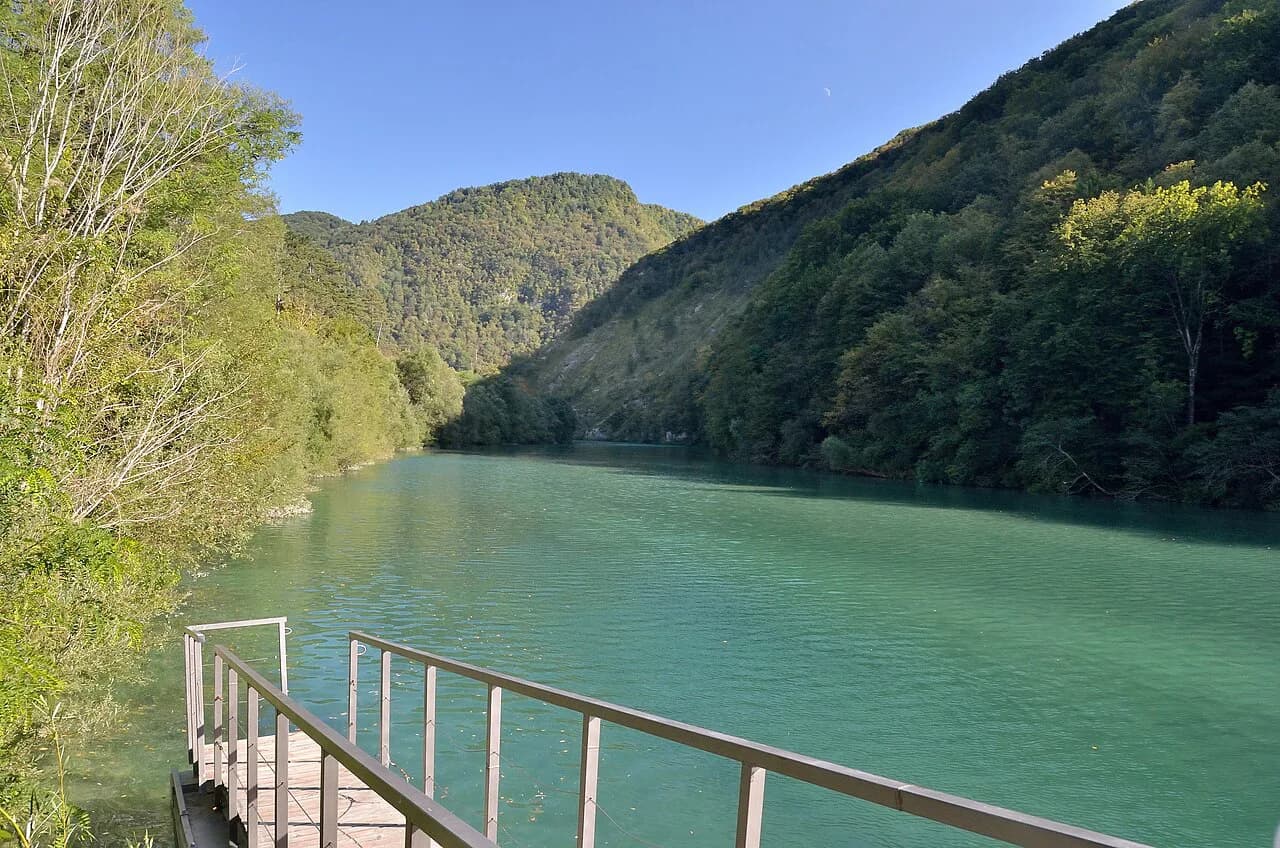
There is no official swimming beach on the Soča, and no lifeguards; people swim at informal gravel spots along the river, most often near Doblar, Plave and Solkan, where the banks open into white gravel and the water is very cold. Elsewhere the river is fast and rocky, so a dip depends on the spot and the day rather than on any posted rules. This guide covers where people get in, why the water is so cold, how to judge a current before you commit, and what to carry for a river day based around Tolmin.
Treat swimming here as a river decision, not a beach decision. Walk the bank, watch how the surface moves, and pick a shallow edge with an easy exit out of the current before anyone gets wet.
Is the Soča River safe to swim in?
Not everywhere, and not automatically. The river runs cold and fast, gorge sections can be too powerful to enter at all, and the safest choice is a shallow gravel edge where you can stand and watch the water move before stepping in. The Soča is not a patrolled swimming area, so the judgment is yours.
The realistic plan is to combine a dip with a river walk rather than to build a day around swimming. Use the water as a cool-down between sights in Tolmin, and keep the swim short, close to the bank, and in view of other people.
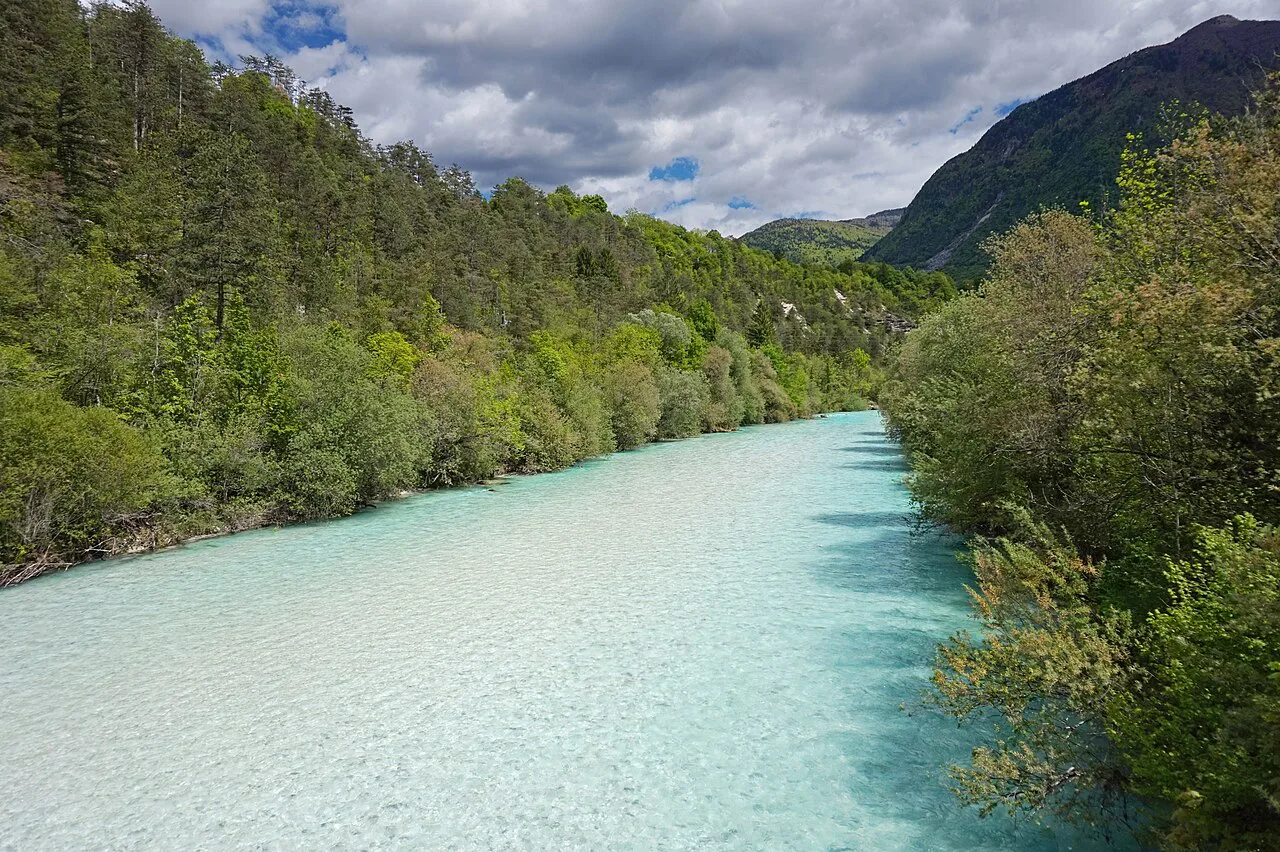
Where people actually swim in the Soča Valley
The spots that come up most are Doblar, Plave and Solkan, described as places on the Soča with white gravel beach and very cold water. They are informal: gravel bars, not concessions, so there are no facilities to plan around.
Farther upstream, people swim or jump in along much of the river, and the cold water is part of the appeal on a hot day. That is a general impression of the valley from visitors, not a recommendation for any single bend, so scout your own entry point and stay conservative.
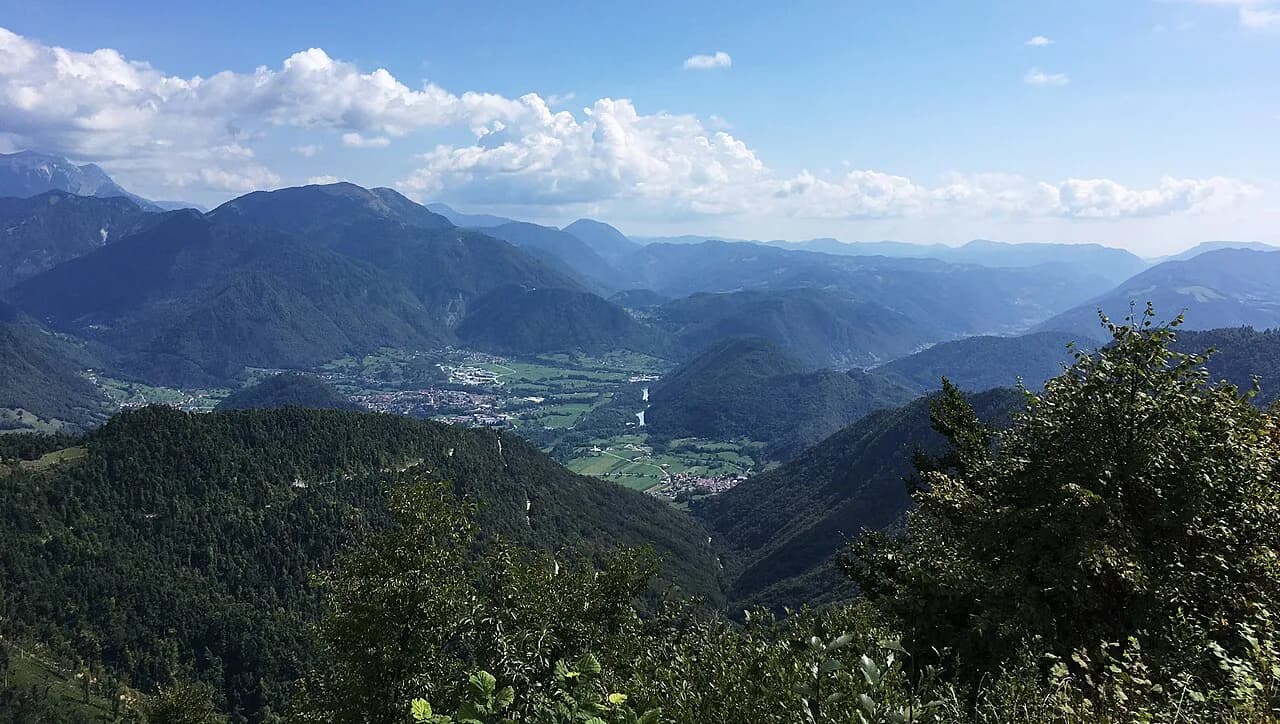
For a base, Tolmin puts you between the lower river and the Tolminka confluence, with the gravel stretches around Most na Soči a short drive west. If you want a museum or a café between swims, Kobarid is the natural next stop north.
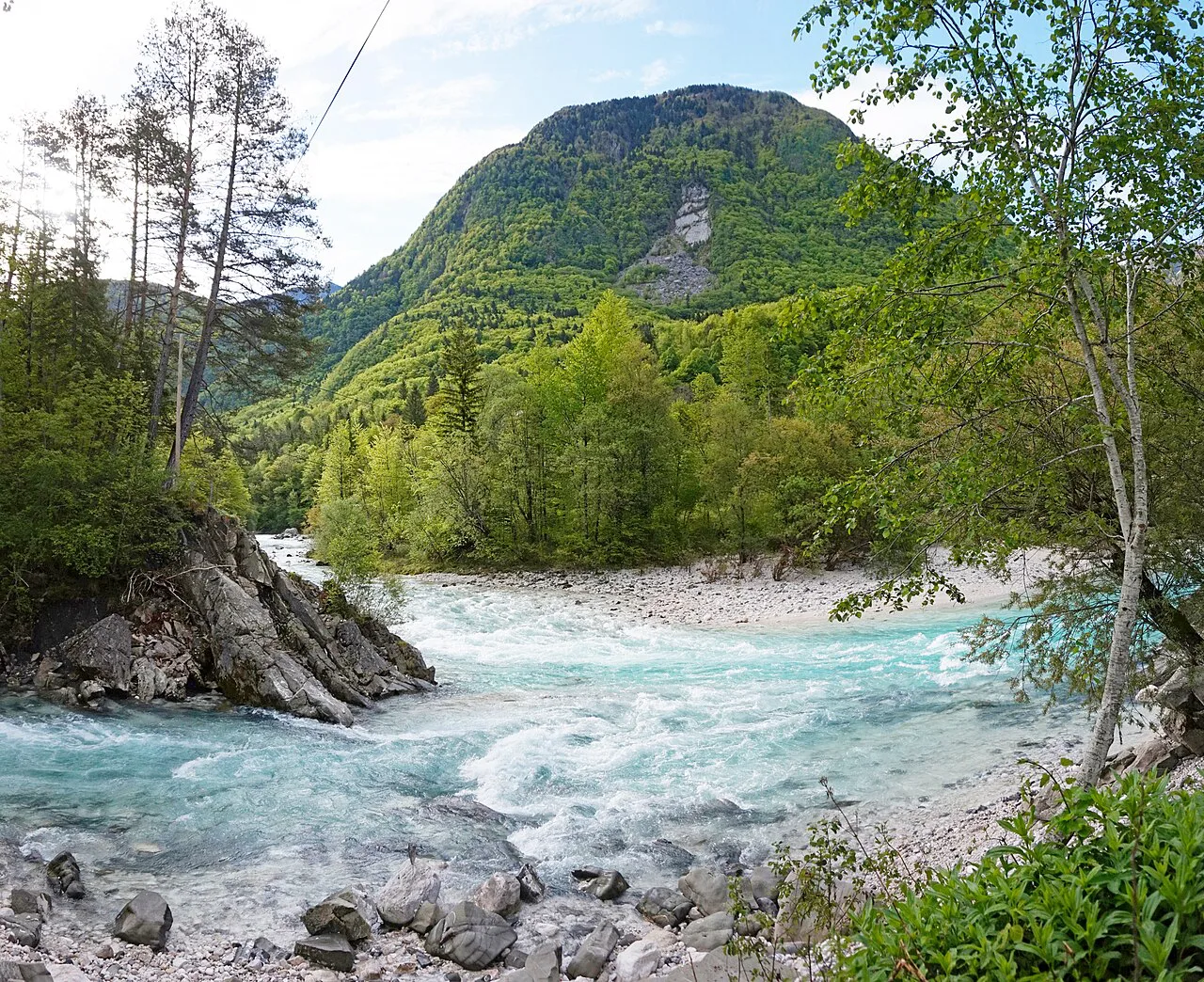
Doblar, Plave and Solkan: gravel beaches and cold water
These three sit on the lower Soča, closer to Nova Gorica than to Bovec, and they share the same character: white gravel banks, shallow margins, and water that shocks on entry. Doblar is near the dam and reservoir below Most na Soči, while Plave and Solkan lie farther downstream.
The practical advantage of gravel is footing: you can see where the bottom shelves away and where the current picks up. Do not count on shade, a changing room, or anyone watching the water but you.
If you are driving between Tolmin and the coast, these lower-river spots break the trip neatly, and you can pair one with a stop at the old town core rather than treating the swim as a destination on its own.
The Little Bridge at Mostnica Gorge and Tolmin Gorge
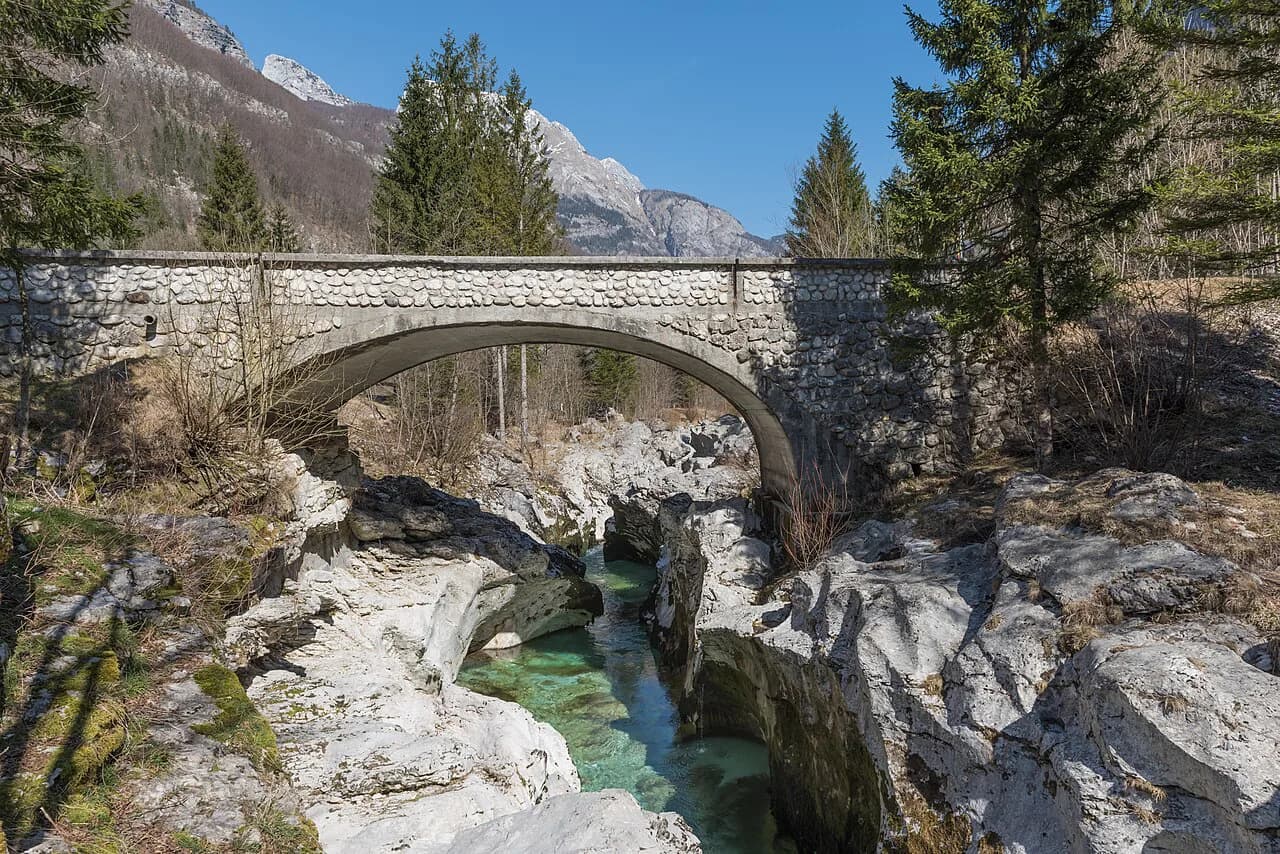
Gorge swimming is a different proposition from river-bank swimming. At the Little Bridge in Mostnica Gorge the water is spectacular in color and brutally cold, because it comes directly off the Alps; a quick plunge is the realistic move, not a long swim.
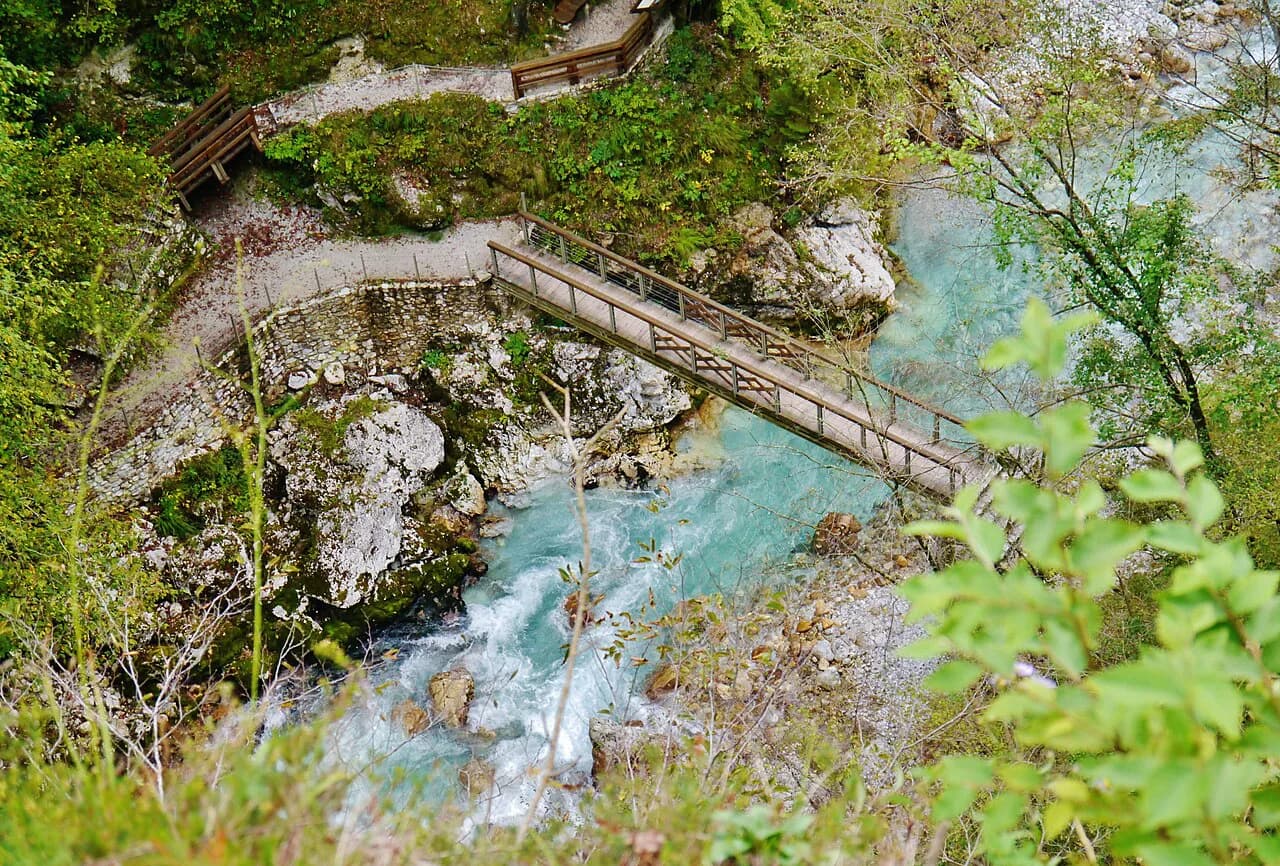
At Tolmin Gorge the flow is often far too powerful to consider entering, and the sensible visit is to watch from the main path or from a rock on the bank. On hot days when the level drops, a swim becomes possible near the first bridge; check the water yourself before trusting that.
Why the Soča is so blue and so cold
The cold is the easy part: the water comes down from the Julian Alps, so it arrives chilled even in August. That is also why a short dip feels bracing rather than comfortable and why long soaks are unrealistic for most travelers.
The color is a separate question from temperature. Treat it as a cue to visibility, not to safety: clear water can still be deep and fast, and a milky or brown stretch after rain tells you the river is carrying sediment and running higher.
How to read the current before you get in
Start upstream. Look at what the surface is doing a few yards above your intended entry, because that water arrives at you within seconds. A smooth, glassy tongue usually means fast, deep flow beneath; broken riffles over gravel mean shallow and slower.
Then look downstream for your exit. In a river you swim across and out, not back against the flow, so pick a gravel bar or eddy below the entry and walk back along the bank. Avoid anything with a hydraulic below it, such as a weir, a bridge pier or a boulder sieve, and stay out of the gorge sections entirely unless the flow is visibly gentle.
Someone in your group should stay dry and watch, particularly with children, and everyone should be able to stand up in the water they enter. If the river is high or brown after rain, skip the swim and walk instead.
What to bring for a river swim
Gravel is hard on bare feet, so bring sandals or water shoes for the walk in and out, plus a towel and a dry bag for phones and keys. River water is cold enough that a quick-dry layer helps after you get out, and there is rarely natural shade on a gravel bar at midday.
Avoid glass containers and anything that can blow into the water; carry out what you carry in. A small first-aid kit is worth the space for a slipped step on wet rock.
When to go: summer water levels and crowds
Summer is when most people get in, and lower water levels usually open up the shallow edges on the lower river. Expect the accessible gravel bars near the road to fill up through the afternoon.
Mornings are quieter and the light on the water is better for photographs, but the air is cooler, so the swim is briefer. Outside high summer you get empty banks and cold water with fewer comfortable hours to dry off in.
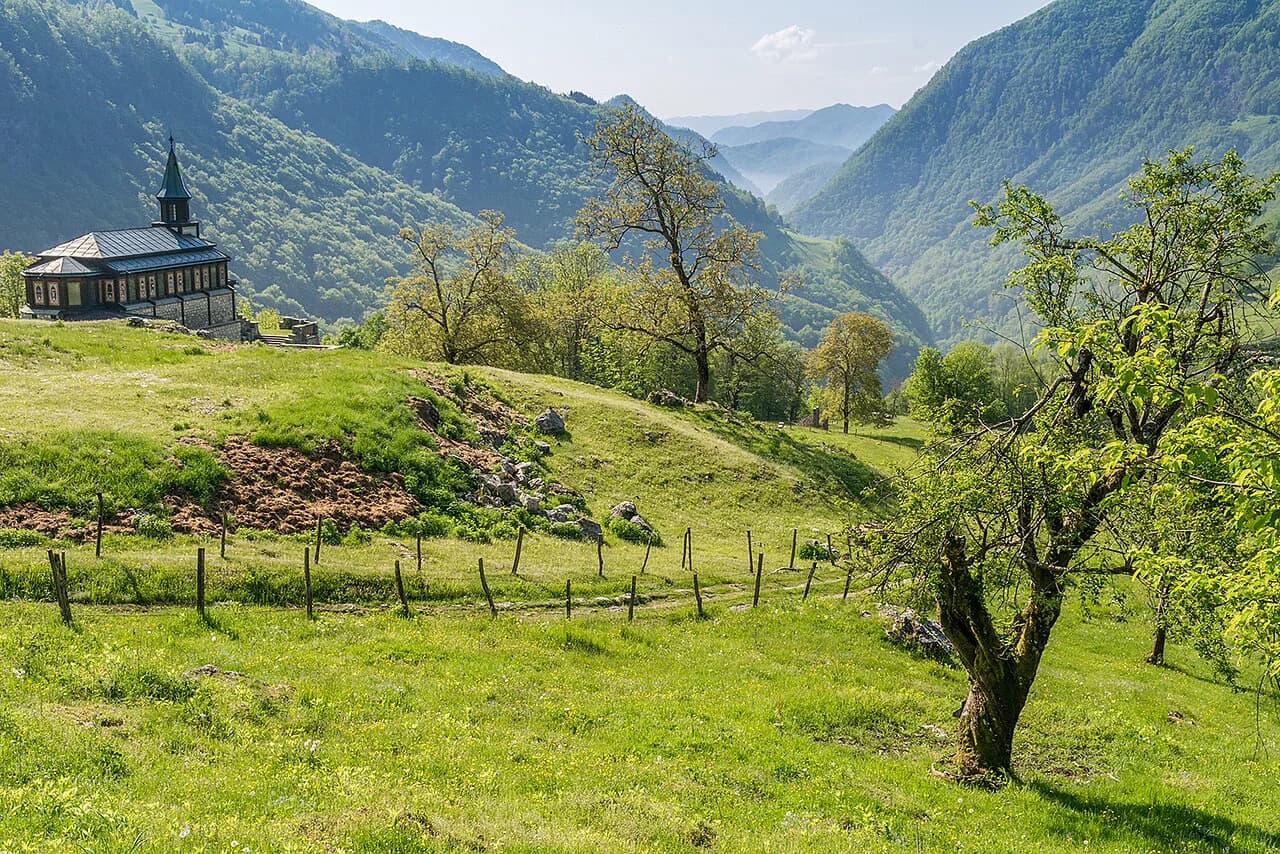
Pair the swim with something nearby rather than driving out just to get wet. Tolmin sits where the Soča and Tolminka meet, and the valleys around it hold the Javorca church above the Tolminka River and the World War I ground of the battle of Caporetto, either of which makes a fuller day than a gravel bar alone.
Which river spot fits your day?
For an easy dip on a driving day, aim for the lower river at Doblar, Plave or Solkan, where the gravel banks give you footing and a clear view of the water. For a colder, shorter plunge with scenery, the Little Bridge at Mostnica Gorge is the pick, and Tolmin Gorge is for looking rather than swimming unless the flow drops.
Whatever you choose, walk the bank first, decide your exit before your entry, and keep the swim short. That habit matters more than which gravel bar you end up on.
Frequently Asked Questions
Why is the Soča River so blue?
The color comes from the clarity of Alpine meltwater moving over pale limestone gravel. Treat it as a visual cue, not a depth gauge: a brilliant turquoise stretch can still be deep and fast, so judge the current by its surface and your footing rather than by the color.
Do I need special shoes for swimming in the Soča?
Yes, bring sandals or water shoes. Around Doblar, Plave and Solkan the banks are white gravel and the riverbed is stone rather than sand, so barefoot walking is uncomfortable. The same shoes help on wet rock paths at the Little Bridge in Mostnica Gorge and on the viewing paths above Tolmin Gorge.
Sources
Notes for your Slovenia trip
Optional updates to our Slovenia place guides.
You might also like
Continue reading
More guides you'll find useful