Piran Salt: The Sečovlje Salt Pans, the Museum, and What to Buy
Piran salt comes from the Sečovlje Salt Pans at Lera and Fontanigge. Here is how the salt is made, what the Museum of Salt-making shows, and which salts to buy.
On this page
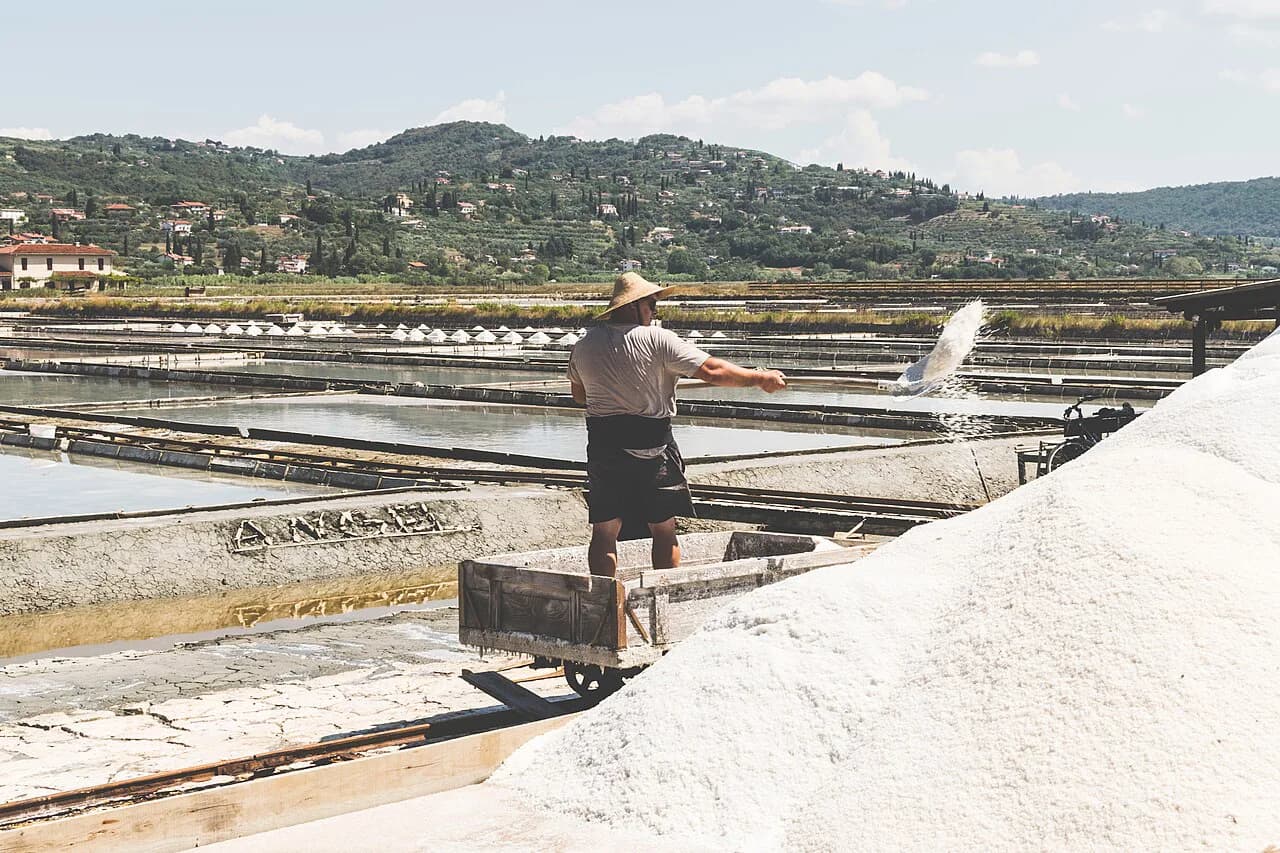
Piran salt is sea salt harvested by hand from the Sečovlje Salina Nature Park, a reserve of about 750 hectares on the far southwestern edge of Slovenia in the Municipality of Piran. The park has two halves: Lera in the north, where salt-making is still taking place, and Fontanigge in the south, where salt-harvesting was abandoned in the 1960s and the old basins are crossed by levees and salt-pan houses. This guide explains the two halves, how the salt is made, what the Museum of Salt-making covers, and which products to look for.
The pans sit close to the Croatian border and the Dragonja river, which meets the sea at the salt pans, not far from Piran. Treat them as an outing in their own right rather than a quick stop, because the park is large. If you are still mapping out the rest of your stay, our roundup of things to do in Piran puts the pans alongside the harbor and the hilltop church.
What Piran salt is and where it comes from
Piran salt, sold under the brand name Piranska sol, comes from the Sečovlje Salina Nature Park along the Slovenian-Croatian boundary. Soline describes the park as covering about 750 hectares in the southern part of the Municipality of Piran, with the active pans at Lera separated from the southern Fontanigge area by the bed of the Drnica stream.
Soline describes the salt-making tradition at the park as originating in the 14th century, and the operation sells the salt under the Piranske soline trademark. The seawater is cited as rich in organic substances and minerals, and the same company also offers the Lepa Vida natural cosmetics range made with ingredients from the salt pans.
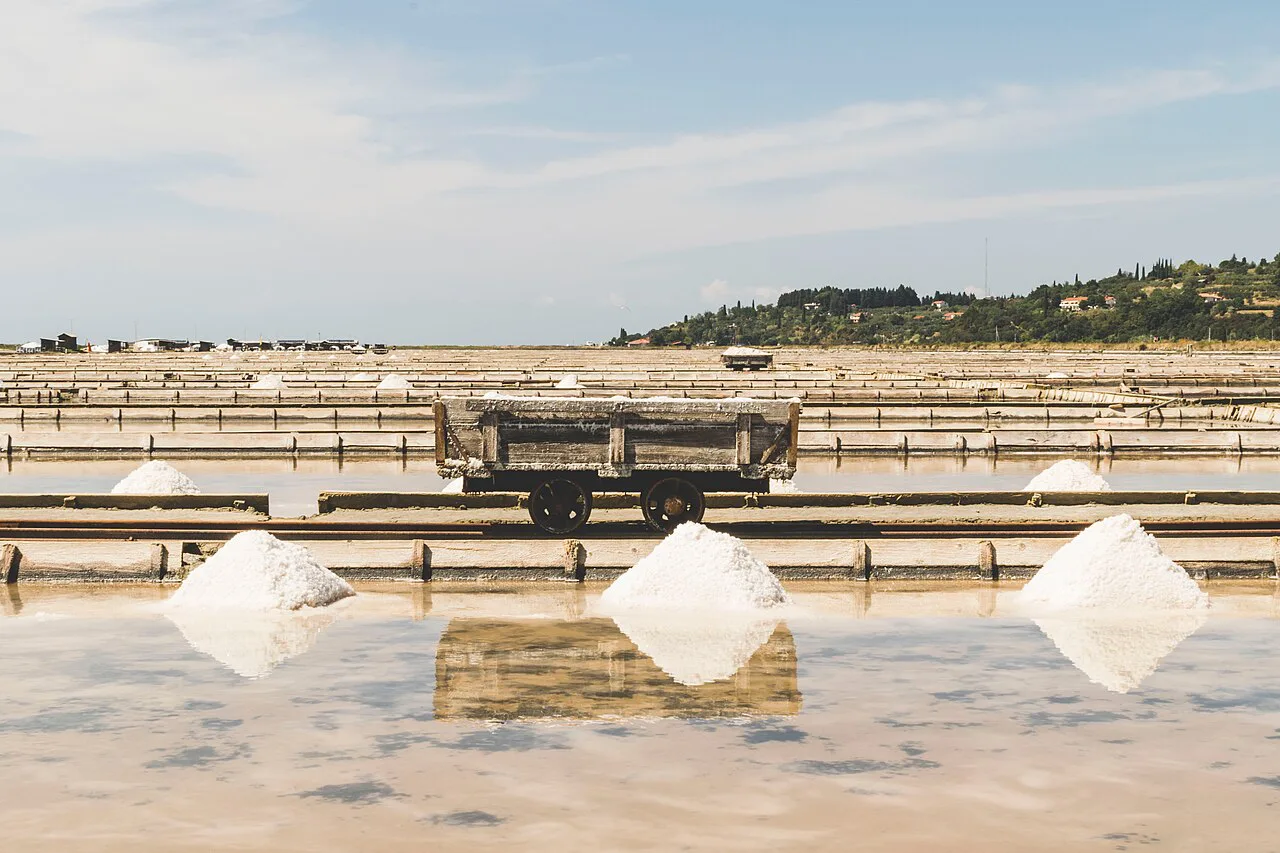
Lera vs. Fontanigge: the two halves of the park
Lera is the northern, working half, where salt is still crystallized in active salt-fields. Fontanigge is the southern half, where salt-harvesting was abandoned in the 1960s; its large basins are gradually being overgrown by salt-loving plants called halophytes, and its ancient levees and scattered salt-pan houses give the area its distinctive look.
For a visitor, the split matters because the two halves show different things. Lera shows the active salt-fields, while Fontanigge is the landscape of abandoned basins, levees and salt-pan houses, with the Museum of Salt-making on site.
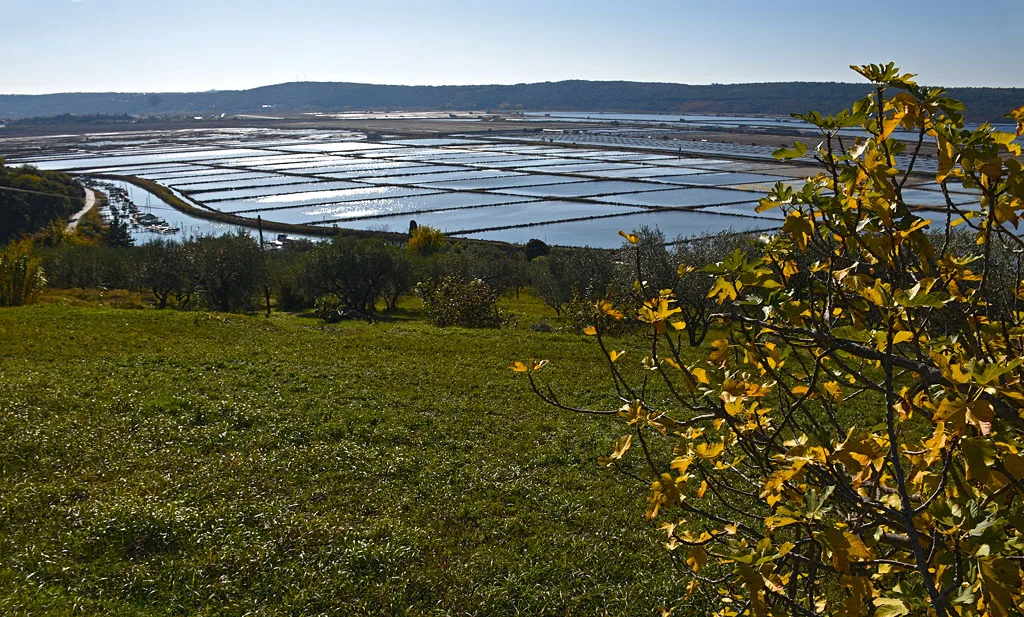
How salt is still made by hand
The key to Piran salt is petola, a biosediment of algae and minerals that the salters cultivate on the bottom of the salt-fields. Soline explains that petola stops sea mud from mixing with the salt and restrains separate ions from building into it, which is why the salt is described as produced on a natural base.
At Lera, the salt-fields used for crystallizing salt are kept separate from the fields used to evaporate seawater into brine. The difference between Lera and Fontanigge lies in the preparation of brine, the harvest, storage, and the tools used, rather than in the basic idea of letting sun and wind concentrate seawater.
The setting is the levees and channels that crisscross the basins, with the salt-pan houses strung along the wider channels at Fontanigge. Together they give the pans their distinctive look.
The Museum of Salt-making at Fontanigge
The Museum of Salt-making sits at Fontanigge, in the southern half of the park, where salt-harvesting stopped in the 1960s. Soline describes the salt-making tradition as still practiced within the museum, so it is where the old process and the former salt-pan landscape are presented.
Pair the museum with the Lepa Vida Thalasso Spa, which sits in the middle of the salt fields and uses products from the Sečovlje Salina Nature Park in its treatments.
Ways to see the pans: walking the levees and salt-pan houses
You pass the old salt-pan houses at Fontanigge and the salt-fields at Lera, and the Dragonja river is the main freshwater vein in the area, joining the sea at the pans. The setting is coastal wetland rather than open beach.
Confirm the current entrance arrangements and any seasonal restrictions with Soline before setting out, since access to different parts of the park can vary.
Salt products to look for: Piranska sol, solni cvet, and fleur de sel
The everyday cooking salt is sold as Piranska sol, while the finishing salt is solni cvet, known elsewhere as fleur de sel. The two are not interchangeable: fleur de sel forms as a thin layer on the surface of the pans, is harder to harvest, and is meant to be sprinkled on a dish at the table rather than cooked in.
The producer sells the salts in its own shop network and online, and the range goes beyond the plain salt into gift sets and accessories. Check the Soline shop pages for what is currently listed rather than assuming a particular item is in stock.
Buying Piran salt
Piran salt appears in many forms, from cooking salt to bath salts and gift sets. Buy it in town if you want to carry it home as a food souvenir, or order from Soline if you would rather not pack it.
Use the salt as a reason to wander Piran's streets and shops rather than a destination on its own; the streets of Piran Old Town are where a salt purchase fits naturally into a loop. See our Piran Old Town guide for what to look for on foot.
Practical notes on visiting the salt pans
The park lies at the southern edge of the Municipality of Piran, close to the Croatian border, below Portorož. Confirm current entrance arrangements and how best to reach the entrance areas with Soline before setting out.
The pans are exposed wetland, so bring water and sun protection. Allow at least a couple of hours to walk the levees and see the museum without rushing.
Is the Sečovlje salt-pan detour worth it?
It rewards a working-landscape visit, so give it a half day rather than a hurried hour. The combination of the Lera salt-fields, the Fontanigge levees and salt-pan houses, and the Museum of Salt-making shows how Piran salt is made.
If salt is your focus, start with the museum at Fontanigge, then continue to the active pans at Lera, and finish with a salt purchase in town. That order builds the story before you buy the product.
Explore more Piran guides
Sources
Notes for your Slovenia trip
Optional updates to our Slovenia place guides.
You might also like
Continue reading
More guides you'll find useful