Piran History: A Timeline Tied to the Town You Can Still Walk
Piran's history runs from an early fortified settlement through centuries of Venetian rule. See the walls, squares and churches where that past still shows.
On this page
Piran is known for its Venetian Gothic architecture, its salt-trade wealth and its town walls, and the short version of its history runs from a fortified early settlement through centuries under the Republic of Venice to a compact seaside town whose old core still shows those layers. The most efficient way to read that history is on foot, moving from 1 May Square up to St. George's church and out along the walls. This guide ties each period to a place you can actually stand in front of, with a realistic order for seeing them. Use the roundup of things to do in Piran alongside it when you are deciding how much of the town to commit to.
What Piran is known for, and the short version of its timeline
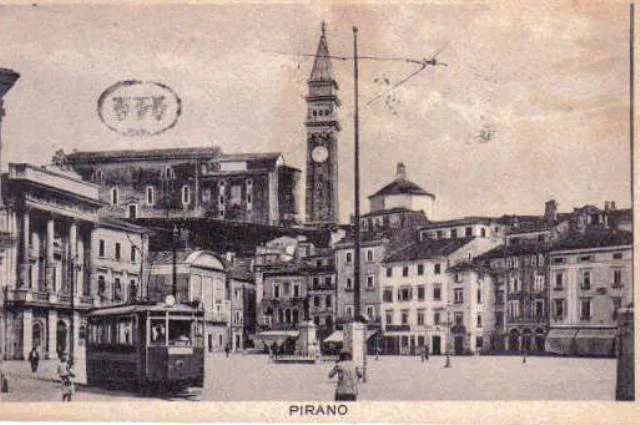
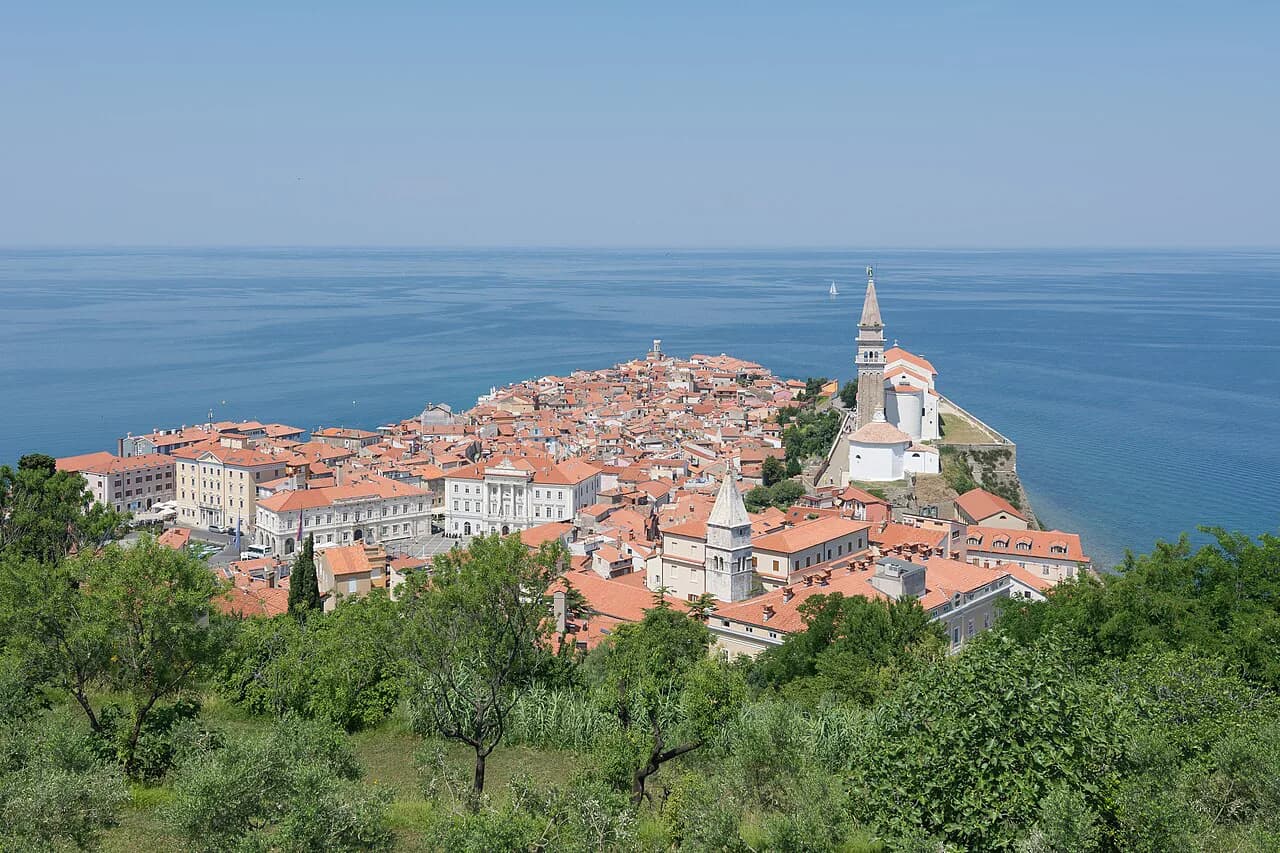
Piran occupies the tip of a narrow finger of land reaching into the Gulf of Piran, and its medieval core packs a Venetian-influenced square, a hilltop church and a ring of fortifications into a small peninsula. Piran was first mentioned as an ancient city in the seventh or eighth century, and settlement formed on the pointed tip before spreading up the slope where the Church of St. George stands.
The town's ownership changed repeatedly before Venice: it passed from Byzantine to Frankish authority in the second half of the eighth century, was connected to the Kingdom of Italy around 840, joined the German Empire in 952 and came under the Patriarch of Aquileia after 1209. Piran acquired its statute in 1274 and was under Venetian rule from 1283 until 1797.
Why salt pans and the sea shaped Piran more than anything else
Salt made Piran wealthy, and the town's strategic position with a fertile hinterland of salt pans drove its trading success with Venice. Salt pans began forming in the area as early as 804, and the Sečovlje pans became the largest of the coastal systems.
The oldest surviving document referring to the Sečovlje salt pans is a 1278 statute granting Piran town status, and the fields were owned by the town, its wealthy families, the church and the monastery. Workers rented specific plots, and families often worked the same plot for generations because the holding represented a significant investment.
That economy explains the harbor and the defenses: the walls protected a salt trade that was a cornerstone of Piran's prosperity. Today the Sečovlje Salina Nature Park spreads across the mouth of the Dragonja River along the Croatian border, and the Sergej Mašer Museum holds a collection showing the salt-extraction process that built the coastal towns.
The first town wall and 1 May Square (Trg 1. maja), Piran's oldest core
The oldest part of the town center is the Old Square, now Trg 1. maja (1 May Square), which was surrounded by a wall in the 7th century with four gates serving as the only entrances. Two of those gates survive: Poljska Vrata (the Field Gate) and Miljska Vrata (the Muggia Gate), while the Church Gate and Central Gate are gone.
Start here rather than at the harbor if you want the chronology in order, because this small square is the kernel the rest of Piran grew around. It sits back from the water, which is why the later harbor quarter needed its own line of defense.
How Venetian rule reshaped the town and its harbor
After Piran came under direct Venetian rule at the end of the 12th century, the bay was turned into a harbor and new buildings pushed beyond the original wall. That expansion required a second wall, which ran around the bay and ended with towers at the harbor entrance; the St. Francis Gate, the First Raspor Gate and the St. George Gate formed its entry points.
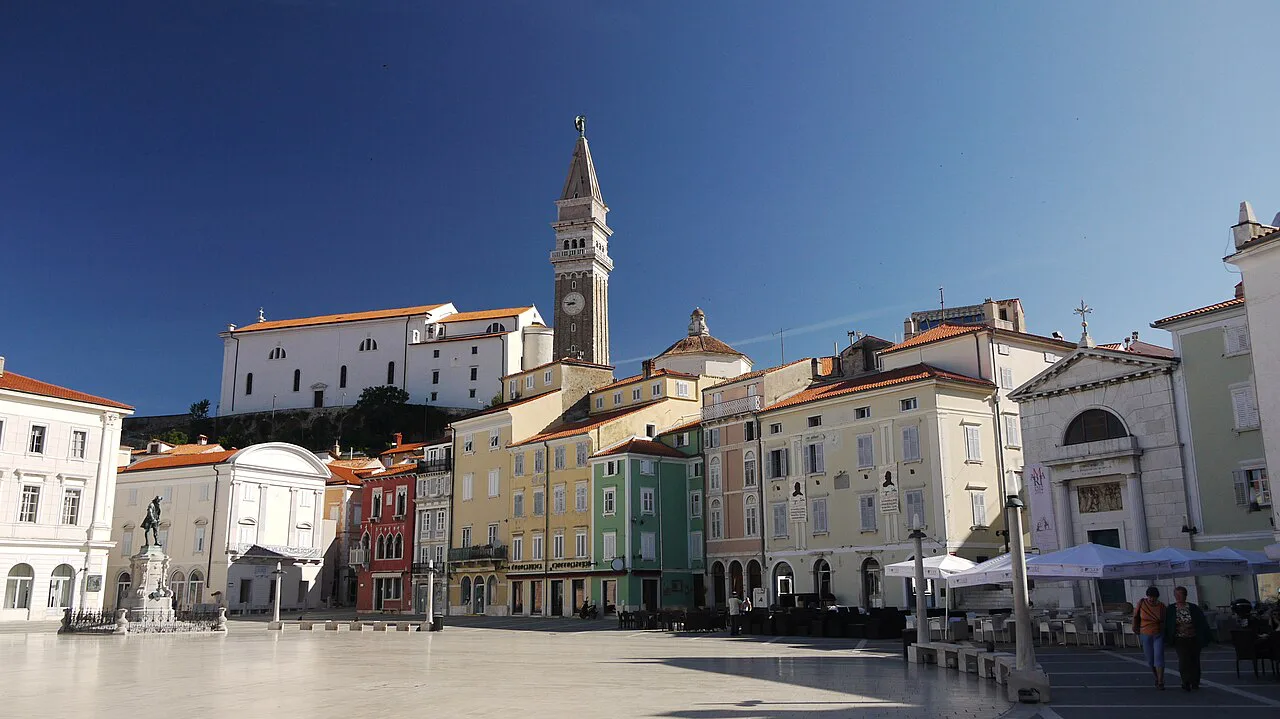
Venetian influence shows in more than fortifications: the town had a monastery, more than 23 churches and numerous chapels, of which 10 churches remain. The architecture along the main square, with its Venetian Gothic facades, is the most visible legacy of those centuries for a visitor walking through today.
The third wall phase on the slope of Mogron and the Walls of Piran today
The final wall-building phase began in the second half of the 15th century, when Turkish invasions became a pressing threat. By then the entire peninsula was encircled and eight defensive towers were built, and it is the remains on the slope of Mogron that carry the most historical value and complete the old town center.
Piran was never besieged by the Turks, and as the threat eased the walls lost their purpose and the town spread beyond them; high maintenance costs even led the authorities to consider demolition. More than 300 meters of the original walls survive, with 13 towers and 7 town gates.
The best-preserved stretch is the one open to visitors, reached on foot up the slope. Check the current entry terms at the ticket office before you climb.
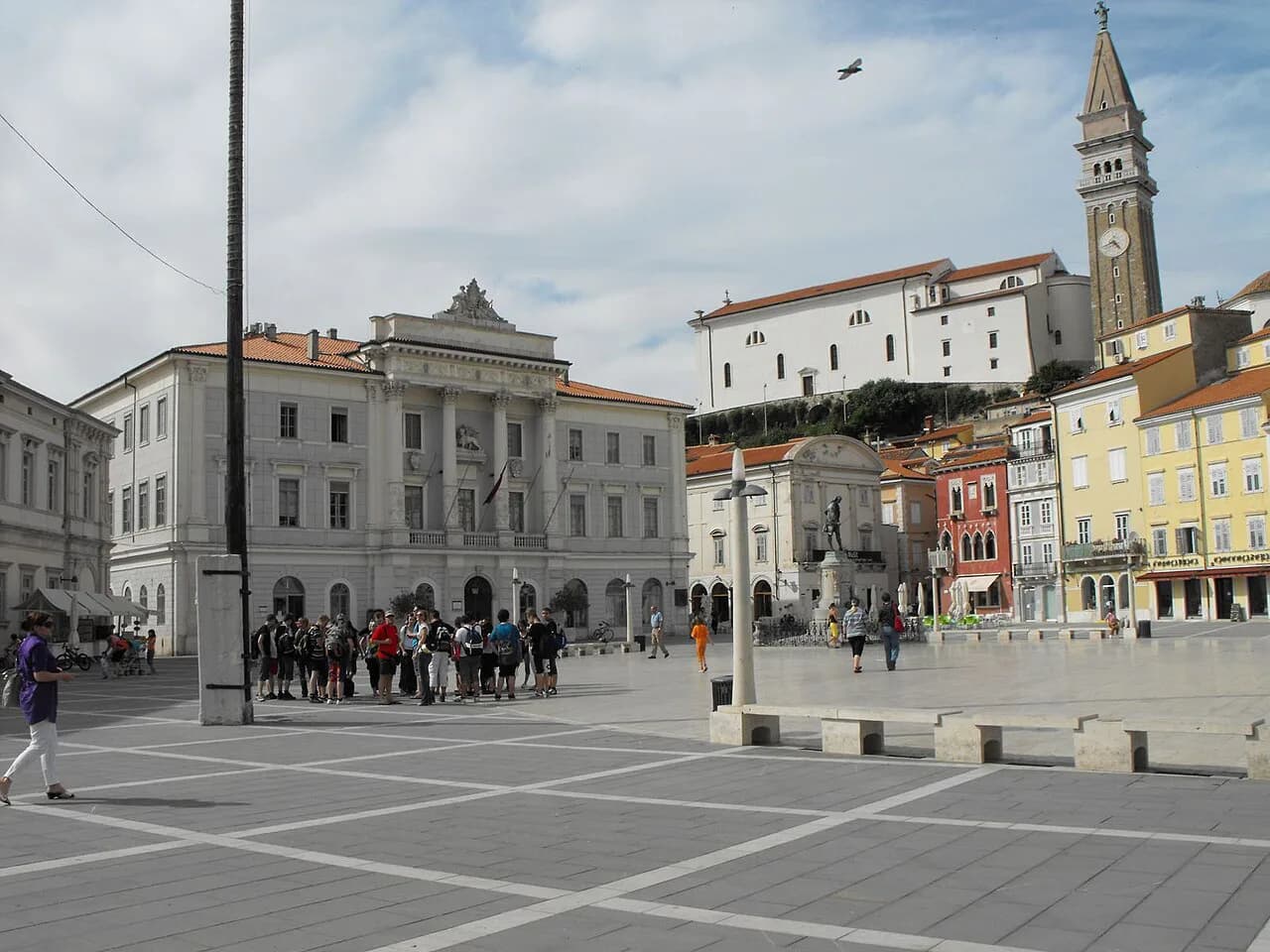
Tartinijev Trg: the square, the Venetian Gothic buildings, and the Tartini statue
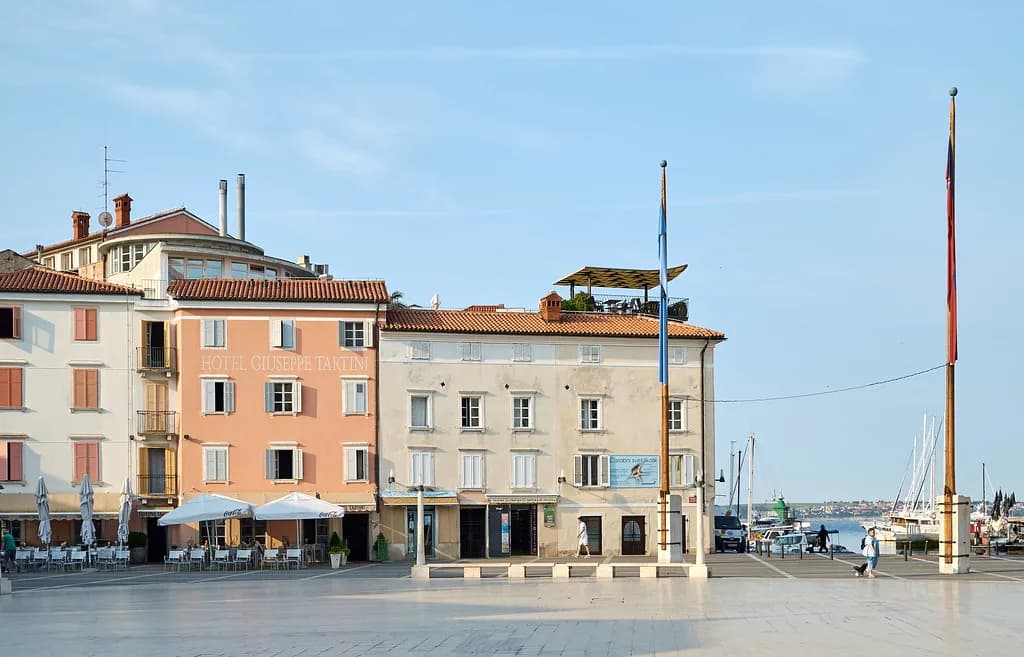
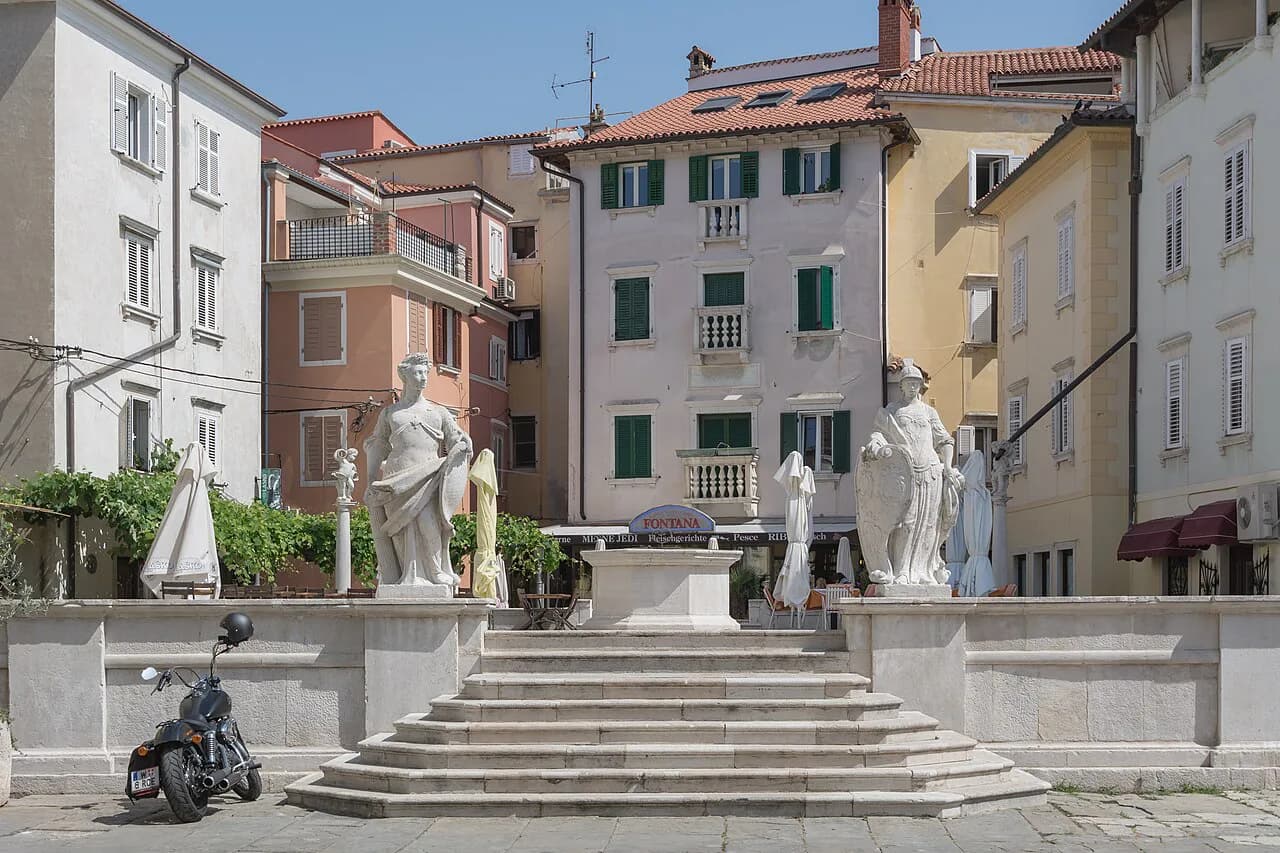
Tartinijev Trg became Piran's most important square at the end of the 13th century but took its present form in the second half of the 19th century, when the mandrake was filled in to create a large market platform ringed by the town's key buildings. Most of the bourgeois houses around it have lost their original form, with the Gothic building known today as the Venetian a notable exception.
The square honors the violinist and composer Giuseppe Tartini, a Piran native; the town planned a monument for the 200th anniversary of his birth in 1892, and the life-size bronze by Venetian sculptor Antonio dal Zotto was completed in 1896. Tartini's birthplace is one of Piran's oldest houses, documented as early as 1384 as the Gothic Casa Pizagrua, and it now holds a memorial room with his death mask, a violin and an oil portrait.
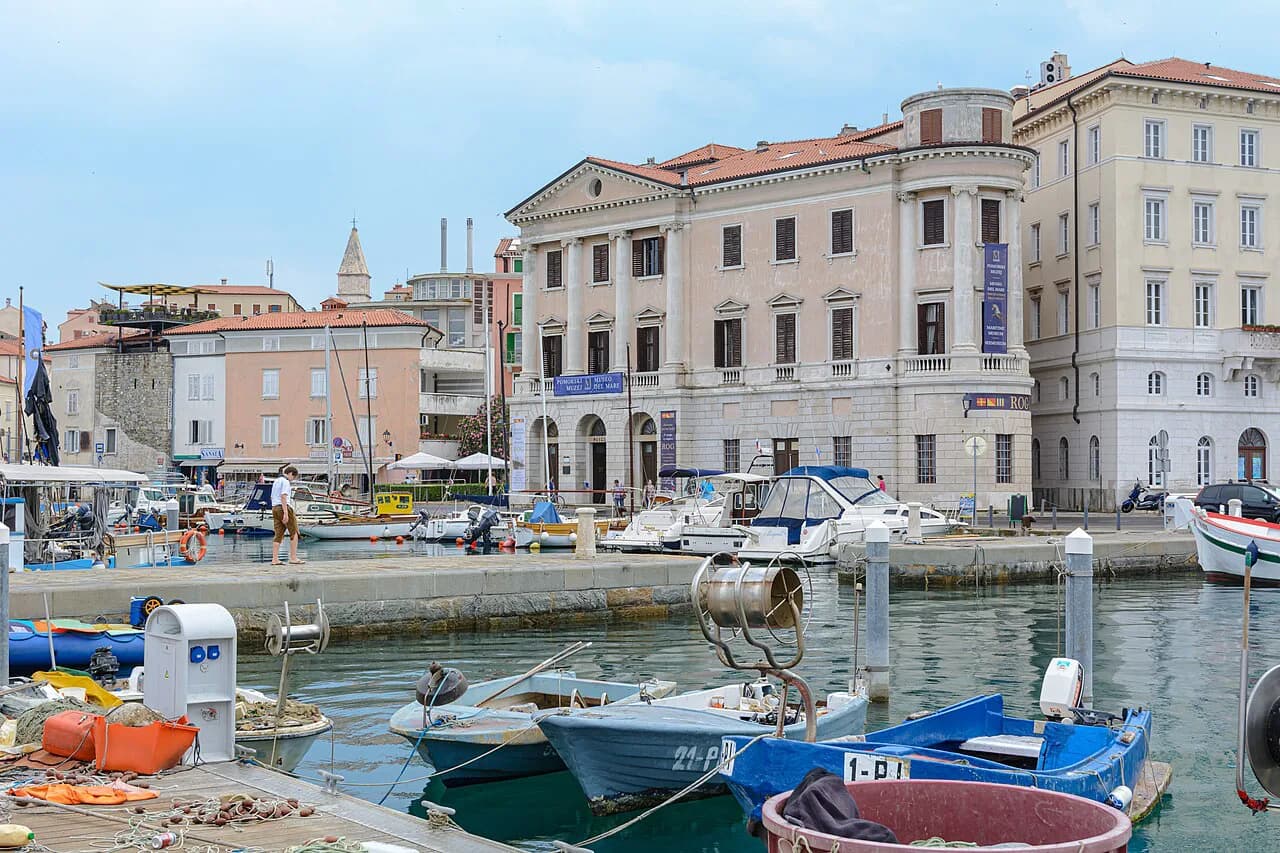
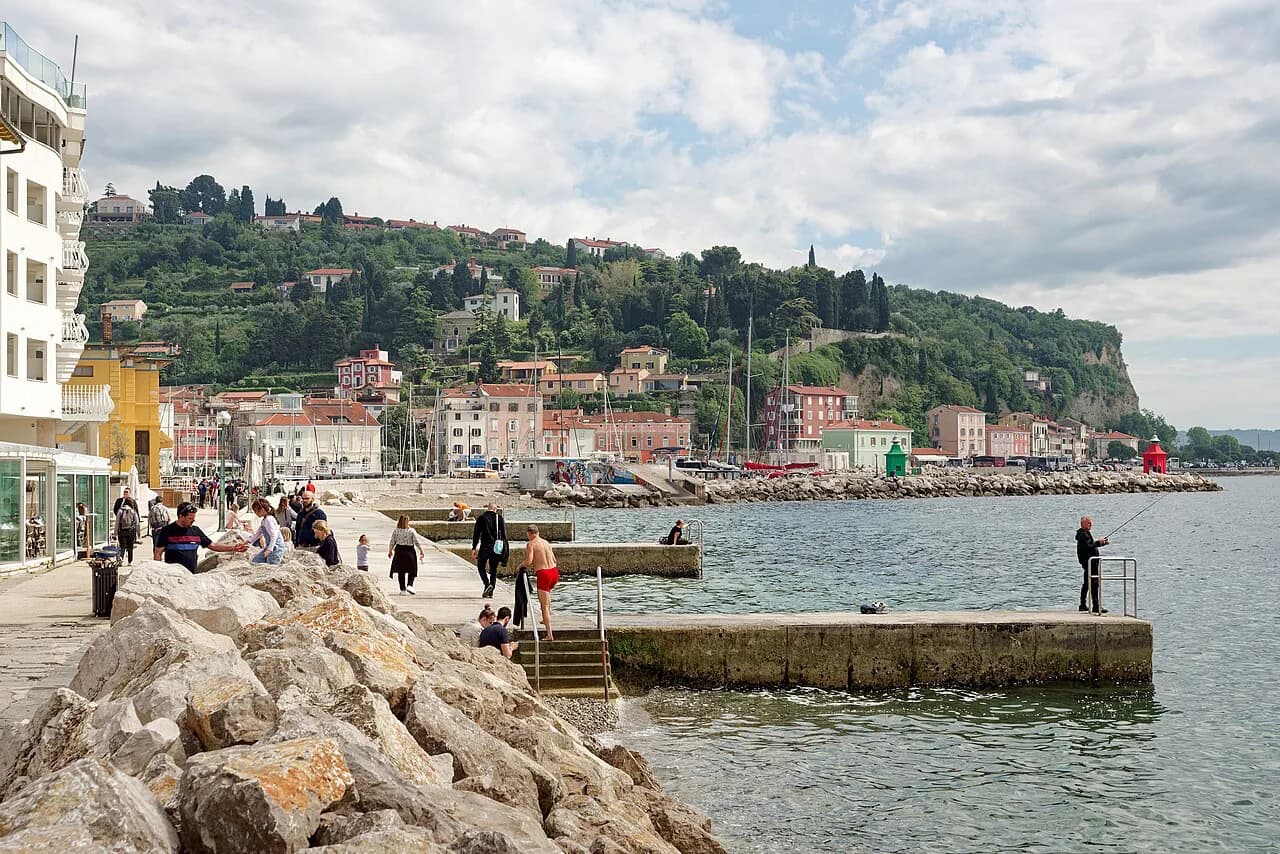
At the far end of the square, fishing boats line the small harbor, which makes a natural pause between the square and the climb to the church. The inscription reading Lassa pur dir, or "let them talk," sits between the upper windows of a deep-rose building on the square.
The Church of St. George and its bell tower above the town
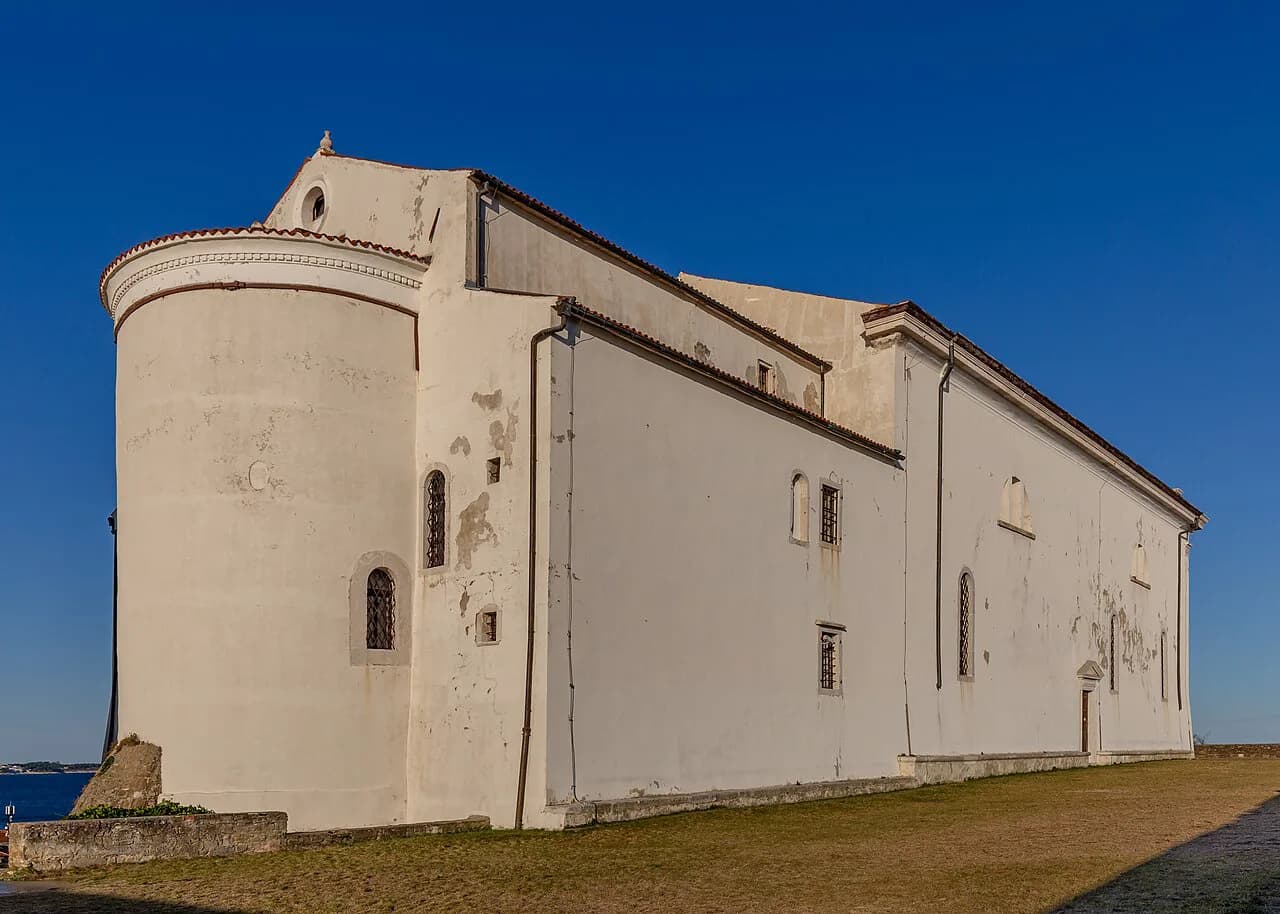
The Baroque Church of St. George, with its bell tower and baptistery, stands on a hill within the walls and is the largest and most famous of Piran's churches. Construction of the Baroque church began in 1595, when the Gothic church on the site was thoroughly renovated and a new free-standing tower was built on the model of St. Mark's in Venice.
The tower carries a 3.7-meter statue placed at its top in 1769 and repositioned on a rotating iron axis in 1908, so the angel swings with the wind. The slope below the church complex was fortified with supporting arches between the middle of the 17th century and the beginning of the 19th.
The church was dedicated to St. George in 1344 after it was credited with protecting the town from a severe storm, and the site remains Piran's most prominent religious landmark. Pair the church with the walls in one outing, since both reward the same uphill effort.
The Monastery of St. Francis and the maritime collections in town
The Monastery of St. Francis was probably built before 1301, when construction of its church began; it started low and Gothic and was later renovated and enlarged, and in the 17th and 18th centuries its community ran schools, including a music department where Tartini acquired his basic musical training.
The Sergej Mašer Museum, founded in 1954 and named for its hero in 1967, preserves Slovenia's maritime history with an archaeological collection on sea routes and trade, material from coastal and inland settlements, and the salt-extraction display. The aquarium at Kidričevo nabrežje 4, founded in 1964, holds more than 200 marine animals across three pools, including the common octopus, fish, crabs and algae.
The Sečovlje salt pans as the working landscape behind Piran's wealth
The Sečovlje salt pans lie a short drive from Piran through Portorož, at the mouth of the Dragonja River, and from a neighboring hillside the inlet reads as evenly spaced rectangular pools reflecting sky and cloud. Salt harvesting was seasonal work for farmers and fishermen, and families competed for the plots they rented.
Seeing the pans after the town closes the loop: the walls, the harbor and the square all make sense once you have stood at the edge of the flats that paid for them. The town celebrates St. George annually on April 24, a holiday that historically marked the start of the salt-harvesting season on the coast.
How long the history sights take and how to fit them into a visit
A sensible route runs from Trg 1. maja through Tartinijev Trg, then up past the monastery to the Church of St. George and out along the walls: each leg is short but uphill, so budget the walls for early morning or late evening rather than the hottest part of the day. Wear shoes suited to narrow stairs and uneven stone.
History-focused visitors can add the Tartini Memorial Room, the Sergej Mašer Museum and the aquarium, but spreading all three plus the church and walls across one day leaves little slack. If you have a single day, choose the walls and the church first, since both carry the clearest visible evidence of the phases described above.
Leave the salt pans for a separate outing if you have a car or can join transport, because they sit outside the old core beyond Portorož. Confirm current entry prices and opening times at each ticket office before you set out.
Which stretch of Piran's past to walk first
Start at 1 May Square, work through Tartinijev Trg, climb to St. George's and finish on the Mogron walls, and the town's timeline becomes a walk rather than a list of dates. The salt pans make the best second outing.
Explore more Piran guides
Frequently Asked Questions
Is the Walls of Piran ticket worth paying for?
The walls are the best-preserved part of Piran's fortifications and the stretch open to visitors, with towers and town gates surviving along more than 300 meters of original wall. The climb is steep and the path uneven, so decide based on your knees and the heat rather than the entrance fee alone; check the current ticket price at the entrance.
Why is Piran's bell tower associated with the wind?
A 3.7-meter statue placed on top in 1769 was repositioned on a rotating iron axis in 1908, so it turns with the wind. When the angel shows its wings toward the city and looks toward Trieste, the bora is blowing and fair weather is expected; when it points its finger at the town, rain or storms are approaching, according to the story told in Piran.
What happened to Piran's other churches?
Historical sources record that Piran had a monastery, more than 23 churches and numerous chapels, and that 10 churches remain today. The Baroque Church of St. George on the hill, with its bell tower and baptistery, is the largest of them.
Sources
Notes for your Slovenia trip
Optional updates to our Slovenia place guides.
You might also like
Continue reading
More guides you'll find useful