Žužemberk Castle: The Krka River Fortress in Suha Krajina
Žužemberk Castle stands above the Krka in Suha Krajina, with six round bastions and a courtyard used for events. Here is what to see and how to plan a stop.
On this page
Žužemberk Castle is a short, satisfying stop rather than a half-day attraction: you take in the reconstructed Renaissance perimeter, look down at the Krka River, and read the ruined inner core. The castle sits on a steep rocky promontory above the river in Suha Krajina, the dry karst country southeast of Novo Mesto, and its six round bastions face the town square at the entrance.
This guide covers what the castle is, how the outer walls and inner ruin differ, how long to allow, how to reach Žužemberk from Novo Mesto and nearby Dolenjska towns, and what the site publishes about hours and admission. It also points out Grajski trg, the square in front of the entrance, so you recognize the approach.
What Žužemberk Castle is and where it sits above the Krka
The fortress controls a crossing and former trade corridor on the Krka River, and records first reliably mention it in 1295 under the German name Seisenberg. The Auersperg family bought the estate from Emperor Ferdinand I in 1538 and held it for more than four centuries, turning it into a Renaissance fortress with massive walls and embrasures.
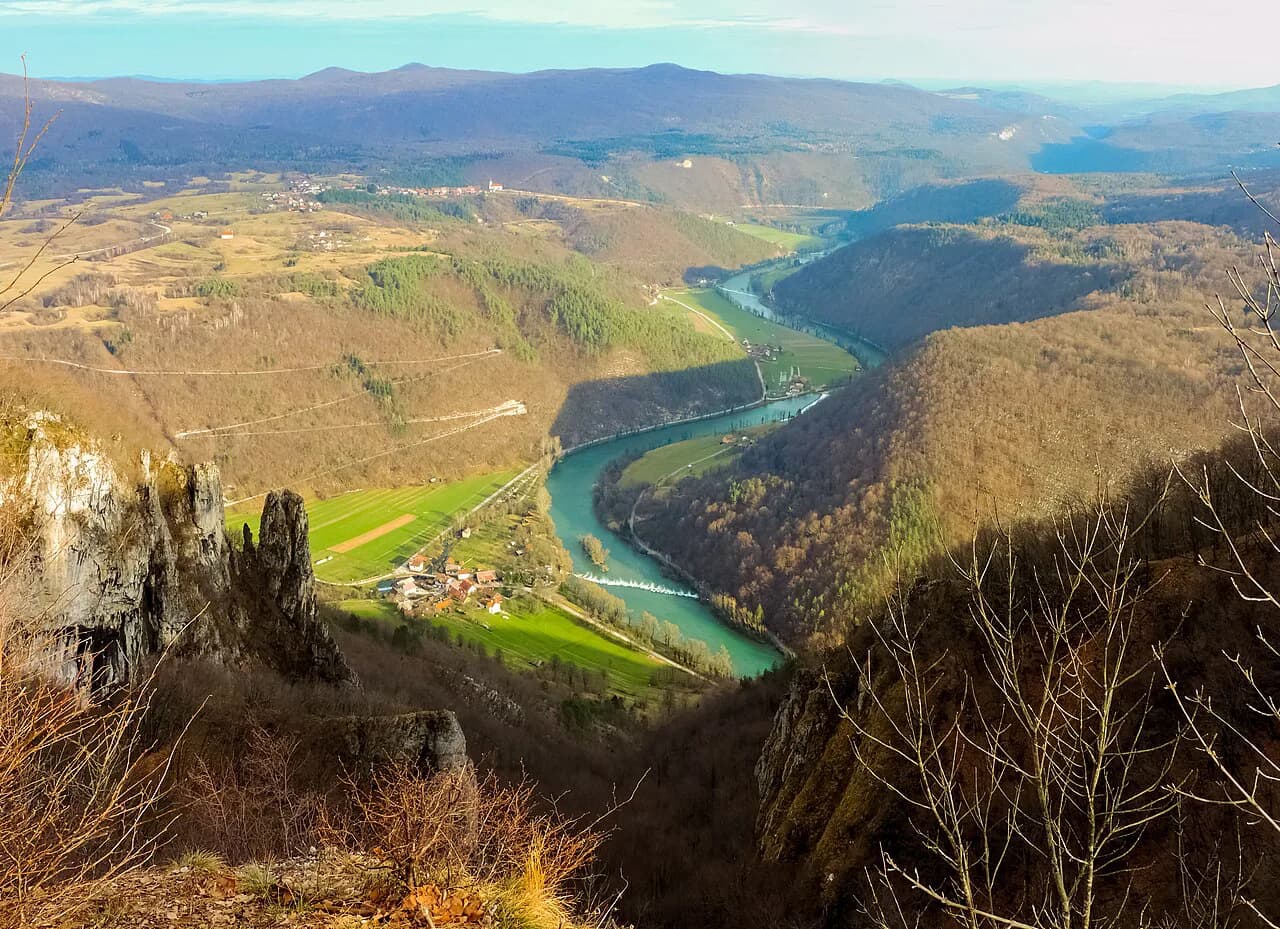
Its position explains the design: the rocky spur above the water gave natural protection, and the ring of walls and bastions faced the landward approach from the town. The building stands in Suha Krajina, which takes its name from the waterless karst plateau around it, and the river below is the reason the site mattered.
The castle address is Grajski trg 33, 8360 Žužemberk, on the square at the foot of the walls. If you are routing a day through this part of the Krka valley, treat the castle as one stop rather than the whole outing.
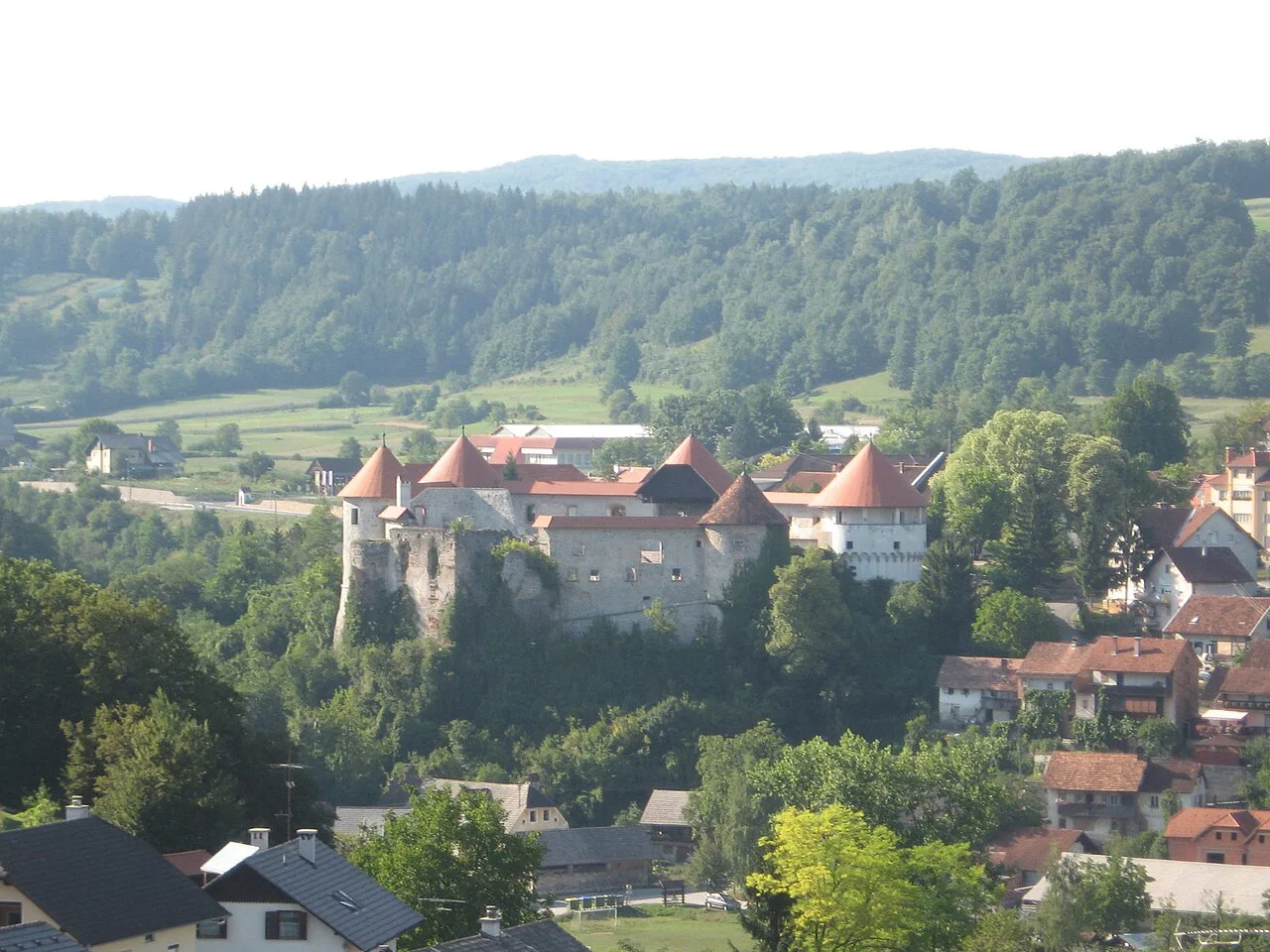
The layout: outer Renaissance walls, six round bastions, and the ruined inner core
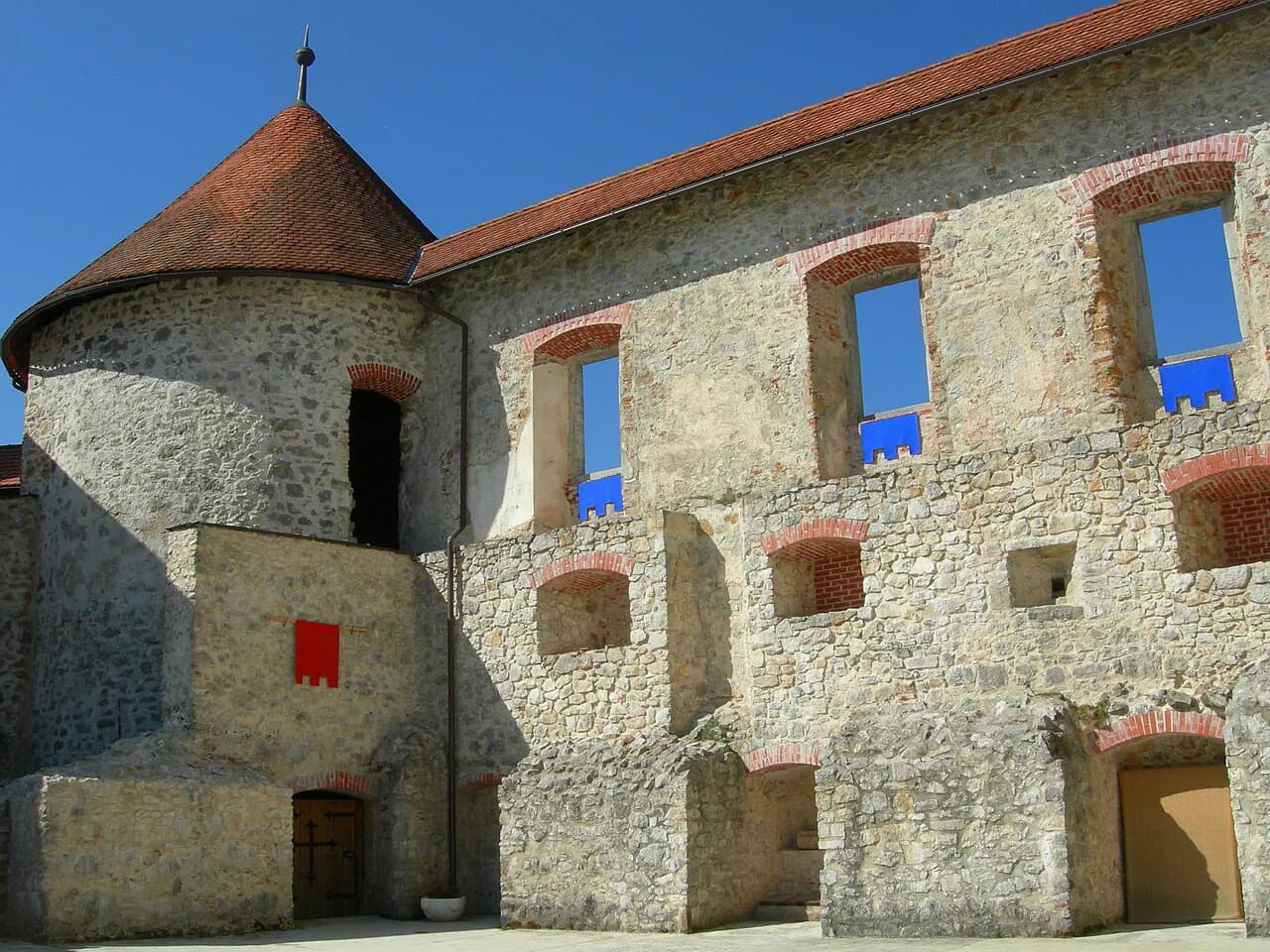
Žužemberk is two experiences in one. The outer Renaissance perimeter, six monumental round defensive bastions and curtain walls were fully reconstructed, so the circuit reads as a fortress; the interior medieval core and residential wings were consolidated and are presented as a readable ruin showing its building phases.
Start outside and walk the bastion line first, because that is where the scale of the Auersperg rebuild is clearest. Then step inside to see the stabilized ruin, where the castle wine cellar was restored and the main courtyard was paved and fitted with an event stage.
Recent work continued on the entrance towers and wall faces, with safety railings and visitor amenities added. Expect a mix of new masonry and standing ruin rather than furnished rooms; there is no palace interior to tour here.
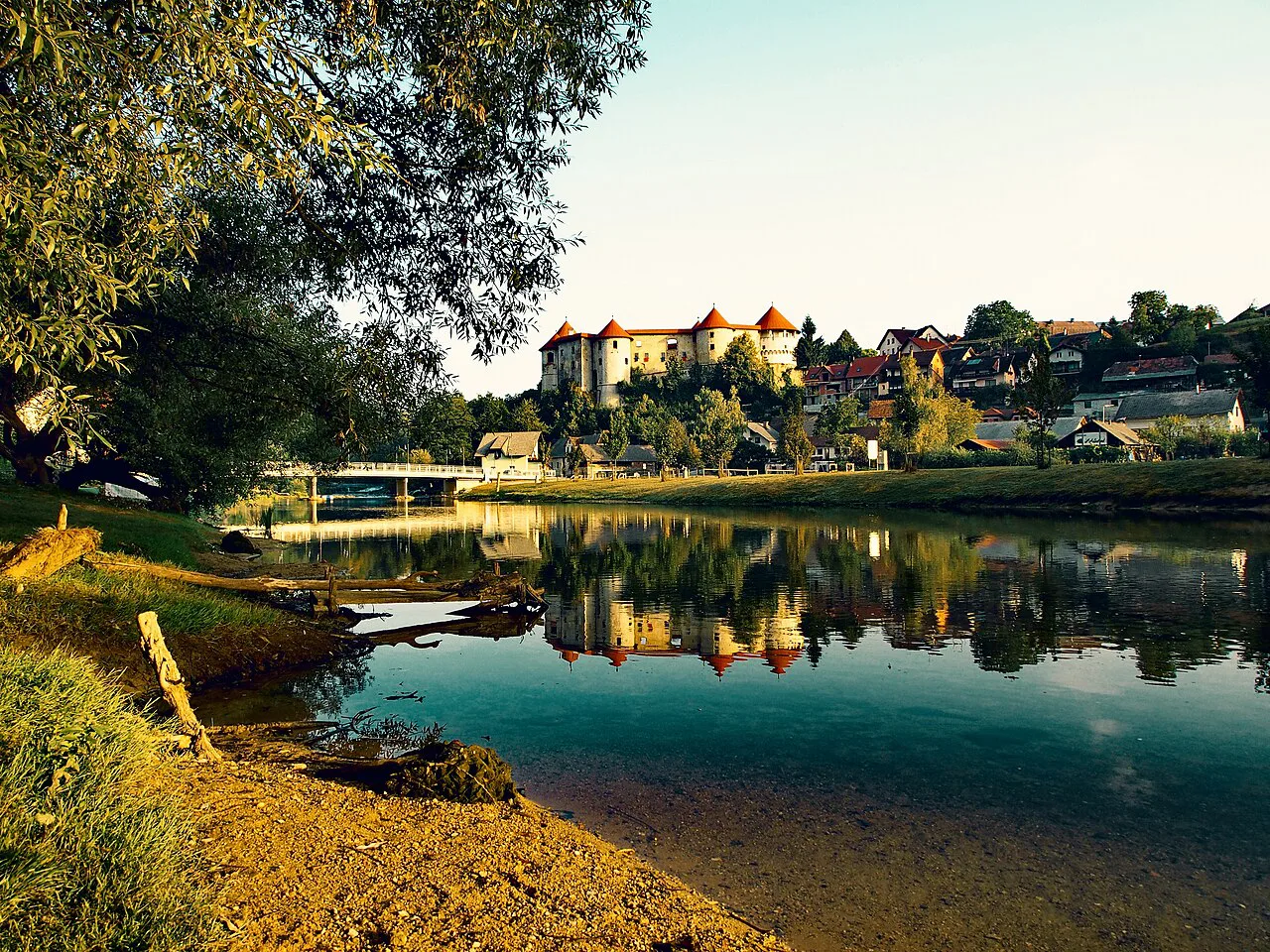
How long a visit takes and what to see first
Allow roughly an hour to ninety minutes for the bastion circuit and courtyard, which are compact and reward looking rather than lingering. Add time if you are also pairing the visit with the river or the town square.
View the approach from Grajski trg first so the six bastions register as a defensive ring, then move into the courtyard for the ruin and the stage. The former wine cellar and the paved courtyard are the interior set pieces; the outer walls carry the visual weight.
Cyclists and drivers coming from Novo Mesto can fold the castle into a loop along the Krka. Routes link the castle with the Krka River on rides starting from Novo mesto Kandija and Šmarje-Sap, so the stop works well as a midpoint.
How to reach Žužemberk from Novo Mesto and the surrounding Dolenjska towns
Žužemberk sits southeast of Novo Mesto in the Krka valley, and the simplest approach is by car along the roads that follow the river through Dolenjska. The castle rises directly above the water, so once you reach the town center the walls are the landmark to aim for.
If you are tracing the Krka rather than cutting across country, plan Žužemberk alongside other river stops. The same watercourse runs past Kostanjevica na Krki, where the river loops through the town, so the two make a natural pairing on a southbound day.
For a wider river day, the Krka also passes Otočec Castle, where the castle stands on an island in the stream and the grounds are open to walkers. Build the route so Žužemberk comes first and Otočec later, or reverse it depending on where you start.
Opening hours and admission for the castle
The castle's visitor listing gives its hours as 08:00 to 15:00 on the day shown, with the site listed as closed outside that window. Hours at a municipal heritage site can change with the season, so confirm the day you plan to arrive before driving out.
The listing carries a ticket inquiry phone number rather than a published admission figure, so ask about entry when you confirm hours. If your schedule is tight, call ahead rather than assuming the courtyard and bastions are accessible outside opening times.
Grajski trg: the cast-iron fountain and the square in front of the entrance
The approach runs through Grajski trg, the square below the castle entrance, where a cast-iron fountain with four dragons spouting water stands in front of the walls. It was cast in the 1760s at the Auersperg foundry in Dvor, and it was fully restored along with the castle works.
Use the square as your orientation point: the fountain marks the front, the bastions rise behind it, and the town center spreads from there. It is also the natural place to pause before or after the walk around the walls.
What happened to the castle in the 20th century and what restoration has done since 1997
The castle lost its residential role at the end of the 18th century when the princely branch of the Auerspergs moved to nearby Soteska, and it later held a district court, prison cells, a tax office and a school before falling into decay. In February 1945 Allied aircraft bombed it heavily because it served as a fortified stronghold, leaving it gutted by fire, and part of the main tower collapsed a few years after the war.
Conservation began in 1969 under architects Ivan Komelj and Vlasto Kopač, who stabilized and roofed the most accessible towers before work halted after 1978. The turning point came with the new Municipality of Žužemberk in 1997 and a dedicated restoration committee, followed by intensive structural rehabilitation between 1997 and 2015.
That campaign stabilized the exterior walls, secured and roofed every defensive tower, restored the wine cellar, and paved the main courtyard, financed with EU funds and the Slovenian Ministry of Culture. The dome of the story is that you are walking a rebuilt shell around a stabilized ruin, which is why the outer circuit feels finished and the interior deliberately does not.
When the courtyard hosts events such as Trški dnevi
The paved courtyard has an event stage, and in summer it hosts the flagship Trški dnevi market days along with medieval festivals, concerts and theatrical performances. The castle is the cultural and event centerpiece of Suha Krajina, so a visit can coincide with something happening in the courtyard.
Heritage events here have run with volunteers and the local heritage community; a 2019 program at the castle ran Saturday from 5pm to 9pm and Sunday from 10am to 5pm. Treat that as a past example of the format, not a schedule, and check what is on for your dates.
Is Žužemberk Castle worth the detour?
Yes, if you are already driving the Krka valley or spending time around Novo Mesto. The reconstructed bastions, the readable ruin inside and the dragon fountain on Grajski trg make a compact, honest stop, and the setting above the river does the rest.
Skip a dedicated cross-country trip unless the castle is one leg of a wider Dolenjska route. Confirm the day's hours and ask about admission before you set out, then pair the visit with another Krka stop such as Otočec Castle to make the drive count.
Explore more Novo Mesto guides
Frequently Asked Questions
Can you go inside Žužemberk Castle?
The restored site includes the courtyard, the former wine cellar and the stabilized inner ruin, while the outer bastion circuit is best seen from outside. Access follows the castle's opening times, so confirm the day you plan to visit and ask about entry when you do.
How long does it take to see Žužemberk Castle?
Plan on about an hour to ninety minutes. Take in the six round bastions and curtain walls first, then go into the courtyard for the ruin and the event stage. Adding the fountain on Grajski trg and a look along the Krka adds more time to the outing.
What else is near Žužemberk Castle?
The cast-iron dragon fountain sits on Grajski trg directly in front of the entrance. Downstream in the Krka valley, Otočec Castle stands on an island in the river, and Kostanjevica na Krki sits in a loop of the same watercourse, so both fit a driving day with Žužemberk.
Sources
- Žužemberk Castle – Hiking & Cycling Routes | Komoot
- Žužemberk castle Tickets [2026] - Promos, Prices, Reviews & Opening Hours | Trip.com
- Žužemberk Castle :: virtual tour
- Attractions and Places To See around Žužemberk - Top 7 | Komoot
- A fairytale night and day at the Žužemberk castle - VisitDolenjska
Notes for your Slovenia trip
Optional updates to our Slovenia place guides.
You might also like
Continue reading
More guides you'll find useful