Krka River in Slovenia: What to See Along the Dolenjska Valley
The Krka river runs through Dolenjska past Otočec, Žužemberk, Kostanjevica na Krki and Brežice. Here's what to see and how to plan the valley drive.
On this page
The Krka river is the second-longest river that flows entirely within Slovenia, rising near the village of Krka and running through Žužemberk and Novo Mesto before joining the Sava near Brežice. Its Dolenjska valley packs castles, an island town, kayaking water and trout streams into a drive of about 94 kilometers. This guide maps the stops in order from source to mouth, explains how to reach them, and flags where the river is best for paddling, wading or fishing.
Most travelers see the valley by car, because the riverside stops at Gradeček, Zagradec, Dvor and Soteska sit away from rail and bus lines. Novo Mesto, Brežice and Kostanjevica na Krki are the practical anchors for a day or a weekend. The stops below are ordered upstream to downstream so you can follow the water rather than backtrack.
What and where the Krka river is
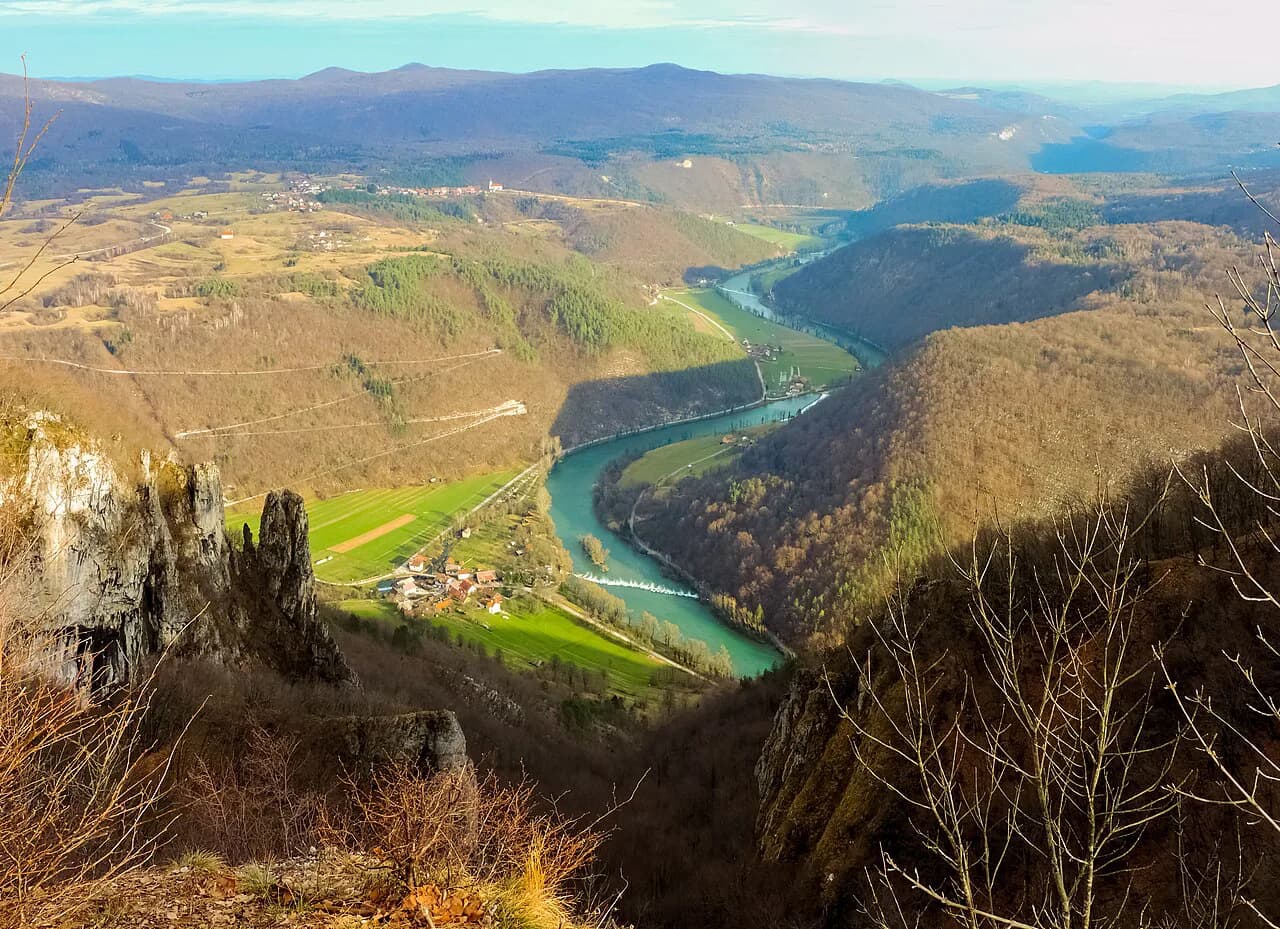
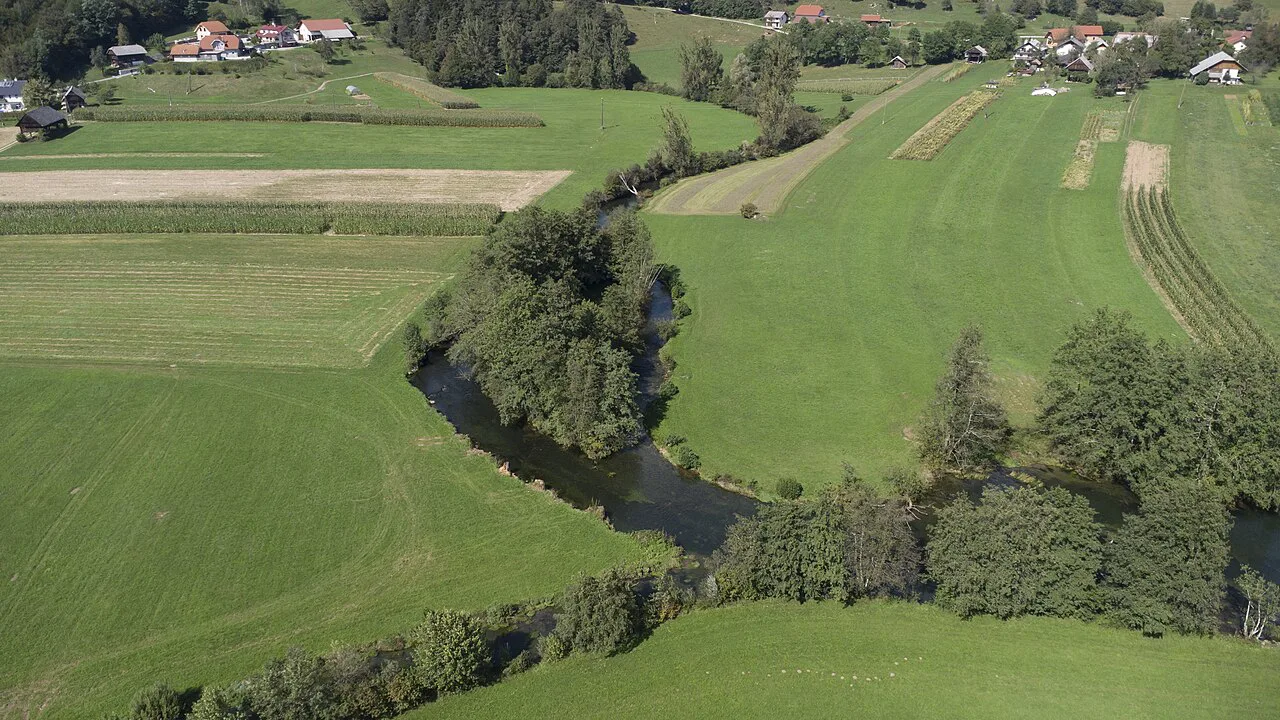
The Krka begins at a karst spring near the village of Krka, roughly 30 kilometers southeast of Ljubljana, then flows east toward the Croatian border. It passes Žužemberk and Novo Mesto before emptying into the Sava near Brežice, a course of about 94 kilometers. The upper stretch is fast and rocky, while the lower half slows into meanders through fields and wooded hills.
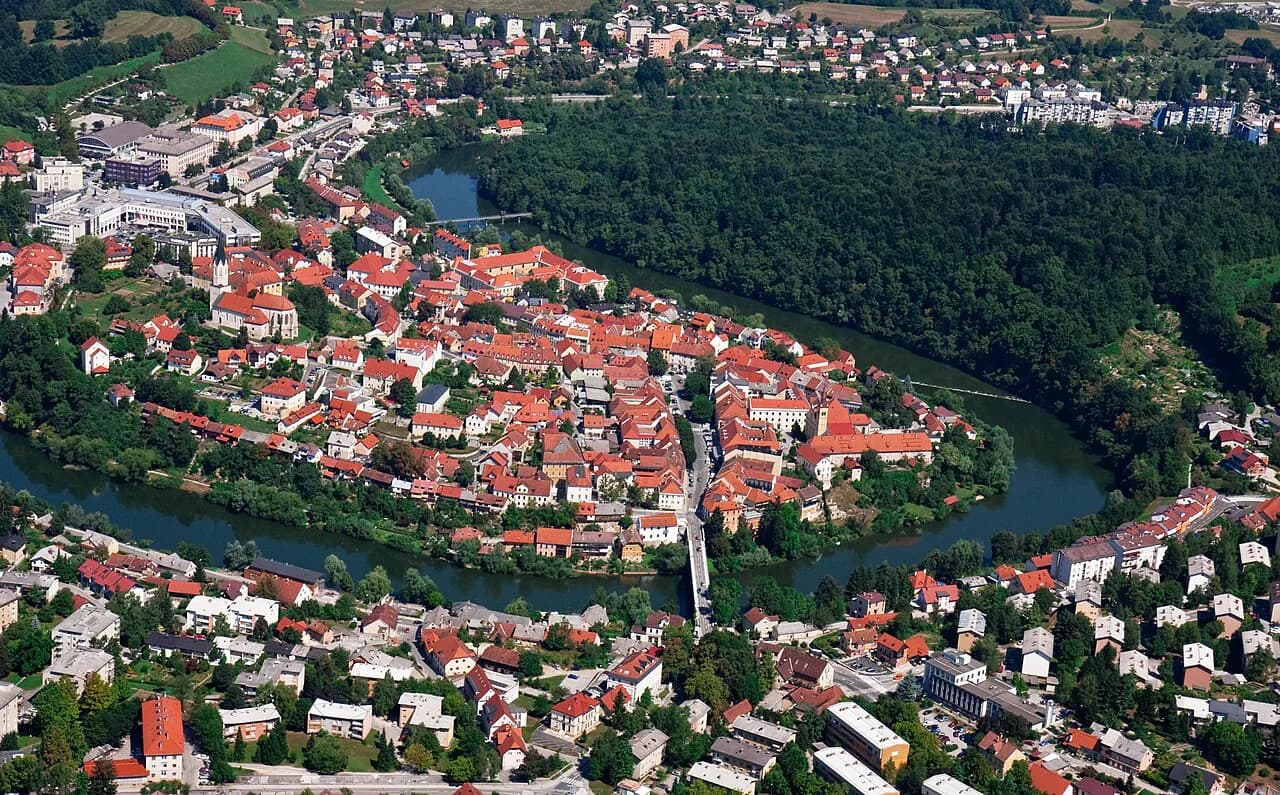
Novo Mesto is the valley's main town, and its old center sits almost three-quarters inside a broad river meander. That bend is the signature view of the lower Krka and a natural place to break the drive. From there the river continues east past Otočec and Kostanjevica na Krki toward Brežice.
Don't confuse it with Croatia's Krka
Search for "Krka river" and you will also pull up Croatia's Krka National Park, which has its own waterfalls and its own ticket system. The Slovenian Krka is a different river in the Dolenjska region, and its draws are castles, an island town and quiet trout water rather than boardwalk waterfalls. Check the country in any booking or map result before you commit, especially when comparing photos.
The two rivers share a name but not a gateway town. Slovenia's Krka valley is entered from Ljubljana via Novo Mesto or Trebnje, while Croatia's park sits near Šibenik on the Dalmatian coast. Pin Novo Mesto as your base if the Dolenjska valley is the plan.
How to travel the valley: car versus bus or train
A car is the practical way to link the source, Zagradec, Loka Park, Dvor, Soteska and the towns in one loop. The riverside pull-offs and the karst spring path at Gradeček are not on a rail line, and buses serve the towns rather than the small stops between them. Travelers without a car can still reach Novo Mesto and Brežice by bus or train from Ljubljana and build a shorter town-based day around them.
Allow a full day for a source-to-mouth drive with three or four proper stops, and a weekend if you want Novo Mesto, Otočec and Kostanjevica na Krki without rushing. The road from Žužemberk toward Novo Mesto runs close to the river for much of the way, so the drive itself is part of the route. Plan fuel and food around Novo Mesto, where services are easiest to find.
Upper course: the karst spring and Krka Cave
The river emerges from a karst spring that looks like a large emerald-green pond near the hamlet of Gradeček. From the parking lot, a path through the village reaches the spring in about ten minutes on foot. Steps beside the spring lead up to Krka Cave, which opens into a hall with an underground lake at its end.
Entry to the cave is ticketed, and the published rates are low enough that the stop suits a short family break. Confirm the current cave opening times and admission on arrival or through the local tourist office before building the day around it, since small karst caves often run limited hours. On the walk back, the Bridge of Love over the meadow makes an easy photo stop.
Rapids and river stops: Zagradec and Loka Park
In the upper course the Krka drops through rapids and small cascades, and the dam at Zagradec is a quick roadside viewpoint worth a few minutes. A short drive toward Novo Mesto brings you to Loka Park, where a large parking area sits by a small wooden inn called Kasca. A gravel path drops through the forest to the riverbank in about five minutes, opening onto grass, wooden bridges and cascades.
Loka Park rewards a picnic rather than a quick photo, so pack food in Novo Mesto or Žužemberk if you plan to stay. The parking area makes it one of the easiest riverside stops on the whole drive. Pair it with Zagradec on the same leg and keep the afternoon for Žužemberk.
Žužemberk: the castle above the river
Žužemberk pairs a castle on the bank with a riverside terrace, and the view from the water back up to the walls is the reason to stop. Restaurant Koren sits on the Krka here, and its terrace is busy in summer, especially on weekends, with locals and visitors swimming nearby. Canoes can be rented at the restaurant for a paddle on this stretch.
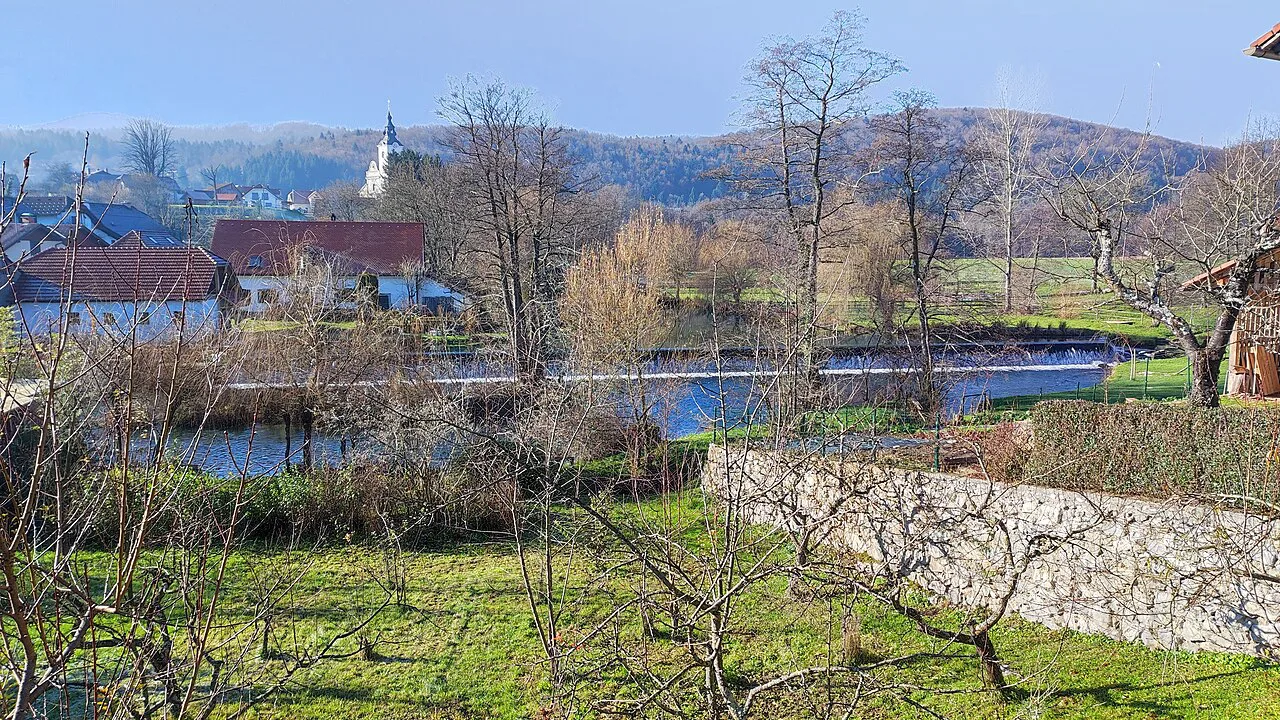
Fishing is regular around the Žužemberk bridge, with fly fishing especially popular on this trout water; a permit is required. Treat the castle and the terrace as a half-day stop rather than a drive-by, and check castle opening details before you go. The riverside setting makes Žužemberk the natural lunch stop between the upper course and Novo Mesto.
Dvor: the iron-foundry museum and tufa thresholds
At Dvor, the Krka crosses tufa thresholds that form a chain of cascades, and the village holds the remains of an iron foundry that ran from 1796 to 1896. A small museum covers that history and can be visited by appointment, so call ahead rather than turning up. The combination of industrial relics and river scenery makes Dvor a distinctive short stop.
The cascades are the main draw if the museum is closed, and they sit close enough to the road for a 20-minute leg stretch. Keep footwear with grip, since tufa and wet limestone are slick. Continue on to Novo Mesto for the night or push toward Otočec.
Novo Mesto: the town inside the meander
Novo Mesto is the valley's hub and the best place to base yourself for two days on the Krka. The old center fills a near-complete loop of the river, which you can see clearly from the air and sense on foot as you cross between the banks. Use the town for fuel, groceries and a full choice of restaurants before heading to the smaller riverside stops.
Novo Mesto also anchors the lower Dolenjska sights, including Otočec, Kostanjevica na Krki and the Pleterje Charterhouse. Give the town a half day of walking and keep the rest for the river stops on either side. It is the one place on the route where you can skip the car for an evening.
Otočec Castle on its river island
Otočec Castle sits on an island in the Krka just east of Novo Mesto, and the building now operates as a hotel. You can see the castle from the banks without staying, which makes it a convenient photo stop on the drive. Castle Struga and a golf course sit nearby if you want to extend the leg.
Travelers who want to stay the night at the castle should book directly with the hotel, since room rates and policies are set by the property rather than published on tourism pages. For a day visit, park, walk to the riverbank and continue toward Kostanjevica na Krki. The stop costs little time and fits naturally between Novo Mesto and the island town.
Kostanjevica na Krki: the island town
Kostanjevica na Krki is a small town set on an island in the middle of the Krka, which makes it the most unusual settlement on the route. The Božidar Jakac gallery occupies part of the former monastery and gives the town a cultural anchor beyond the river views. Walk the bridges and the quiet streets rather than treating it as a drive-through.
Check the gallery's opening days and admission before you commit an afternoon, since small regional galleries often close on Mondays and run shorter winter hours. The town pairs well with a riverside walk and a slow lunch. It is the best stop on the lower Krka for travelers who care more about atmosphere than castles.
Soteska Manor, the Devil's Tower and Pleterje
Soteska Manor and the nearby Devil's Tower add a ruin-and-legend stop between Novo Mesto and the eastern end of the valley. The Pleterje Charterhouse, a monastery founded in 1407 at the foot of the Gorjanci hills, is the other notable stop on this leg. Both are quiet, low-key visits rather than full attractions.
Carthusian monasteries are working religious houses, so check visiting rules and any shop hours before you drive out. Soteska is the easier add-on if time is tight. Choose one and save the other for a return trip rather than rushing both.
Brežice: the castle and the Sava confluence
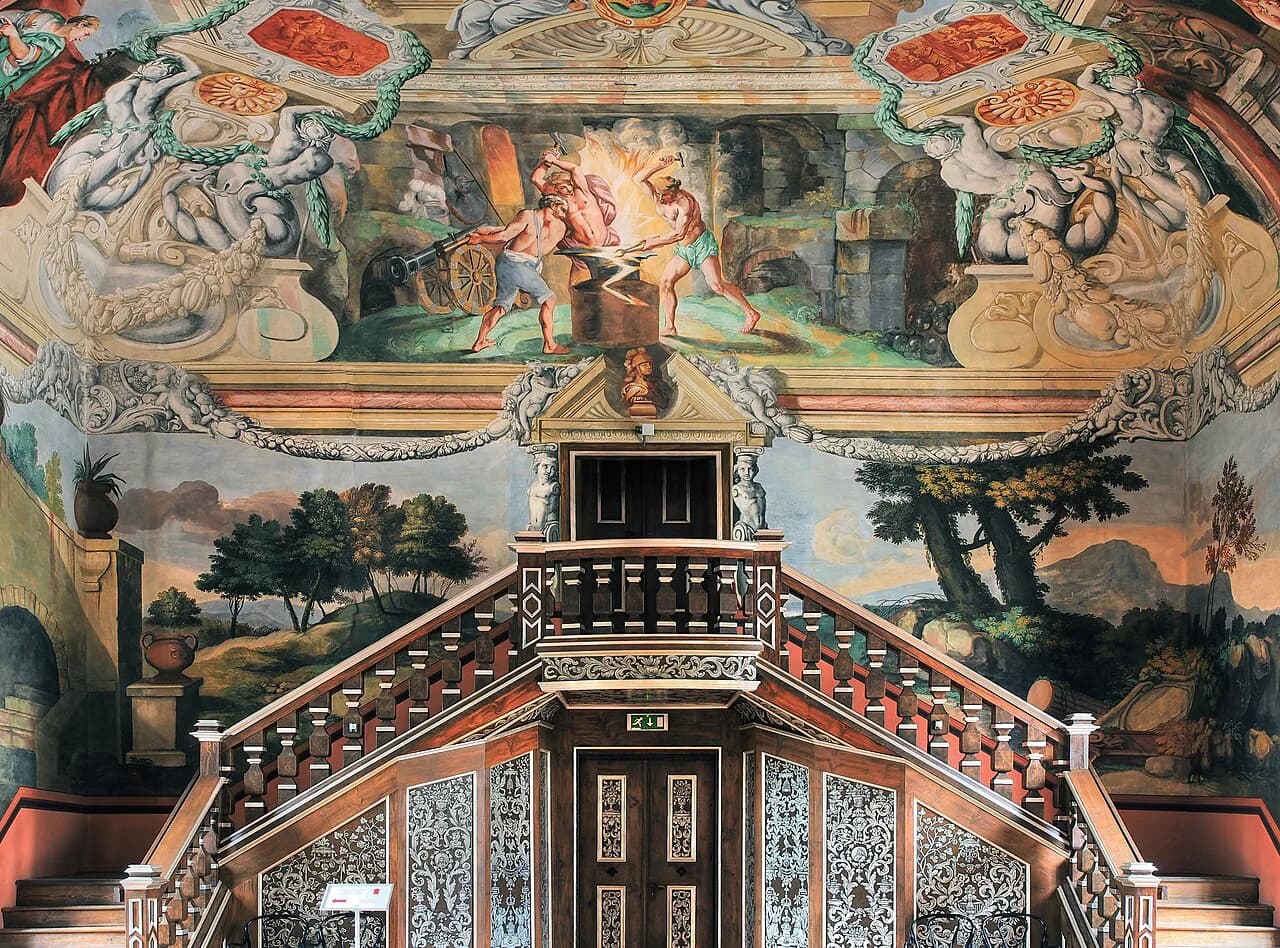
Brežice marks the eastern end of the Krka's course, close to where the river meets the Sava. The castle's Royal Hall is known for its painted interior and hosts early baroque and Renaissance music events. The medieval town center is small enough to walk in an hour or two.
Check castle opening times and any event schedule before you plan a tour, because the hall may close for concerts or private use. Brežice works best as the finish line of the source-to-mouth drive, with the castle as the last indoor stop of the day. From there the motorway back toward Ljubljana is close.
Kayaking, rafting and where to wade
The Krka offers rafting and kayaking on several stretches, with the most popular paddling near the town of Krka alongside the source. In many places the river runs shallow enough to wade, though the water is cold even in summer. Canoe rental is available at the riverside terrace in Žužemberk.
Operators set their own season, minimum ages and equipment rules, so book through a local outfitter and ask about life jackets and river conditions. After heavy rain the upper Krka rises quickly, and the limestone boulders make footing uncertain. Wade only where the current is clearly gentle and you can see the riverbed.
Fishing the Krka: trout water and permits
The upper Krka is a limestone stream holding both brown and rainbow trout, with prolific sedge hatches and the best chance at larger fish in the evening. Wading is tricky over limestone boulders but the entire trout stretch is accessible along its length. Fly fishing is popular here, and a permit is required to fish.
Buy your permit from the local fishing club or a licensed lodge before you cast, since the Krka is managed water rather than open access. The Radovna and Sava Bohinjka are other trout streams the same lodge lists among its destination waters, but the Krka is the Dolenjska trout option. A guided day makes sense if you want to learn the water quickly.
Which stretch of the Krka fits your day?
For a single day, drive from the source near Gradeček through Zagradec, Žužemberk and Novo Mesto, then finish at Otočec. That route captures the spring, the rapids, the castle terrace and the island castle without long detours. If you have a second day, add Dvor, Kostanjevica na Krki and Brežice on the lower river.
Without a car, base yourself in Novo Mesto and build the day around the town meander, Otočec and a bus or train to Brežice. Whichever route you choose, verify castle hours, cave admission and fishing permits with the operator before you set out, since small Dolenjska sites keep limited schedules.
Explore more Novo Mesto guides
Frequently Asked Questions
Where does the Krka river in Slovenia begin and end?
It rises at a karst spring near the village of Krka southeast of Ljubljana and flows east through Žužemberk and Novo Mesto before emptying into the Sava near Brežice.
Is the Krka river the same as Croatia's Krka National Park?
No. They are separate rivers in different countries. Slovenia's Krka runs through the Dolenjska region and is known for castles, an island town and trout water, while Croatia's Krka National Park lies near Šibenik on the coast.
Sources
Notes for your Slovenia trip
Optional updates to our Slovenia place guides.
You might also like
Continue reading
More guides you'll find useful