
Piran Lighthouse: What to See at the Punta and How to Visit

The Piran lighthouse (Piranski svetilnik) is a compact 1872 light built on the platform of a 1508 defensive bastion at the far tip of the Punta cape, sharing that platform with the lighthouse keeper's former residence, a neo-Gothic belfry and the Church of Our Lady of Health. Plan on 30 to 60 minutes here, most of it in the small museum inside the keeper's house and on the belfry stairs. This guide covers where the complex sits, how to walk to it, what the exhibition shows, ticket tiers and the month-by-month schedule.
The site at a glance: light, bastion, belfry and church
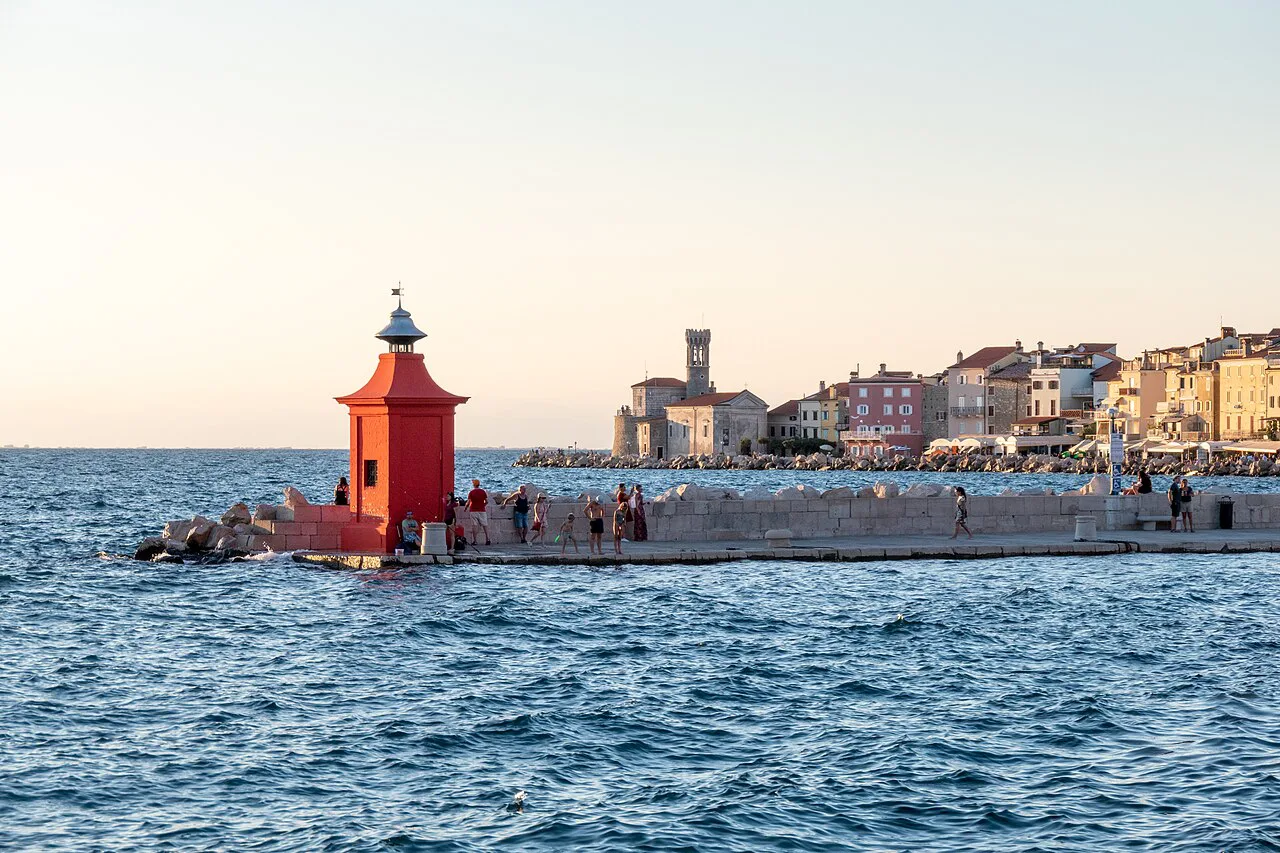
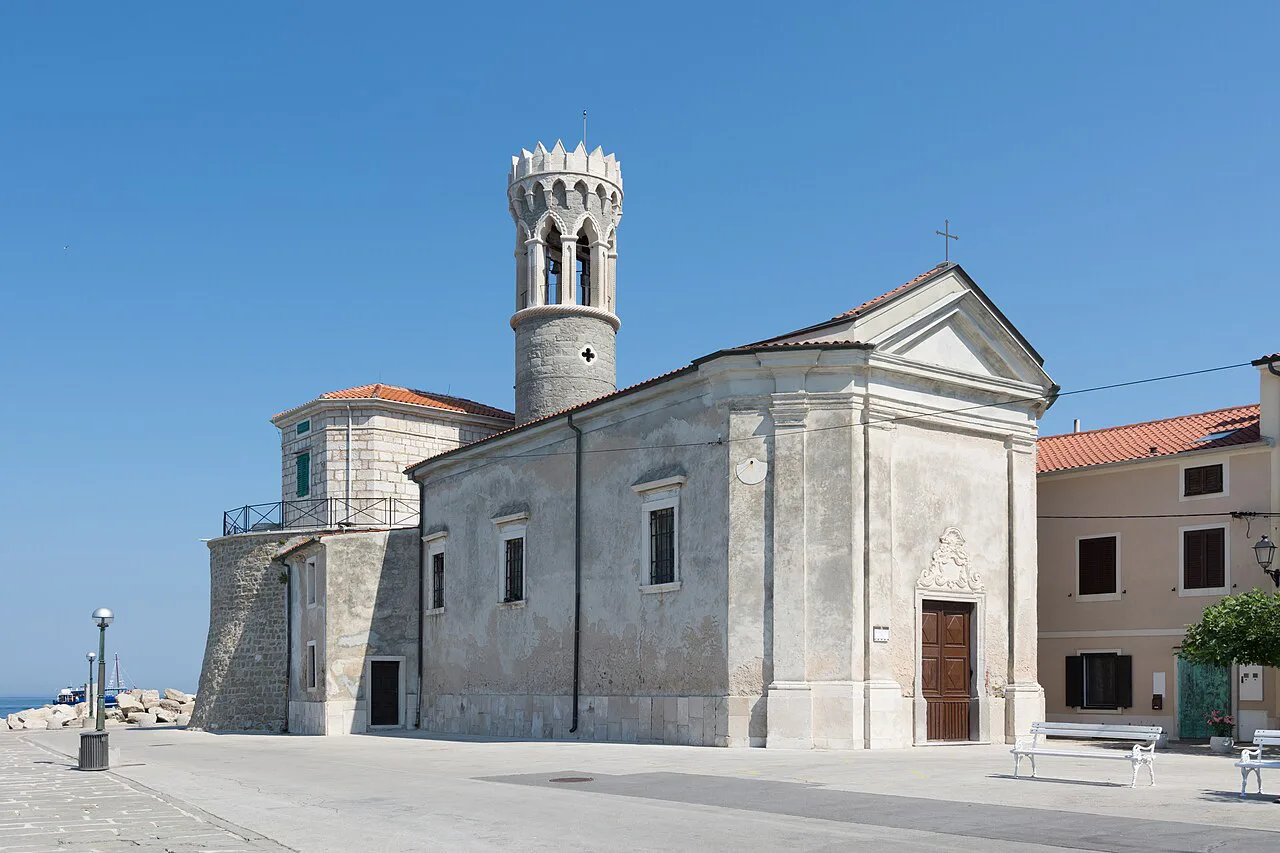
The building most people photograph on the Punta is the round neo-Gothic bell tower, not the lantern itself, which sits low and partly hidden behind the larger structures. The base is the Bastione, a defensive tower that was part of Piran's walls and was built in 1508, when the ground around it was a detached tidal marsh. Since 1872 the tower has carried the lighthouse and the keeper's house, and the electric light sits 12 meters above sea level with a visibility of 11 nautical miles.
Read the complex as one layered whole: the fortification terrace, the 1872 light, the keeper's dwelling added in 1874 and the belfry rebuilt in its current round form in 1855 after the earlier square tower was destroyed in 1849. The Church of Our Lady of Health leans against the Venetian tower, and its interior stucco and ceiling paintings were recently restored while salt air has damaged the marble altars.

Where it is: Prešernovo nabrežje 20 on the Punta
The address is Prešernovo nabrežje 20, 6330 Piran, at the far end of the Punta cape beside the Church of St. Clement, as listed by the Portorož & Piran tourist board. From Tartinijev trg, the walk along the seafront to the tip takes a few minutes and stays flat, so it slots easily into an evening stroll. The old town is pedestrian, which means you arrive on foot rather than by car.
From Portorož, the cape is reached on foot once you are in the old center. Leave the car outside the historic core and finish the approach along the promenade. The exterior terrace gives the view over the rooftops, and it is where most visitors end up at sunset.

Getting in: the stone stair from the street
Entry to the keeper's house is up the external stone staircase from the street on the northeast side, which leads to the top of the former rondelle. Inside, a hallway divides the original flat into four small rooms that made up the keeper's family quarters. If the gate at the stair is shut, the museum is between seasons rather than closed permanently, so match your visit to the published months below.
Inside the keeper's house museum
The exhibition in the residence covers the history of this Piran district from prehistoric times, the development of the port and lighthouse service, and the keeper's work and daily life from the light's installation until it was automated at the end of the 1970s. A section is devoted to the restoration and conservation work on the monument itself. The rooms have not been fully restored, and the layered decorative paintings under later coatings are part of what you see.
The keeper's flat is the reason to pay the entrance fee rather than simply photograph the tower from the promenade, and temporary exhibitions are also staged in the lighthouse premises. Budget most of your half hour inside these four rooms if maritime history interests you.
Climbing the belfry for the rooftop view
A tour of the lighthouse includes the interior of the belfry and the spiral stairs up to the top, where the view opens over Piran's rooftops and the surrounding coast. The climb is short but the stairs are tight, so leave bags at the bottom if the passage feels narrow. This is the closest thing to a viewpoint on the cape and pairs naturally with the exhibition below.
Tickets: what the entrance fee covers
The entrance fee is 3.00 EUR for visitors generally, 1.00 EUR for citizens of the Municipality of Piran, 8.00 EUR for families and free for children up to 7 years, and the money goes toward the museum's work, site upkeep and presentation. Pay at the site when you arrive; the fee is small enough that booking ahead is unnecessary.
The tourist board also lists 3 EUR as the standard rate with free admission for children under 7. Use the museum page for the current tiers and the timetable before a trip.
Opening months and hours, season by season
The season runs from April through October, and the schedule shifts by month. In April and May the museum opens Friday, Saturday and Sunday from 11:00 to 17:00; June moves the weekend opening to 10:00 to 17:00. July splits the day into 9:00 to 12:00 and 17:00 to 21:00, August into 9:00 to 12:00 and 16:00 to 20:00, September runs 10:00 to 18:00 and October 10:00 to 17:00.
The tourist board publishes a 10:00 start for May and June on Friday, Saturday and Sunday, so the two published timetables differ slightly for the spring weekends. Rely on the museum's own page for the day you plan to go and treat the other listing as a cross-check. The midsummer evening slots are the most comfortable for the terrace, since the light stays up late.
Outside those months the museum rooms are not on the published schedule, so plan the Punta as an exterior walk if you visit in winter. The light itself is an automated navigational beacon rather than a staffed station, so there is no keeper on duty to let you in.
How long to allow and what to pair it with
Give the lighthouse complex 30 to 60 minutes: the stair, the four museum rooms and the belfry climb. Add time if you want to sit on the terrace for the sunset, which is the reason many people walk out here in the evening. The visit works as one stop on a promenade walk rather than a standalone outing.
The seafront on either side of the cape is an open-air route that links naturally with the Forma Viva Portorož sculpture works on the Seča peninsula across the bay, so walking out from the square and back makes a natural loop of an hour or so with the museum in the middle.
Nearby on the cape: church, walls and harbor beacons
The Church of Our Lady of Health leans against the Venetian defense tower right beside the lighthouse, and the surviving stretch of the Piran walls and the 1508 bastion belong to the same defensive story, so the cape reads as a single walk through the town's maritime past.
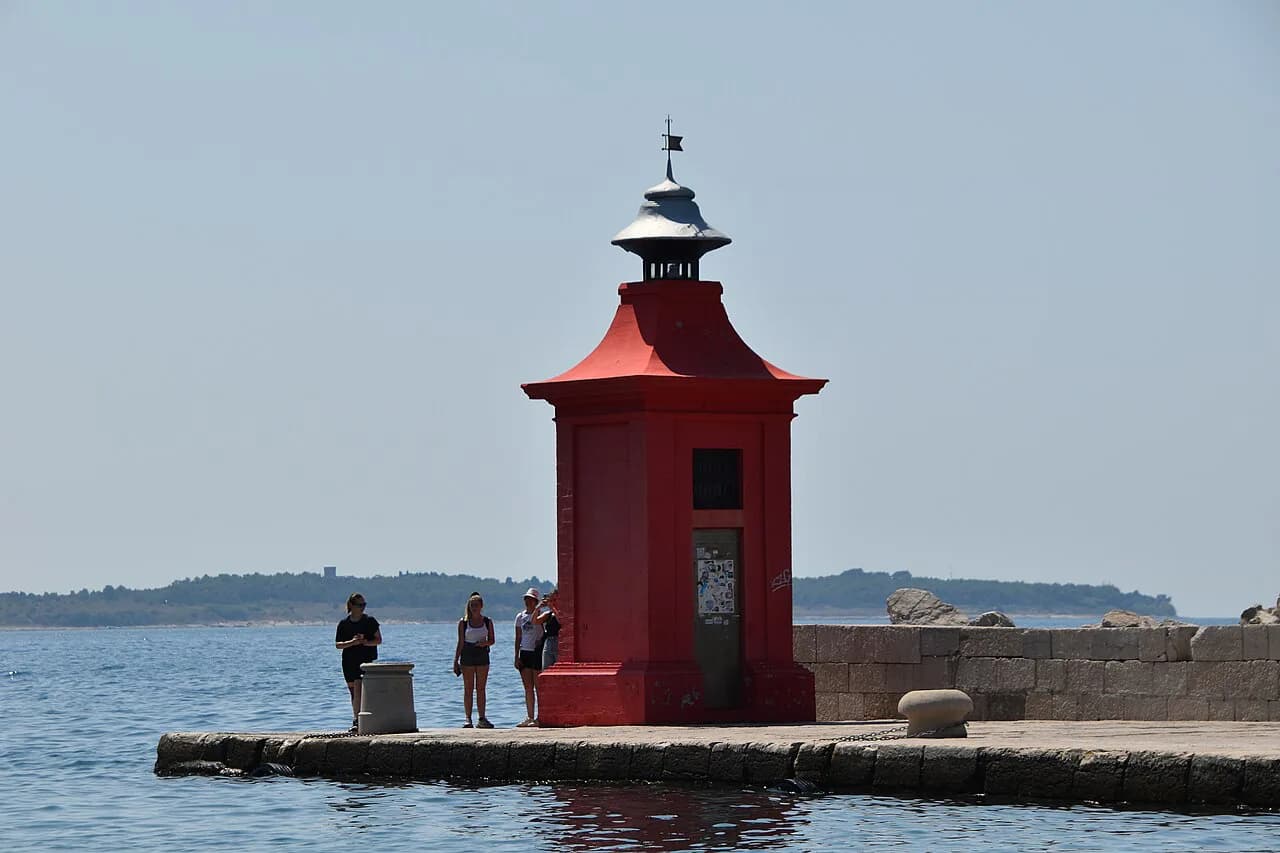
Two small harbor beacons, one red and one green, mark the entrance to the harbor below the cape, and a pier leads out to the red one. Viewed from the bus station lookout, they line up with the neo-Gothic belfry for the classic Piran skyline shot.
A short detour into the old town brings you past the Venetian house and the aquarium, both easy add-ons before or after the cape walk. Another sensible wet-weather substitute is the Maritime Museum Piran (Pomorski muzej Sergej Mašera), which runs the lighthouse display.
Is the Piran lighthouse worth the walk to the Punta?
Yes, if you treat it as a short, layered stop rather than a major sight: the exhibition in the keeper's flat and the belfry view give the small light real substance, and the terrace is a fine place in town for a sunset. Go on a day when the museum is scheduled to open if you want to go inside, and otherwise walk out for the exterior and the church.
Build the rest of the day around the old town on foot, since the pedestrian center puts the square, the seafront and the cape within one continuous walk.
Explore more Piran guides
Frequently Asked Questions
Is the Piran lighthouse the same as the bell tower?
No. The bell tower is the round neo-Gothic structure that most visitors photograph and mistake for the lighthouse. The actual lantern is a smaller 1872 structure set on the 1508 bastion platform behind the larger buildings, and the two form one complex with the keeper's house and the Church of Our Lady of Health.
Can you go inside the Piran lighthouse?
Yes, during the published season from April through October. The entrance is up the stone stair from Prešernovo nabrežje, and inside you find a museum exhibition in the keeper's former flat plus access to the belfry and its spiral stairs. Outside those months, plan on viewing the exterior and terrace only.
How far is the Piran lighthouse from Tartini Square?
It is a short flat walk along the seafront from Tartinijev trg to the tip of the Punta cape, on the order of a few minutes. The old town is pedestrian, so you arrive on foot.
Is there an entrance fee for the lighthouse in Piran?
Yes. The Maritime Museum's lighthouse page publishes the current price list, with a standard rate, a reduced rate for Municipality of Piran citizens, a family ticket and free admission for children up to 7; the money goes toward upkeep and the museum's work.
How do I know whether the museum is open on my date?
Check the Maritime Museum's lighthouse page for the month-by-month schedule before you go, since the days and hours shift between spring, midsummer and autumn. The Portorož & Piran tourist board listing gives a second published timetable you can compare.