
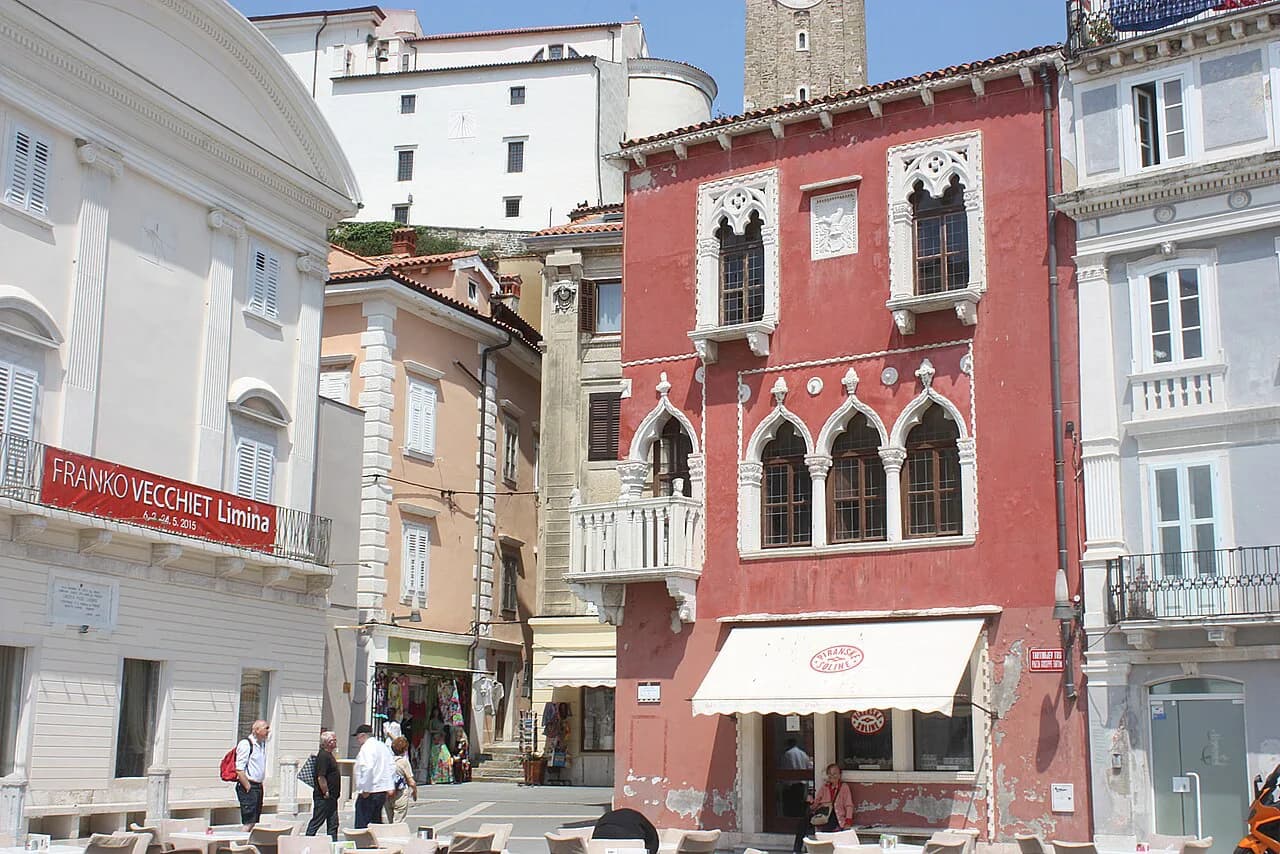
Venetian House in Piran: The Gothic Facade on Tartini Square

The Venetian House is a facade stop of a few minutes on Tartini Square in Piran, not a museum you tour inside. You go for one thing: a mid-15th-century Gothic residence whose carved windows, decorative corner balcony and stone lion relief survive in the middle of the old town's main square. This guide places it on the square, tells you which details to find, explains the Latin line between the windows and pairs it with the sights within a short walk.
What the Venetian House is
The building known in Slovenian as Beneška hiša is a Gothic residential house at Tartini Square 4, in the center of Piran and a short walk from the harbor front. It dates from the mid-15th century, when Piran was an important port town with strong trade ties to the Republic of Venice, and its Gothic style reflects that maritime era.
Treat it as a piece of standing architecture rather than an attraction with a desk and a turnstile. Nothing in the building's published description mentions an interior you can visit, so build it into a walk rather than a separate outing.
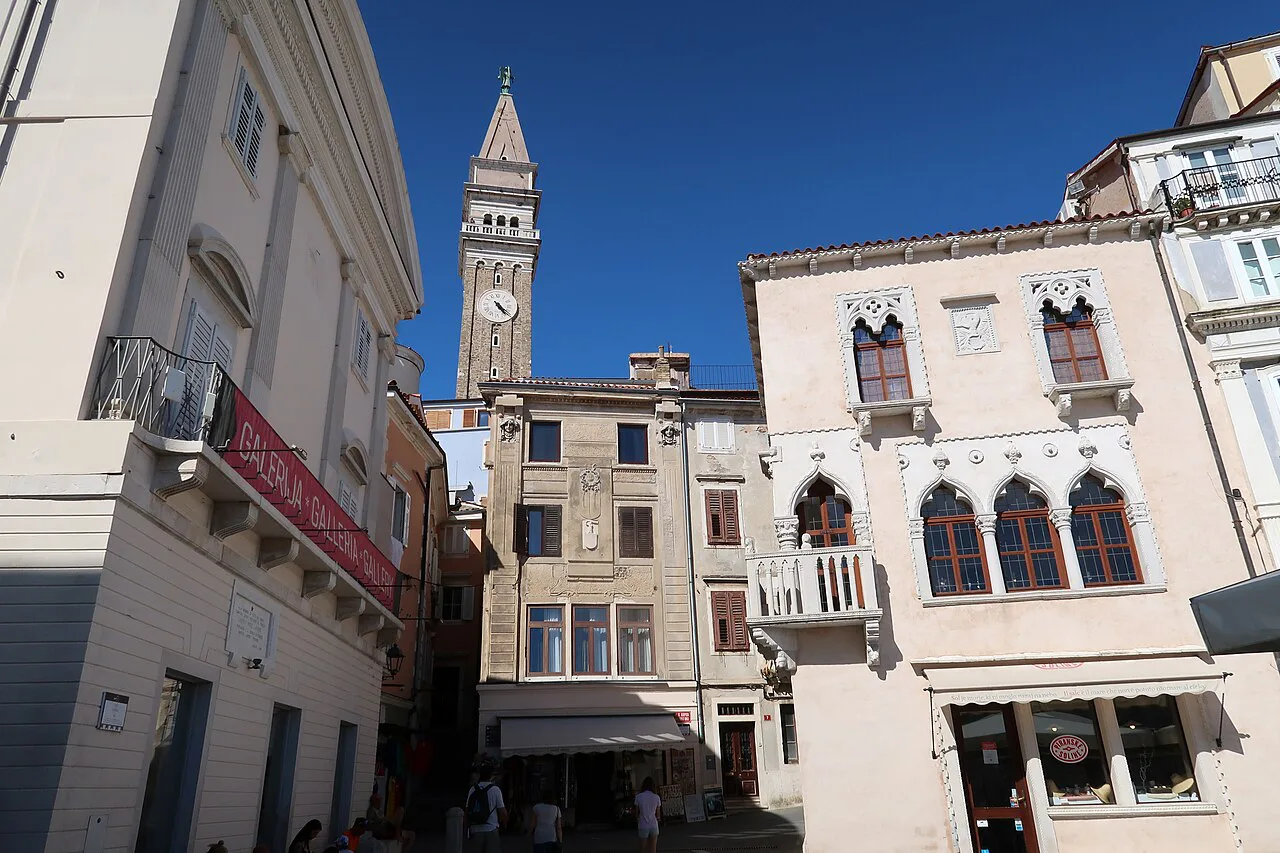

Where it stands on Tartini Square
The house faces Tartini Square, the broad paved space at the heart of Piran's pedestrian old town. Address references put it at Tartini Square 4, close to the Tartini Monument, the town hall and the surrounding houses with Venetian-style facades.
That setting matters for planning. Tartini Square (Tartinijev trg) in Piran is the natural starting point for anything in the old town, and the Venetian House sits squarely on the route between the waterfront and the lanes climbing toward St. George's Church.
The square's edges are lined with colorful house fronts in a Venetian style, so the Gothic house reads as part of a street wall rather than a standalone monument. Look along the facades rather than searching for a sign.
If you want the wider set of sights in town laid out before you arrive, work from the Piran attractions overview and pick your stops in walking order.
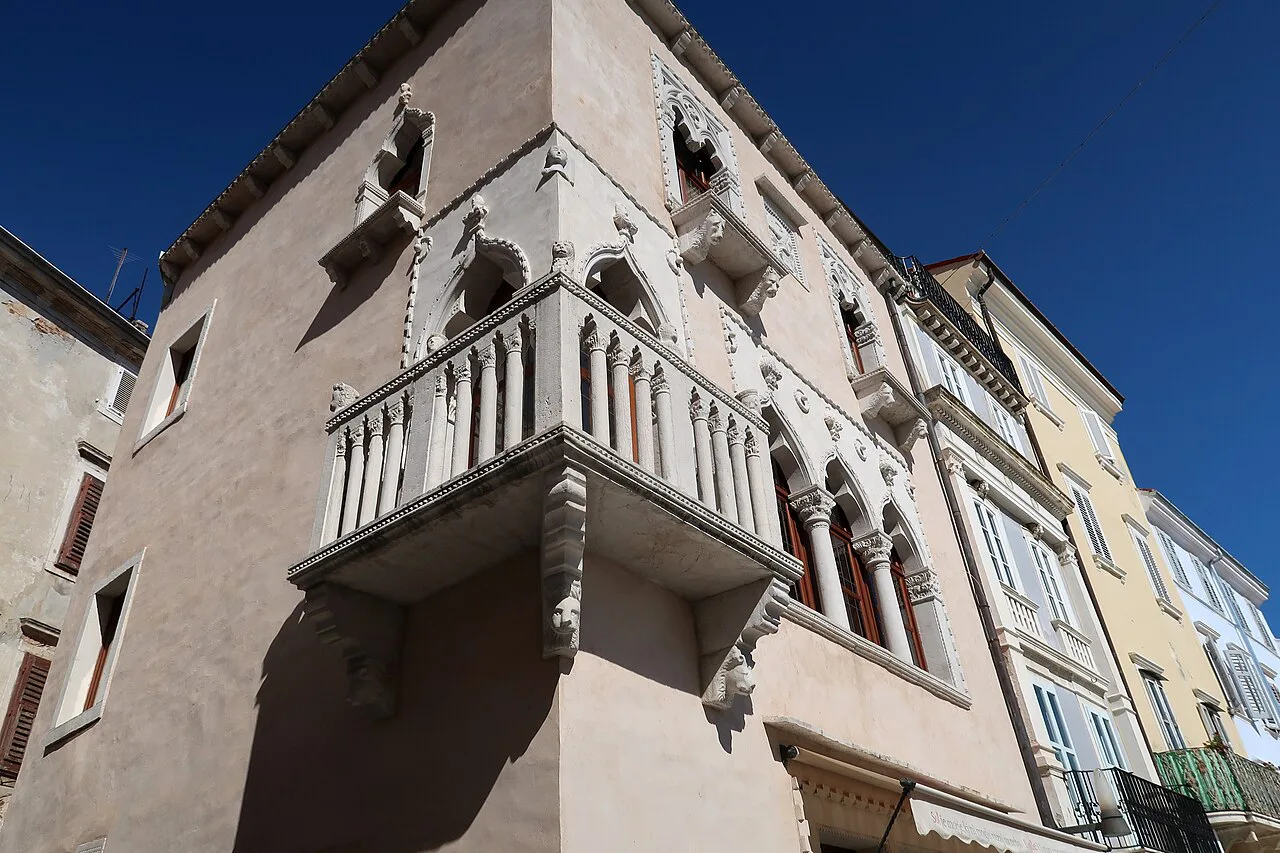

What to look for on the facade
Four features reward a slow look. Start with the carved window openings and the decorative corner balcony, which give the upper floor its Gothic character. Then find the stone relief of a lion holding a banner on the facade, and finally the Latin inscription carved between the windows.
The lion relief carries a message rather than decoration alone: it holds a banner, and the carving sits alongside the lettering between the windows. Give the facade two or three minutes at close range and you will find all four; walk past at street pace and you will see only another old house.
The 'Lasa pur dir' inscription
The inscription carved between the windows reads Lasa pur dir, rendered as "Let them talk." The carving is tied to a Venetian merchant's relationship with a local woman, and the merchant had the line cut into the stone as an answer to gossip circulating about the two of them.
That story is the reason to look up rather than walk past. The inscription is a personal message fixed into a public facade, and it survives in the stone among the window openings on the square's edge.
How long to allow
Budget a few minutes for the house itself and fold it into a walk across the square. Read the inscription, find the balcony and the lion, and move on; there is no interior circuit to add time for.
The bigger time cost is the square. Allow a quarter of an hour or more for Tartini Square as a whole, including the monument, the surrounding facades and a look back toward the water, and your stop at the Venetian House fits inside that rather than adding to it.
Getting there on foot
You reach the house on foot, because the old town around Tartini Square is pedestrian. Come up from the harbor front, follow the open paved space, and the facades on the square's edge are in front of you; the walk from the waterfront takes a few minutes.
Piran itself is compact enough that most old-town stops sit within a short walk of the square. If you are stringing together several, plan a single loop rather than backtracking through the lanes.
Nearby on the same square
The Tartini Monument stands on the square within a minute of the house, and Piran's town hall and theater are in the same cluster. The parish church and campanile of St. George sit roughly 50 to 70 meters away by coordinate reference, uphill above the square.
Other buildings on and around the square carry their own carved detail, including a Baroque house a short distance away. Walk the perimeter once and you will pick up several facades in the same few minutes.
Uphill and museum options nearby
St. George's Parish Church and its campanile are the obvious uphill continuation, positioned close above the square. The church, the baptistry and the campanile appear together in the surrounding-monument list, so treat them as one stop.
For an indoor stop, the Sergej Mašera Maritime Museum sits within a couple of minutes of the house on the same street pattern. Combine the facade with the museum if you want to spend an hour rather than a few minutes in this corner of town.
The coastal strip beyond Piran rewards a separate half-day: the Forma Viva Portorož sculpture park on the Seča peninsula is a short drive or bus ride around the bay if you are already in town.
Practical notes for an exterior sight
This is a facade on a public square in a pedestrian old town, so the visit is a look rather than a booking. Read the carved detail from the square, keep clear of doorways, and let the surrounding facades carry the rest of the stop.
Piran's old town rewards slow walking: the lanes are narrow, the surfaces uneven and the square opens up suddenly. Wear shoes you can walk in and leave the car outside the pedestrian core.
Should the Venetian House be on your square walk?
Yes, if you are crossing Tartini Square anyway: the inscription, the balcony and the lion relief take a few minutes and give the square a focal point. Skip a dedicated trip for it alone and pair it with the monument, the surrounding facades and the climb to St. George's.
Build the stop into a morning in the old town, finish at the church and campanile above the square, and add the maritime museum if the weather turns.
Explore more Piran guides
Frequently Asked Questions
Do you need tickets for the Venetian House in Piran?
The house is a Gothic facade on Tartini Square, and the published description covers the exterior carvings rather than an interior tour. Plan on viewing it from the square as part of a walk, and ask at the Piran tourist information office if you want to confirm whether any part of the building can be visited.
What is the inscription on the Venetian House in Piran?
The line between the windows reads Lasa pur dir, meaning "Let them talk." According to the building's published description, a Venetian merchant had it carved as a reply to gossip about his relationship with a local woman.