Capuchin Bridge in Škofja Loka: What to See and Where to Stand
The Capuchin Bridge in Škofja Loka is a 14th-century stone bridge over the Selška Sora. Here's how to find it, what you're looking at, and the best view.
On this page
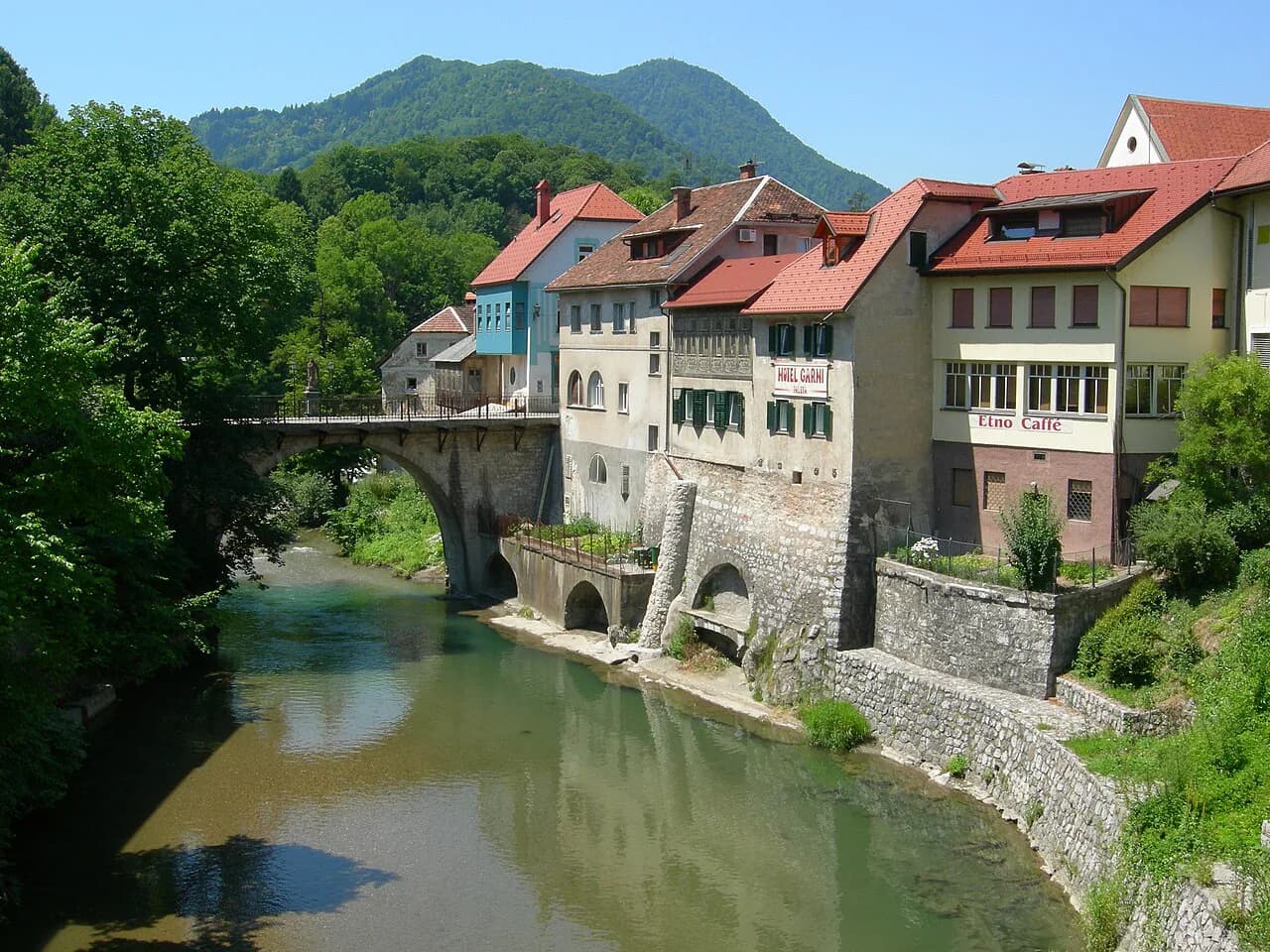
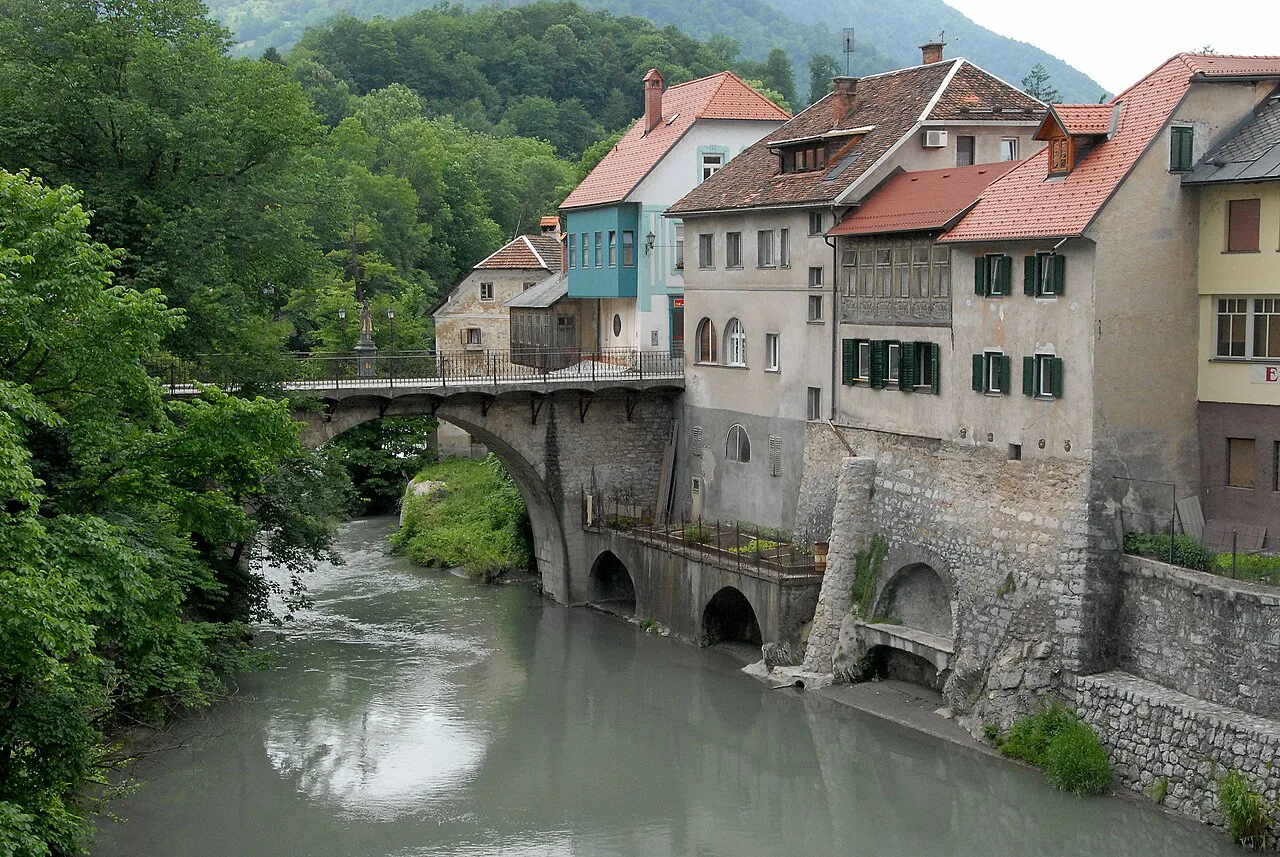
The Capuchin Bridge is a semicircular arch bridge of cut stone over the Selška Sora in Škofja Loka, dating to the mid-14th century. You see it in about ten minutes, but you should walk both bridges and the old town center around it, which takes an hour or two. This guide covers where the bridge sits, which parts are medieval and which came later, the viewpoint most people miss, and how to work it into a short walk with St. Jacob's Church, the main square and the castle.
Two names get used for the same crossing. Locally it is the Kapucinski most, and it also appears as the Stone Bridge, described as leading from the Capuchin monastery to the old town center.
What the Capuchin Bridge is
The structure is a single semicircular span of cut stone across the Selška Sora, built in the mid-14th century. Its medieval fabric is the stone arch and the abutments; the ironwork and the statue on top are much later additions, so it helps to know which is which before you look.
In town the crossing is also called the Stone Bridge, and it carries foot traffic between the Capuchin monastery bank and the old town center. Treat it as a piece of the street network rather than a ticketed sight: you cross it on foot as part of a walk into the center.
Where it sits in Škofja Loka
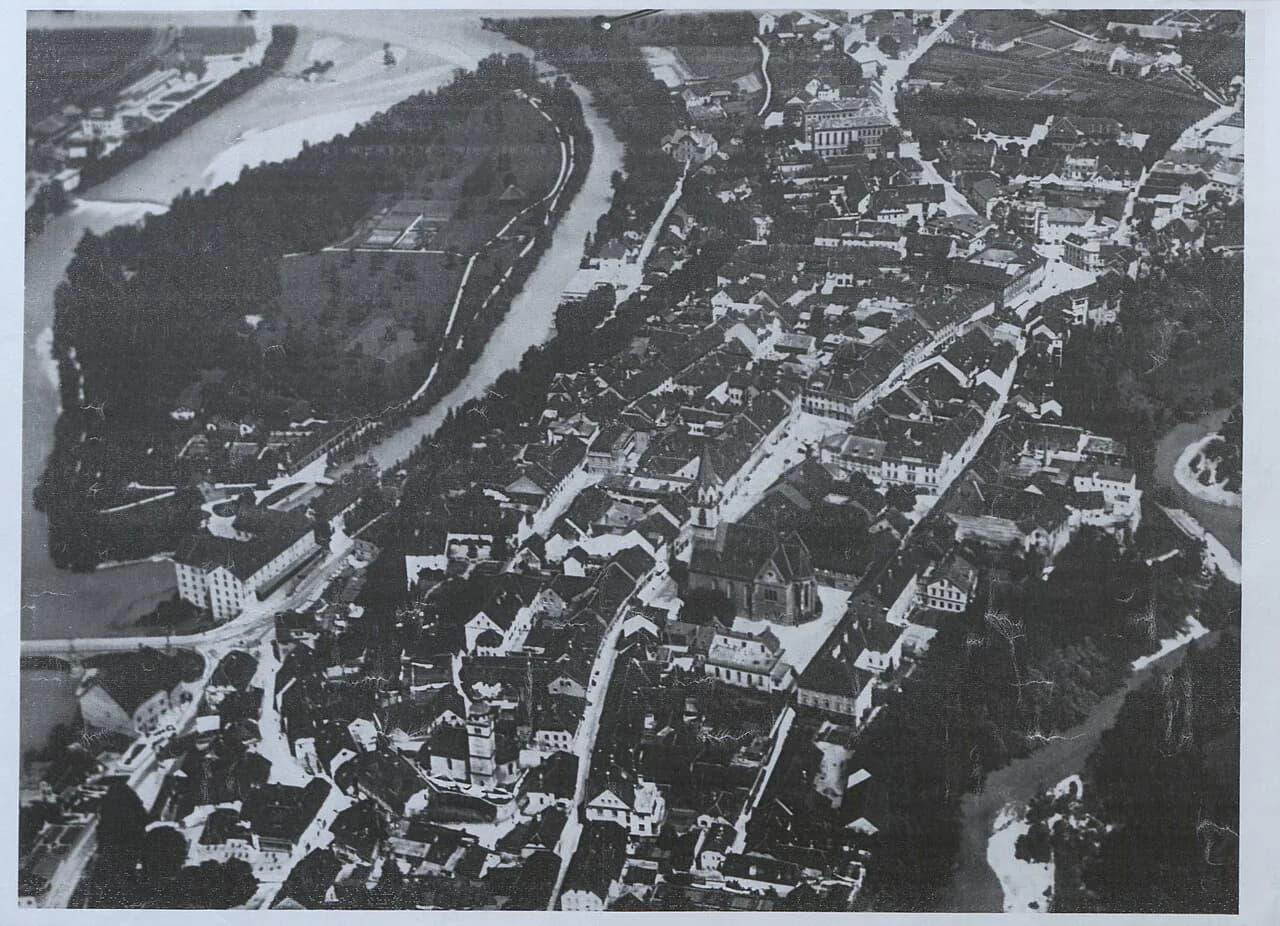
The bridge spans the Selška Sora on the edge of the historic core, with the monastery side on one bank and the old town on the other. That position explains its history: it was the way in and out of town, not a decoration in the middle of it.
For orientation, the walkable center around the bridge, the main square and the church takes an hour or two at an unhurried pace. The full route through town and up to the castle is laid out on the Škofja Loka page, which is useful if you are building a half day rather than a quick photo stop.
What to look for on the bridge
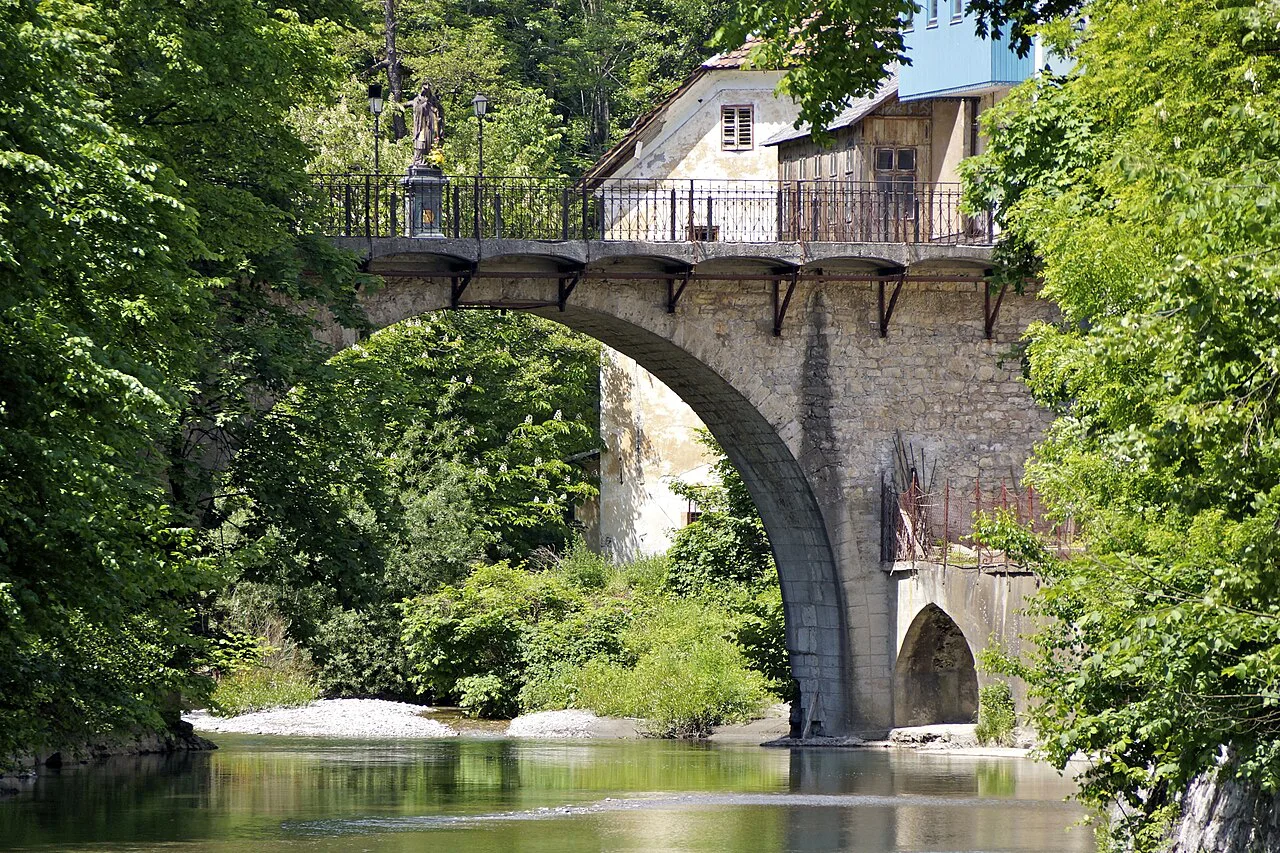
The bridge was thoroughly renovated in 1888, when it received an iron railing. In the middle of that railing stands a statue of Saint John of Nepomuk, with the Škofja Loka coat of arms on the pedestal below. Look for the statue first, then the railing it sits on, and then step back to see how both sit on the older stone arch.
The name comes from the church on the far side of the river, so the bridge reads as an approach to the monastery rather than a standalone monument. Walk the span once from each direction; the coat of arms faces one way, and the statue is easier to photograph from the side than head-on.
The Selška Gates and the medieval town edge
During the Middle Ages the Selška Gates stood next to the bridge, with a guard tower controlling the crossing. The gate was a controlled entrance, which is why the bridge functioned as the fortified way into town rather than a simple link between banks.
Knowing that, the bridge makes more sense: it marked the town's edge, and the streets beyond it were the old town proper. As you cross toward the center, you are following the line the gate controlled.
The best view of the bridge
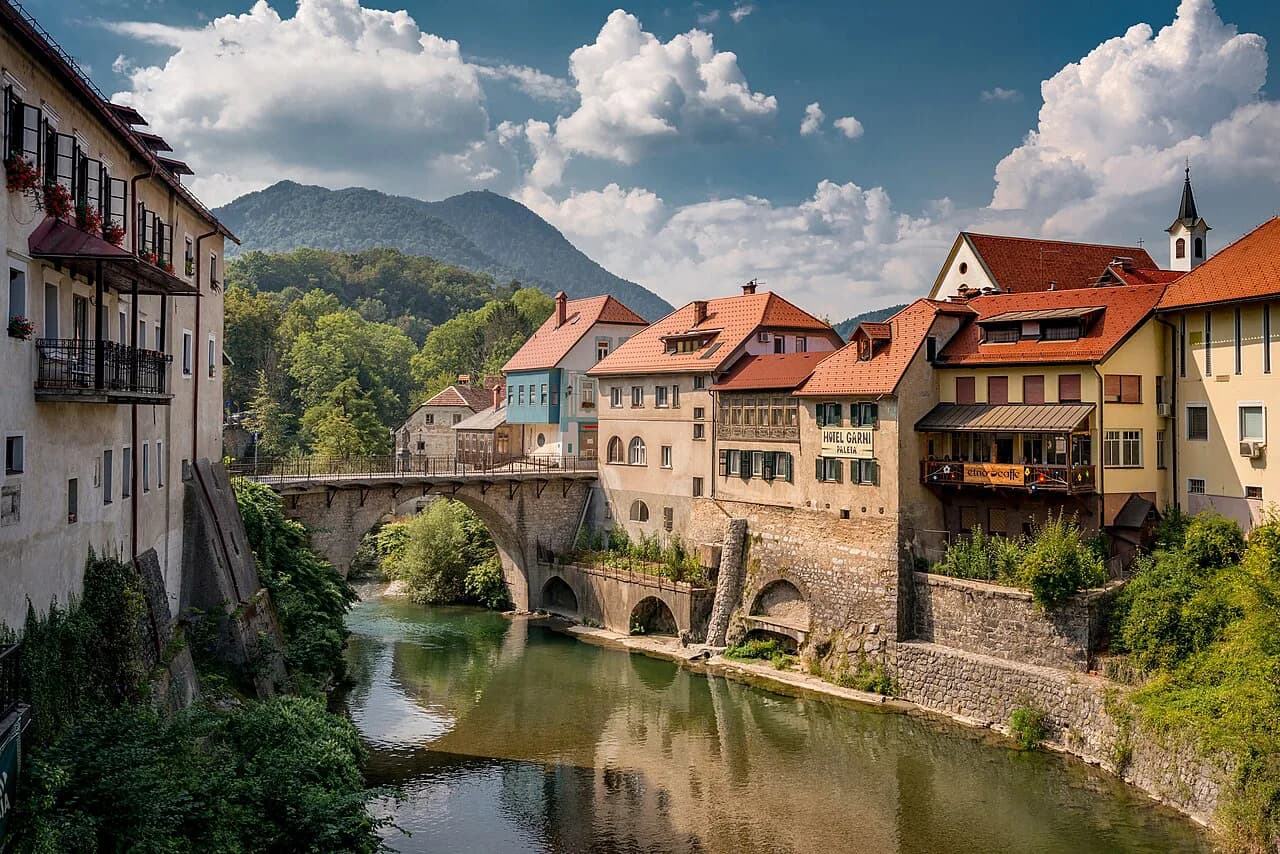
The better view is not from the Capuchin Bridge itself but from the smaller bridge just below it. Cross that lower bridge on foot and turn back: you get the arch, the water and the town in one frame instead of a flat deck-level view.
The practical loop is simple. Walk across the small bridge below, take the first left and then left again to cross the Capuchin Bridge itself, and continue up the steps toward the castle. That order gives you the photo first and the crossing second.
Slotting the bridge into a short walk through town
Start at the Šeširski Most bridge across the river, pass the stone-built Gostilna Kašča on your left and take the first right up the steps to St. Jacob's Church. The church was built in 1471, and its painted ceiling carries 16th-century frescoes worth a few minutes inside.
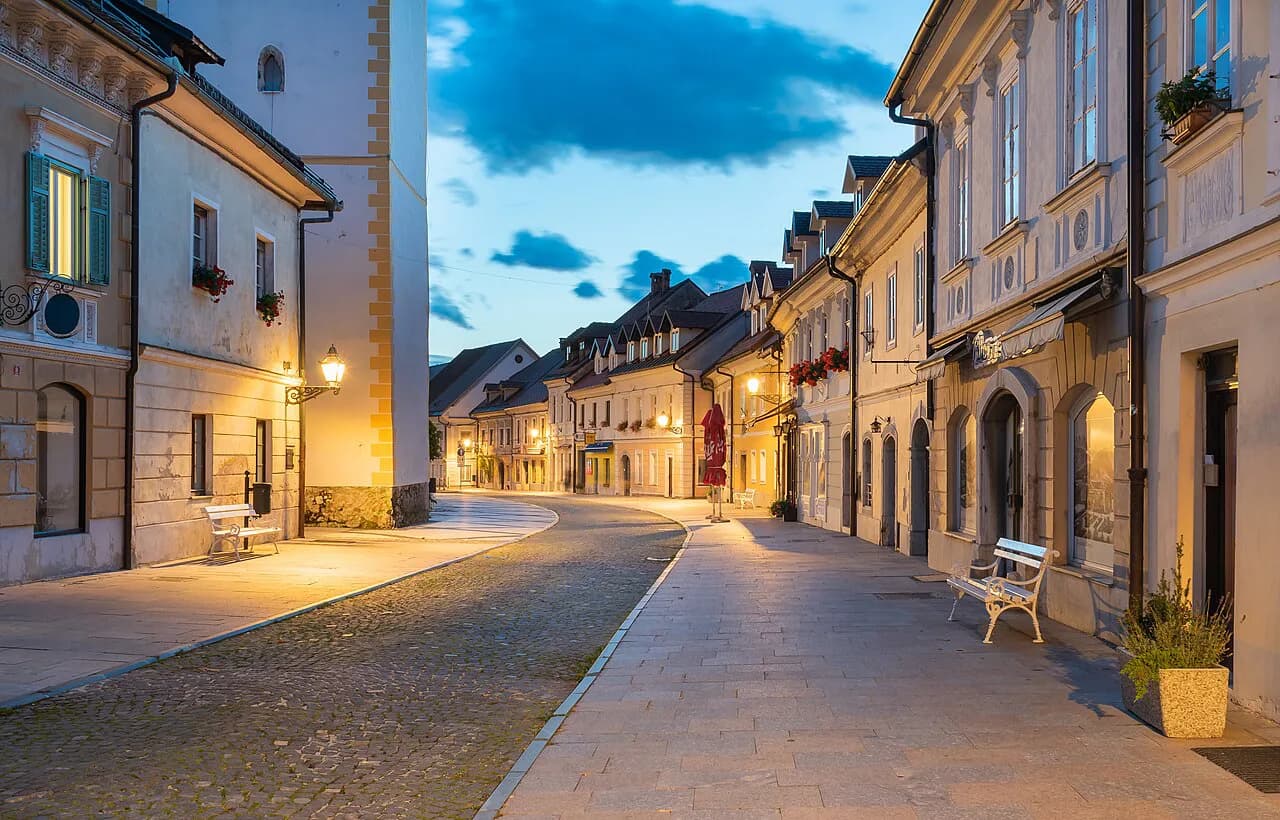
From the church, a small alley leads to Mestni trg, the main square lined with colorful medieval buildings and cafés, including Kavarna Homan for a coffee or ice cream. Walk the square to its far end and come back, then cross the small bridge and the Capuchin Bridge and climb the steps toward Škofja Loka castle.
Practical footing: parking and the walk into the center
If you drive, the obvious place to leave the car is the larger lot by the Šeširski Most bridge, where payment goes through EasyPark. From there you walk into the center, and the bridge loop comes roughly halfway through.
The drive from Ljubljana takes about 30 minutes, and a bus from the capital is an easy 35 minutes. The town also sits roughly halfway between Ljubljana and Lake Bled, so it works as a stop rather than a separate expedition. Published bus timetables are the thing to check when you fix your day.
Nearby in the same visit
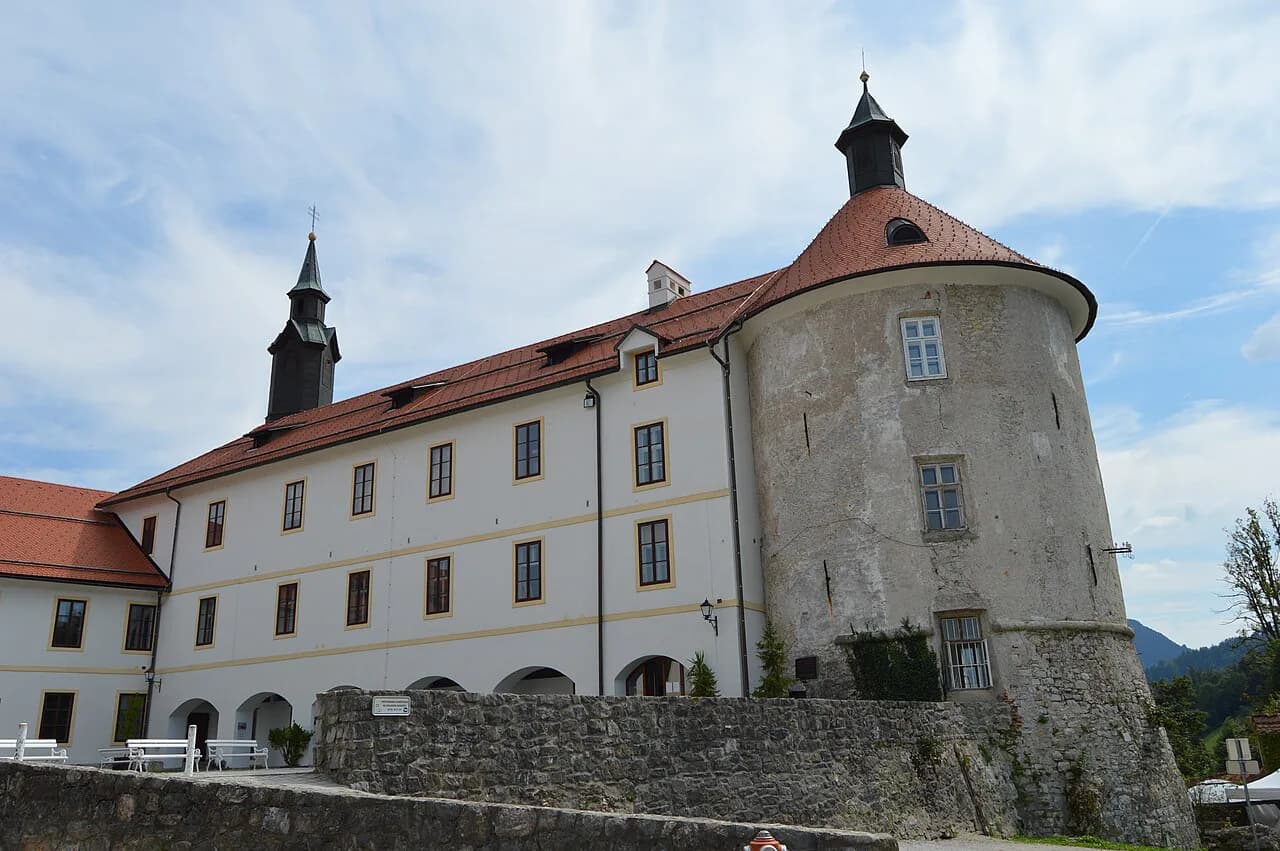
Above the town, the Loka Museum fills Škofja Loka castle, with floors of local archaeology, history and art; not every exhibition has English translations. The museum is open Tuesday to Sunday from 10am to 5 or 6pm, and also on Mondays from June through September.
Below the castle walls, Homan House is the bourgeois mansion tied to the town's café and pastry tradition, a natural stop on the way back down to the river. If you are extending the day beyond Škofja Loka, Kranj and the Kokra canyon are the next logical stops in the same direction.
Does the bridge deserve its own stop?
No, not on its own. The Capuchin Bridge earns ten minutes, but the reason to come is the compact loop around it: the small bridge viewpoint, the statue and railing over the medieval arch, St. Jacob's Church, Mestni trg and the climb to the castle. Budget an hour or two for that circuit rather than a dedicated trip.
Come on foot from the Šeširski Most lot, cross the lower bridge first for the view, and finish uphill at the castle museum if it is open. Confirm current museum hours and ticket prices before you go, since those change by season.
Explore more Škofja Loka guides
Frequently Asked Questions
Is the Capuchin Bridge the same as the Stone Bridge in Škofja Loka?
Yes. The crossing is known both as the Capuchin Bridge (Kapucinski most) and as the Stone Bridge, the name used for the route linking the Capuchin monastery with the old town center.
How old is the Capuchin Bridge?
The stone bridge over the Selška Sora dates to the mid-14th century. The iron railing and the statue of Saint John of Nepomuk were added in an 1888 renovation, so the medieval fabric and the later fittings are different periods.
How long does a visit take?
Allow an hour or two for the historic center on foot, including the bridge, the smaller bridge below it, St. Jacob's Church and the main square. Add time separately if you go up to the castle and its museum.
Sources
Notes for your Slovenia trip
Optional updates to our Slovenia place guides.
You might also like
Continue reading
More guides you'll find useful