Škofja Loka Castle: The Loka Museum, Garden and Climb
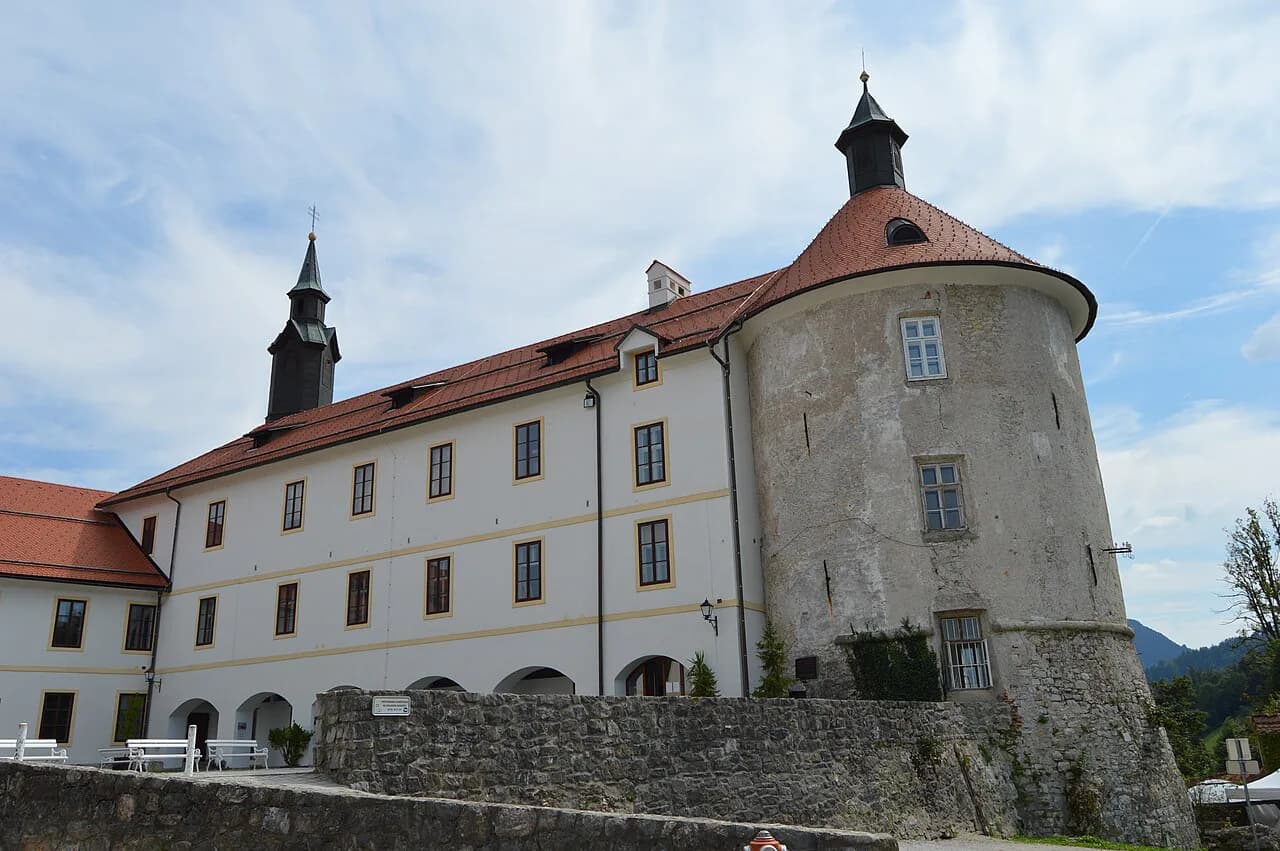
Škofja Loka Castle holds the Loka Museum, a chapel and a terrace above the old town. Here's what to see, how long it takes and how the climb fits a day.
On this page
Škofja Loka Castle is worth an hour and a half of a day in town: the climb is short but steady, the terrace explains the whole valley, and the Loka Museum inside gives the building a purpose beyond the view. Plan it as the top of a bottom-to-top walk that starts at the river and the Capuchin Bridge, crosses the main square and finishes on the castle ridge. This guide covers what sits inside the museum, how the ascent feels, what the garden adds, and how to fit the castle into a day in Škofja Loka, a compact town in the hills northwest of Ljubljana.
What Škofja Loka Castle is and where it sits
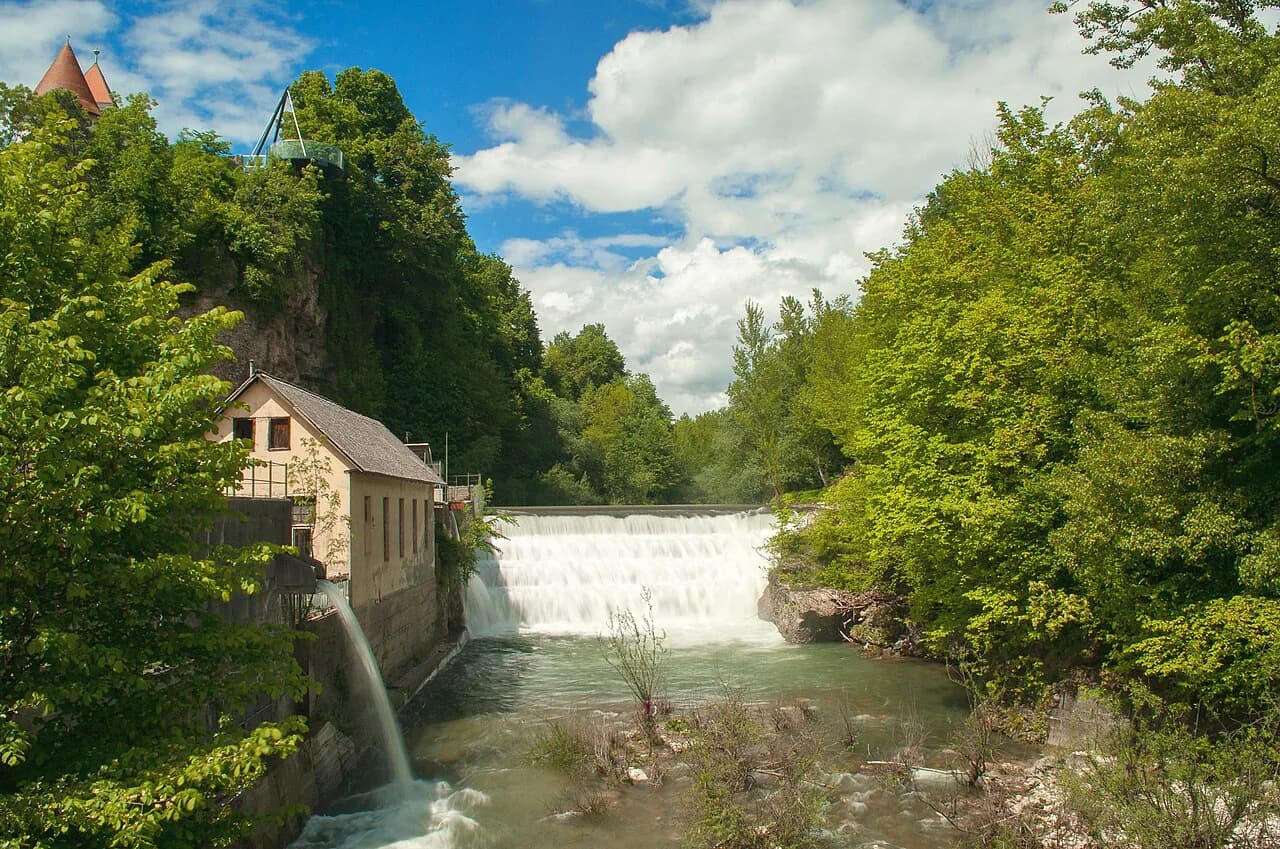
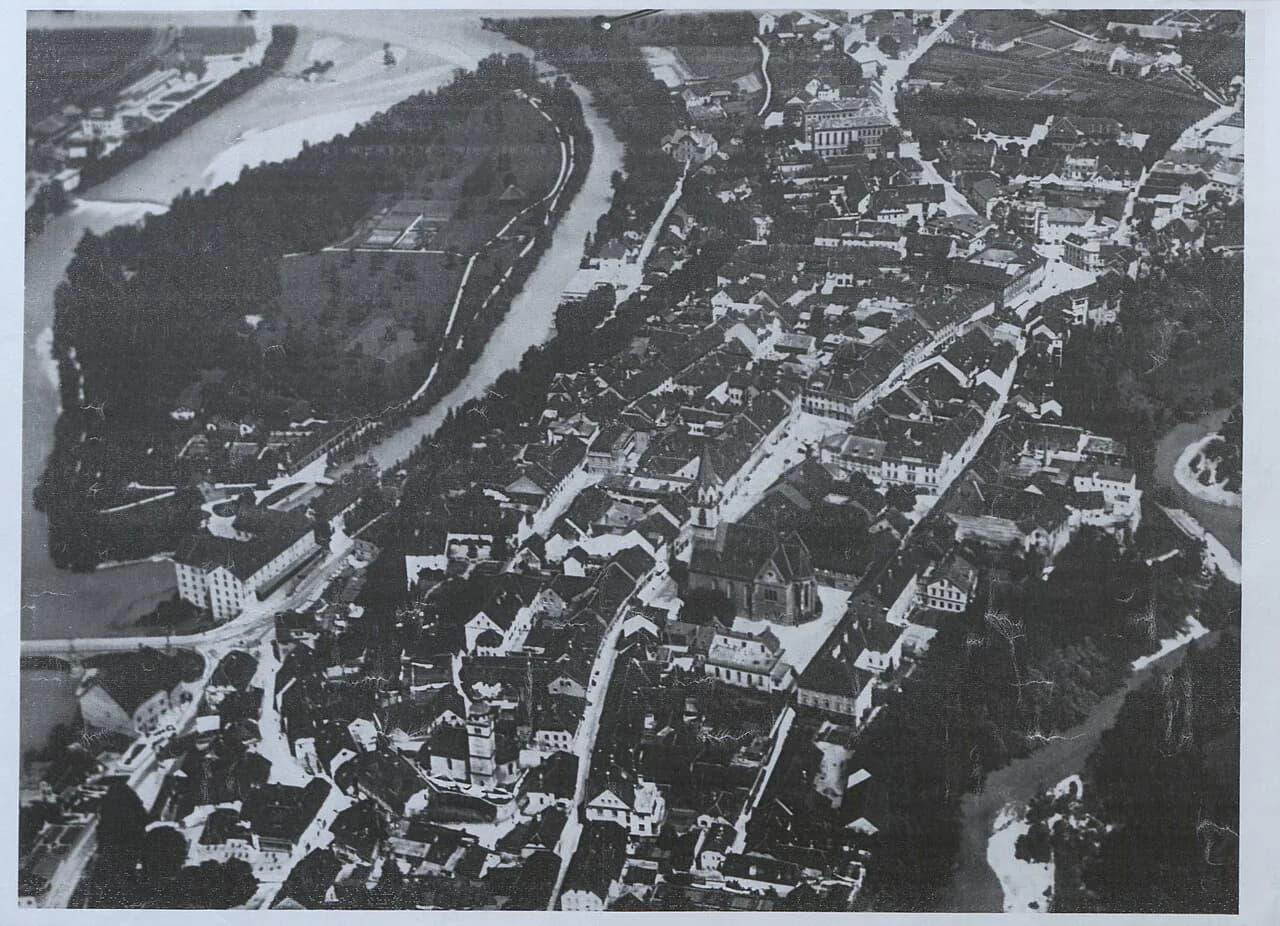
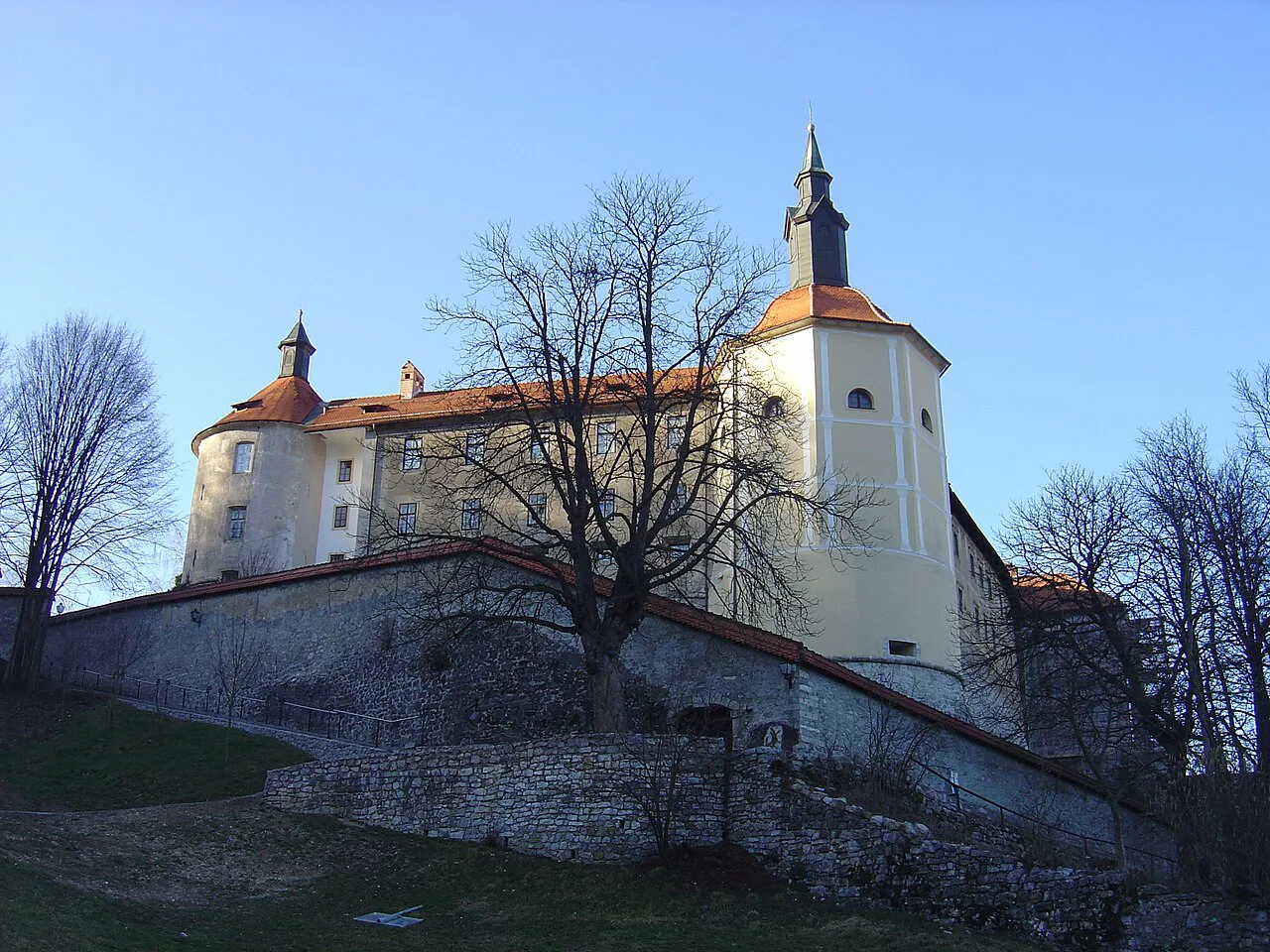
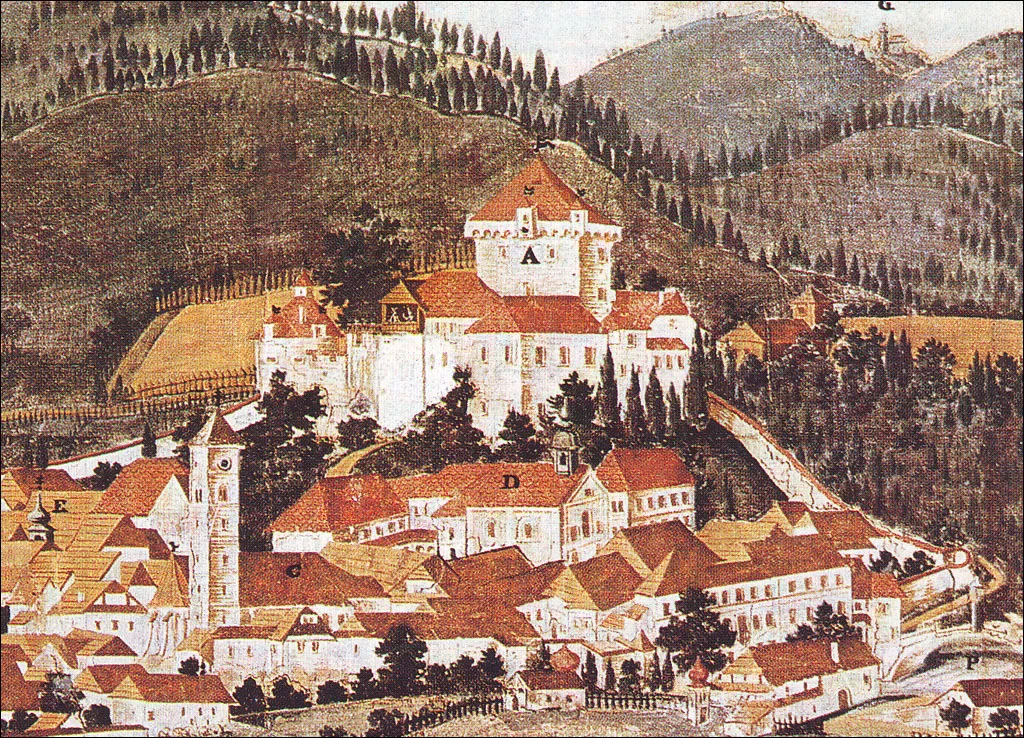
The castle sits on the ridge directly above the medieval core, so it reads as the roof of the town rather than a separate excursion. Below it, the Poljanska Sora and Selca Sora meet at the edge of the center, and the lanes climb from the riverside up through two squares toward the castle hill.
Treat the building and the museum as two separate things. The castle is the hilltop anchor and the terrace; the Loka Museum is the collection housed inside it, with archaeological finds through to twentieth-century material, a chapel you can walk through, and rooms of local craft exhibits that include the region's iron-forging history. Knowing which part you came for makes the visit simpler and tells you whether to budget for the interior at all.
The museum's own site is the place to confirm what is on display and when the castle doors are open, since exhibitions rotate and the calendar changes with the season.
The climb from Mestni trg to the castle terrace
The standard approach starts at the top of Mestni trg, where a short climb with handrails leads up to the castle in about ten minutes on foot. It is not a hike, but it is continuous, so people who dislike stairs should pace it rather than treat it as a stroll.
The honest trade-off is effort against payoff: the ascent is the only real work of the day, and the terrace is what you get for it. From up there the rooftops drop away and the Poljanska and Selska sides open out behind the town, which is the clearest way to understand how Škofja Loka sits in its valley. If you want the view without the push, take a long pause on the square first and go up later in the afternoon, when the light on the square and the bridge is at its best.
Wear shoes that cope with cobbles and stone steps, because the lanes between the squares and the path up are uneven underfoot.
Inside the Loka Museum: collections, chapel and craft exhibits
Inside, the Loka Museum is a general collection with history, art and art history, ethnology, archaeology and sports sections, plus a collection devoted to the Škofja Loka Passion Play. The mix suits a town museum rather than a single-theme gallery: you move from local archaeology to craft and iron-forging displays to a preserved chapel in one continuous loop.
Budget roughly an hour and a half if you read the labels and take in the chapel; less if you are there mainly for the terrace. The museum's calendar and visitor pages carry the current opening hours, closing days and admission charge, so check those before you climb rather than assuming the castle is open every day.
Museum content is the reason to go inside on a wet or cold day, when the terrace alone would be a short stop.
The castle garden and the views over the valleys
Behind the castle, small garden paths and terraces look out over the Poljanska and Selska valleys, and ten minutes here does more for the day than another loop through the streets. The enclosed castle garden follows the medieval monastery garden type known as hortus conclusus, with a linden tree-lined path, and it relates to the former convent garden at the foot of the castle hill.
The garden is the calmest part of the visit and a natural place to slow down after the museum. Treat it as the soft exit from the castle: views first, then the shaded path down, then the lanes back into town.
How long to give the castle, and where it fits in a day
Give the castle and museum a combined block of about two hours including the climb and the garden, then leave the rest of the day for the town. A workable order runs from the Capuchin Bridge and Mestni trg in the morning, up to the castle late morning, then the garden and viewpoints before drifting down to Spodnji trg in the afternoon.
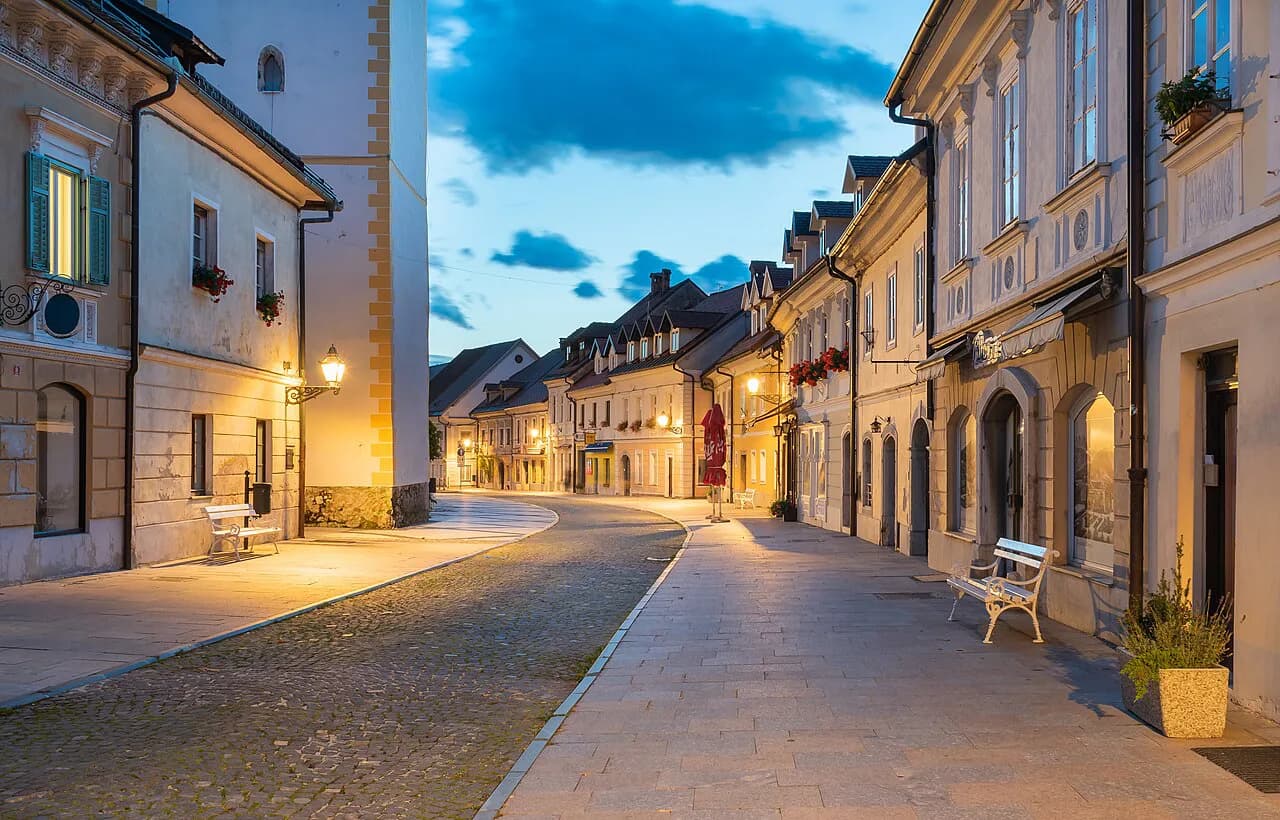
Keep the two squares straight: Mestni trg is the long, slightly curved upper square that holds the town's center of gravity, while Spodnji trg sits lower, quieter and more residential, with restored facades and stone details. The castle sits above the first and the second works as the reset on the way down.
The Loka Museum is run by Loški muzej Škofja Loka, the town's general museum, which also manages the castle and its garden.
Getting to Škofja Loka and the walk up
By bus from Ljubljana, services leave from stand 28 at the main station and take about 45 minutes, running roughly every half hour. Confirm the current departure point, timetable and fare with the operator on the day, since these are the details most likely to shift.
The train station is the trap: it sits about three kilometers outside the center, so arriving by rail adds a walk or a short transfer before you even start toward the castle. Driving takes roughly 35 minutes from Ljubljana, with several parking areas near the center, which puts you closer to the foot of the climb.
Once in town, everything is walkable in a single loop: riverbank, square, castle, garden, lower square. That compactness is the argument for coming by bus and doing the whole day on foot.
What to pair with the castle: bridge, squares and the river
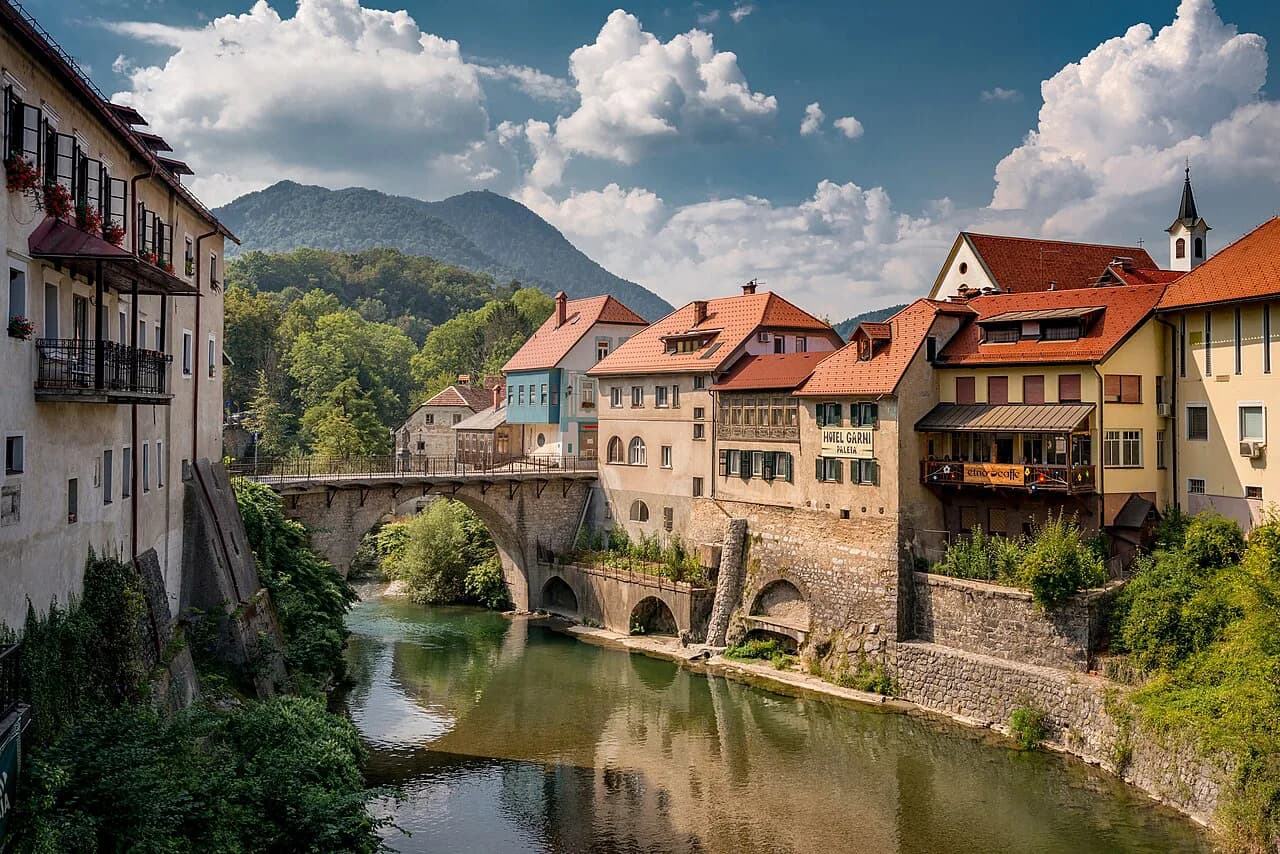
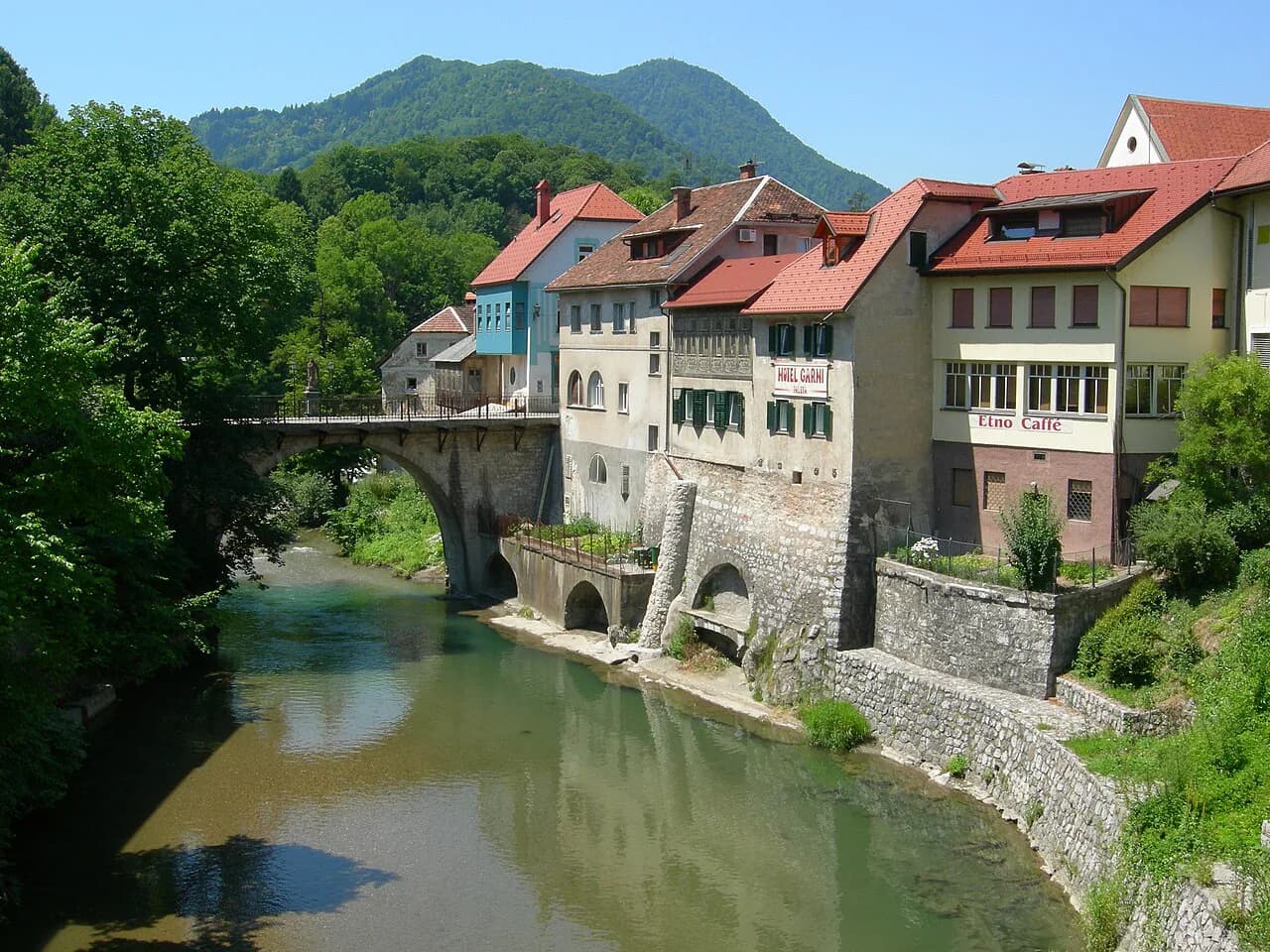
Start at the Capuchin Bridge, the town's cleanest visual line, where the river runs below, facades sit ahead and the castle ridge rises behind the rooftops. Looking upstream and then back at the town explains the whole layout before you step into the streets, and it is the right first stop for orientation.
Cross to Mestni trg and walk it slowly: long, slightly curved and lined with historic facades, with doorways, stone passages and small shifts in elevation that keep it from feeling flat. Then climb to the castle from the upper end, as described above.
If time remains, the town ends and the valleys begin almost immediately; a short walk toward the Selska or Poljanska valley edge makes a quiet finish after stone streets.
Is the castle worth the climb?
Yes, if you treat it as the top of a town walk rather than a destination in itself. The climb costs ten minutes of steady effort, the terrace pays you back with the valley view, and the Loka Museum fills the interior with local archaeology, craft and chapel material that a quick photo stop would miss.
Check the museum's opening hours, closing days and admission charge on its own pages before you go, and confirm bus times and fares with the operator on the day. Build the day from the Capuchin Bridge upward, and the castle lands exactly where it should.
Explore more Škofja Loka guides
Sources
Notes for your Slovenia trip
Optional updates to our Slovenia place guides.
You might also like
Continue reading
More guides you'll find useful