Škofja Loka: What to See in the Medieval Town and Around It
Plan a visit to Škofja Loka: Mestni trg and its painted houses, Loka Castle and museum, the Capuchin Bridge, plus Crngrob Church and Visoko Manor nearby.
On this page
Give Škofja Loka half a day and you can walk the old town, climb to Loka Castle and stand on the riverbank below the Capuchin Bridge; add a car and Crngrob Church and Visoko Manor fill out the rest. The town sits about 25 minutes by train from Ljubljana, with Kranj roughly 15 minutes north and Bled about 40 minutes away. This guide covers the layout of Mestni trg, what the castle museum holds, where the classic bridge view is, and how to split a visit between the town on foot and the countryside by car.
The old town rewards slow looking rather than a checklist: painted facades, arcades, a plague column and the surviving stretch of medieval wall. Everything below is on the west side of the country, in the Škofjeloško region, which the local tourist board presents as living UNESCO cultural heritage.
Where Škofja Loka is and how to reach it
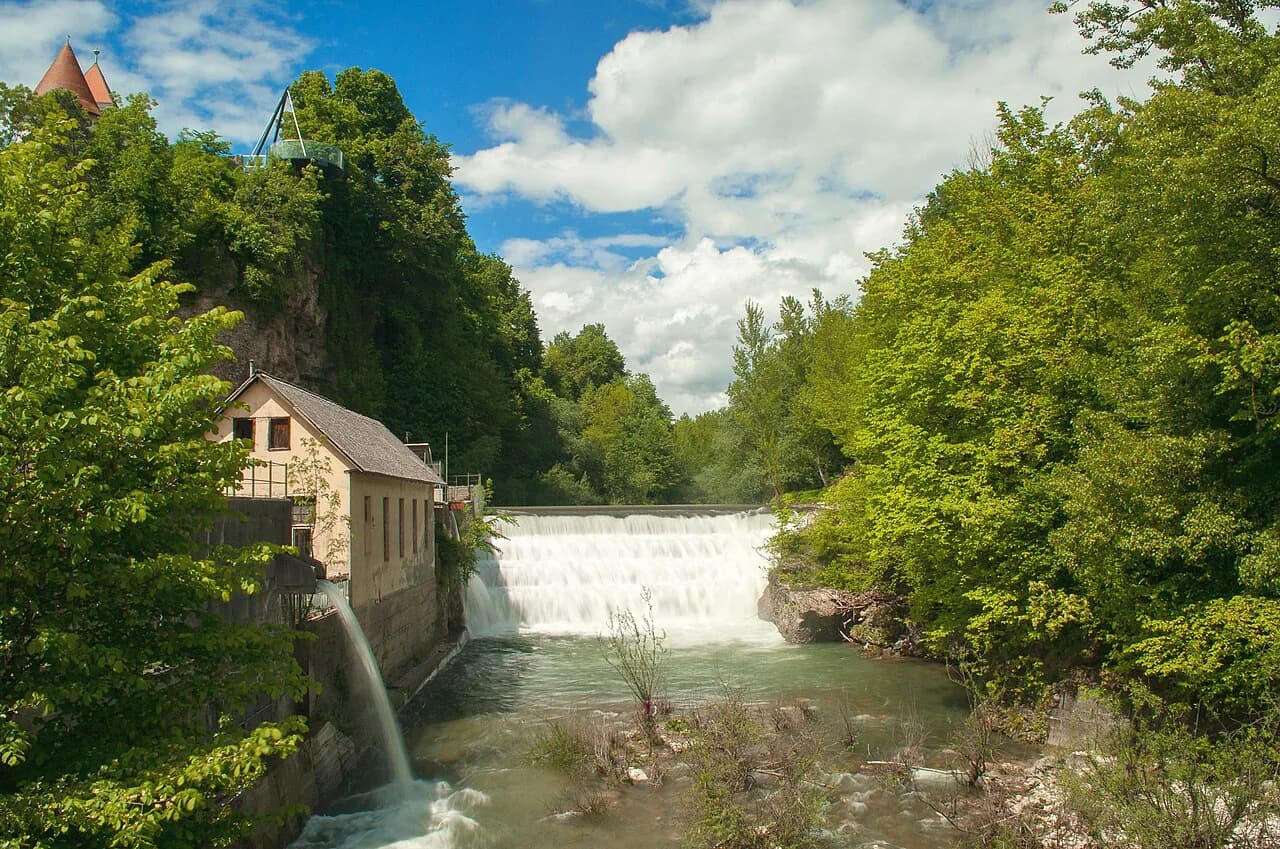
Two rivers meet below the castle: the Selška Sora and the Poljanska Sora, which run west into hill country from the town. That geography explains the shape of a visit, because the old town, the castle hill and the bridge all sit within a few minutes of each other.
By train, Škofja Loka is roughly 25 minutes from Ljubljana, which makes it one of the easier non-Ljubljana towns to reach without a car. By road, Kranj is about 15 minutes north and Bled about 40 minutes, so the town works as a stop between the capital and the lakes rather than a separate expedition.
The district spreads beyond the town into four areas the tourist board groups together: Škofja Loka itself, Gorenja vas - Poljane, Železniki and Žiri. Železniki, in the Selška dolina, is the local center for bobbin lace and ironworking, while Gorenja vas - Poljane sits in the Poljanska dolina below Mount Blegoš.
The old town in an hour or two
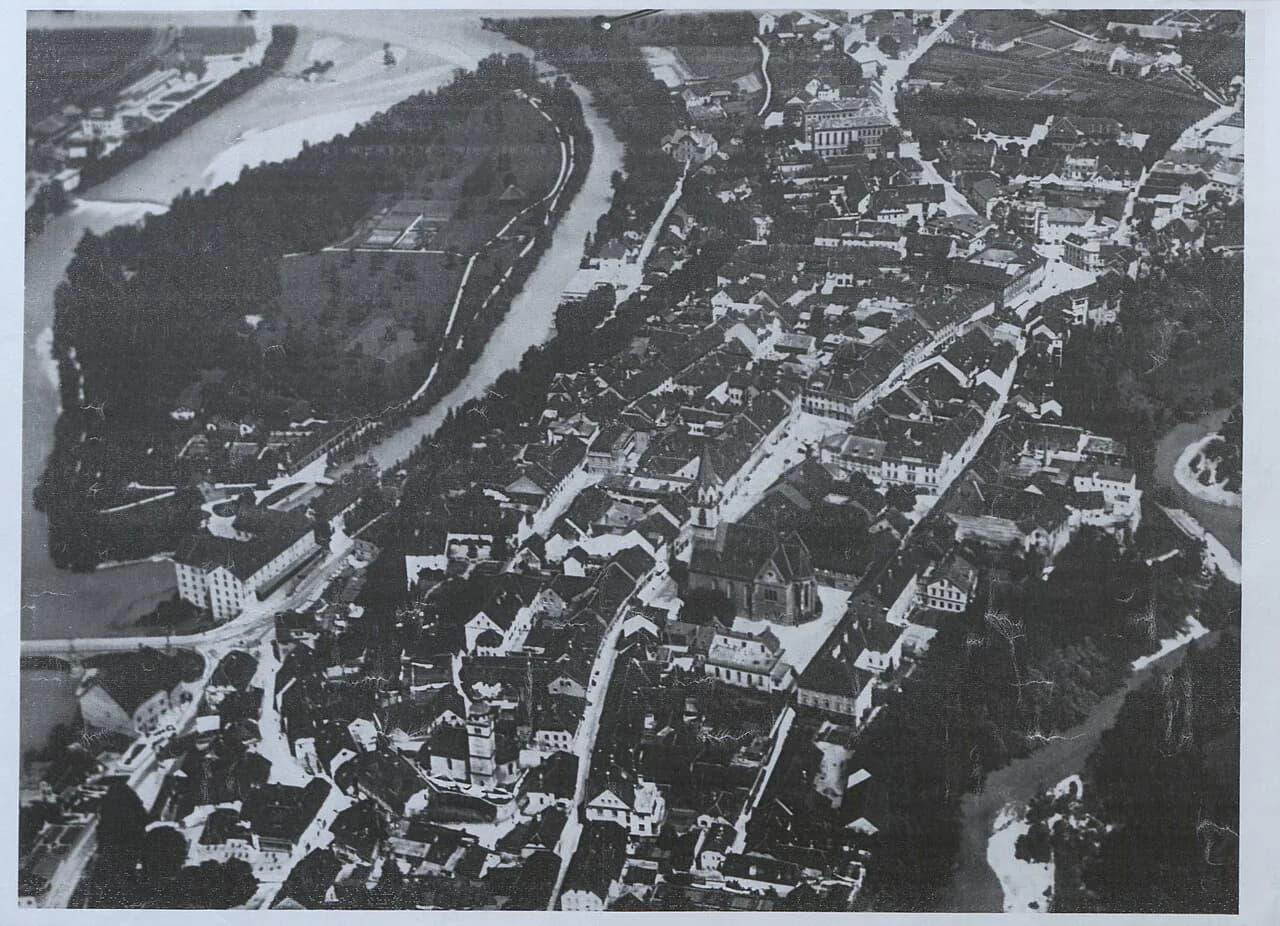
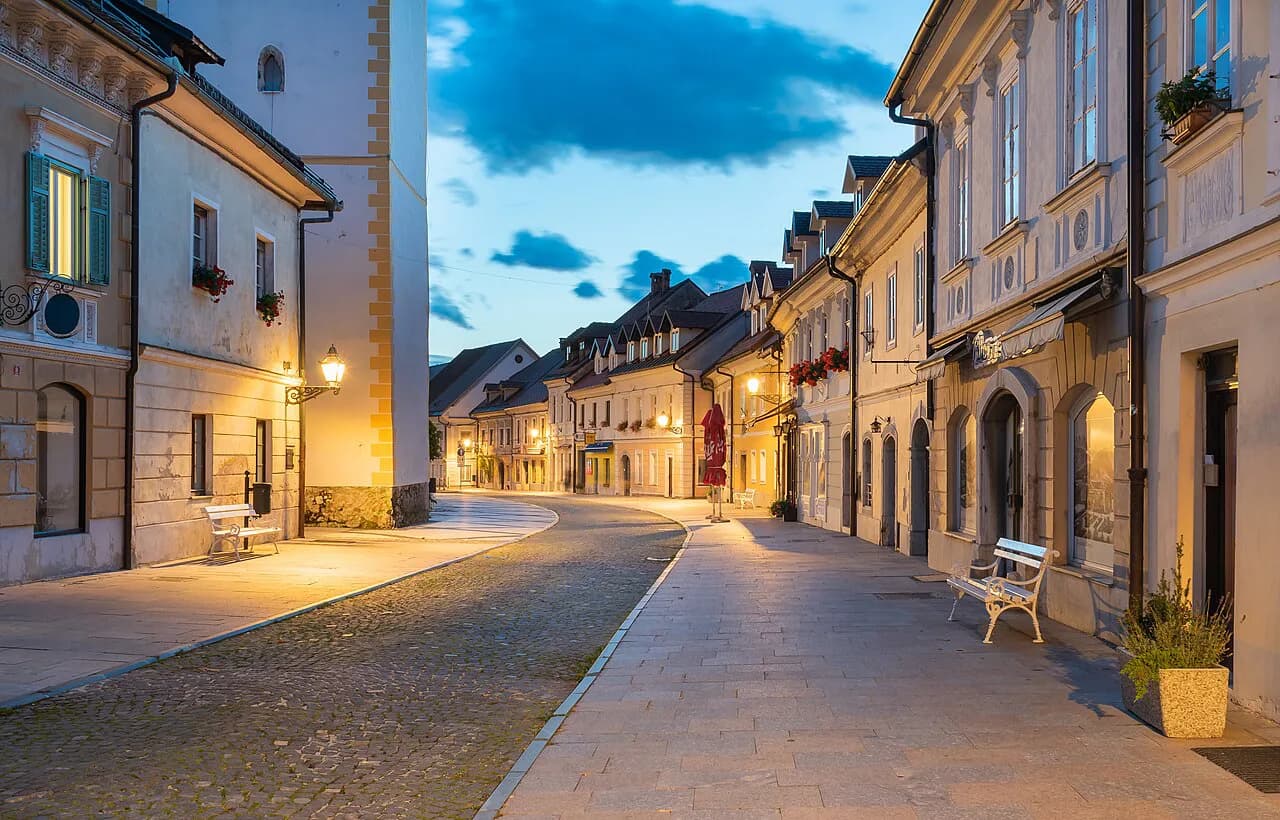
Mestni trg is the long, sloping square at the heart of the old town, lined with painted facades and arcades and marked by a plague column. Homan House, with its sgraffito front, stands at the top end of the square, and a stretch of the medieval town wall survives to the east. The streets cover easily in an hour or two, and the square is quiet outside weekends.
Treat the square as the anchor and let the side streets fill the time: the painted houses and arcades reward a slow pass rather than a photo stop. If you are moving on to another town the same day, the old town is the part to protect in the schedule, since it is compact and close to the castle path and the bridge.
Loka Castle and the Loka Museum
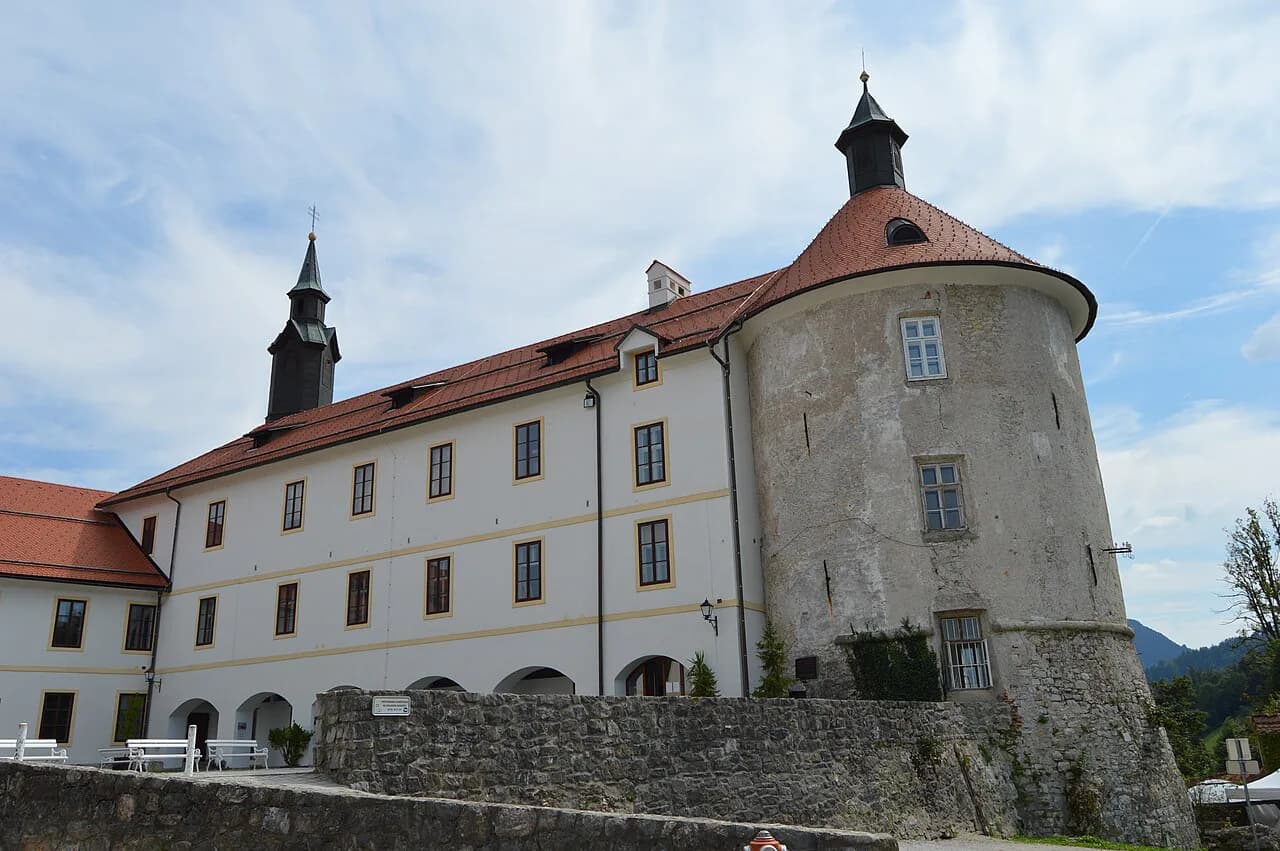
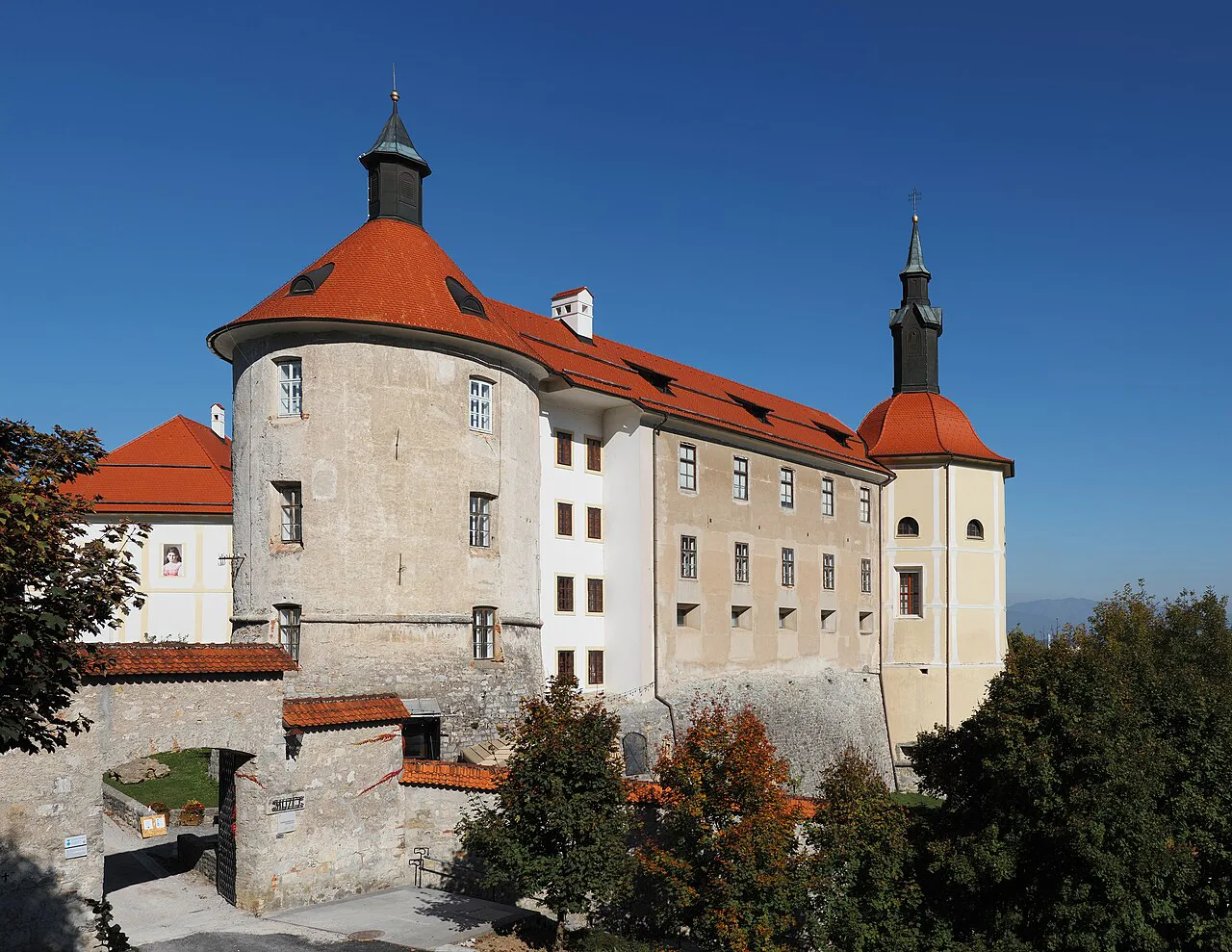
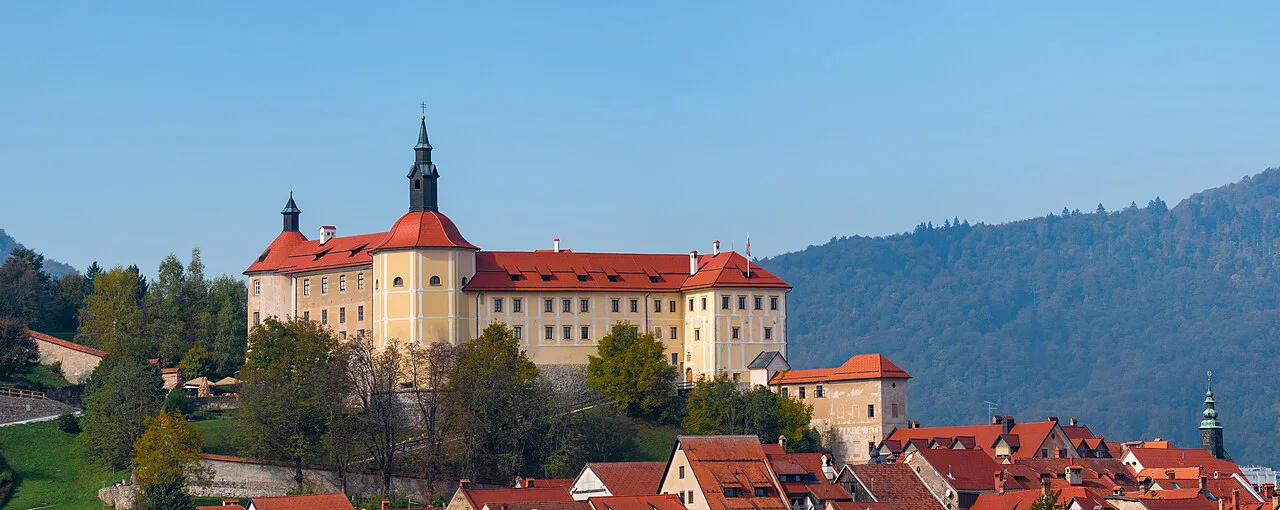
Above the old town, the Škofja Loka castle houses the Loka Museum, whose collections cover local guilds, crafts and the region's history. A short, steep path climbs from the main square in about ten minutes, and the terrace at the top gives a view over the rooftops to the two rivers. The castle garden includes a reconstructed farmhouse and outbuildings, which makes the hill worth more than the museum alone.
Plan the climb as a ten-minute effort rather than a stroll, and give the castle around an hour and a half if you want the museum, the garden and the terrace. Admission and opening times are not something to guess at, so confirm them with the castle or the tourist office before you build the day around them.
The Capuchin Bridge and the riverbank view
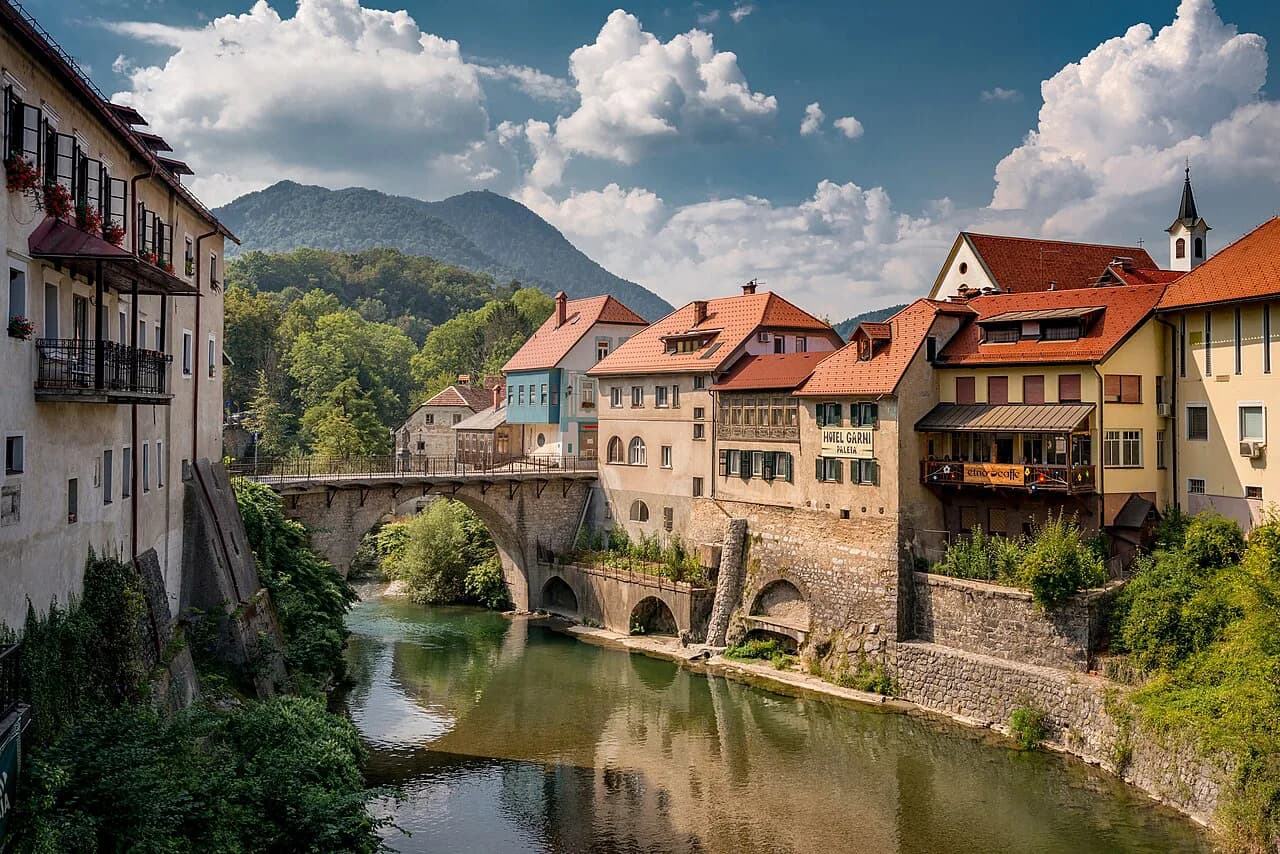
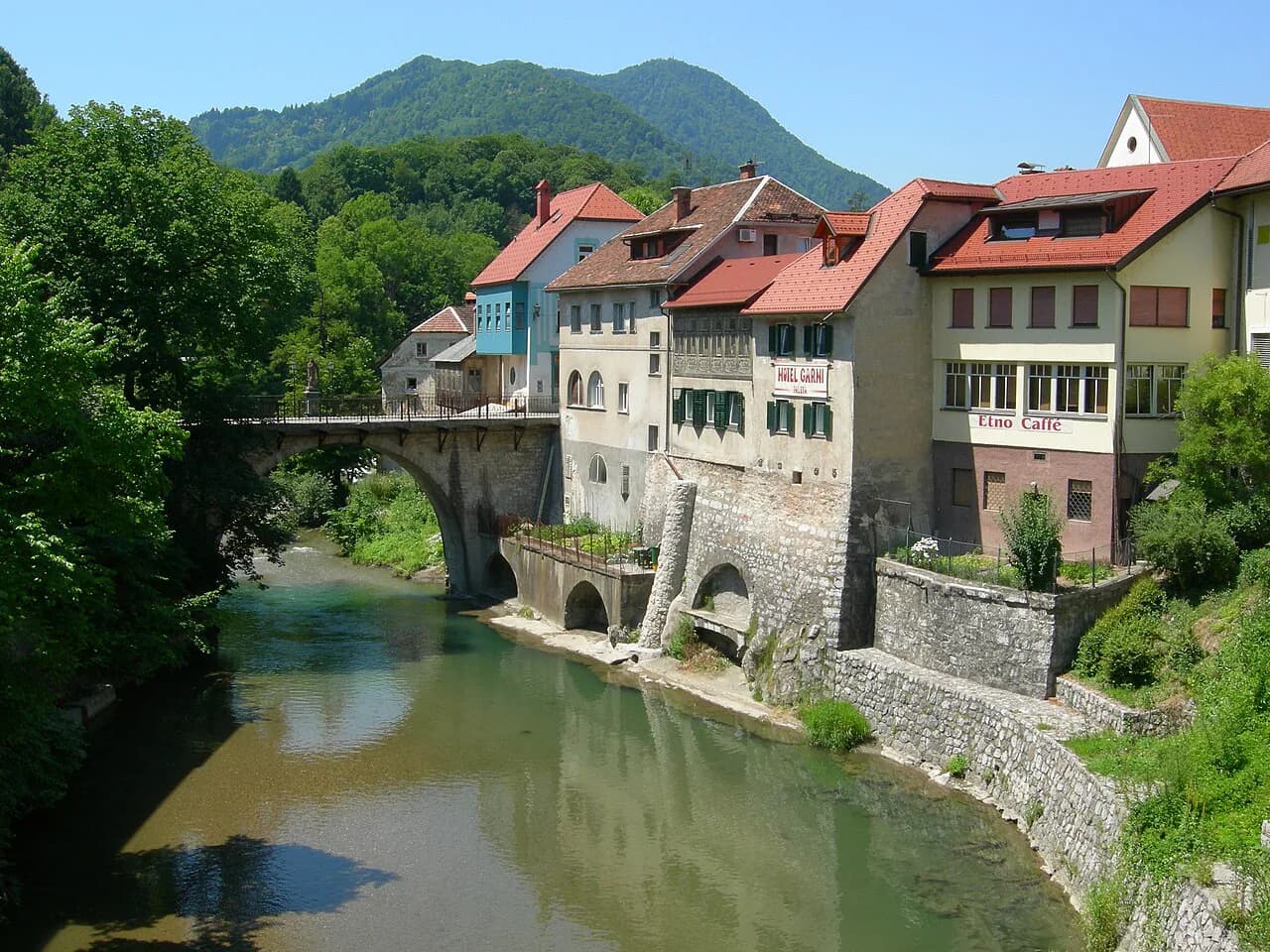
Stone arches carry the Capuchin Bridge over the Selška Sora at the edge of the old town, with a statue of Saint John of Nepomuk halfway across. Crossing takes a few minutes, but the riverbank below is where the classic view opens back to the painted houses and the castle walls. Evening light falls on the water and the castle walls, which makes the hour before dusk the best time to come.
The bridge is close enough to the square to fold into the same walk, so there is no reason to choose between the two. Come down to the bank after the castle rather than before, when the light is warmer and the rooftops sit behind the arches.
Crngrob Church: a short drive north
On a meadow about 4 km north of Škofja Loka, the Church of the Annunciation at Crngrob carries a large exterior fresco of Holy Sunday showing which crafts were forbidden on the Sabbath. Inside, a gilded wooden altar fills the presbytery. Opening hours are limited, so ask at the tourist office in town before cycling or driving out.
The fresco is on the outside, which means the church is worth the detour even if you cannot get through the door, but the altar is the reason to time the trip for opening hours. A bicycle covers the 4 km easily; a car makes sense if you are pairing the church with Visoko Manor further west.
Visoko Manor in the Poljane valley
About 12 km west in the Poljane valley, Visoko Manor and its farm were the home of the writer Ivan Tavčar, whose novel set here is a Slovenian classic. The house is open for visits, and the grounds hold a museum space and an inn. Footpaths along the Poljanska Sora make it an easy half-day from town.
Pair Visoko with Crngrob and you have a car-based afternoon that balances the town's walking morning. If you would rather stay on your feet, keep the old town, castle and bridge as the whole visit instead of stretching the day thin.
How to split a few hours
The practical tradeoff is walking versus driving. The old town, Loka Castle and the Capuchin Bridge fit into a few hours on foot, with the square quiet outside weekends and the bridge best in the hour before dusk. Crngrob and Visoko Manor need wheels and add a half-day on top.
If you are passing between Ljubljana and the lakes, consider the town as a stop of a few hours and leave the countryside for a return. If you have a full day, start on Mestni trg, climb to the castle, walk down to the riverbank, then drive north to Crngrob and west to Visoko.
The wider Škofjeloško area
Beyond the town, the region groups into Gorenja vas - Poljane, Železniki and Žiri, each with its own draw. Železniki is known for bobbin lace and ironworking, Žiri for the footwear traditionally made there, and the Poljanska dolina around Gorenja vas - Poljane sits below Mount Blegoš.
The area also holds fortifications of the Rupnik Line, along with castles, churches, memorials and historic houses that the tourist board lists as cultural attractions. Craft traditions run through it too, from blacksmiths and lacemakers to honey-bread bakers and other traditional trades, several of which can be seen on themed trails.
If you want a second stop in the same direction, Kamnik offers another old town with two castles, and the Kokra canyon near Kranj adds a short nature break to the north. Both keep you in the same part of the country without a long drive.
Is the old town enough, or should you add the countryside?
Use the old town, Loka Castle and the Capuchin Bridge as the core of the visit; they fit into a few hours and sit within minutes of each other. Add Crngrob Church and Visoko Manor only if you have a car and a full day, and confirm church hours at the tourist office before setting out.
From Ljubljana, the train makes the town an easy half-day; from Bled or Kranj, it works as a stop en route. Either way, time the riverbank for the hour before dusk, when the view back to the town is at its best.
Explore more Škofja Loka guides
Sources
Notes for your Slovenia trip
Optional updates to our Slovenia place guides.
You might also like
Continue reading
More guides you'll find useful