Škofja Loka Old Town: Squares, Bridge, Castle and What to See
Škofja Loka old town pairs two painted squares with a 14th-century stone bridge and a castle museum above town. Here is what to see and how to walk it.
On this page
Škofja Loka old town takes about half a day: a compact core of two squares, a stone bridge over the Sora river and a castle on the hill above, all within a short walk of each other. The center is small and sloped, so the sensible order is bridge first, squares second, then the climb to the museum. This guide routes the walk by the actual layout, names the buildings worth stopping at, and covers how to get there from Ljubljana and how much time to budget.
What the old town is
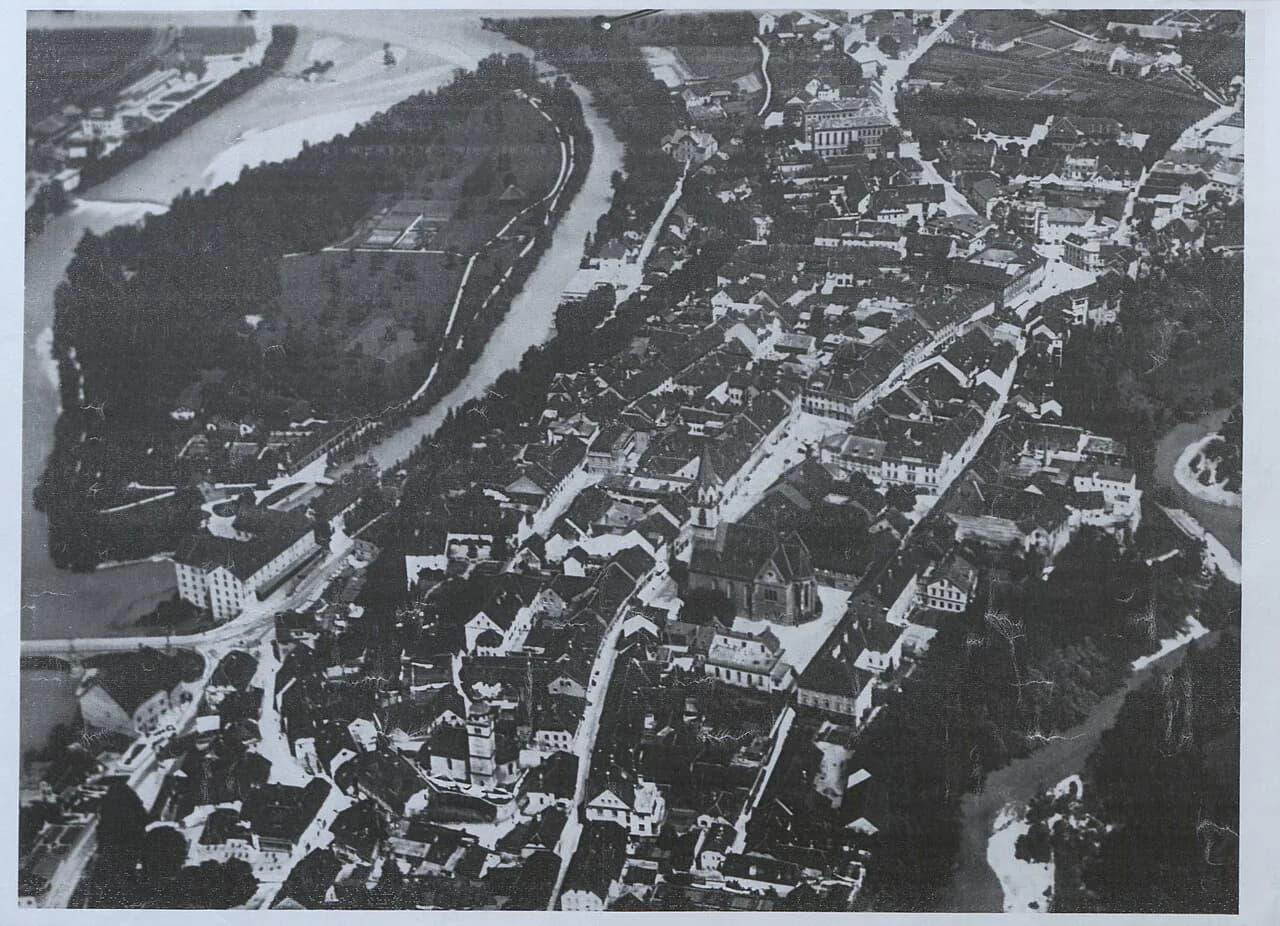
The historic core is a tight cluster of merchant houses and churches set on the Sora river, with the old town spread across two connected squares. The town is known for its Passion Play, the first Slovenian drama and the biggest outdoor theatre show, which is inscribed on the UNESCO List of Intangible Cultural Heritage. That heritage sits alongside ordinary daily life: a café on a square, a museum in the castle, and a market town's street plan.
Treat the center as a single loop rather than a checklist of separate sights. Everything named in this guide is walkable in one continuous circuit, and the only real climb is the path up to the castle. That makes the town easy to fit around a bus schedule or a half day borrowed from Ljubljana.
Orientation: Mestni trg, Spodnji trg and the river
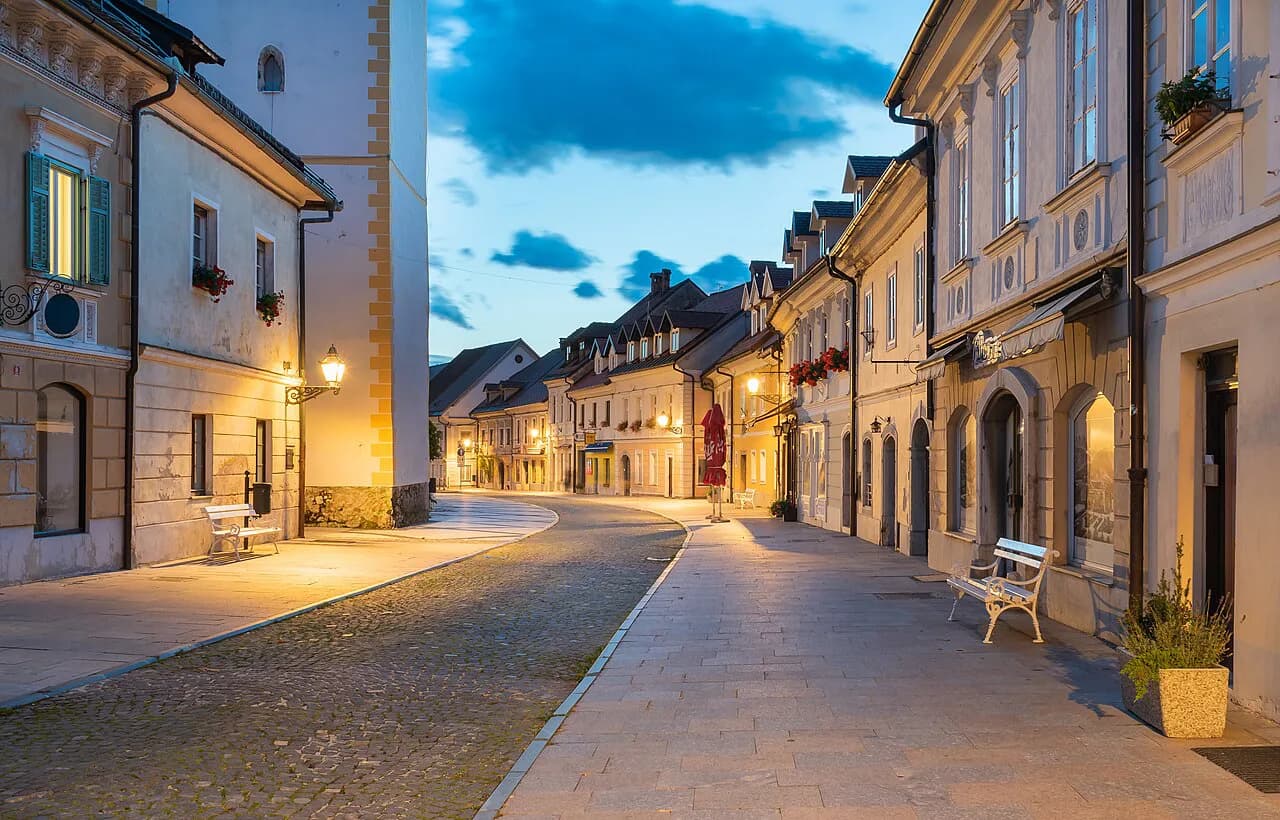
Two squares carry the old town. Mestni trg (Town Square) is the long, sloping lower square lined with colorful merchants' houses, outdoor cafés, ice cream shops and a Baroque plague pillar; Spodnji trg (Lower Square) sits quieter and more residential, with older stone-detailed facades. The traveler account describing the layout puts both squares within a few minutes of each other on foot.
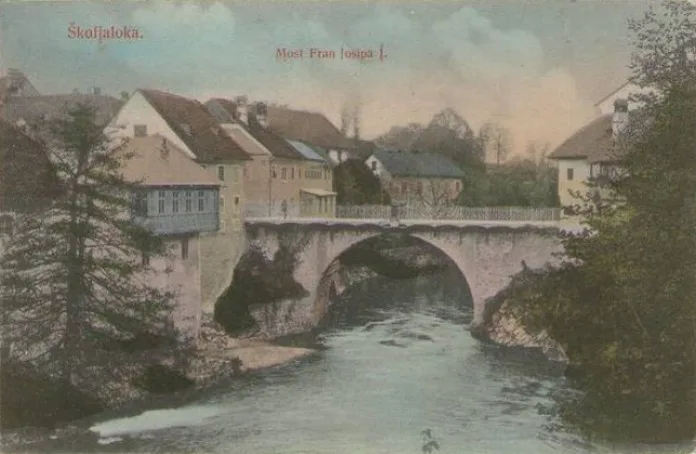
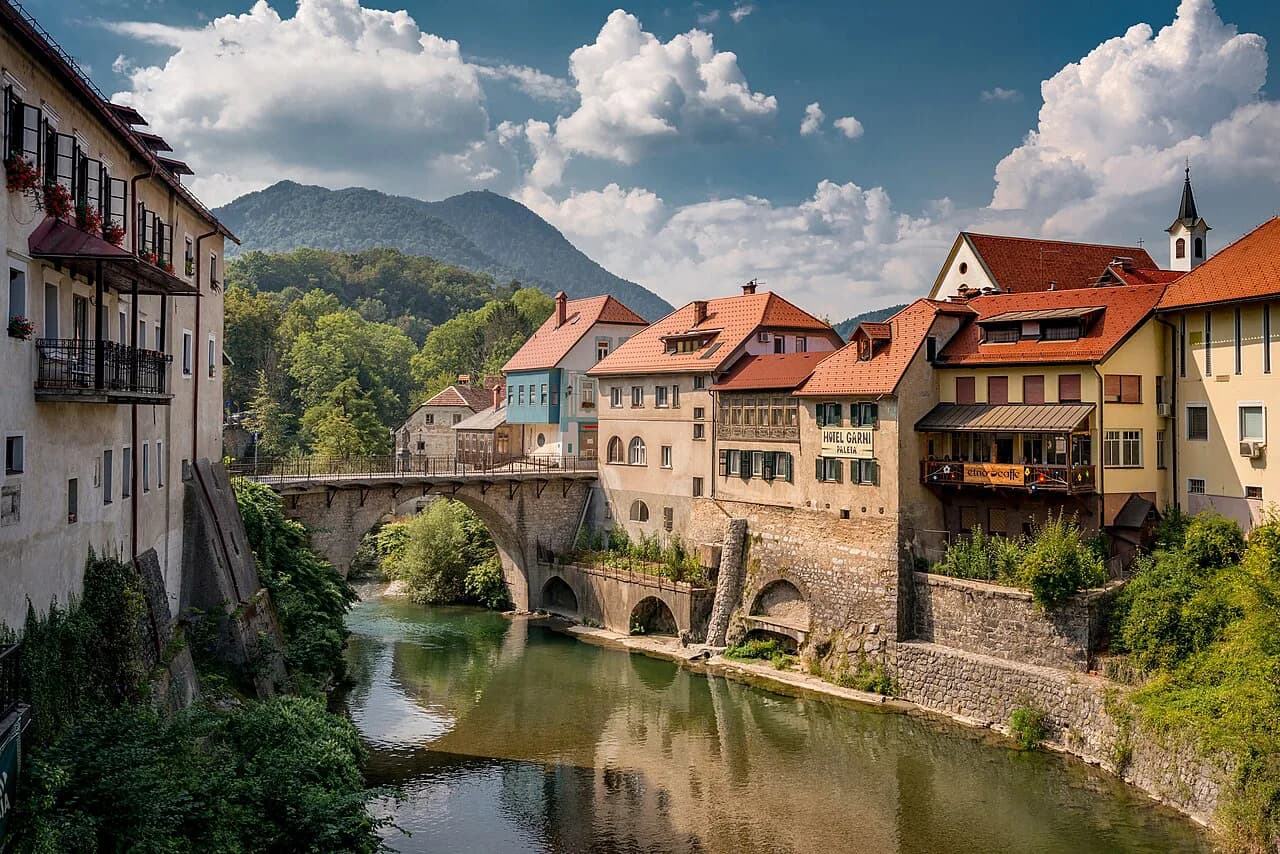
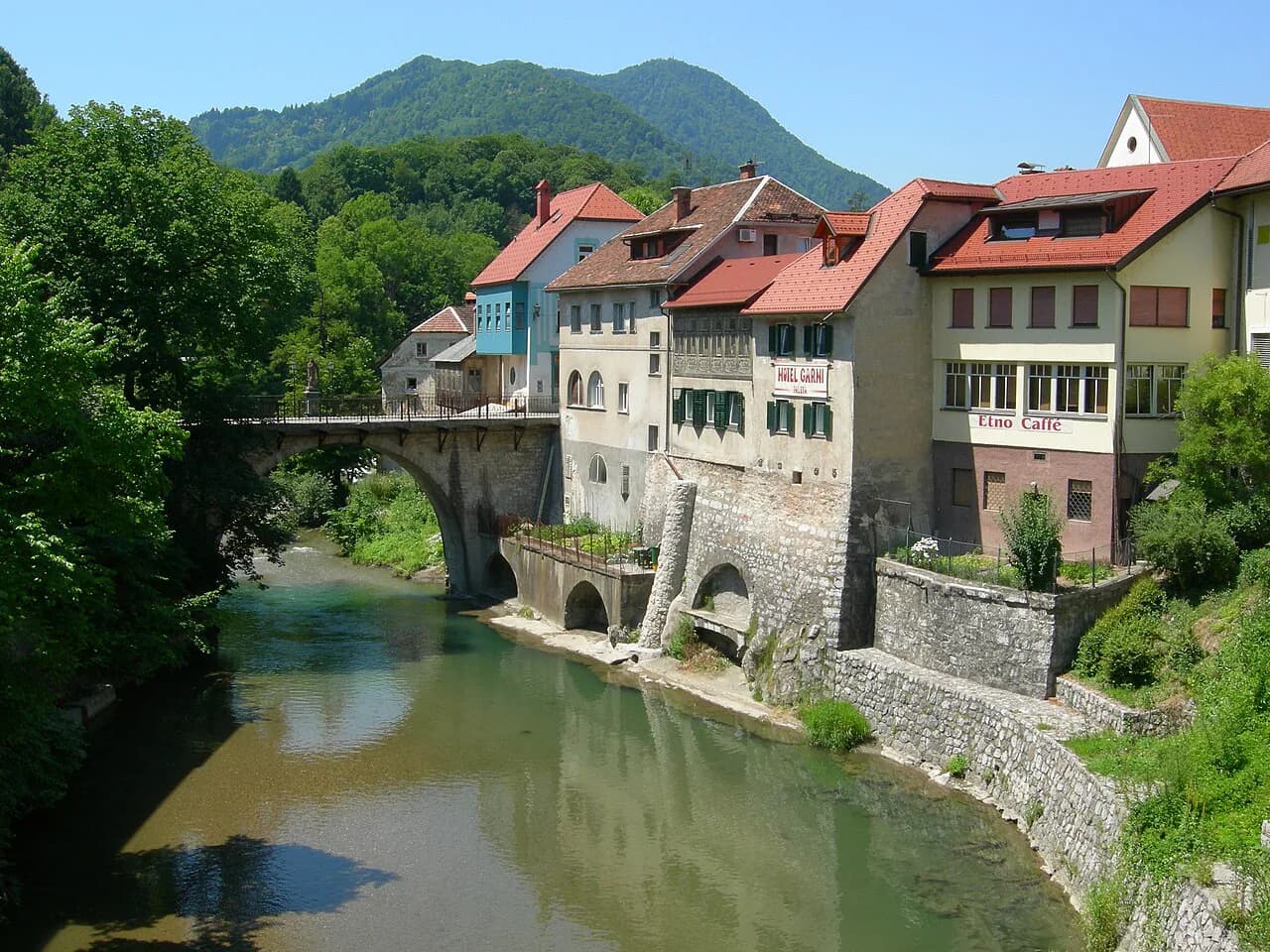
The Capuchin Bridge, also called the Stone Bridge, crosses the Selska Sora just below the squares and is the natural place to start or finish the walk. From there the lanes lead uphill into Mestni trg, through to Spodnji trg, and then onto the castle path. Because the whole circuit is short, you can afford to double back for a café table when the light or the weather changes.
Capuchin Bridge: the carved stone span
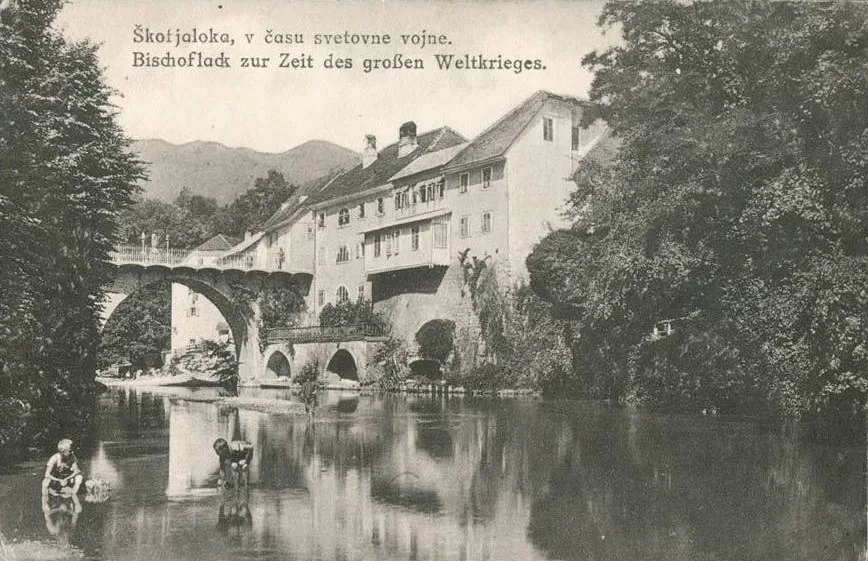
The Capuchin Bridge, also known as the Stone Bridge, is a semicircular span of carved stone built in the mid-14th century, and it ranks among the oldest monuments of its type in Central Europe. It crosses the Selska Sora, and a statue of St. John of Nepomuk stands on the bridge. The structure is short, so most visitors spend minutes rather than an hour here, but it frames the best approach view of the painted houses behind it.
A local retelling ties the bridge to a story about Bishop Leopold, who is said to have created it and later died in a fall from it, and notes iron safety railings added to both sides in 1888. Treat that as town storytelling rather than documented fact; the bridge you cross today has railings and a steady flow of pedestrians.
Mestni trg: the long sloping square
Mestni trg is where the old town feels most alive: a sloping run of houses in pastel colors, a Baroque plague pillar partway along, and cafés and ice cream shops spilling onto the pavement. Faded wall paintings and street sculptures decorate several facades, which rewards a slow walk rather than a quick photo stop. Sit at one of the outdoor tables and the square becomes a place to watch rather than a sight to tick off.
Spodnji trg: the quieter lower square
Spodnji trg trades the café bustle for a residential calm, with stone-detailed facades and buildings that the traveler account dates to the 16th century. It is the better square for a quiet coffee and cake, and it gives you a sense of how the town works outside visitor hours. Walk through rather than around: the lanes connecting the two squares hold much of the town's texture.
Church of St James (St. Jacob)
The Parish Church of St James, also written St. Jacob, is the 15th-century Gothic landmark inside the old town and the building that anchors the skyline from the squares. It is an active parish church rather than a museum piece, so visit it as part of the walk and keep the stop short. Its position makes it a useful orientation point: if you can see the church, you are close to Mestni trg.
Homan's House: Gothic manor, café and patisserie
Homan's House is a Gothic-style bourgeois manor with Renaissance elements, restored in the 16th century, and today it houses a café and patisserie. A travel account describes a balcony engraved with the year 1529 and frescoes of a medieval soldier and Saint Christopher beside it. It is the most rewarding single stop on the squares because the building and the coffee break happen in the same place.
Loka Castle and Loka Museum above town
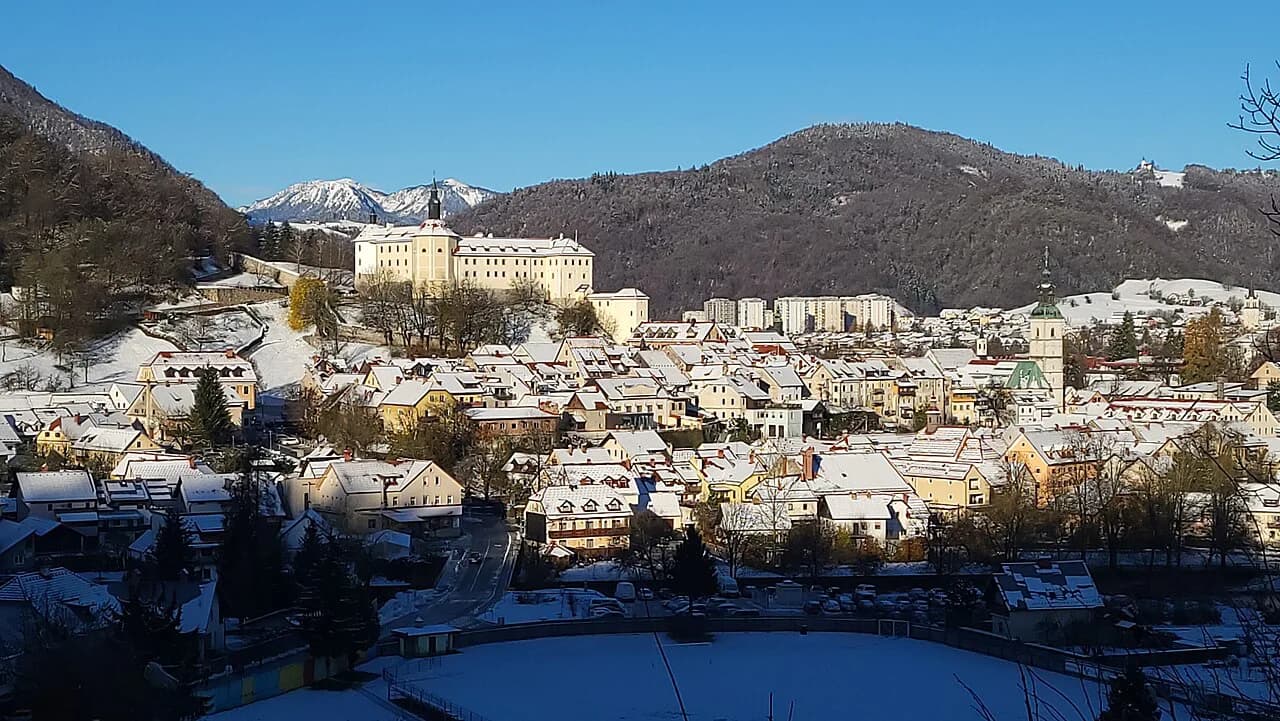
The 13th-century Loka Castle stands above Škofja Loka and houses the Loka Museum with its collections. The walk up from the center of the Old Town takes about 10 minutes on an uphill path, and the reward is a wide view over the town and the surrounding valley. Budget the climb on top of your square time rather than instead of it, since the path is short but steep enough to notice.
Museum opening times and admission are set by the museum itself and are not listed here, so check the castle's own listing before you commit to the climb at the end of the day. If the museum is closed when you arrive, the castle grounds and the view still justify the walk.
Capuchin Library and the Passion Play manuscript
The Capuchin Library holds the original manuscript of the Škofja Loka Passion Play along with the Dalmatin Bible, incunabula and other early Slovenian books, which makes it the scholarly heart of the town. Access is not a walk-in arrangement, so plan it as a specific visit rather than a casual stop on the square circuit. The Passion Play itself is a live outdoor production and the reason the town's name travels.
DUO Arts and Crafts Centre and the Sokol Centre
Two modern venues extend the walk beyond the medieval core. The Škofja Loka DUO Arts and Crafts Centre is an exhibition gallery and workspace that links the town's handicraft traditions to current makers, while the Škofja Loka Sokol Centre serves as the town's cultural center for events. Both are worth a look if you have already covered the squares and want an indoor stop.
Romuald's Path: a self-guided walk with stories
Romuald's Path is an interactive mobile application that guides you through the town and its Passion Play history, its legends and its other attractions. Use it as a lightweight self-guided tour if you are visiting without a group, or skip it and follow the bridge-to-castle route in this guide. It suits travelers who like context on their phone rather than in a booklet.
How much time the old town needs
Plan two to three hours for the bridge, both squares, the church, Homan's House and the climb to the castle; add an hour if you go into the museum. The center is compressed, so the constraint is the slope and the castle path, not distance between sights. An organized walk around the city can be arranged through the local tourist board if you prefer a guide to the app.
Getting there from Ljubljana
A direct bus from Ljubljana Central Bus Station to the town center is the simplest option, with a journey of roughly 35 to 40 minutes according to a traveler account of the route. Driving takes about 35 minutes along Route 230, roughly 25 kilometers northwest of the capital. The bus drops you in the town rather than at a peripheral lot, which matters on a short visit.
Fares and departure times change, so confirm the current schedule with the operator before you set out. If you drive, park below the old town and walk up rather than trying to thread the lanes; the center is pedestrian in character and small enough that a car is a liability once you arrive.
Crowds, slope and pacing
The old town handles visitors well because it is compact and mostly outdoor, but the slope between the squares and the climb to the castle are the two places a short visit feels rushed. Go early if you want the squares to yourself, and use midday for the museum or a café rather than for the uphill path. Combine the town with somewhere nearby only if you are driving, since the bus schedule sets your return time.
Where the walk sits in a wider trip
Škofja Loka works as a half-day stop between Ljubljana and the Julian Alps, or as a quieter counterpoint to a bigger town. If you are driving, the Kokra canyon in Kranj adds a short scenic detour on the same route, and Kamnik, Slovenia offers another old-town circuit with two castles if you want a second compact town. Arboretum Volčji Potok suits a garden stop in the same region when the season is right.
Is Škofja Loka worth the half day?
Yes, if you want one compact, walkable town with real buildings rather than a single headline sight: the bridge, two painted squares, a Gothic church, Homan's House and the castle museum sit within a short circuit. Skip it only if your schedule is already tight and the Julian Alps or the coast needs the day. The trade-off is a short uphill climb and a museum whose hours you have to confirm before you set out.
Explore more Škofja Loka guides
Frequently Asked Questions
Can you see Škofja Loka old town in a couple of hours?
Yes. The bridge, Mestni trg, Spodnji trg, the Church of St James and Homan's House fit into two hours at an easy pace, and the uphill walk to Loka Castle adds roughly 10 minutes each way. Add an hour if you plan to go into the museum.
How do you get to Škofja Loka from Ljubljana?
A direct bus from Ljubljana Central Bus Station reaches the town center in roughly 35 to 40 minutes according to a traveler account of the route, and driving along Route 230 takes about 35 minutes. Confirm current departure times with the operator, since schedules change.
What should you not miss in the old town?
The Capuchin Bridge, the painted houses and plague pillar on Mestni trg, the Gothic Church of St James, and Homan's House with its café and patisserie. The castle above town adds the museum and the valley view if you can manage the climb.
Sources
Notes for your Slovenia trip
Optional updates to our Slovenia place guides.
You might also like
Continue reading
More guides you'll find useful