Goriška Brda: Hill Villages, Šmartno and Dobrovo Castle
Goriška Brda is a hill country of walled villages and vineyards between the Alps and the Adriatic. See Šmartno, Dobrovo Castle and the Gonjače tower.
On this page
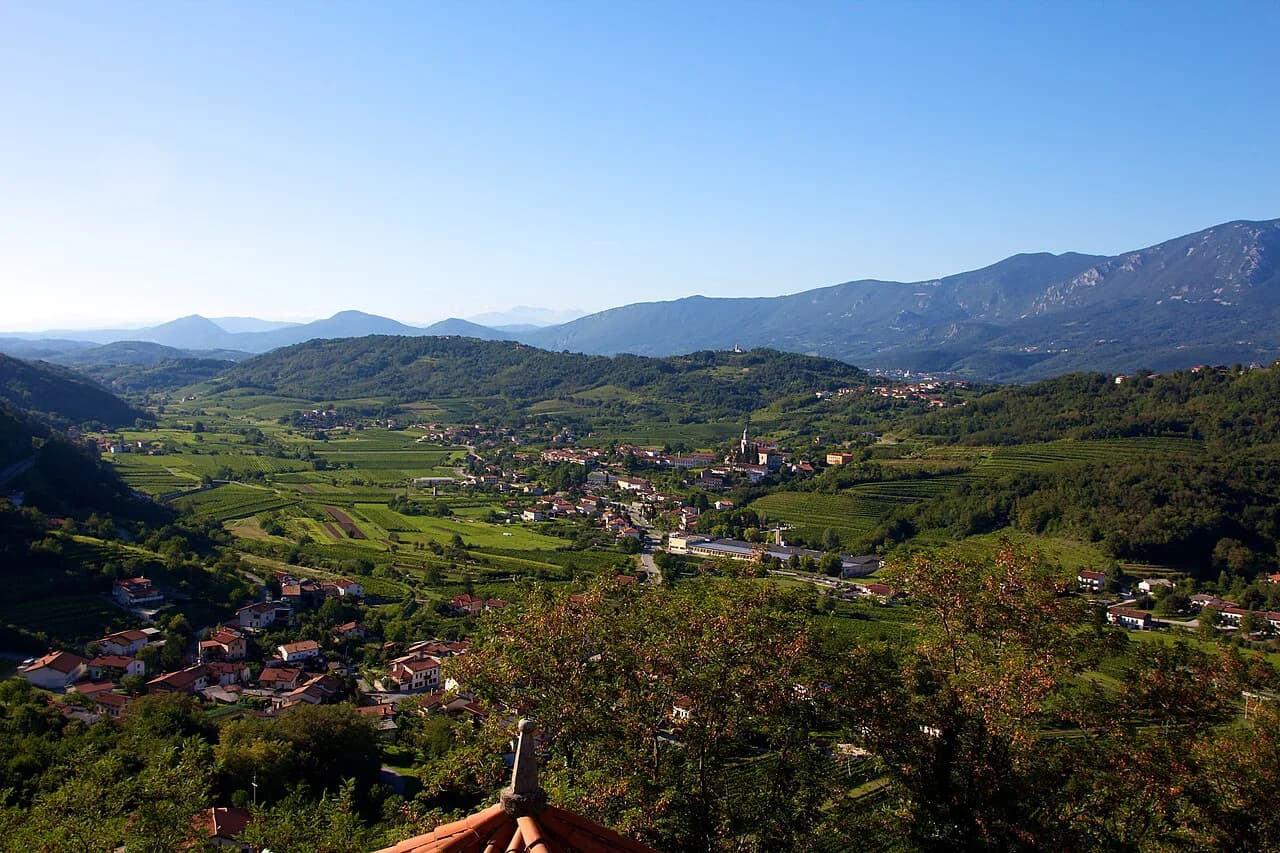
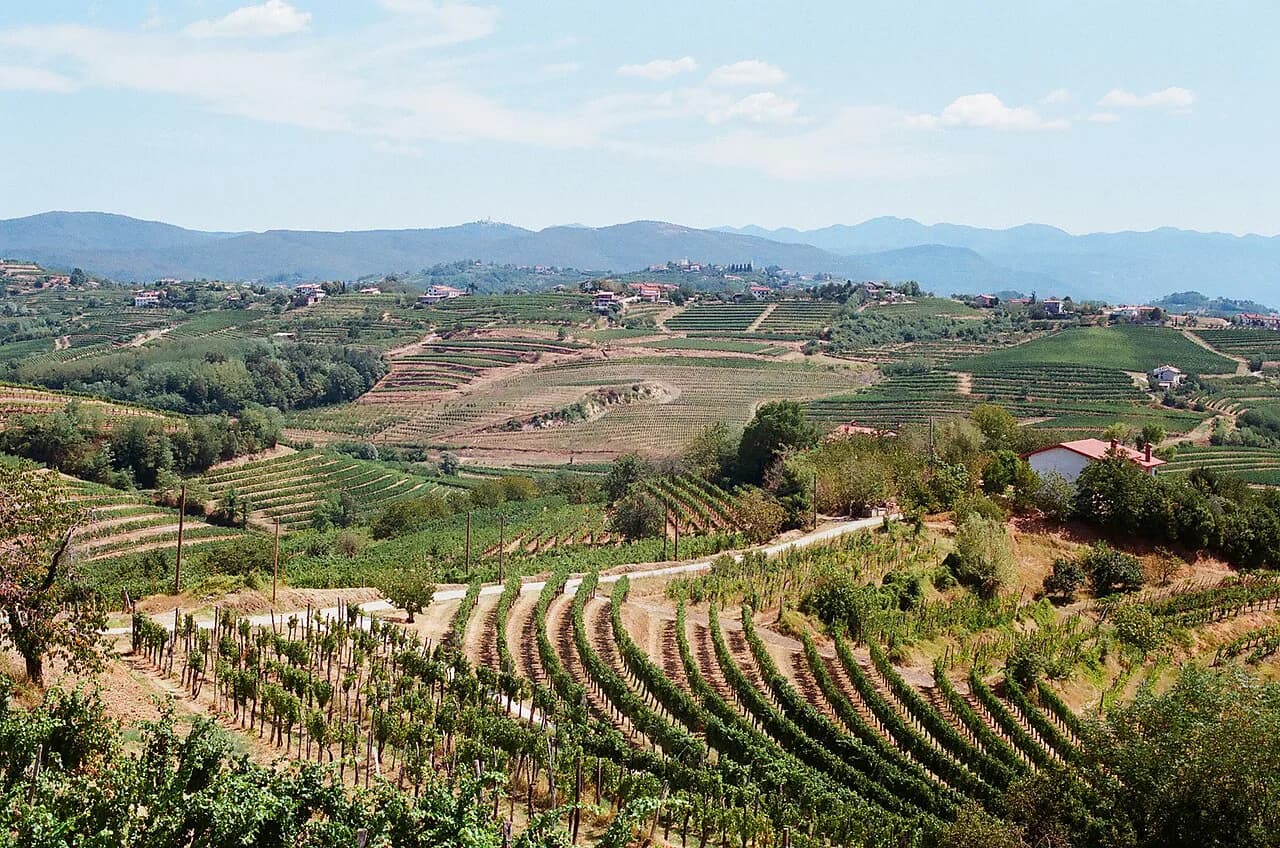
Goriška Brda rewards a half day to a full day of slow driving between hill villages, with the walled village of Šmartno as the anchor sight. The region sits in the far west of Slovenia between the Adriatic Sea and the Alps, and its vineyards and orchards on rolling hills have earned it the nickname Slovenian Tuscany. This guide covers the villages worth stopping for, the outlook tower above Gonjače, and how to link Brda with Nova Gorica.
Come for the layout as much as the sights: small hamlets of narrow alleys and slate roofs sit close together, yet the roads between them twist along ridges. Because Brda's border with Italy was drawn through the hills, a short drive can cross the frontier more than once, so plan a loop rather than a straight line and carry your passport or ID.
What Goriška Brda is and where it sits
Brda is a patchwork of vineyard hills on Slovenia's western edge, close to the Italian border and within sight of both the Alps to the north and the Adriatic to the south. Its villages are small, its roads are winding, and the whole region is compact enough that you can see several places in a single afternoon. Italian is commonly spoken alongside Slovenian here, a legacy of a border that has moved across these hills.
Treat Brda as countryside rather than a town. There is no single center to walk from; Dobrovo serves as the seat of the municipality and the practical hub, while the sights are spread across villages a few minutes apart by car. That spread is the reason a car matters more here than in a place like Piran or Koper.
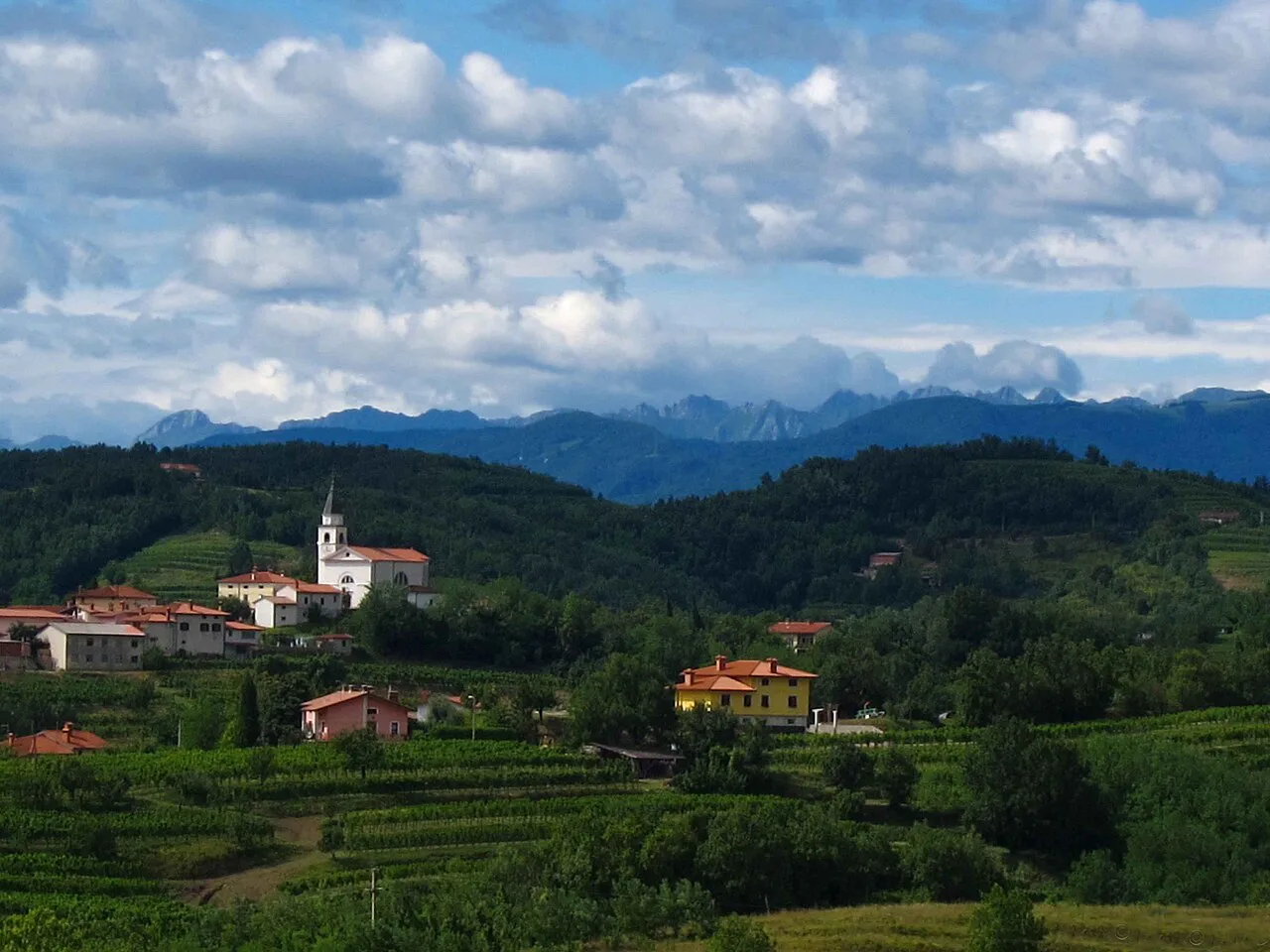
How the villages are laid out
Distances between villages look tiny on a map, but the roads climb and drop with the ridges, so a five-kilometer hop can take noticeably longer than it would on flat ground. Build your day around two or three villages plus the lookout tower rather than trying to tick off every hamlet.
A sensible order is Dobrovo first for orientation and the castle, then Šmartno, then the tower at Gonjače for the wide view, with Biljana or Medana fitted in if time allows. Each stop is short on its own, which is why the region suits travelers who prefer scenery and villages to museums. For a companion page on the walled village itself, see Šmartno, Slovenia.
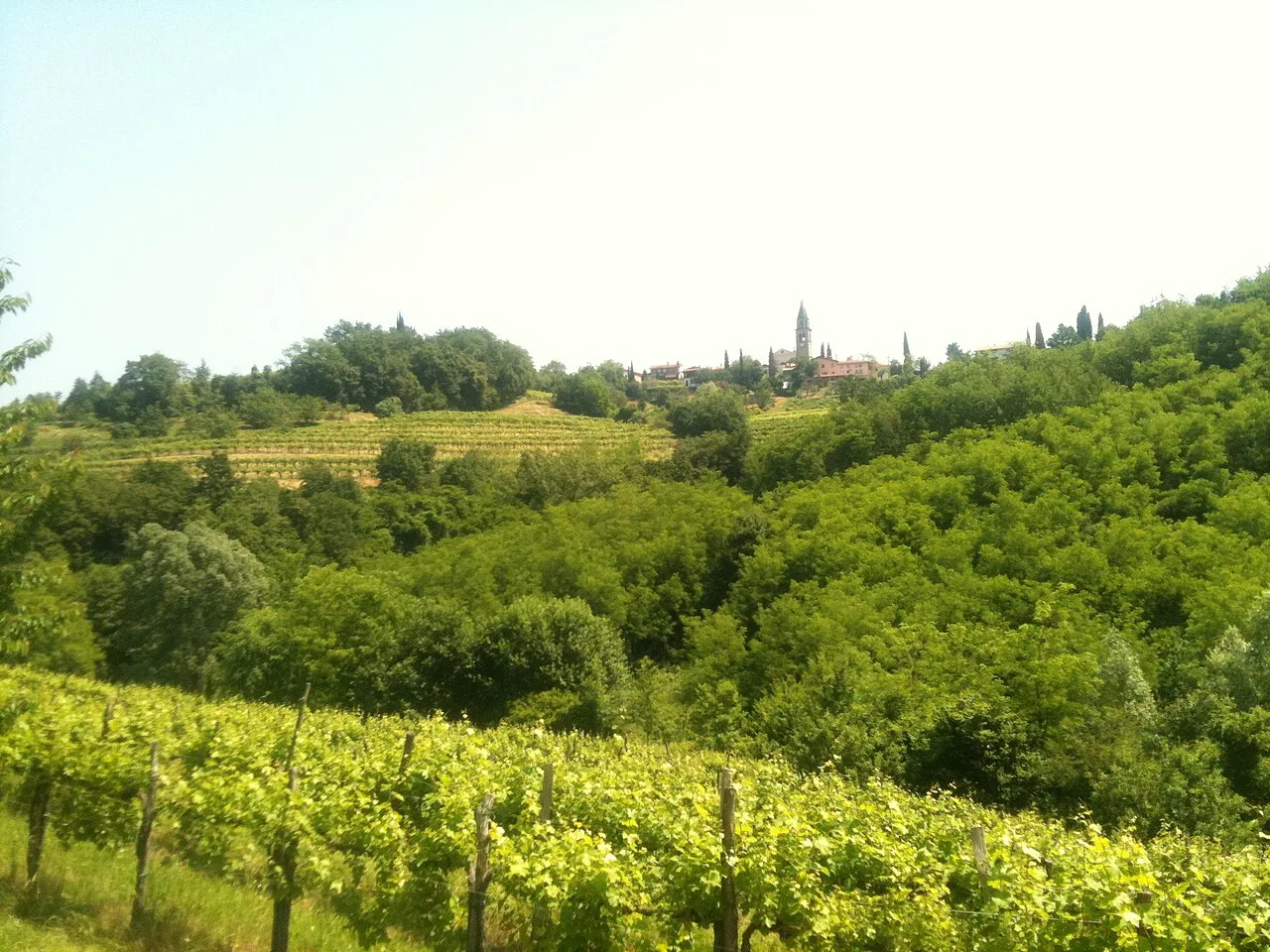
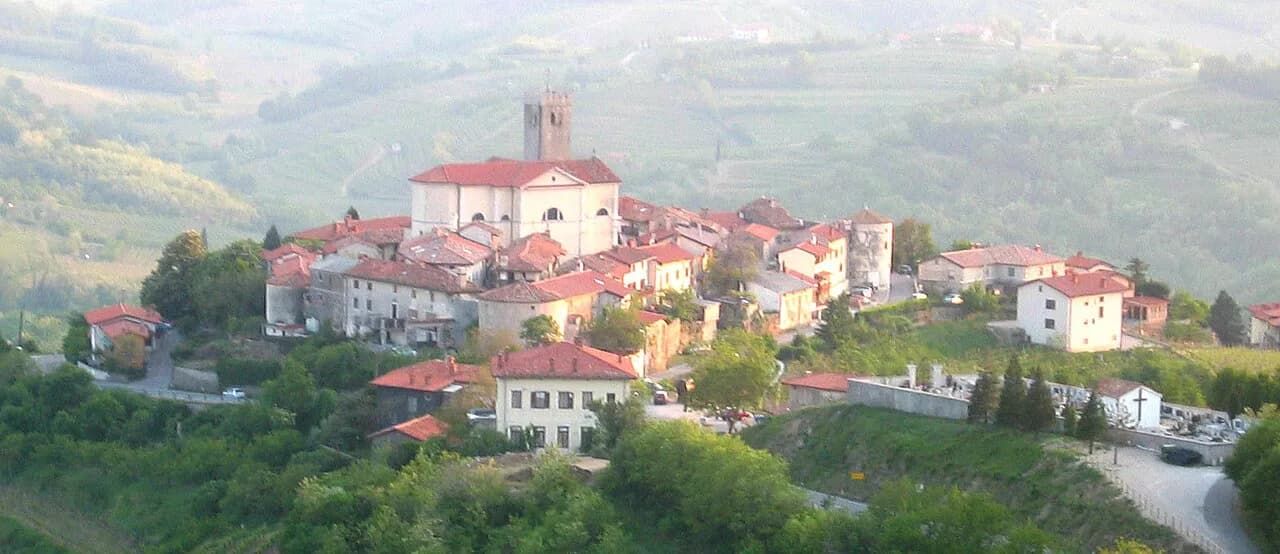
Šmartno: the walled village and its five towers
Šmartno is the village most visitors remember: a compact settlement tucked behind a rampart punctuated by five towers, with narrow stone streets inside and the Church of St. Martin at its center. It is a place to walk slowly, look at the details of the stonework, and stop for coffee or a meal in one of the small places around the lanes. Because the village is enclosed, you can see it thoroughly in a short walk.
Photographers tend to linger here, since the rampart and the tight alleys give repeated frames without much effort. Move at a relaxed pace and let the light on the stone set your timing. If you only have time for one stop in Brda, make it this one.
Dobrovo: the castle and its art collection
Dobrovo is the administrative center of Brda, and its castle is the region's main indoor sight, recognizable by towers at its four corners and a broad view over the surrounding hills. Art lovers come for a collection of graphic works by the painter Zoran Mušič, with temporary museum exhibitions alongside it. Check current opening details before building your day around it, since small village sights can keep short hours.
The castle has served as the seat of local noble families and today is used as an exhibition center and museum. The permanent draw is a collection of graphic works by Zoran Mušič, with occasional museum collections shown alongside. Allow roughly half an hour to an hour for the Mušič works and whatever temporary show is mounted. If you are traveling with someone who tires of vineyards, this is the stop that gives the day balance.
Gonjače: the outlook tower and its 144 steps
The lookout tower above Gonjače is Brda's best viewpoint, a 23-meter structure reached by climbing 144 stairs. From the top, the view opens over the Brda hills and, in clear weather, takes in the Julian and Karst edges, the Dolomites, Friuli and the Gulf of Trieste. Set aside 20 to 30 minutes for the climb and the look around.
The steps are the reason to decide in advance whether everyone in your group will climb; the reward is a panorama that makes the twisting roads make sense. A Second World War monument stands beside the tower, so the stop pairs a view with a moment of context. Pair it with Šmartno, which is only a short drive away, rather than making a separate trip.
Biljana and Medana
Biljana is worth a detour for its bell tower of the Aquileia type, attached to a church documented in written sources as far back as 1233, and known as one of the oldest parishes in Brda. Nearby, the building known as Dorišče carries a small tower and once served as a military hospital during the First World War. Both make a short, quiet stop.
Medana is a small village of wine cellars and lodging houses, and it was home to the poet and translator Alojz Gradnik. If you are passing through, it is a natural place to pause between Dobrovo and the border rather than a destination in its own right. Combine it with Biljana for a gentle hour away from the main tour stops.
How to reach Brda by car
Brda is a car destination. From Ljubljana, the drive is roughly 120 kilometers and about an hour and 50 minutes; from the Koper area on the coast it is around 83 kilometers and an hour and 10 minutes. Coming from Maribor is a much longer run of nearly three hours. If you are staying in Nova Gorica or Gorizia, Brda is a short excursion rather than a day on the highway.
A car also lets you handle the border hops without relying on a timetable, since the roads cross into Italy and back. If you are coming from the coast, the drive inland through the hills makes a natural approach.
Half day or full day in Brda
A half day covers the essentials: Dobrovo Castle and its Mušič collection, a walk inside Šmartno, and the climb up the Gonjače tower. That is a comfortable three to four hours with driving between them. Add Biljana and Medana and you stretch into a full day, with time left for a long lunch in one of the villages.
A full day also lets you take the region at the slower pace it rewards, stopping at viewpoints and farm stands along the way. If you are basing yourself in Nova Gorica, the combination of the town's own sights and a Brda loop fills a day without rushing either. The Nova Gorica Attractions: 5 Visitor Guides page covers what to pair with it.
Brda with Nova Gorica and Gorizia
Brda sits close enough to Nova Gorica and to Gorizia in Italy that the three belong in one plan. The border between the two towns is easy to cross, and driving through it on the way to the hills is part of the region's character rather than an obstacle. If you are planning a wider stop in the area, Gorizia and Nova Gorica are worth a separate look.
One practical route is to start in Nova Gorica, drive up into Brda for the villages and the tower, then return through the border and finish in Gorizia. That keeps your driving in daylight and leaves the evening free. It also avoids the longer highway run from Ljubljana if you are already staying in the area.
Practical trade-offs in the hills
Expect narrow, winding roads through the villages. Carry your passport or ID for the Italian border crossings, and fill up before you head into the hills.
Wine tasting is one option among many rather than the organizing theme of the day. Many wineries in Brda are small family operations, and the region's reputation rests on a wide spread of grape varieties rather than a single one. If you do want to taste, arrange it before you arrive so it fits around the villages instead of replacing them.
Which Brda loop fits your day
If you have one afternoon, do Dobrovo, Šmartno and the Gonjače tower in that order and skip the rest. If you have a full day, add Biljana and Medana and leave room for a long lunch. Either way, drive yourself and keep your ID handy for the border.
From Nova Gorica or Gorizia, Brda is the easiest hill country to reach, and pairing it with the town's own sights makes a complete day. Travelers coming from Ljubljana or the coast should plan the drive as part of the outing rather than tacking it on.
Explore more Nova Gorica guides
Frequently Asked Questions
Do you need a car to see Goriška Brda?
A car is the most practical way to see Brda because the villages and the Gonjače tower sit on winding roads a few minutes apart, and some drives cross into Italy and back. Without a vehicle, the region's spread-out layout makes independent touring harder, though guided day trips from the coast are offered.
How long does a visit to Goriška Brda take?
A half day covers Dobrovo Castle, a walk in Šmartno and the climb up the Gonjače tower, roughly three to four hours including driving between stops. A full day adds Biljana and Medana and allows a slower pace with a proper lunch in one of the villages.
Can you visit Brda as a day trip from Ljubljana or the coast?
Yes. The drive from Ljubljana is about 120 kilometers and around an hour and 50 minutes, while the coast near Koper is closer at roughly 83 kilometers. From Nova Gorica or Gorizia, Brda is a short excursion, which makes it the easiest base for a half-day visit.
Sources
Notes for your Slovenia trip
Optional updates to our Slovenia place guides.
You might also like
Continue reading
More guides you'll find useful