Styrian Pumpkin Seed Oil: How It's Made and How to Use It
Styrian pumpkin seed oil is a cold-pressed Austrian specialty with a deep green color and nutty taste. Here is how it is made, used, and stored.
On this page
Styrian pumpkin seed oil is a cold-pressed oil made from the seeds of the Styrian oil pumpkin, a squash bred without a woody seed coat. It comes from Styria, Austria's southernmost province, and it is deep green in the bottle with a nutty aroma. This guide covers what separates it from ordinary pumpkin seed oil, how it is made, which dishes it suits, and how to store and label-check a bottle.
You will not find a bottle priced here, because retail prices move and vary by market. What you can learn is why a liter costs more than most cooking oils: the seed-to-oil ratio is steep, and Pödör presses the seeds cold and bottles the oil unfiltered. From there you can judge a bottle on its label rather than its shelf position.
What Styrian pumpkin seed oil is
Styrian pumpkin seed oil is a single-ingredient product: the bottle lists 100 percent oil of Styrian pumpkin seeds, nothing added. It is vegan and gluten-free, and it is not a blend with rapeseed or sunflower oil. That matters when you compare it with generic pumpkin seed oil on a supermarket shelf.
Styria is the Austrian region south of the Slovenian border, and the oil belongs to that landscape the way the pumpkin fields do. Producers describe it as the taste of fall in the province, and the flavor notes they give are walnuts, crispy bread, and sweet caramel. If you are based in Ptuj or elsewhere in Slovenian Styria, you are in the neighboring region across the border, where pumpkin seed oil is also a kitchen staple.
Why the oil is dark green and nutty
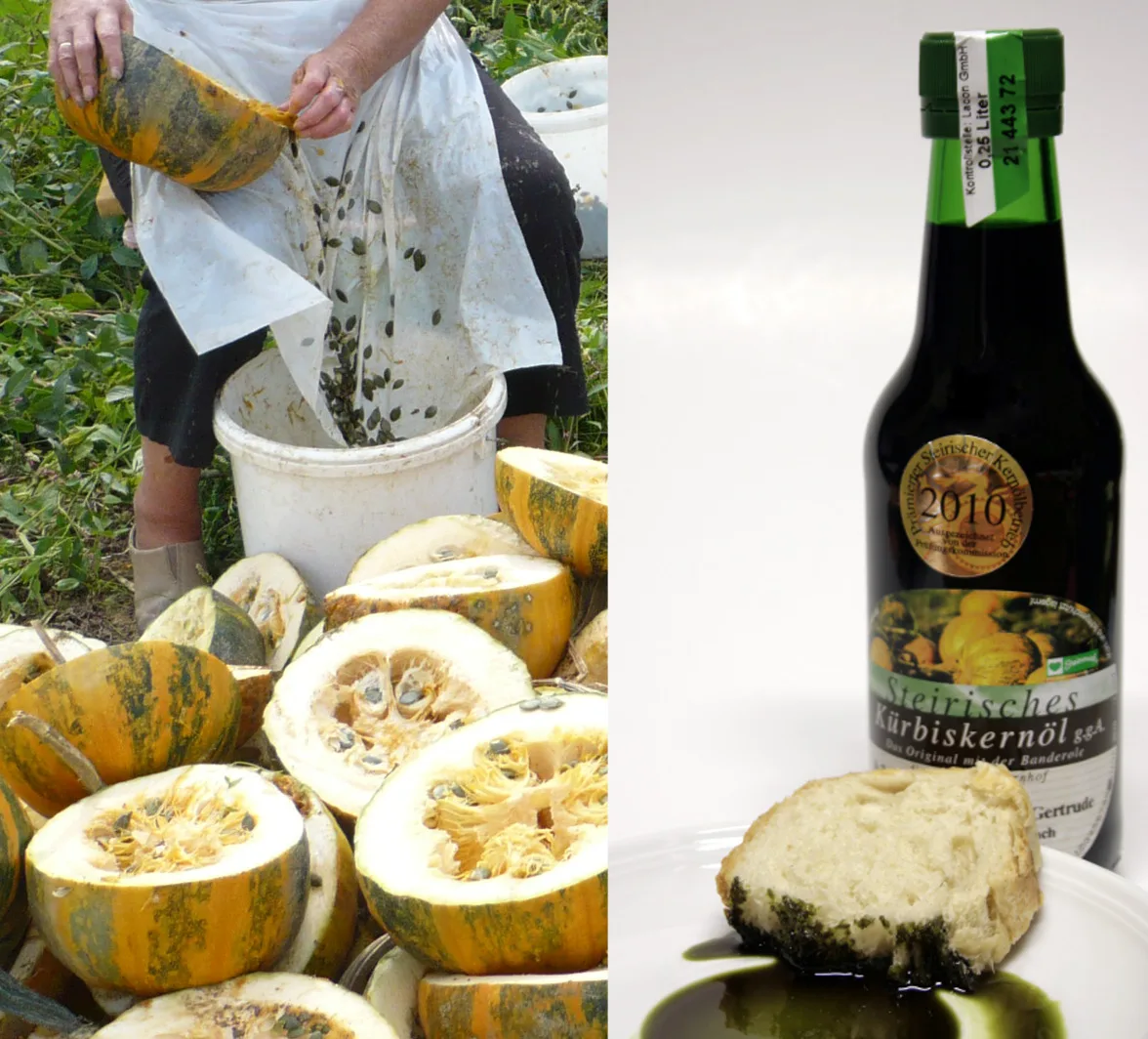
The color comes from the seeds themselves. The Styrian oil pumpkin's seeds are wrapped only in a fine silver skin rather than a hard shell, and that skin is what producers credit for the characteristic deep green. The nutty aroma comes from the roasting step in the press, not from added flavoring.
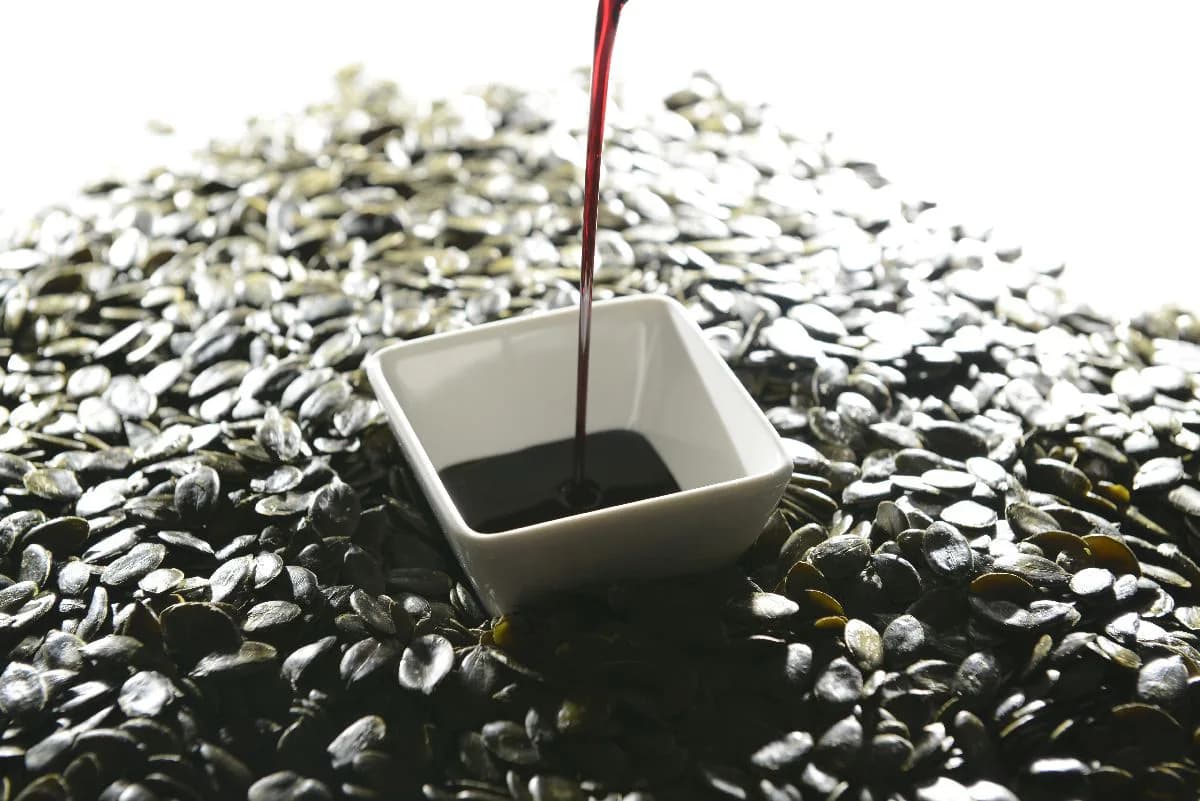
Poured onto a plate, the oil reads almost black-green; thinned over pale food, it turns a clear green. That intensity is why a little goes a long way and why a small bottle lasts a home cook a while.
How the oil is made, from seed to bottle
The process starts at harvest in autumn, when the seeds are separated from the pumpkin flesh. The seeds are washed and dried, which lets them be stored and pressed later rather than immediately. After grinding, the seed meal is mixed with water and salt and gently roasted until the water evaporates, and then the oily mass is pressed.
Pödör describes its own process as cold pressing the seeds daily and filling the unfiltered oil into dark glass bottles straight after sedimentation, so light and time do less damage. Because the oil is unfiltered, sediment settles and the bottle needs a shake before pouring.
The Styrian oil pumpkin and its soft seed coat
The Styrian oil pumpkin is a specific variety, bred for seeds without a woody coat. That soft silver skin makes the seeds easier to process and is what distinguishes them from the hull-on pumpkin seeds sold as a snack. The variety spread through Styria after farmers succeeded in breeding a hull-less pumpkin.
Written records of pumpkin seed oil production in the region go back to 1735, and in 1773 the oil was restricted to pharmacy use because it was considered too valuable for cooking. Treat those dates as history rather than as rules that apply to a bottle today.
How much seed goes into a liter of oil
The ratio is the reason for the price. Pödör states that a liter of its Styrian pumpkin seed oil takes around 30 pumpkins or 2.5 kg of pumpkin seeds. Piccantino gives a slightly wider figure of 30 to 35 pumpkins, depending on the fruit.
Those figures explain why the oil is sold in small bottles as a condiment rather than in bulk as a frying oil. A splash is the normal serving, and the bottle is treated more like a good vinegar than like a workhorse cooking fat.
How to use it: salad dressing, soup, potato salad, and dessert
Styrians use it most often as a salad dressing, and it is the classic finish for potato salad and for a cream of pumpkin soup. It also works as a dressing for breaded, fried chicken salad. In all of these it is a finishing oil, added at the table.
Beyond salads, producers suggest drizzling it over stews and leafy greens, into cake mixtures, or, for the adventurous, over vanilla ice cream with whipped cream. It also lifts scrambled eggs, added after cooking. If you are planning a meal out in the region, the same oil usually shows up on menus in and around the old town.
Why it is added after cooking, not used for frying
Pumpkin seed oil should not be heated. It is not a cooking or frying oil; it goes on after the heat is off, which is why recipes call for it at the end or at the table. Heating it would waste both the aroma and the money in the bottle.
Because the oil is a finishing oil meant for the plate rather than the pan, it is not the right fat for cooking. Use a neutral oil for cooking and keep the pumpkin seed oil for the plate, the bowl of soup, or the salad.
How to store it and why you shake the bottle
Unopened, the bottle keeps for 18 months in a cold, dry space away from sunlight, with the expiry date printed on the bottle. Once opened, use the oil within three to four months so its vitamins and minerals do not lose quality. Because it is unfiltered, shake before pouring.
A cool cupboard is enough for most kitchens, but a warm countertop next to the stove is not. If you buy a larger bottle, you can decant part of it into a small dark bottle and keep the rest sealed.
Reading the label: cold-pressed, unfiltered, PGI, and country of origin
Four words on the label do most of the work. Cold-pressed tells you the seeds were pressed without heat; unfiltered means the oil was bottled with sediment and should be shaken; P.G.I. refers to protected geographical indication for Styrian pumpkin seed oil; and country of origin should read Austria.
Brands differ in bottle size and packaging, and a producer such as Pödör sells the same Styrian oil in a smaller bottle alongside the standard size, so compare the price per liter rather than the sticker. Import rules and shipping can change what reaches a US address, so check the seller's current terms before ordering from abroad.
How to choose and use a bottle
Buy on the label and the price per liter: cold-pressed, unfiltered, Styrian, and bottled in Austria. Then treat it as a finishing oil, shaken, kept cool and dark, and used within a few months of opening.
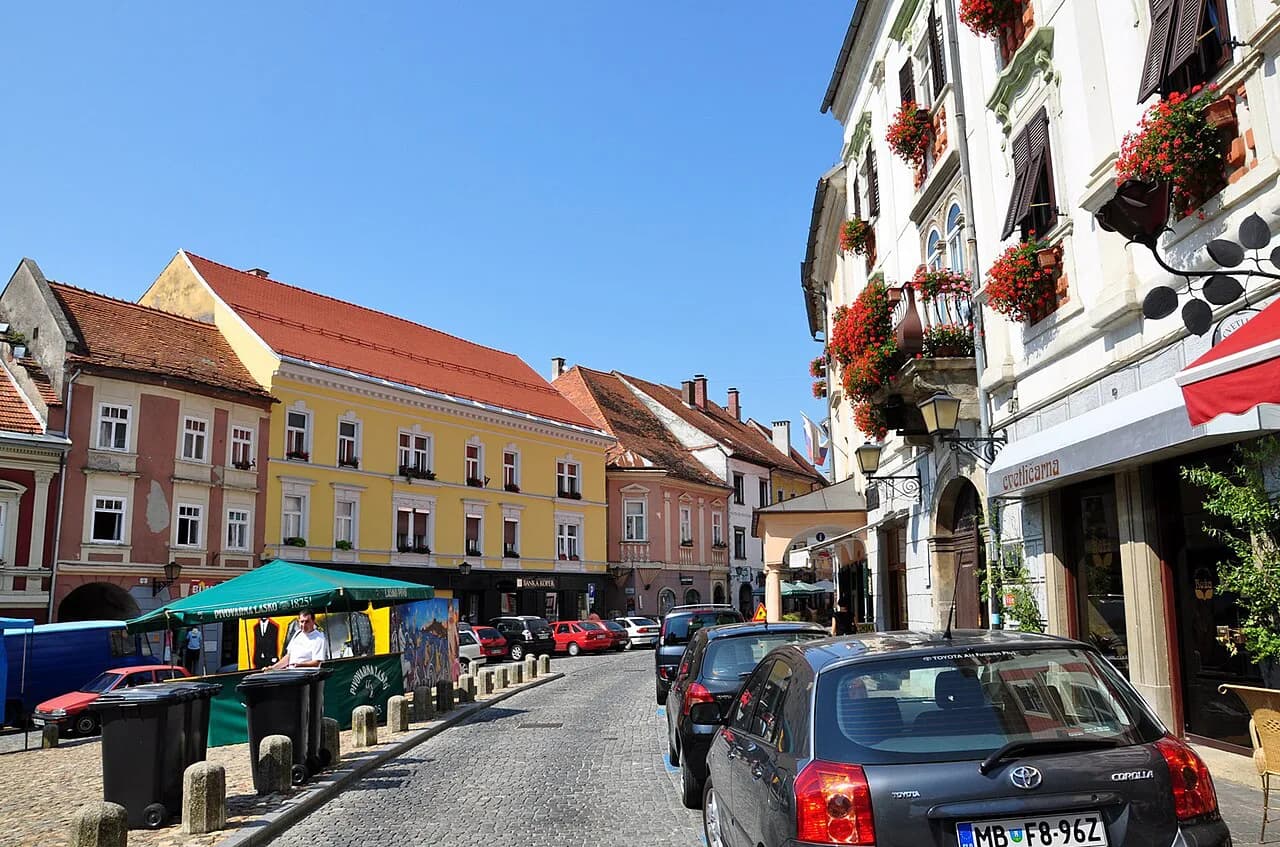
If your trip takes you through Ptuj, look for pumpkin seed oil on local menus over potato salad or soup before you buy a bottle to take home, and the surrounding sights make a good day out alongside it.
Explore more Ptuj guides
Frequently Asked Questions
What is the difference between Styrian pumpkin seeds and regular pumpkin seeds?
Styrian oil pumpkin seeds have only a fine silver skin rather than a hard woody shell. That soft coat is what producers credit for the oil's deep green color, and it makes the seeds easier to press.
What are the benefits of Styrian pumpkin seeds?
Pödör states that more than half of Styrian pumpkin seed oil consists of polyunsaturated fatty acids and that it contains vitamins including E and A. Treat those as the producer's description of the oil's composition rather than as medical advice.
Can you fry with pumpkin seed oil?
No. Pumpkin seed oil should not be heated, so it is added to salads, soups, potato salad, scrambled eggs, and desserts after cooking rather than used in the pan.
Sources
- Amazon.com : PÖDÖR Premium Styrian Pumpkin Seed Oil - 8.4 fl. Oz. - Cold-Pressed, 100% Natural, Unrefined and Unfiltered, Vegan, Gluten-Free, Non-GMO in Glass Bottle : Grocery & Gourmet Food
- Pumpkin seed oil, Styrian, cold-pressed - Pödör
- Shop Online - Styrian Pumpkin Seeds, Oil & Protein Powder
- Styrian Pumpkin Seed Oil - Healthy and Tasty - Magazine- Piccantino
Notes for your Slovenia trip
Optional updates to our Slovenia place guides.
You might also like


Continue reading
More guides you'll find useful