Kurentovanje: What to Know About Ptuj's Kurent Carnival
Kurentovanje is Ptuj's carnival, where kurenti in heavy sheepskin masks ring bells through the streets. Here is what the figures are and how the event works.
On this page
Kurentovanje is the carnival held in Ptuj, and the kurenti are its centerpiece: masked figures in sheepskin who ring bells as they move through the streets. The organizer, Javni zavod Ptuj, publishes the program on its own site, so you can plan around named events rather than guesswork. This guide explains who the kurent is, what the costume consists of, which other ethnographic figures appear, and which parts of the program reward a closer look.
Ptuj is a compact town, and the carnival unfolds on Mestni trg and along a published procession route, which is why an evening presentation and a full procession day feel like two different events. Pick your day by what you actually want to watch rather than by crowd size alone.
What kurentovanje is
Kurentovanje is Ptuj's carnival season, organized by Javni zavod Ptuj from Mestni trg 4, and it brings together kurenti, other traditional ethnographic figures, and modern carnival masks. The program runs as several strands at once, with processions, a carnival corso, presentations of ethnographic figures, concerts, masked dances, and exhibitions, so it is not a single parade you attend once and leave.
The carnival's program rotates through Artfest, Etnofest, and Karnevalfest, which is the practical reason the schedule mixes ritual displays with concerts and masked parties. Knowing which strand is running on your dates tells you whether you are booking a folklore evening or a street party.
Who the kurent is: the sheepskin figure and the bells
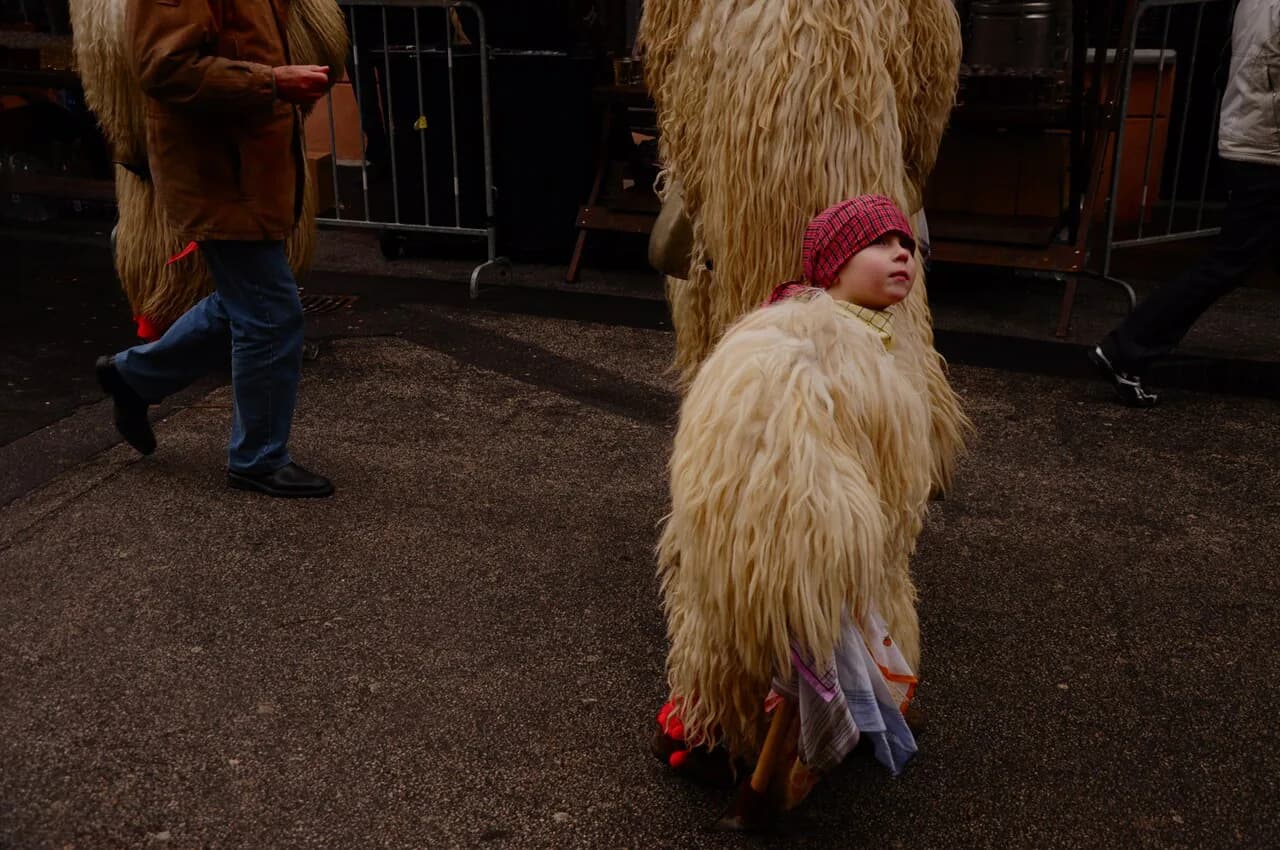
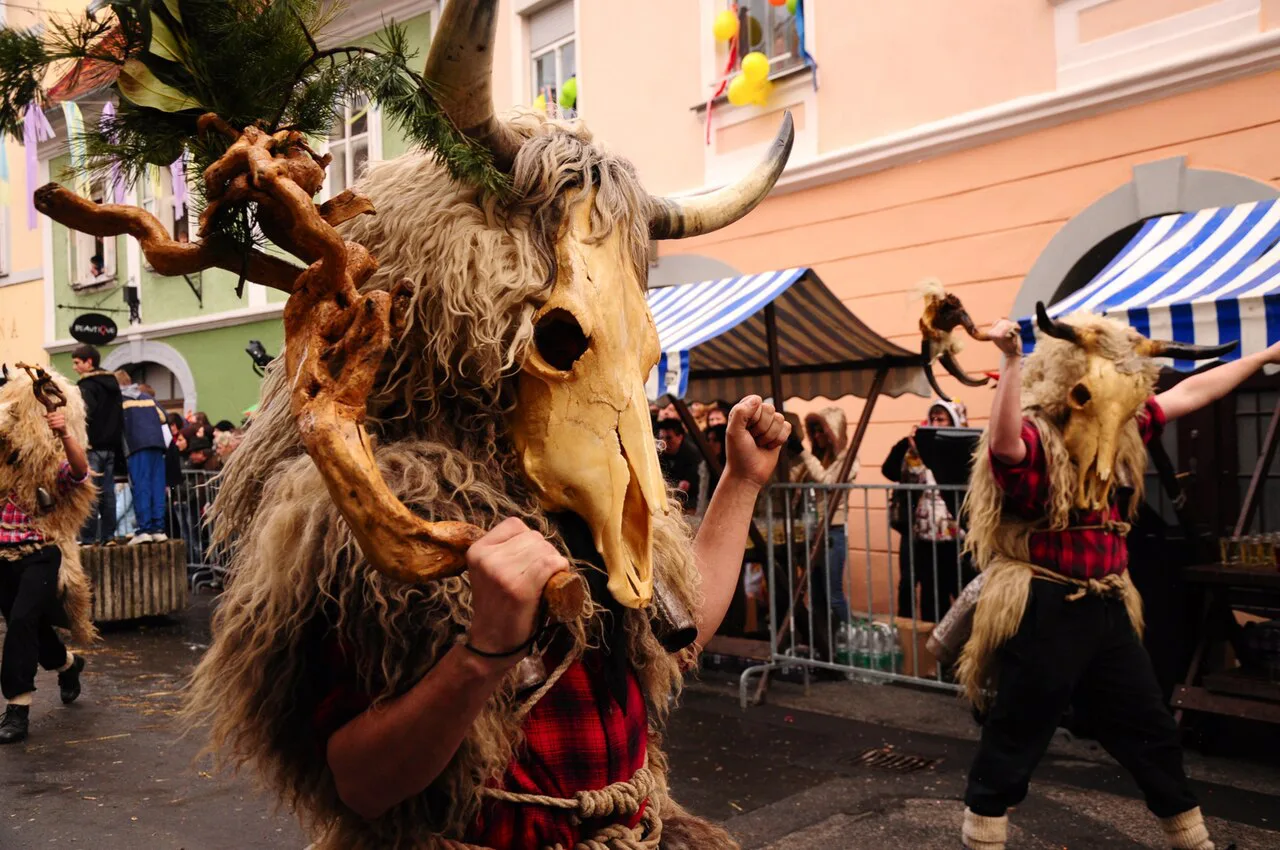
The kurent is the most numerous and recognizable traditional carnival figure in Slovenia, documented at least as far back as 1880. In folk belief the figure drives off evil and brings luck and contentment, and it is also treated as one of the symbols of Slovenian identity. At Ptuj's Kurentovanje you can see up to a thousand kurenti performing their ritual, which is the single best reason to time a visit to the festival itself.
The costume is what makes the figure unmistakable on the street: a heavy sheepskin worn over the body, with the bells that give the kurenti their sound as they move in groups. The neighboring regional variant, the korant, belongs to the same family of bell-ringing figures, and the organizer programs kurent and korant groups together. Listen for the bells before you see them; that sound is how the figure announces itself.
Twenty kurent associations in Ptuj are linked through the Zveza društev kurentov, which counts more than 900 members and carried the nomination for the UNESCO list. That structure explains why the figures appear in organized groups rather than as lone performers. Watch how a group moves together rather than following one individual.
The other ethnographic figures at Kurentovanje
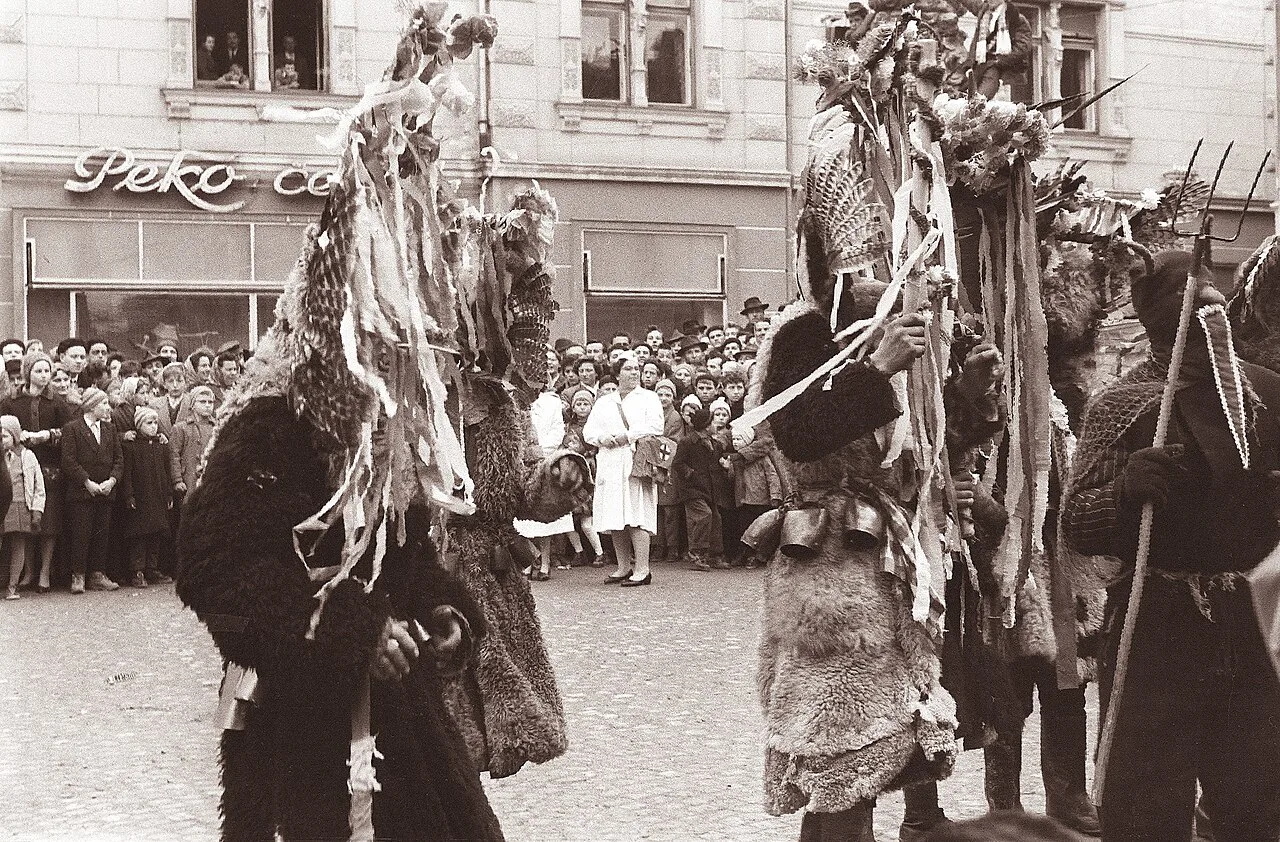
The kurent shares the streets with a set of other traditional figures from the Ptujsko and Dravsko polje areas, Haloze, and Slovenske gorice. The organizer lists baba, the Cigani from Dornava, the hudič, the Jürek and Rabolj from Haloze, the kopjaš wedding figure, the kurike and piceki, the medved from Ptujsko polje, the orači, the ploharji, the pustni plesači from Pobrežje, the pokači, the ruse from Ptujsko polje, and the vile.
Each figure has its own role in the ritual, and the organizer groups them into categories rather than one undifferentiated parade. The ploharji are associated with charming fertility, the pokači with luck and prosperity, and the orači with marking a magic circle. The program sets aside dedicated evening presentations precisely so visitors can study these figures one at a time.
What happens on the streets: the route and Mestni trg
Mestni trg is the main stage, and the organizer names it as the location for the Saturday carnival corso, the children's masked revelry, the evening presentations, and the Tuesday farewell. Processions follow a published route through the streets, which is the detail to check before you choose where to stand. In a compact old center, watching on the square and watching along the route are genuinely different experiences.
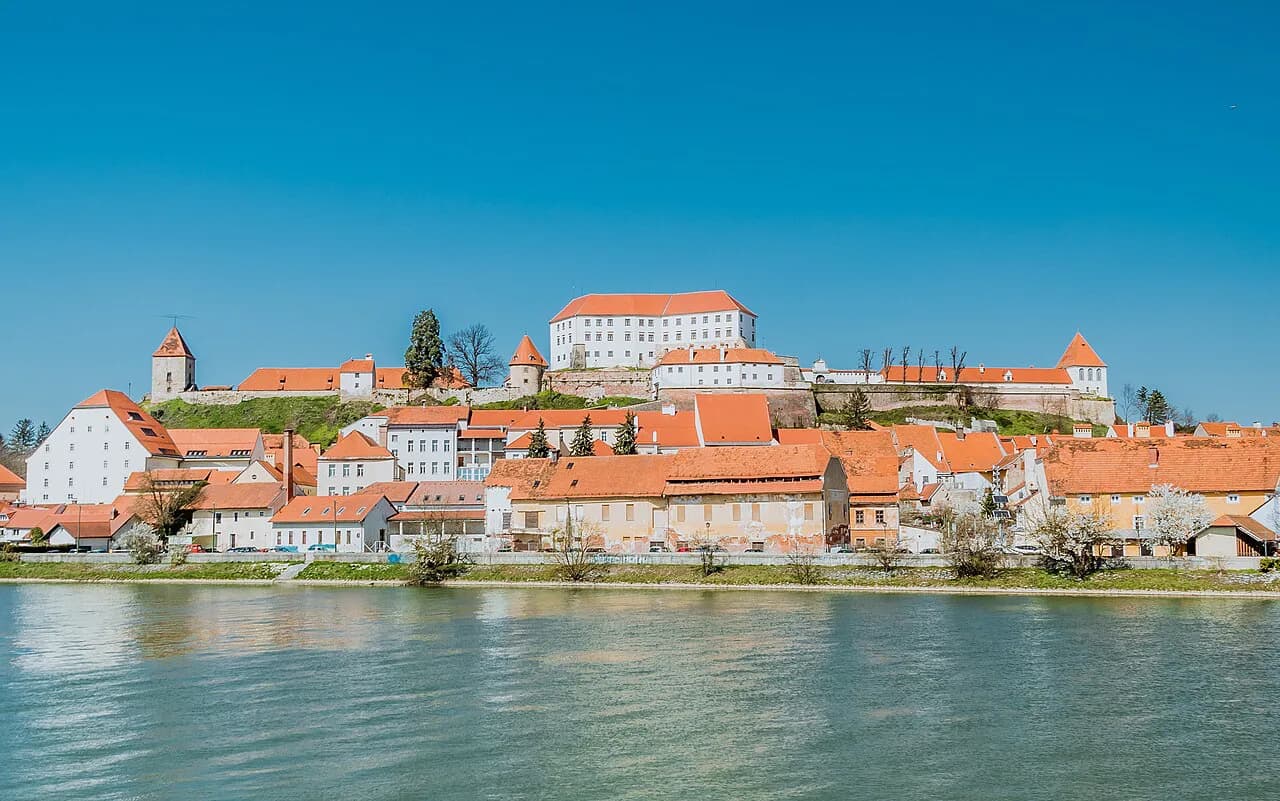
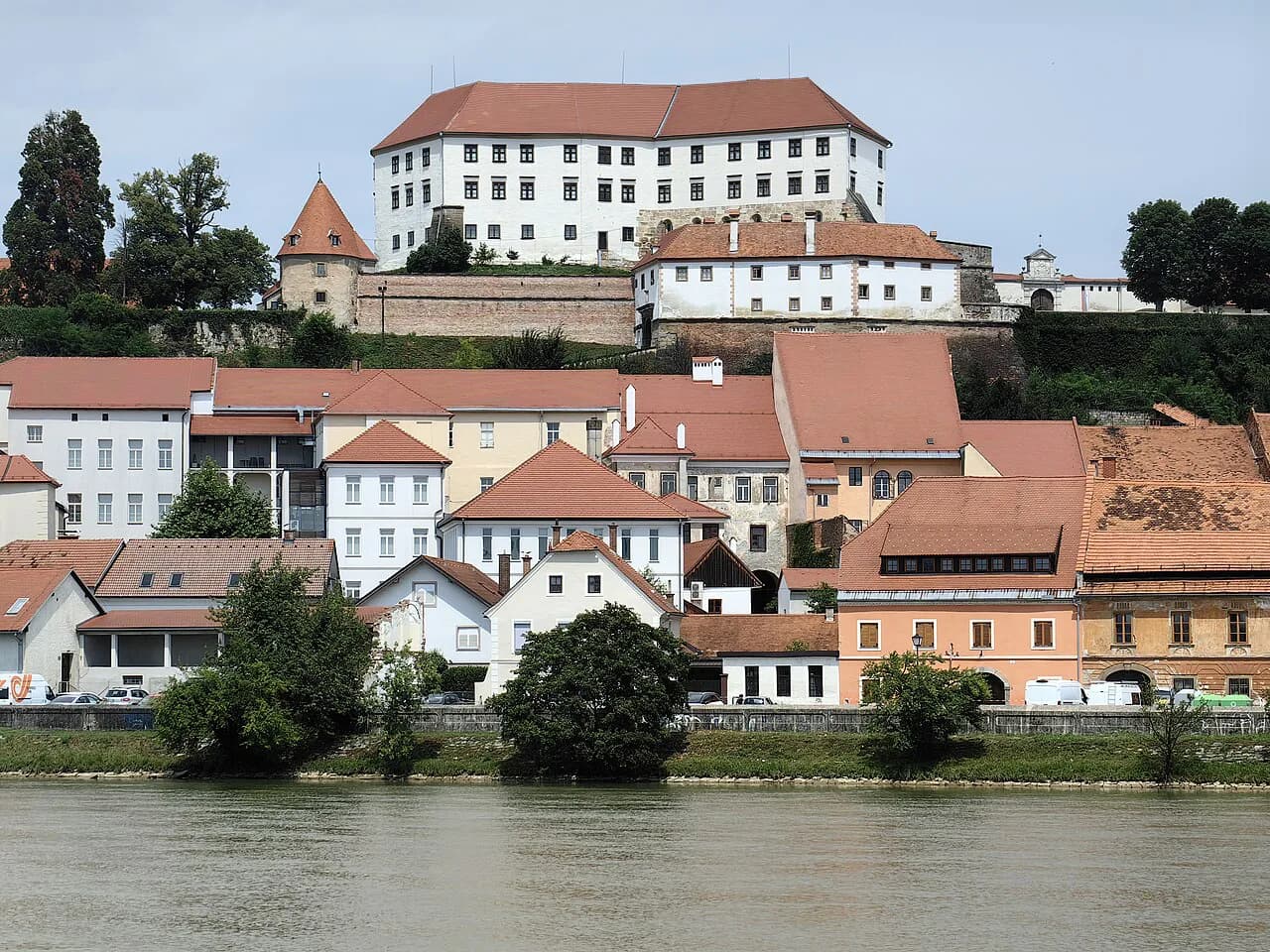
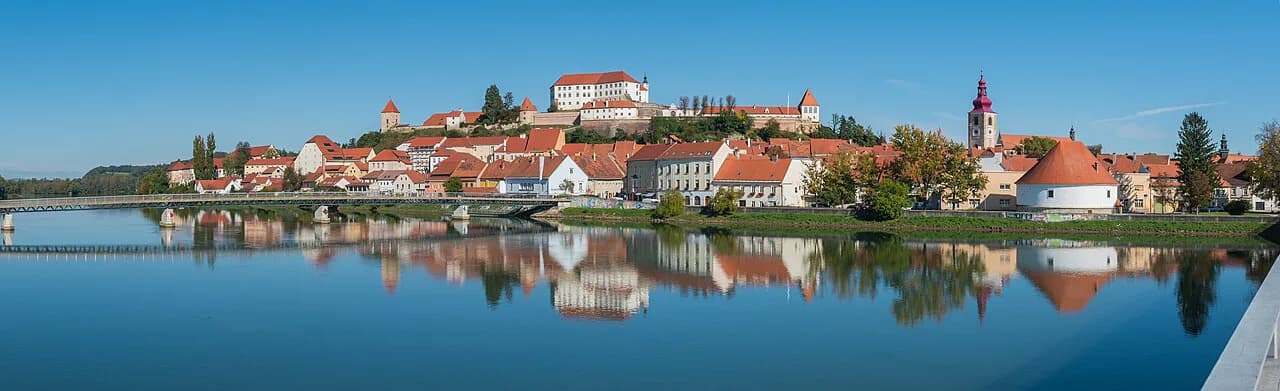
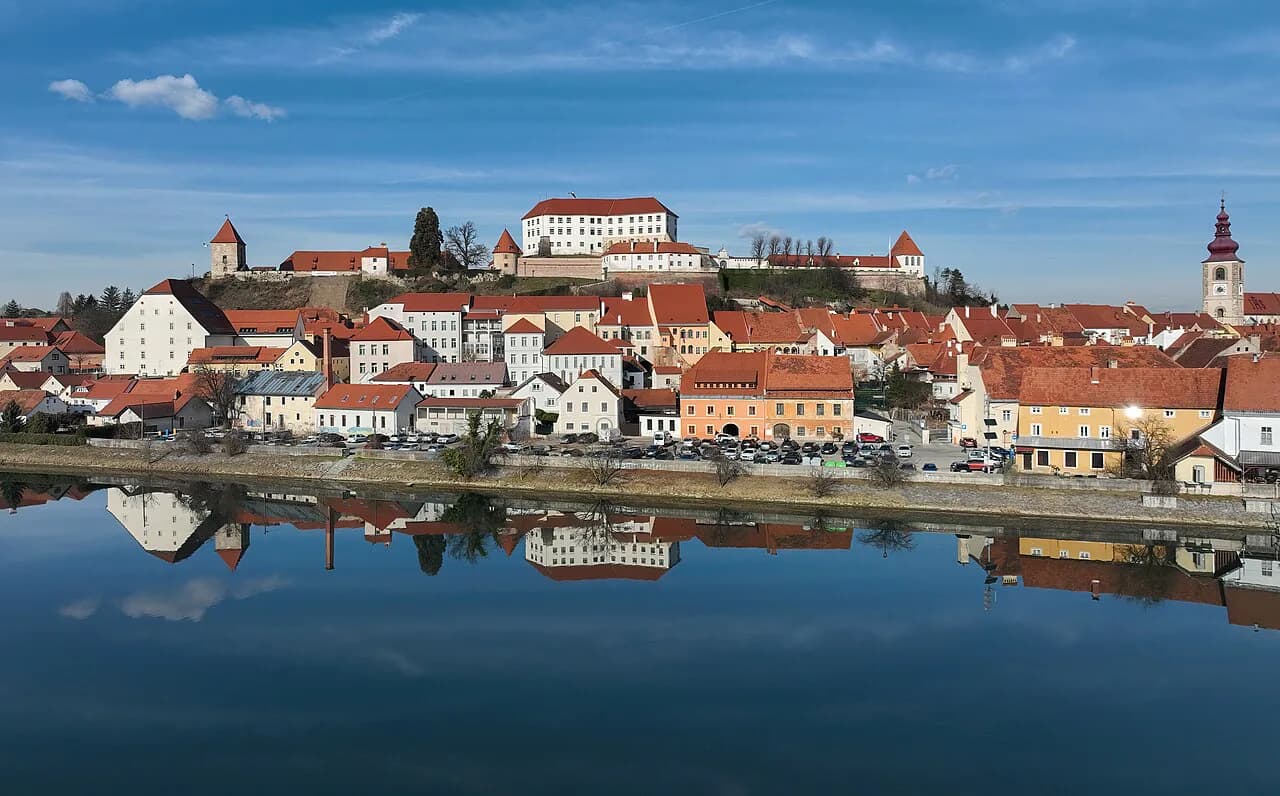
With the old town and the Drava River as the setting, a day at the carnival doubles as a day in a compact historic center where the walk between the square and the river bank is short. Arriving early gives you time to find a spot on Mestni trg before the crowds settle in.
The named parts of the program
Kurentov skok opens the season, when at midnight kurenti put on their bells for the first time and ring them to drive off winter and evil; the published schedule places it at a farmstead in Spuhlja. The Day of Kurent and Korant Groups with the handover of power follows later in the week, when Mestni trg fills with horned and feathered figures. If you want the largest number of figures on the square at once, this is the midweek evening to plan around.
The Evening Presentations of the Autochthonous Carnival Figures take place on Mestni trg, and the organizer describes them as the chance to meet the kurenti and other traditional figures up close and learn their ritual. These evenings are the alternative to a crowded procession day if what you want is a clear view and some explanation.
The International Ethnographic and Carnival Procession is the centerpiece, when thousands of traditional figures and carnival masks pass through the streets, followed by a party with a band and DJ on Mestni trg. The Saturday carnival corso invites visitors to dress up and join the procession alongside townspeople, Romans, medieval traders, kurenti, and koranti. Choose between watching the biggest lineup and walking in a smaller, more participatory parade.
Carnival Tuesday closes the season with an urban celebration: the town joins the festivities on Mestni trg and in the old town, with a band and DJ into the evening and the handover of power with the burial of carnival in the early afternoon. A children's masked party on Mestni trg, a night spectacle with fire, krampusi, kurenti, and koranti, and a kurent market on Novi trg round out the published program.
Where to see the kurent costume outside the carnival
Kurentova hiša on Murkova ulica is the year-round address for the kurent, and the national tourism board presents it as a place to meet the figure and the costume tradition throughout the year rather than only during the carnival. If your trip falls outside the season, this is the named stop for seeing the mask and dress up close. Confirm current visiting arrangements with the town's tourist information service.
The tourism board also sets the kurent in the wider context of Slovenian Shrovetide customs around the country, useful if your trip touches more than one region. For the rest of your time in town, the Ptuj Attractions guide covers the castle, the old town, and the Roman remains in one place.
UNESCO listing and what it means for how the tradition is presented
The kurenti's rounds were entered in the Slovenian Register of Intangible Cultural Heritage in 2012, then declared a living masterpiece of national importance, and at the end of 2015 the government proclaimed them intangible cultural heritage of national significance. The organizer describes the rounds as the second Slovenian entry on the UNESCO Representative List after the Škofjeloški pasijon. The listing is why the carnival is presented as heritage to be understood, not only as entertainment.
The organizer states that UNESCO status raised international recognition and also works to protect the heritage from excessive commercialization and from being taken out of its original time and place. That is why the presentations of the figures are staged with explanation and why the ritual elements stay tied to the carnival calendar. Reading the program with that in mind makes the difference between a masked parade and a documented tradition clearer.
Practical trade-offs for a carnival visit
The main procession day packs the route and Mestni trg, so standing still in a dense crowd is the cost of seeing the full lineup. The evening presentations give you a closer look at the figures with less jostling, but they cover fewer participants than the international procession. Decide which matters more before you commit a day.
An evening event in late winter means dark, cold hours on an open square, and the presentations run after sunset. The Saturday corso and the international procession are daytime events, which suits travelers who would rather watch in daylight. Layer up either way: the event happens outdoors and on foot.
Ticket terms, parking arrangements, and charges for individual events are confirmed only through the organizer, Javni zavod Ptuj, which lists its address at Mestni trg 4 and publishes the program online. Check that page before you travel, since changes to times and locations appear there.
Which Kurentovanje day should you pick?
Choose the international procession if you want the largest gathering of figures and masks in one pass, and accept the crowds along the route and on Mestni trg. Choose an evening presentation if you want a closer, calmer look at the kurenti and the other ethnographic figures with some explanation of their ritual.
If your dates fall outside the carnival, plan around Kurentova hiša on Murkova ulica instead, and pair it with the rest of the town using the Ptuj Attractions guide. Check the organizer's published program before booking travel, because the event's shape changes from day to day.
Explore more Ptuj guides
Frequently Asked Questions
Do I need tickets for the procession?
The organizer publishes the program with event names and locations but does not list admission terms for each event on those pages, so confirm with Javni zavod Ptuj before you travel. The same source is where schedule changes appear.
Can you see kurenti at any time of year?
The kurenti's rounds belong to the carnival season, and the national tourism board points to Kurentova hiša on Murkova ulica in Ptuj as the place to meet the figure and its costume outside that period. Check current visiting arrangements with the town's tourist information service.
What is the difference between a kurent and a korant?
They belong to the same family of bell-ringing carnival figures, and the organizer programs kurent and korant groups together, including a dedicated day for both during Kurentovanje. The kurent is documented in Slovenia at least as far back as 1880.
Sources
Notes for your Slovenia trip
Optional updates to our Slovenia place guides.
You might also like
Continue reading
More guides you'll find useful