
Planica Nordic Centre: What to See and Do at the Valley

Planica Nordic Centre is a ski jumping and cross-country complex in the Rateče–Planica valley near Kranjska Gora, and a half day covers its main pieces: the ski flying hill, the museum, the central building and the zipline. This guide explains how the site is laid out, what each part costs in euros, who can ride the zipline and how to pace a visit.
Reach it by driving west from Kranjska Gora through Rateče; the complex sits at Rateče 167, with the Reception main building opposite the ski flying hill and the zipline chairlift about 300 meters away. Parking is at the complex itself, with a dedicated stop for motorhomes.
Where Planica Nordic Centre sits in the valley
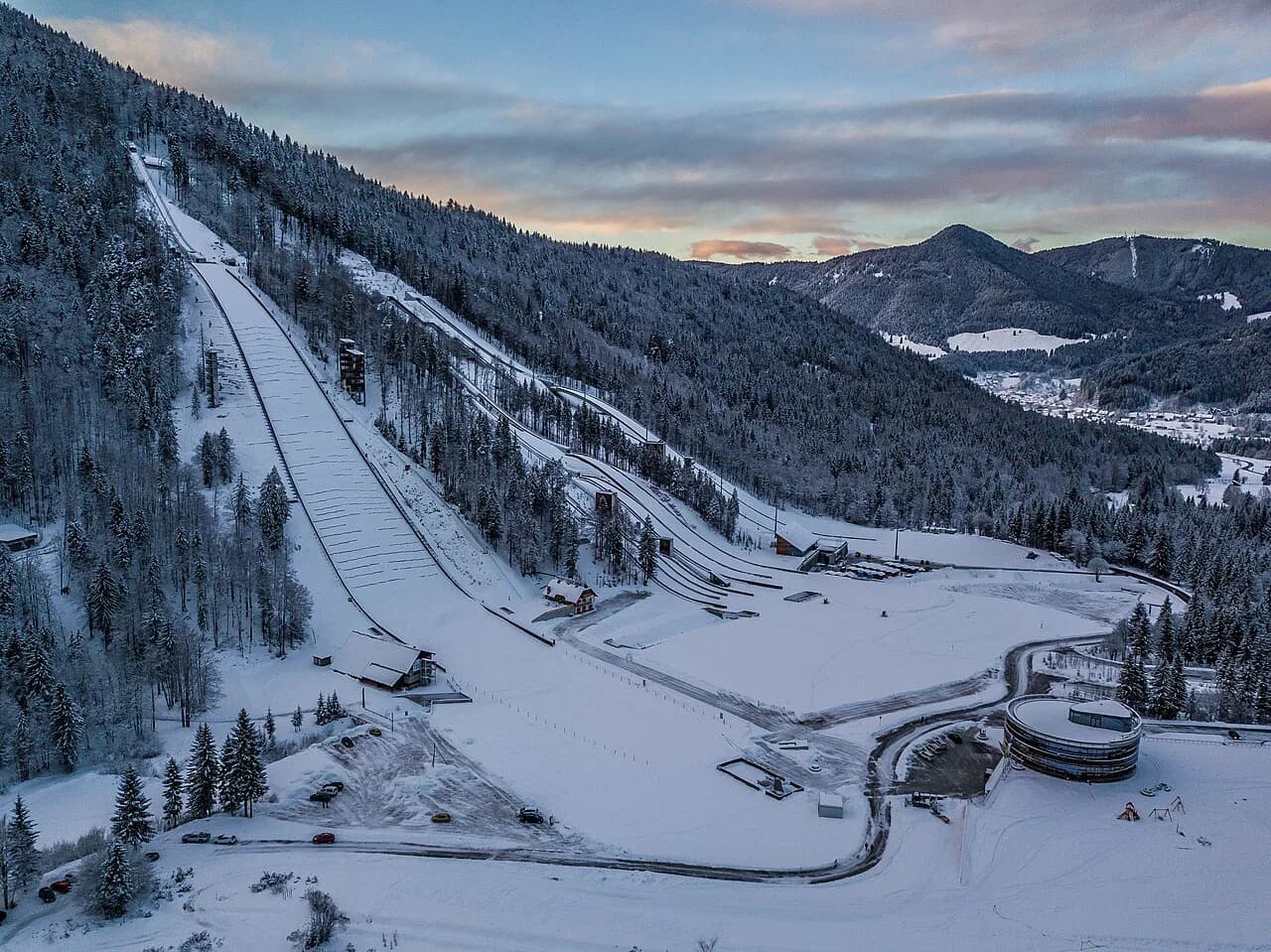
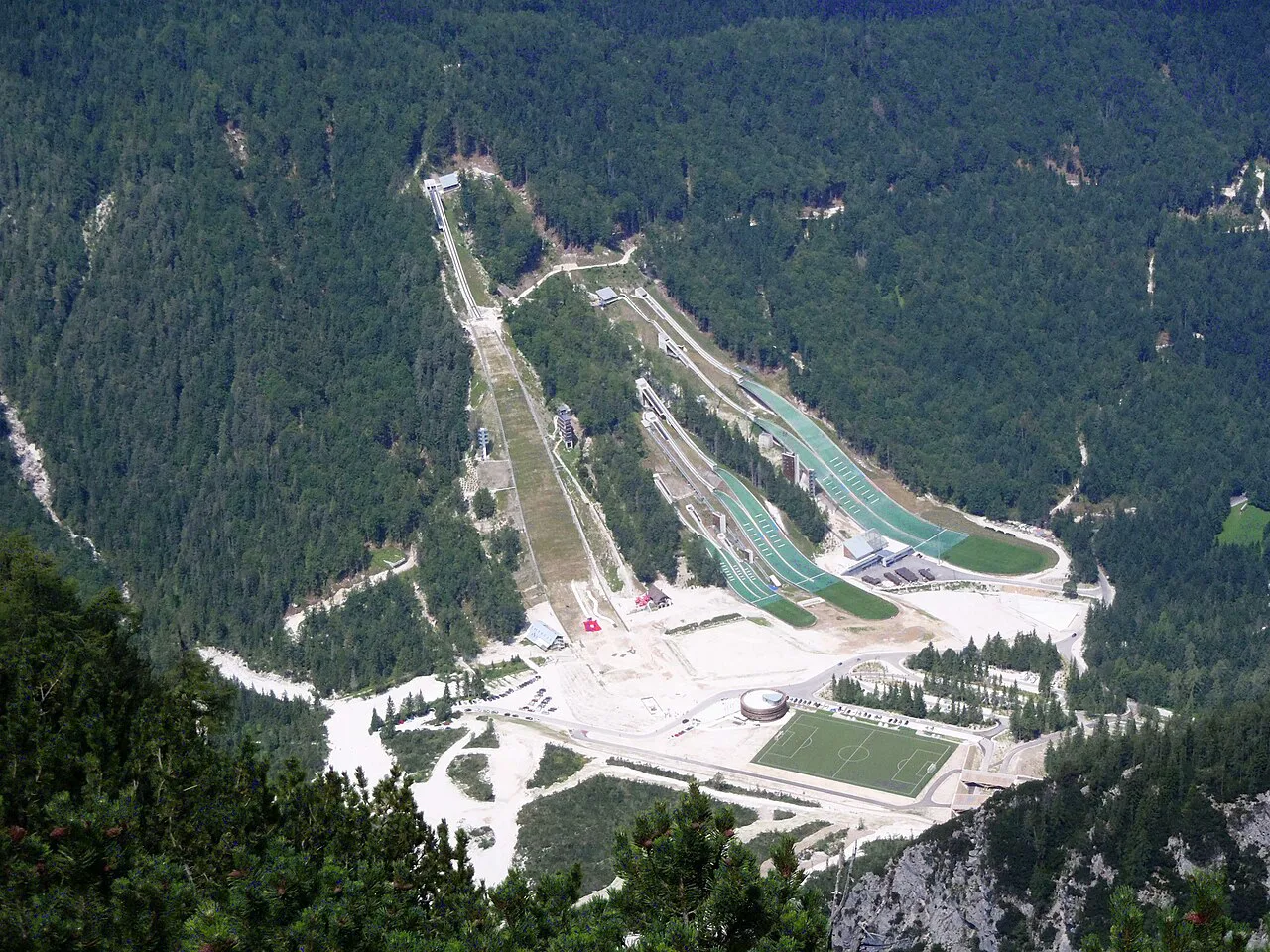
Planica Nordic Centre lies in the alpine valley under the Ponce mountains, on the road that leads toward Tamar valley and the edge of Triglav National Park. The ski jumping section and the cross-country section are separated by the path toward Tamar, with the Central Building at the center of the site.
The complex was rebuilt in stages through the 2010s, and the Gorišek Brothers Flying Hill and the surrounding jumps sit on the slope above the main building. For orientation, arrive at the center's reception in the main building opposite the ski flying hill; staff there direct you to the chairlift, museum and tours.

Getting there and where to arrive
From Kranjska Gora, the drive to Planica runs through Rateče and takes roughly 10 minutes, and parking is at the complex itself, with a dedicated stop for motorhomes. Arrive at the main building first: it faces the ski flying hill and handles reception, zipline check-in and tour departures.
If you are combining Planica with the rest of the valley, Lake Jasna near Kranjska Gora makes an easy stop on the way in or out, and Zelenci nature reserve is close to Rateče, where the Sava Dolinka rises.

The Gorišek Brothers ski flying hill and the chairlift
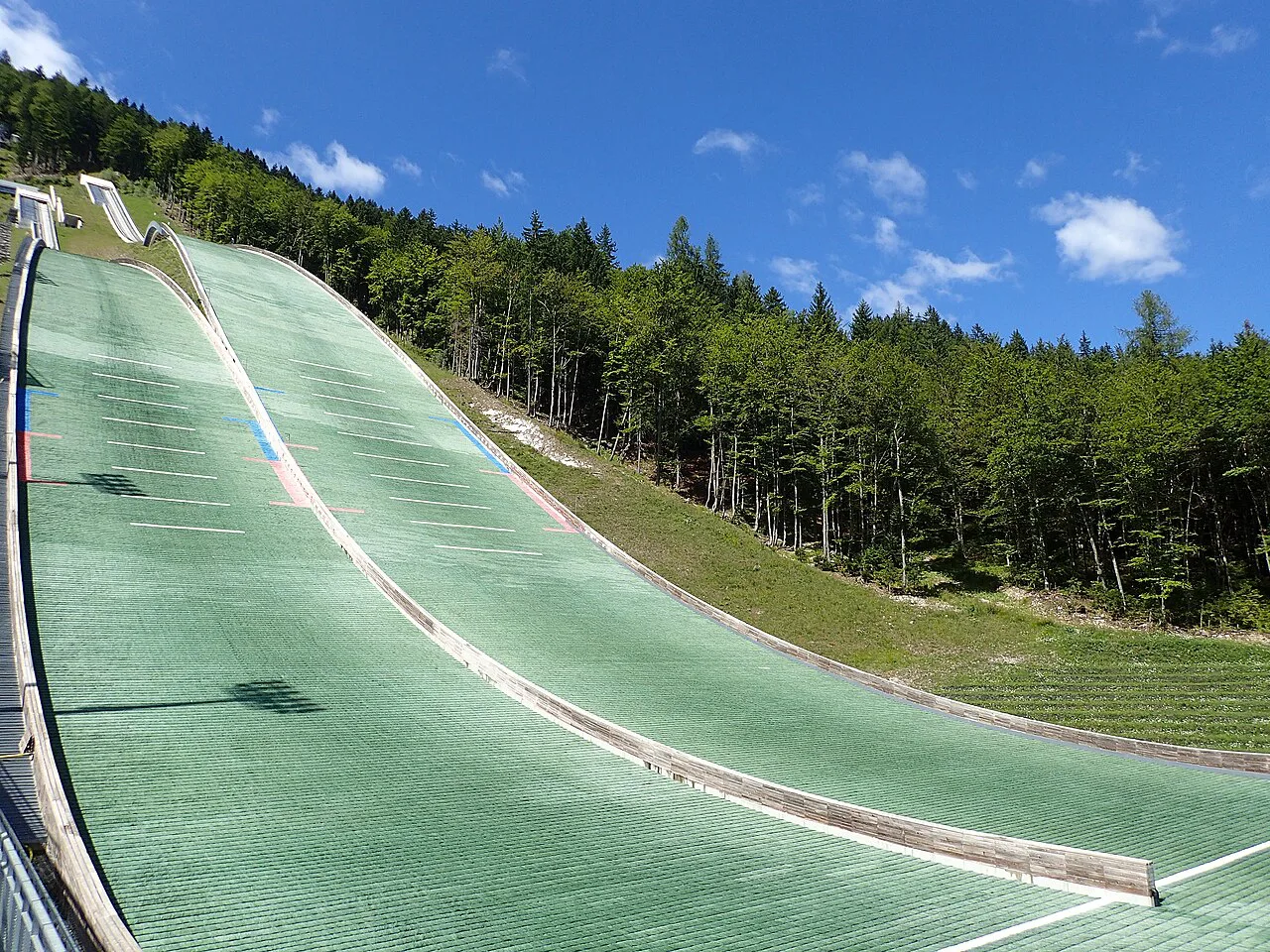
The Gorišek Brothers Flying Hill is the focus of the site, and the zipline experience includes a chairlift ride to its top that takes about 8 minutes. The top gives you the full view down the inrun and out over the valley floor, and it is the zipline start point.
The launch sits at 1,151 meters, and the chairlift that serves the zipline is roughly 300 meters from the main building. The lift, ride and descent are booked together as the zipline experience.
The zipline: 566 meters and 202 meters of drop
The zipline descends 566 meters with a height difference of 202 meters, and riders reach speeds of up to 85 km/h. A solo descent is a single ride; a two-descent ticket gives one person a second run.
Every participant is weighed in equipment before the descent, because the trolley must be matched to body weight. You wear a harness and helmet supplied on site, ride the chairlift in the trolley's backpack, and launch from the top of the hill.
Who can ride: weight, height and age limits
Solo riders need a minimum height of 140 cm and a body weight with equipment between 30 kg and 120 kg. The safety gear itself weighs about 5 kg, so the scale at check-in is the deciding measure.
Children aged 5 and up who are at least 120 cm tall can ride tandem with a parent or guardian, and the combined weight of both riders with equipment must not exceed 120 kg. No prior experience is needed for either option.
Zipline prices and what extras cost
A solo descent costs 29 EUR, a tandem (adult plus child) is 49 EUR, and a two-descent ticket for one person is 49 EUR. A GoPro 360° video of your ride is an additional 19 EUR.
The tandem price applies only within the combined weight limit and to a child accompanying an adult, so two adults booking together should count on two solo tickets. Gift cards for the zipline are sold through the same booking page.
Booking the zipline and how long it takes
Reservation is not mandatory but strongly advised, and in summer slots can fill before you arrive. Book online, by phone or by email, then show up at reception at least 15 minutes before your descent.
The full experience, including equipment fitting and the chairlift ride, takes about 30 minutes. Instructors brief you on the procedure, hand out the harness and helmet, and walk you through the final details at the top.
Planica Museum and guided tours of the Central Building
A local guide can take you through the Central Building, the viewing platform and Planica Museum as one tour, with the museum covering the site's ski-jumping story. The architectural tour and the museum are the calm counterpart to the zipline, and pairing them gives you the full picture of the jump and cross-country setup.
The museum and architectural tour fill the non-adrenaline part of a Planica visit. Check the center's info and contact pages for tour times and museum entry details before you go.
Cross-country skiing and the ski school
In winter, the cross-country trails follow the natural terrain toward the forest, and the Planica cross-country ski school runs individual, family and group courses for beginners and improvers. A group course from 5 to 10 people costs 35 EUR per person for one day (2 hours), 60 EUR for two days (4 hours) and 100 EUR for three days (6 hours).
Private lessons start at 38 EUR for one adult for one hour a day and 35 EUR for a child up to 12, with two-hour sessions and additional hours priced separately. A family course for two adults and up to three children aged 15 or under costs 175 EUR for a 2-hour day.
The ski school page also lists cross-country ski equipment rental, so you do not need to bring skis to try the trails. Whether the school and the trails are running on your dates depends on snow and the center's schedule.
How much time to allow at Planica
A half day fits the essentials: the chairlift ride, about 30 minutes for the zipline, and an hour for the museum and a guided tour of the Central Building. Budget extra if you plan a two-descent ticket or a cross-country lesson.
Pair Planica with the rest of the valley: Lake Jasna and the Zelenci Nature Reserve sit along the road back toward Kranjska Gora, and the Vršič Pass road climbs from Kranjska Gora for a scenic drive when it is open.
Practical limits: weather, health and what to bring
Descents run within a temperature range that extends down to -10 °C, so cold days alone do not necessarily cancel the ride. If you are prone to cold, choose a slot in the warmer part of the day.
The descent is not recommended for people with spinal injuries, high blood pressure or heart conditions, epilepsy, pregnant women, or anyone who has had surgery within six months or eye surgery within three months. Anyone under the influence of alcohol or drugs cannot ride.
Bring sporty clothing and closed shoes, and tie back long hair; in summer you can carry sandals in the backpack provided with the equipment. Riders with reduced mobility can take part only with prior notice and at their own responsibility.
Nearby: Tamar valley, Triglav National Park and Kranjska Gora
The road past Planica continues into Tamar valley at the edge of Triglav National Park, a short drive from the center's parking. For more in the area, the Kranjska Gora Attractions: 8 Visitor Guides covers the lake, the nature reserve and other stops around town.
On the road back toward Kranjska Gora, the Russian Chapel (Ruska kapelica) on the Vršič Pass near Kranjska Gora is a natural stop if you drive the pass in the warmer months.
Should the zipline be your reason to visit Planica?
If you want the adrenaline high, book a solo or two-descent zipline slot ahead of your visit and pair it with the chairlift and the museum. If you prefer a quieter day, the Central Building tour and the cross-country trails give Planica a slower pace.
Either way, allow half a day and come back into Kranjska Gora for Lake Jasna or the Vršič road.