
Lake Jasna: A Visitor's Guide to Kranjska Gora's Alpine Lake

Lake Jasna, Jezero Jasna in Slovenian, is two interconnected lakes just outside Kranjska Gora at the entrance to the Vršič Pass. Allow an hour for a lap of the shoreline and a look at the Zlatorog statue, or half a day if you plan to swim, sit at a café, and use the lake as a base for the rest of the valley.
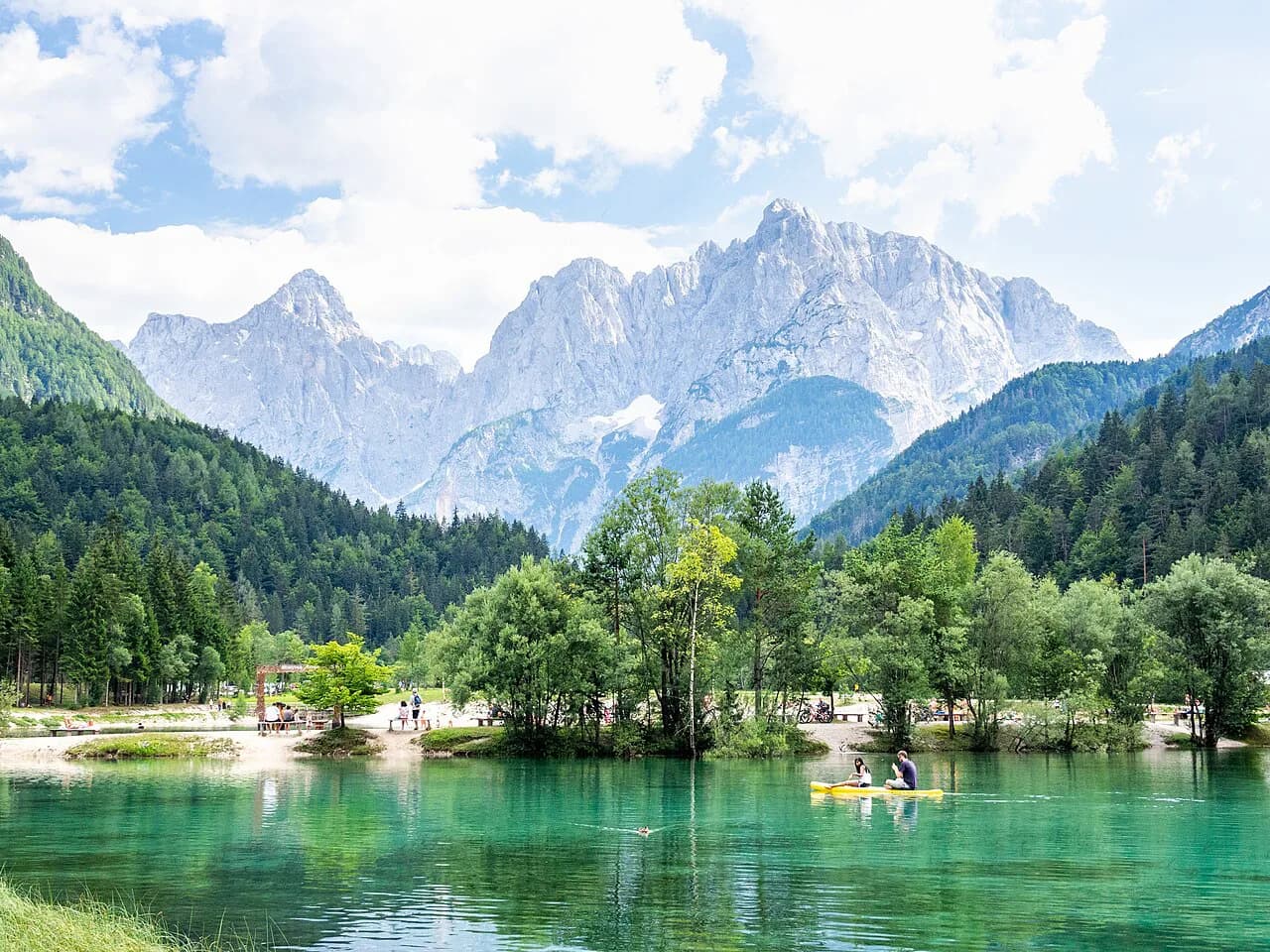
The name means "clear," and the water earns it: the lakes form where the Mala Pišnica and Velika Pišnica streams meet, and the constant flow keeps the surface transparent enough to mirror the Julian Alps behind it. This guide covers where the lake sits, the three ways to reach it, what to look for on the shore, the facilities, and how much time to give it.
Where Lake Jasna is and what you are looking at
The lake sits on the edge of Kranjska Gora, along the road that climbs to the Vršič Pass and at the threshold of Triglav National Park. It is not a wild mountain tarn but a pair of linked artificial lakes, which is why the shore is easy to walk and the layout is compact rather than sprawling.
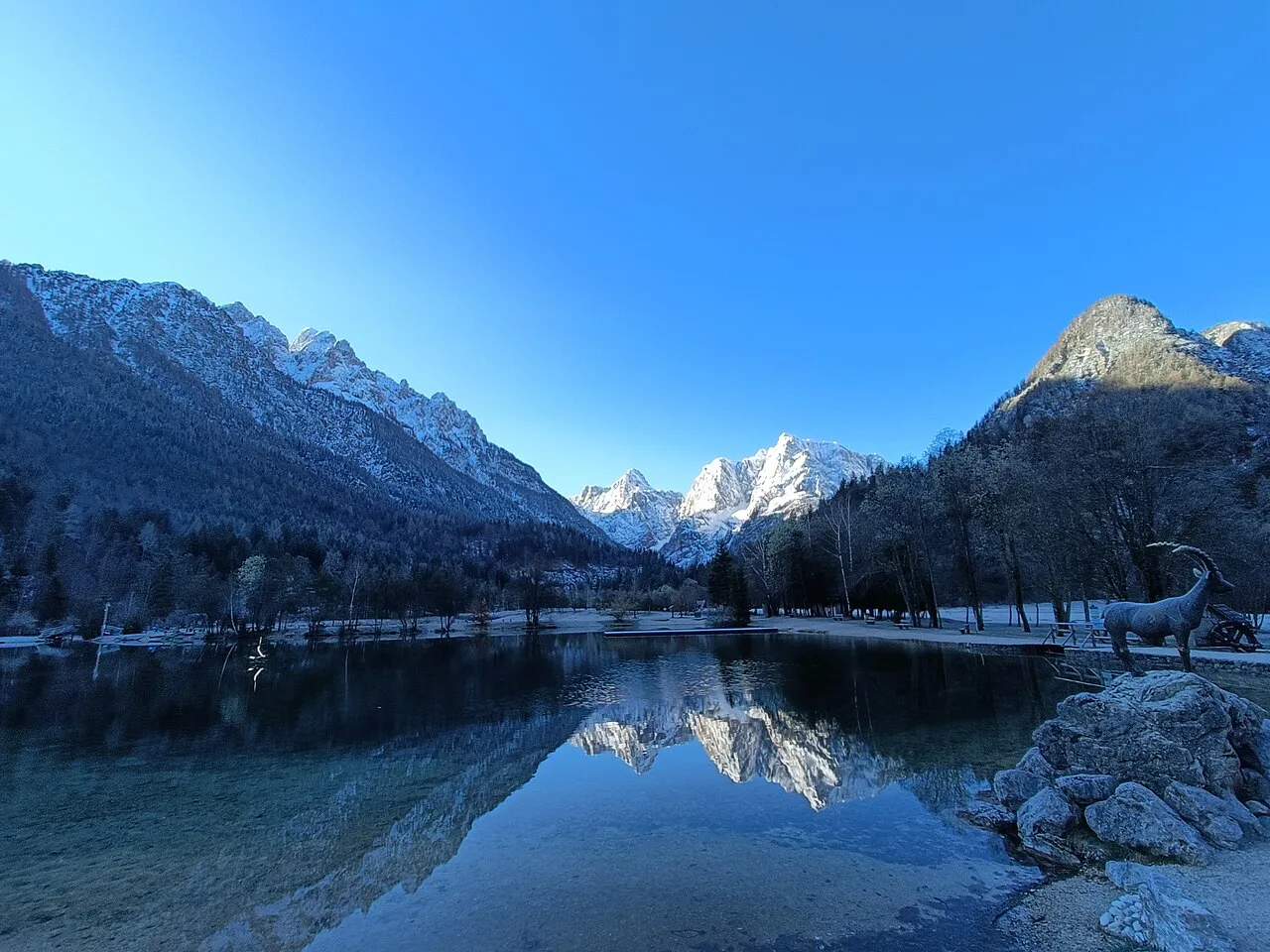
Two streams feed it, the Mala Pišnica and the Velika Pišnica, and their confluence is what gives the water its clarity and its cold. The white pebble shore and the bronze Zlatorog statue, the golden-horned chamois of Alpine legend, are the two landmarks to look for as you arrive.
Because the lake lies at the mouth of the pass, it works as a first stop on a drive up to Vršič or a last one on the way down. It also sits close enough to town that you can treat it as an extension of a morning in Kranjska Gora rather than a separate excursion.

Getting there by car
Driving is the simplest approach. The lake is about an hour from Ljubljana and roughly 40 minutes from Lake Bled, which makes it an easy add-on to a day in the Upper Carniola region rather than a destination that needs its own travel day.
Parking sits right beside the lake and is paid, and on a sunny summer weekend the spaces go quickly; arriving early is the practical fix rather than a vague suggestion. Rates and any seasonal rules are set by the operator, so read the signs or the machine at the lot when you pull in.
If you are continuing up toward the pass, treat the road as a mountain route with its own conditions; check the current access situation before committing to the climb. The same applies in reverse if you are descending toward Kranjska Gora in changeable weather.

Getting there by bus
Regular bus services connect both Ljubljana and Bled with Kranjska Gora. The bus stop in town is a short, pleasant walk from the lake, so you can leave the car behind entirely and still reach the shore without a taxi.
The trade-off is scheduling: you are tied to the timetable rather than your own pace, and a late return means watching the clock instead of the mountains. Check departure times for your travel date before you set out, and build in slack for the walk back into town.
Arriving on foot from Kranjska Gora
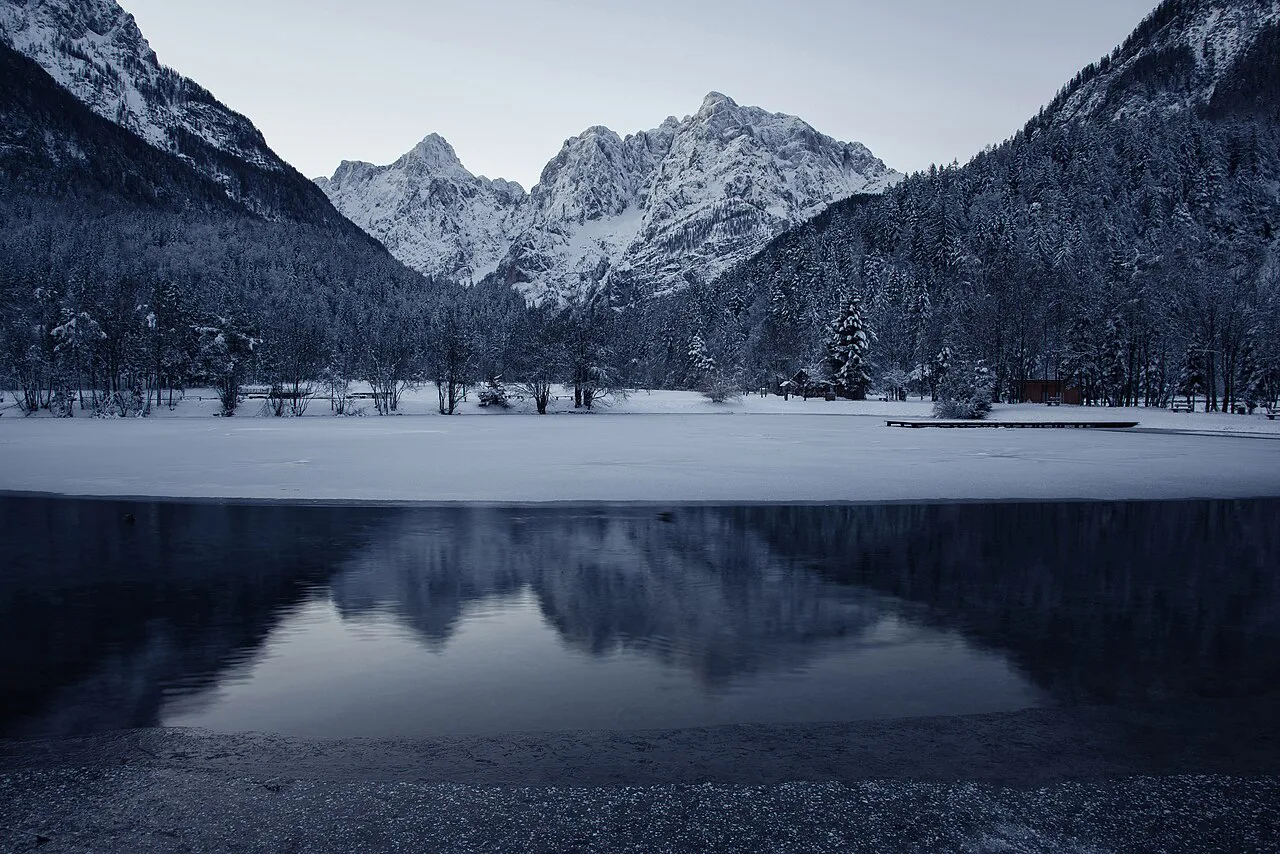
Walking in from Kranjska Gora takes about 20 minutes in winter conditions, which makes the lake a realistic errand on foot rather than a drive. In snow the path is the same distance but a slower one, so allow a little more time than you would in dry weather.
This is the option that sidesteps the parking problem entirely: no lot to circle, no machine to feed, no early alarm. It also lets you combine the lake with a wander through town on the way back, which is a more relaxed half-day than a drive-and-park dash.
What to see on the shore
Start with the water itself. The white pebble beach and the clear surface reflecting the Julian Alps are the whole point of the visit, and the view changes with the light through the day. The Zlatorog statue stands at the lake as a focal point for photographs and a marker of where you are.
The shoreline paths are mostly flat and well maintained, which means they work for a stroller, a gentle stroll, or anyone who would rather not tackle a climb. That flatness is the reason the lake suits a mixed group: some can swim while others walk the perimeter.
Facilities around the lake
A few cafés and bars sit on the shore, so coffee with the mountain view is part of the visit rather than a detour into town. Public toilets and changing rooms are on hand, which matters if you intend to get in the water.
Opening times at the cafés follow their own seasonal rhythm, so if a sit-down stop matters to your plan, check the hours posted at the door on the day rather than assuming. The paths and the shore itself are the constants; the concessions are not.
Swimming and paddling
People do swim here in summer, on the white pebble shore, and the water is cold alpine stream water rather than a warmed lake. Paddleboarding also happens on the surface, so the lake is used for more than a quick dip.
Go in expecting a short dip rather than a long soak, and keep an eye on children near the streams that feed the lake. Conditions change with the weather and the season, so read the water and the shore before committing.
How long to allow
A shore walk and a stop at the statue take about an hour, which is enough to see the lake properly if you are passing through. Add time for a coffee or a swim and you are into half a day, which is a fair trade if the weather is good and you want to use the shore rather than just photograph it.
If your schedule is tight, come early, walk the perimeter once, and leave the swimming for another trip. If it is loose, the lake rewards lingering: the light on the Julian Alps backdrop shifts through the day and the flat paths make it easy to loop back for a second pass.
Nearby options
The Zelenci nature reserve, with its spring-fed green water and the source of the Sava Dolinka, sits a short drive from Kranjska Gora and pairs naturally with a stop at the lake on the same outing. Farther up the pass road, the Russian Chapel near Kranjska Gora marks a natural pause if you are heading toward the summit.
Planica Nordic Centre, with the Gorišek Brothers ski flying hill, is the other obvious companion stop on a Kranjska Gora day, and the Mojstrana alpine museum adds context if you want the alpine story rather than just the view.
The Martuljek waterfall and Peričnik Waterfall are the other water stops in the valley, and Tromeja from Kranjska Gora gives you the three-border ridge if you want a view back over the lake and town.
Drive in early or walk in from town?
Drive if you are combining the lake with Vršič or Zelenci and can be at the lot early; walk in from Kranjska Gora if you would rather not hunt for a space at all. The bus is the third option when the timetable suits you and the car does not.
Whichever route you take, give the lake at least an hour and let the shore set the pace rather than the other way around. Park, or don't, and then walk the perimeter once before deciding whether to stay for a coffee or a swim.
Frequently Asked Questions
Can you swim in Lake Jasna in Slovenia?
People do swim from the white pebble shore in summer, and the water is cold stream-fed alpine water rather than a warmed lake. The paths and shore stay walkable regardless, so non-swimmers are not left waiting on the bank.
Is Lake Jasna the same as Lake Bled?
No. Lake Jasna is a pair of interconnected lakes at the edge of Kranjska Gora, at the entrance to the Vršič Pass, while Lake Bled is a separate lake roughly 40 minutes away by car. The two are often visited on the same trip but are distinct places.
Do you need a car to visit Lake Jasna?
A car is the simplest way in, and paid parking sits beside the lake. Regular buses also connect Ljubljana and Bled with Kranjska Gora, and the lake is about a 20-minute walk from town in winter conditions, so a car is not essential.