Križna Cave: Boat Tours, Underground Lakes and What to Expect
Križna Cave is a water cave near Bloška Polica with emerald underground lakes. Compare the four tour lengths, boat rides and how to reserve a place.
On this page
Križna Cave is a water cave with controlled access in the karst south of Cerknica, and the tour you choose decides how much of it you see: a short boat ride on the first lake takes about an hour, while the full run to Crystal Mountain takes six and a half to seven hours. The cave has no concrete pathways and no strong lighting, so you enter in rubber boots with a hand torch. This guide compares the four tour lengths, explains the underground lakes and boat ride, covers the cave bear remains and wildlife, and sets out how to reserve and what to expect.
What Križna Cave is
Križna jama, usually written Križna Cave in English, is an 8,273-meter cave system lying beneath the Bloke plateau and the Loški and Cerknica fields. The entrance sits 1.5 km south of the village of Bloška polica, and the cave takes its name from the nearby Church of St. Cross. It is run as an open cave with controlled access.
The cave is looked after by the Association of Križna Cave Lovers, founded in 1998 with around 30 members, which runs visitor tours and also maintains other karst sites such as Jama Golobina and Mrzla Cave pri Ložu. That matters for planning: visits are organized by the association rather than by a large commercial operator, so the visitor operation is small and tied to guided slots.
Why this cave is different from walkway show caves
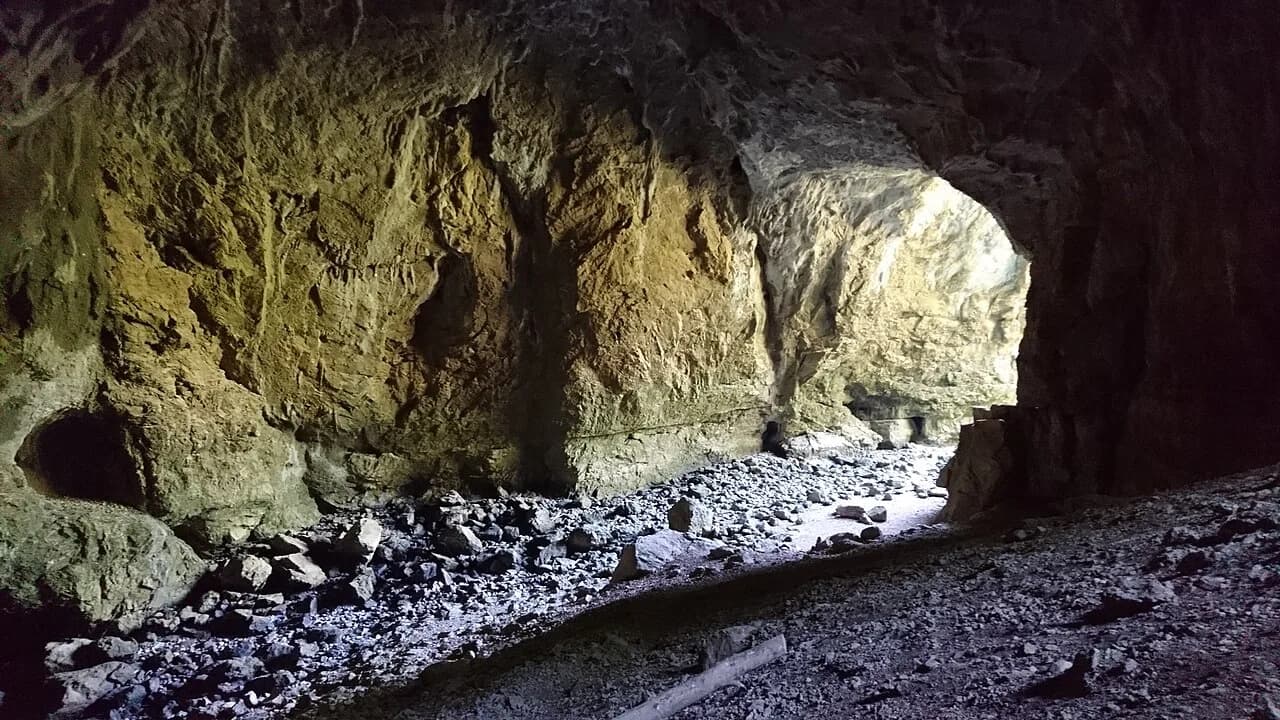
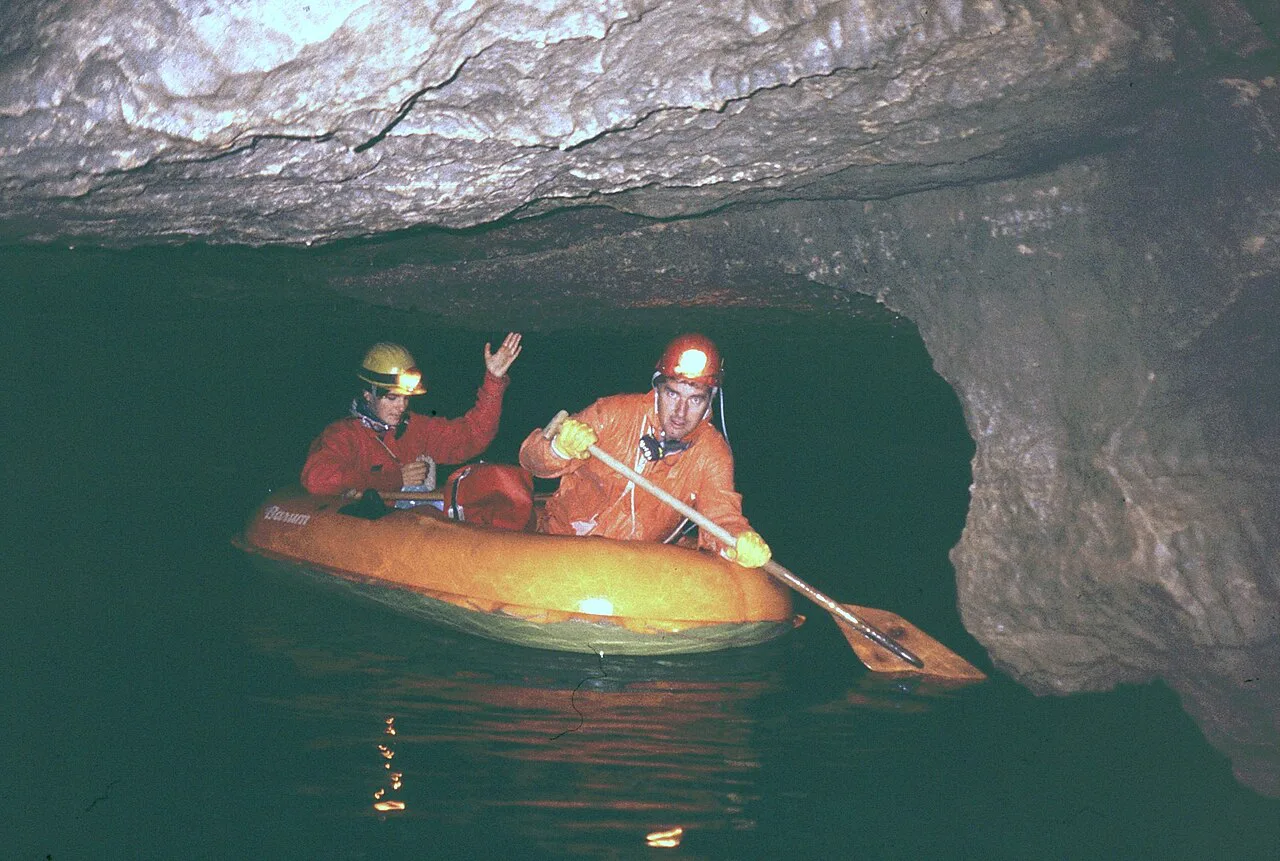
Križna Cave is one of the few tourist caves in Slovenia without concrete paths and without strong artificial lighting, which the association describes as harmful to the cave environment. Visitors are issued rubber boots and an electric torch before entering. If you picture a paved, brightly lit tunnel with handrails, this is the opposite experience.
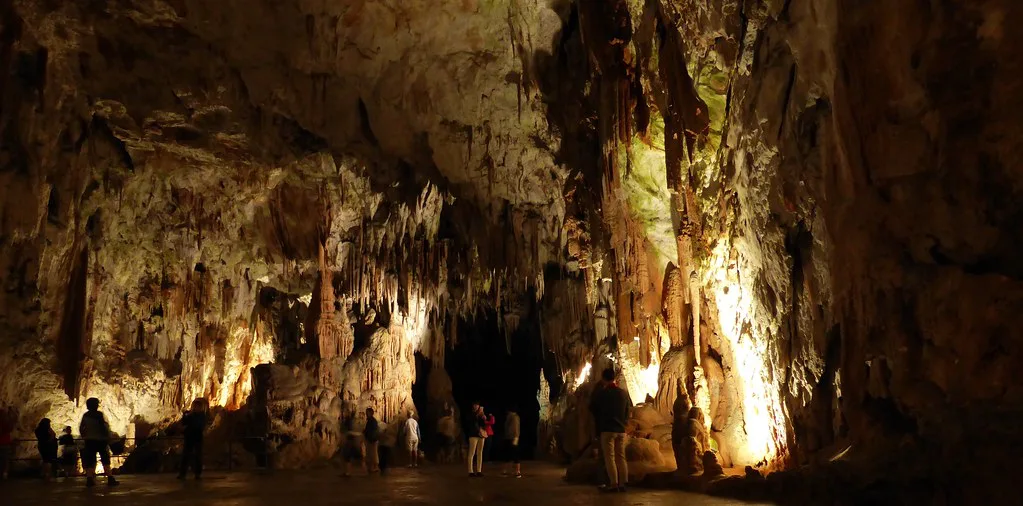
If you want the classic walkway-and-lighting experience with a train into the cave, plan for Postojna Cave instead and treat Križna as a separate, wetter day. The two are in the same karst region but are built for different visitors, and mixing them up is the most common planning mistake.
The underground lakes and the boat ride
The cave is known for a chain of lakes held back by calcite barriers, with 45 lakes in total and 22 of them passable by rubber boat. The barriers grow very slowly, about 0.1 mm a year, and are fragile, which is why every visit includes a boat ride but the guide does the work. Lakes reach depths of up to 7 m.
On the short tours you paddle the first lake only. The three-and-a-half to four-hour tour follows the water section through the 13th lake as far as Calvary, and the long tour continues past more than 20 lakes toward Crystal Mountain. During the ride the guide moves the boat over the sinter barriers by hand rather than letting it scrape across.
The four tour options compared
The shortest option is a boat ride on the first lake lasting 1 to 1.15 hours, and the step up adds the Bear Tunnel for a total of 1.5 to 2 hours. The water section to Calvary runs 3.5 to 4 hours, and the longest route to Crystal Mountain takes 6.5 to 7 hours. Pick by the hours you can spare rather than by the name, because the two short tours stay close to the entrance.
Anyone pressed for time, traveling with young children or unsure about enclosed spaces should take one of the two short tours. The Calvary and Crystal Mountain routes are proper half-day and full-day commitments in a cold, wet environment with no shortcuts back to the entrance.
Why the water section needs advance planning
The water section of the cave admits at most four people a day, a limit set to protect the calcite barriers and the cave's slow natural regeneration. Mass tourism is deliberately kept out, which is why the long tours cannot absorb a carload of walk-ins. If Calvary or Crystal Mountain is the reason you are coming, that cap is the single fact that should drive your booking date.
Reservations are handled separately for individuals and for organized groups, and the association publishes a dedicated ticket page for short-tour individuals. Reserve before you build the rest of the day around the cave, and confirm your slot by phone or email using the contact details the association lists. In October the association lists the short first-lake tour daily at 15:00, with 11:00 and 15:00 slots on weekends.
What you see inside: Calvary, Blatni rov and Crystal Mountain
At Calvary, considered the finest spot in the cave, the passage splits into two tunnels: Blatni rov (Muddy Passage) heading north and Pisani rov (Colorful Passage) to the north-east. Blatni rov is harder going because the mud makes it slippery, and Pisani rov leads on to Crystal Mountain, the largest space in the cave.
The cave bear story and the Bear Tunnel
Cave bear remains have been found in the cave, and part of the material, including a skull, is on display. That is what the optional Bear Tunnel extension on the 1.5 to 2-hour tour adds. If you want the paleontology as much as the lakes, the middle tour length is the efficient way to get both.
The wildlife: 60 underground species and bats
Sixty troglobitic species have been recorded in Križna Cave, a count that places it fourth worldwide for subterranean biodiversity. Among them are cave crustaceans, a cave spider, the beetle Leptodirus hochenwartii and the lesser horseshoe bat, which uses the cave seasonally. Together with the adjoining New Križna Cave it forms the second-largest wintering bat population in Slovenia.
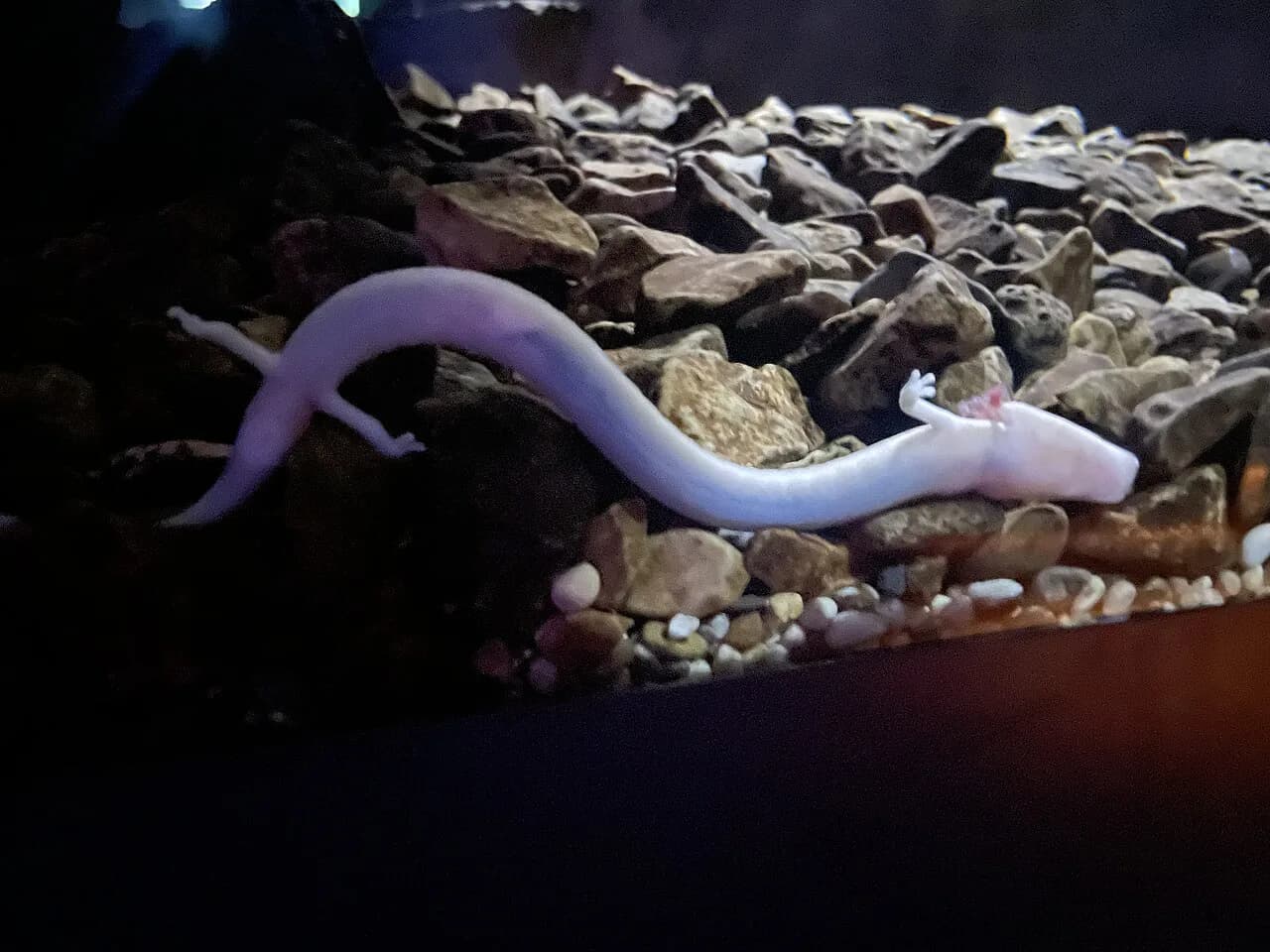
Two species carry the cave's name, a cave beetle and a cave snail. Keep your torch pointed where the guide directs, since the point of the low lighting is to leave these animals and the calcite formations undisturbed. Anyone drawn to Slovenia's underground fauna should also read about the olm, the blind cave salamander shown at other karst caves.
Getting there and what to bring
The association's address is Bloška Polica 7, 1384 Grahovo, and the cave entrance is 1.5 km south of Bloška polica. Phone contact is +386 41 632 153. Driving in the karst around Grahovo and Loška dolina is straightforward, but the final approach is on local roads, so allow extra time rather than cutting a reservation fine.
Boots and a torch are provided, so bring a warm layer and accept that you will be cold and damp by the end of the longer tours. Leave the flip-flops and the good coat in the car. The water part of the cave fills during high-water periods when the Farovščica from the Bloke plateau flows through, which is part of why access is controlled.
Who should skip Križna Cave
Skip it if you need handrails, even floors and steady electric light, or if confined spaces and cold water make you uneasy. The cave has no concrete pathways and no strong lighting by design, and the longer routes involve hours of stooping and boat work. Travelers with limited mobility should choose a show cave with paved paths.
Nearby karst to pair with the cave
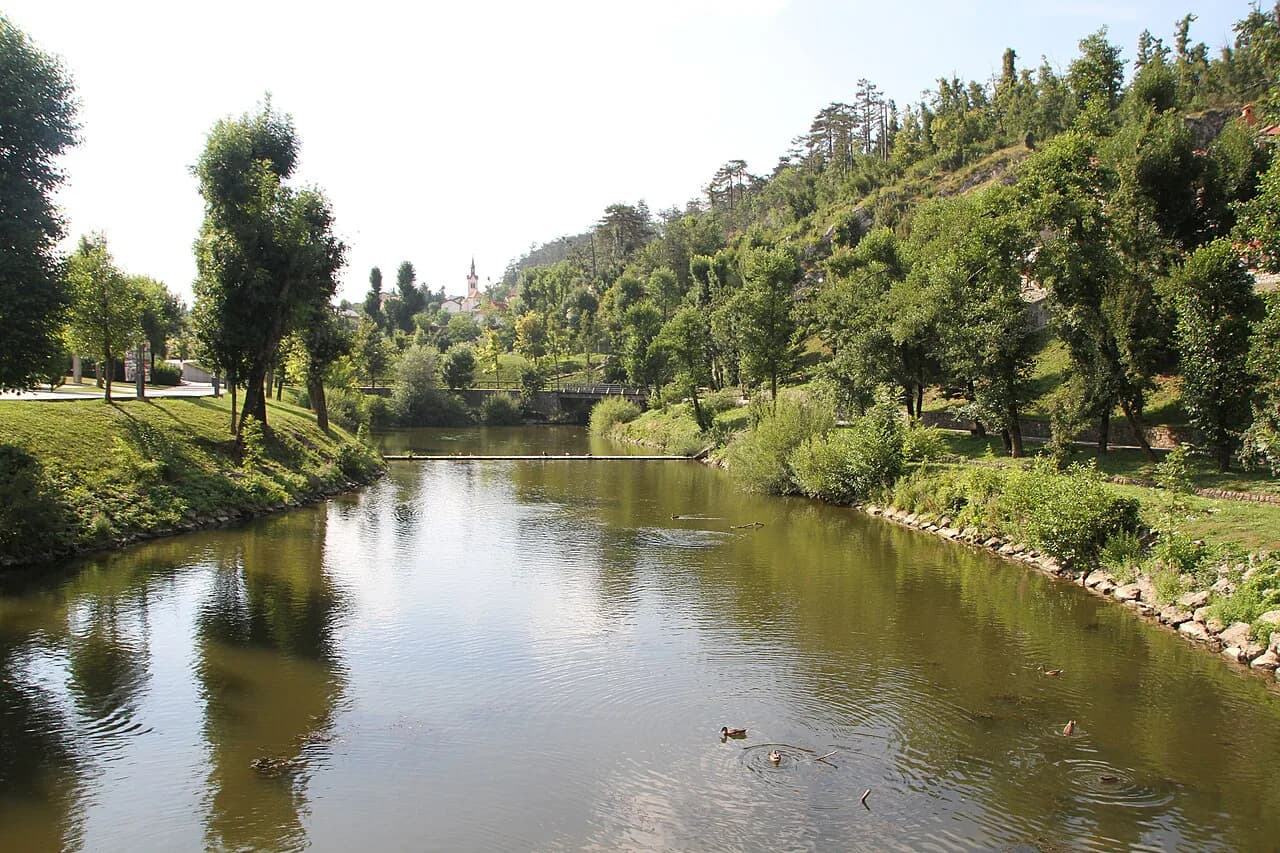
Križna Cave sits in the middle of the Cerknica and Bloke karst, close to Lake Cerknica, the intermittent lake on Cerknica Polje that fills and empties through underground channels. Pairing the cave with the lake makes a natural full day in the same landscape. Elsewhere in the region, Pivka jama and Črna jama near Postojna offer a contrasting cave visit.
If you are building a cave-focused trip, compare Križna with the bigger operations through the Postojna attractions hub, which also covers the Postojna Cave Tickets page, the Predjama Castle tour and Postojna Cave parking. Reserve Križna first, since its small capacity is the hardest piece to fit.
Which Križna Cave tour should you reserve?
Reserve the short tour with the first-lake boat ride if you have an hour or so, and add the Bear Tunnel if you want the cave bear remains for not much more time. Choose Calvary at 3.5 to 4 hours or Crystal Mountain at 6.5 to 7 hours only if the underground lakes are the point of your day, and book those early because the water section admits at most four people daily.
Call or email the association with your dates and group size, confirm the meeting point at Bloška Polica 7, and pack a warm layer for the boat. If you also want a paved, lit cave with a train and easy access, add Postojna Cave Tickets on a different day instead of expecting Križna to fill that role.
Explore more Postojna guides
Frequently Asked Questions
How long does the Križna Cave tour take?
It depends on the option. The short tour with a boat ride on the first lake takes 1 to 1.15 hours, adding the Bear Tunnel brings it to 1.5 to 2 hours, the water section to Calvary runs 3.5 to 4 hours, and the route to Crystal Mountain takes 6.5 to 7 hours.
Do you need to book Križna Cave in advance?
Yes, reserve ahead, especially for the longer water routes. The water section admits at most four people a day, and reservations are handled separately for individuals and organized groups. Do not turn up at Bloška Polica expecting to join a tour on the spot.
Is Križna Cave suitable for children?
Older children comfortable in cold, wet, enclosed spaces on a small boat should manage the two short tours. The longer Calvary and Crystal Mountain routes last hours with no shortcuts out, so they suit families less well. Ask the association about age and fitness when you reserve.
Sources
Notes for your Slovenia trip
Optional updates to our Slovenia place guides.
You might also like
Continue reading
More guides you'll find useful