Olm (Proteus anguinus): Slovenia's Blind Cave Salamander
The olm is a blind, pale cave salamander of Slovenia's Karst. Learn what it looks like, where it lives and how a sighting fits into a guided cave visit.
On this page
The olm is Proteus anguinus, a pale, blind salamander that lives in the subterranean lakes and streams of limestone caves in the Dinaric Alps, including Slovenia. This guide covers what the animal looks like, how it lives underground, and how to place it within the cave country of the Karst around Postojna.
What an olm is
The olm, Proteus anguinus, is a salamander in the family Proteidae, the same family as the North American mudpuppies and waterdogs. It spends its whole life in cave water rather than emerging onto land. Dictionary entries describe it as a pale, blind, eel-like salamander of underground streams in southeastern Europe that keeps its larval form into adulthood.
Olms are native to countries along the Adriatic Sea, from Slovenia and northern Italy south through Croatia and Bosnia and Herzegovina. The range may continue into Montenegro and Serbia, and isolated populations have been introduced in the French Pyrenees and northeastern Italy. For a traveler based in Slovenia, that native range starts right here in the Karst.
What an olm looks like
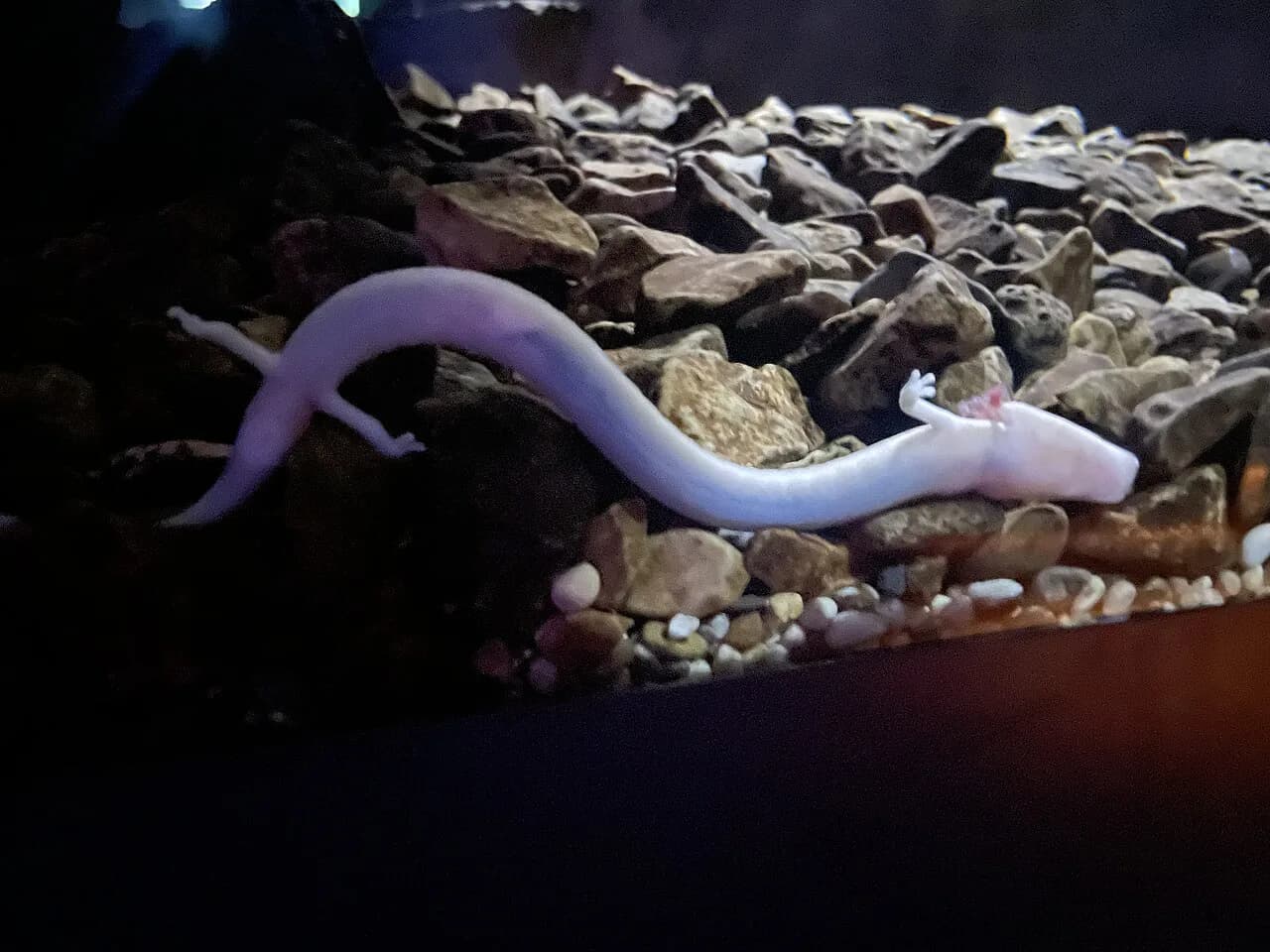
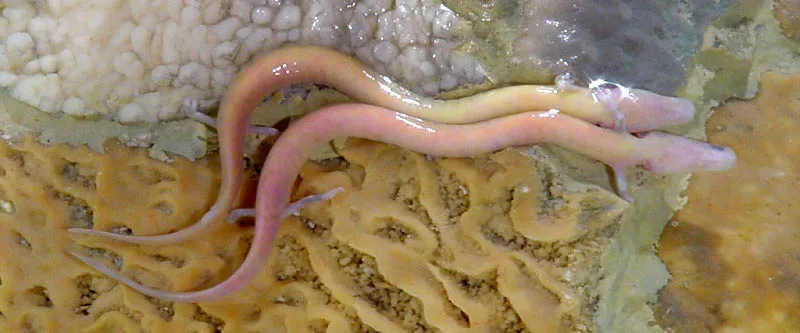
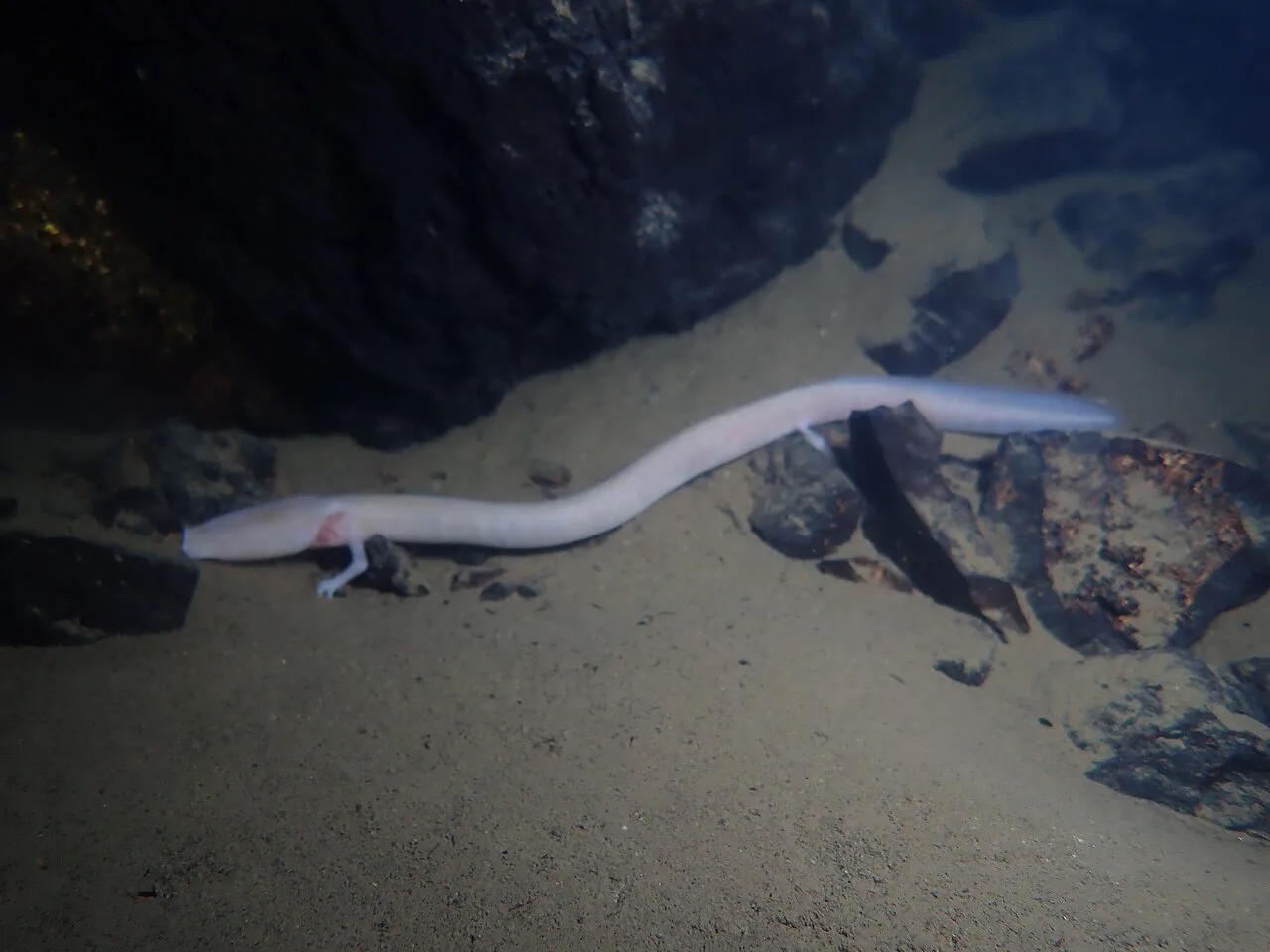
An olm has a slender, elongated body that averages 23 to 25 centimeters (about 9 to 10 inches), with a full range of 20 to 30 centimeters from head to tail. The torso is cylindrical with roughly two dozen grooves along each side, and the tail is flattened with small fins on top and bottom. Females grow larger than males, but the two sexes otherwise look much alike.
The skin is typically creamy white with a pinkish tinge, and the belly is translucent enough to show the outlines of internal organs. Three large, feathery, bright pink gills sit on each side of the body just behind the head. The eyes are very small and stay under the skin rather than breaking through it, which is why the animal reads as blind.
Why it is called a baby dragon
Unlike most amphibians, olm larvae skip a distinct metamorphosis. Hatchlings come out as miniature adults and keep larval features such as the external gills and tail fins for life. Juveniles carry faint yellow or red blotches and have better-developed eyes than adults.
Development is slow and temperature-bound. Within water of 8 to 15°C, eggs hatch in roughly 86 days at the warm end and up to 182 days in colder water. The animals reach sexual maturity at 14 to 15 years old and breed on average every 12 years, so a cave population turns over very slowly.
Where olms live
Olms inhabit the subterranean freshwater lakes and streams of limestone caves in the Dinaric Alps. That water is slightly acidic, rich in oxygen, and stays between 5 and 15°C. Olms usually sit deep inside cave systems, generally more than 300 meters below the surface, though heavy rain and flooding can push them into open streams nearer the surface.
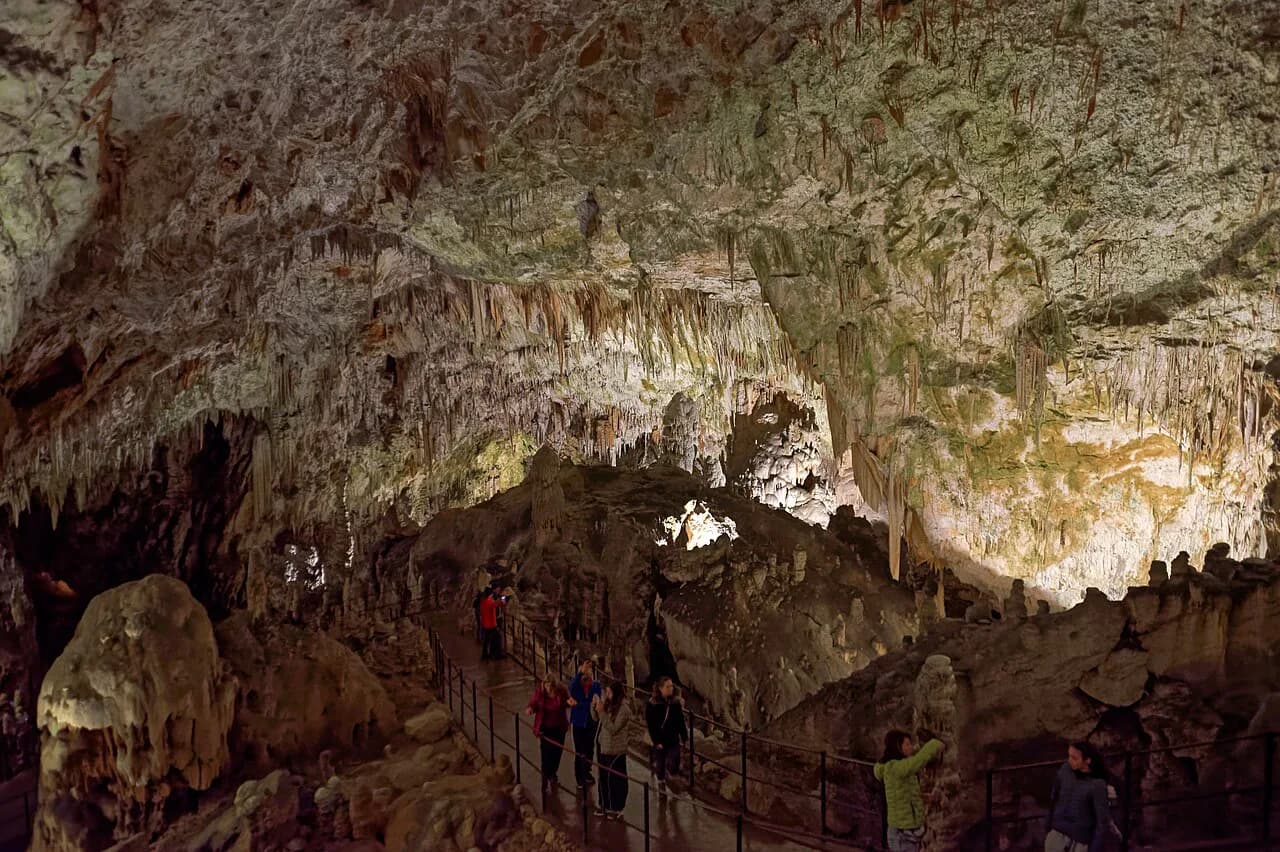
In Slovenia, that habitat corresponds to the cave country around Postojna, where an underground river runs through a long system of chambers and passages. The Postojna Cave guide explains how the show cave is laid out and how it fits into a Karst itinerary.
How olms handle light
An olm's pale skin is not fixed. Exposed to light, the skin turns dark violet to black, and the darkening reverses when the animal returns to darkness. That reaction is one reason a sighting depends on controlled cave lighting rather than open daylight.
A separate form, the black olm, has permanently dark skin and a shorter head and was previously classified as Proteus anguinus parkelj. It occurs within the same Dinaric range.
How olms feed and behave
Olms are aseasonal breeders: males set up and defend territories, a female approaches a male, and after courtship she picks up a spermatophore and stores it internally. A female may lay fertilized eggs over up to 25 days, producing a clutch that averages about 35 eggs, and she guards them through the two-to-six-month incubation.
Because they live deep underground and breed so rarely, olms are not something you can expect to see on a surface walk.
Seeing an olm in Slovenia
The olm is the animal most visitors associate with the Karst cave country, so it makes sense to think of a sighting as part of the wider cave itinerary rather than a stand-alone stop. The Postojna Cave guide covers how the show cave is organized, and Postojna Cave Tickets covers booking.
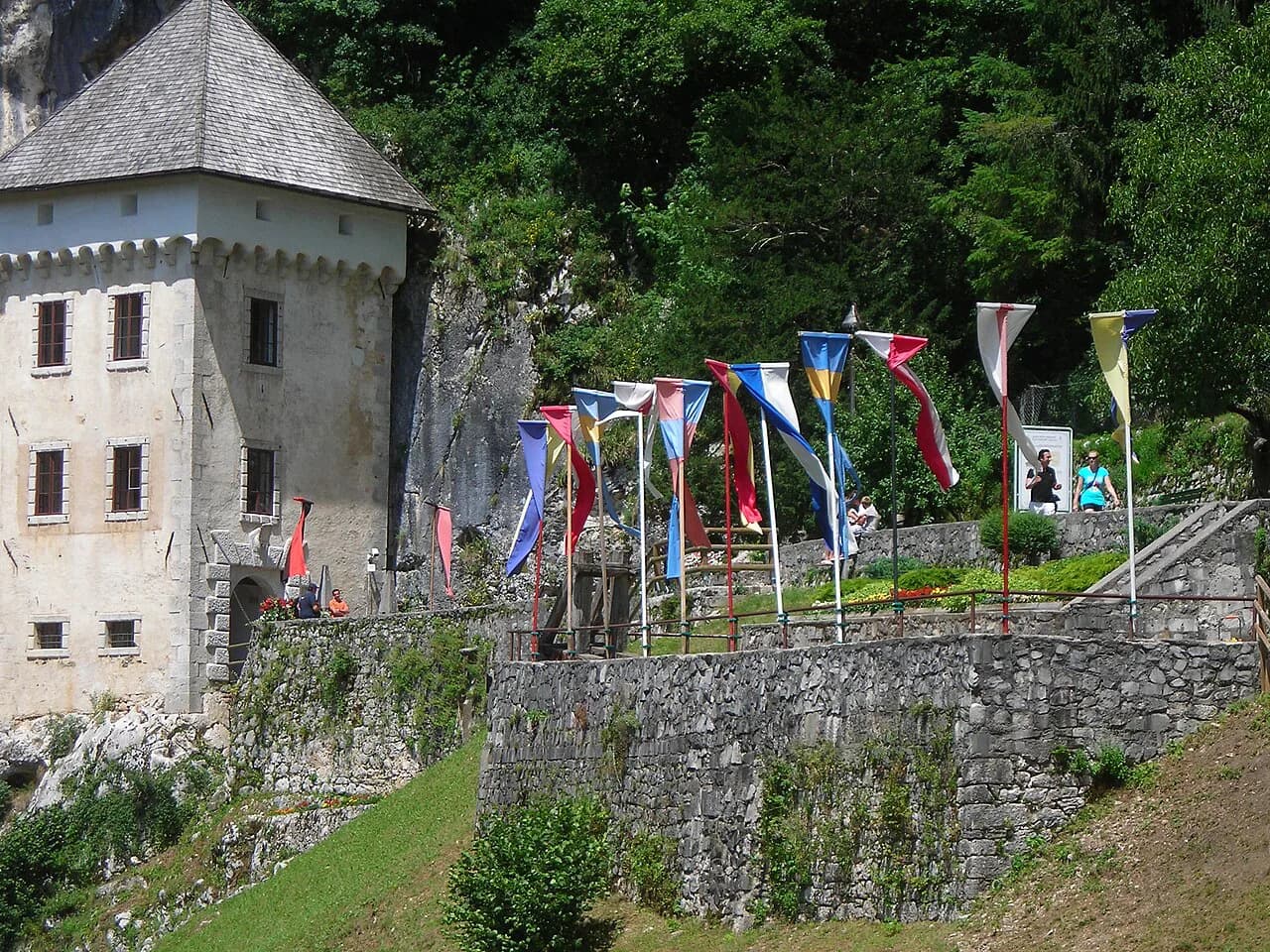
Plan the rest of the day around the cave country rather than the animal alone. Predjama Castle sits nearby and pairs naturally with a cave visit, and the castle is covered in the Postojna Cave and Predjama Castle guide.
Allow time for the wider cave country if the olm sparks an interest in Karst geology. Križna Cave is known for its underground lakes and is reached by boat, and Rakov Škocjan offers a surface look at sinkholes and collapsed caves without a formal tour. Both make sense as add-ons to a Postojna-based day rather than separate trips.
Olms beyond the cave entrance
The olm's story extends well past any single cave. Across the Dinaric range, the species is tied to clean, oxygen-rich groundwater in the caves where it lives.
For a broader look at what else to do around Postojna, the local attraction guides cover the cave, the castle and the surrounding Karst in more detail. Use them to shape a route rather than adding stops one at a time.
Should you build a day around the olm?
Yes, if you are already planning a Postojna Cave visit. The olm is the creature most associated with the region's cave water, and a cave day fits naturally around it. Build the day around the cave, then add Predjama Castle or a second Karst stop if time allows.
If wildlife is the main goal, keep expectations realistic: the olm is a cave animal that lives deep underground, so plan around the cave country rather than a guaranteed sighting. Let the animal be the highlight of a wider Karst day.
Explore more Postojna guides
Frequently Asked Questions
Are axolotl and olm the same?
No. The olm is Proteus anguinus, a salamander in the family Proteidae that lives in Dinaric cave water in Slovenia and neighboring countries. The axolotl is a different species from Mexico. Both keep larval features such as external gills into adulthood, which is why they are often confused.
How long do olms live?
Olms develop very slowly: they reach sexual maturity at 14 to 15 years old and breed on average every 12 years. Their cave water stays between 5 and 15°C and eggs take two to six months to hatch, so a population turns over gradually. Ask the cave operator about the animals on display during your visit.
Sources
Notes for your Slovenia trip
Optional updates to our Slovenia place guides.
You might also like
Continue reading
More guides you'll find useful