Rakov Škocjan: Natural Bridges, Valley Walk and How to Get There
Rakov Škocjan is a karst valley in Notranjska with the Small and Great Natural Bridges, a marked study path and church ruins. Here is how the walk works.
On this page
Plan a half day at Rakov Škocjan. The valley is short, the walking is easy to follow, and the two natural bridges sit at opposite ends of a marked study path. What it does not offer is a ticketed cave tour or a grand visitor complex, so the visit is mostly the path, the Rak stream and the forest around it. This guide covers what the bridges are, what the study path passes, how long the valley takes, and how to reach the parking areas.
The usual mistake is to confuse this valley with the Škocjan Caves further south on the Karst. Rakov Škocjan is a separate place in Notranjska, near Cerknica, and it fits naturally into a day built around Lake Cerknica or the caves around Postojna rather than a coastal itinerary.
A collapsed cave ceiling rather than a cave you enter
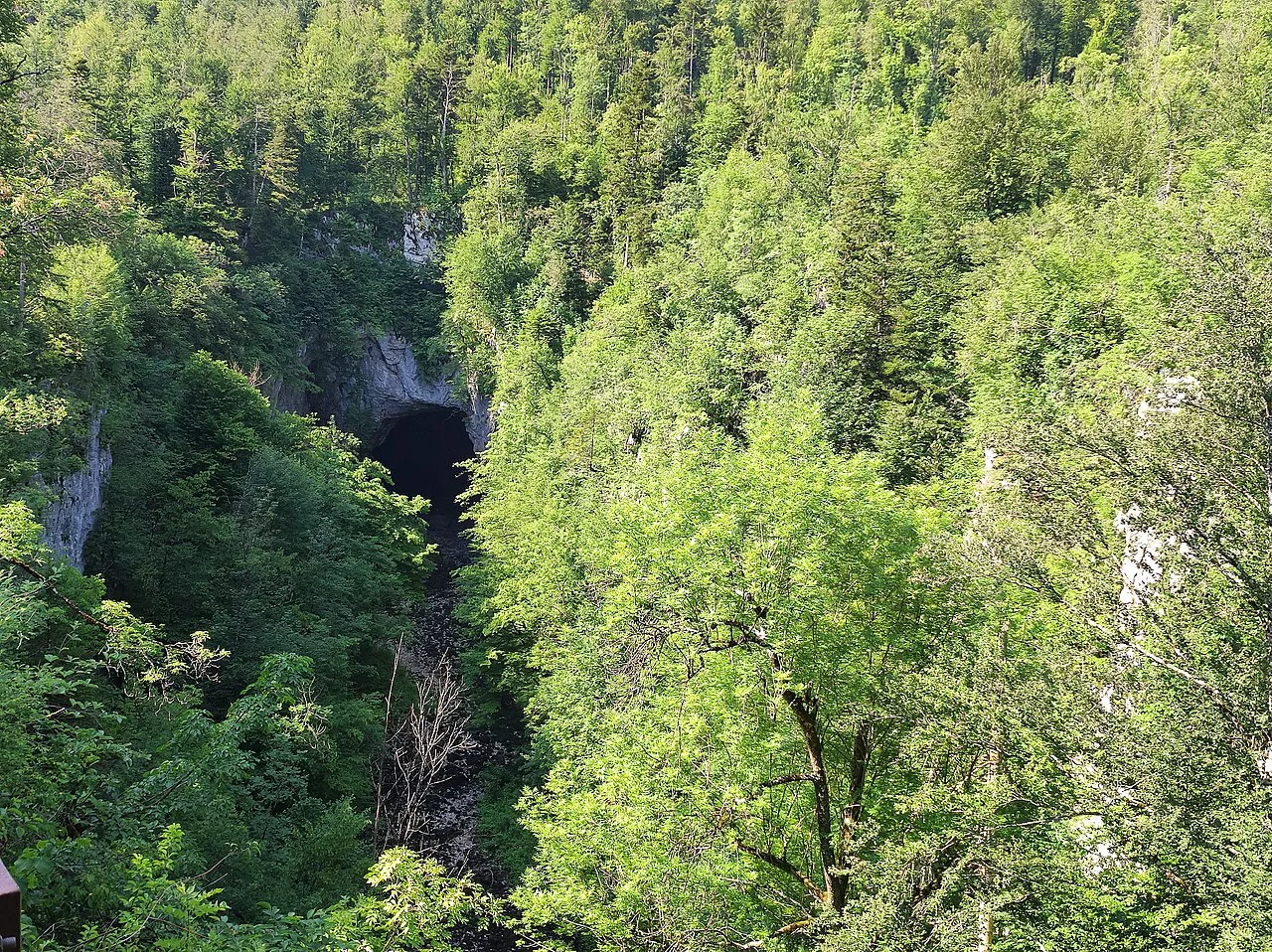
The valley exists because water dissolved the limestone underground until the roof of a large hall gave way. What remains is a canyon-like valley with the Rak flowing through it, and the two bridges are leftover pieces of that old ceiling. Reading the landscape this way makes the bridges look less like separate arches and more like the surviving ribs of one collapsed system.
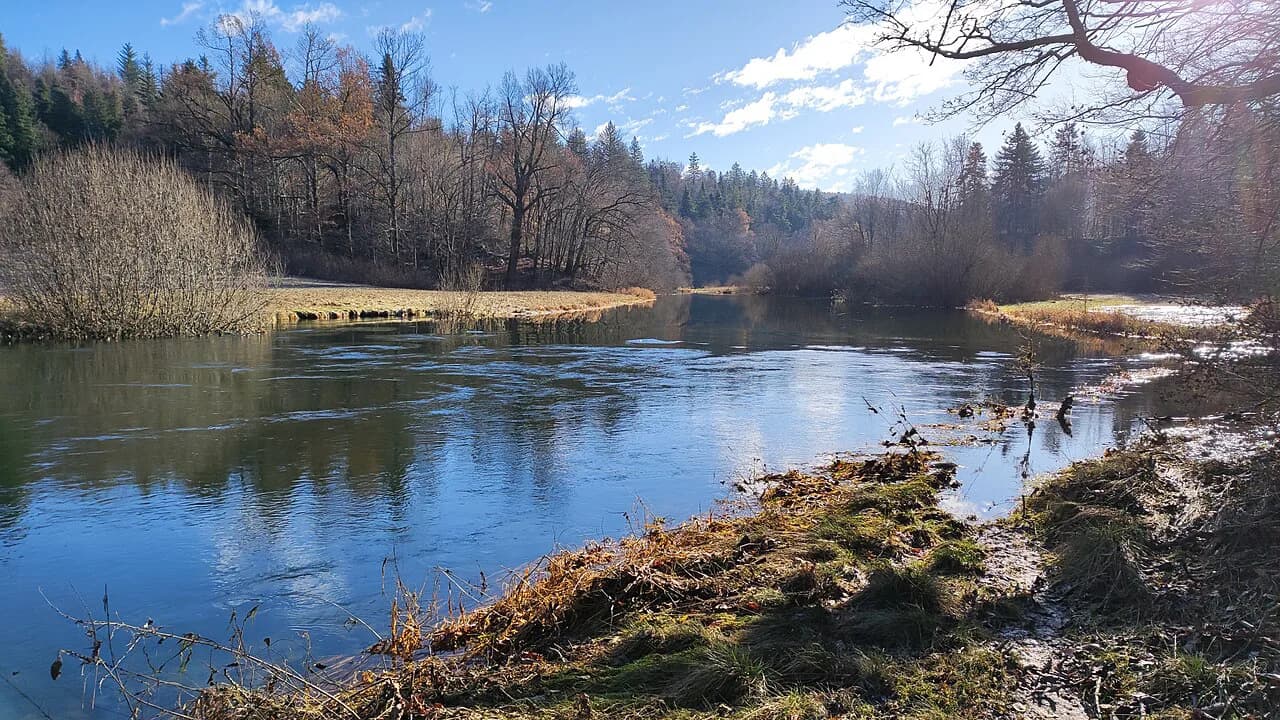
The valley lies between Cerknica and Planina field and has been protected as a regional park since 1949. The Rak rises from the Zelše caves inside the valley, and the valley floor runs about 2.5 km, which is why the visit feels compact rather than like a full-day cave excursion.
The Small and Great Natural Bridges
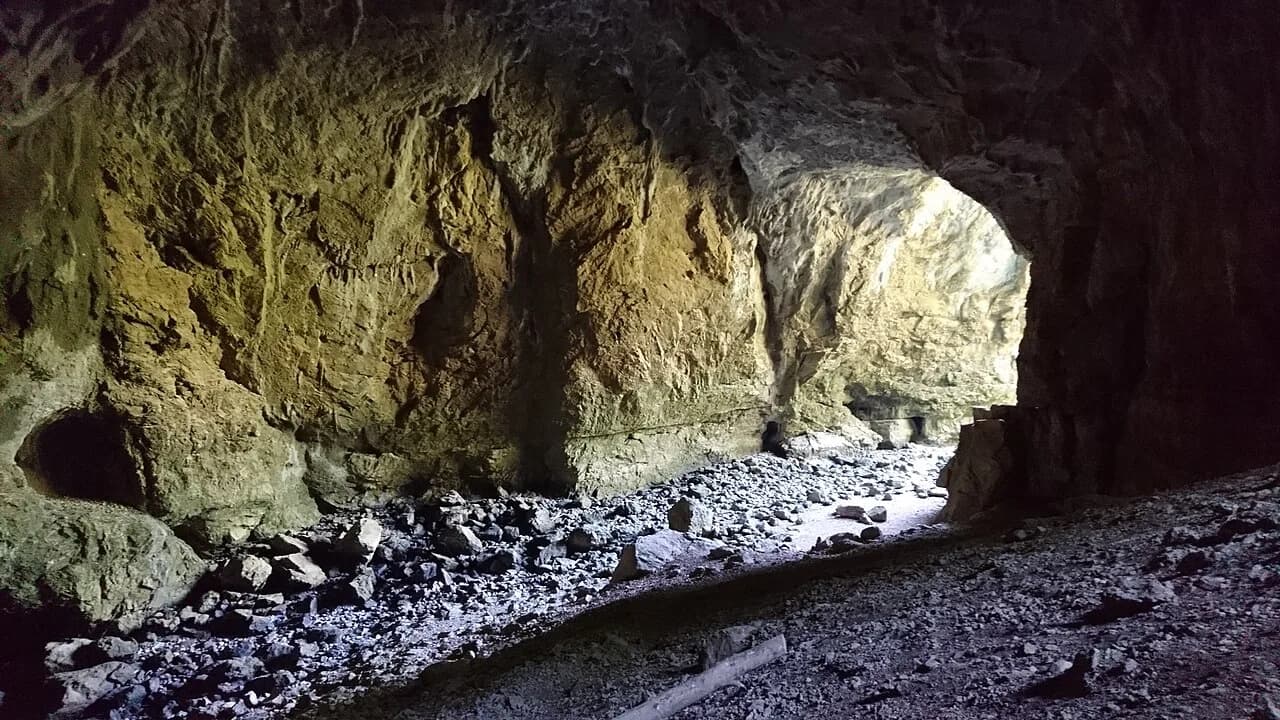
The Small Natural Bridge (Mali naravni most) stands in the upper valley and is the remnant of a ceiling between two sinkholes, with its upper edge reaching 42 m above the Rak. The Great Natural Bridge (Veliki naravni most) sits in the lower valley on the sinkhole side of the stream, is 23 m thick and stands 37 m above the Rak. Walking from the small bridge to the great one, under old trees, is the core of the visit.
Because the bridges sit at opposite ends of the valley, the direction you walk changes what you see first. Starting at the Small Natural Bridge parking area puts the lower, thicker arch at the end of the walk, while starting near the hotel reverses that. Either way the trail between them is short enough that you are not committing to a long day.
What the marked study path passes
A naturalistic study path runs through the valley, marked with educational tables. In sequence it takes in the Zelše caves, the Small and Great Natural Bridges, the Kotel sinkhole, Tkalca Cave and the ruins of the Church of St. Cantianus. Following the whole path gives you the karst features in one continuous walk instead of hunting for them separately.
Tkalca Cave is a 2,845 m long cave with two entrances, and the Zelše caves open through sinks between 8 and 50 m deep where you can look down at the Rak flowing below. Neither is a show cave with guided tours, so treat them as features along the trail rather than stops you book ahead. The church ruins near the Great Natural Bridge are the one built element on the route and give the valley its name.
How the Rak behaves
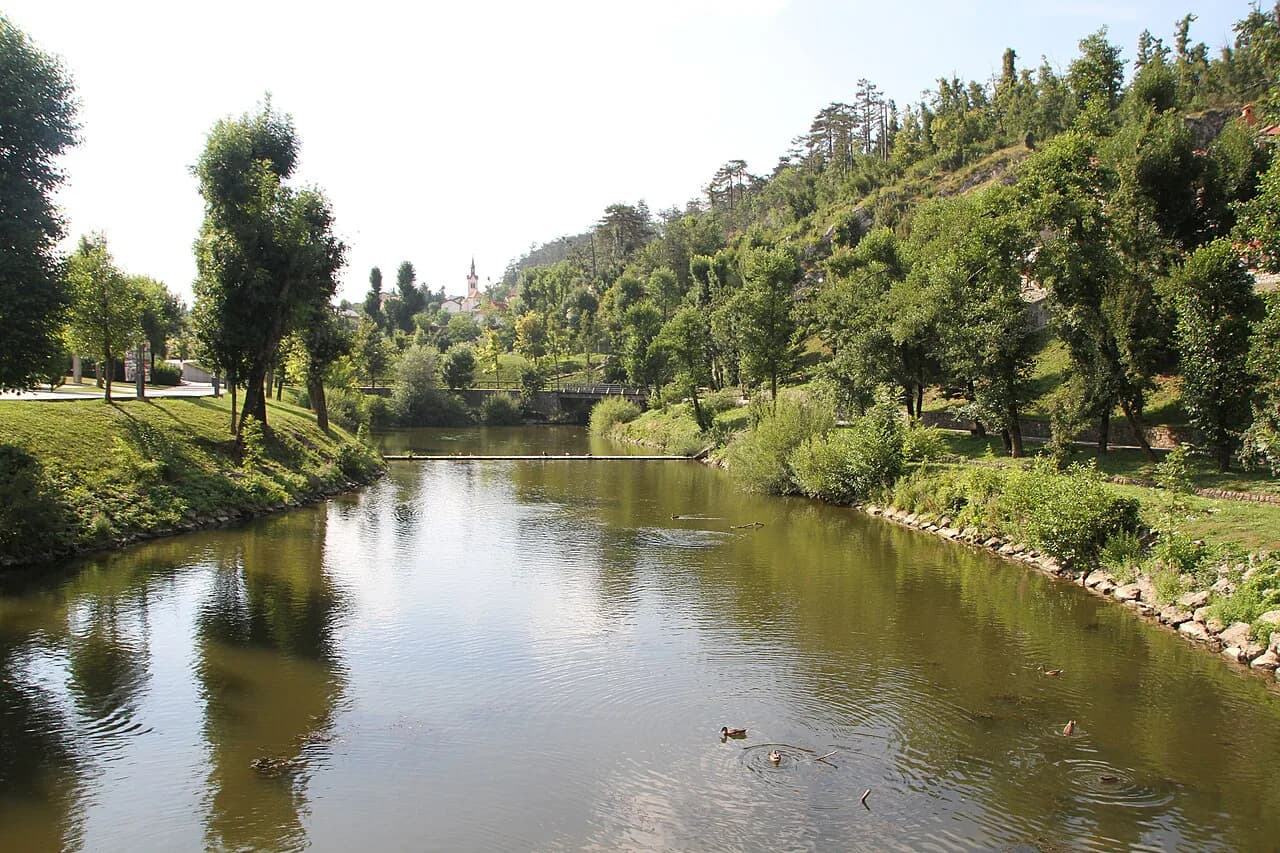
Karst streams appear and disappear, and the Rak is a clear example. It rises from the Zelše caves in the valley, runs through it, and drops through sinkholes along the way. Watching the water vanish into the rock is the part of the visit that explains why the surrounding landscape is full of sinks, caves and dry stretches.
If water levels are normal, the Rak can also be explored by boat. Boating depends on conditions, so it is not something to build a day around without confirming locally first.
How long the valley takes
The park publishes a rugged circular cycling route through the valley from the parking lot by the Small Natural Bridge or by the hotel. It runs 5 km with an elevation difference of 74 m and is rated for about an hour. That is the loop to choose if you want to see both bridges and still have time for Lake Cerknica.
If you want a longer outing, the same route extends to 19 km by starting at Dolenje Jezero and heading through Dolenja vas, with a viewpoint over Lake Cerknica on the way before turning right toward the valley. That version trades time for a wider look at the Cerknica basin and works better with a bike than on foot.
The 5 km figure is a loop from the valley parking lots on the published cycling route, not the length of the valley floor itself, so do not read it as a 5 km walking trail one way. The 2.5 km valley length is the better measure of how far you actually travel between the two bridges.
Walking or cycling the valley
On foot the valley is the more rewarding choice, because the study path with its educational tables is meant to be read as you go. A bike covers the ground faster and handles the 19 km approach from Dolenje Jezero well, but the trail between the bridges is where you want to stop and look, and stopping is easier on foot.
Cyclists who want the full network of routes in the Lake Cerknica area can buy a printed map at the Lake Cerknica Visitor Center for 2.00 €. Note that the visitor center at Lake Cerknica is closed on Mondays, but information is available by phone at 031 668 223 or by email at tic@notranjski-park.si.
After rain the paths through the valley can be slippery, so shoes with good grip matter more here than on a paved cave tour route. The forested sections stay shaded and damp longer than the open ground around Lake Cerknica.
Getting there and where to park
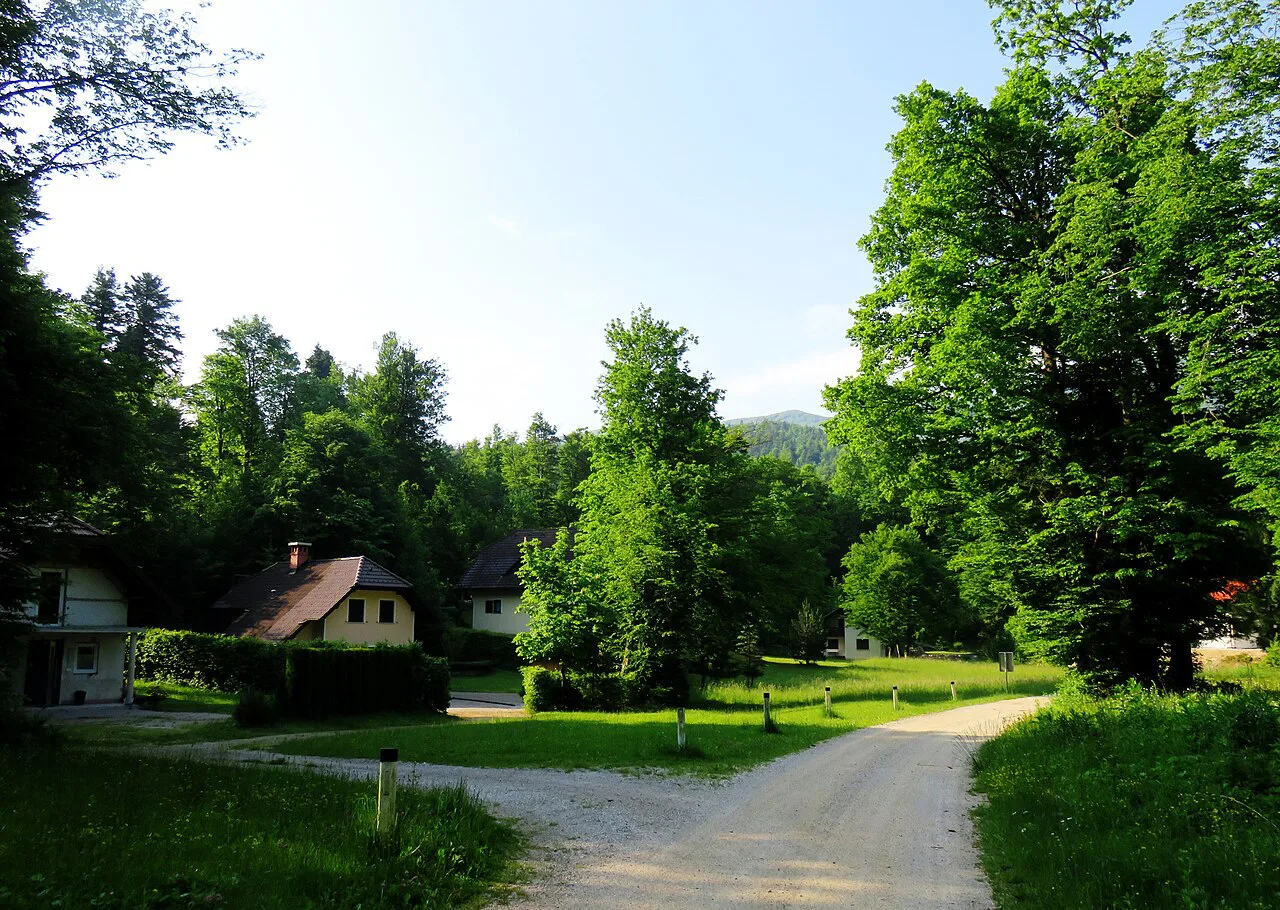
The simplest approach is by car to the valley itself. There are parking areas by the Small Natural Bridge and by Hotel Rakov Škocjan, and the 5 km circuit starts from either one. Coming in from the villages of Zelše, Podskrajnik or Dolenja vas is also possible and leads you into the valley from different directions.
The valley sits in the municipality of Cerknica in Notranjska, roughly between Cerknica and Postojna. Travelers arriving by train can use Rakek as a nearby rail point, though the last stretch to the valley is not on the rail line.
Pairing it with Lake Cerknica and Postojna Cave
Rakov Škocjan makes its best sense as one stop in a Notranjska day. Lake Cerknica lies a short drive away, and the two together cover an intermittent lake and a collapsed karst valley without much driving between them.
The other natural pairing is with the show caves around Postojna. Travelers who want the underground experience with a guided route should book that separately rather than expect it at Rakov Škocjan. Check Postojna Cave Tickets in advance, since timed slots fill in high season. For the practical details, see the Postojna Cave.
If you are building a cave-focused trip, the Postojna Cave tour and the combination of Postojna Cave and Predjama Castle are the standard half-day and full-day formats, and both are easier to plan than the unguided paths at Rakov Škocjan. For a quieter underground option nearby, Križna Cave runs guided boat trips by advance arrangement.
Staying safe on a sensitive karst landscape
Stay on the marked paths and keep off exposed edges. The bridges and sinkholes are unprotected rock features, and the ground around them can be loose or wet. The same rules that apply at other karst sites in the region apply here: do not climb on the formations and do not enter areas that are not open to visitors.
Bring water, sun protection and, in warmer months, tick protection. The valley is forested and damp, so repellent is worth packing even on a short walk.
What to bring for a half day outdoors
You need less than you would for a full-day hike. Grippy shoes, water, a layer for the shaded valley and insect protection cover the 5 km loop comfortably. Binoculars are a reasonable addition if you plan to combine the valley with the birdlife around Lake Cerknica.
Because the valley has no ticketed cave tour to arrange, the main thing to confirm before you set out is the state of the paths after weather. The Notranjska Regional Park site carries current route notes and practical advice for the area.
Is Rakov Škocjan worth the stop?
Yes, if you are already in Notranjska and want a short, quiet walk with real karst features. The valley loop from the parking lots is a compact outing, the two bridges give the walk a clear shape, and pairing it with Lake Cerknica makes a sensible day.
Skip it if your trip is built entirely around guided cave tours. Rakov Škocjan rewards people who want to read the landscape on their own; travelers who want a timed underground route should put their time into the Postojna Cave and Predjama Castle combination instead.
Explore more Postojna guides
Frequently Asked Questions
Is Rakov Škocjan the same as the Škocjan Caves?
No. Rakov Škocjan is a karst valley in Notranjska near Cerknica, with the Small and Great Natural Bridges and a marked study path through the valley. The Škocjan Caves are a separate cave system elsewhere on the Karst, visited on guided tours. Budget them as different stops on different days.
Do you need a ticket or a tour for Rakov Škocjan?
The visit is built around a marked study path through the valley rather than a guided cave tour, so there is no tour slot to book for the bridges and trail. The Zelše and Tkalca caves are features along the path, not show caves with guided tours. Check the park site for current practical notes before you drive out.
Can you walk from Lake Cerknica to Rakov Škocjan?
The park publishes a 19 km circular route that starts at Dolenje Jezero and passes a viewpoint over Lake Cerknica before reaching the valley. That distance suits a bike more than a walk. The shorter 5 km loop begins at the valley parking lots themselves.
Sources
Notes for your Slovenia trip
Optional updates to our Slovenia place guides.
You might also like
Continue reading
More guides you'll find useful