Swimming in Lake Bohinj: Bays, Water Temperature and Tips
Where people swim in Lake Bohinj, the named bays and shores, how cool the summer water stays, and how the villages at each end fit together.
On this page
Swim in Lake Bohinj at its natural bathing areas rather than at a single official beach: the popular Fužinarski zaliv (Fužinar Bay), Naklova glava (Naklo's Head) and the Ukanc shore at the mouth of the Savica waterfall. Water shoes help on the rocky, deep-dropping entries, and the surface stays cool even in midsummer. This guide covers each shore, the cited summer temperature, and the village layout that determines where you park and start.
Where you can swim in Lake Bohinj
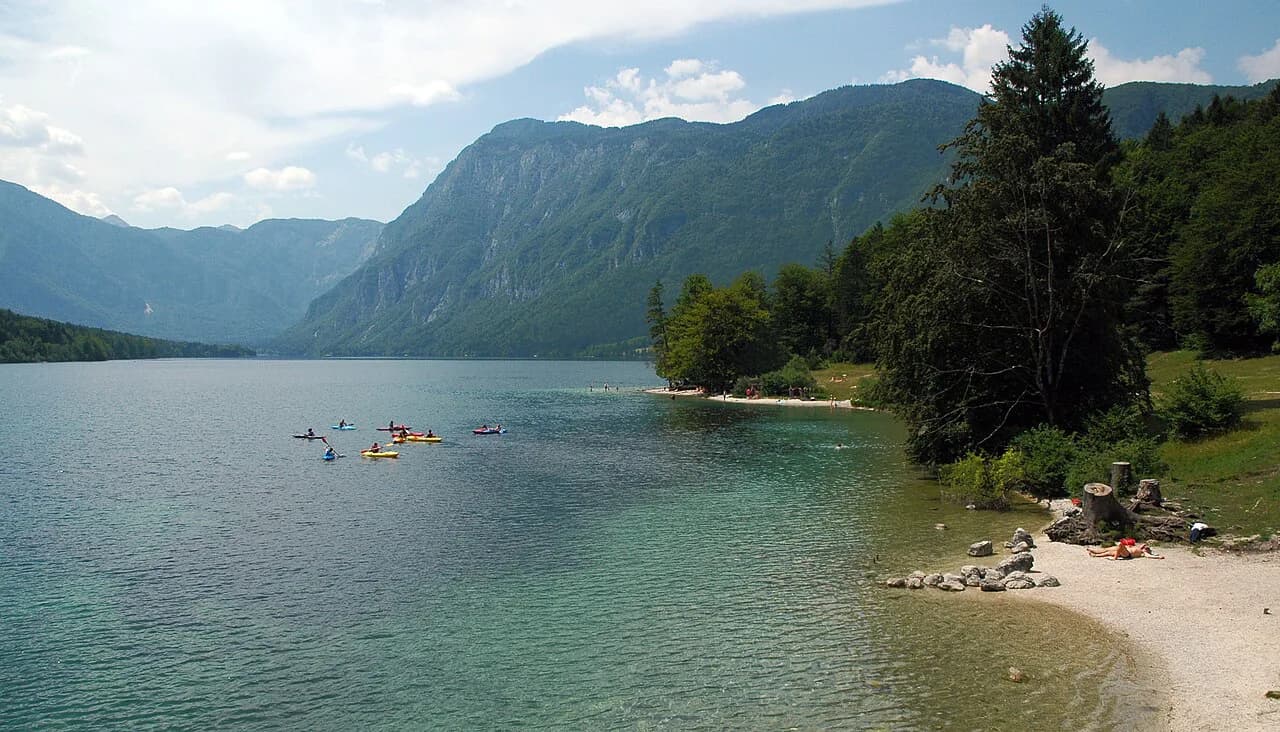
Swimming here is informal and spread out. Bathers use natural bathing areas around the shore, and part of the appeal is finding your own small pebble beach, which usually means arriving early. The lake sits inside Triglav National Park, so the shoreline is shared with walkers and anglers rather than built up with resorts.
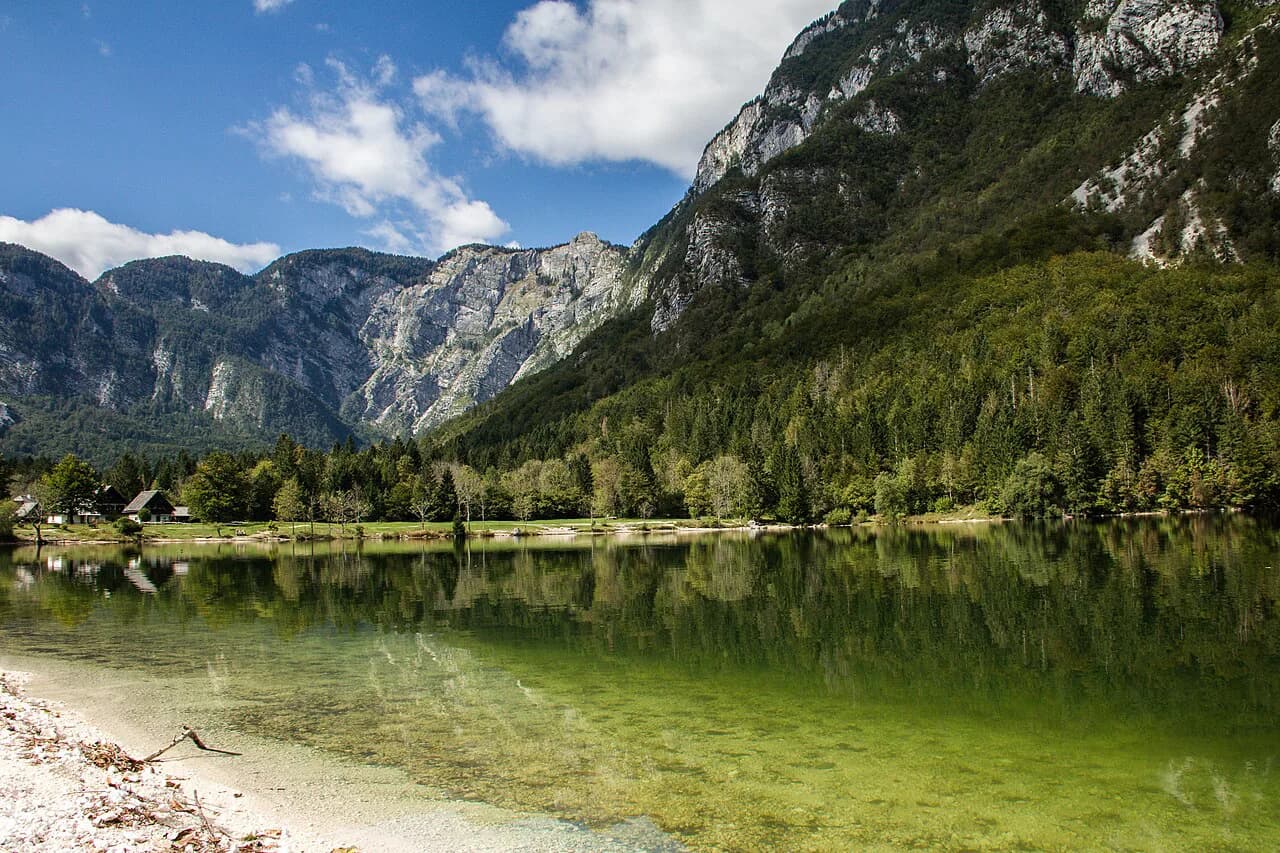
The water is clean and clear, and the lake bans motor boats, so the swimming zones stay quiet. The surface warms to only up to about 22 °C (71 °F) in summer, which the lakeside apartments describe as fresh even on the hottest days.
As a day plan, use the Lake Bohinj Map to fix which bay you are aiming for before you set off, because the three main areas sit at different ends of a long lake. Without that, it is easy to park at one end and spend the afternoon looking at the water you meant to swim in.
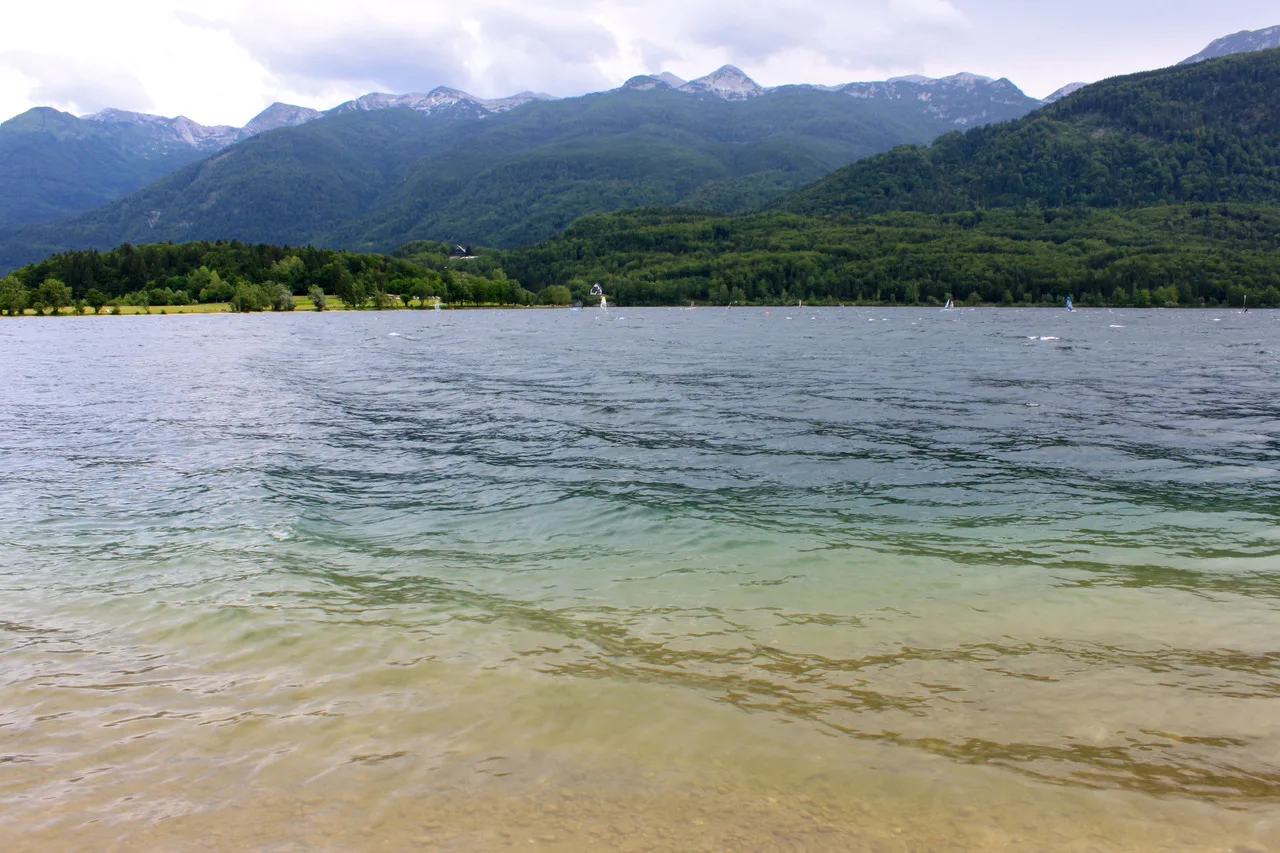
Fužinarski zaliv (Fužinar Bay): the most popular lake beach
Fužinarski zaliv (Fužinar Bay) is the most popular lake beach, with a grassy shore that suits families and anyone who wants to spread out a towel rather than balance on stones. It sits on the Stara Fužina side of the lake, which makes it the natural first stop if you arrive from that village.
Grass means comfort but also company: the popular bays fill up, and the advice to be an early bird to claim a spot applies most of all here. If you want a quieter patch, walk a little away from the main access points along the bank.
The grassy shoreline at Fužinar Bay is the easiest spot for a mixed group, since non-swimmers can sit comfortably while others go in. Do not treat the shallow-looking entry as shallow all the way out, because the bottom can fall away quickly.
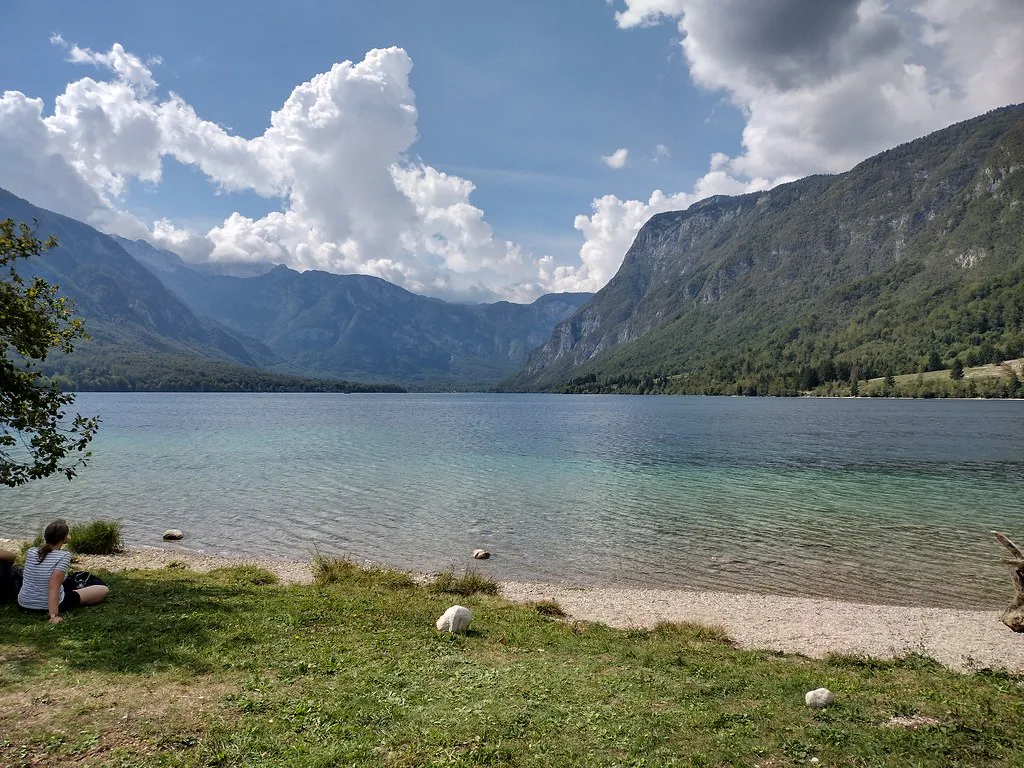
Naklova glava and the Ukanc shore by the Savica mouth
Naklova glava (Naklo's Head) is the second named bathing area, and Ukanc has both a grassy and a pebble beach where the Savica waterfall's water reaches the lake. These western-end spots put you close to the quieter, more forested side of the lake.
At Ukanc the entry is rocky in places and gets deep fast, so water shoes and a float for weaker swimmers are worth carrying. Travelers who swam near Ukanc report exactly that combination: a small rocky beach, a sandbar to walk, and a quick drop into deep water.
Ukanc is also where the crowd thins out relative to the eastern bays, which makes it the better pick on a busy summer afternoon. Plan your swim here around the walk back, since the return to Ribčev Laz along the shore is a long one.
How cold the water gets in summer
Expect a cool swim rather than a warm one. The surface warms to only up to about 22 °C (71 °F) in summer, so even in August the lake feels brisk on first entry and comfortable once you are moving.
That figure is the upper end of what the surface reaches, not a forecast for your dates, so treat it as a planning guide only. A cloudy week or a cold snap will pull it down, and the deep water stays colder than the surface.
Short dips are the practical approach: go in, get out, dry off in the sun on the grass, and repeat. Bring a towel and a warm layer even on hot days, because the shade along the shore is cool.
Pebble versus grass shores and what to bring
The lake alternates between grassy bays and pebble or rocky stretches, and which you get depends on where you stop. Grass is easier on bare feet; pebble and rock entry is where water shoes earn their place.
Pack light but pack right: water shoes, a towel, something to sit on, and a dry bag for phones. The bottom shelves quickly in places, so a float for children is sensible even where the beach looks gentle.
The lake is a national park shoreline, so carry out what you bring in and keep to the marked paths between bays. For the practical side of arriving by car, see Lake Bohinj parking before you commit to a bay at the far end.
Rowing and boating on the lake instead of swimming
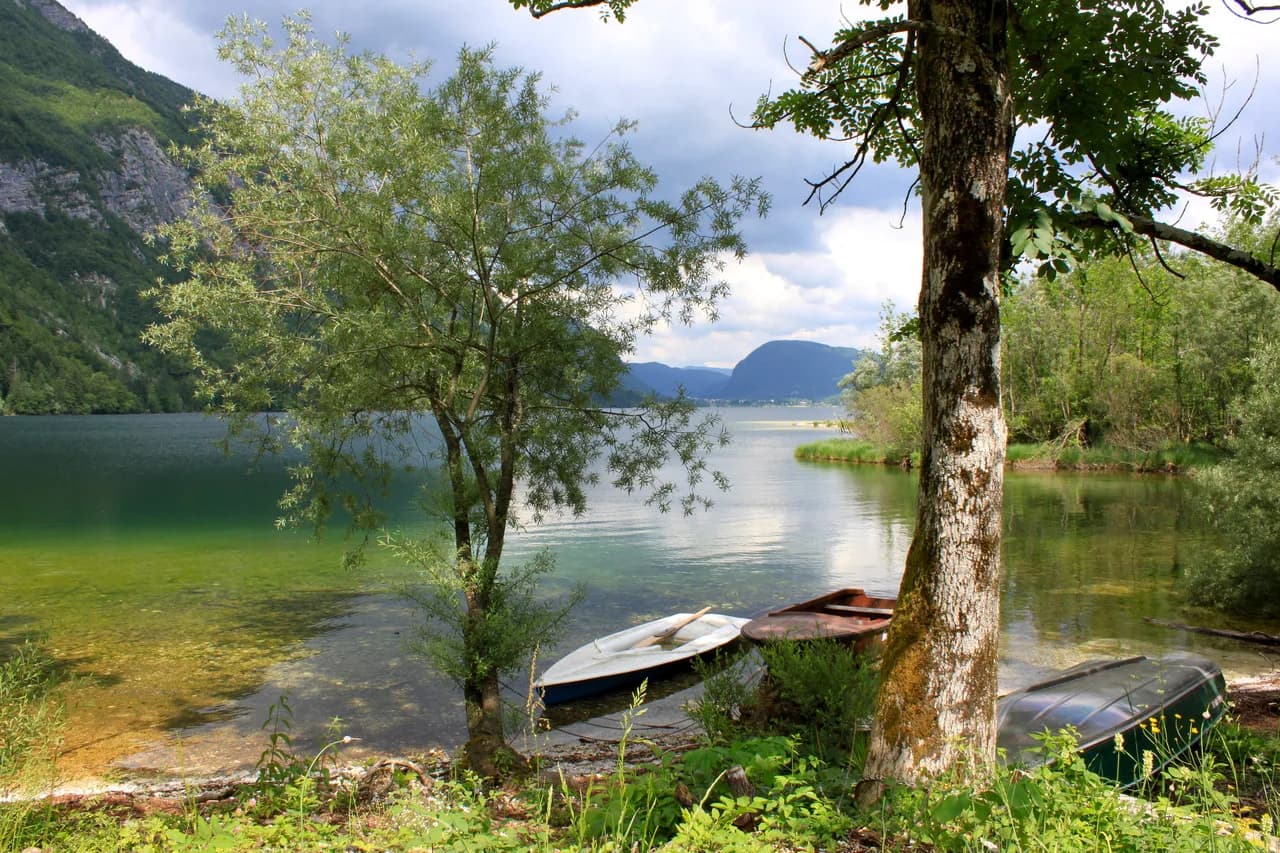
If the water is too cold for you, rent a boat or canoe and get out on the lake instead, which gives you the same views without the plunge. Motor boats are banned, so the lake stays calm enough for rowing.
Rowing suits mixed groups: one person pulls, everyone else looks, and nobody has to commit to a full swim. Check the boat hire arrangements when you arrive, since they depend on the season and the weather.
Paddlers who want a guided option on the water can read up on kayaking on Lake Bohinj and the Sava Bohinjka before booking. It is a different day out from a shoreline swim, but it uses the same cold, clear water.
Swimming in the Sava Bohinjka river
When the lake feels warm, the Sava Bohinjka river is the local alternative, with wild pebble beaches between Ribčev Laz and Bohinjska Bistrica. The river runs colder and faster than the lake, which many swimmers prefer on the hottest afternoons.
Children enjoy the rapids and stream pools, but keep them in sight at all times, as the river source warns. This is moving water, not a still lake, so pick a calm pool rather than the fast channel.
River entry means more rocks and less grass, so the same water shoes matter even more here. Combine a river dip with a stop in Bohinjska Bistrica rather than driving between spots.
Practical layout: Ribčev Laz, Stara Fužina and Ukanc
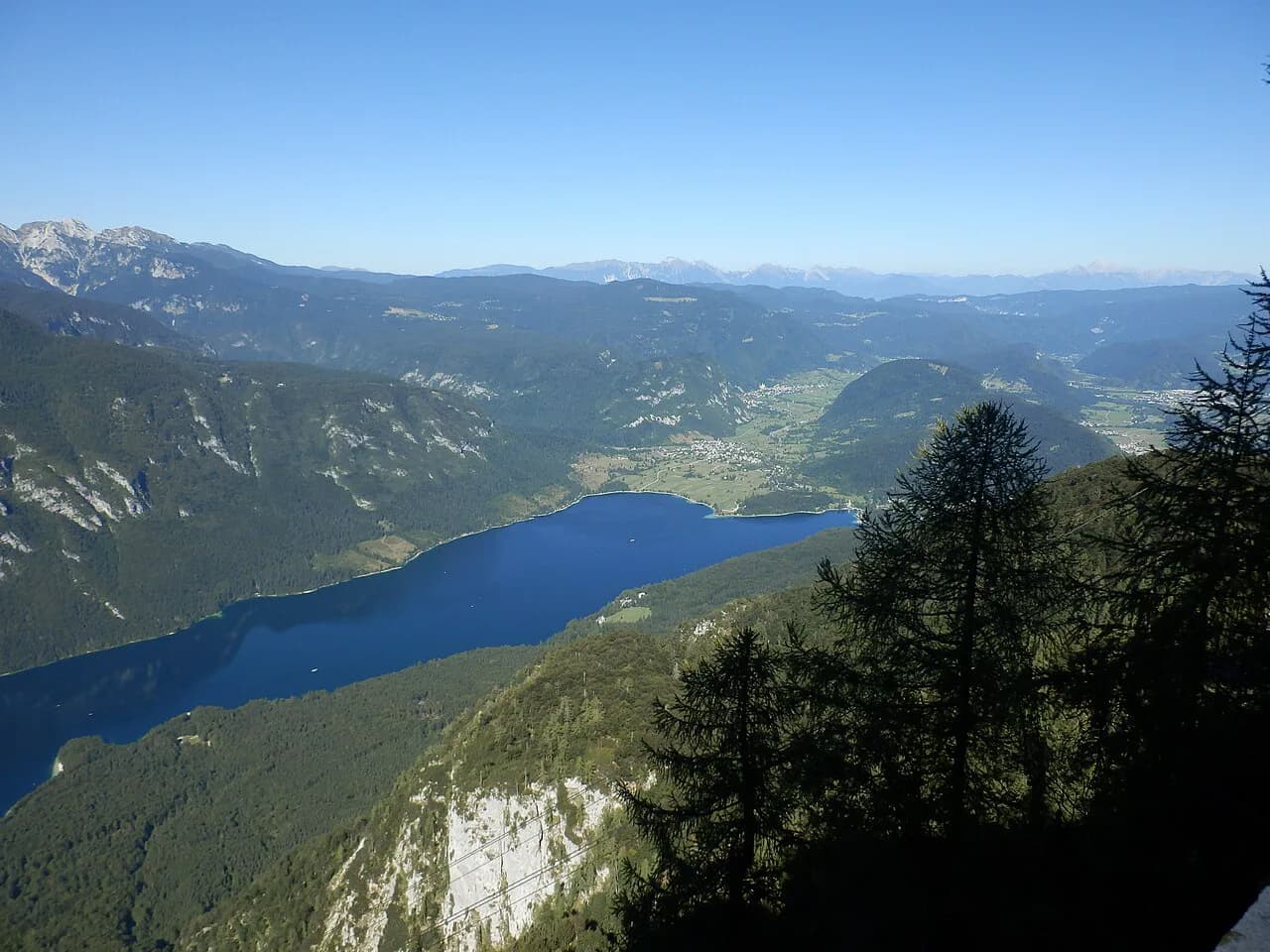
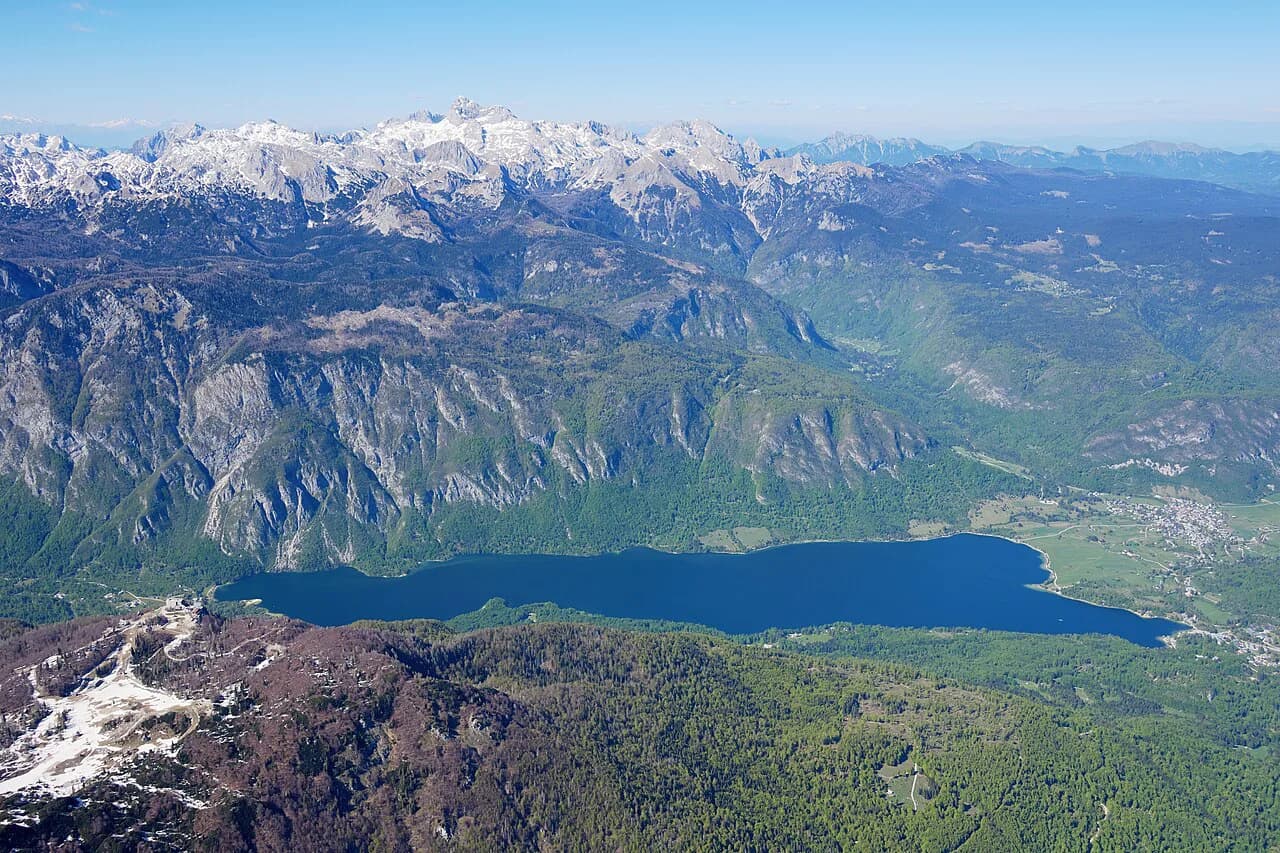
The lake runs roughly east to west, with Ribčev Laz at the eastern end, Stara Fužina and Fužinar Bay along the northern side, and Ukanc at the western end near the Savica mouth. Knowing that order tells you which bay you reach first.
If you only have an afternoon, base yourself at the eastern end and swim at Fužinar Bay, which is close to the main village and its facilities. With a full day, drive or walk to Ukanc for the pebble shore and the deeper water.
On the water itself, the lake is long and narrow, so distances between bays add up more than they look on a map. The wider guide to Lake Bohinj covers the rest of the shoreline and the villages around it.
Lake Bled makes a natural contrast on the same trip: it is busier and more built up, while Bohinj keeps a quieter, wilder shoreline. If you want a meal after swimming, the Bohinj restaurants are concentrated around Ribčev Laz and Stara Fužina.
Which Bohinj shore suits your swim
Choose Fužinar Bay for grass and easy access, Naklova glava for a quieter named spot, and Ukanc for a pebble shore with deep water near the Savica mouth. Whatever you pick, bring water shoes and expect the lake to feel cool even in midsummer.
If you would rather not swim at all, rent a boat, walk the shore, or dip in the Sava Bohinjka river instead. Plan your route with the Lake Bohinj Map so you spend the day in the water rather than driving around it.
Explore more Bohinj guides
Frequently Asked Questions
Is Lake Bohinj warmer or colder than Lake Bled?
Expect Lake Bohinj to feel cool even in summer, with the surface warming to only up to about 22 °C (71 °F). Both lakes sit in the Julian Alps and stay brisk; treat any temperature figure as a planning guide rather than a forecast for your dates.
Sources
Notes for your Slovenia trip
Optional updates to our Slovenia place guides.
You might also like
Continue reading
More guides you'll find useful