Šmartno, Slovenia: The Walled Village in Brda
Šmartno is a walled village in the heart of Brda with a hilltop church, stone houses packed inside fortifications, and views to the Alps and the Adriatic.
On this page
Šmartno needs about an hour, two if you linger over lunch or a museum collection. It is a compact walled village in the geographical center of Brda, and you can walk every lane inside the walls in well under an hour.
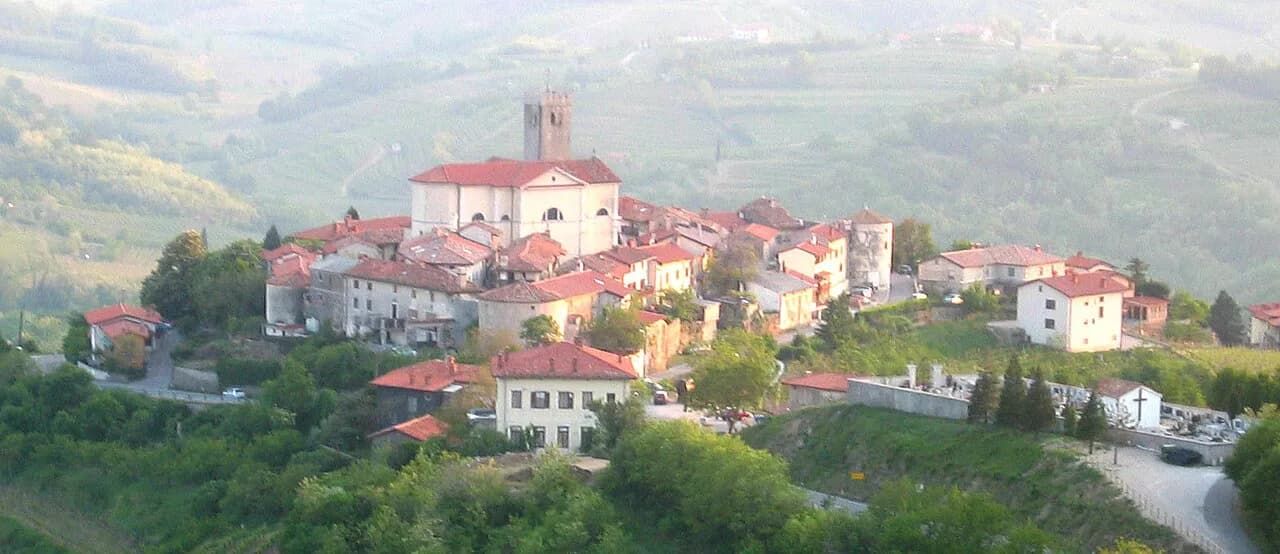
What makes it worth the stop is the shape of the place: stone houses packed shoulder to shoulder inside fortifications, all wrapped around one parish church. The village has been declared a cultural heritage monument, so what you walk through is the protected historic core rather than a rebuilt showpiece.
This guide covers the walls and towers, the Church of St. Martin, the museum collections and gallery, the food and shop stops inside the village, and how to slot Šmartno into a wider day across Goriška Brda.
What Šmartno is and where it sits
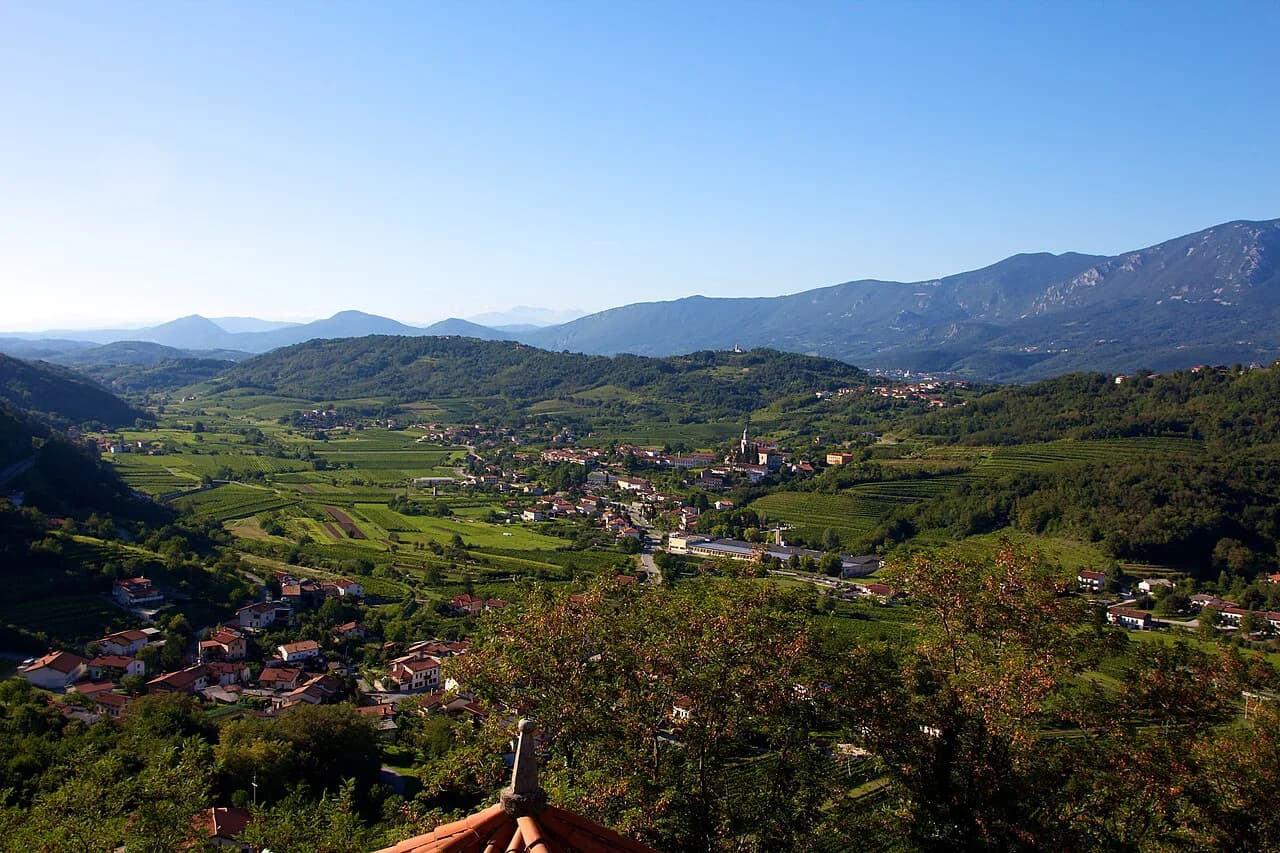
Šmartno is a village in the Municipality of Brda in Slovenia's Littoral region, close to Kojsko. It sits on rising ground in the middle of Brda, the wine-growing country that rolls between the Alps and the Adriatic.
The setting explains the view. From the village you look east to Nanos, north-west to the Carnic Alps, and south over the Friuli plain toward the Adriatic Sea.
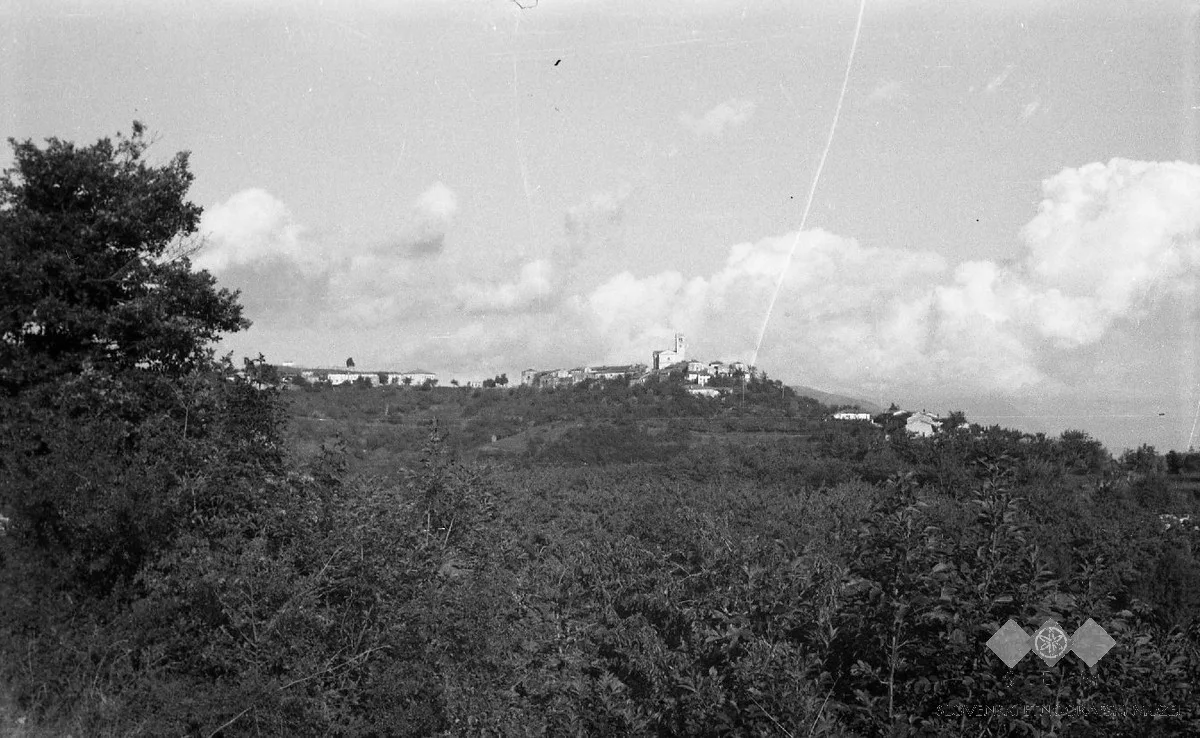
Šmartno was built on Roman foundations and first mentioned in 1317. In the first half of the 16th century a large anti-Turkish camp, a medieval fortress, was raised on the remains of a Roman outpost around the church, and the village served as a frontier fortress during the Venetian-Habsburg wars until the mid-18th century.
The walls and defensive towers
The village is surrounded by walls and fortified with defensive towers. Walking in through a gate, you are inside a closed ring rather than on an open village street, which is why the lanes feel so contained.
Look for the defensive towers as you circle the outer lanes; they mark the line of the old fortifications and give you the clearest sense of how small the defended core actually is.
Treat the walls as the frame of the visit rather than a separate sight. There is no circuit to hike here; you read the fortifications by walking the lanes inside them and glancing up at the towers.
The Church of St. Martin
The houses in the center cluster around the Church of St. Martin, the largest parish church in Brda, and the village takes its name from the saint. The church is the anchor of the whole layout, so start here and work outward.
The bell tower was originally a fortress tower, a reminder that this was a defended site before it was a parish. The bell carries a motif of the Holy Three Kings and dates from 1857.
Inside, the Baroque church has three marble altars, with a particularly rich main altar. The presbytery and the Stations of the Cross were painted by Tone Kralj, which is the detail to look for once you are through the door.
Walking the village and the views
A simple stroll through the streets is the main activity. The houses are tightly clustered around the church, so the pleasure is in the stonework, the doorways, and the way the lanes turn between buildings rather than in any single monument.
Give the outward views their own ten minutes. On a clear day the panorama runs from Nanos across the Carnic Alps to the Friuli plain and the Adriatic, which is a wider sweep than most single villages in the region offer.
The walking itself is short and on paved lanes, but the village sits on rising ground and the streets are uneven in places. Shoes made for cobbles matter more here than distance does.
Museum collections and galleries
Several living museum collections in the houses document the past and the roots of the Brda people. Among them is the Brda House with the adjoining Brda Cellar, whose ethnological collection covers the folk and residential culture of Brda.
Art has its own space at the House of Culture, a gallery where local and foreign artists exhibit. Check what is hanging before you plan around it, since a gallery with rotating shows is not a fixed sight.
Be honest about scale when you plan. These are collections in village houses, not a regional museum, so budget them as a twenty- to thirty-minute addition rather than a half day.
Food, drink, and shops inside the walls
Eating and drinking is concentrated in a handful of places within the village: Bar Pr Naad, Hiša Marica, Olive Bar and Turn. The streets also host the Brda gastronomy festivals, Brda and Wine and St Martin's Day, when the village fills up.
For shopping there is the picturesque natural cosmetics shop Nona Luisa and a Vinoteka stocked with many Brda and local wine labels. Both sit inside the village, so you do not have to leave the walls to buy local.
Settle the practical question before you arrive. Menus, prices and opening days for these places are published by the venues and by the Brda tourist office rather than fixed here, and a festival day can change whether a table is available at all.
The Tourist Information Centre and souvenir shop
A Tourist Information Centre inside the village is where you find out more about what is on across the destination. It is the sensible first stop if you arrive without a plan for the rest of Brda.
The center also holds a shop selling souvenirs and local products, Briška Butiehca. It is a compact stop, useful for a small local purchase rather than a long browse.
Šmartno on a Brda loop with Dobrovo
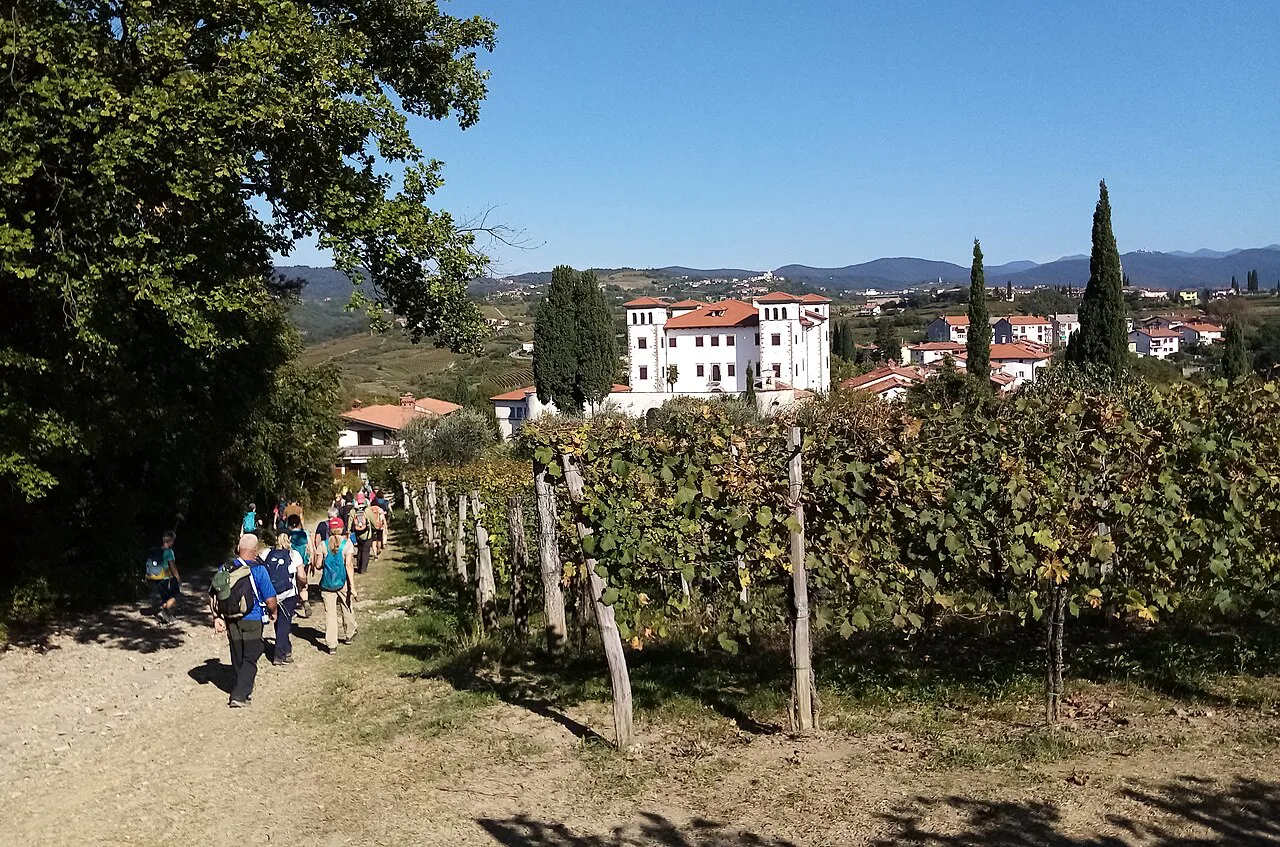
Šmartno works best as one stop on a circuit rather than a destination on its own. The village rewards an hour of walking, and the rest of Brda rewards the rest of the day in vineyards, villages and viewpoints.
Dobrovo, with its castle, is the natural anchor for that loop, and Šmartno fits neatly before or after it. Build the day around the Brda villages you most want to see rather than around a single stop.
If you are coming from the east, Nova Gorica makes a practical base for this corner of the country. The town has its own sights, including Kromberk Castle and the Museum of Goriška, which pair well with a Brda day.
How long Šmartno takes and what to expect
Plan on one to two hours. The walled core is small, the lanes are short, and the church, towers and views fill that time comfortably without a rushed pace.
The trade-off is scale. Šmartno is a village of clustered stone houses around one church, called an architectural jewel and a cultural monument, and it does not carry enough to fill a day by itself.
Crowds follow the festivals and the wine crowds, so an ordinary weekday morning gives you the quietest lanes. Pair the visit with the rest of Brda and the short stop becomes a good one.
Should Šmartno be your only stop in Brda?
No. Make Šmartno part of a Brda day, with Dobrovo Castle and the vineyards around it, rather than the whole plan. The walls, the church and the views are a satisfying hour or two, and the villages nearby are what fills the rest.
Arrive with the Tourist Information Centre as your first stop, walk the lanes inside the walls, look up at the towers, and finish with a table at one of the village's own spots. That order gets you the layout before the crowds do.
Explore more Nova Gorica guides
Frequently Asked Questions
Do you need a car to reach Šmartno in Brda?
Šmartno sits in the middle of Brda near Kojsko, a rural area of small villages and vineyard roads. A car gives you the most freedom to link Šmartno with Dobrovo and other Brda stops in one day, and the local tourist office can tell you what transport and organized options are currently running.
Can you walk around Šmartno without a guide?
Yes. The village is compact and the lanes are short, so a self-guided walk takes about an hour to an hour and a half. The layout is a ring of stone houses around the Church of St. Martin inside the fortifications, and the main things to look for are the church interior, the towers and the outward views.
What is there to see inside the walls besides the church?
The Brda House and Brda Cellar hold an ethnological collection on the folk and residential culture of Brda, and the House of Culture is a gallery with rotating exhibitions. The village also has a wine shop, a natural cosmetics shop and a souvenir shop with local products, so you can fill a couple of hours without leaving the walls.
When is Šmartno busiest?
The village hosts the Brda gastronomy festivals, Brda and Wine and St Martin's Day, and those are the days when the streets fill up. For quieter lanes, aim for an ordinary weekday rather than a festival date, and check the tourist office calendar for what falls during your trip.
Sources
Notes for your Slovenia trip
Optional updates to our Slovenia place guides.
You might also like
Continue reading
More guides you'll find useful