Sečovlje Salina Nature Park: Lera, Fontanigge and the Saltworks Museum
Plan a visit to Sečovlje Salina Nature Park on the Slovenian coast, with the working Lera pans, the abandoned Fontanigge basins and the Museum of Salt-making.
On this page
Sečovlje Salina Nature Park is the salt-pan landscape at Slovenia's far southwest corner, where the working pans at Lera still produce salt and the abandoned basins at Fontanigge carry the Museum of Salt-making. The park covers about 750 hectares along the Croatian border in the southern part of the Municipality of Piran, and you can see it on foot, by bicycle or with a guided tour.
This guide explains how the two halves differ, what the petola biosediment does, and how the pans fit a day on the Slovenian coast. It sticks to what the park authority and the salt company publish, and it flags the decisions worth making before you set out.
Where the park sits on the Slovenian coast
The park lies at the southern end of the Municipality of Piran, along the Slovene-Croatian boundary, with the Dragonja river reaching the sea at the salt pans. Lera, the northern part, is where salt is still made; Fontanigge, the southern part, is separated from it by the bed of the Drnica stream. That single stream is the line to keep in mind when you decide which entrance and which half of the park you want.
In the wider picture, Sečovlje is the largest coastal wetland in Slovenia, roughly 750 hectares in extent. It is also one of only two salt pans left in the Gulf of Trieste, alongside Strunjan, after the many others disappeared. That makes the pans a coastal stop with a specific reason to visit, not just a stretch of marsh beside the road.
Lera and Fontanigge: two halves, two systems
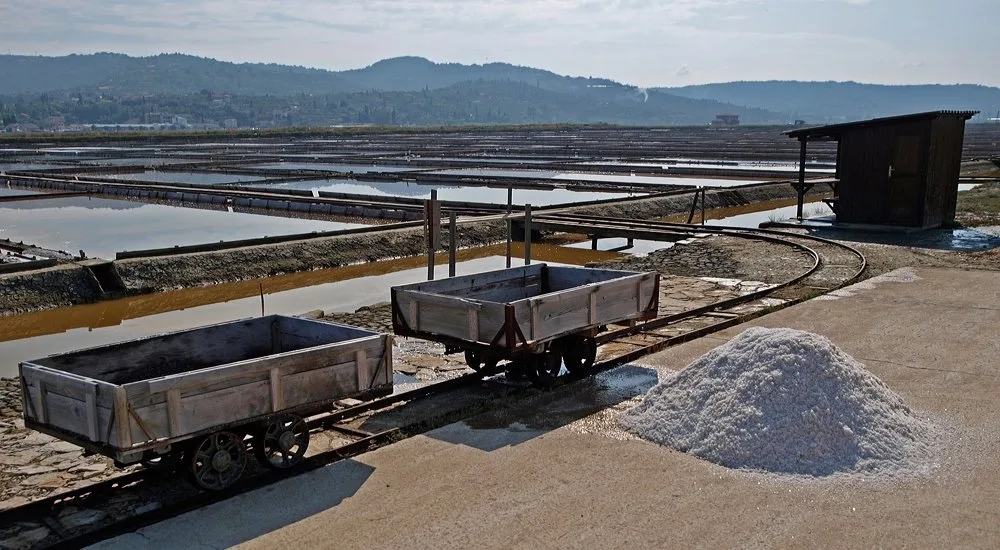
At Lera the salt-fields used for crystallizing salt are kept separate from the fields used to evaporate seawater, so the process runs in stages across distinct basins. Salt is still harvested there by the traditional manual method, and the ponds are managed as a working landscape rather than a display. If you want to see salt-making as an active operation, Lera is the half to aim for.
At Fontanigge, salt harvesting was abandoned in the 1960s, and large basins are gradually being overgrown by the salt-loving vegetation known as halophytes. The old levees still crisscross the basins, and the larger ones survive best. The half is quieter and more ruined in feel, which suits anyone more interested in the cultural landscape than in the harvest.
The Drnica, the Dragonja and what divides the halves
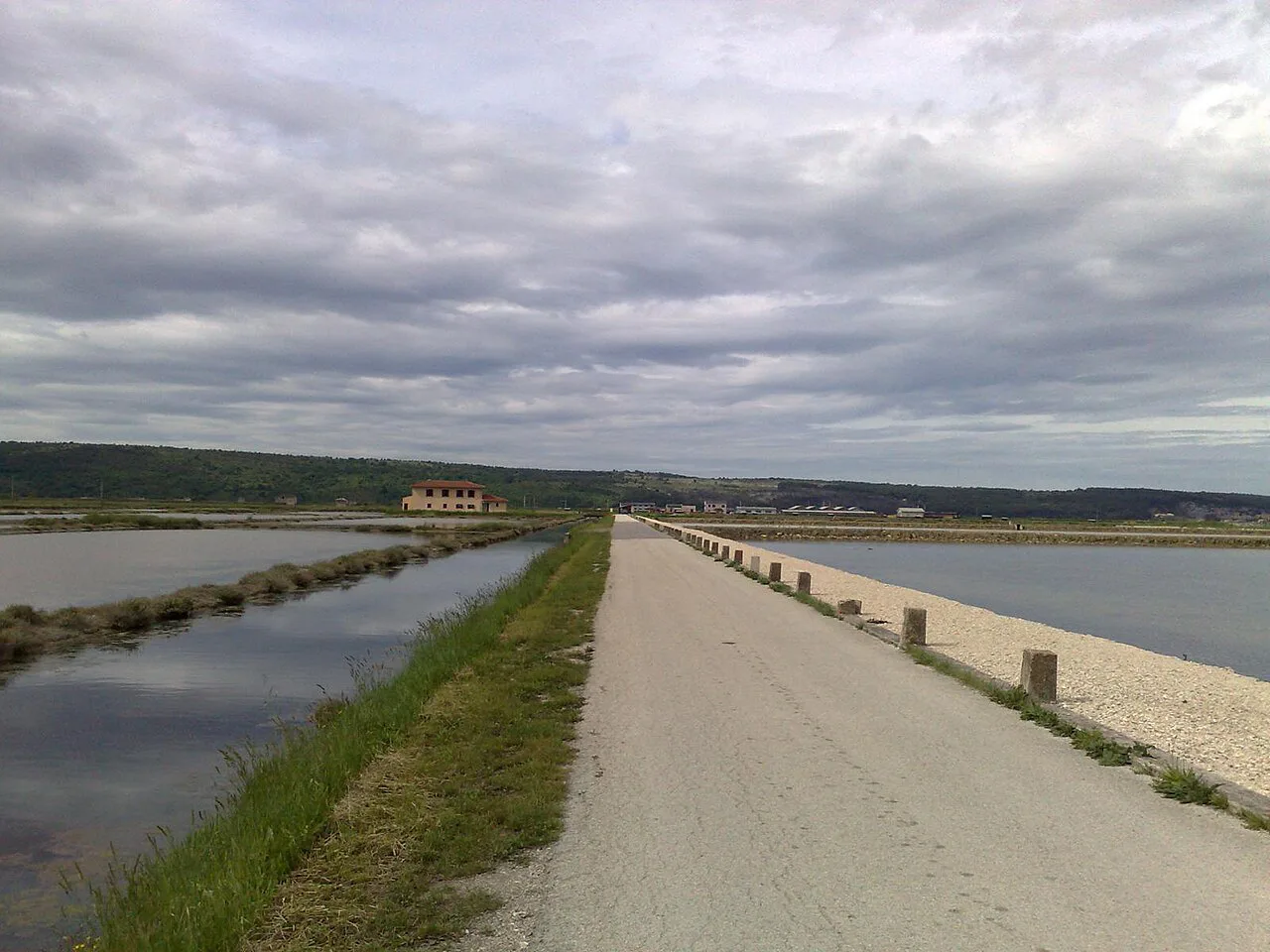
The Drnica stream's bed is the physical border between Lera and Fontanigge, which is why the two halves can look so different within one protected area. The Dragonja river is the main freshwater vein, and it joins the sea at the Sečovlje salt pans after its course through the hinterland. Those two water lines explain the mix of fresh and salt conditions that the wetland plants and animals depend on.
For a visitor, the split matters because the halves are not interchangeable. Lera is the working side, Fontanigge the museum and abandoned-basin side, so a short visit has to choose. A longer visit can walk or cycle between them and see both in one outing.
The Museum of Salt-making and the salt-pan houses
At Fontanigge the tradition of salt-making is still practiced within the Museum of Salt-making, which keeps the craft visible on the abandoned side. The salt-pan houses scattered along the wide channels and the old levees give the basin landscape its character, so plan the museum as the anchor of a Fontanigge outing rather than an add-on at the end.
Along the wide channels, former salt-pan houses are scattered, and their characteristic look is what gives the Salina landscape its distinctive image. The salt-making tradition here dates from the 14th century, so the houses and basins are part of a long working history rather than a recent set. The saltworks museum and the cultural landscape around it are the reason to slow down on this side.
The petola and why Sečovlje salt is different
Both Lera and Fontanigge salt-fields are lined with petola, a special biosediment cultivated on the bottom of the basins. The petola stops sea mud from merging with the salt and restrains separate ions from building into it, which is why the process is more than letting seawater dry out. It is the technical heart of Sečovlje salt-making and the thing to look for when a guide explains the basins.
The salt is sold under the Piranske soline name and comes in grades such as Piranska sol and Solni cvet, the salt flower. At both Lera and Fontanigge the salters cultivate petola, a special biosediment on the basin floor that keeps sea mud out of the salt and restrains separate ions from building into it. That is the detail that separates a salt pan from a shallow pond, and it is worth asking about on a guided tour.
On foot, by bicycle or with a guide
You can visit the park on your own, on foot or by bicycle, or as part of a guided tour. Guided tours are designed for visitors who want to learn more about the park and the tradition of salt production, so they add context that the paths alone do not. Choose a tour if the petola, the levees and the salt-pan houses are your reason for coming; choose a self-guided walk if you mainly want the landscape and the birds.
The distances are the trade-off. Lera and Fontanigge sit on either side of the Drnica, and a bicycle covers the spread faster than walking. Look at the park's visiting pages for current details before you pick a half to start from.
Thematic routes and who they suit
The park publishes thematic routes as a way to structure a visit, which helps when the pans look like one flat expanse from the car park. A route gives you a reason to walk a particular line of levees and channels rather than wander the nearest basin. They suit visitors with an interest in the salt process, the cultural landscape or the wetland habitats, and less so anyone who wants only a quick photo stop.
Pair a route with the museum if you are giving the park half a day, and keep the route short if Sečovlje is one stop between Piran and the border. Check the current route options on the park's site, since the list is the authority's to revise.
Birdlife and the wetland
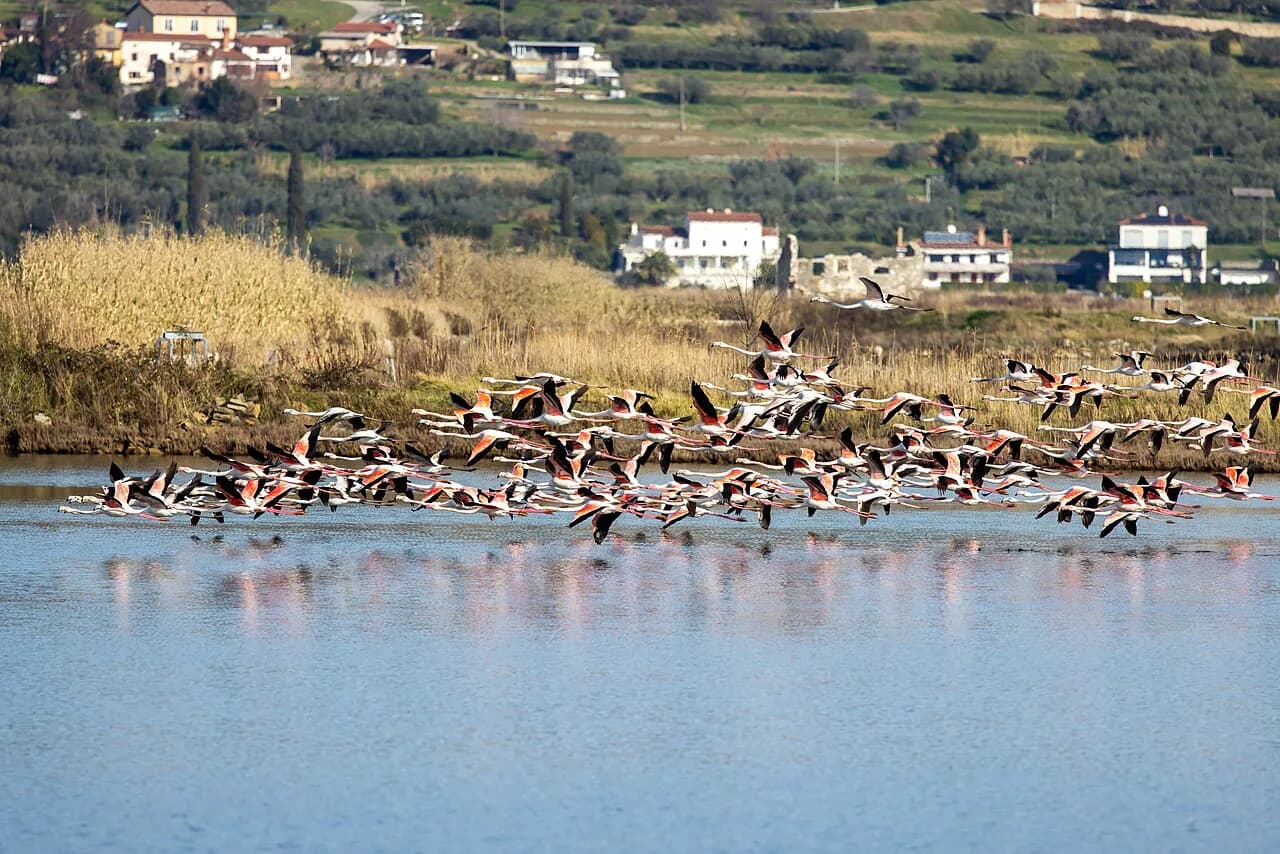
The salt marshes are wetlands with rich biodiversity, and the plants and animals there have adapted to the extreme conditions of the pans. Because the park sits mostly between land and sea, a range of different habitats turns up within a short distance. That makes the pans a place to walk slowly and look at the edges of the basins rather than a place to tick off a single viewpoint.
World Wetlands Day on 2 February is the park's own reminder of why these habitats matter, and the park marks it each year. The wider point for a visitor is that the salt pans are managed for conservation as well as for salt, so the water levels and the vegetation you see are deliberate. Treat the basins as working habitat and keep to the paths and levees.
Pairing the pans with Piran, Portorož and Strunjan
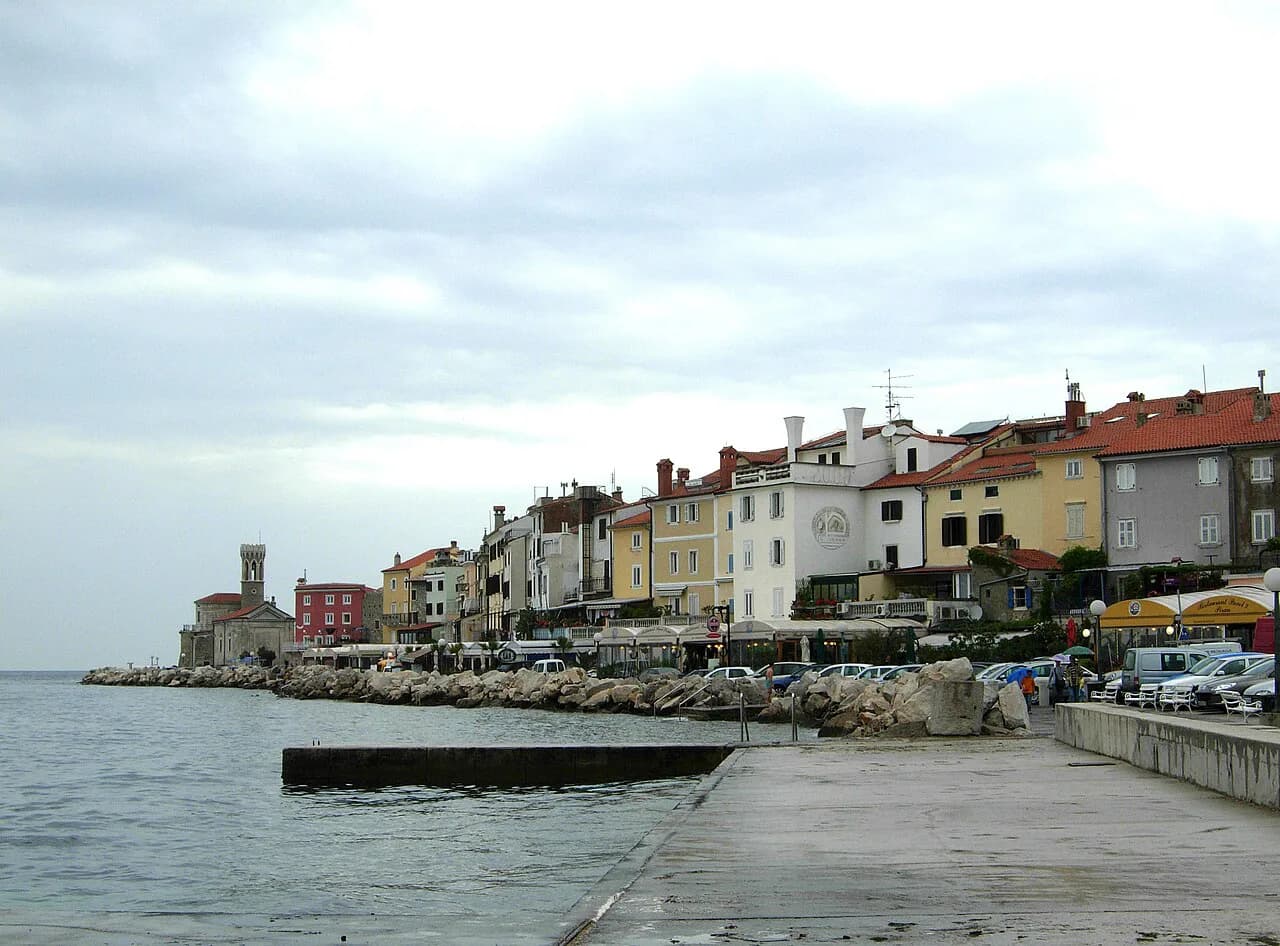
Sečovlje sits in the Municipality of Piran, a short drive from both Piran and Portorož, so it fits naturally as a half-day out from either town. Portorož is the closest base for the pans, and its waterfront makes an easy bookend to a morning at Lera or Fontanigge. The two towns together fill a coast day without needing a third stop.
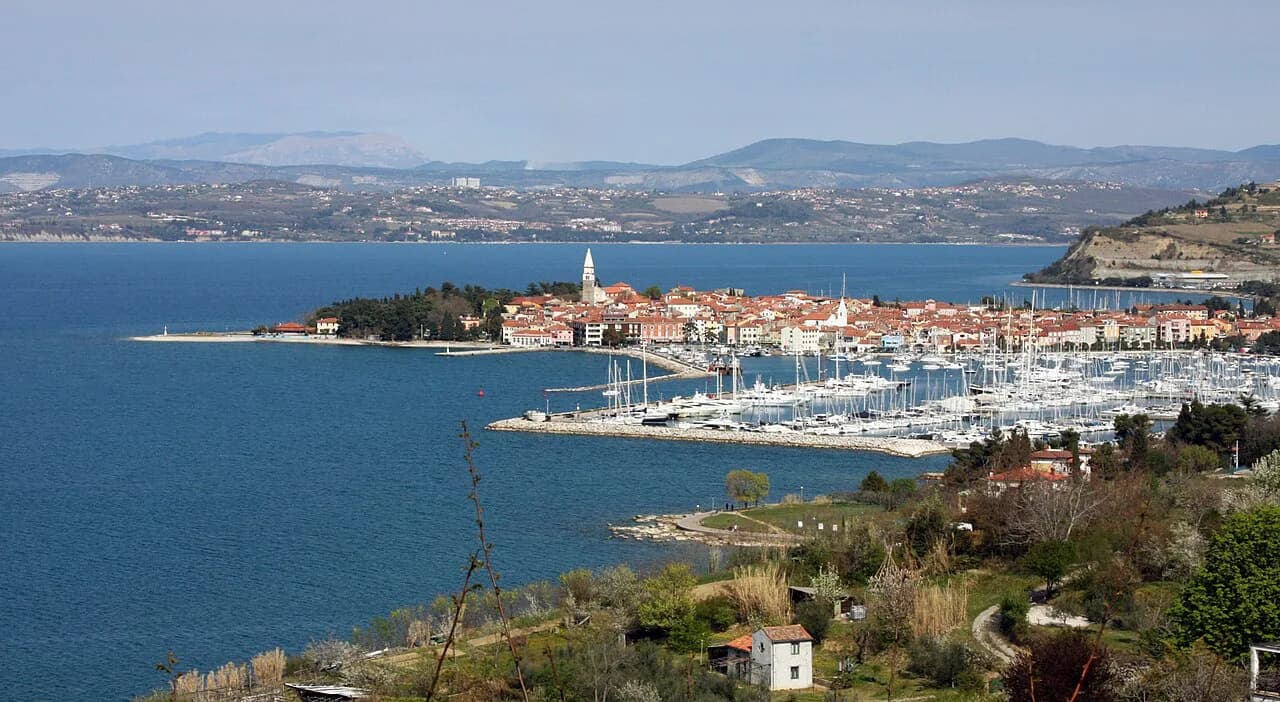
Strunjan, the other surviving salt pan in the Gulf of Trieste, is the obvious comparison and a separate stop on the same stretch of coast. Izola, further north, is a harbor town that works as a base or a lunch stop on the way. If you are stringing the coast together, the coast guide sets out how the towns relate.
Practical decisions before you go
Allow about half a day if you want Lera and Fontanigge with the Museum of Salt-making, and less if you are choosing one half. Decide first whether you want the working pans or the abandoned basins, then whether a guided tour earns its place for you; a tour makes most sense if the salt process is the draw. Walking is slower but keeps you close to the levees and channels; a bicycle widens the loop.
Admission is free on the first Sunday of every month from October 2026 onward, under an amendment to Slovenia's nature-conservation act. For other days, the park publishes an opening-hours and price list, and that page is where to confirm the current ticket prices in euros, tour times and any seasonal changes. Check it close to your visit rather than relying on a plan made months ahead.
Which half of the salt pans should you choose?
Choose Lera if you want to see salt still being made in working basins, and Fontanigge if the Museum of Salt-making, the old levees and the salt-pan houses are the draw. With half a day, do both and let the Drnica be the line between them. Confirm the current admission arrangements on the park's opening-hours and price list before you set out.
Explore more Slovenian Coast guides
Sources
Notes for your Slovenia trip
Optional updates to our Slovenia place guides.
You might also like
Continue reading
More guides you'll find useful