Slovenian Coast: Koper, Izola, Piran and Portorož Town by Town
Plan the Slovenian coast town by town: what Koper, Izola, Piran and Portorož each feel like, how they connect by cycle path and bus, and where to slow down.
On this page
Treat the Slovenian coast as four separate decisions rather than one blurry seaside recommendation. Koper, Izola, Piran and Portorož sit within a few kilometers of each other between Italy and Croatia, and each one asks something different of your time. This guide takes them town by town, names the squares and streets worth steering toward, and explains how the cycle path and the shoreline actually connect.
The coast is short, and that is an advantage: you can see more than one town in a day without spending it in a car. What you should not expect is a long sandy beach holiday; the water is entered from pebble and concrete edges beneath rocky ground. Plan around the old towns and the walking between them, and the coast rewards you accordingly.
What the Slovenian coast actually is
Slovenia's seaside is a narrow Adriatic strip wedged between Italy and Croatia, with Koper, Izola, Piran and Portorož as the four towns that anchor a visit. Koper is the largest of them and the one with a working harbor and a preserved Venetian-era core, which changes the rhythm of a morning there. Izola, Piran and Portorož follow south and west along the Gulf of Trieste toward the Gulf of Piran.
The landscape is Mediterranean in feel: colorful fishing-town architecture, olive groves, and clear water close to the towns. Inland rises the Karst plateau, which is why cave country and the coast sit so easily in the same trip. Think of the coastline as the settled, walkable half of a region whose other half is limestone and underground rivers.
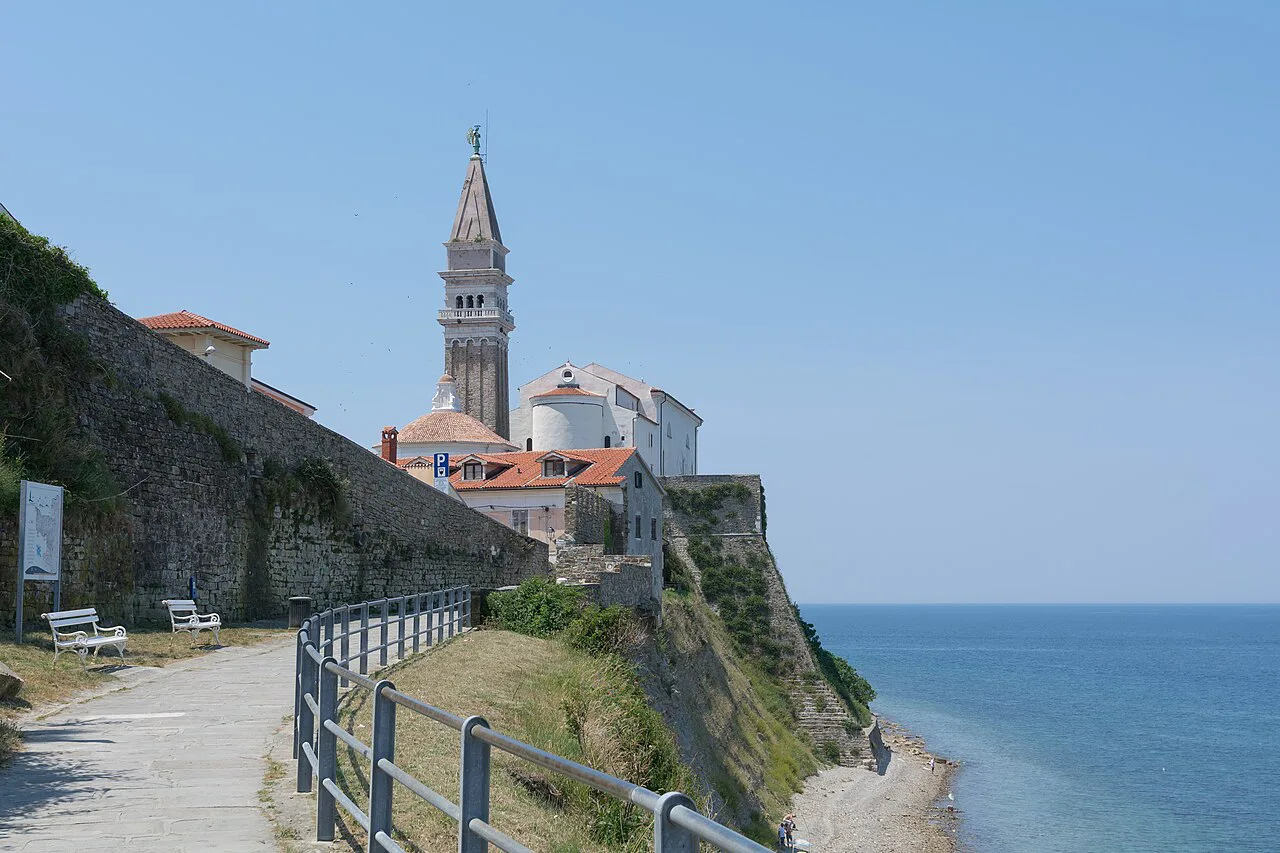
How the coast is laid out and how to move between the towns
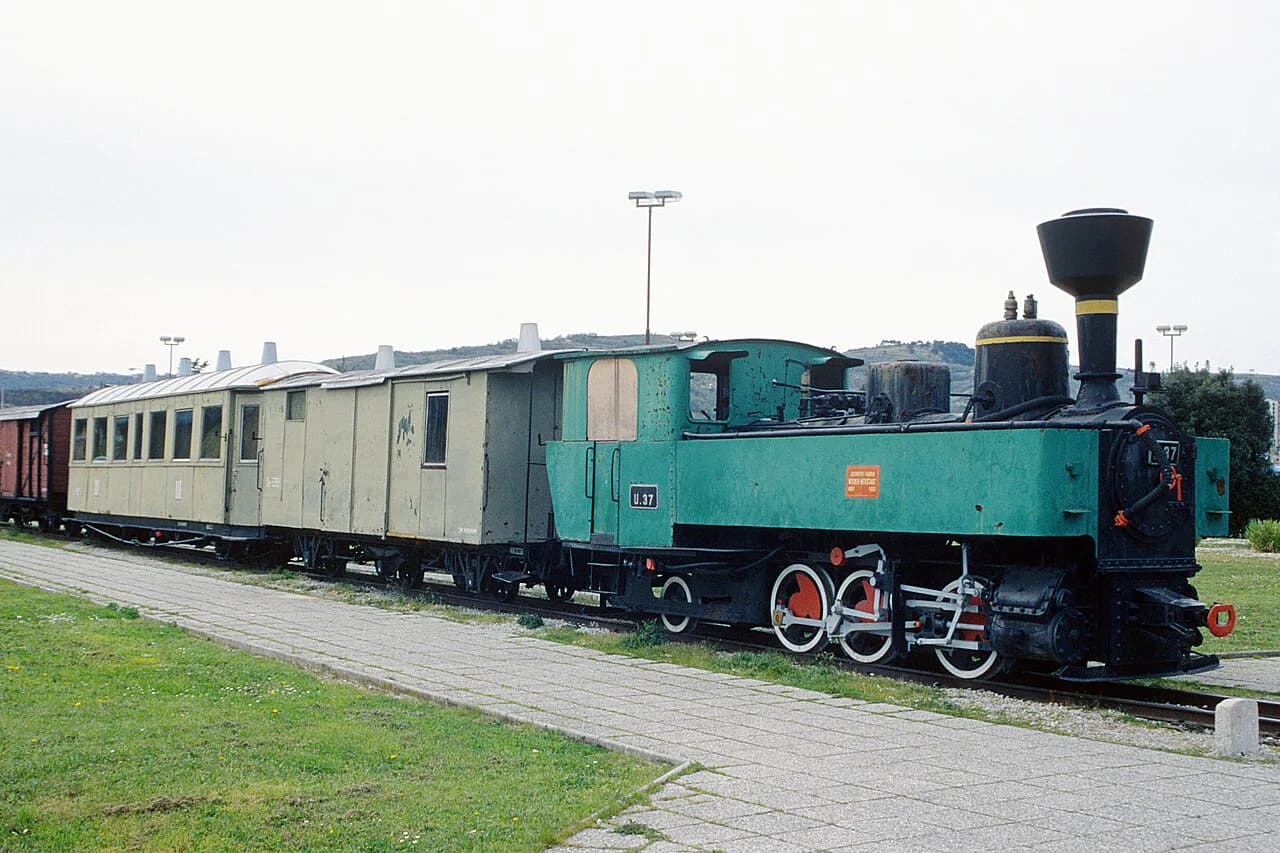
The spine of a coast trip is the old Parenzana railway line, converted into a cycling and hiking route. The original service ran from Trieste to Poreč in northern Croatia between 1902 and 1935, and the disused track was developed into a trail in 2002, on the hundredth anniversary of its opening. That means a continuous, mostly gentle corridor linking the towns rather than a string of separate day trips.
Cycling is the practical way to string Koper, Izola, Strunjan and Piran together in one day, and there were more cycle paths along this stretch than through most of a week of riding elsewhere. Ask locally about bike collection points and daily rates, since those change with the season. Walking is realistic between Izola and Strunjan, and between Piran and Portorož, which sit only minutes apart.
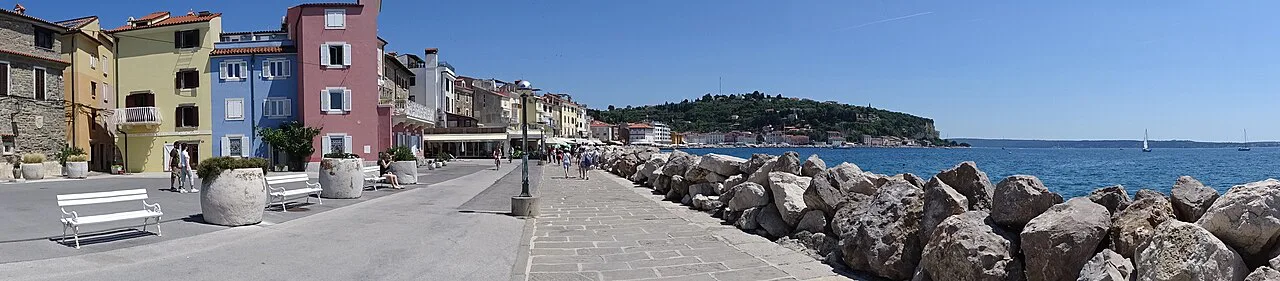
Koper: Tito Square, the Praetorian Palace and a working harbor
Koper is where you feel the Venetian centuries most clearly in the street plan. The medieval core is filled with preserved Venetian architecture, and the main square, Tito Square, holds the Praetorian Palace and Koper Cathedral as its set pieces. Arrive in the morning and walk the narrow lanes fanning off the square before the cafés fill.
This is also a working port, and that shapes a visit: the harbor is a live maritime space rather than a decorative marina. The waterfront promenade gives you the harbor on one side and the old town on the other, with the market and the quay as the natural meeting points. If you want a base with the most town infrastructure and the easiest road access of the coast towns, Koper is the sensible anchor.
Leave the car outside the old-town core and walk in; the streets are tight and the port area absorbs a lot of traffic, so circling for a spot inside the center is rarely worth it. Koper sits at the northern end of the run, which is why it often serves as the first stop on the way south.
Izola: the former island, the harbor and the old-town alleys
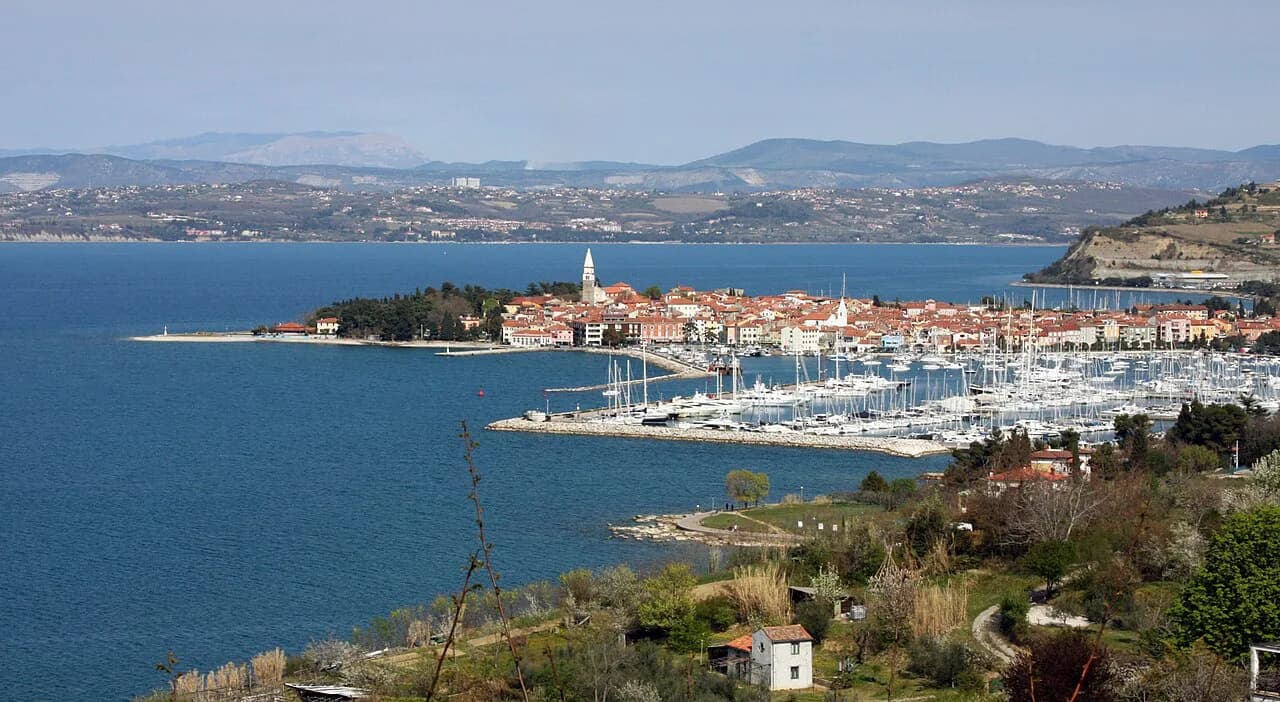
Izola began as an island, connected to the mainland by a narrow stone bridge, and the shape still reads in the old town. The harbor is the center of gravity, with fishing boats and waterfront eateries along the quay, and the alleys behind it are where the town gets quiet.
This is the coast town to slow down in. Izola is known for seafood, wine and olive oil, and the harbor front is lined with places to eat it; for a shortlist of what is actually worth sitting down for, see these Izola restaurants. Budget an afternoon rather than an hour if you want the old town and a proper meal.
The side streets hold museums, galleries and artists' studios, which makes Izola a good rainy-hour fallback when the water is uninviting. Cycle onward toward Strunjan and the path lifts slightly uphill, giving you a look back over the harbor. That short climb is the viewpoint of this stretch of the route.
Strunjan between Izola and Piran: the salt-making village
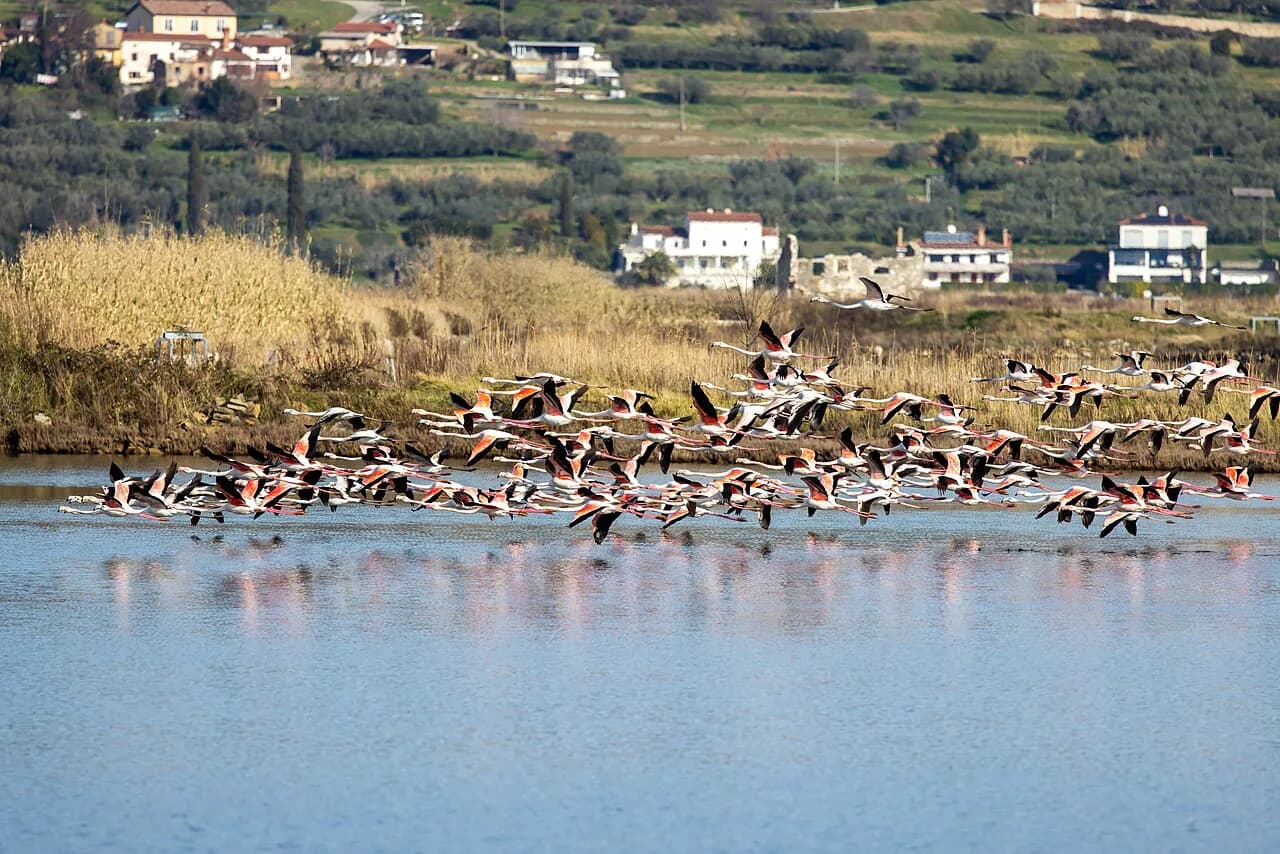
Strunjan sits between Izola and Piran, a salt-making village that the coastal cycle route passes directly through. On the ride out of Izola the path runs upland for a stretch, then descends through fertile valleys dotted with almond trees toward the water. Treat Strunjan as the pause that breaks up the ride rather than a destination in itself.
The village and its surrounding landscape are the reason to get off the bike: this is where the coast's salt-making history becomes visible rather than abstract. Continue south along the shore and the Gulf of Trieste opens in front of you.
Piran: Tartinijev Trg, Rozmanova ulica and the city walls
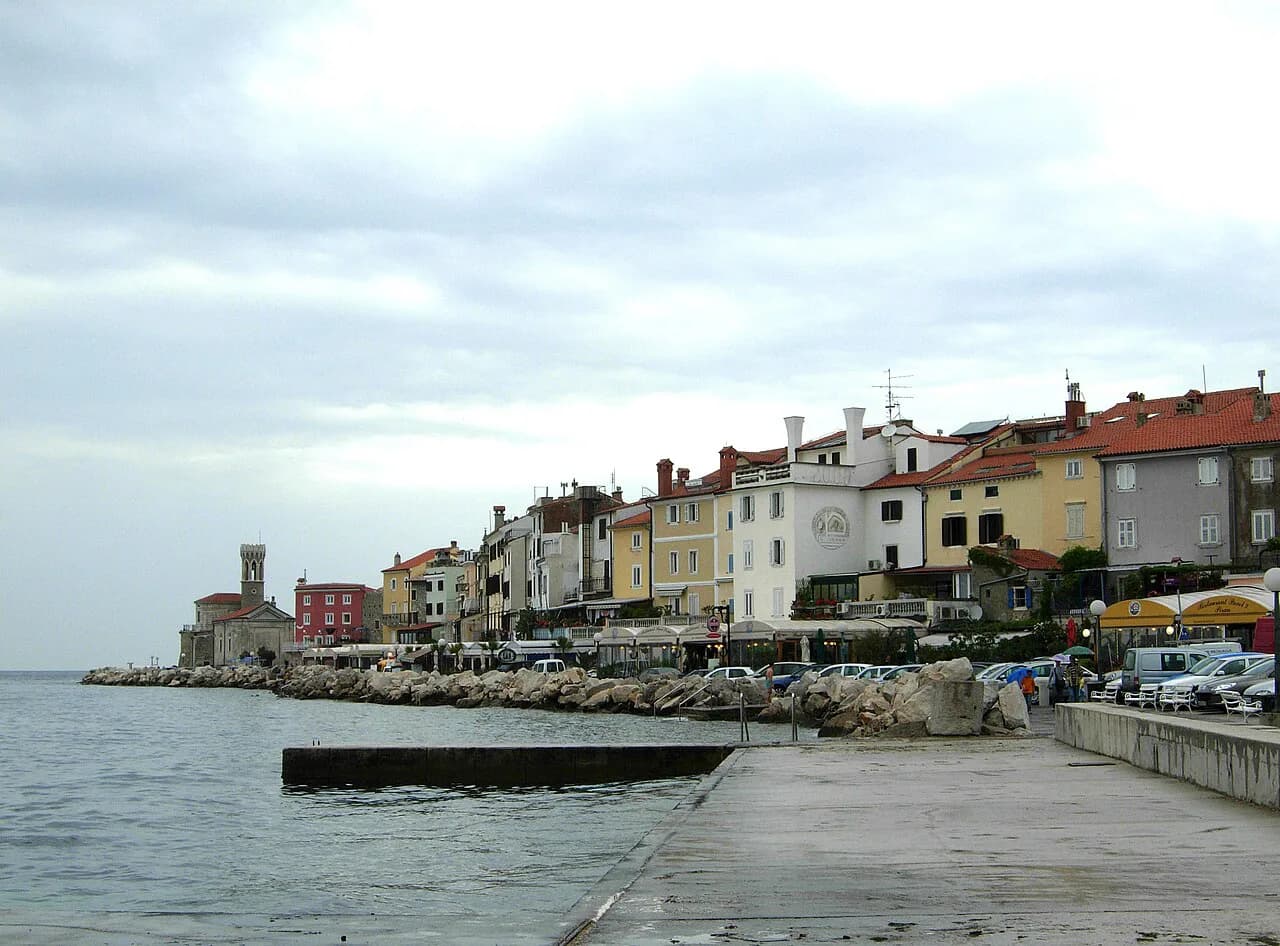
Piran is the tight, photogenic peninsula the coast is known for, and its old town centers on Tartinijev Trg, a broad square ringed by Venetian Gothic facades and seafood restaurants. From the eastern edge of the square, Rozmanova ulica climbs steeply toward the Baroque Church of St George. Take the stairs slowly in summer heat; the reward is the view back over the rooftops to the water.
The old city walls are the other climb worth making, with preserved sections and seven gates you can pass through. Parts of the wall date back to the seventh century, and the panoramas from the top are the classic Piran shot. Go early or late in the day to avoid the crush on the stairways.
Piran's streets are narrow, Gothic in places, and unmistakably Mediterranean, with a Venetian feel reinforced by how close Venice sits across the water. Park outside the pedestrian core and walk in; the peninsula rewards travelers on foot.
Portorož: the resort side of the coast
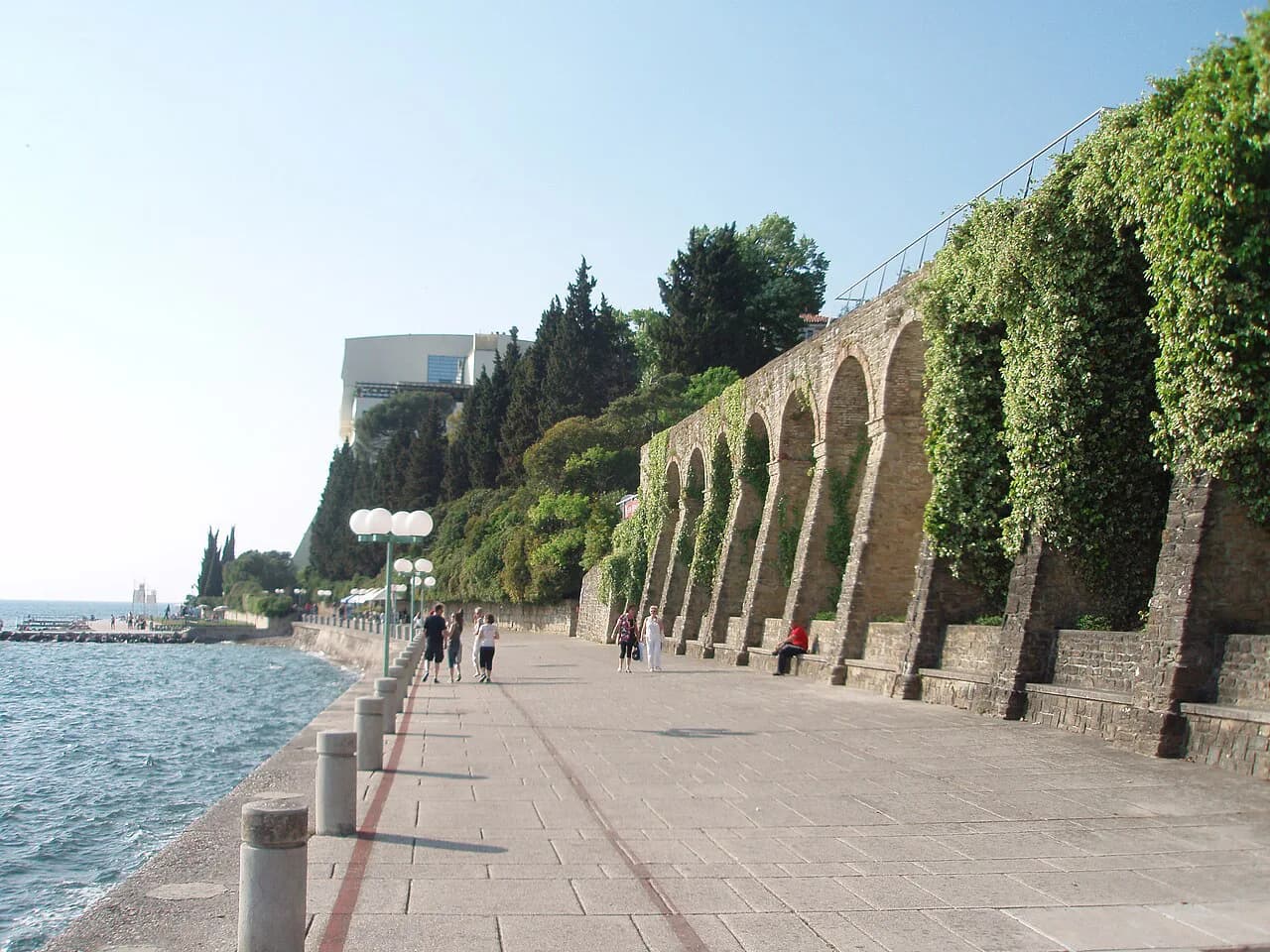
Portorož is the coast's resort town, and it deliberately reads differently from Piran next door. Instead of Gothic alleyways you get a promenade, a pier for views over the water and the forested hills behind, and a strip of hotels and restaurants built for holiday infrastructure.
Portorož is also the place where the coastline gets most commercial, with music spilling from the boardwalk restaurants and people everywhere in season. It is a short hop from Piran and it connects to the same cycle route, so treating the two as one stop is easy. If you want the promenade and the pier rather than the medieval maze, base yourself here instead.
For eating, the town's restaurants lean toward sea-view dining and Istrian cooking; this shortlist of Portorož restaurants covers the promenade and the side streets. Dress for the waterfront rather than the alley.
Choosing between the towns: old-town atmosphere or resort infrastructure
If you want Venetian old-town atmosphere and stairways, Piran is the core of the coast; if you want the working port, the cathedral square and the easiest town to arrive in, Koper delivers. Izola is the middle ground where the harbor, the seafood and the quieter lanes fit together without much effort.
Choose Portorož when promenade, pier and resort facilities matter more than medieval streets. Choose Piran when you want to walk out of your door into alleyways and climb to a church and walls. The two are close enough that staying in one and spending the evening in the other is entirely reasonable.
Water and shoreline expectations
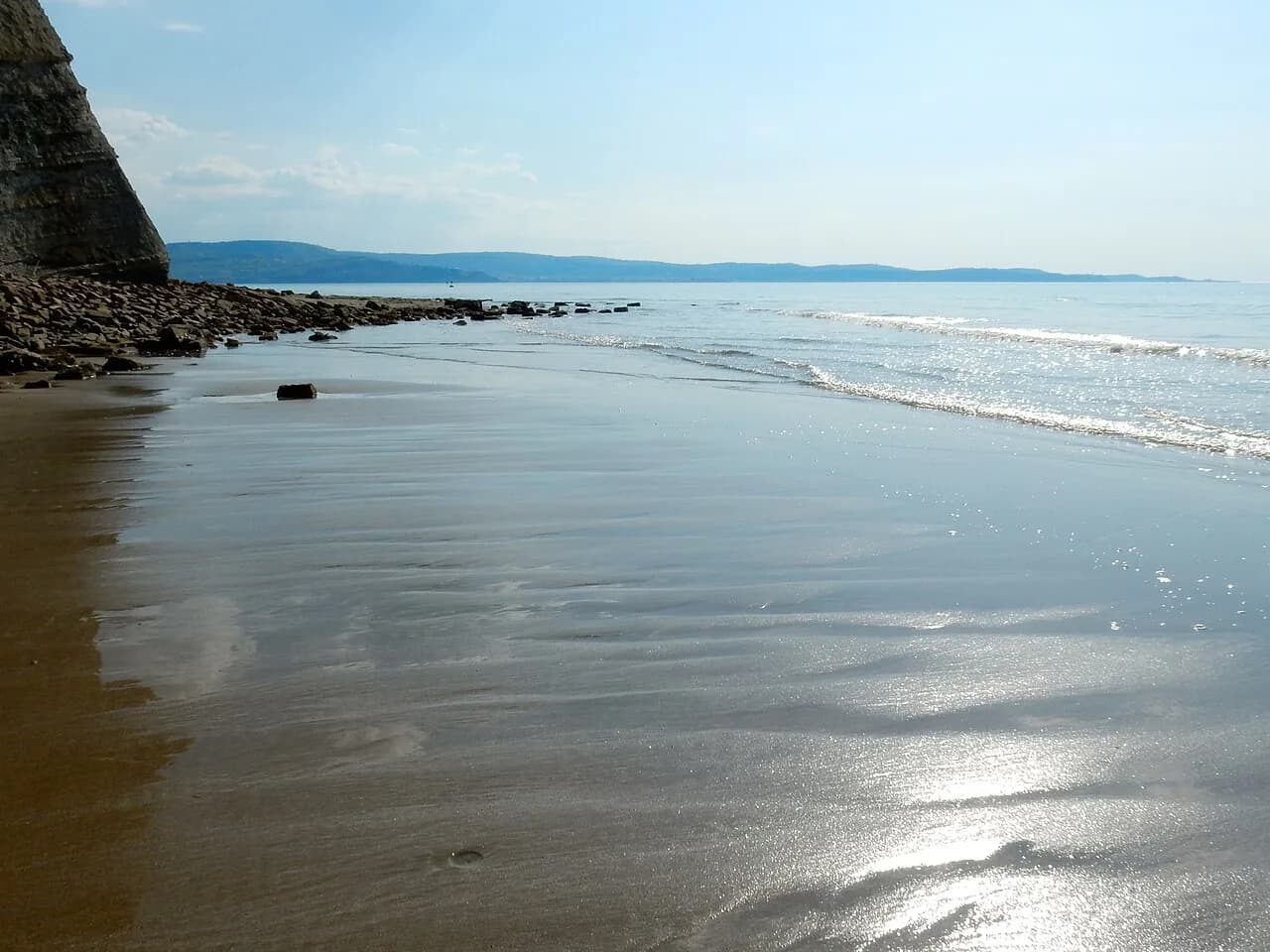
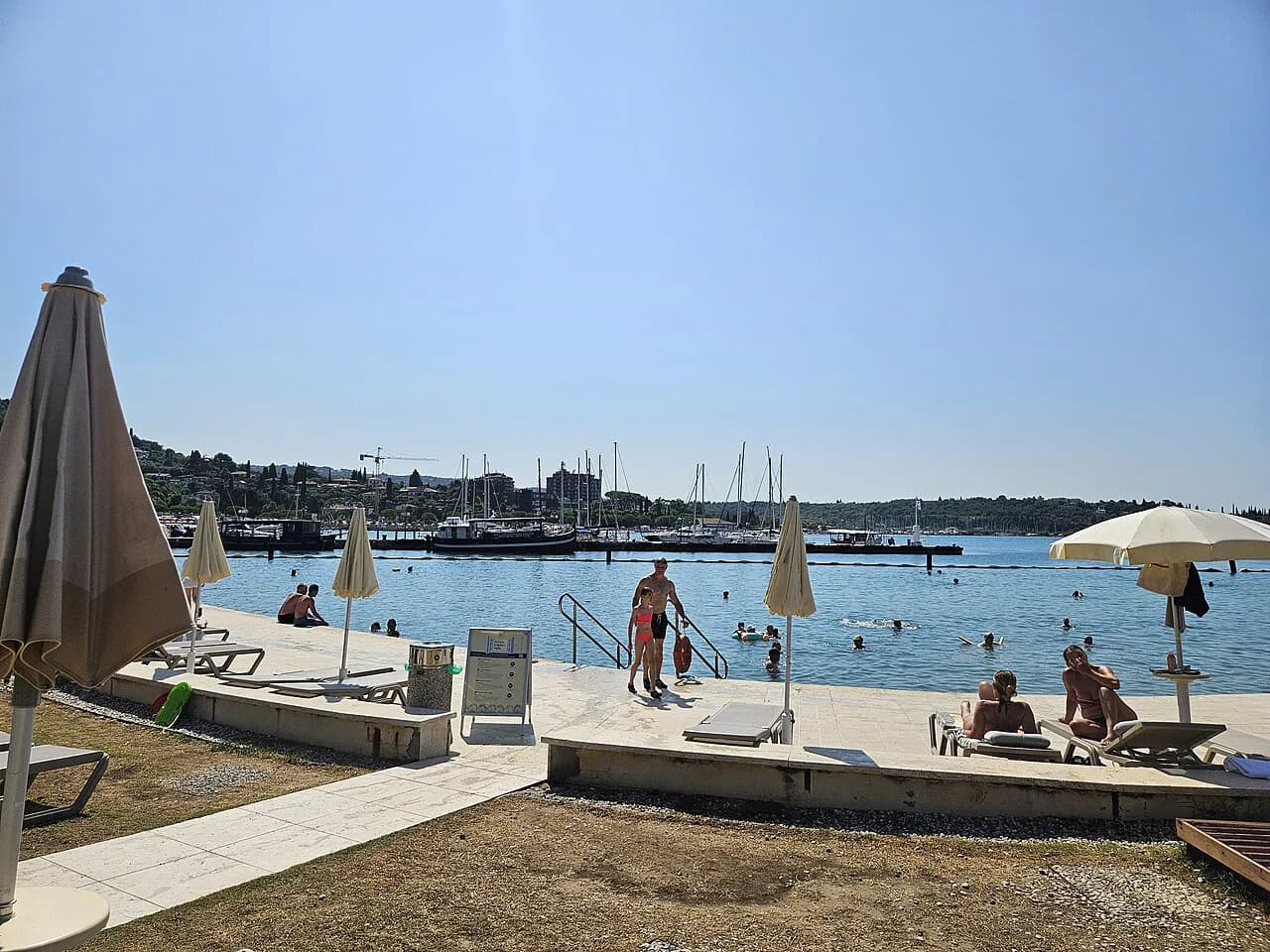
The Adriatic here comes with character rather than a palm-lined sandy beach. Expect pebbly coves beneath rocky cliffs, and in places walk-in points that are simply wide concrete sea walls from which people enter the clear water. Plan on water shoes and a towel rather than an umbrella-and-lounger setup.
Water temperature in summer averages in the lower seventies Fahrenheit, which is comfortable for swimming and useful for deciding whether to bring a wetsuit for children. Treat that as a seasonal average rather than a forecast for your particular week.
Practical constraints: summer crowds and winter weather
The coast's summer peaks in July and August, and that is when the promenades, parking and restaurant queues tighten most. Winters bring wet weather and occasional snow, which turns the towns into quieter, colder places where the walking still works but the swimming doesn't. Plan your visit around which of those versions of the coast you actually want.
In high summer, arriving early in a town and moving on by mid-afternoon is a better use of the day than trying to hold a parking spot through lunch. On a bike, the timing problem partly disappears, which is another argument for the cycle path over the car.
Getting to the coast
One practical approach is to fly into Trieste – Friuli Venezia Giulia Airport in Italy and drive southwest for roughly 50 miles, or about 80 kilometers, to reach the coast. From there the towns sit within a few kilometers of each other, so a single base can cover Koper through Portorož.
Once you are on the coast, the towns sit within a few kilometers of each other, so a single base can cover Koper through Portorož. The trade-off is between a city base with more services and a smaller base inside a walking old town.
Where the coast fits in a wider Slovenia trip
The Karst plateau inland is the natural extension of a coastal stay: limestone country where water has worked out giant caverns, and where the region's two publicly accessible cave parks, Postojna and Škocjan, both sit within reach. Trips from the coast combine the shoreline with Lipica and Škocjan Caves in a single day.
If you are heading north afterward, Bled Attractions: 4 Visitor Guides is the counterpart for the lake country, and Bled Neighborhoods helps you decide where to land around the lake. The two regions are different enough that neither substitutes for the other.
What to skip or save for later
Save the far end of the cycle route for a return visit rather than cramming it in. If you have only a day, Koper and Piran give you the range of the coast, old-town core to medieval peninsula, without needing more logistics than a single bike or bus ride.
Ankaran, north of Koper and near the Italian border, is worth keeping for a quieter, slower trip when the main four towns feel crowded. It is the reason to extend the coast north rather than ending at Koper.
Which stretch to book your day around
For a first visit, build your day around Koper and Piran with the cycle route between them as your mode of transport, and add Izola as the meal stop rather than a separate half-day. If that is too much for one day, move Izola and Strunjan to a second morning and Portorož to an evening.
The one thing to plan around is the balance between old-town walking and resort time. Decide before you go which you want more of, then anchor your base and your day accordingly.
Explore more Slovenian Coast guides
Frequently Asked Questions
Does Slovenia have a coastline?
Yes. Slovenia has a short Adriatic strip between Italy and Croatia, with Koper, Izola, Piran and Portorož as the four main coastal towns. The coastline runs from the Gulf of Trieste toward the Gulf of Piran, and the four towns are within a few kilometers of each other, which makes the coast manageable in a single day of cycling or a couple of days of leisurely walking.
Which is better, Koper or Piran?
They do different jobs. Koper gives you the Praetorian Palace and Koper Cathedral on Tito Square, a preserved Venetian-era core, a working harbor and the easiest road access of the coast towns. Piran gives you the medieval peninsula: Tartinijev Trg, Rozmanova ulica climbing to the Church of St George, and the old city walls with seven gates. Piran is more atmospheric on foot; Koper is easier as a base.
How do you get between the coastal towns?
The old Parenzana railway line is the backbone. It was developed into a cycle and walking route in 2002, running from Trieste in Italy to Poreč in Croatia, with a continuous corridor linking Koper, Izola, Strunjan and Piran. Walking works between Izola and Strunjan and between Piran and Portorož. A bike covers the full Koper-to-Piran stretch in a day and keeps you out of the summer parking squeeze.
Is the water in Slovenia warm enough to swim?
Summer water temperatures average in the lower seventies Fahrenheit, according to the typical reading for the area. That is comfortable for most swimmers and bearable for children once they are in. The shoreline is pebble and concrete rather than sand, so water shoes help; plan for the water being cooler at the edges of the season rather than consistently warm.
Sources
- Visit Slovenia Adriatic Coast: Best of Slovenia Adriatic Coast Tourism | Expedia Travel Guide
- Coastal Slovenia with Kids - Slovenia Family Travel Guide
- Slovenia's Small but Perfectly-formed Coastline - Gallop Around The Globe
- The Gorgeous, Slovenian, Istrian Coastline. – Wandering Teacher
- Slovenian coast trip - ESN Ljubljana
Notes for your Slovenia trip
Optional updates to our Slovenia place guides.
You might also like
Continue reading
More guides you'll find useful