Pokljuka Plateau Guide: Getting There, Pastures and Goreljek Bog
Plan a day on the Pokljuka plateau in Triglav National Park: how to drive from Bled, where to park, the Goreljek boardwalk and the shepherd pastures.
On this page
Pokljuka is a high forested plateau inside Triglav National Park, roughly 20 km from Bled and sitting between about 1,100 and 1,400 meters. Treat it as a place you move around by car or transfer, with short walks at each stop, rather than a single trail you start and finish in one go. This guide covers how to reach the plateau, the parking rules that shape a day there, the main pasture and bog stops, and a way to budget your time.
The plateau spreads across the Julian Alps above the Radovna Valley and the Bled basin, with Rudno Polje as its sports and cross-country hub and the shepherd pastures scattered through the spruce forest. Most travelers base themselves at Bled or Lake Bohinj and drive up for a half day or a full day. Because the stops sit several kilometers apart on narrow forest roads, planning the order of your visits matters more than covering distance on foot.
What the Pokljuka plateau is and where it sits
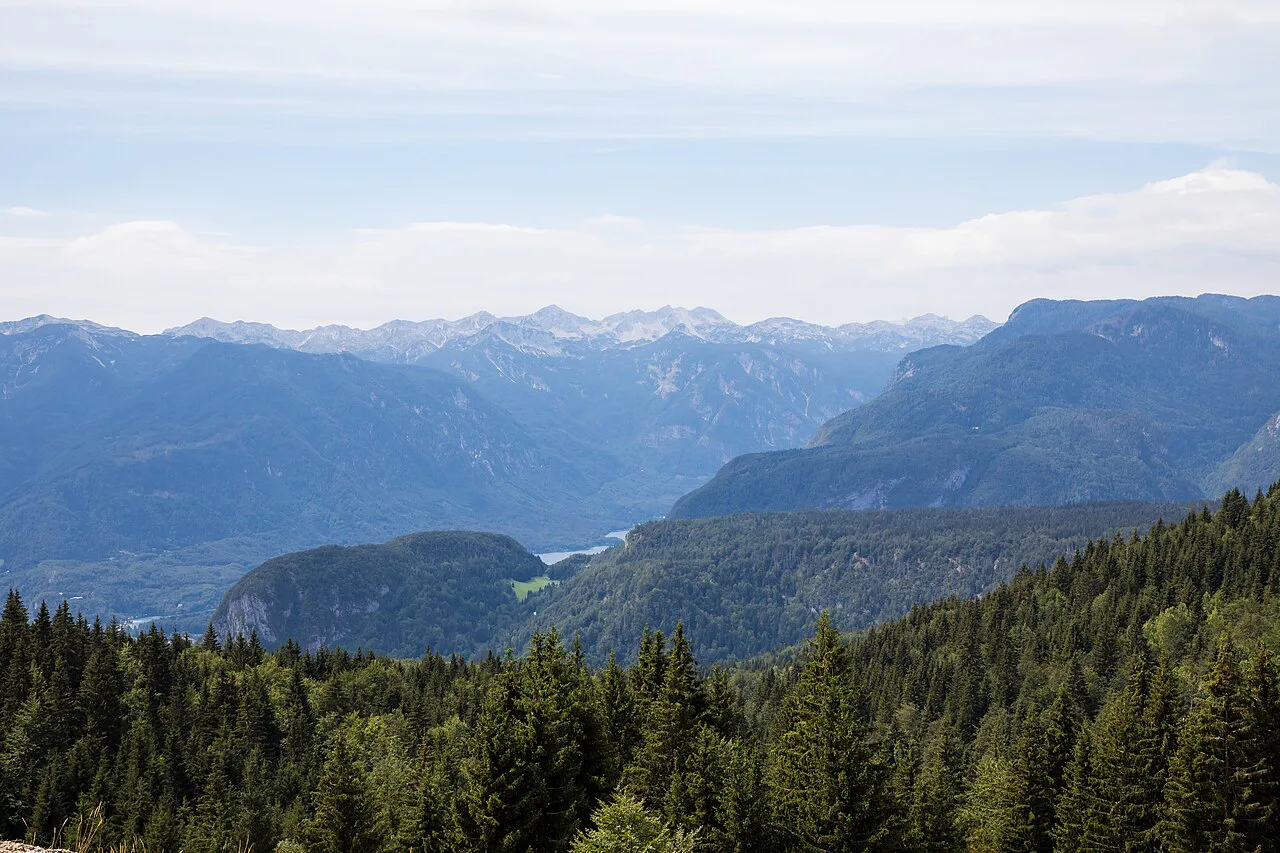
Pokljuka is a forested plateau in the Julian Alps, about 20 km from Bled and roughly a 25-minute drive from the lake. It lies inside Triglav National Park and stretches across roughly 20 km of spruce forest at an altitude of 1,100 to 1,400 meters. The tourism board for Bled describes it as the largest forested area in the national park, which is why the plateau feels like a quiet counterpoint to the lakeside crowds.
Two things define a visit. First, the plateau top holds the stops most people come for: the Goreljek peat bog, the Zajamniki and Javornik pastures, and the sports center at Rudno Polje. Second, the rim above the Radovna Valley holds Pokljuka Gorge, a separate walk reached from a different access road near Krnica. Keep these two zones distinct in your plan so you are not driving back and forth across the plateau.
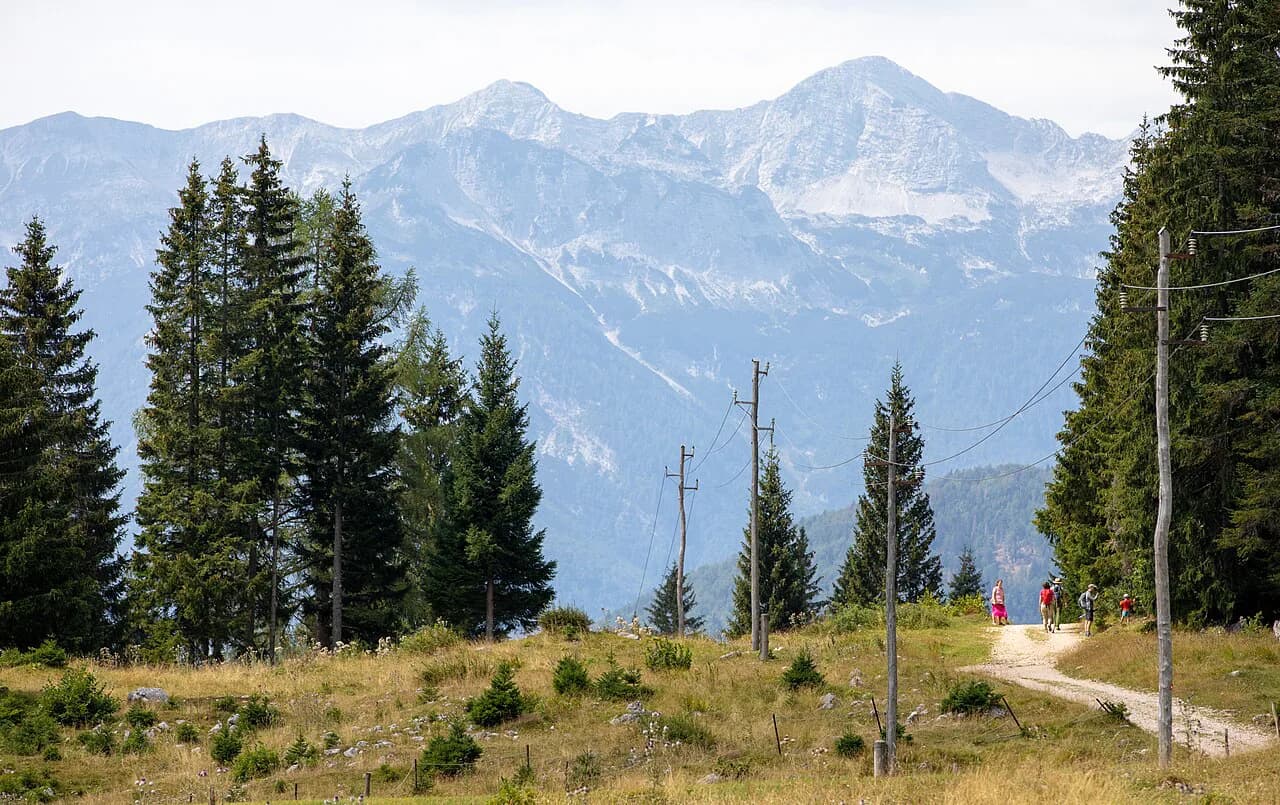
The surrounding peaks frame the views from almost every stop. Viševnik rises to 2,050 meters and Debela peč to 2,014 meters, both above the plateau and visible from the pastures and from Rudno Polje. You do not need to climb them to enjoy Pokljuka; they work as landmarks that tell you which way you are facing on the plateau.
How to reach Pokljuka from Bled
Driving is the practical way up. From Bled, the plateau is about 25 minutes by car, and the road climbs through forest to the Goreljek and Rudno Polje area. A private transfer from Bled is the alternative if you would rather not handle mountain driving or hunt for a space in peak season, and it also solves the problem of reaching trailheads that sit a few kilometers apart.
For an overview of how Pokljuka fits with the rest of the park before you fix your route, look at a Triglav National Park map and mark the plateau access road, Rudno Polje and the Krnica turn for the gorge. That way you can decide whether Pokljuka is your whole day or a morning before you drop down to Lake Bohinj in the afternoon. Public transport to the plateau itself is limited, so most visitors arrive by car or on an organized transfer.
Parking and road rules on the plateau
Park only in designated, marked areas. According to the local guide who documents the plateau's rules, wild parking on grass or at the roadside is met with fines that start at €80, so a casual pull-off can turn an inexpensive day into an expensive one. That same guide reports parking fees in marked areas of €2.00 to €3.00 per hour, but confirm the current rate at the machine or barrier when you arrive rather than budgeting from an old figure.
One road restriction is specific and worth knowing before you set out: according to the local guide, the forest road from Spodnji Goreljek to Praprotnica is closed to private motor vehicles during the peak summer season, from June 15 to October 15, to protect the alpine ecosystem. Do not assume the same rule applies to every forest track on the plateau; check signage at each junction and follow what is posted on the day you drive.
In winter, the access road and parking areas are subject to snow conditions, and in past seasons a Bled Ski Bus has connected Bled with the plateau. Confirm on the day whether a shuttle is running before you rely on it, and keep tire chains or winter tires in mind if you are driving up after snowfall.
Walk 1: the Goreljek peat bog study trail
Start with the Goreljek peat bog study trail, an easy educational walk on wooden footbridges through a high-altitude peat bog. The boardwalk keeps you off the sensitive ground and makes the stop manageable for almost anyone, including families with young children.
This is the gentlest introduction to the plateau and a good first stop after the drive, because it requires no route-finding and sits close to the main access road. Bring a light layer even in midsummer; the plateau sits between 1,100 and 1,400 meters and the forest shade keeps temperatures lower than at Bled.
Walk 2: Planina Zajamniki and its row of shepherd huts
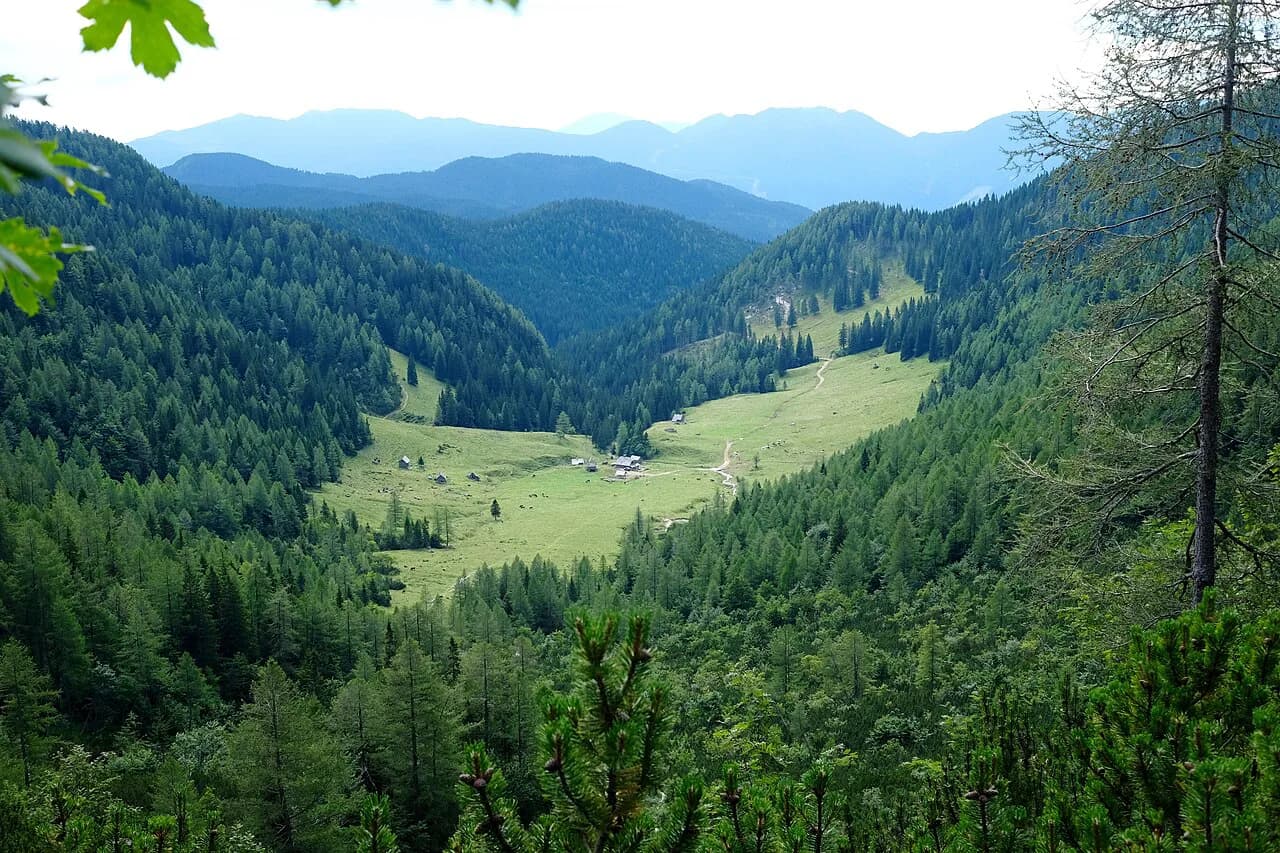
Planina Zajamniki is the postcard stop: a cluster of wooden shepherd huts with larch-shingle roofs set along a single line, with the Julian Alps behind them. The view down the row of huts is the reason most photographers come, and the walk from the parking area is short and undemanding. Give it an hour if you want to walk the pasture and take photos without rushing.
Many of these pastures are still active in summer, and you can buy sour milk, fresh cottage cheese and hard alpine cheese directly from the shepherds at the dairies. Bring cash, since the pasture huts have no card readers. The tourism board also recommends Zajamniki as a winter walk, when the hut cluster under snow makes an easy short outing from the road.
Planina Javornik and Planina Uskovnica: quieter pasture stops
If Zajamniki is busy, head to Planina Javornik, known on some maps as Zajavornik. It is a working pasture with shepherd huts in the middle of the forest, and the local guide recommends it as the quieter alternative to the main stops. In summer you may find fresh cheese sold by the herder, so bring cash and small notes.
Planina Uskovnica is another good add-on, reached by an easy marked path from Rudno Polje, with a mountain hut that stays open around the clock and a small chapel beside it. The hut is a useful shelter if the weather turns, and the pasture gives you open views back across the forest. Combine Javornik and Uskovnica only if you have a full day and a car to link the trailheads.
The sports center at Rudno Polje across the seasons
Rudno Polje is the plateau's sports hub, home to the Sports Centre Triglav Pokljuka. In summer it serves as a trailhead and a base for walkers heading out across the pastures and toward the surrounding peaks. In winter it becomes the center of cross-country skiing on the plateau, with groomed trails running from Rudno Polje toward the Konjščica pasture when snow allows.
The venue is associated with IBU Biathlon World Cup events, and it has offered biathlon shooting sessions with instructors for visitors, but do not plan around either without confirming what is on during your dates. Check the sports center's own schedule before you build a day around a session or an event. Cross-country ski rental has been available at Hotel Center at Rudno Polje in winter.
Pokljuka Gorge and the mossy canyon below the plateau rim
Pokljuka Gorge is a dry limestone canyon at the edge of the plateau above the Radovna Valley, reached by a different access road near Krnica. It is a loop of forest paths, narrow mossy passages, natural rock bridges and short wooden walkways, taking about 1.5 to 2 hours at an easy pace. There is a small parking lot near the trail entrance, and the drive from Bled is ten to fifteen minutes.
Treat the gorge as its own outing rather than tacking it onto a plateau day, because the access road and parking are separate from Goreljek and Zajamniki. The wooden walkways and exposed roots get slippery after rain, so save it for a dry day if you can. It sits in the national park buffer zone, and the walk is short enough to pair with an afternoon back at the lakes.
Winter on Pokljuka: beginner slopes and cross-country trails
Winter turns the plateau into a snow-sports base rather than a pasture walk. Three small ski slopes suit beginners and families: a 300-meter slope at Goreljek beside Hotel Pokljuka, a 350-meter slope with a platter lift and two baby lifts beside Hotel Jelka, and two lifts at the foot of Viševnik at Rudno Polje. This is where to bring children for their first turns, not where to look for steep terrain.
Cross-country skiers get the most from Rudno Polje, where the plateau's trail network is groomed when snow is good, with trails leading toward Konjščica and, in good snow, to Uskovnica and Javornik. Snowshoeing and shorter winter walks work from the same trailheads, with the Zajamniki huts and the path to Uskovnica as the easiest destinations. Sledding hills sit near Hotel Jelka and at the sports center for children.
What a Pokljuka day costs and how long to allow
Budget a half day at minimum and a full day if you want both the pastures and the gorge. A sensible order from Bled is Goreljek first, then Zajamniki, then Rudno Polje for the sports center and Uskovnica, with the gorge saved for a separate morning. Parking fees in marked areas are the main fixed cost, reported at €2.00 to €3.00 per hour by the local guide, and any purchases at the pastures are cash.
If you are continuing into the park after Pokljuka, the Vrata Valley makes a natural next stop, reached from Mojstrana. That pairing works best with your own car, since you will be covering two separate access roads in one day.
Drive up or book a transfer?
Drive if you are comfortable on narrow mountain roads and are willing to park only in marked areas, paying the hourly fee and avoiding roadside pull-offs that carry fines. Book a transfer if you would rather skip the parking hunt in peak season or want to string together stops that sit several kilometers apart. Either way, fix your order of stops before you leave Bled, because the plateau rewards a plan more than it rewards improvisation.
Start with the Goreljek boardwalk, add Zajamniki and a pasture stop, and keep the gorge for a separate dry day. Check the current parking rate and any road closures posted at the junctions, and bring cash for the dairies.
Explore more Triglav National Park guides
Frequently Asked Questions
Do I need a car to visit Pokljuka?
A car or a private transfer is the practical way to reach the plateau, since the stops at Goreljek, Zajamniki and Rudno Polje sit several kilometers apart on forest roads. Organized transfers from Bled are available and solve both the driving and the parking problem.
Can I visit Pokljuka in winter?
Yes. In winter the plateau hosts beginner ski slopes at Goreljek and near Hotel Jelka, cross-country trails from Rudno Polje, and easy snowshoe and sledding areas. Check snow conditions and whether any shuttle is running before you drive up.
How long does the Goreljek boardwalk take?
The Goreljek peat bog study trail is an easy walk on wooden footbridges, and most visitors treat it as a short stop of well under an hour while working through the plateau's other stops. It is the gentlest stop on the plateau and a good first one after the drive from Bled.
Sources
Notes for your Slovenia trip
Optional updates to our Slovenia place guides.
You might also like
Continue reading
More guides you'll find useful