Castles in Slovenia: Which Ones to Visit and How to Plan Them
Castles in Slovenia range from Bled Castle above the lake to Predjama, the world's largest cave castle. Here's what each is like and how to plan a visit.
On this page
For a first trip, plan around two castles: Predjama Castle near Postojna, a medieval fortress set into a 123-meter cliff, and Bled Castle above Lake Bled. Both sit on routes most visitors already drive, so neither costs you a separate day. Everything else in this guide is a matter of region and taste.
Slovenia's castle stock is more varied than the postcard image suggests. You get cave castles, town fortresses with museums and towers, furnished riverside manors, and remote ruins that reward a car and patience. This guide groups them by region and explains what each visit actually involves so you can choose one anchor for a day rather than collecting stops.
What to expect from castles in Slovenia
Treat castles here as four different kinds of sight rather than one category. Cave castles and cliff-top fortresses are about position and drama; town castles pair a tower or museum with a walkable old center; manor houses at Snežnik and Otočec are about furnished rooms and parkland; and remote ruins are about the drive and the view. Knowing which kind you are booking saves a wasted afternoon.
Visitor numbers get cited loosely. A travel blog puts the national total above 500, which is worth knowing only because it explains why castle signs appear on almost every road. Treat the figure as a rough count rather than an official statistic, and choose by region and access rather than by tally.
Tour format varies more than visitors expect. At Predjama, a guided tour runs through a phone app included with the ticket, and you can rent an audio guide at the castle ticket office for EUR 2.90 instead. Elsewhere you may walk unescorted through rooms or join a set tour, so check the specific castle's visitor information before you build a schedule around it.
Predjama Castle: the cave castle in a 123-meter cliff
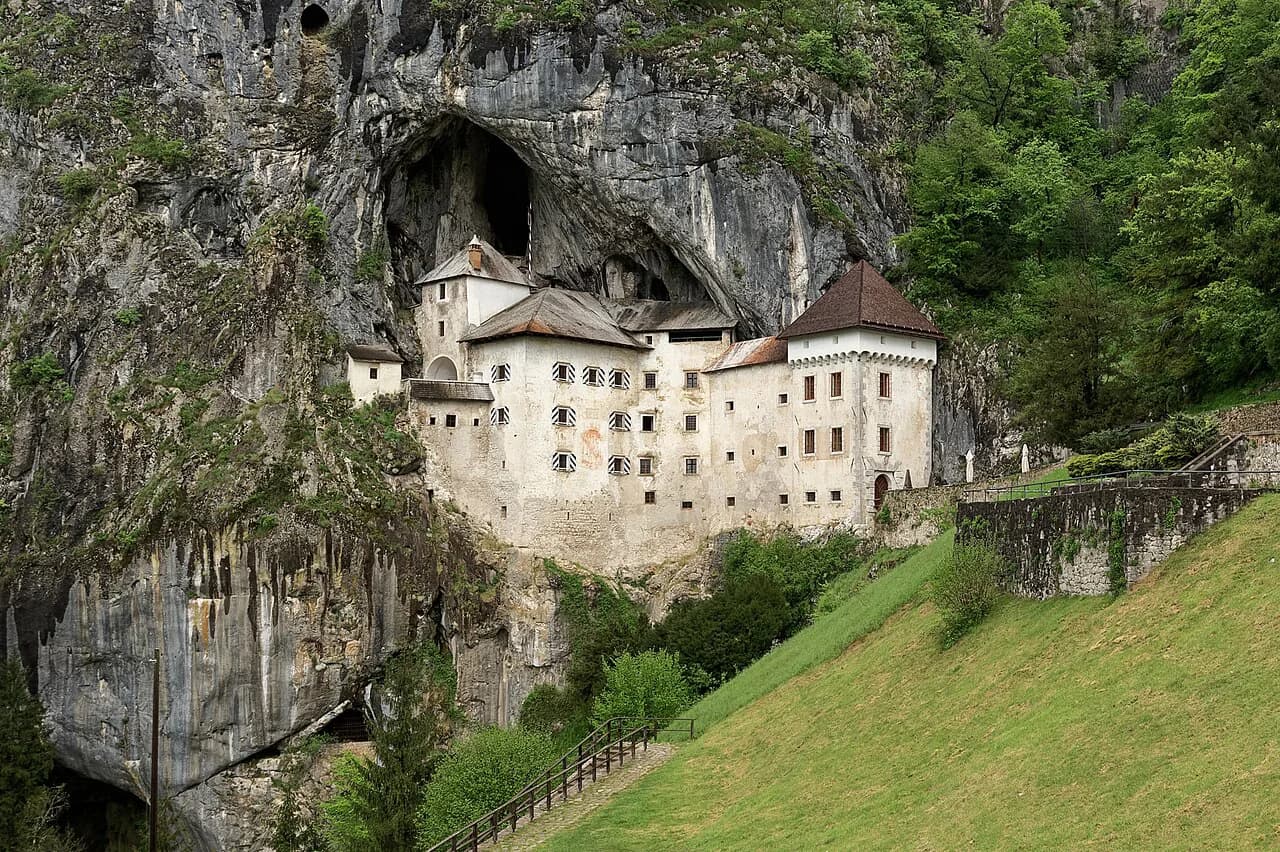
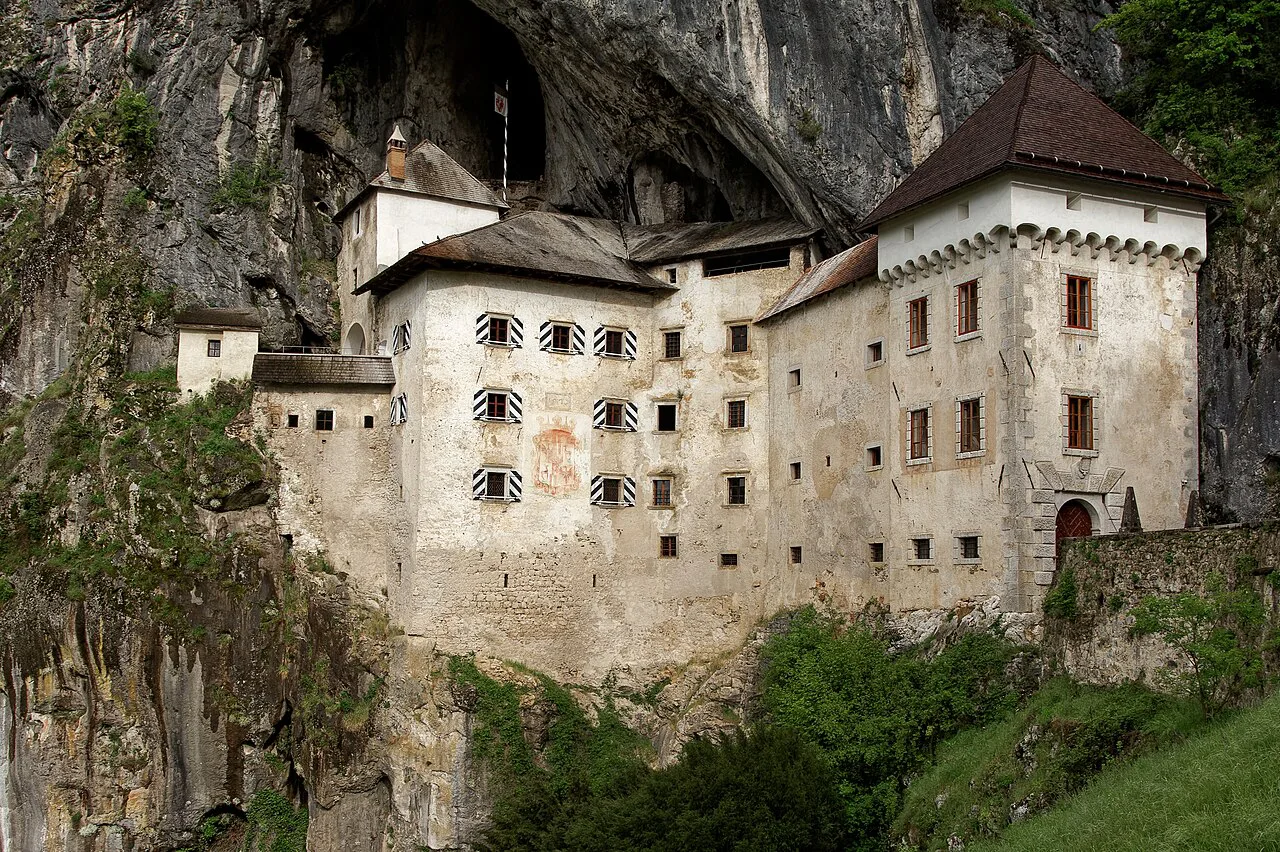
Predjama Castle is the one castle in Slovenia most travelers should not skip. It sits wedged into a 123-meter rock wall about nine kilometers from Postojna, with the castle's rooms built directly against the cliff and a cave network underneath. The official operator describes it as the world's largest cave castle, a Guinness World Records listing, and that claim is the reason to go.
Inside, the route passes the armor, the chapel, the kitchen and the torture chamber, then climbs to an attic holding a collection of plate armor and medieval weapons with a view over the valley below. Allow roughly an hour for the castle itself; the appeal is the setting and the collection rather than grand furnished state rooms.
The Erazem of Predjama story is the thread the castle hangs on. The rebel knight held out against an imperial siege for more than a year, supplied through secret tunnels behind the castle, and died according to the tale while in his bathroom after a servant betrayed him. It is legend as the operator tells it, and it makes the tunnels and the cliff make sense.
The castle is open to visitors every day, including holidays and bad weather. That makes it a sensible anchor for a day when the forecast turns, unlike viewpoints and lake activities that depend on conditions. Check tour times on the operator's site before you set out, since the app-based tour still runs to a schedule.
Postojna Cave and Predjama Castle as one day
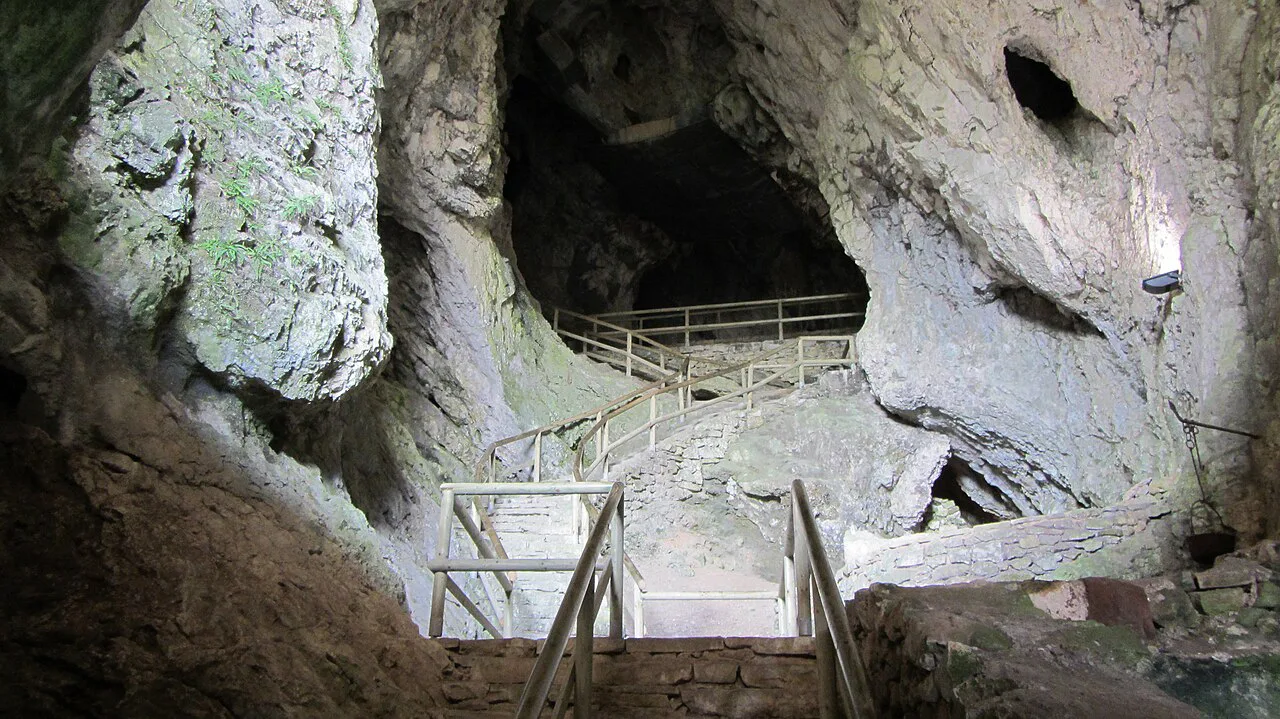
The castle and Postojna Cave sit a few kilometers apart and work best as a single day, with the castle first and the cave in the afternoon. Postojna Cave Park, the operator that runs both, recommends exactly that order and sells combination packages that cover the pair. Booking online in advance is the practical move in summer, when timed cave entries fill.
The cave beneath Predjama Castle is a separate visit from the castle and has its own season. It is open only from June to August because the bats hibernate in the cave the rest of the year, while the castle above stays open year-round. If the cave under the castle is the reason for your trip, plan around that summer window.
In high season a shuttle connects Postojna Cave with the castle, and the ride takes up to 20 minutes. It is a high-season service, so do not build an off-season plan around it; outside those months you drive or arrange your own transfer between the two. That single detail decides whether you need a car for this day.
Postojna Cave itself is a 24-kilometer system entered by an underground train, and it has drawn visitors since the 19th century. The cave visit takes longer than the castle, so wear shoes that handle uneven ground. It is the reason most people pair the two sites rather than seeing Predjama alone.
Bled Castle above Lake Bled
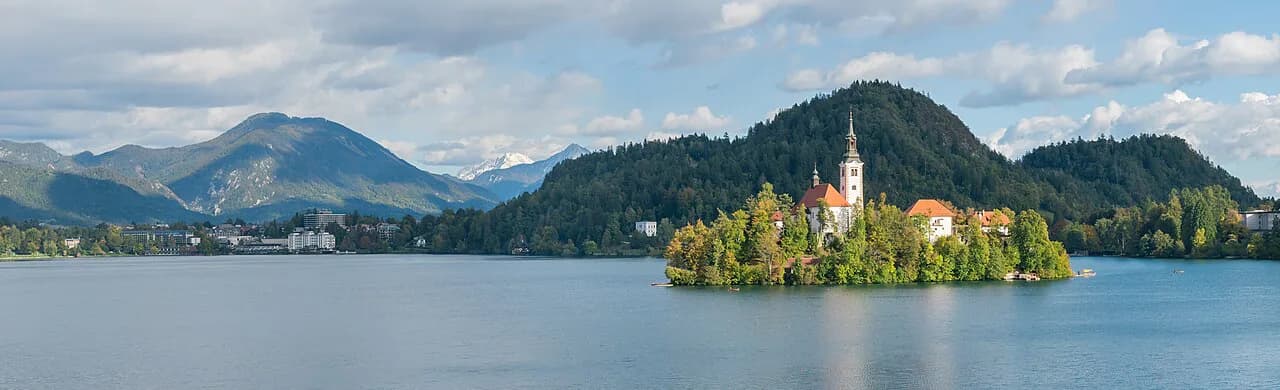
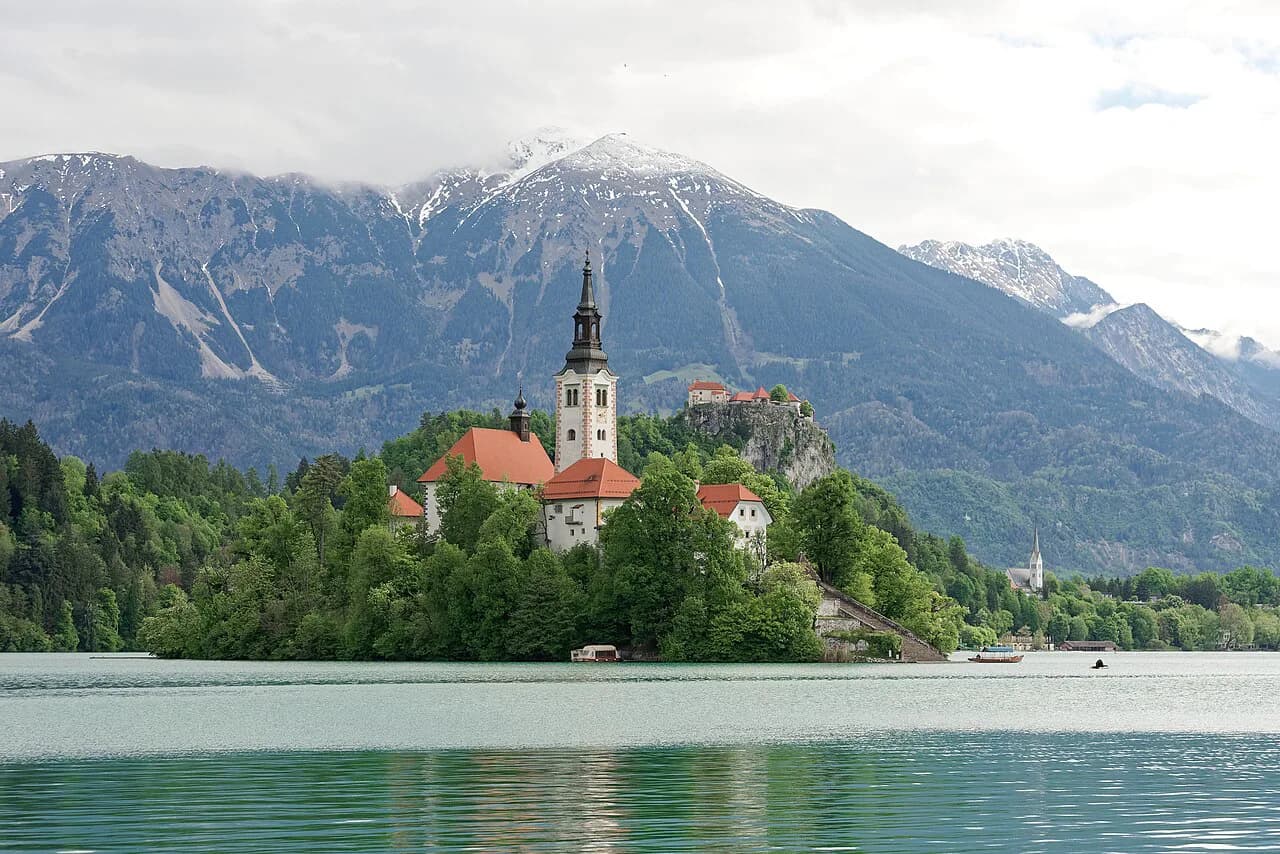
Bled Castle stands on a cliff above Lake Bled. It is the oldest castle in Slovenian territory, first mentioned in 1011, and today holds a museum, a printing works, a wine cellar and a Gothic chapel, so it rewards more time than a photo stop. The view over the lake and its island church is the reason most visitors climb up. If the hilltop setting is what draws you, the hilltop churches in Slovenia offer the same position-and-view appeal without the walls.
The castle fits naturally into a Bled day, but it is up a steep approach rather than in the village center. Allow an hour to ninety minutes for the courtyards, museum and printing works, and go early in summer when the parking areas and the castle fill. Bled is the one castle in this guide where crowds, not opening hours, set your schedule.
Combine the castle with the lake rather than treating them as two outings. A morning at the castle, a walk along the shore and a boat trip to the island fill a comfortable day without a car once you are in Bled. Travelers moving on toward Bohinj or Kranjska Gora can leave in the late afternoon.
Ljubljana Castle and its viewing tower
Ljubljana Castle sits above the old center and works as a city stop rather than a destination castle. The tourism board bills it as the iconic guardian of the capital, and it pairs naturally with a walk through the old town below. It suits a half-day if the capital is already on your route.
If your Slovenia itinerary is built around the lakes, the coast or the east, Ljubljana Castle is the easiest castle to cut. Ljubljana city coverage sits outside this guide, but the castle's position above the center makes it a low-effort add-on if you already have a capital day. Skip it rather than squeeze it into a transfer.
Ptuj Castle and Celje's Old Castle on the eastern side
Ptuj Castle guards the old town of Ptuj in the Thermal Pannonian east, and the Old Castle of Celje anchors a separate stop in the same region. Both make sense if your route already runs east toward Maribor, Ptuj or the wine country around them. Do not treat either as a day trip from Bled.
The Old Castle of Celje is the more ruin-like experience of the two, spread across a hilltop with walls and views rather than furnished rooms. Pair it with Celje's town center and allow a half-day. Ptuj Castle fits better with the old town below it, where the streets are the draw as much as the building.
Travelers with eastern Slovenia on the plan can add furnished interiors nearby. Rajhenburg castle and Sevnica castle both give a different, more domestic picture of castle life than the fortresses at Ptuj and Celje.
Snežnik Castle and Otočec Castle: manors for interiors
Snežnik Castle in the Dolenjska south gives an authentic glimpse of 19th-century aristocratic life, which is a different proposition from a bare fortress. You come for furnished rooms and period detail rather than ramparts and towers. It suits travelers who want to see how a castle was actually lived in.
Otočec Castle stands on a river island and pairs easily with the Krka valley roads south of Novo mesto. Combine the two manors in one slow day through Dolenjska, with a stop in Novo mesto between them. Both are stops of an hour or two, not half-day commitments.
The Dolenjska landscape holds more castle stops than most visitors realize. Travelers with a car can link the Dolenjska manors with Turjak castle and other stops on a loop back toward Ljubljana.
Štanjel Castle in the Karst
Štanjel Castle sits in the Karst village of Štanjel, close enough to the coast and the Škocjan Caves to slot into a Karst day. The tourism board frames it around culture and cuisine, which fits the village's position among the Karst's stone settlements. It rewards travelers who want a castle with a village attached rather than an isolated ruin.
Build a Karst day with Štanjel at its center rather than as a detour. The Škocjan Caves and the Lipica stud farm lie in the same limestone country, and combining two of the three makes a full day without excessive driving. The castle itself is a short stop; the village and the surrounding landscape carry the rest.
Remote castles and what a road trip actually costs you
Beyond the headline sites, Slovenia has castles that reward a car and a flexible day. Rihemberk Castle (Grad Rihemberk) Above Branik sits in the Vipava valley area, and Bogenšperk Castle holds the legacy of Janez Vajkard Valvasor, the 17th-century polymath. Neither fits neatly into a public transport schedule.
Farther east, Grad Castle in Goričko, Slovenia's largest castle complex according to the tourism board, sits in the far northeast near the Hungarian and Austrian borders. It is a full day from Ljubljana by car and only makes sense as part of a Pomurje route. Travelers with limited days should treat it as a reason to return.
Figure the driving, not the castle count. A day that pairs Bled with Predjama means crossing the country; a day that pairs Predjama with Štanjel works because both sit in the Karst. Build each day around one region, and let the castles within it fill the hours.
Getting to the castles without a car
The castles most accessible without a car are Bled Castle and Ljubljana Castle, both in towns with rail and bus connections and walkable centers. For Predjama, confirm current transport options from Postojna, including the high-season shuttle, before you rely on them. Ptuj and Celje sit on rail lines in the east, which makes them workable for travelers staying overnight.
A car becomes effectively required for Snežnik, Otočec, Štanjel and the remote eastern castles, where services are sparse and the stops sit off main routes. A rental picked up in Ljubljana covers the Karst, Dolenjska and the lakes in one loop. For travelers without one, pick two towns with rail access and build around them.
Slovenian place names on road signs and timetables use the local forms, so match them before you set out. A stop listed as Grad Rihemberk above Branik will not show up if you search only for Branik, and the same applies across the country. Diacritics matter less than the base name.
Which castles to cut when your trip has limited days
For a trip of five days or fewer, keep Predjama and Bled and cut everything else. Those two cover the cave castle and the cliff-top castle, arguably the two experiences that define Slovenian castles. Everything else is a variation on manors, town fortresses and ruins.
For a longer trip, add one eastern castle — Ptuj or Celje — and one Dolenjska manor, and stop there. Štanjel earns a slot if your route already runs through the Karst toward the coast. Remote castles like Rihemberk and other out-of-the-way stops belong to a second trip or a dedicated road-trip loop, not a first one.
If you are based at Lake Bled or Bohinj, resist the urge to reach Predjama in a day trip. The drive crosses the country and leaves no time for the cave, which is half the point. Book an overnight in Postojna instead, or drop the castle until a later trip.
Build your castle day around one region
Choose Predjama if you want one castle that justifies the trip, and build the day around Postojna Cave with the castle first. Choose Bled Castle if the lake is already on your route, and treat the visit as part of a Bled day rather than a separate stop. Those two decisions cover most trips.
Add a region once the anchor is set: Ptuj or Celje for the east, Snežnik and Otočec for Dolenjska, Štanjel for the Karst. Travelers who want a quieter castle with a village attached should look at Dobrovo Castle in Goriška Brda or Grad Castle in Prekmurje, both of which reward a car and an unhurried loop.
Explore more Slovenia guides
Frequently Asked Questions
Is Predjama Castle worth visiting without Postojna Cave?
Yes. The castle is open every day, including holidays and bad weather, and the tour covers the armor, chapel, kitchen, torture chamber and the attic collection of plate armor and medieval weapons. Postojna Cave adds an underground train and a 24-kilometer cave system, but the castle stands on its own as a visit.
Can you visit Predjama Castle without a car?
In high season the Postojna Cave Park shuttle connects Postojna Cave with the castle, and the ride takes up to 20 minutes. Outside that season the shuttle does not run, and the castle is a short drive from Postojna rather than a walk. Confirm current transport options from Postojna before a car-free visit.
What is the best castle in Slovenia for a first visit?
Predjama Castle near Postojna, because its position in a 123-meter cliff and the cave network behind it make it unlike anything else in the country. Choose Bled Castle instead if your route runs through the Julian Alps and the lake is already on your plan.
Sources
- Slovenia's fairytale castles and manors | I feel Slovenia
- The Castles of Slovenia — eCKsplorer
- Predjama Castle » Postojna Cave Park - Welcome to the official website Predjama Castle
- Go on a Virtual Tour of the most incredible Slovenian Castles - Ecobnb
- Predjama Caves and Castle: two legendary masterpieces carved from rock - Barceló Experiences
Notes for your Slovenia trip
Optional updates to our Slovenia place guides.
You might also like
Continue reading
More guides you'll find useful