Slovenian Alps: Ranges, Lakes, Mountain Roads and Where to Base
Slovenian Alps explained: the Julian Alps, Kamnik-Savinja Alps and Karavanke, plus the lakes, valleys and pass roads you can reach without climbing.
On this page
The Slovenian Alps are three separate ranges in the north and northwest of the country: the Julian Alps, the Kamnik-Savinja Alps and the Karavanke, with the forested Pohorje plateau usually grouped with them. Most of the Julian Alps sit inside Triglav National Park, which covers 880 square kilometers, and Triglav itself rises to 2,864 meters. What makes the range easy to visit without a summit day is the layer of lakes, valley floors, pass roads and cable cars at its edges. This guide covers those, not the climbing routes.
The pattern to plan around is simple: a lake shoreline or a valley floor takes a half day, a pass road or a cable car takes a half day of its own, and a pair of them together fills a full day. The Alps begin roughly an hour from Ljubljana by road, so a base at Bled, Bohinj, Kranjska Gora or in the Soča valley puts different pieces within reach. Choose the valley first and the sights second.
What counts as the Slovenian Alps: three ranges and a plateau
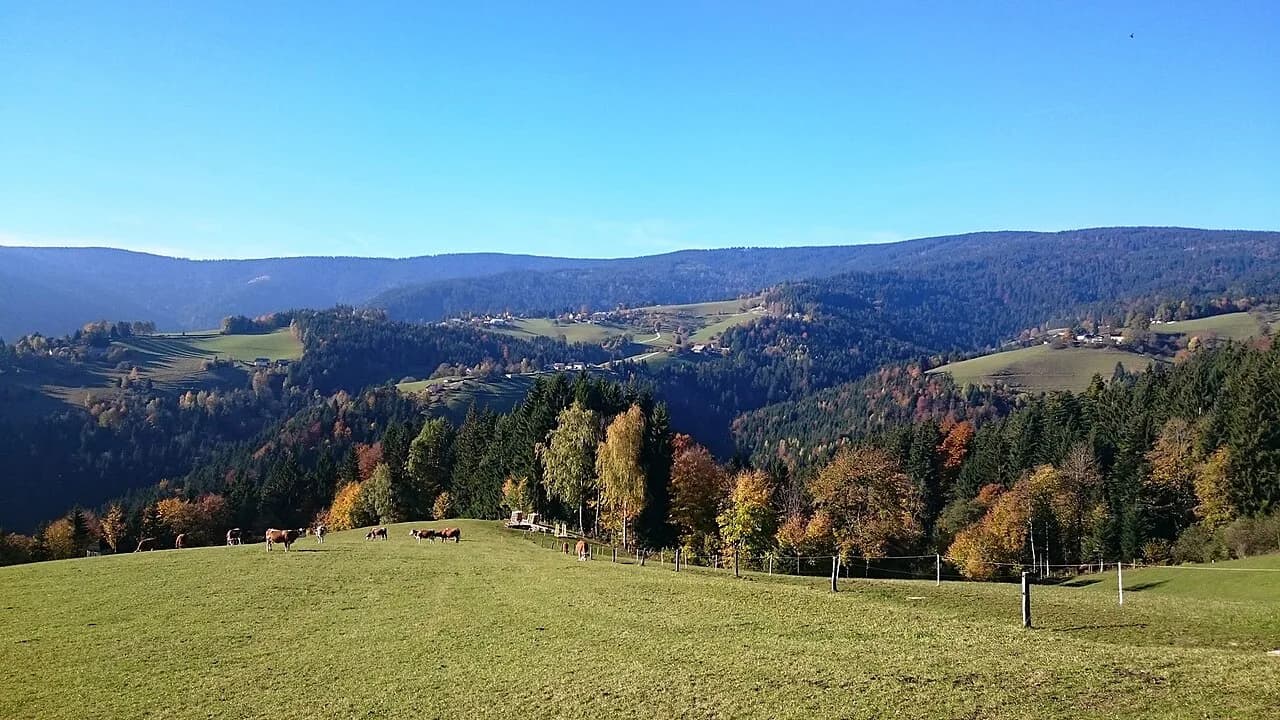
Slovenia has three distinct alpine ranges: the Julian Alps in the northwest, with the Kamnik-Savinja Alps and the Karavanke in the north. The forested Pohorje plateau in the northeast is usually considered part of the Alps as well, although its peaks only reach around 1,500 meters. Treating the Alps as a single destination leads to long drives; treating them as separate ranges keeps each day short.
The Julian Alps are the range most visitors mean. They extend across Italian and Slovenian territory and are often divided into the western Julian Alps, which rise between the Fella and upper Isonzo rivers, and the eastern, Slovenian side. The western peaks include Mangart at 2,668 meters, Jof Fuart, Jof di Montasio and Canin, while the eastern Julian Alps are the Slovenian ones and hold the national park.
Altitude works differently here than in the central Alps. The valley floors sit at only 600 to 800 meters, yet the peaks above them pass 2,500 meters, so the height difference between a parking lot and a summit can reach about 2,000 meters. That is why a short drive gains so much scenery, and why the weather at the top rarely matches the valley.
Where the Julian Alps sit: the northwest, Triglav National Park and the Italian border
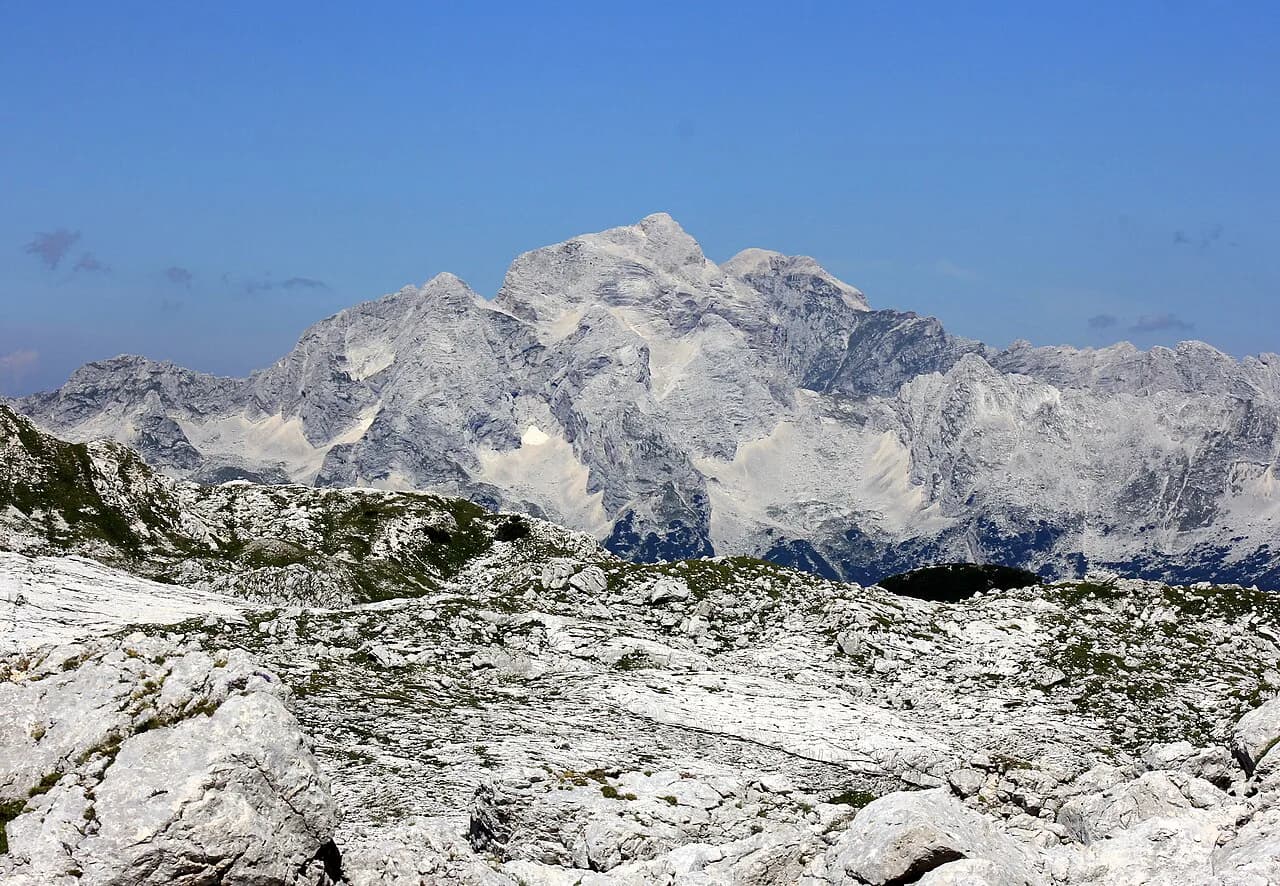
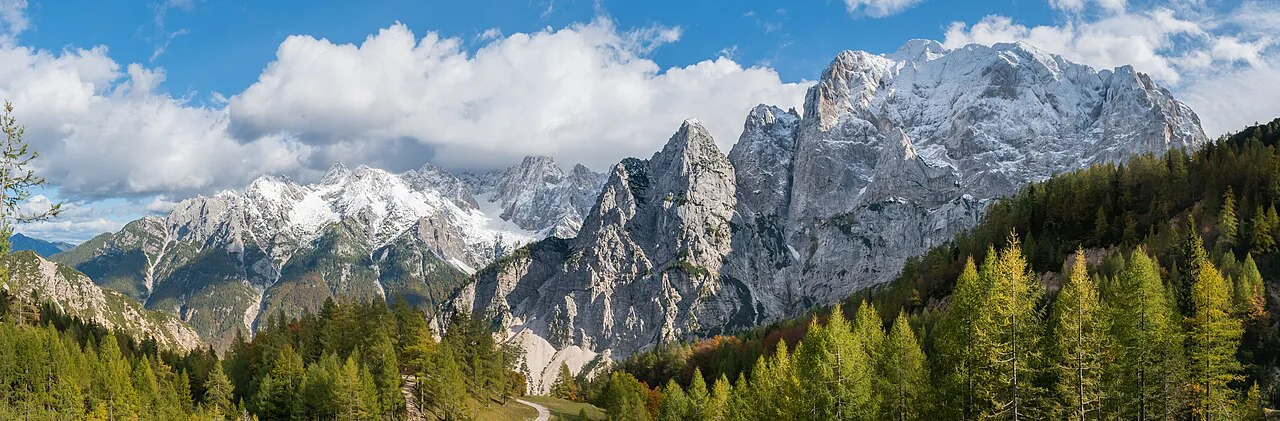
The Julian Alps occupy Slovenia's northwest corner and continue across the border into Italy's Friuli region. Triglav National Park covers most of the Slovenian Julian Alps, and Triglav, the country's highest mountain at 2,864 meters, stands inside it. The park holds the valley lakes, the Komna plateau and the Krnsko jezero area, all of which appear on maps as targets for a walk rather than a climb.
The park's valleys are the practical part for a non-climbing visitor. Lake Bohinj and the surrounding meadows sit below Triglav, and the slopes above them carry mountain huts that hikers use on multi-day routes. For a driver, the same valleys give trailheads, viewpoints and lake access without committing to a hut night.
The border position also shapes the scenery. The Julian Alps reach their southeastern limit in Slovenia, where the limestone peaks meet the Dinaric mountains running down through the Balkans. That transition shows in the mix of high rock, forest and karst you see on a single drive.
The easy-access lake valleys: Lake Bled and Lake Bohinj
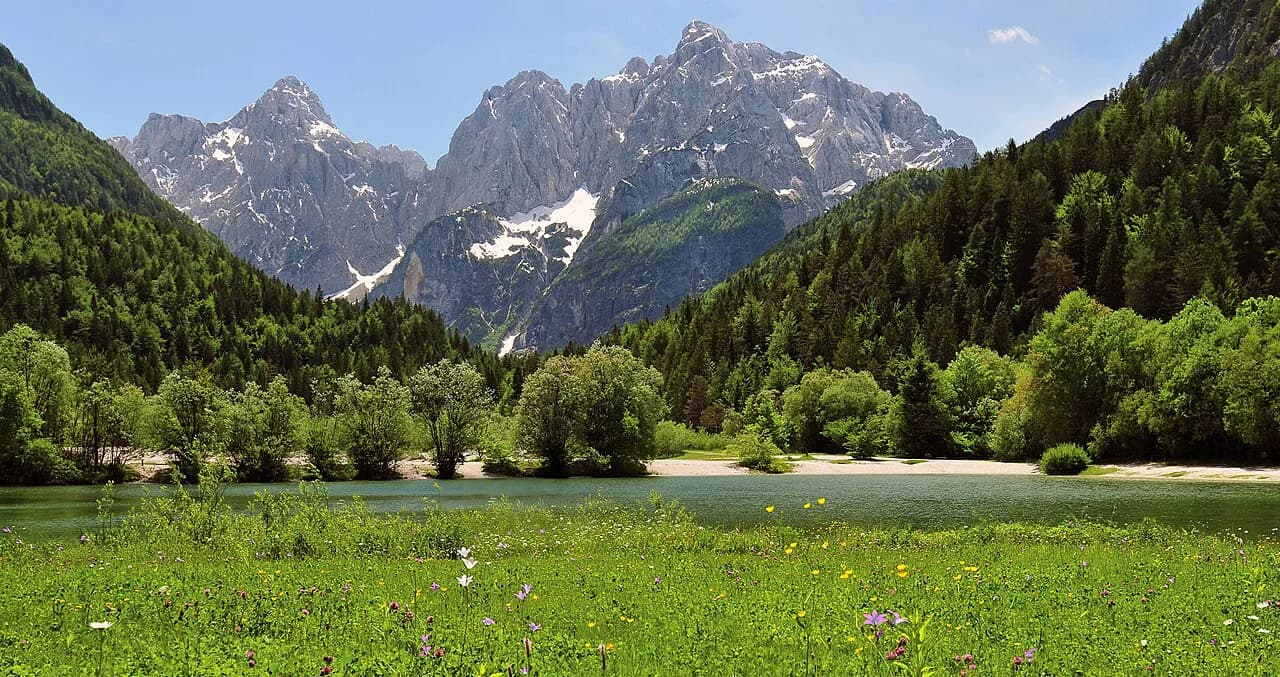
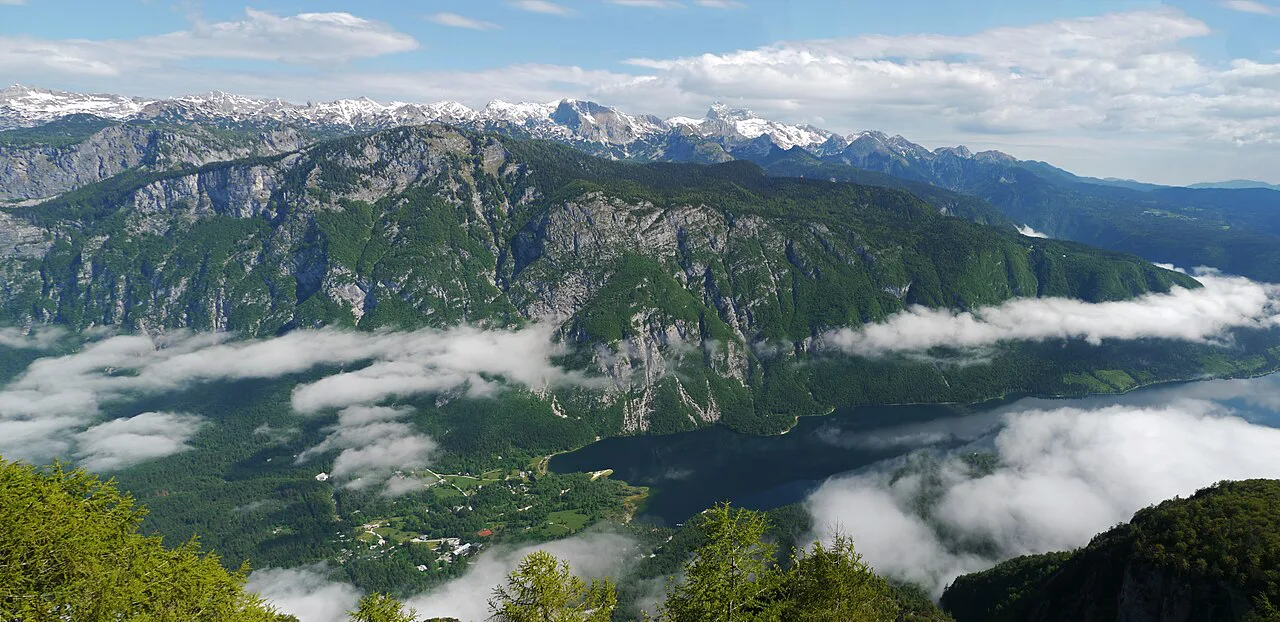
Lake Bled and Lake Bohinj sit at the foot of the Julian Alps and are the two places most travelers use as their first alpine stop. Bled has the island, the cliff-top castle and a compact shoreline, while Bohinj is the quieter lake inside the national park. Both work as a half day of shoreline walking, and either can fill a full day if you add a cable car or a drive up to a pass.
Bohinj is the better base if your priority is the national park itself, since the lake and the surrounding meadows lie below Triglav. Bled is the stronger base if you want more services and a shorter run to the Vršič road. Bled works as a base for the eastern Julian Alps, and the surrounding area has more than a single day of shoreline and castle visits if you let the weather set the order.
The two lakes are linked by a short drive, so a single base can cover both. Plan Bled early in the day and Bohinj for the afternoon, or the reverse, and keep one day in reserve in case afternoon storms build over the peaks in June.
Mountain pass roads you can drive: Vršič pass and Mangartsko sedlo
Two high roads give drivers the alpine world above the treeline without a hike: the Vršič pass and Mangartsko sedlo, the saddle below Mt. Mangart. Access by road on both is possible in late spring and summer, so neither is a winter drive. Rain or early snow can close them again, so treat the drive as a fair-weather plan and confirm conditions before you set out.
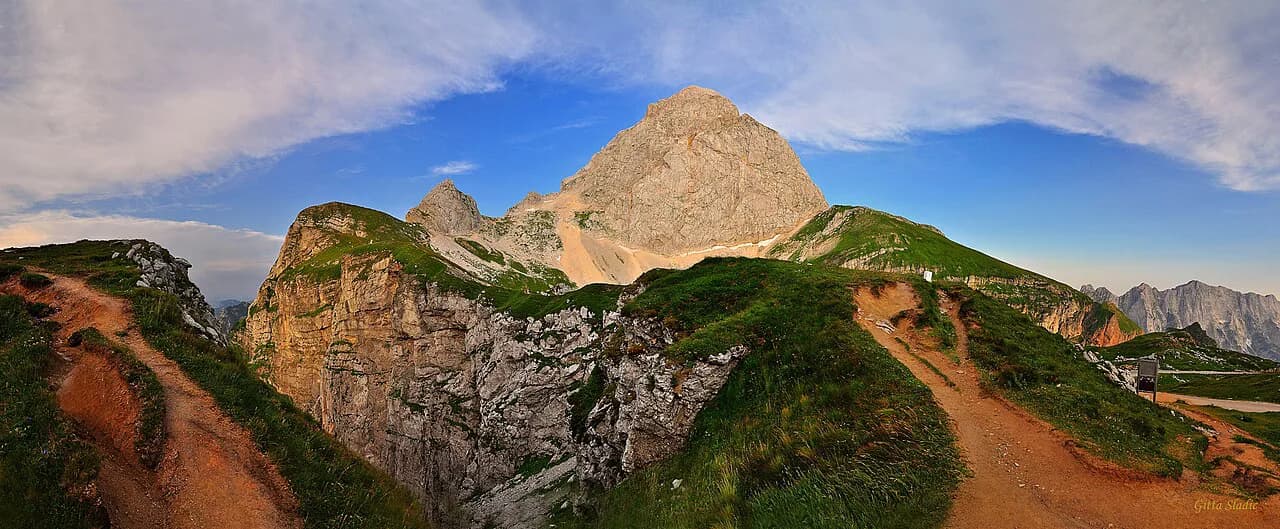
The Mangart road deserves its own half day. The saddle sits above the Soča and Koritnica valleys, and the road climbs from a forested approach into open rock and grass. Access by road to the Mangart saddle is possible in late spring and summer. The Mangart Saddle guide is the place to read before you drive it.
The Vršič pass is one of the two high roads that give drivers the alpine world above the treeline without a hike. Access by road to the Vršič pass is possible in late spring and summer, so it is not a winter drive. Rain or early snow can close it again, so treat the drive as a fair-weather plan and confirm conditions before you set out.
A pass day pairs well with a valley day. Drive up in the morning, walk a short stretch of the saddle or a viewpoint, and drop into the next valley for lunch. Keep the car fueled and the tank topped up before the climb, since services thin out above the valley towns.
Cable cars that do the climbing for you
Several high areas in the Slovenian Alps have cable car access: the Kanin range, Mount Vogel, Krvavec and Velika Planina. Vogel rises above Lake Bohinj. Krvavec sits above Cerklje na Gorenjskem and is an easy run from the Ljubljana side, while Velika Planina is a high pasture plateau in the Kamnik area.
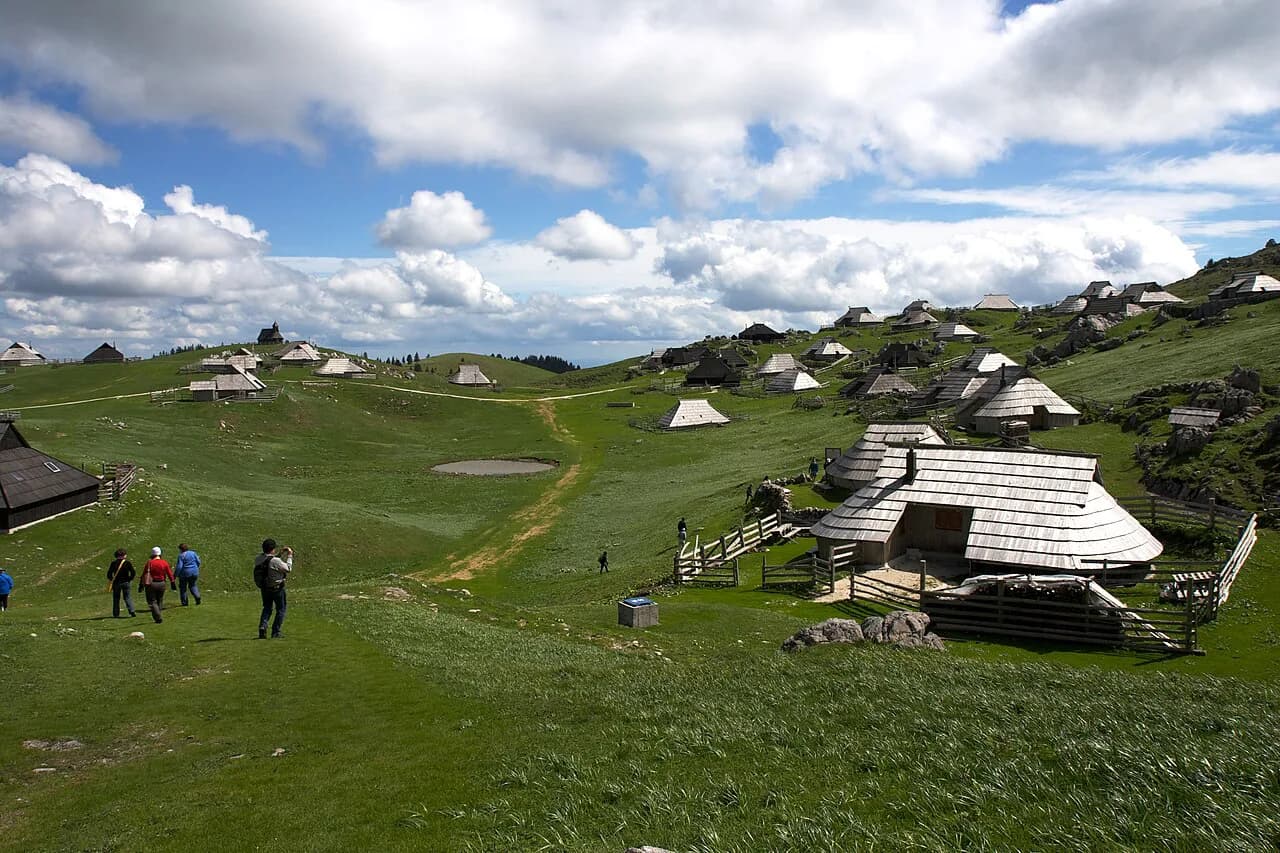
Velika Planina is the one that feels most unlike a ski hill: a high pasture with a settlement of shepherds' huts on open grass. The plateau sits above the Kamniška Bistrica valley and can be visited as a half day from Ljubljana or Kamnik, with the cable car removing most of the climb.
For a short mountain fix near the capital, Krvavec is the easiest cable car to slot into a day. Its guide covers the gondola, the upper station and the walking on top, which is enough on a clear morning without committing to a full alpine day.
Treat any cable car as a weather-dependent plan. The upper stations sit in open terrain where cloud can close the view in minutes, so ride up early and come down when the cloud builds. Fares and operating times change by season, so confirm them with the operator on the day.
The Soča valley and Bovec: alpine scenery without a summit
The Soča valley gives you the alpine scenery of the Julian Alps without a summit day. Bovec sits at the valley's northern end, with the Kanin cable car above the town and the Vršič road arriving from Kranjska Gora. The river runs clear and turquoise through the valley floor, and the surrounding slopes rise straight from the road.
Bovec is the practical base for the valley. From town, the Mangart road and the Vršič road are both within a short drive, so a two-night stay covers the two passes and the river. That concentration is why Bovec makes a better second base than an add-on from Bled.
The valley is also where the Julian Alps show their scale. The height difference between the valley floor and the peaks around Bovec is close to 2,000 meters, and you see that wall from the road. Allow a full day for the valley and a second for a pass or the cable car.
Valleys built for walking: Logarska dolina and the eastern ranges
Logarska dolina is a valley floor rather than a peak, which makes it the right eastern counterpart to the lake valleys. The valley sits below the Kamnik-Savinja Alps and works as a half day of easy walking with a long cliff wall above. It is the place to go when you want the alpine backdrop without a cable car or a pass road.
Logarska dolina can be paired with Velika Planina in a single eastern loop, but not comfortably in one day. Keep them on separate days and use the Kamnik side as the overnight if you want both. The Logar Valley guide covers the valley's layout and the walking from the road.
The foothill plateaus round out the eastern side. Golte sits above Mozirje and is reached by gondola, which makes it a half-day stop for travelers heading north from the Savinja valley. The Golte guide explains the gondola and the plateau walk itself.
Rogla is the southern end of that group, on the Pohorje plateau above the Dravinja valley. It is a low, forested alternative to the Julian Alps and works for a quiet day when the high peaks are in cloud. The Rogla guide covers the plateau and what you can do there.
Wildlife and flowers above the treeline
The world above the treeline is the most rewarding habitat in the Alps and the one most visitors miss. Alpine ibex, chamois and marmots live in the open rock and grass, and the cliffs hold Alpine chough, raven and, on some faces, wallcreeper. Both marmots and ibex were reintroduced to the Slovenian Alps in the 20th century rather than surviving from the Ice Age.
The plant list is short and memorable. Edelweiss and Zois' bellflower grow in the rock and scree, and the larch and mountain pine belt near the treeline is where the habitat changes. Look for these along any pass road or cable car summit, since both reach the right altitude in a few minutes.
The valleys hold the same wildlife at lower altitude. Chamois range down into forest, and the rock faces along the Soča valley carry cliff-nesting birds. Keep your distance from wildlife and never feed it, since habituation is the main threat to animals along busy roads.
How long the Slovenian Alps need
Budget half a day per pass road or cable car, and a full day for a lake plus one of them. A lake shoreline on its own takes two to three hours, and the two lakes together take most of a day with the drive between them. On that math, a three-day alpine trip covers one lake base, one pass and one cable car without rushing.
Getting around without a car versus driving the passes
A car gives you the pass roads and the valleys, but a car-free trip can still work around the lakes and the main valleys. Buses link the lake towns and the larger valley towns, and the cable cars run from their valley stations. Without a car, build the trip around Bled, Bohinj and the Soča valley towns, and plan the pass roads around transfers rather than self-driving.
If you drive, remember that the two pass roads are seasonal and the surface is alpine. Drive up in the morning, keep to the marked pull-offs, and avoid the descent in failing light. Summer is the busy season at the lakes, so arrive early rather than counting on a space.
If you would rather not deal with a rental at all, use the trains and buses to reach Bled, Bohinj or Bovec and then join a guided day for the passes. Check the operator's current schedule directly, since seasonal runs change between years.
Where to base: Bled, Bohinj, Kranjska Gora and the Soča valley
Bled is the best base for a first alpine trip: a lake, a castle, a short run to Bohinj and road access to the Vršič pass. It also has the most services of the four. Choose Bled if you want the lake on your doorstep and the eastern Julian Alps within an hour.
Bohinj is quieter and sits inside the national park, so the meadows and the Vogel cable car are close. It suits travelers who want the park itself rather than a town. Kranjska Gora is the base for the Vršič road and the upper Sava valley, and it puts both the pass and the Julian Alps near the door.
The Soča valley around Bovec is the pick for the two pass roads in one stay. It is the most scenic base and the least built-up, and it works for a two- or three-night block after the lakes. If you are dividing a week, give Bled or Bohinj three nights and Bovec two.
Summer crowds, parking limits and afternoon storms
Summer is the busy season at the lakes, so arrive early or use the bus between the two lakes. The same crowds push toward the cable car stations, so ride up in the morning before the queue builds.
June is the month to watch for afternoon storms in the high mountains. The standard advice from the Alps applies: start early, be off exposed ground by mid-afternoon, and carry a shell even on a clear morning. If the cloud is already building at noon, choose a valley walk instead of a pass.
The passes and the high saddles are the first places to feel a change in the weather. Check the forecast the night before, keep the plan flexible, and use a valley or a lake for the day the cloud does not lift.
Which valley should you book first?
Book Bled or Bohinj first unless the Soča valley is your priority. A lake base gives you the easiest introduction: a shoreline, a castle or island, the Vogel or Krvavec cable car, and one clear day for a pass. Then add two nights at Bovec for the Soča valley, the Mangart road and the Kanin cable car.
The rest of the range, Logarska dolina, Velika Planina, Golte and Rogla, fits an eastern loop from Ljubljana and does not need to be on the same trip. Pick one eastern valley rather than trying to string all four together. That gives a week that covers the alpine scenery without spending it in the car.
Explore more Slovenian Alps guides
Frequently Asked Questions
Do the Alps pass through Slovenia?
Yes. Three distinct alpine ranges lie in Slovenia: the Julian Alps in the northwest, with the Kamnik-Savinja Alps and the Karavanke in the north, and the forested Pohorje plateau in the northeast usually grouped with them. Most of the Julian Alps are protected inside Triglav National Park, and Mount Triglav rises to 2,864 meters.
How do the western and eastern Julian Alps differ?
The Julian Alps extend into both Italian and Slovenian territory and are divided into western and eastern groups. The Italian, western peaks rise between the Fella and upper Isonzo rivers and are steeper and harder to reach; the western summits include Mangart (2,668 m), Jof Fuart, Jof di Montasio and Canin. The eastern Julian Alps are the Slovenian side and hold Triglav National Park.
Can you reach the high Alps without hiking?
Yes. Two pass roads, the Vršič pass and the Mangart saddle road, give drivers access above the treeline in late spring and summer. The Kanin range, Mount Vogel, Mount Krvavec and Velika Planina also have all-year-round cable car access.
Sources
Notes for your Slovenia trip
Optional updates to our Slovenia place guides.
You might also like
Continue reading
More guides you'll find useful