Vršič Pass: Driving the 50 Hairpins from Kranjska Gora
Plan a drive over Vršič Pass, the 1,611 m road between Kranjska Gora and Bovec: 50 hairpins, the Russian Chapel, summit huts and descent stops.
On this page
Vršič Pass is Slovenia's highest road crossing, at 1,611 m, and you drive it rather than hike it: 24 km of mountain road with 50 hairpin turns link Kranjska Gora with Bovec and the Trenta valley. Plan it as a half-day scenic drive with a clear midpoint at the summit huts, not as a quick shortcut.
This guide follows the road in driving order from the Kranjska Gora end, names the pull-offs worth stopping for, and explains the weather and vehicle cautions that decide whether the drive works. It also covers the bike option and what you will not find up there.
What and where Vršič Pass is
The pass connects Kranjska Gora in the Upper Sava Valley with Bovec and the Soča valley by way of Trenta, and the high road itself is known as Ruska cesta, the Russian Road. It crosses Triglav National Park, so the drive is inside protected mountain terrain from the first hairpin to the last.
The turn count is worth knowing before you set out: of the 50 serpentines, 24 are on the Kranjska Gora side and the road is paved there, while 26 climb or descend the Trenta side. That split tells you which end has the longer, more continuous sequence of bends.
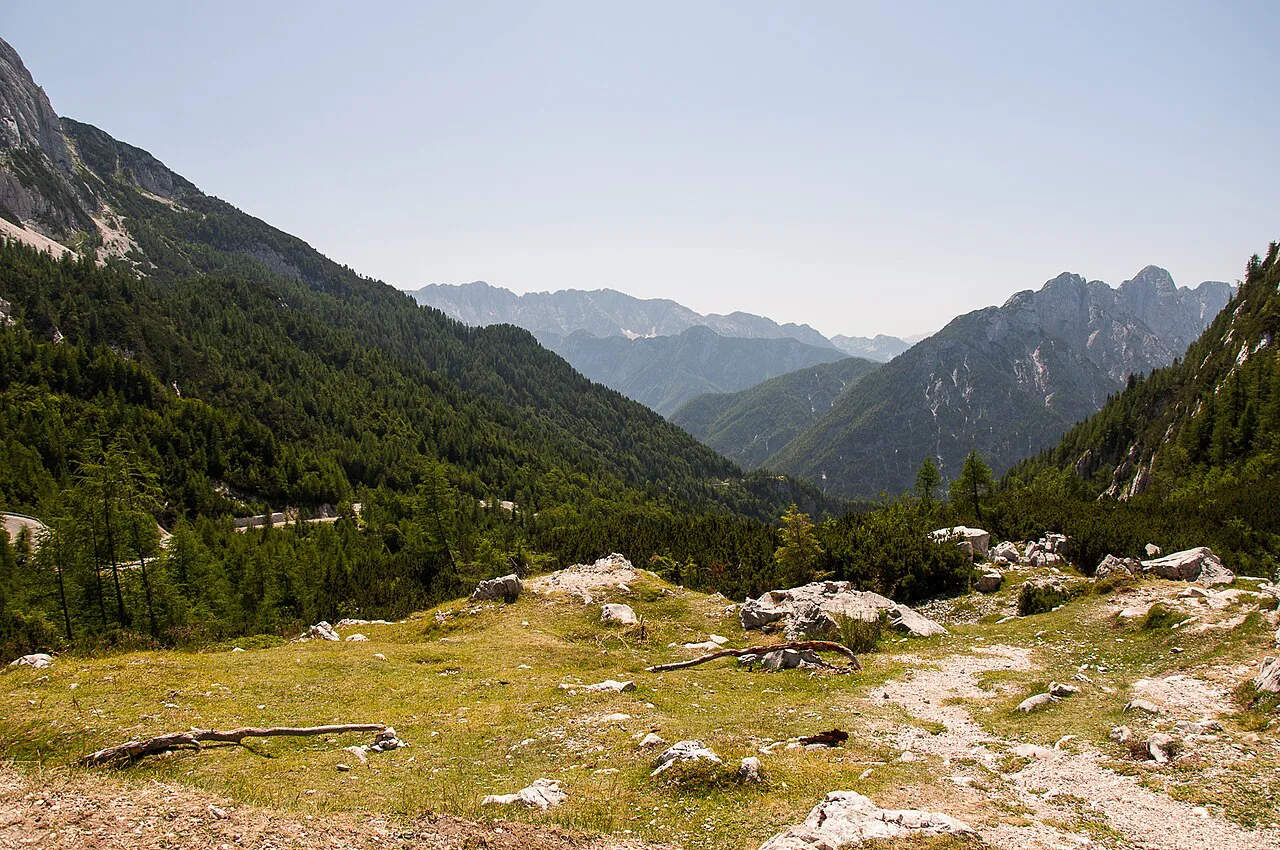
The road itself: 24 km and 50 hairpins
The drive runs 24 km from Kranjska Gora to Trenta, and the summit signs put the pass at 1,611 m. Allow more time than the distance suggests: hairpins, photo stops and slow traffic ahead of you all eat into the schedule, and the summit huts are the natural place to pause.
Much of the road was built for the Isonzo Front in World War I, when 10,000 Russian prisoners of war were put to work on it in 1916 and more than 300 prisoners and several guards died in landslides. Stonework from that construction still forms parts of the road surface you drive on today.
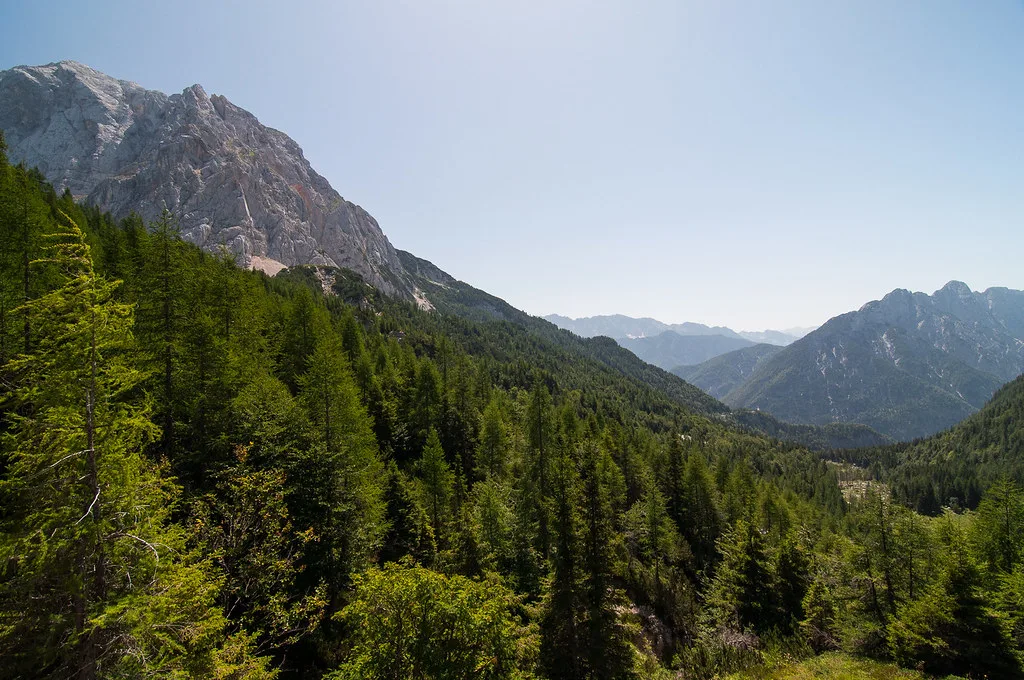
Which direction to drive and how long to allow
Either direction works, and the views are continuous from both ends. Starting at Kranjska Gora puts Lake Jasna and the Russian Chapel early in the drive, while starting at Bovec means you climb through the Trenta valley and along the Soča first and finish with the hairpins.
Set aside a half day rather than an hour. Between the chapel stop, one of the huts for food and a viewpoint on the descent, a drive that takes under an hour without stopping will take considerably longer once you actually get out of the car.
The Russian Chapel and its pull-off
The Russian Chapel stands on the Kranjska Gora side of the pass near the 6th serpentine, built to commemorate the prisoners who died building the road and fully renovated between 2005 and 2006. It is a small wooden Orthodox chapel in the trees, and the walk from the parking lot just before it takes only a few minutes.
Treat this as a labor memorial rather than a scenic afterthought: the road under your wheels is the reason the chapel exists. Parking sits before the chapel, so stop on the way up rather than trying to turn around on a bend.
Stops on the Kranjska Gora side
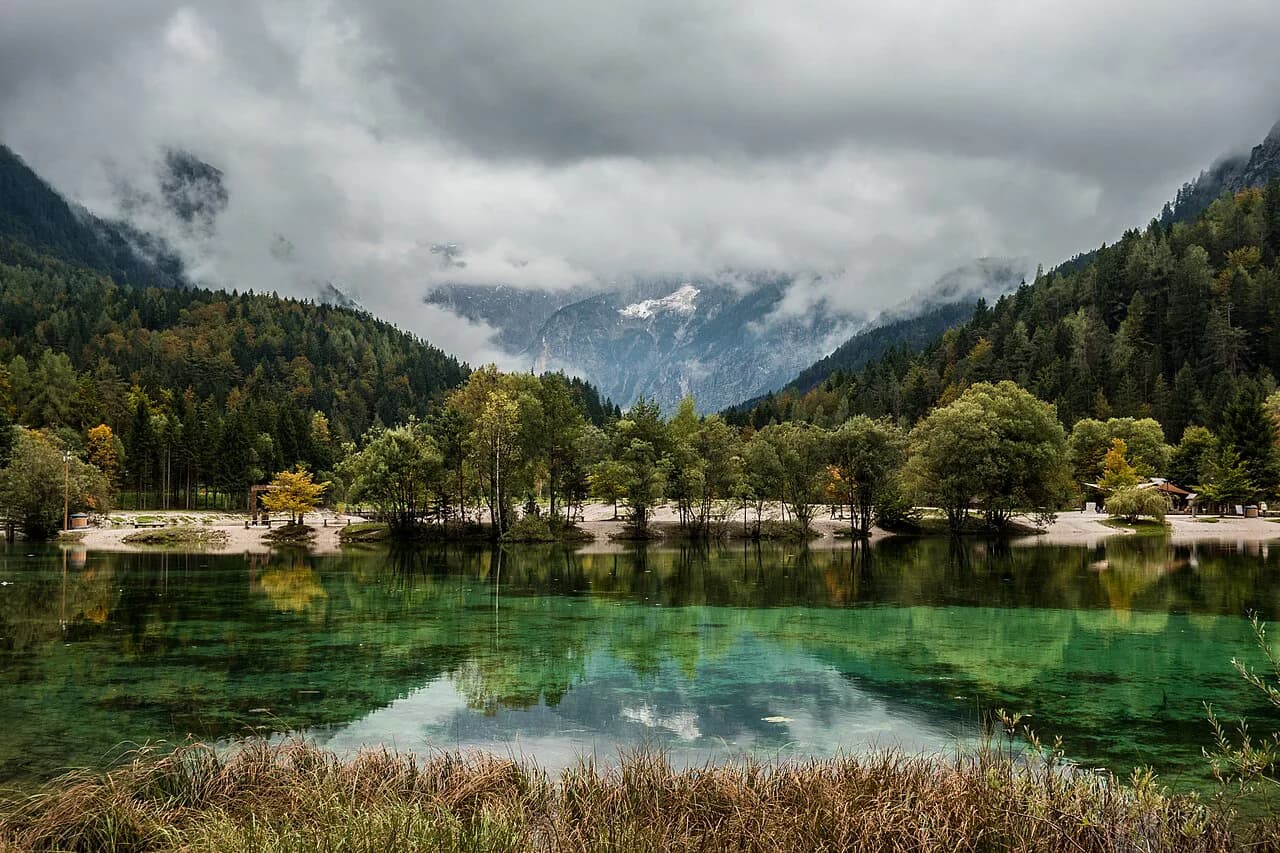
Lake Jasna sits right at the start of the climb out of Kranjska Gora, an artificial lake with walking paths around it and views toward Razor and Prisank. It is a leg-stretch and photo stop before the bends begin, and the road passes it before the real ascent.
Above the lake, Koča na Gozdu comes early in the climb and Erjavčeva koča higher up; both are mountain lodges serving traditional food such as soups, sausages and schnitzel. Erjavčeva koča sits at 1,525 m directly on the pass road, making it the obvious lunch stop around the middle of the climb.
Prisank, the Pagan Girl and the Prisank Window
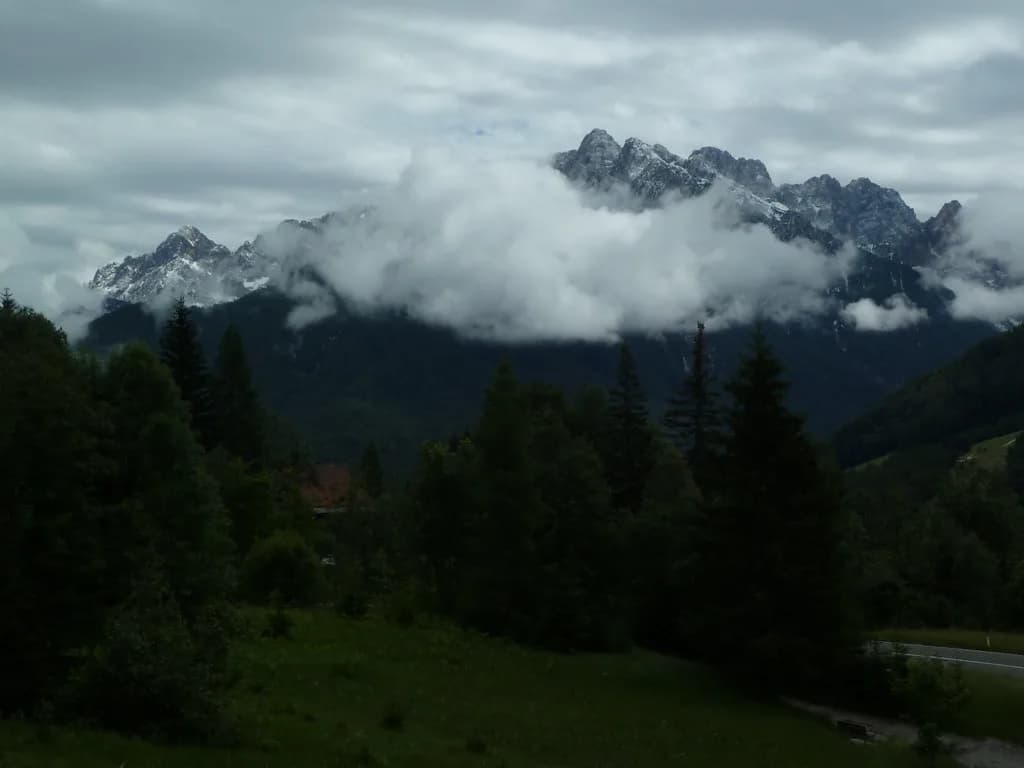
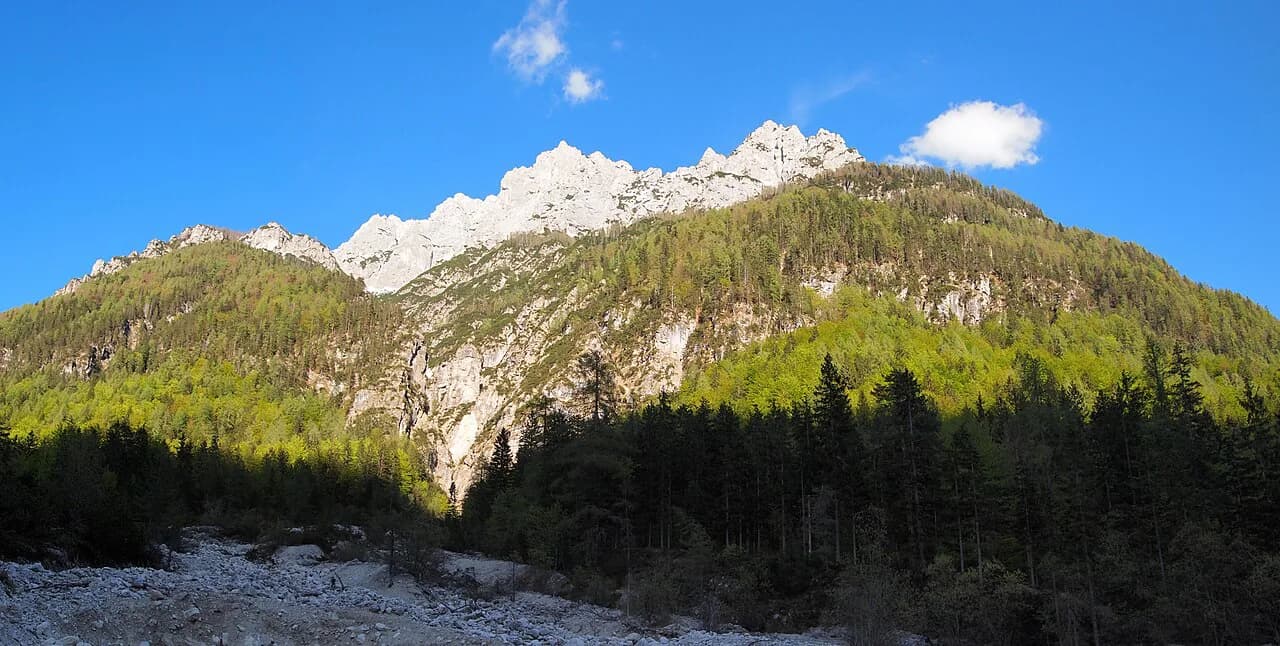
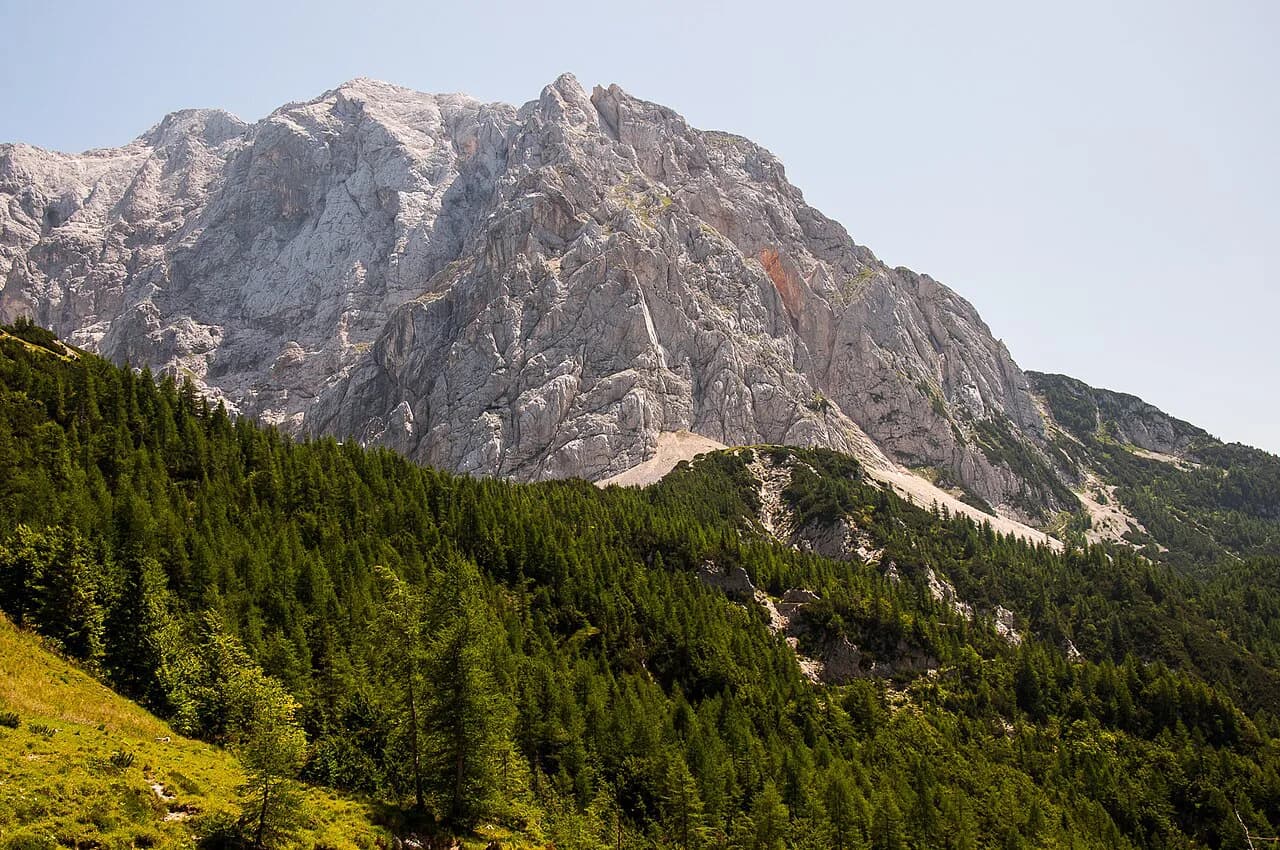
Look up at the northern wall of Prisank (2,547 m) from the road and you can pick out a rock formation that reads as a woman's face, the Pagan Girl or Ajdovska deklica. The same mountain face holds the Prisank Window, a large natural rock opening visible from the right angle on the drive.
Both features are things you spot from a pull-off, not destinations in themselves. The protected routes that lead through the windows are a separate undertaking with their own demands, so keep the car-based viewing as the plan for a pass drive.
Around the summit: Poštarski dom and the huts
At the top, the road passes the huts selling souvenirs and continues a short way up to Poštarski dom at 1,737 m, above the 1,611 m pass. Food and drinks are available at Poštarski dom during the summer season, from 1 June to 30 September.
Erjavčeva koča is a mountain hut at 1,525 m rather than a hotel, so expect simple shelter and food rather than resort service. Opening times there can change outside the main summer season, and groups are handled by arrangement.
The descent toward Trenta and Bovec
On the way down into the Trenta valley, the Šupca viewpoint is the stop to make for the wide view over the Soča valley and the surrounding peaks. From there the road follows the emerald Soča down toward Bovec, with the river alongside for much of the descent.
If you are heading on into the Soča valley, plan your day around where you want to finish rather than turning back over the pass the same afternoon. Driving down to Bovec leaves you at the other end of a long mountain road with a fresh set of bends to handle.
When to drive it: season, weather and road conditions
The road sits high in the Julian Alps and is affected by season, weather and traffic, so conditions can differ from one day to the next. Snow can close the pass, and the Julian Alps receive heavy snowfall, so do not assume it will be driveable out of season.
Before you commit to the drive, look at live weather and webcam information for the pass and check the current road status. Those two checks are the difference between a good day out and a wasted morning at the barrier.
Driving cautions on the hairpins
The pass road is steep, narrow and twisting, with 50 hairpins in 24 km, which is the whole point but also the risk. Know how to drive a manual gearbox before you rent a car for this, and use low gears on the descent rather than riding the brakes.
Parking rules and availability around the pass change by season and operator. Pull off only where it is allowed and never stop on a bend for a photo.
Riding it instead: the bike option
The route works as a marked cycling climb from Kranjska Gora to the pass and on up to Poštarski dom, a long day with a big height gain that many riders soften with an electric bike or a van shuttle for themselves and the bike. Plan roughly six to seven hours for the full loop from Mojstrana.
The celebrated single-track descent is officially marked as extreme and is not recommended in muddy or wet conditions. If you are not confident on technical terrain, ride the road down instead.
Where the road leaves you at either end
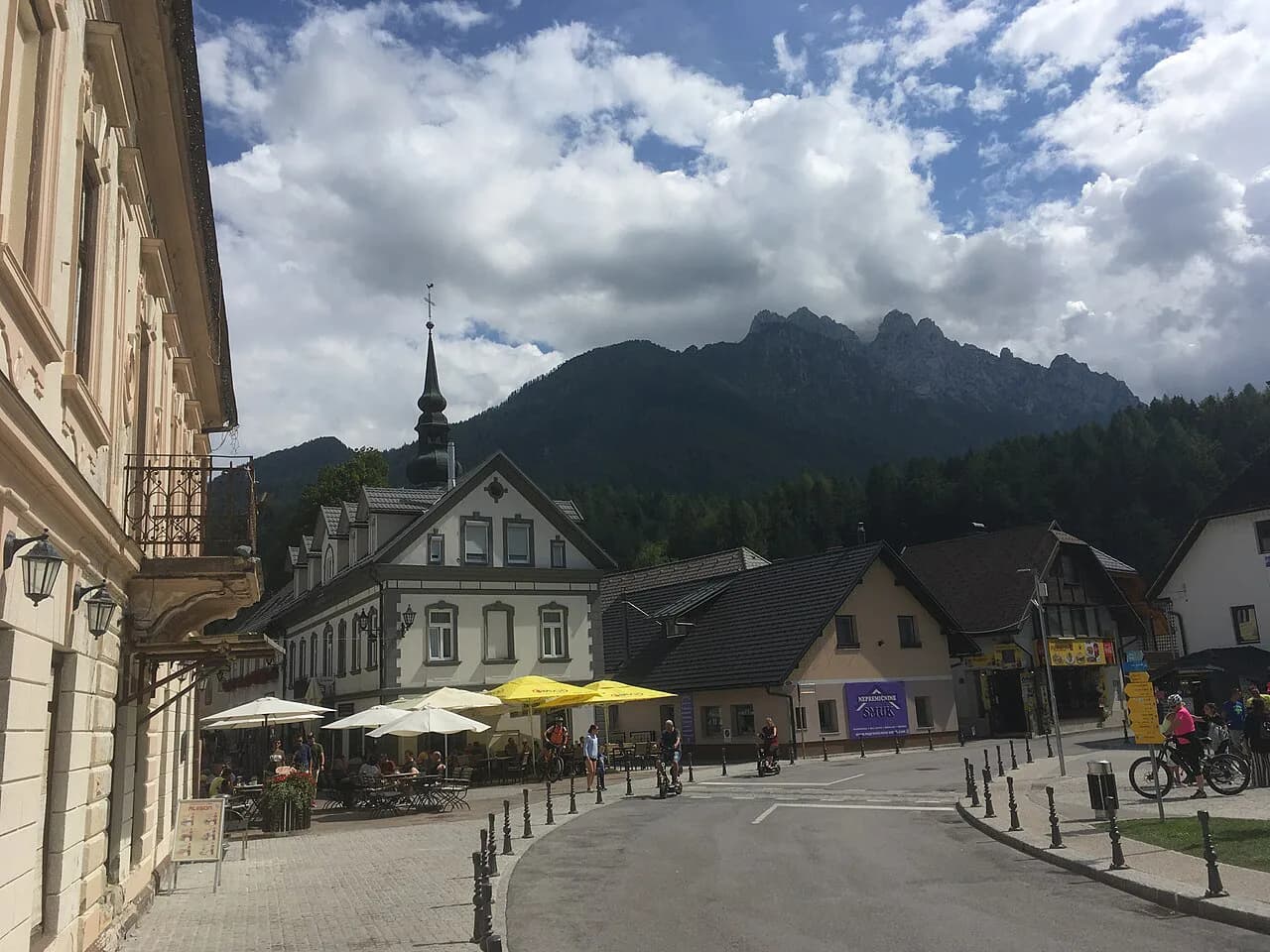
At the Kranjska Gora end the pass road lands you straight into town, close to the lake, the shops and the upper valley, which makes it easy to pair the drive with an afternoon there. The town works as a base for the road and the surrounding valley.
At the other end, Bovec and the Soča valley take over, and the drive becomes part of a bigger day along the river. Whether you finish in Kranjska Gora or Bovec determines how much of the descent you experience in daylight.
What the pass does not give you
Food options on the pass are limited to the mountain lodges, and their menus are similar to one another. Stock up on local cheese and prosciutto in Kranjska Gora or Bovec before the climb so you are not dependent on a hut being open when you arrive.
Back in town, the Kranjska Gora Restaurants are a better bet for a proper meal after the drive than anything you will find on the mountain. Build the day so the food stop comes after the descent, not before.
Which end should you start from?
Start at Kranjska Gora if you want Lake Jasna and the Russian Chapel early in the drive and an easy return to a town with food and services. Start at Bovec if the Soča valley is the main event and you would rather climb through Trenta before the hairpins.
Whichever end you choose, drive it in daylight with time to stop at the chapel, a hut and Šupca, and check the weather and road status on the morning itself before setting out.
Explore more Kranjska Gora guides
Frequently Asked Questions
Is Vršič Pass open today?
The pass road is affected by season, weather and traffic, and snow can close it. Check live weather and webcam information for the pass and the current road status on the day you plan to drive before leaving Kranjska Gora or Bovec.
How many hairpins does Vršič Pass have?
The road has 50 serpentines over 24 km between Kranjska Gora and Trenta, with 24 on the Kranjska Gora side and 26 on the Trenta side. The Kranjska Gora side is paved.
Can you drive Vršič Pass in a rental car?
Yes, and many travelers do, but the road is steep, narrow and twisting. Be comfortable with a manual gearbox, use low gears on the descent and pull off only where parking is allowed.
Sources
Notes for your Slovenia trip
Optional updates to our Slovenia place guides.
You might also like
Continue reading
More guides you'll find useful