Rajhenburg Castle: What to See Inside the Brestanica Castle
Rajhenburg Castle above the Sava at Brestanica holds Trappist and exile exhibitions, a Romanesque chapel portal and a 1530 fresco. Here's what to see.
On this page
Rajhenburg Castle is a hilltop castle above the confluence of the Brestanica brook and the Sava near Krško in eastern Slovenia, and it is visited for its museum collections as much as its architecture. Budget roughly an hour to ninety minutes inside if you read the exhibitions, and check the day of the week before you drive out, because the castle closes on Mondays. This guide covers where it stands, how to reach it, the hours and admission the sources give, and what to look for in the building itself.
What Rajhenburg Castle is and where it stands
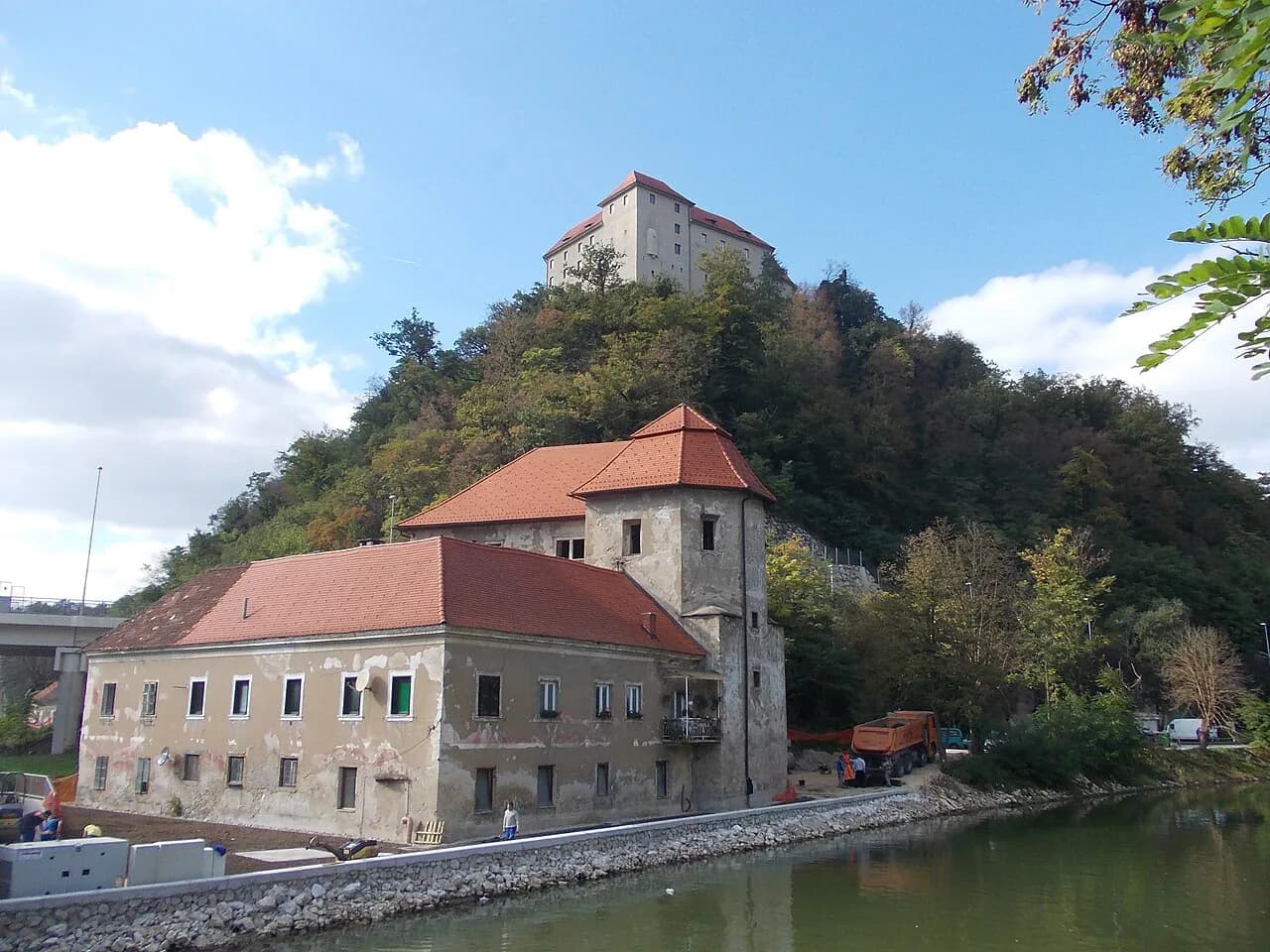
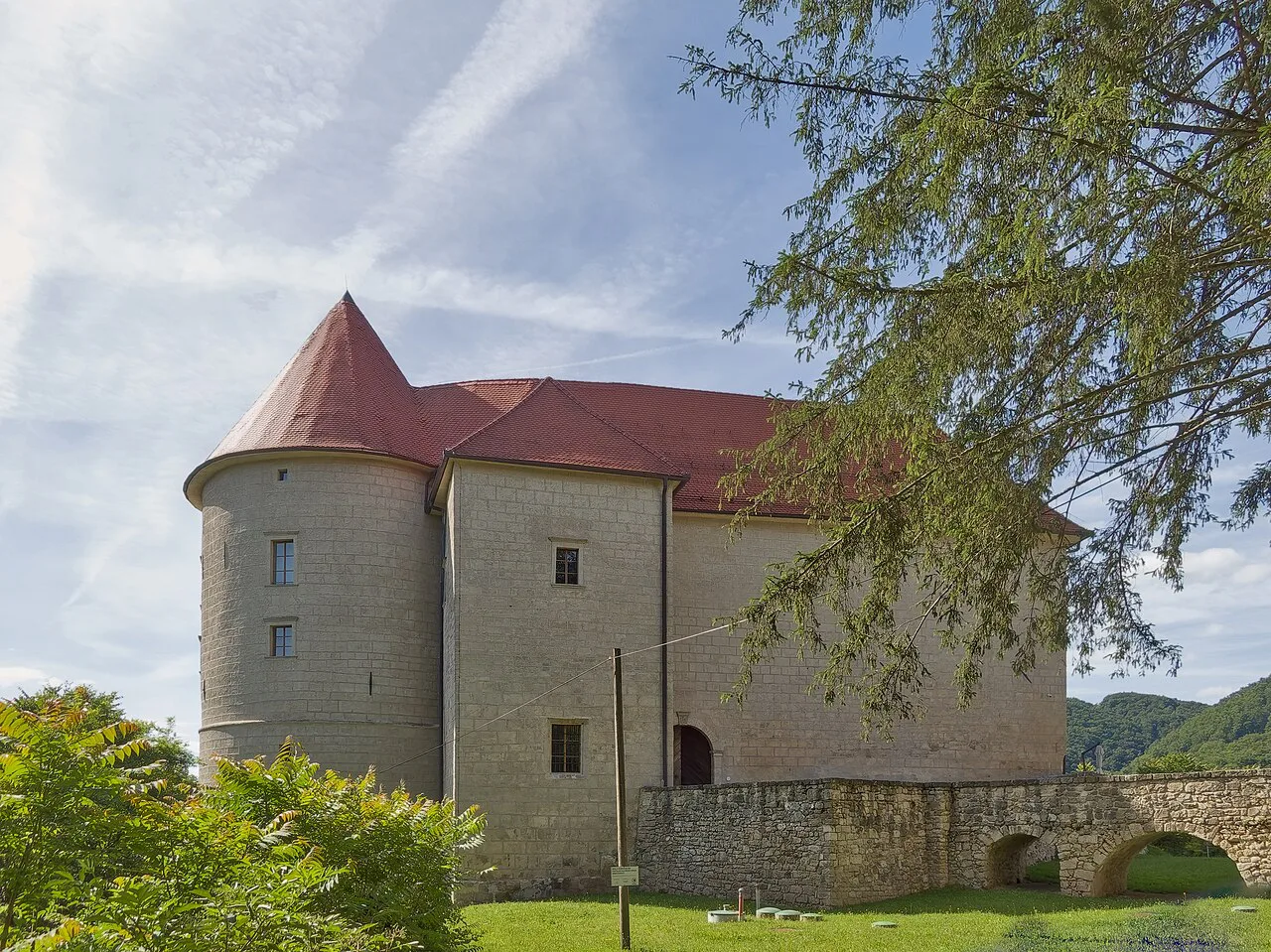
The castle sits on a rocky spur about sixty meters above the meeting of the Brestanica brook and the Sava River, which is why the site controlled the valley for centuries. The address is Cesta izgnancev 3, 8280 Brestanica. The building you see today grew in layers: a Romanesque core from the twelfth century, a sturdy reconstruction in the sixteenth century, and a recent full renovation supported by the European Union's Cohesion Fund.
Archbishop Konrad of Salzburg built the castle between 1131 and 1147, and the oldest Romanesque section still shows in the walls. It is managed by the Krško Culture House, and its museum work is tied to the National Museum of Contemporary History, whose Brestanica unit prepared the permanent Trappist exhibition here. That combination explains why a medieval castle holds modern historical collections rather than period rooms alone; for context across the country, see our guide to castles in Slovenia.
How to reach it from the Krško and Brežice side
Rajhenburg Castle is a short drive from Krško, and the approach is by road to Brestanica on the Sava. Set the destination as Cesta izgnancev 3 rather than the town name, since the street climbs toward the castle rather than sitting in the center. Parking arrangements at the castle are not spelled out in the tourist listings, so plan to arrive early in the day and watch for signed spaces on the approach.
If you are coming from Brežice or elsewhere in the Posavje, the castle pairs naturally with the region's other castle stops on a single driving day. The contact number published for the castle is +386 7 620 4216, useful if you want to confirm access before a longer detour.
Opening hours and the days it is closed
Hours change with the season. In winter, from October to March, the castle opens Tuesday to Friday from 10 am to 4 pm and Saturday and Sunday from 10 am to 5 pm. From April to the third Saturday in June it opens Tuesday to Sunday from 10 am to 6 pm; from that third Saturday through August, Tuesday to Sunday from 10 am to 8 pm; and in September, Tuesday to Sunday from 10 am to 6 pm.
The castle is closed on Mondays year-round, and it also closes on January 1, November 1, and December 24, 25, 26 and 31. Treat Monday as a hard no and build the rest of your Posavje day around that gap. For a late-October or winter visit, the 4 pm weekday close means the castle belongs in the morning.
Admission price and what the ticket covers
Admission starts from 5 EUR per person, which the Posavje tourism listing quotes as the entry point rather than a full price table. Rates for children, families or guided groups are not set out there, so ask at the desk or by phone when you arrive. The ticket gets you into the castle and its museum exhibitions, including the Trappist display and the collections on exile and the penal years.
The Trappist story: monastery, chocolate and the permanent exhibition
Trappist monks bought Rajhenburg in 1881 and turned it into a monastery, where they made chocolate and liqueur until the occupation in April 1941. The order was dissolved in 1947 and the castle was nationalized. The permanent exhibition on the Rajhenburg Trappists was prepared by the Brestanica unit of the National Museum of Contemporary History in the 1990s and restaged in 2013 after the renovation.
That chocolate-and-liqueur legacy is the thread that ties the visit together, from the exhibition rooms down to the museum shop, where local products including chocolate are sold. The castle also hosts a Rajhenburg Day of Chocolate and Liqueurs as one of its events. If you are choosing between Posavje stops, this is the one with a food story attached to its museum.
The exile and prison years in the museum collections
In April 1941 the Germans took over the castle and made it the central camp for deporting Slovenes, and Culture.si records that around 45,000 people were sent into exile from here during the war. From June 1947 a Criminal Reeducation Center for Women opened in the building, followed by other penal institutions. The museum collections address the fate of the exiles and the period when penal institutions operated in the castle.
This dual identity, monastery and later deportation camp and women's prison, is what makes the content here unusual for a Slovenian castle. Give the historical rooms real time rather than treating them as a corridor between architectural highlights. Readers comparing castle visits across the country will find a broader list on our guide to castles in Slovenia.
What to look for in the building
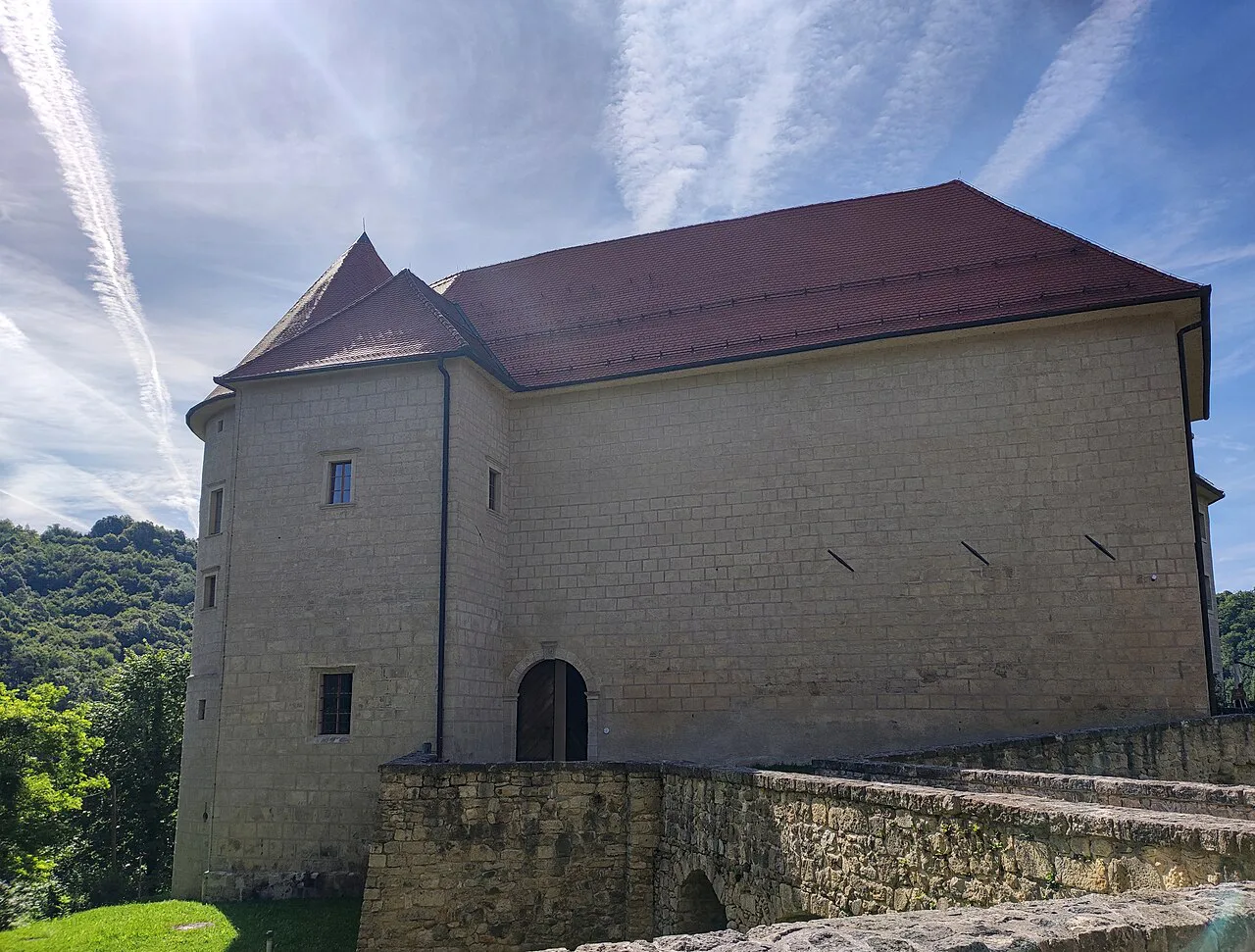
Start with the Romanesque perimeter from the twelfth century, which is notable for how its walls are structured and built. The castle chapel keeps its original Romanesque portal even though the two-story chapel building was solidly reconstructed in the sixteenth century. Inside, look for the profiled timber ceilings and the terraced walls that show the building's many building phases.
The feature most visitors miss is on the first floor: a secular Renaissance fresco by the Master from Marija Gradec, dated 1530 and discovered in the 1980s, tucked into the inner façade decoration. Ask where it is before you start walking, because it is easy to pass. The Great Hall, with its four-leaf Gothic window and stone cross, is the other architectural set piece, and it carries the castle's temporary art exhibitions.
Furniture, the Brestanica embankment model, postcards and the medals
Beyond the frescoes, the displays include castle furniture from the collections of the National Museum of Slovenia and a model of the Brestanica embankments as they stood at the end of the nineteenth century. Postcards on show illustrate social and everyday life. There is also a display of Olympic and world championship medals won by Primož Kozmus, which gives the castle an unexpected sports corner.
The café, pastry shop and museum shop
The castle has a café and a pastry shop, according to the Posavje tourism listing, and a museum shop where local products including chocolate are sold. Culture.si also lists a restaurant and a café among the castle's facilities. Build a coffee stop into the end of the visit rather than the start, so the exhibitions get your freshest attention.
How long a visit takes and how it fits the Posavje castles
Plan on an hour to ninety minutes for the exhibitions and the architectural stops, plus time for the café and shop. The museum content is heavier than the building tour, so readers traveling with children may want to shorten the historical rooms and linger on the fresco and the Great Hall instead.
Rajhenburg works best as one stop on a Posavje castle day rather than a destination on its own, since the region holds several castle sites within easy driving distance of each other. If your trip leans toward the center of the country instead, Bogenšperk Castle makes a comparable half-day stop with its own museum rooms. Either way, confirm the hours for the day you plan to drive, because this castle's schedule shifts by season and its Monday closure is firm.
Rajhenburg Castle in a Posavje day
Yes, if you are already in the Posavje and want a castle where the museum does real work. The Trappist chocolate story, the exile collections and a 1530 fresco in the same building give it more texture than a shell of period rooms. A Monday arrival gets you a locked door, so set the day around the seasonal hours and the 5 EUR starting admission.
Explore more Slovenia guides
Frequently Asked Questions
Do I need to book Rajhenburg Castle in advance?
The published visitor information does not describe a booking requirement for individual entry, so most travelers can simply arrive during opening hours. If you are coming with a group or want to confirm the day's schedule, call the castle at +386 7 620 4216 before you set out.
Is Rajhenburg Castle the same as Brestanica Castle?
Yes. The castle is also called Brestanica Castle, after the town below it, and appears under both names in Slovenian tourism listings. The address, Cesta izgnancev 3 in Brestanica, is the same either way.
Sources
Notes for your Slovenia trip
Optional updates to our Slovenia place guides.
You might also like
Continue reading
More guides you'll find useful