Churches in Slovenia: Hilltop Churches, Monasteries and Where They Are
Churches in Slovenia range from hilltop landmarks like St Thomas above Škofja Loka and Jamnik to monasteries and island churches. Here is where each one sits.
On this page
The churches in Slovenia that most travelers come for are small white buildings on open hilltops, and the best-known of them stand in the hills west and north of Ljubljana: St Thomas above Škofja Loka, the Jamnik church near Kranj and St Jacob above Medvode. A second, quieter group is architectural rather than scenic, made up of monasteries and pilgrimage churches you enter rather than photograph from a distance. This guide sorts both groups by where they sit and how you reach them, so you can match a church to the hours you actually have.
Plan around access, not around a list. Some of these churches are photographed from the road, some need a short walk up from a village, and some sit on private or working farmland where the approach matters more than the building. The sections below group the hilltop churches that way first, then cover the monasteries and shrines that reward an actual visit, then set out the etiquette that keeps these places visitable.
What kind of churches you see across Slovenia
Slovenia's sacred landscape runs from wayside shrines and small village churches to basilicas, monasteries and charterhouses, and the country's tourism board presents that range as a reason to travel between regions rather than stay in one place. The hilltop church is the form visitors recognize first: a single white tower on a bare ridge, usually visible from a road below.
Two practical facts shape a church-focused trip. First, most of the famous hilltop churches are in the hills of central Slovenia within reach of Škofja Loka, Medvode and Kranj, so they combine badly with a coast or Karst itinerary and well with a Bled or Škofja Loka day. Second, the monastery and pilgrimage sites are scattered across the east and north, which makes them natural stops on a drive between Maribor, Celje and Novo Mesto rather than a loop of their own.
The Slovenian tourist board groups pilgrimage sites, iconic churches and monasteries as distinct strands of the same heritage, alongside the Way of St James route that crosses the country. That framing is useful for planning: pick one strand per day, since hopping between a hilltop viewpoint and a monastery interior usually means a long drive with little time at either end.
Hilltop churches: how to pick which ones to see
The hilltop churches are landscape subjects as much as buildings, and photographers return to them for the way low cloud, frost and first light sit around the towers. Winter conditions of fog, snow and frost are what draw many photographers to these ridges, which is worth knowing if you are deciding between a summer and a colder-season visit.
For a first trip, choose by reach rather than by reputation. St Leonard at Črni Vrh and the church on Bukov Vrh can both be photographed from the road and sit close enough to pair in one outing, while the churches at Jamnik and above Škofja Loka reward getting out of the car and walking up. Leave anything described as needing a moderate hike for a day when the weather is settled and you have daylight to spare.
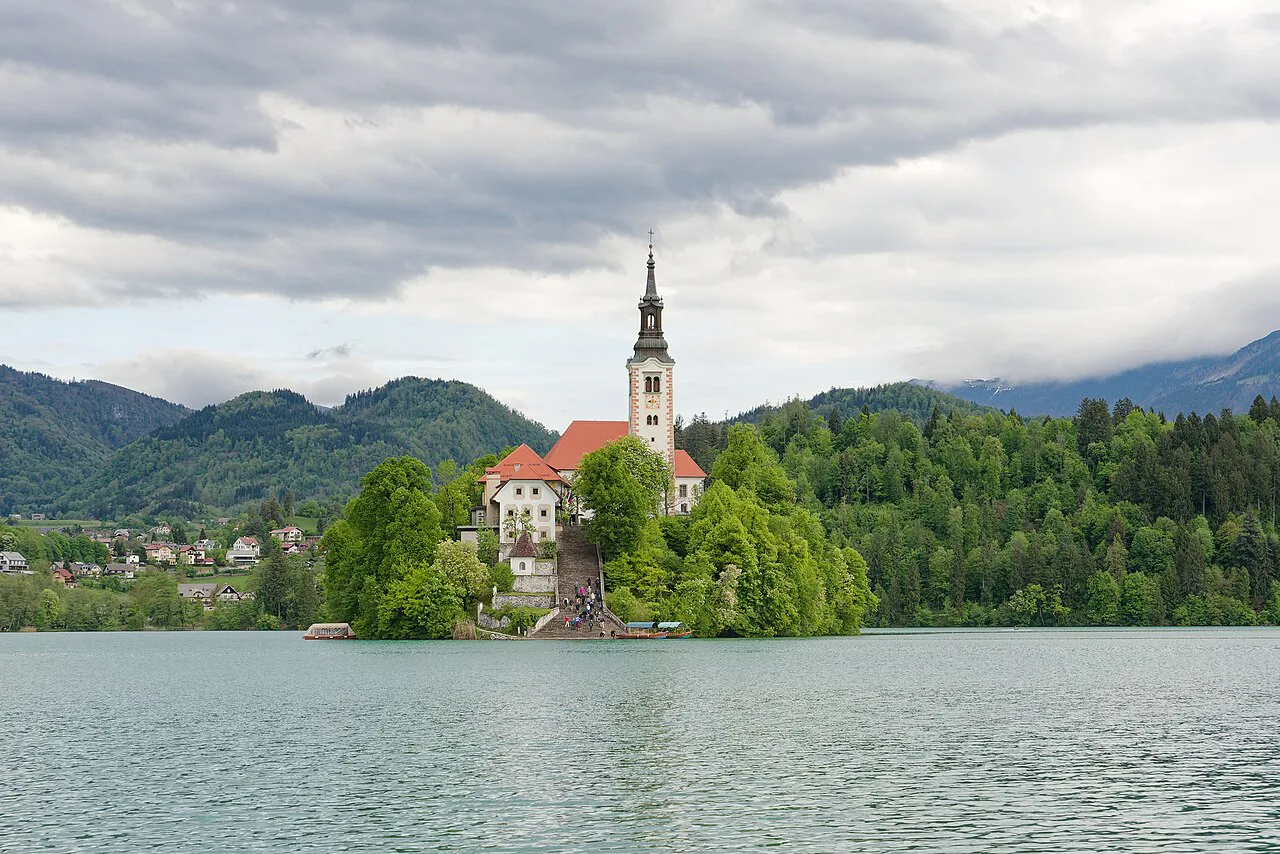
St Thomas Church (Cerkev Svetega Tomaža) above Škofja Loka
St Thomas Church, Cerkev Svetega Tomaža, sits in the hills above Škofja Loka and is the hilltop church most photographers put first. Treat it as a sunrise or late-afternoon stop: the building faces open country, and the light on the ridge is the reason to be there rather than the interior. Pair it with time in Škofja Loka itself, which is a short drive below.
Do not confuse it with the second St Thomas Church, Cerkev Svetega Tomaža at Gorenji Vrsnik, which is a separate building in a remote village surrounded by meadows and trees. The two share a name and nothing else, so check the village name before you set a route.
Jamnik Church (Cerkev sv. Primoža in Felicijana) near Kranj
The Church of St Primus and Felician at Jamnik is the church most visitors mean when they say Jamnik, and it has drawn photographers since a full-moon photograph of it circulated widely. If you go, walk up to the building itself instead of stopping at the roadside viewpoint; the approach is part of the visit and the church is small enough that the viewpoint alone undersells it.
Jamnik sits near Kranj, which makes it the easiest hilltop church to add to a day built around Bled or the road toward Kranjska Gora. Allow time to park in the village and walk rather than expecting to pull up beside the church.
St Jacob Church (Cerkev Svetega Jakoba) above Medvode
St Jacob Church, Cerkev Svetega Jakoba, stands above Medvode and is reached on foot from the valley. The route passes working meadows, and the request from people who know it is simple: stay on the path and do not cut through the grass.
Because it sits close to Ljubljana's northern edge, St Jacob works as a half-day add-on to a Škofja Loka or Medvode base rather than a destination on its own. Combine it with St Nicholas at Praprotno and the view from Vrh Svete Trojice on the same loop, and you cover three churches without a long drive between them.
St Nicholas Church at Praprotno and the view from Vrh Svete Trojice
St Nicholas Church at Praprotno, Cerkev Svetega Nikolaja, is small and unassuming up close, and it is best seen as part of a wider view rather than as a standalone stop. From Vrh Svete Trojice you look across rolling hills toward it, and a telephoto lens turns the surrounding landscape into a hunt for towers.
This is the area to slow down in. The Polhov Gradec Hills, Polhograjsko hribovje, hold several of these churches within a short drive of each other, so a single morning here can produce more photographs than a day spent chasing one famous building.
St Thomas Church at Gorenji Vrsnik and St Leonard Church at Črni Vrh
St Thomas at Gorenji Vrsnik is the remote version: a church in open meadows with trees around it and a trail leading up. It is quieter than the Škofja Loka church of the same name and appeals to travelers who would rather walk a little than share a viewpoint.
St Leonard Church, Cerkev Svetega Lenarta, at Črni Vrh stands above the Ljubljana basin and can be photographed from the road, which makes it the low-effort option in the Polhov Gradec Hills. It is larger than most of the hilltop churches here but keeps the same simple outline.
Holy Saturday Church on Bukov Vrh and pairing it with Črni Vrh
The church on Bukov Vrh, formally the Church of the Sorrowful Mother of God and known in Slovenia as Sveta Sobota, is a short drive from Črni Vrh, so the two belong in one outing. From the church there are views of another church with Triglav behind it, a composition that needs a long lens rather than a wide one.
If you are working with a car and half a day, this is the most efficient pairing in the guide: park once at Črni Vrh, photograph from the roadside, then drive the short distance to Bukov Vrh. Do the reverse if morning light matters to you and you want the Bukov Vrh ridge first.
Walled and fortified churches: St Nicholas at Tabor
Some Slovenian churches were built to protect people, not just to gather them. St Nicholas Church at Tabor is one of the remaining walled churches known as a tabor, an encampment that sheltered local people during the Ottoman invasions, which is why it reads as a small fortress rather than a village church.
The walls and the wooded setting make Tabor awkward to photograph from the ground; the building is usually shot from the air, and launching a drone among trees needs care. If you are not flying, go for the architecture rather than the picture and expect a different experience from the open hilltop churches.
Holy Trinity Church (Cerkev Svete Trojice) and Sveti Ožbolt above Škofja Loka
Holy Trinity Church, Cerkev Svete Trojice, stands apart from the other hilltop churches in style, leaning toward Italian rather than Central European architecture, and it was recently renovated in stone. Reaching it involves a moderate hike, so it suits a day when you want the walk as much as the building.
St Oswald Church, Sveti Ožbolt, also sits above Škofja Loka and is far less visited, largely because it is harder to get to. If you have already done St Thomas above Škofja Loka and want a second church in the same hills without the crowd, this is the one to substitute in.
Churches reached on foot versus from the road
Sorting these churches by access saves more time than any other planning decision. Roadside subjects include St Leonard at Črni Vrh and Bukov Vrh, which you can shoot from the car park or verge; short walks take you up to Jamnik and St Jacob above Medvode; longer walks lead to Holy Trinity and the more remote churches.
Budget by light rather than by distance. A roadside church takes minutes but only looks right at certain hours, while a walk-in church costs you the climb and usually delivers you at whatever time you arrive, so start earlier than you think you need to.
Photography etiquette at hilltop churches: meadows, private land and drones
Most of these churches sit in working countryside, and the etiquette is straightforward. Do not walk through meadows to reach a church; stay on marked paths and tracks even when the grass looks like a shortcut, which is the specific request made about the approach to St Jacob.
Some of the best-known viewpoints are on private land. Sveti Andrej at Planina nad Horjulom is one example: the church sits in front of rolling hills in a composition that photographers seek out, but the land it is viewed from is private, and the guidance is to respect the owner rather than treat the spot as public.
Drones need the same restraint. Tabor is best photographed from the air, but takeoffs and landings happen in forest, and flying close to a church or over farmland causes the sort of friction that gets access closed for everyone.
Pilgrimage routes and the Way of St James in Slovenia
The Way of St James crosses Slovenia, and the national tourism board presents it as a pilgrimage route that draws walkers of any or no religious background. For a church-focused trip it offers a different structure: instead of driving between towers, you follow a marked route and encounter churches as stops along it.
Slovenia also has recognized pilgrimage sites that function as destinations in their own right, and the tourism board lists them separately from the hilltop churches. These are the places to build a day around if you want to attend a service or see an interior rather than photograph an exterior.
Monasteries, shrines and town churches worth the detour
Brezje is Slovenia's national shrine of Mary Help of Christians, and it belongs on a pilgrimage-minded itinerary in a way the hilltop churches do not. Brezje: Visiting Slovenia's National Shrine of Mary Help of Christians covers the basilica and how to approach it.
Stična Abbey (Stična Monastery) is in the Dolenjska countryside and is worth a stop on the drive between Ljubljana and Novo Mesto. Stična Abbey pairs naturally with the surrounding villages rather than with the central-Slovenian hilltop churches.
The Žiče Charterhouse is a former Carthusian monastery in the hills above Slovenske Konjice, and Žiče Charterhouse rewards travelers who are already driving through eastern Slovenia. Olimje: The Monastery, the Old Pharmacy and the Deer Park adds a monastery with a working old pharmacy near Podčetrtek, which suits a thermal-spa base.
Pleterje Charterhouse is a Carthusian house in the Gorjanci hills near Kostanjevica, and Pleterje Charterhouse fits the same Dolenjska loop as Stična. Ptujska Gora is a pilgrimage church above the Drava plain, and the climb from the village below is part of the visit.
Where to slot churches into a Bled, Škofja Loka or Karst itinerary
For a Bled or Škofja Loka base, spend one morning on the central-Slovenian hilltop churches: St Thomas above Škofja Loka at first light, then Jamnik on the way toward Kranj. Keep the afternoon loose, because fog and low cloud decide how much of the ridge you actually see.
On the coast and in the Karst, town churches make more sense than hilltop ones. A Koper church such as those covered in Churches in Koper fits a walking day inside the old town, and a Maribor church does the same for Slovenia's second city on the Drava. Both replace a drive with a stroll and leave your evenings free.
Travelers who want an English-language service rather than a historic building have options in Ljubljana: Ljubljana International Christian Center ARKA meets at Leskoškova 9E with services in Slovenian and English, and Ljubljana International Church meets on Celovška cesta 70. Both publish their meeting times directly, so confirm the schedule on their own sites before you plan a Sunday around it.
Which church route suits your trip
If you have a car and a day near Škofja Loka or Bled, pick two hilltop churches rather than five: one visited at first light and one on the road back, with St Thomas above Škofja Loka and Jamnik the obvious pairing. If you are moving between regions, trade hilltops for monasteries, with Stična and Pleterje on the Dolenjska drive and Brezje on the pilgrimage route.
Wherever you go, respect the ground you cross: stay out of meadows, keep away from private viewpoints and fly drones sparingly. Those habits matter more than any single photograph, because they are what keeps these churches reachable for the next traveler.
Explore more Slovenia guides
Sources
Notes for your Slovenia trip
Optional updates to our Slovenia place guides.
You might also like
Continue reading
More guides you'll find useful