Slovenian Food: What to Eat and How to Order It
Slovenian food explained for visitors: the dishes worth ordering, the regional kitchens behind them, and how to spot a good gostilna.
On this page
Order štruklji in the Alps, pršut on the Karst, goulash in the east, and you have the logic of Slovenian food in three plates. The country's cooking is regional rather than uniform, shaped by Austrian, Italian, Hungarian and Balkan neighbors, so what lands on your table depends on which valley or coast you are standing in. This guide sorts the dishes by regional kitchen, then covers how a gostilna meal is paced, which dishes suit meat-free eaters, and the menu words worth knowing before you sit down.
It is written for travelers basing themselves outside Ljubljana, in Bovec, Koper, Idrija, Ptuj or the lake towns, where the regional kitchen is often the main event of the day. Where a dish belongs to a named town, that is noted, so you can eat it on location rather than hunting for it in the capital.
What Slovenian food looks like on a plate
The base of most traditional plates is plain and seasonal: meat, cabbage, potatoes, beans and buckwheat, with mushrooms, chestnuts and spring greens appearing when they are in season. Austrian, Italian, Hungarian and Balkan threads run through the cooking, most visibly in the way regional kitchens differ from one valley to the next. You will see the same dish under different names, or with different fillings, depending on where you are.
Restaurants that focus on this cooking are called gostilna, and they serve traditional, unfussy plates rather than a tasting-menu version of them. Expect a short menu that changes with the season and a kitchen that assumes you are hungry. A full glossary of dishes with English equivalents is on our Slovenian dishes page if you want the long version before you travel.
The regional kitchens, and what each puts on the table
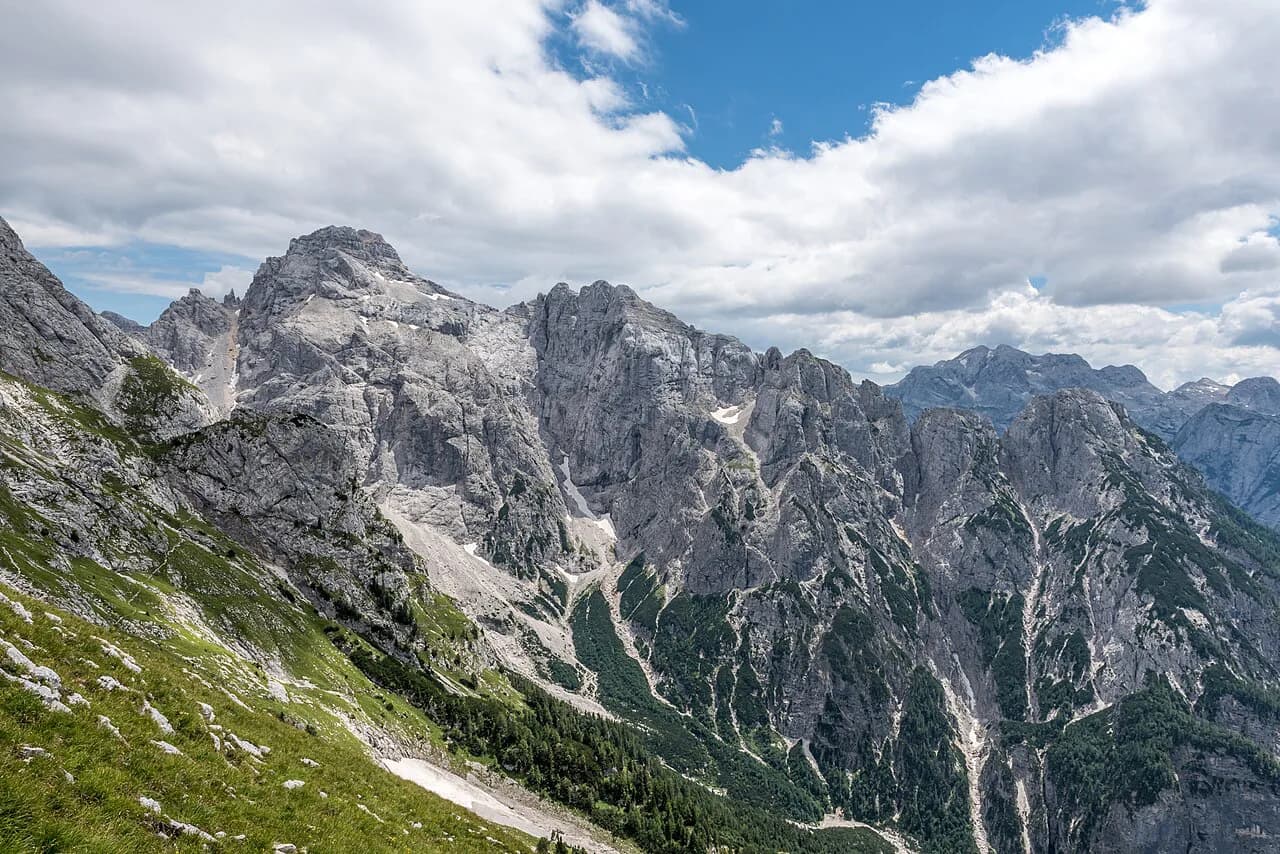
Slovenian gastronomy is shaped by the Balkan region, central Europe and Italy, and by a landscape of green valleys that supplies beef, game, local vegetables and potatoes. The climate pushes the cooking toward stews and soups of meat and vegetables, food built for cold winters, while the coast and the Karst pull in Mediterranean ingredients.
The practical version: the Alps give you dumplings, buckwheat, cheese and river fish; the Karst and coast give you air-dried ham, truffles, olive oil, seafood and salt; the east gives you pork, paprika, pumpkin seed oil and layered pastries. Use that map when you choose where to eat, and order the dishes that belong to the ground you are standing on.
Alpine dishes: štruklji, žganci and mountain cheese
Štruklji are rolled dumplings, made as a log and cut into slices, and they come in savory and sweet versions with fillings that run from farmer's cheese to hazelnut and white chocolate. They are the dish most worth ordering in the Alpine north and west, and they appear alongside main courses rather than only on the dessert list.
Ajdovi žganci is a buckwheat spoon bread, dry-fried flour cooked in salted water and shredded with a fork, sometimes made with potato or wheat flour instead. It is treated as a national dish and shows up in traditional restaurants around the Gorenjska and Štajerska regions and in mountain huts, either as a base under mushroom soup or on its own with sour milk. In the north it is drier and crumb-like; in Štajerska it is closer to a dumpling.
Frika is a simple Alpine plate of potatoes, eggs, butter and cheese cooked together like an omelet and usually served with polenta. For cheese, look for tolminc, a semi-hard cheese from the Soča valley, mohant with its intense flavor, and bovški sir, a goat cheese often served on local boards; a cheese plate often arrives with Slovenian honey.
Polenta, made from corn or barley flour, is the default side in this part of the country and can just as easily be the main course. Trout from the Soča river is the fish to order in the valley towns, and it is usually the simplest thing on the menu.
Karst and coast: pršut, truffles and seafood
On the Karst and along the coast the cooking turns Mediterranean. Pršut is the dry-cured ham you will see on every cold board, and the forests of Slovenian Istria supply both white and black truffles, which turn up in creams, pastas and shaved over simple dishes.
Fusi are Istrian egg-and-flour pasta shaped like garganelli, and they work well with butter and seasonal vegetables, asparagus in spring being the classic pairing. Look for them in restaurants around Koper and inland in Istria rather than in the Alpine north.
Fish from the Adriatic is served along the short coastline, with brodet and cod dishes among the options, and salt is a local product worth noticing on the table. A cold board of pršut with olives and a glass of local wine is a sensible way to start, and the Karst forests inland supply both white and black truffles.
Pannonian and eastern dishes: stews, paprika and pumpkin seed oil
In the east the cooking leans toward pork, paprika and slow-cooked stews. Goulash, Hungarian in origin, appears on nearly every menu in the country as a meat stew with potatoes and parsley served in one pot, and it is a safe order when you want something warming after a cold day.
Obara is a meat and vegetable soup from the Štajerska region, made with whatever meat gives it its name, chicken obara or beef obara being the usual versions, plus carrots, turnips, green beans, peas and onions. In a traditional gostilna it often arrives with buckwheat or potato žganci to make it a full meal.
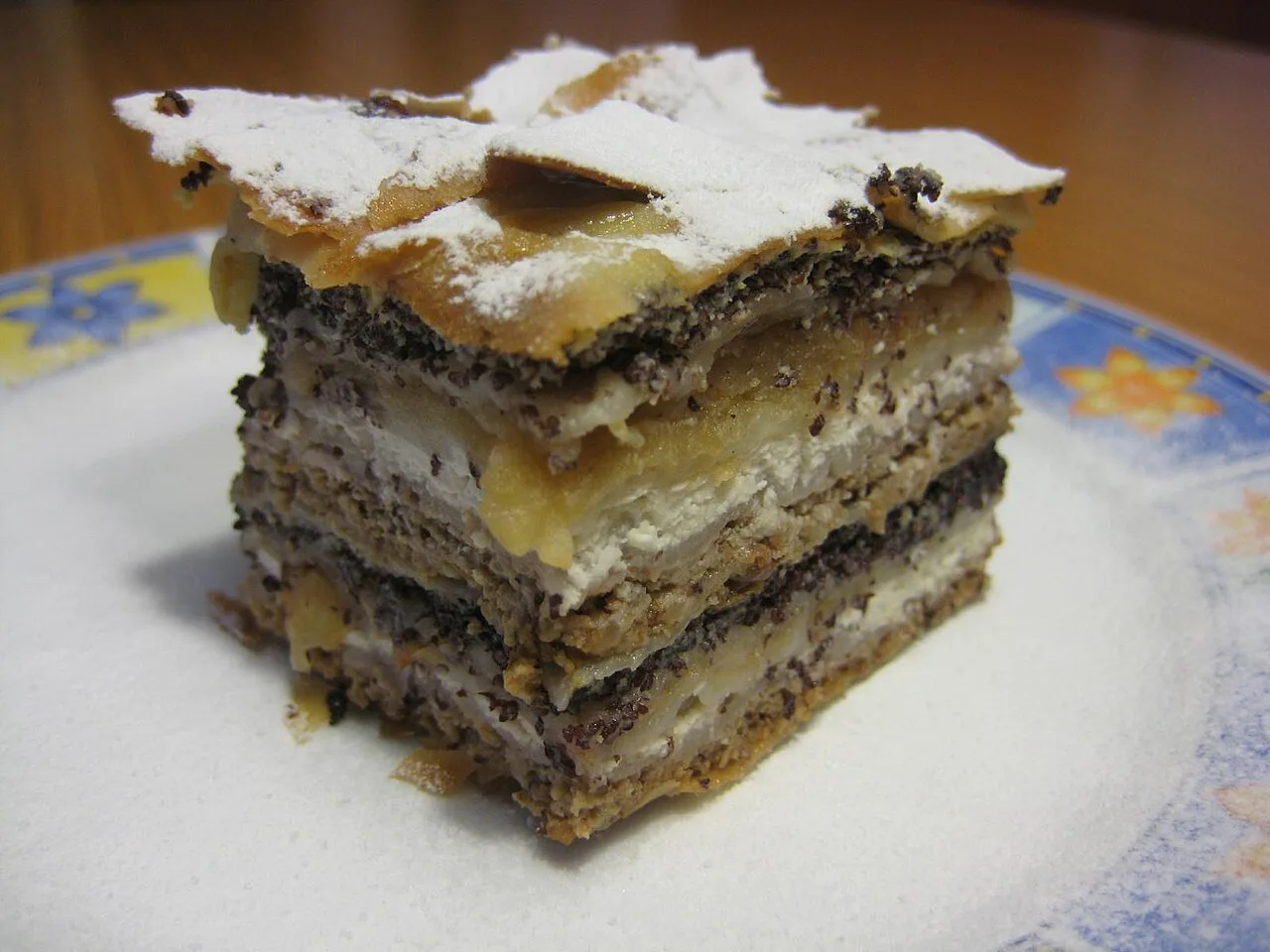
Bujta repa, a sour turnip and pork dish, belongs to the eastern table, and pumpkin seed oil is the region's signature drizzle, used on salads, soups and even ice cream. Prekmurska gibanica, a layered pastry of poppy seeds, walnuts, apples and raisins, comes from the same eastern corner and appears on dessert menus across the country.
Dumplings and pasta: Idrijski žlikrofi from Idrija
Idrijski žlikrofi are potato-filled dumplings from the mining town of Idrija, made from simple pasta dough wrapped around cooked, seasoned potato and sauteed onion and molded into a small hat shape. The size is fixed for an authentic žlikrof, and the dish holds EU-protected status, which is why it is worth eating in Idrija rather than anywhere else.
In restaurants around Idrija you can order them as a starter or a main, in a meat or vegetarian version with lamb or vegetable sauce. They also appear nationally, but the town is the place to try them with the local sauce and a sense of where they come from.
Meat and sausage: Kranjska klobasa
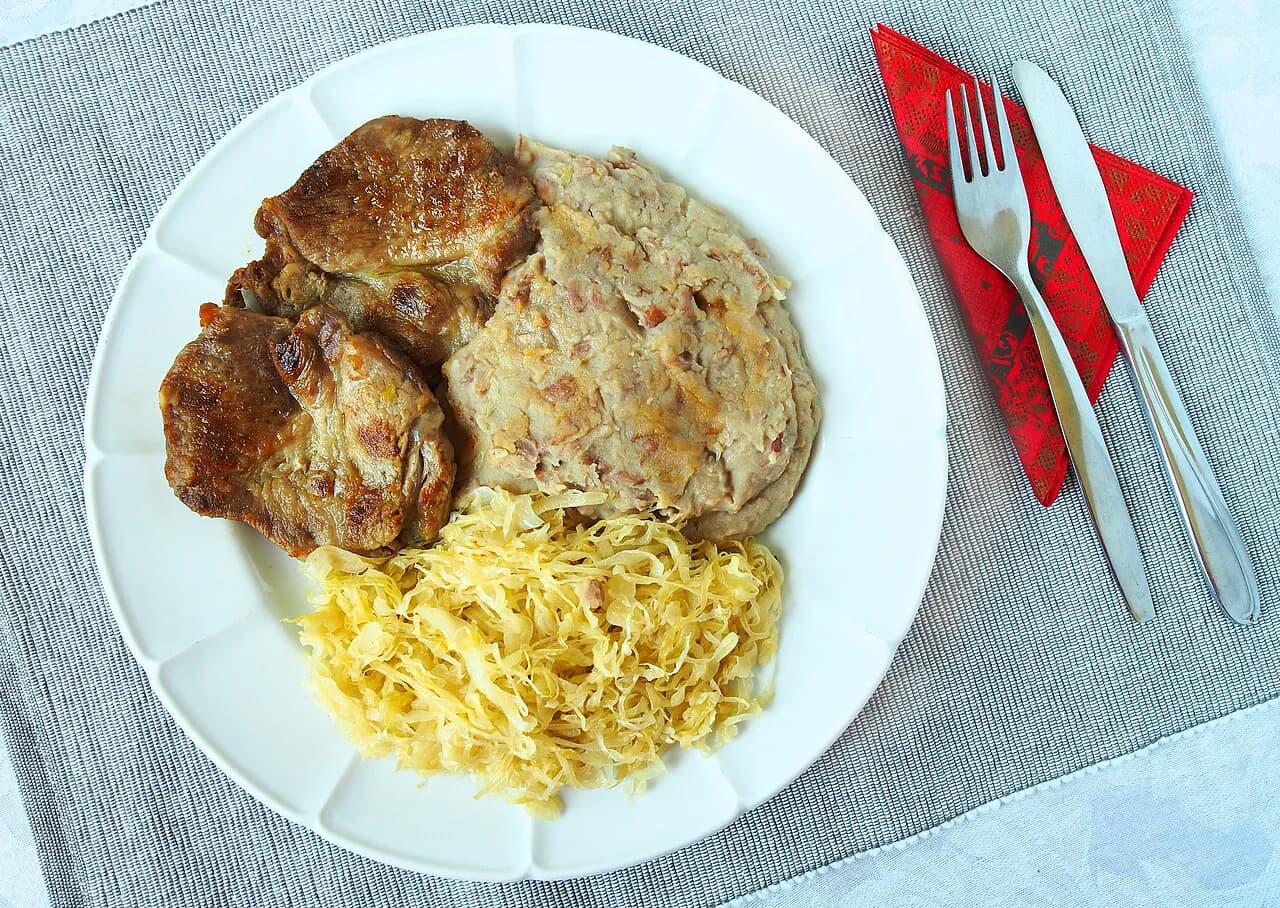
Kranjska klobasa, the Carniolan sausage, is the one sausage to know, a homestyle recipe served with grated horseradish and Slovenian mustard. It is mild and finely textured, and the horseradish is easy to mistake for cheese on the plate if you are not paying attention.
You will also meet Kranjska klobasa as street food, and it is a good benchmark order in any gostilna. Order it with a side of matevž, the mashed bean and potato dish with pork cracklings, or with sauerkraut.
Soups and stews as a main course
In Slovenia a soup or stew can be the whole meal, not a starter. Jota is the northern standby, a pot of beans, sauerkraut and potato that arrives thick enough to eat with a spoon standing up, and it is closely related to the capuzi grabi of neighboring Friuli-Venezia Giulia.
Ričet is a barley and bean soup with pork, matevž is the bean-and-potato mash served as a side, and sauerkraut appears alongside most pork dishes. In a traditional restaurant these arrive in deep bowls with bread, and ordering one plus a salad is a normal, filling lunch.
Vegetarian Slovenian food: what to order
Meat-free eating is possible without much effort if you know which dishes to ask for. Frika, žganci, polenta, štruklji with cheese or sweet fillings, and a cheese plate with honey all work as a full meal, and dandelion salad is a standard spring side.
Simple dough dishes round out the meat-free options at a gostilna, and the cheese board is often the best-value order on the menu. Ask what the kitchen has without meat rather than assuming the menu marks it.
Desserts: potica, gibanica, krofi and kremna rezina
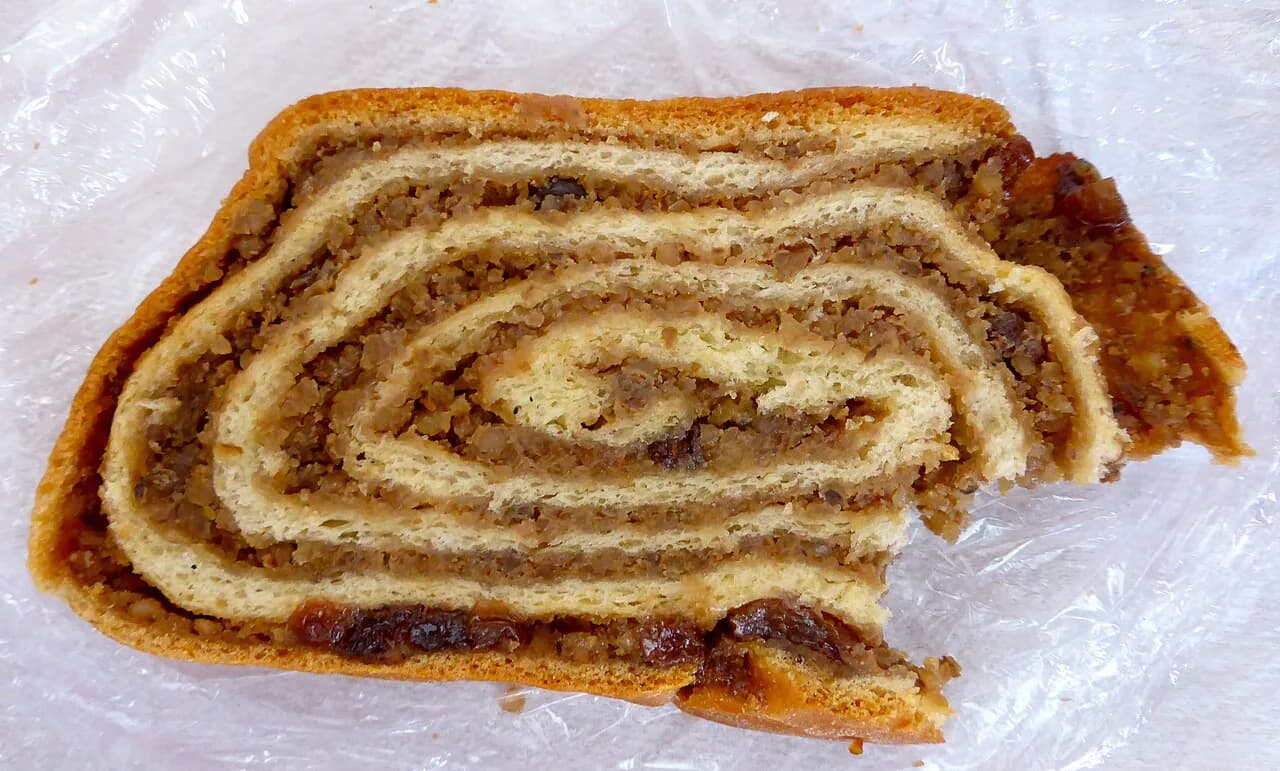
Potica is a rolled yeast cake with a nut or seed filling, sliced thin and served with coffee or as a snack. Prekmurska gibanica is the layered pastry of poppy seeds, walnuts, apples and raisins, and krofi are the jam-filled doughnuts that appear at celebrations and in bakeries.
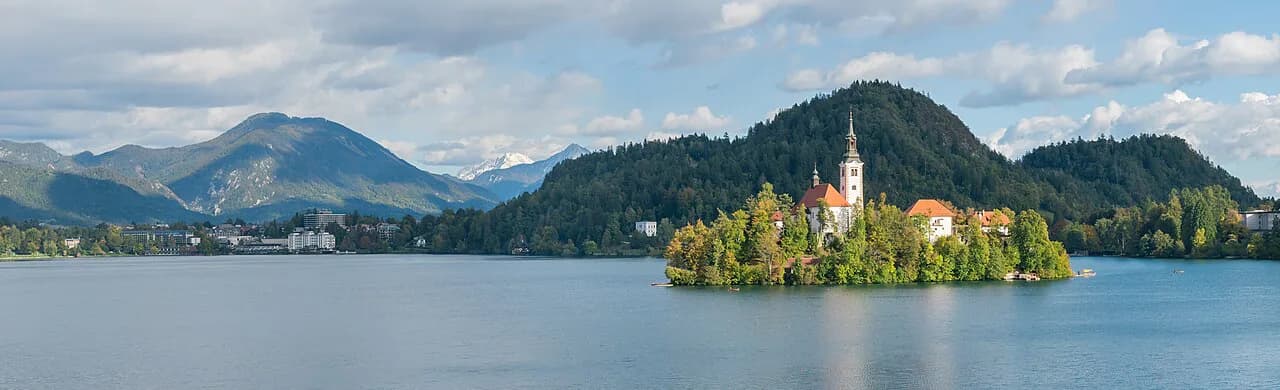
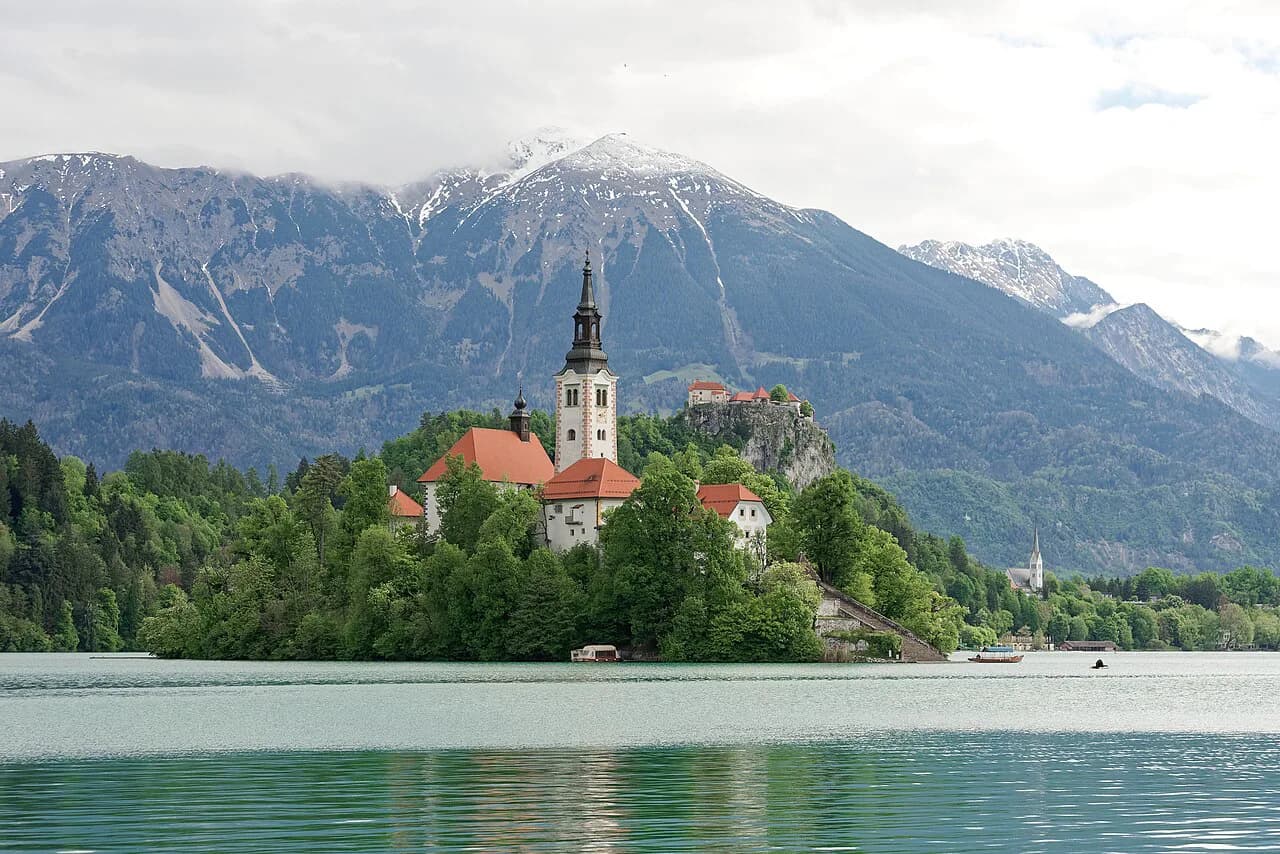
Kremna rezina, the cream cake associated with Bled, is a vanilla custard and cream square that most visitors try at least once at the lake. Order it with coffee in the afternoon rather than after a heavy lunch; the portion is generous.
What to drink with Slovenian food
Wine is the default drink with a meal, and Slovenian producers make both whites and reds worth trying; beer is everywhere and grappa, called žganje locally, closes many meals. Slovenian honey is a product to take home rather than a drink, though it often arrives on the cheese board.
For a lighter start, kislo mleko, the sour milk served with žganci, is a traditional accompaniment in the Alpine regions and worth trying once. Ask for a local wine by the glass rather than a brand you recognize; the house pour is usually the regional option.
Where to eat: gostilna, tourist farms and bakeries
The gostilna is the traditional restaurant format, and a good one keeps a short menu of local dishes rather than a long international one. Tourist farms serve much the same cooking in a rural setting, often with their own cheese, cured meat and bread, and are a good choice for a long lunch outside the towns.
Bakeries are where you buy potica, krofi and bread for a picnic, and they are also the cheapest way to try several pastries in one stop. Read the menu for the words in the glossary below before you order, and ask what is local that day.
How a meal is ordered and paced
A Slovenian meal usually starts with soup or a cold plate, moves to a main with a side, and ends with dessert and coffee, but portions are large enough that two courses is often plenty. A stew or soup can arrive as a main course, so check the portion before ordering a starter as well.
Bread may come without being ordered, and a cover charge may appear on the bill; ask if you are unsure. Tipping is not obligatory, and rounding up the bill is a normal, friendly gesture rather than an expectation.
Regional food to seek out outside Ljubljana
In Idrija, order žlikrofi; in the Soča valley around Bovec and Kobarid, look for bovški sir, tolminc and Soča trout; in Koper and Slovenian Istria, order fusi, truffles and fish. In the east around Ptuj and Maribor, goulash, obara, pumpkin seed oil and prekmurska gibanica are the things to eat.
This is the practical advantage of eating outside the capital: the dish and the landscape match. A lunch in Bovec tastes like the valley, and a plate of žlikrofi in Idrija tastes like the town's own kitchen.
Dish glossary for reading a menu
Useful terms: štruklji are rolled dumplings; žganci is a buckwheat spoon bread; frika is a potato-and-egg pan dish; obara is a meat-and-vegetable soup; bujta repa is a sour turnip and pork dish; jota is a bean and sauerkraut stew; matevž is mashed beans and potato; and žlikrofi are potato-filled dumplings.
For meat, Kranjska klobasa is the Carniolan sausage and pršut is dry-cured ham. For sweets, potica is a rolled nut cake, gibanica is a layered pastry, krofi are doughnuts, and kremna rezina is the cream cake.
Which dish to order first
Start with the dish that belongs to where you are: štruklji and žganci in the Alps, pršut and fusi on the Karst and coast, goulash and gibanica in the east. That rule will serve you better than any list, because Slovenian cooking is regional first and national second.
If you only have one meal, make it a gostilna lunch with soup or a cold plate, a main with a local side, and a dessert shared at the table. Read the menu with the glossary above and you will recognize more than you expect.
Explore more Slovenia guides
Frequently Asked Questions
What is traditional Slovenian cuisine?
It is regional cooking built on meat, cabbage, potatoes, beans and buckwheat, with Austrian, Italian, Hungarian and Balkan influences. The Alps lean on dumplings and cheese, the Karst and coast on cured ham, truffles and seafood, and the east on pork, paprika and layered pastries.
What drink is Slovenia known for?
Wine is the usual drink with a meal, both white and red, and beer is widely available. Grappa, called žganje locally, is the traditional after-dinner spirit, and Slovenian honey is a product visitors often take home.
What are five traditional Slovenian foods to try first?
Štruklji, ajdovi žganci, Kranjska klobasa, Idrijski žlikrofi and prekmurska gibanica cover the dumpling, buckwheat, sausage, pasta and dessert sides of the cuisine. Add pršut and truffles if you are on the Karst or the coast.
Sources
Notes for your Slovenia trip
Optional updates to our Slovenia place guides.
You might also like
Continue reading
More guides you'll find useful