Kremsnita: What It Is, Where It's From, and How to Eat It
Kremsnita is a vanilla custard slice layered between puff pastry, tied to Lake Bled in Slovenia and to Samobor in Croatia. Here's what's in it and what to expect.
On this page
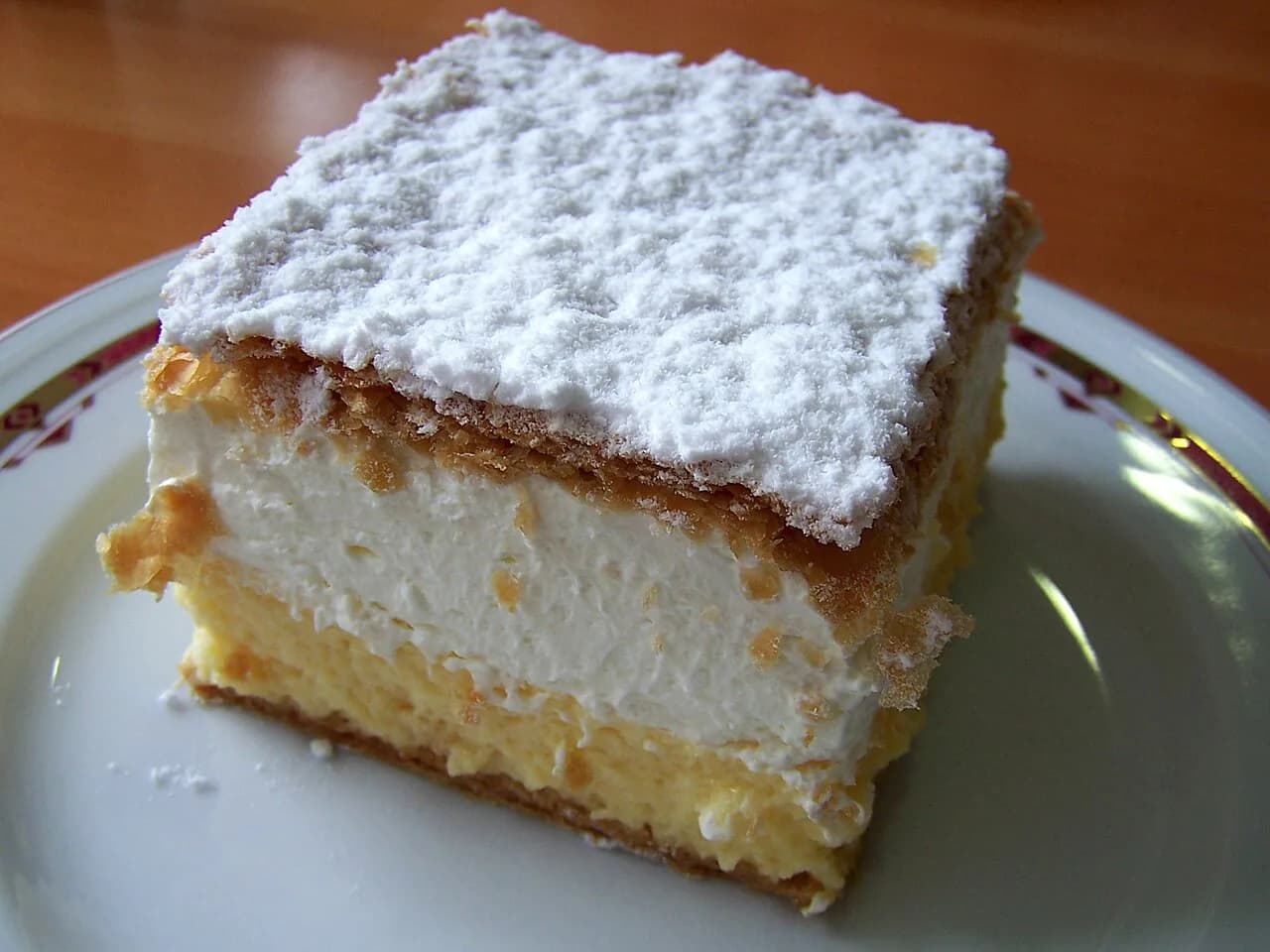
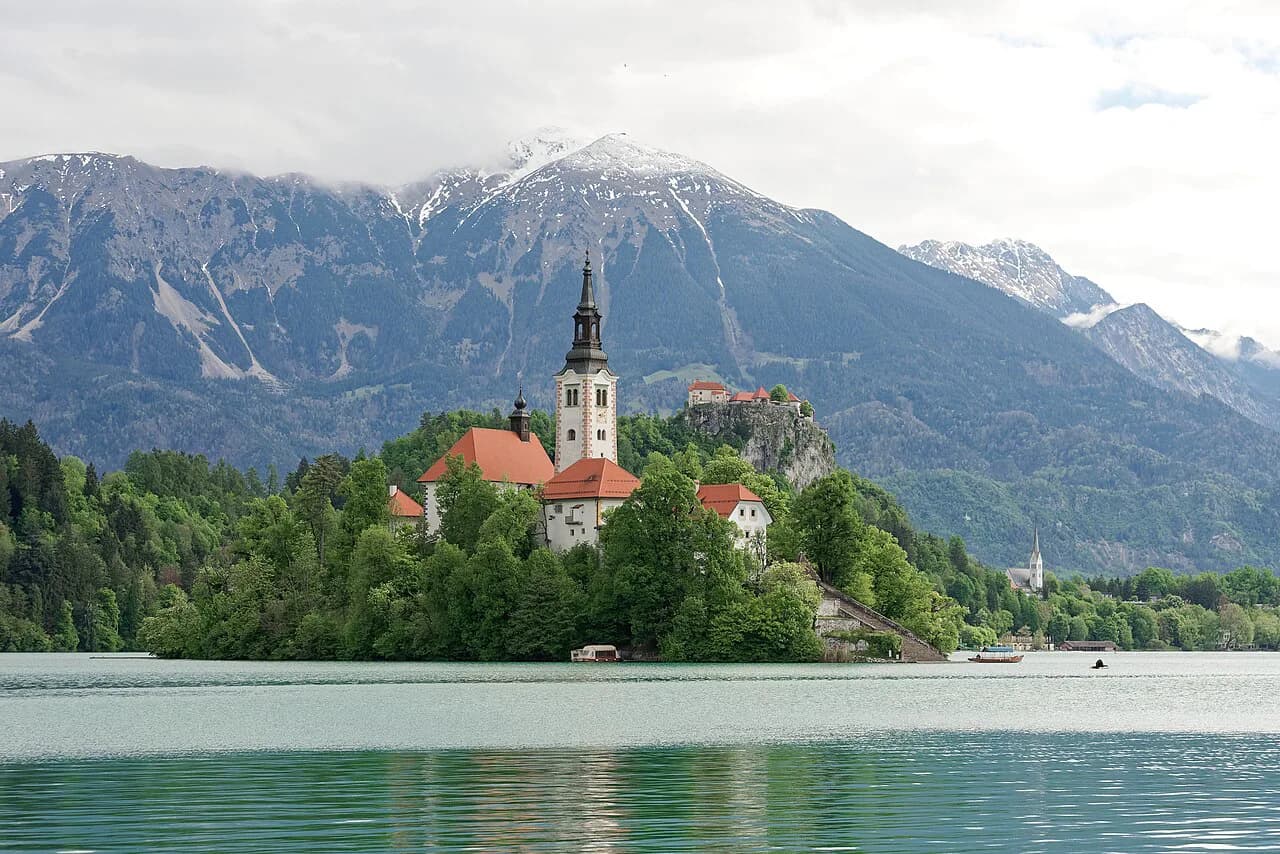
Kremsnita is a tall vanilla custard slice built on puff pastry and finished with powdered sugar, and in Slovenia it is remembered as the dessert of Lake Bled. The version sold at the lake is called kremna rezina, a slice that gained its following among visitors to the lake and its church-topped island. This guide sorts out what sits between the pastry layers, why the name changes as you cross borders, and which steps make or break a homemade batch.
What Kremsnita Is: Puff Pastry, Custard and a Sugar Top
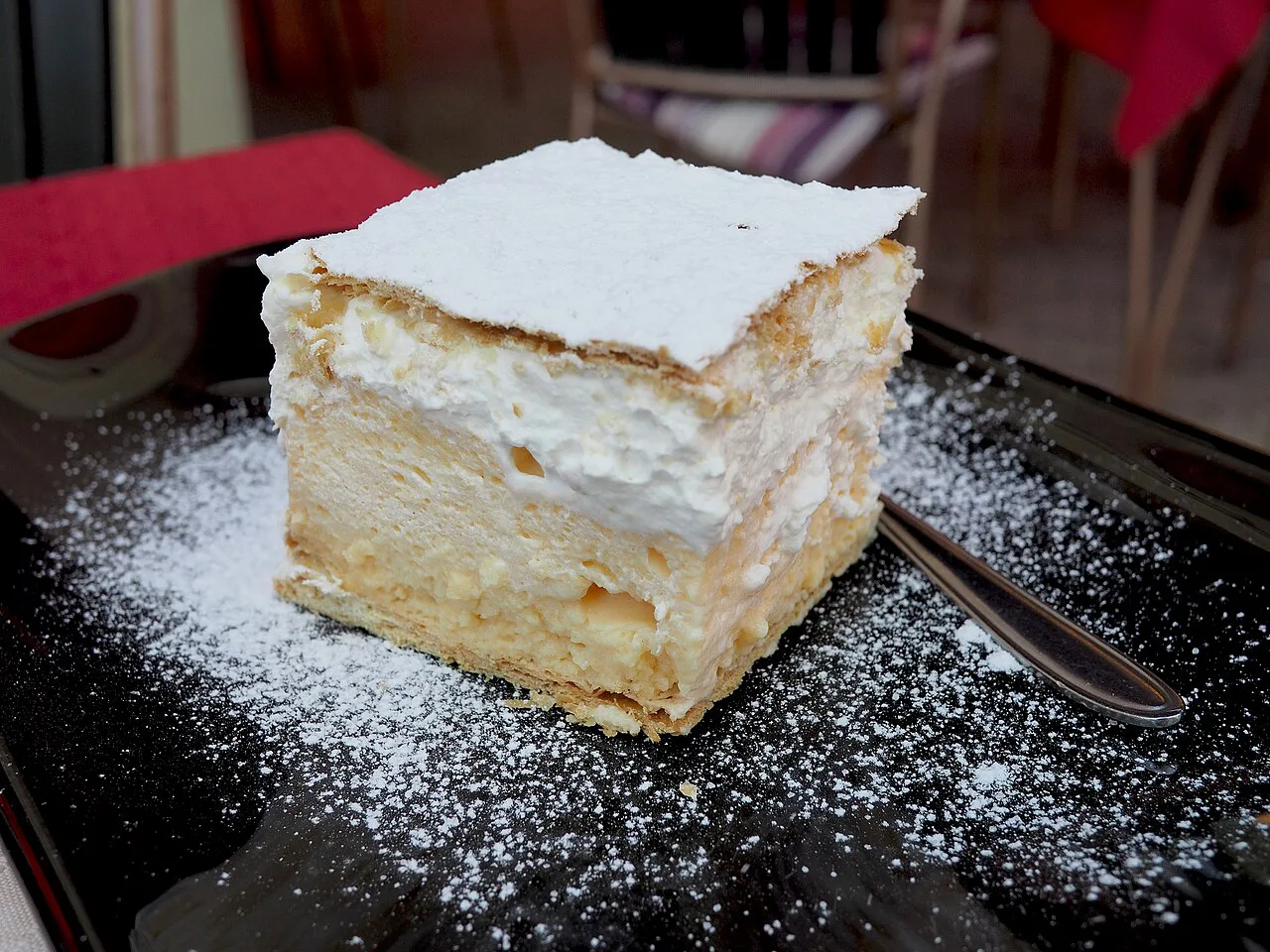
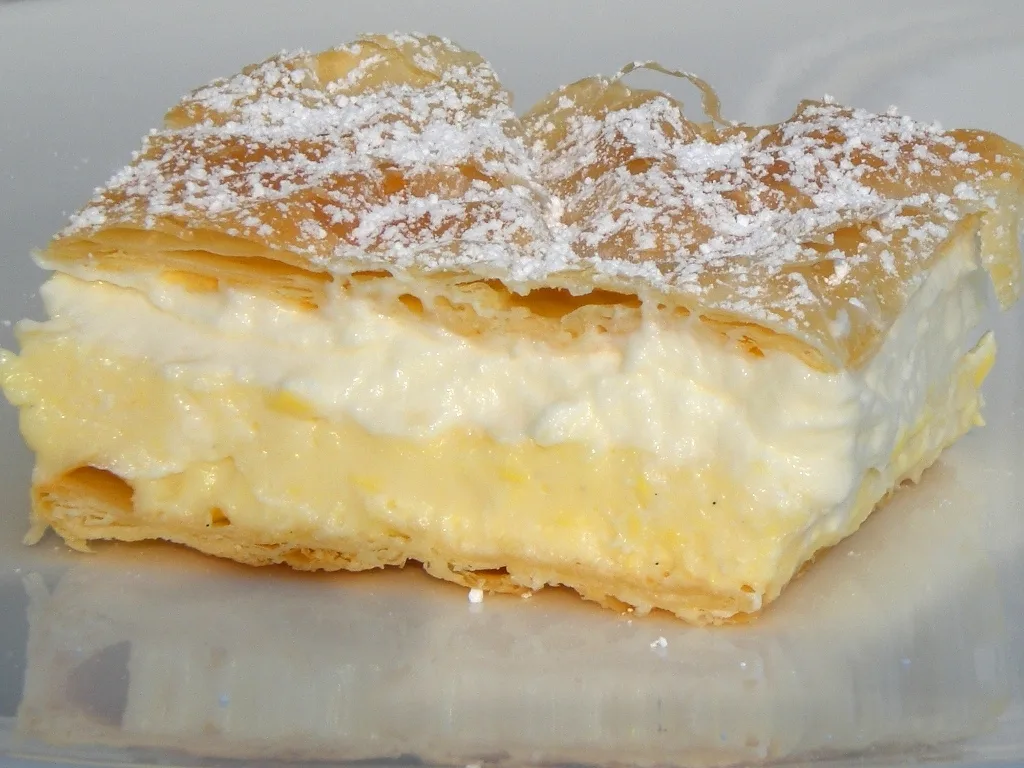
The cake is a sandwich: a sheet of baked puff pastry on the bottom, a thick custard across it, and a second pastry layer on top, with powdered sugar sprinkled over the finished slice. It is meant to be tall, and a home recipe built for a 9x13-inch pan fills the pan to the brim for a substantial slice.
The custard is usually set with cornstarch and eggs rather than gelatin, which gives a smooth, almost pudding-like filling when the starch dominates. Some recipes use cornstarch alone, while others mix in flour for a sturdier body, and the slice is not overly sweet even by European standards.
A whipped cream layer is optional rather than essential, and it changes the character of the slice. Adding cream on top of the custard after refrigeration produces a richer, taller cake, and the finished slice is served cold straight from the fridge.
Why the Same Cake Has Several Names
The cake travels under several labels depending on which country you are standing in. In Slovenia it appears as kremna rezina, in Croatia as kremšnita, in Serbia, Bosnia and Montenegro as krempita, in Germany and Austria as Cremeschnitte, and in Hungary and Slovakia as krémes.
In English the closest terms are custard slice or vanilla slice, and none captures the pastry-and-custard structure exactly. The name kremšnita is a Croatian adaptation of the German Cremeschnitte, which helps explain why the word looks familiar across borders.
The Samobor Origin Story and the Bled Connection
One account attributes the Samobor version to Đuro Lukačić, who returned to his native Samobor in the early 1920s after apprenticing at Zagreb pastry shops and worked in his brother's shop on the main square, while another credits him with creating the cake there in 1923. The fuller history is skeptical of the invention claim: desserts of this family, including the French mille-feuille and the Austrian Cremeschnitte, predate the 1920s, and Lukačić said he liked Hajoš's recipe best but changed the proportions.
The Slovenian version is tied to Lake Bled, where the slice gained its following among visitors to the island church. Travelers come specifically for the dessert while sitting with a view of the water, which is how a regional pastry became a destination food.
What a Traditional Recipe Contains
A standard home recipe calls for puff pastry sheets, a large quantity of milk, eggs separated into yolks and whites, sugar, cornstarch, vanilla, and often a splash of rum. The egg whites are whipped stiff and folded into the cooked custard, which gives the filling its airy height rather than a dense, flan-like texture.
The custard must be cooked until thick while stirring frequently, then left to cool before it meets the pastry and the refrigerator. One home version failed to set even after overnight refrigeration because the cream relied on egg and starch to hold it, a reminder that a homemade batch can stay oozy rather than slice cleanly.
Swapping cornstarch for arrowroot or tapioca starch does not work in this filling, because the custard will not turn out the same. If you are cooking without eggs, aquafaba whipped in place of the egg whites produces a similar lift, though the flavor is not identical.
Why the Top Pastry Is Baked in Squares
The top sheet of puff pastry is scored and baked in individual squares before it ever meets the custard. When the cake is assembled, the pre-cut squares lift off cleanly, so you slice only the bottom pastry and the custard beneath it.
Some bakers add the top pastry just before serving so it stays crisp, then dust with powdered sugar at the table. Others lay the squares over the chilled custard and refrigerate the whole thing, which softens the top slightly but holds the structure.
Kremsnita Versus Krempita: The Whipped Cream Question
The Croatian kremšnita and the Serbian krempita are close relatives, but the fillings differ. The Samobor style is essentially a thick layer of chiboust cream between two sheets of puff pastry with confectioners' sugar on top, while the Zagreb version adds a whipped cream layer and a chocolate glaze.
Montenegro's version runs to three layers of pastry, and Hungary and Slovakia call their slice krémes. If you are chasing a particular texture, the name is a weaker guide than a description of the layers.
Where to Eat It Around Lake Bled
The dessert is firmly associated with Lake Bled, and that association is strong enough that visitors treat a slice as part of the visit rather than an afterthought. The version served there is known locally as kremna rezina, and eating it while looking out over the water is the usual pattern.
Lakeside cafés change with the season, so read the posted menu before you sit down. For a wider look at the country's sweets, from rolled dough to poppy-seed layers, see our guide to Slovenian desserts.
Making It at Home: The Mistakes That Sink a Batch
The first mistake is undercooking the custard. If it stays loose on the stove, it will stay loose in the pan, so cook it until it thickens noticeably and keep stirring to avoid scorching, then give the assembled cake a full overnight set in the refrigerator.
The second is laying the whipped cream on warm custard, which melts it into a sloppy layer. Cool the custard completely before the cream goes on, and use a deep dish with tall sides, because a shallow pan cannot hold a properly tall slice.
A recipe written for American bakers may need a sugar bump, since the European versions are deliberately restrained; one tested recipe suggests raising the sugar to about 350 grams, roughly 1 3/4 cups.
How Kremsnita Fits With Other Slovenian Sweets
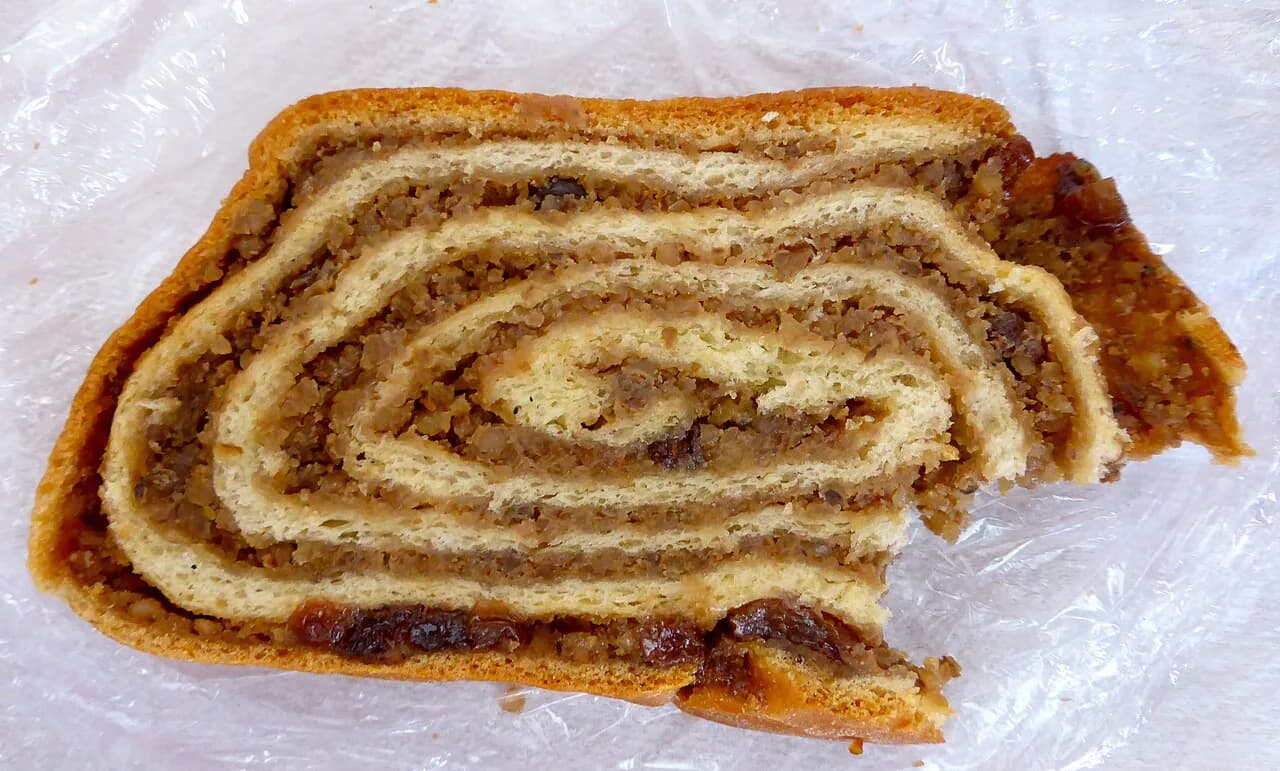
If you like the custard slice, the rest of the dessert table runs in a different direction. Potica is a rolled yeast cake filled with walnuts, tarragon or other fillings, and our potica guide explains the fillings and the rolling method.
For something with more layers and a northern accent, prekmurska gibanica stacks pastry with poppy seeds, walnuts, apples and a cheese layer, and its home region lies near the Mura River. Štruklji covers the boiled and rolled branch of the tradition, from sweet to savory.
If your timing lands in carnival season, krofi, the filled doughnuts, are the sweet to look for. Outside that window, Slovenian cookies like vanilijevi kifeljčki are the everyday tea-table option.
Is Kremsnita Worth Seeking Out at Bled?
Yes, if you treat it as a small, specific pleasure rather than a bucket-list event. A tall slice of cold vanilla custard between crisp pastry is a good thing to eat while looking at water, and the version at Lake Bled carries the name kremna rezina for a reason.
If you bake at home, start with a recipe built for a deep pan and give the custard a full night to set. If you buy one, look at the layers before you commit, since a whipped cream top and a chocolate glaze signal the Zagreb branch rather than the Samobor one.
Frequently Asked Questions
What is kremšnita called in English?
Custard slice, vanilla slice or cream slice are the usual English terms. The German Cremeschnitte is the ancestor of the Slavic names, and none of the English labels captures the puff-pastry sandwich structure exactly.
Sources
Notes for your Slovenia trip
Optional updates to our Slovenia place guides.
You might also like
Continue reading
More guides you'll find useful