Flancati: Slovenia's Carnival Angel Wings Pastry Explained
Flancati are thin, fried Slovenian pastries dusted with powdered sugar and tied to Carnival. Here is what they are and how they get their shape.
On this page
Flancati are thin, twisted pastries fried until golden and then dusted with powdered sugar, and in Slovenia they are tied to Carnival, the pre-Lent season called Pust. The brittle style, krhki flancati, is the one most recipes describe, though soft versions exist too. This guide covers what separates the two, how the dough gets its knotted shape, what the white wine is doing, and what changes if you bake instead of fry.
You will also see the same pastry under other names, which matters when you are reading a menu or a pastry case on the coast. The components are basic pantry items, so the interesting part is technique, not shopping.
What flancati are
Flancati are made from a simple dough rolled very thin, cut into strips or rectangles, slit and twisted, then deep-fried until light and flaky. After frying they are typically dusted with powdered sugar, and they belong to Carnival, holidays and family gatherings rather than the everyday table.
That dairy-free dough is unleavened, built from egg yolks, sugar, flour, whole egg, white wine, fat and salt, with powdered sugar added at the end for dusting. The brittle krhki recipe instead uses baking powder, sour cream, oil, rum and lemon zest, so the two approaches are not interchangeable. Pick one recipe and follow its quantities rather than mixing them.
Flancati are one traditional Slovenian sweet among many, and they sit alongside the country's baked and rolled pastries rather than replacing them. For the wider picture of what gets baked and served across the country, start with the collection of Slovenian desserts.
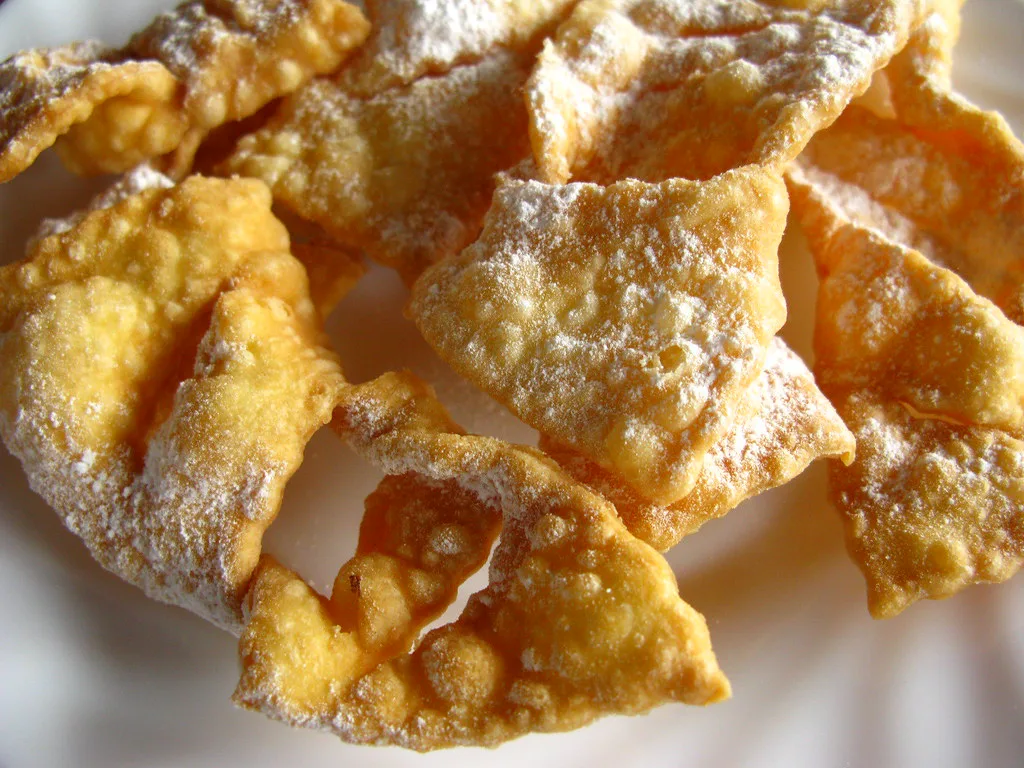
Krhki flancati versus the soft style
There are two kinds of flancati, soft and brittle, and the brittle one is what the krhki recipe sets out to make. That version is also described as fried sweet crostoli, kroštule or angel wings. The distinction is texture, not decoration: both end up sugared, but they do not bite the same way.
A sour-cream-and-butter dough is the other family you will encounter, and it behaves quite differently from the wine-based, unleavened dough. One home baker describes that version as closer to puff pastry than to a doughnut once baked. Decide first whether you want a shatteringly crisp result or a softer, richer one, because the ingredient list follows from that.
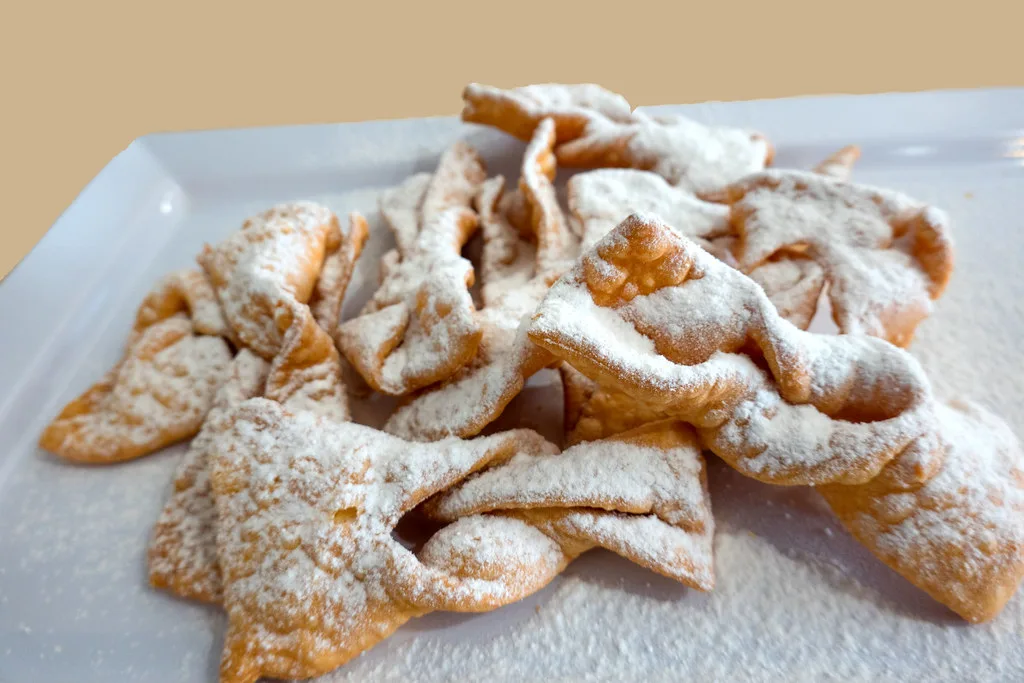
How the shape happens
The shape comes from one step, not a special cutter. The dough is rolled to roughly 2 mm, close to the thickness of a coin, then cut into rectangles of about 5 by 10 cm, or 2 by 4 inches. A few small lengthwise slits go down the middle, and one end is pulled through the slit with a slight twist.
Rolling thinner is the lever that matters most. One recipe notes the dough should be about as thin as the spine of a kitchen knife, because pastry that is too thick fries heavy rather than shatters.
Strips can also be cut into diamonds, squares, coiled into thin bows, or folded around jam like small ravioli, which is why you see several silhouettes on one platter. The slit-and-pull step is only needed for the classic twisted look.
Why white wine goes into the dough
White wine is traditional here, and one recipe credits it with making the dough light, crisp and flaky while keeping the pastries from absorbing too much oil in the fryer. That is the practical argument for it, not just flavor. Sparkling water is suggested as an alcohol-free substitute that still keeps the pastry airy.
The brittle recipe takes white wine alongside sour cream, egg yolks, rum, lemon zest and vanilla sugar. Rum and lemon zest are standard in the coastal version too, where dark rum or grappa can stand in. Small quantities shape texture and aroma rather than a boozy result.
Other names for the same pastry
On the Slovenian coast, in Istria, the same treats are known locally as hroštole or hroštule, and in standard Slovenian as krhki flancati. Because that coast was long part of the Venetian sphere, the pastry also answers to Italian names, which makes a pastry case easier to read.
Across the border the family goes by many regional names: bugie in Piedmont, frappe or sfrappole in Emilia, cenci in Tuscany, chiacchiere in Lombardy, and galani or crostoli in Veneto. Angel wings covers the same idea in English. Flancati belong to a shared European fried-dough tradition rather than to Slovenia alone.
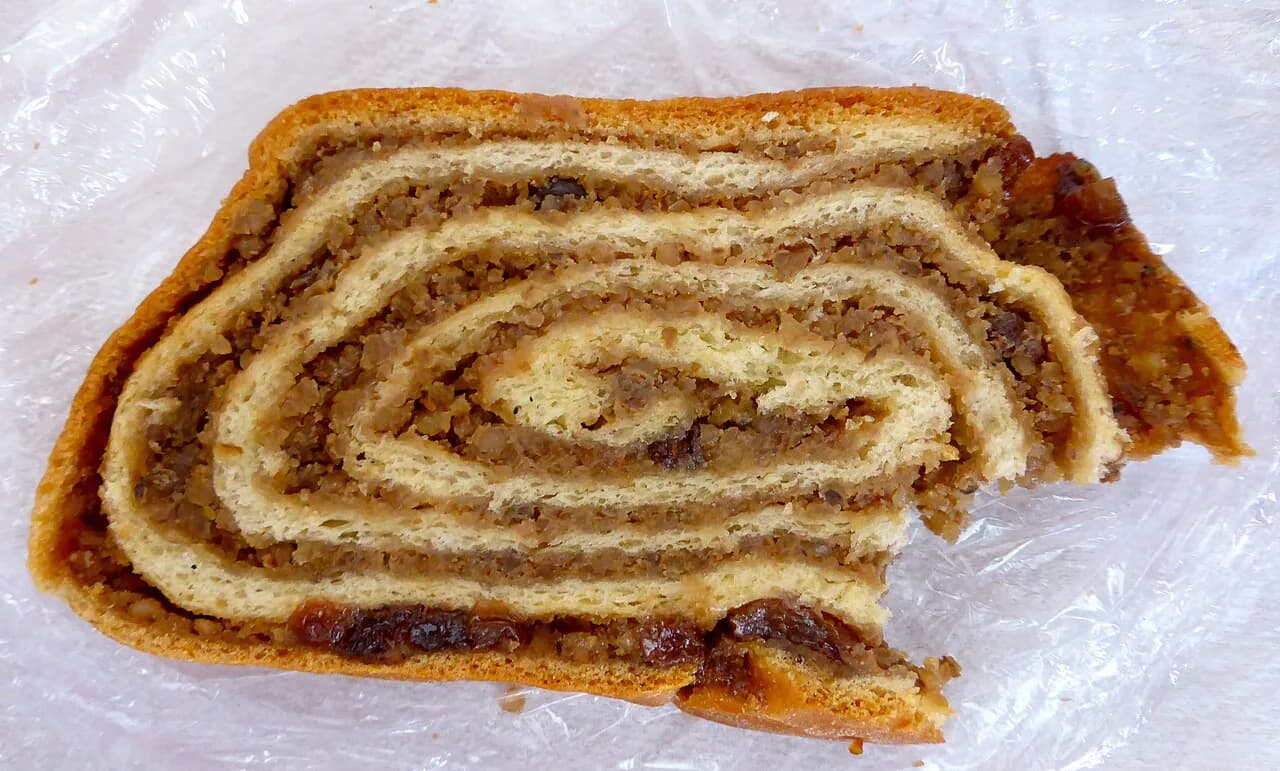
Slovenia has its own baked and rolled sweets that travelers meet first, and potica is the one most likely to land on a breakfast table. The guide to potica covers the dough, fillings and rolling method if you want to compare it with a fried pastry.
Frying, cooling and dusting
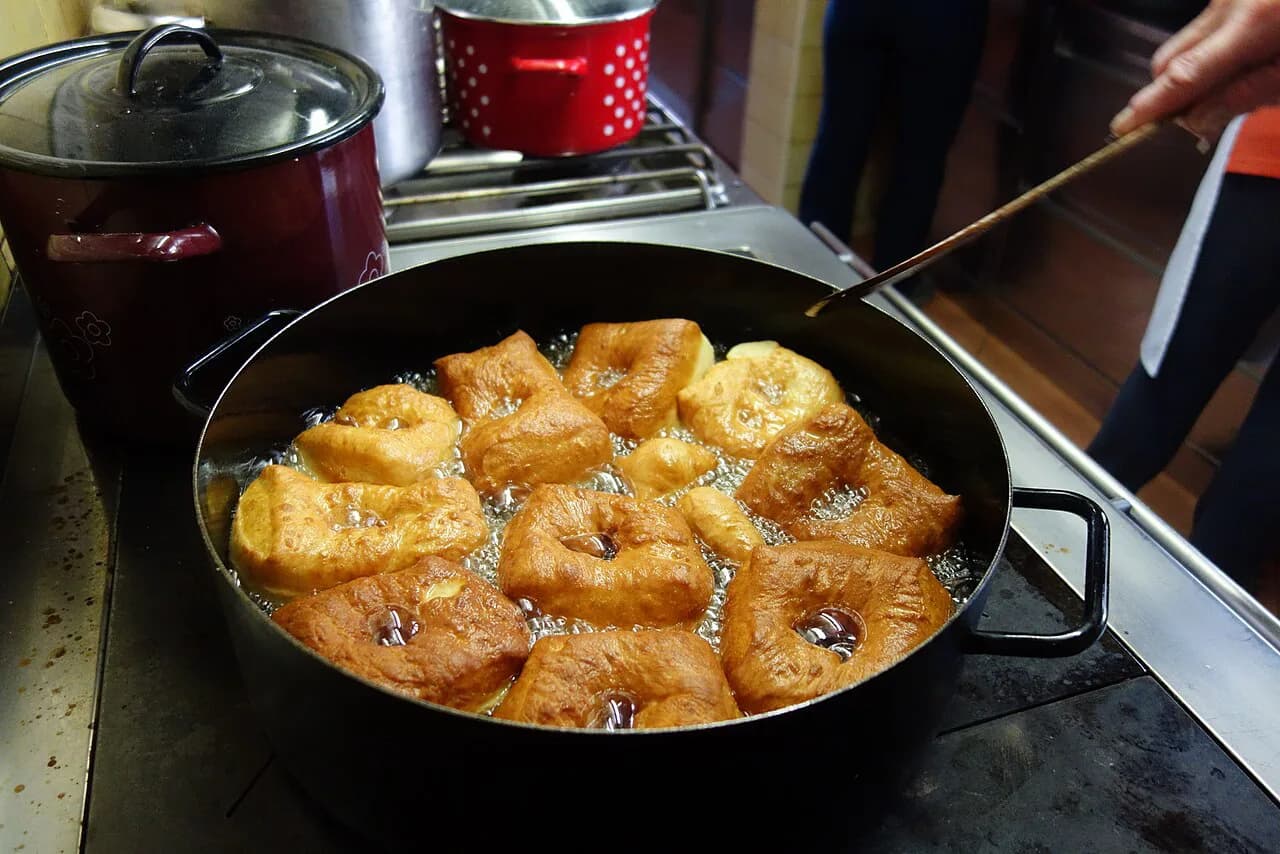
Heat the oil to 160 degrees and use enough depth, roughly 6 to 8 cm in a medium pot, so the pieces float and puff rather than sit on the bottom. Sunflower or canola oil is suggested. Fry until golden, then move the pastries to a cooling rack or paper towels.
Sugar goes on after frying and cooling, not before. The krhki recipe finishes with a sprinkle of icing sugar, and the coastal version calls for a generous dusting once the pastries are completely cool, since sugar added to hot pastry just melts away.
The dough rests before rolling, which relaxes the gluten so the sheet rolls thin without fighting back. One recipe allows about an hour, and another asks for at least 30 minutes and ideally an hour.
Baked versions and how they differ
Baking is a real option, but it produces a different pastry rather than a lighter copy of the fried one. A baked sour-cream dough is cut into squares, slit and pulled through as usual, then baked at 350 degrees Fahrenheit for 10 to 15 minutes until medium brown, turned once for even color, and finished with confectioner's sugar.
One older family recipe, written out by hand, was for oven-baked flancati, though the same family confirms the deep-fried method was the one actually used. Treat a baked batch as its own thing and judge it on its own terms.
Where you come across them
Expect flancati during Carnival and the weeks around it, when they show up alongside other fried sweets. The coastal account places them in pastry shop windows together with fritole and jam-filled doughnuts, made in large quantities to last through Lent.
Carnival in Slovenia also means krofi, the filled doughnuts that share the season with flancati. The guide to krofi covers what they are and how they are made, which helps if you are deciding which Carnival sweet to try first.
Fried dough of this kind turns up under different names across Europe, so a bakery elsewhere may be selling a similar pastry without the Slovenian label. The collection of Slovenian desserts is the place to start for a wider map of the country's sweets. These are usually eaten as a sweet snack rather than a plated dessert, so buy a small bag and share it.
Which flancati recipe should you try?
If you want the Carnival classic, choose the brittle krhki dough with white wine, roll it thin, slit it, and pull one end through before it hits the oil. If you would rather not deep-fry, make the baked sour-cream version and expect something closer to puff pastry, then dust either batch generously once it has cooled.
Frequently Asked Questions
Are flancati the same as angel wings?
Yes, angel wings is the English name for this fried, sugar-dusted pastry, and the brittle style is also called fried sweet crostoli or kroštule. On the Slovenian coast you will see it as hroštole or hroštule.
Why are flancati eaten at Carnival?
They are traditionally a Carnival food, tied to the pre-Lent season called Pust. Along the coast they are made in large batches meant to last through Lent.
Can you make flancati without deep-frying?
You can bake a sour-cream version, but the result is closer to puff pastry than to fried dough. It is a different pastry rather than a substitute, so judge it on its own.
Sources
Notes for your Slovenia trip
Optional updates to our Slovenia place guides.
You might also like
Continue reading
More guides you'll find useful