Pleterje Monastery: What You Can See at the Charterhouse
Pleterje Monastery is a working Carthusian charterhouse near Šentjernej. Visit the Gothic church of St. Trinity and the open-air museum by prior arrangement.
On this page
Pleterje Monastery rewards a prearranged visit, not a spontaneous stop. It is a working Carthusian charterhouse where the monks live a contemplative life behind walls, so the public sees a limited, specific slice: the Gothic church of St. Trinity, the open-air museum next door and the monastery shop. This guide separates the cloistered part from the public part, then covers the church interior, the museum, the monastic products, the wine tasting and the drive from Šentjernej or Novo mesto.
What Pleterje Monastery is: a Carthusian house in the Drča valley
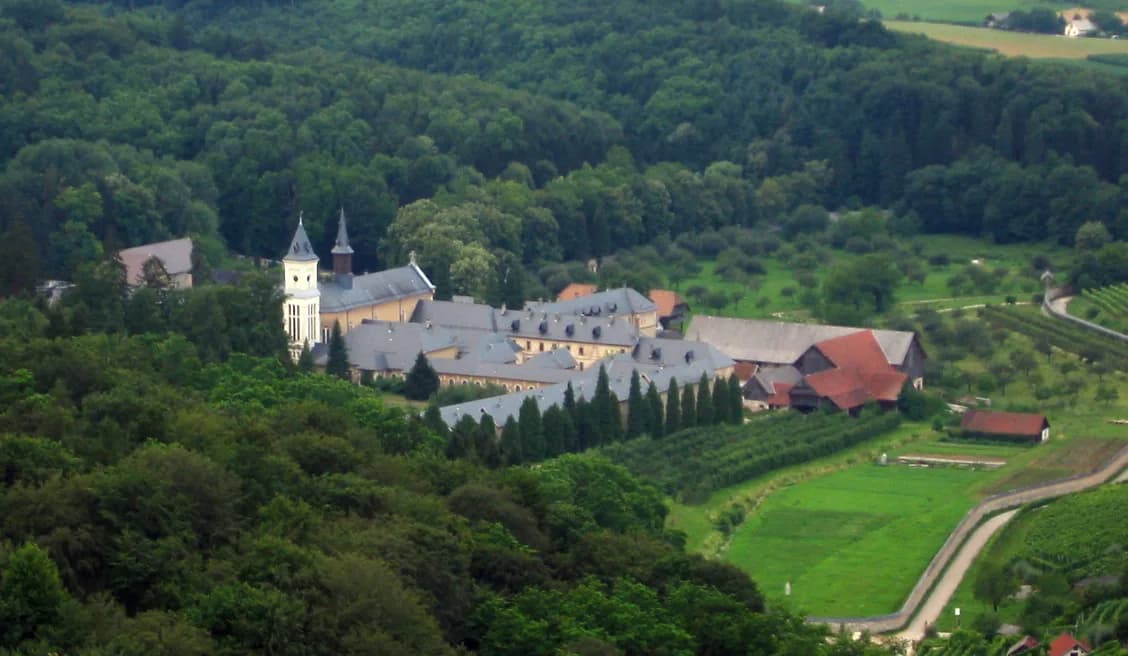
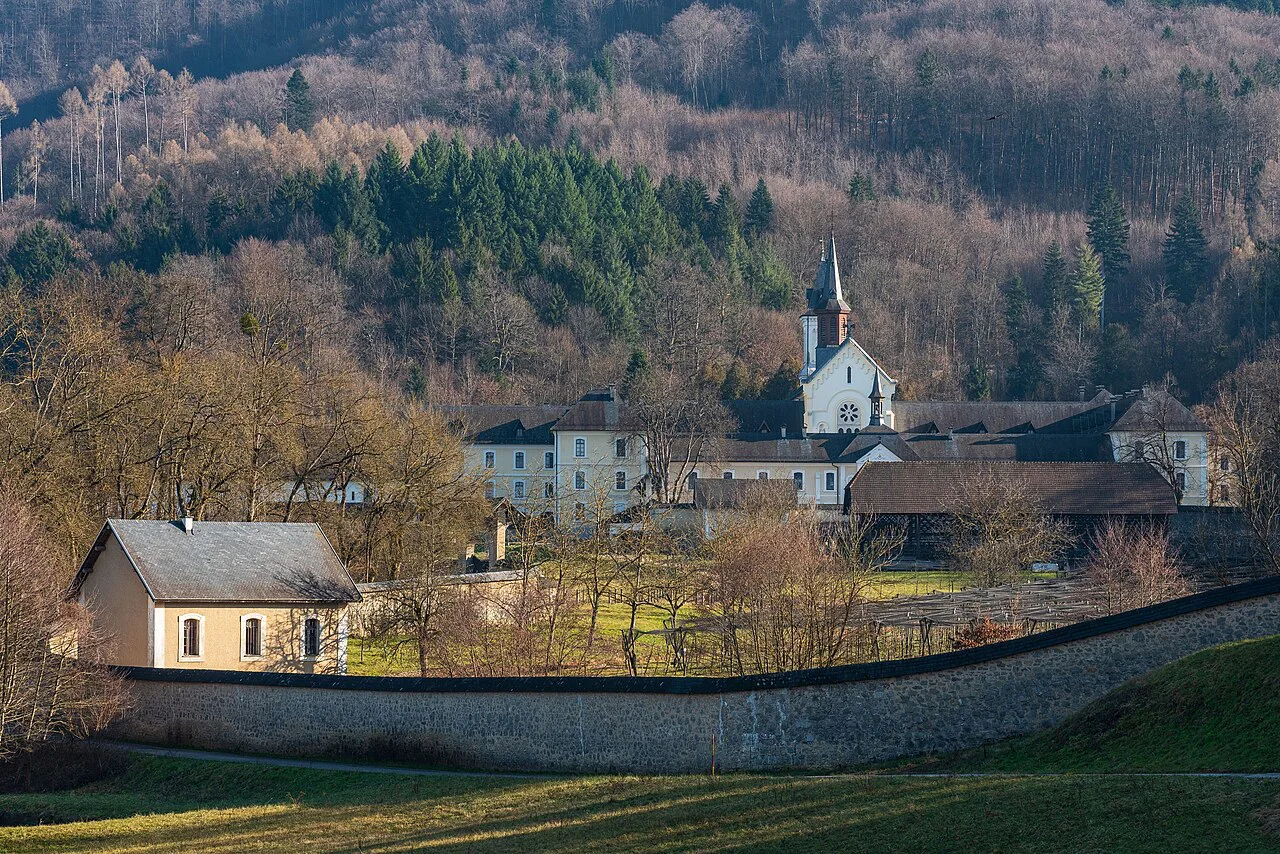
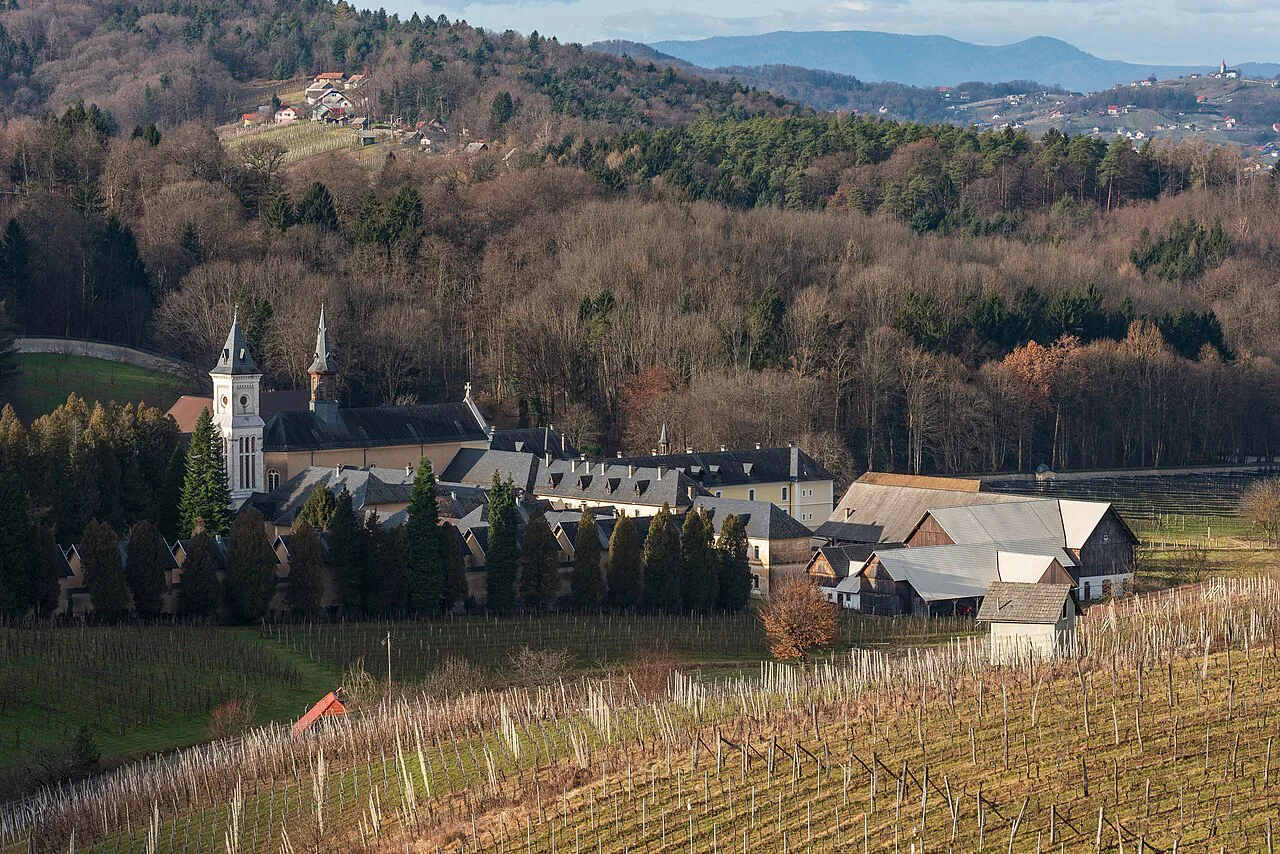
Pleterje sits in a hidden valley beneath the Gorjanci hills next to the village of Šentjernej. The monastery is a Carthusian charterhouse, a community of hermits whose monks follow a solitary and silent path, and most of the complex is cloistered and closed to the public. The official monastery site describes it as a Catholic monastery in which monks follow Christ in an exclusively contemplative life, with an address at Drča 1, 8310 Šentjernej.
Count Herman II of Celje founded the house in 1403. Of the medieval buildings, the church, part of the cloister and the sacristy survive; the rest of the complex was rebuilt at the start of the 20th century after Carthusian monks repurchased the estate in 1899. Knowing this helps you read the site: the Gothic core is the church, and the surrounding ranges are newer.
What you can enter and what stays behind the cloister walls
The monastery has two distinct parts. The Clausura admits only monks, apprentices and lay monastery help, while the public part includes the Gothic church of St. Trinity. That split is the single most useful thing to understand before you go, because it explains why a visit here is short and structured rather than a wander through courtyards and corridors.
Plan on seeing the church, a multimedia presentation about the monks' life and the charterhouse's significance, and the open-air museum. The VisitDolenjska listing says the museum is open every day of the year by prior arrangement, so the operative word is arrangement: contact the monastery ahead with your date rather than assuming a walk-in schedule.
The Gothic church of St. Trinity
The church was built in a simple Gothic style, and VisitDolenjska dates the old Gothic church to 1406. Inside, look for the long choir, the large Gothic windows and details described as Parlerian: console masks and flower keystones. The interior is the reason to come if you care about medieval architecture rather than monastic routine.
In the middle of the nave stands a Rood screen that once divided lay monks from choir monks, and clay vessels are built into the walls to give the space a particular resonance for choirs. Those two features are easy to miss if you walk straight to the altar, so give the nave a slow pass. Together they show how the building was fitted for a specific form of worship.
Arranging your visit
Because access runs on prearrangement, your first step is contact. The monastery publishes a telephone number and email address on its own site, and the Dolenjska tourism listing carries a separate mobile contact for the monastery and museum. Call or write with your preferred date, the size of your group and whether you want the museum and a wine tasting, then wait for confirmation before you build a day around it.
The multimedia presentation covers the monks' way of life and the cultural and historical weight of the charterhouse, which is useful because so little of the complex is visible. Treat it as the context setter before you step into the church. Confirm the current arrangements for your date when you make contact, since the visit model depends on the community's schedule.
The Pleterje open-air museum
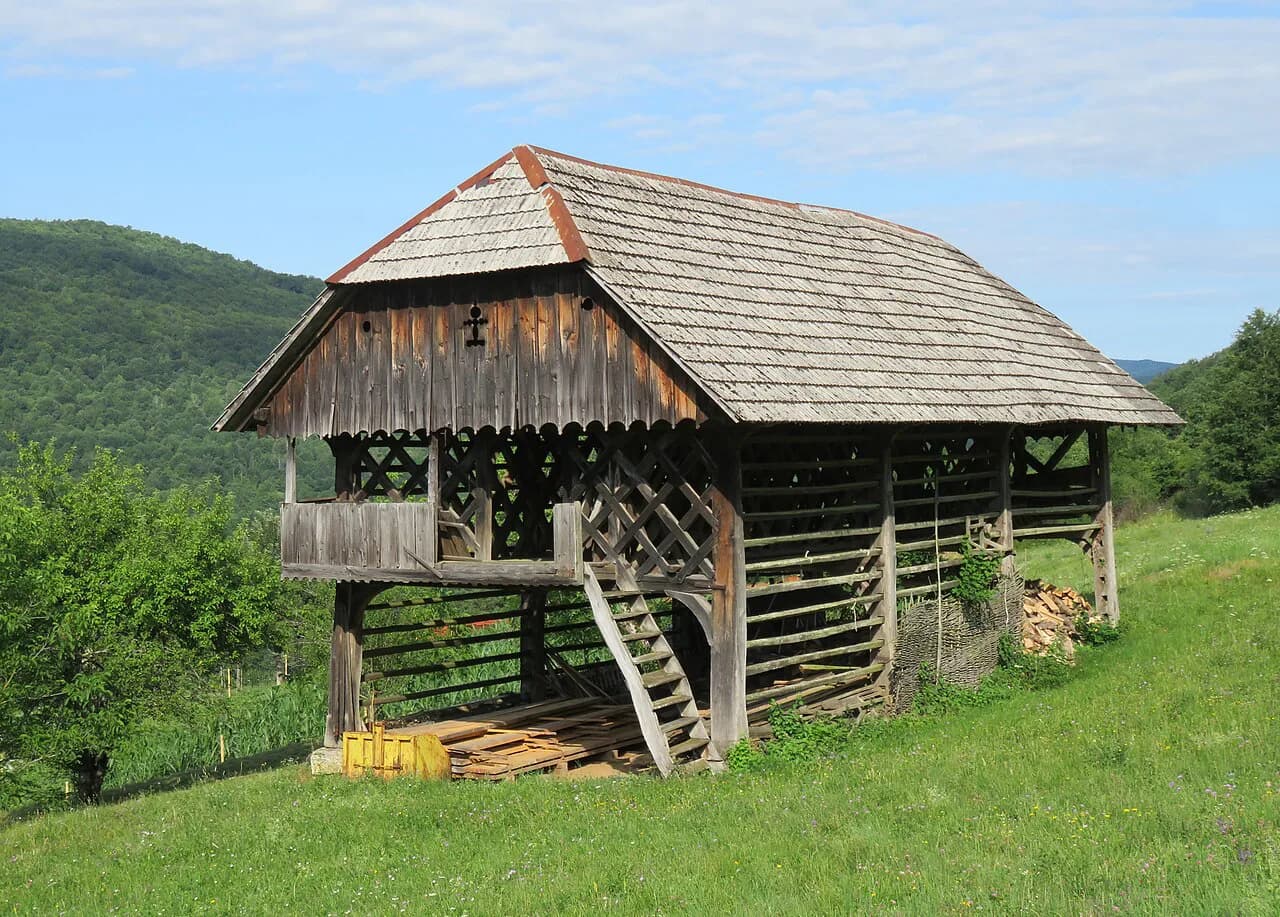
Adjacent to the monastery is an open-air museum built around an old traditional farmstead from 1833. The tourism board frames it as a place to explore the cradle of the Slovenian nation, which tells you the exhibits lean toward rural Dolenjska life rather than monastic history. It pairs naturally with the church because the two sit side by side.
Build the museum into the same prearranged booking as the church. Because entry depends on prior arrangement rather than posted hours, the farmstead is not something to save for a second trip or tack onto a late afternoon. Ask for both when you call.
The monastery shop: Cviček, fruit brandies and Medica
The monks are traditionally known for fruit produce, wines, brandy and bee products. Named products include Pleterski sadjevec (fruit brandy), Pleterska viljamovka (William pear brandy), Cviček wine and Medica honey liqueur. These are specific bottles to look for in the on-site shop, not a generic souvenir shelf.
The monastery also cultivates land and sells fruit, honey and candles. If you are driving rather than flying, the shop is the practical reason to leave space in the trunk; if you are flying, Cviček and the brandies are the more portable choices. Confirm what is in stock on the day of your visit.
Tasting Pleterje wines by prior arrangement
A tasting can be arranged in advance and covers seven samples, moving from Cviček and mass wine through Blue Frankish and predicate wines to sparkling wine. That range gives you a real read on the monastery's production rather than a single pour, and it makes the tasting a genuine stop rather than an afterthought. Request it when you book, since it is not an on-demand add-on.
If you want to take bottles home afterward, taste first and buy second at the shop. Anyone driving should plan a designated driver, because the samples are wine, not sips of water. Ask about the current tasting arrangements when you make contact.
Getting to Pleterje from Šentjernej and Novo mesto
Pleterje lies in a valley beside Šentjernej under the Gorjanci hills, with the entrance address at Drča 1. A car is the practical option, since the monastery sits in a rural valley off the main road and the last stretch is country road.
Because access needs to be arranged ahead, the drive is the easy part; the timing is what you control. Set your arrival for the slot you agreed and leave buffer for the last stretch of country road. If you are combining Pleterje with other stops in Dolenjska, put Pleterje first so a delayed booking does not derail the rest of the day.
Other Carthusian houses in Slovenia: Žiče, Jurklošter and Bistra
Pleterje is the youngest of four Slovene Carthusian monasteries. Žiče was founded in 1160, Jurklošter in 1170 and Bistra in 1255, with Pleterje following in 1403. If Carthusian architecture is your reason for coming, that quartet gives you a natural shortlist for a second day in the region.
Of the four, Pleterje is the only still-inhabited Carthusian monastery in Slovenia, which is why its public access is limited to the church and the museum. The Žiče Charterhouse makes an obvious comparison, with ruins in a secluded valley that reward a completely different kind of visit. Read up before you go so you know what survives at each site.
Where Pleterje fits in a Dolenjska day alongside Kostanjevica
A collection of about 44 oil paintings from the 17th and 18th centuries, attributed to Flemish, French, Italian and German masters, is exhibited at the Božidar Jakac Art Museum in Kostanjevica. That gives you a reason to pair the monastery with Kostanjevica on the same loop. The monastery's library, by contrast, stays within the community.
If you want a second religious site on the drive, Stična Abbey lies along the route toward central Slovenia. Pair a prearranged Pleterje slot with a flexible stop at the abbey so a booking change does not cost you the whole day. The Cistercian church there is a useful counterpoint to the Gothic church at Pleterje, and our guide to churches in Slovenia sets the wider context for both.
Should you book Pleterje or another Carthusian site?
Book Pleterje if you want a Gothic church interior, a clear explanation of Carthusian life and a shop with named monastic products, and if you can commit to an agreed date. Skip it if you expect to wander freely, because the cloister is closed and the visit is fixed. Either way, call or email first and confirm the arrangements for your date.
If you are collecting Slovenia's monastic sites, put Pleterje alongside Žiče and Stična and see how differently each one handles visitors. Brezje works as a contrasting Marian shrine stop on a longer church-focused drive.
Explore more Slovenia guides
Frequently Asked Questions
How many Carthusian monks live at Pleterje today?
The monastery's site and the tourism listings do not give a current headcount, so there is no reliable figure to quote. The community is described as a group of hermits living a contemplative life behind the cloister walls. Ask when you arrange your visit if the number matters to you.
Can I visit Pleterje without booking?
The church, the multimedia presentation and the open-air museum are visited by prior arrangement, and the tourism listing describes the museum as open every day of the year by prior arrangement. Contact the monastery with your preferred date and group size before you travel, and wait for confirmation before planning the rest of your day around it.
Is the Pleterje church open every day?
The open-air museum is described as open every day of the year by prior arrangement, so the visit depends on a booking rather than fixed opening hours. Confirm access to the church for your date when you make contact.
Sources
Notes for your Slovenia trip
Optional updates to our Slovenia place guides.
You might also like
Continue reading
More guides you'll find useful