Ptujska Gora: The Gothic Pilgrimage Church Near Ptuj
Ptujska Gora is a hilltop pilgrimage village near Ptuj with a Gothic basilica, the Virgin of Mercy relief and views over the Drava plain and Haloze hills.
On this page
Ptujska Gora is worth the short detour from Ptuj for one reason: a Gothic pilgrimage church whose interior holds the Virgin of Mercy relief with its 82 carved figures. The village clusters on and below a hill above the Drava plain, with the church at the top and a market square below it. This guide covers what to look for inside the basilica, how the site is laid out, where to park and how the hill fits into a day out from Ptuj.
What Ptujska Gora is and where it sits
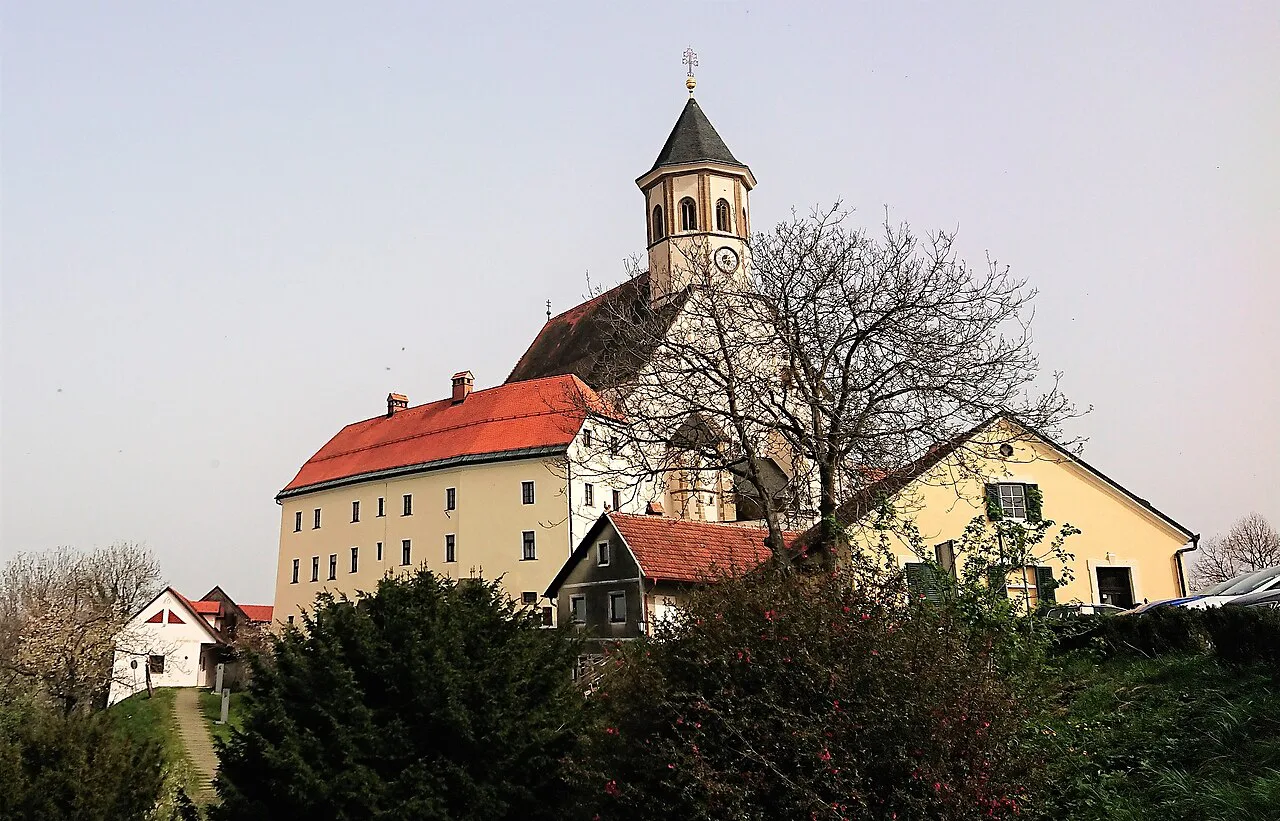
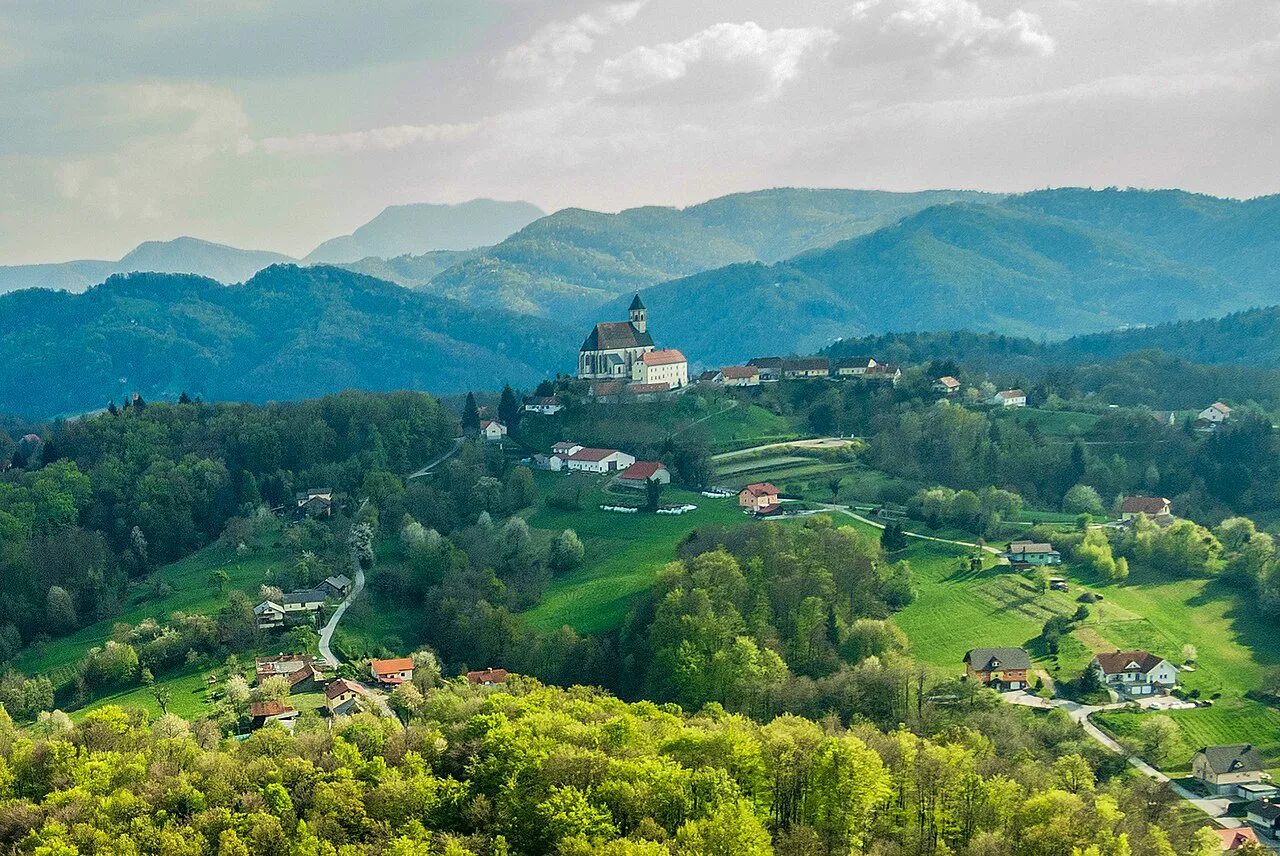
The name covers both a village and its church, set on a hill above the Drava plain roughly between Ptuj and Majšperk. The village grew on the flat ground below the church, in front of a large market square, while the basilica occupies the top of the hill. You park near the top or below, then climb to the church itself.
The church is the Basilica of the Virgin of Mercy with the Protective Cloak, known in Slovenian as Bazilika Marije Zavetnice s plaščem. It has carried several names over the centuries, including Črna Gora, which is why older maps and signs can look confusing.
The basilica interior: what you see first
Inside, the church is a three-nave Gothic hall, and the eye goes straight to the baroque high altar where the mercy relief now sits. The building reads as a treasury of early fifteenth-century carving rather than a single showpiece. Seating is arranged for services, so keep to the edges when worshippers are present.
The dedication comes from the image of Mary spreading her cloak, a motif repeated in bronze above the main portal. If you are collecting Slovenia's church interiors, this one belongs on the same list as Brezje, Slovenia, where the national shrine draws far larger crowds.
The carving to look for first: the mercy relief
The Virgin of Mercy relief, carved around 1410, shows Mary sheltering 82 people under her outstretched cloak. Among the faces are the church's founder Bernard III of Ptuj, his wife Valburga, two Franciscan friars and a spread of nobility and clergy. It is a group portrait as much as a devotional image.
The original relief was moved into the high altar during the baroque period, and a shallow bronze version now marks its old place above the main portal.
The side altars and Gothic sculpture in the nave
Work through the nave systematically and you will find the Celje altar of Frederick II of Celje in the south apse, a baldachin-type piece attributed to the circle of Petr Parléř. Against the clustered columns stand the Rosary altar, with a seated Madonna and child flanked by St. Catherine and St. Andrew, and the slightly later Sigismund altar with figures of St. Barbara and St. Erasmus. The St. Jacob statue on the console of the central column on the right shows the workshop's early fifteenth-century carving.
The baroque pulpit from the mid-eighteenth century and two confessionals are later additions, and the color windows depicting the Canticle of the Sun date from the early 1980s, so Gothic carving, baroque furnishings and modern glass share one room.
Frescoes, stonecutter's marks and the tower chapel
Gothic frescoes survive in the southern part of the space under the choir, in what was once the Chapel of the Cross, showing scenes from the life of Jesus. In the chapel housed in the former defense tower you can see Gothic reliefs from the original 1410 church furnishing, including the Angel with Coats of Arms, the Adoration of the Magi and the Death of Mary. More than a thousand stonecutter's marks are visible on dressed stone inside and out.
Outside: the baroque stairway, portal and bell tower
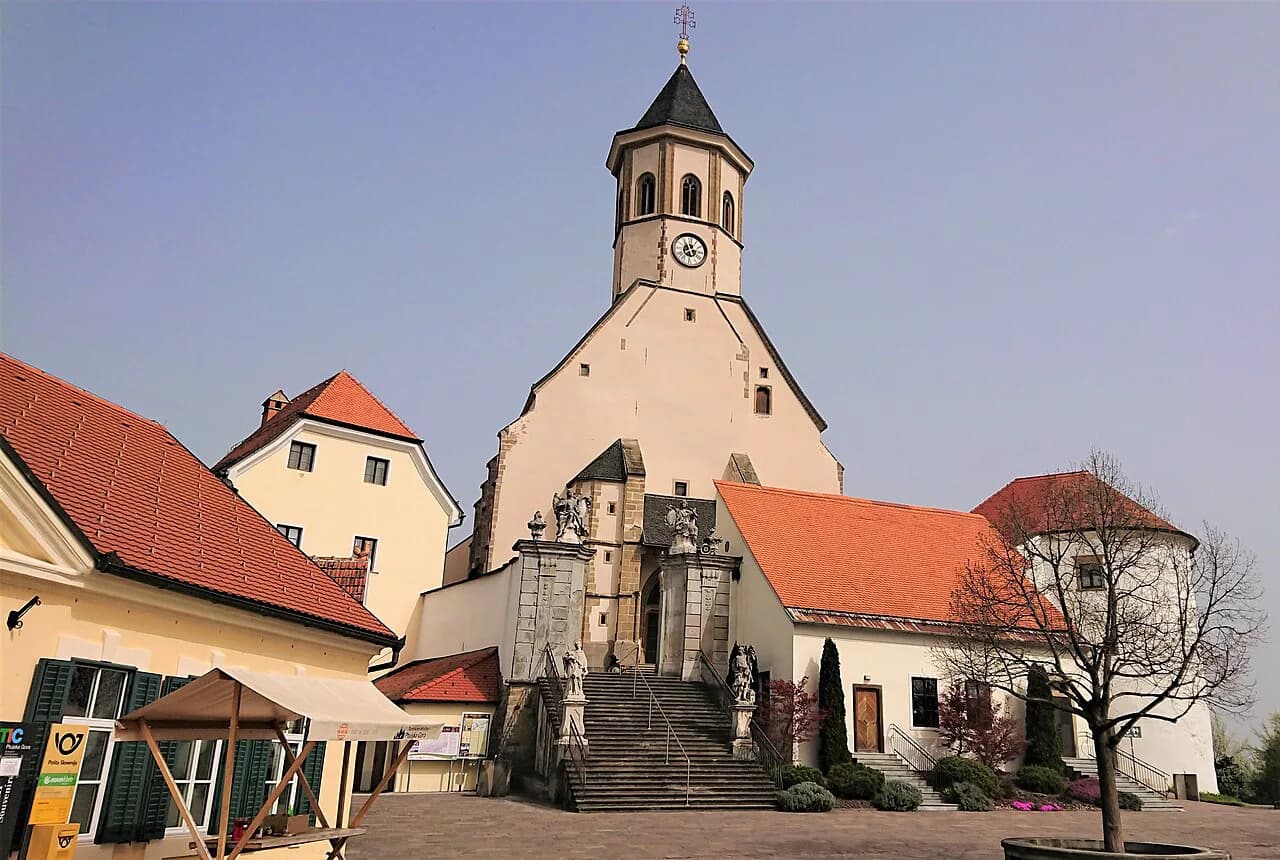
The baroque stairway up to the church is guarded by statues of St. Florian and St. John Nepomuk, with seated angels holding shields at the top. The main portal carries a bronze Virgin of Mercy, and the door leaves include a bronze portrait of Pope John Paul II with St. Anton Martin Slomšek, added after the 1999 visit. The bell tower in its present baroque form holds four bells, and tall Gothic windows of about nine meters animate the exterior, especially on the east side where three apses close the church.
Walk the outside perimeter once before leaving: the muscular flank walls and the slender east end show how the building was fortified and later remodeled. Whether the tower itself can be entered on a given day is something to ask at the tourist information office on the village square.
The wall and southern defense tower
A wall with a surviving southern defense tower wraps the churchyard, a reminder of the period when the hill was fortified against Ottoman raids. The wall is short enough to walk in a few minutes, and it frames the best exterior angles of the church.
Views from the hill in each direction
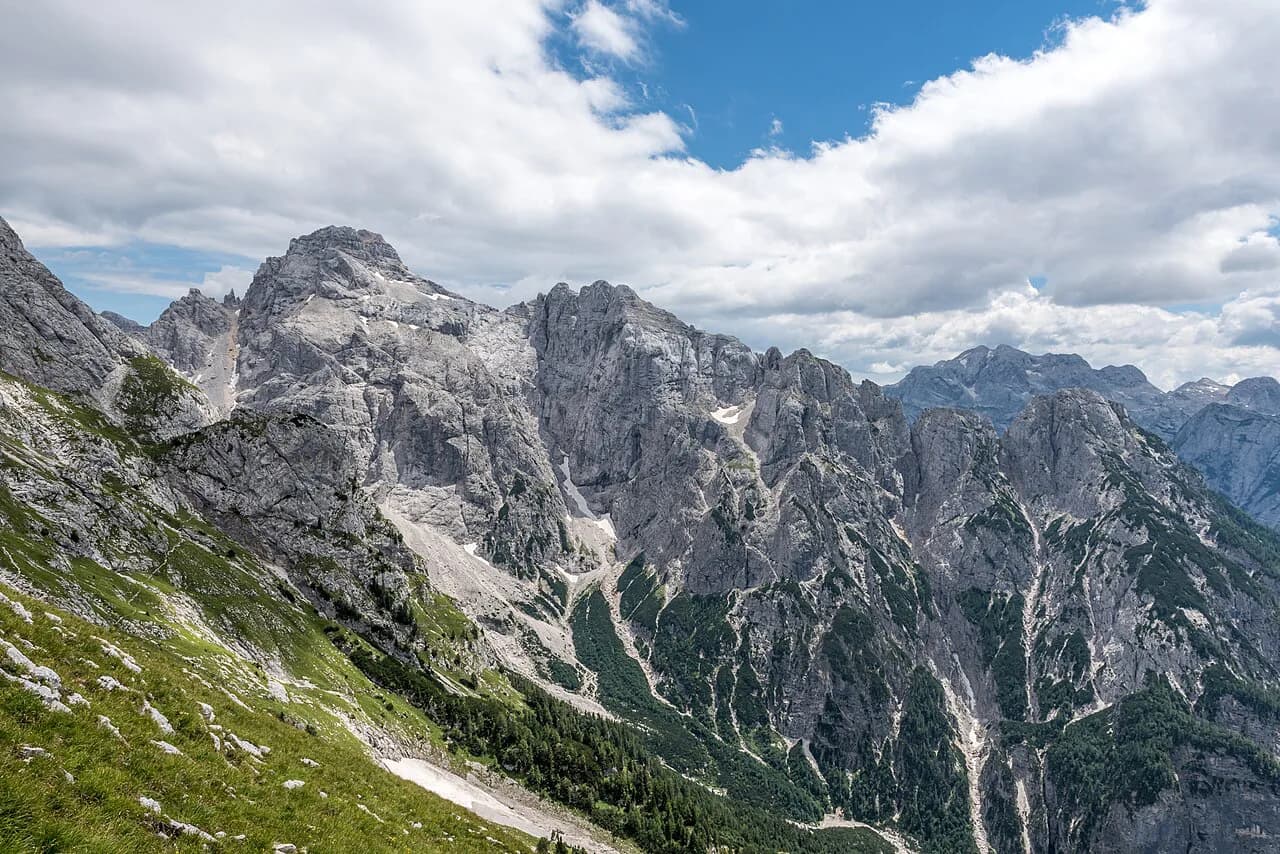
Treat the hilltop as a viewpoint with named landmarks rather than a vague panorama. To the southeast you look toward the cemetery church of St. Lenart and the church of St. John at Janški Vrh; due south are the church of St. Bolfenk and Donačka Gora; to the west the land opens across the Drava plain. Looking north you can pick out Ptuj, the Slovenske gorice hills and, on a clear day, the Pohorje ridge and the mountains above Graz in Austria.
Several of the churches are small silhouettes rather than obvious landmarks, so binoculars help. Late afternoon light usually works best for the plain, while the morning side favors the Haloze hills to the south, and the Slovenian Tourist Board's image library gives a fair sense of the setting before you go.
The village square below
The market square in front of the church holds the pillory column known as the pranger, a copy of a fifteenth-century original inscribed with the year 1855. Ptujska Gora held market rights from 1447 and competed with Ptuj for traders, which is why the square is wider than a village of this size would suggest. The tourist information office, opened on the square in 2004, is where you pick up information on the church, the village, cycling routes and accommodation.
Getting there by car and where to park
Driving is the straightforward way to reach Ptujska Gora from Ptuj, following signs first for Lovrenc na Dravskem polju and then for Ptujska Gora. At the roundabout on the hill, turn left twice to reach the parking area reserved for church visitors. From the Ljubljana–Maribor highway, leave at the Slovenska Bistrica north exit, head toward Ptuj, exit at Cirkovce and follow the road through Lovrenc na Dravskem polju; from the Podravska highway, leave at Hajdina and route via Kidričevo and Apače.
From that parking area the walk to the basilica takes about ten minutes over 0.55 km and climbs roughly 38 meters, finishing with a steeper paved stretch and steps past the stations of the rosary. On a hot day or with limited mobility, plan to stop on the way up. Confirm current visiting arrangements with the parish office before a special trip.
Is Ptujska Gora worth a stop from Ptuj?
Yes, if you are interested in Gothic carving or want a hilltop view close to Ptuj; no, if you are chasing a full day of sights. Half a day covers the church, the square and the viewpoints with time to spare. The highlight is inside a working church, so the best visits happen outside service hours.
Pair the church with Ptuj itself rather than treating it as a standalone destination. Travelers touring religious sites across the country can use the churches in Slovenia guide to slot Ptujska Gora beside other stops, and Stična Abbey and Žiče Charterhouse make a natural second half of a longer monastery-and-church itinerary.
Combining the church with a bike loop past the lakes
Cyclists based in Ptuj can link Ptujska Gora with two lakes on a 41 km marked route across the Drava plain. The loop climbs 427 meters on asphalt and is rated moderately demanding; it suits road, trekking and e-bikes, and the tourist board lists it as family-friendly. Red direction signs point the way from Ptuj toward Ptujska Gora, and D8 markers guide riders from Kungota via Green Lake, Cirkovce and Sestrž.
Sestrško Lake has a walking path around it, while the Green Lake sports and recreation center groups sport, relaxation and food on one site. The route only makes sense if you already have bikes with you; otherwise, drive to the church and skip the loop. Load the GPX track from the Ptuj tourist board before setting out so you can follow the signed junctions on the ground.
How to Slot Ptujska Gora Into Your Trip
Build Ptujska Gora into a Ptuj day as a two- to three-hour stop: park near the church, walk the paved path, and work through the interior in a fixed order from the mercy relief to the side altars and frescoes. Add the village square and the viewpoints if the weather holds.
If you are touring Slovenia's religious heritage, compare the Olimje, Slovenia stop and the Pleterje monastery on the same trip to see how different orders shaped very different buildings.
Frequently Asked Questions
Are Mass times published for Ptujska Gora?
Mass times change with the liturgical calendar and are not part of a general visitor listing. The parish office and the village tourist information office on the square are the places to confirm service times for the day you plan to visit.
Can you climb the bell tower?
The tower holds four bells and has been rebuilt several times, and no general visitor access is described. Ask at the tourist information office on the square whether the tower is open on the day of your visit.
Sources
Notes for your Slovenia trip
Optional updates to our Slovenia place guides.
You might also like
Continue reading
More guides you'll find useful