Stična Abbey (Stična Monastery): Visiting Slovenia's Cistercian Site
Stična Abbey is a working Cistercian monastery in Dolenjska housing the Slovene Museum of Christianity. Here is how to get there, park, and find the entrance.
On this page
Stična Abbey is a Cistercian monastery in the village of Stična in Dolenjska, and part of the complex houses the Slovene Museum of Christianity. Plan a half day from Ljubljana by car if you want both the museum and the monastery courtyards. This guide separates the three parts of the site, then covers the drive, the bus and train options, parking, and the walk to the museum door.
What Stična Abbey is and where it sits in Dolenjska
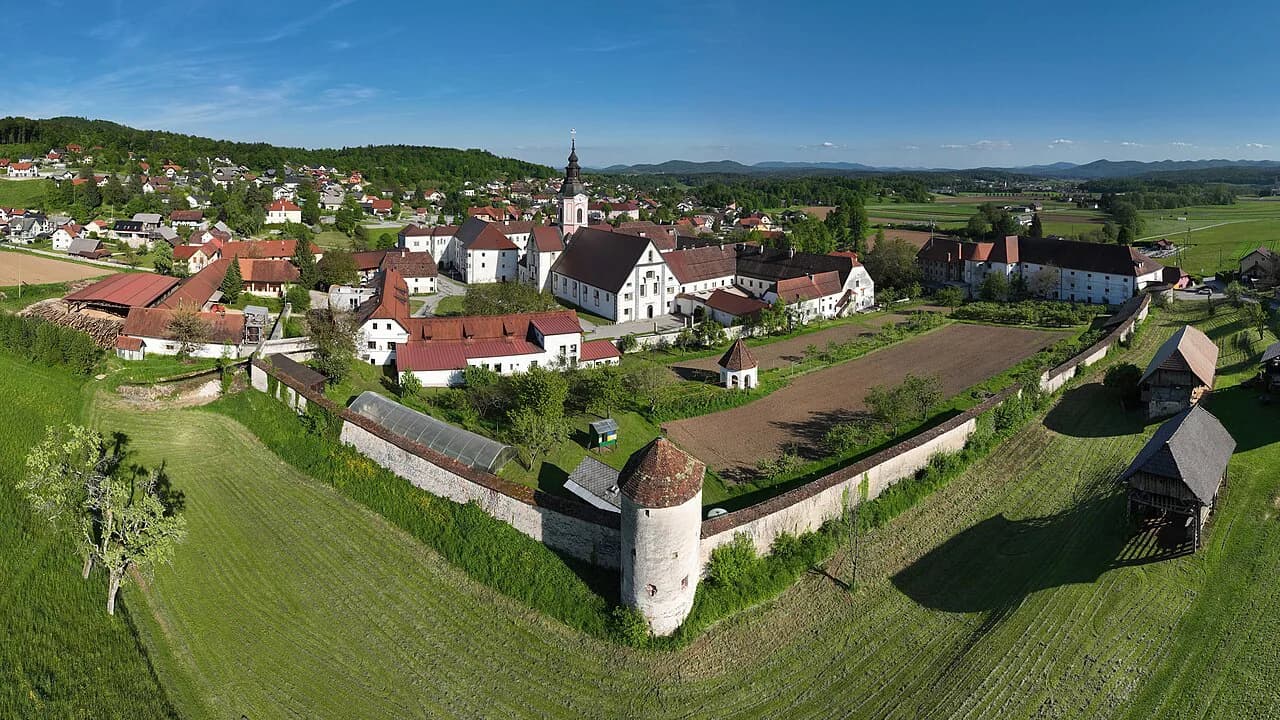
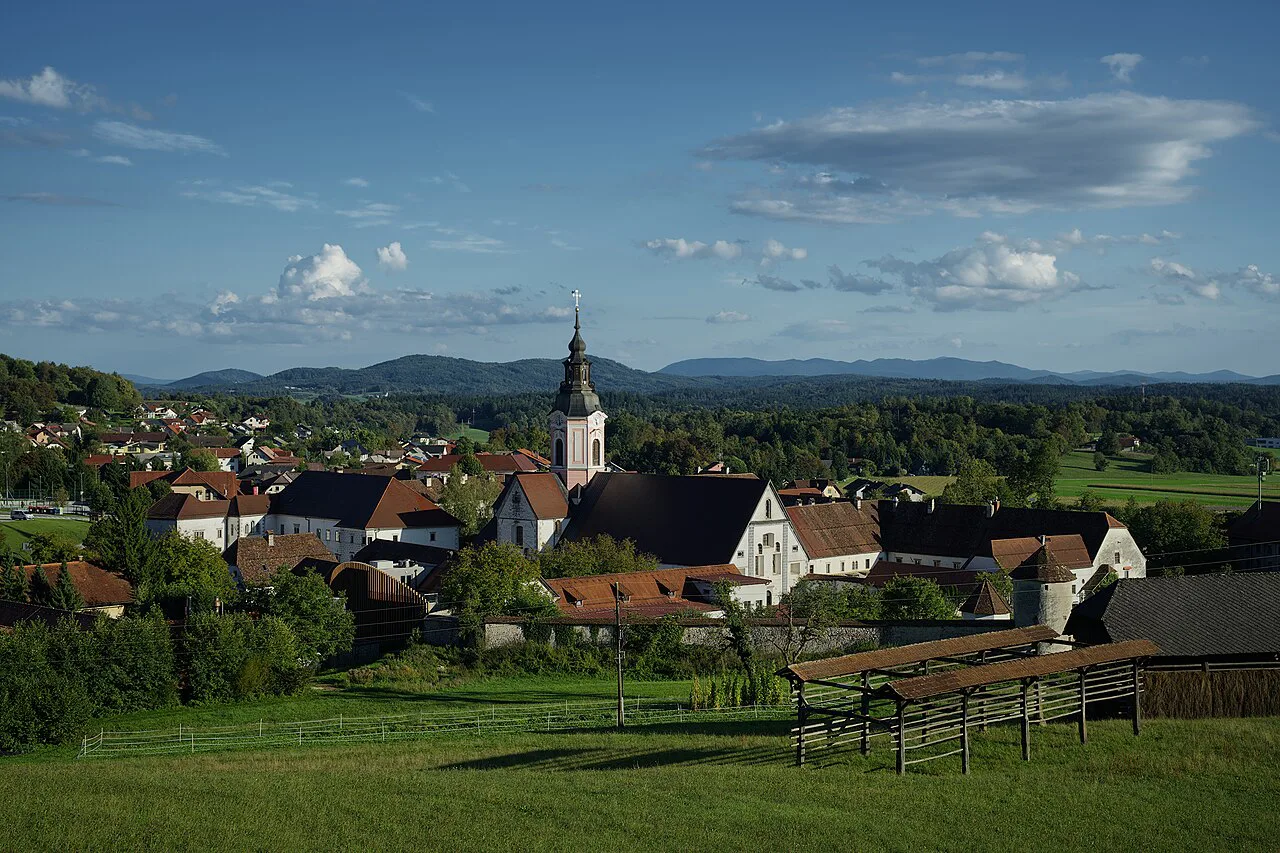
The museum gives the address as Stična 17, 1295 Ivančna Gorica, and places the site 36 km east of Ljubljana and 41 km from Novo mesto. That puts it within an easy drive of either city and makes it a natural stop if you are already moving between them. The monastery sits at the edge of a working village, so the approach is a normal street, a stream, and a walled complex rather than a long rural lane.
The community traces its mother house to Rein Abbey in Austria. Treat the site as an active religious institution with a museum inside it, not as a ruin or a museum piece; you walk through a portion of a larger working complex. For the wider map of monastic and pilgrimage sites in the country, our guide to churches in Slovenia sets them side by side.
The Cistercian community: what is still operating today
Monks still live at Stična and continue the monastery's workshops, with lay people assisting, and the monastery has been opened to the public as a museum with a curator responsible for the interiors and exhibitions. Expect to share the site with people going about the community's business rather than with a pure visitor circuit.
The Slovene Museum of Christianity inside the complex
The Slovene Museum of Christianity occupies part of the abbey, with exhibition spaces in the Renaissance Old Prelature and in a part of the Baroque building by the stream. You are looking for two separate buildings inside the monastery walls, not a single modern block. The Old Prelature is the name to watch for on signage.
The museum runs permanent and temporary exhibitions, guided tours, lectures and workshops, and publishes a Cistercian way booklet connecting the order's sites across Europe. Its subject is Christian art, church history and popular devotion rather than the monastery alone, which makes it the interpretive hub for a church-focused trip; our guide to Brezje: Visiting Slovenia's National Shrine of Mary Help of Christians covers the country's other major shrine.
The Basilica of the Sorrowful Mother of God and the monastery buildings
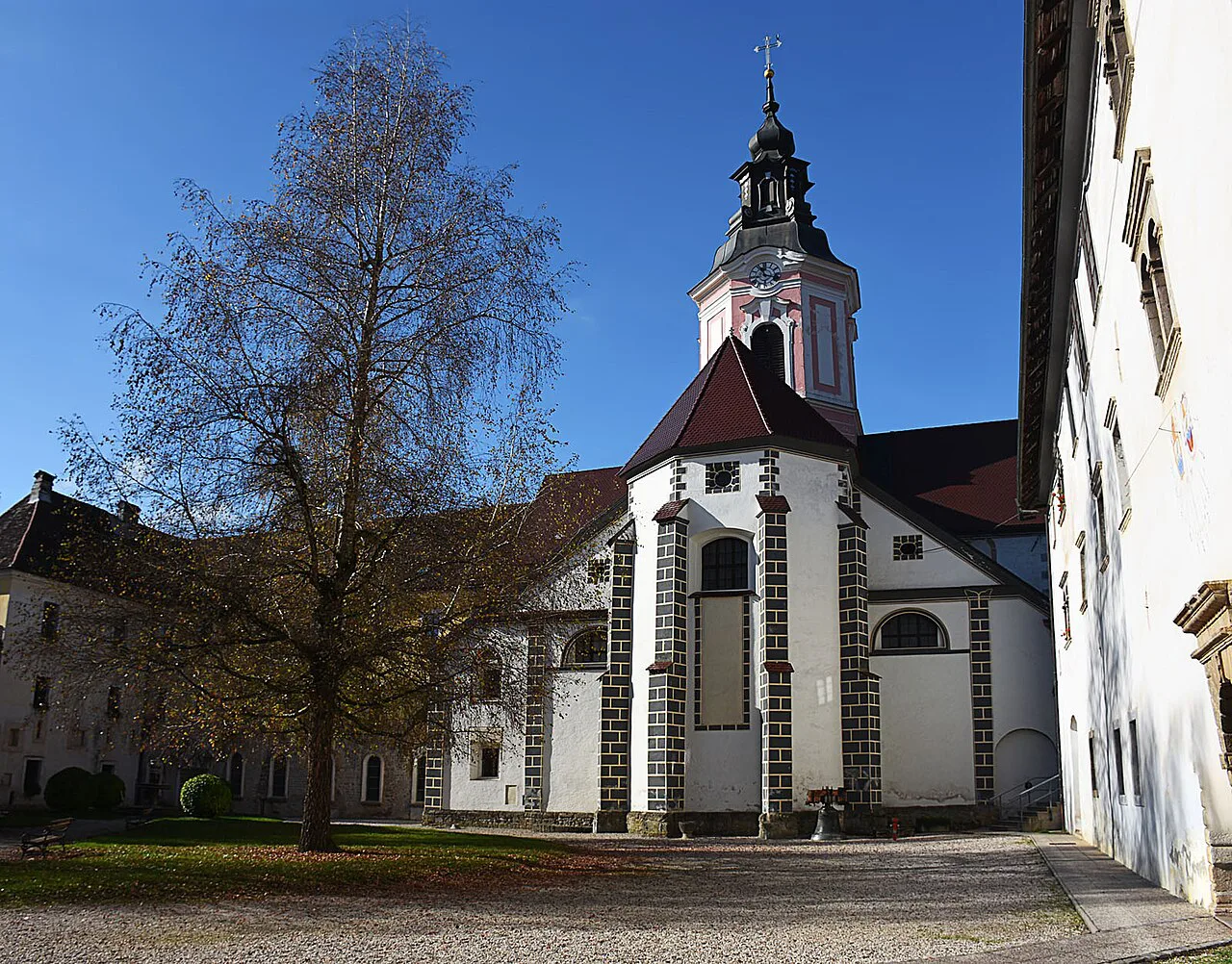
The Basilica of the Sorrowful Mother of God is the monastery church, and its forecourt doubles as a small parking area for cars. The museum entrance is reached from the monastery courtyard rather than from the church itself, so do not assume the church door is the museum door.
Around the church sit the Renaissance Old Prelature, the Baroque building by the stream, and the cloister spaces the community uses. For comparison, our page on Olimje: The Monastery, the Old Pharmacy and the Deer Park covers a smaller house with a famous pharmacy, while Žiče Charterhouse in the hills northeast of Celje is a more ruined experience.
The cross corridor and the Renaissance basilica ground plan
The early Gothic cross corridor, a covered walk linking the buildings around a courtyard, is the architectural feature most often singled out, and it is the kind of space you walk through slowly. The basilica is described as Renaissance with an unusual ground plan of five apses, easier to appreciate if you study the footprint before walking around the church.
Works of art commissioned by various abbots, including paintings and statues, are part of what the interiors hold, and the monastery is described as one of the significant cultural monuments on Slovenian territory. Ask at the museum desk which spaces are on that day's route rather than assuming the whole complex is walkable.
Getting there by car from Ljubljana or Novo mesto
By car, Stična is 36 km east of Ljubljana and 41 km from Novo mesto, both straightforward drives on main roads through the Dolenjska countryside. From Ljubljana the approach passes Šentvid pri Stični; from Novo mesto you come in from the southeast. Navigating to the Stična 17 address is the simplest method.
Arriving by train or bus, and the walk from the stop
The nearest railway station is in Ivančna Gorica, 2.5 km from the museum, which you should plan to walk or arrange a lift for. The regular LPP bus on the Ljubljana–Šentvid pri Stični route stops 200 m from the museum, a far shorter walk, so the bus is the more practical public transport option if the timetable suits you.
The museum describes two walking routes from the stop. Either follow the stream up to the first bridge in front of the main monastery entrance, cross into the inner courtyard and turn right for the museum; or continue to the upper, second bridge, cross there, and look for the museum information column and main entrance on your left. Take the second route if you want the orientation column before committing to the courtyard.
Parking around the monastery
Museum visitors can park free at the public bus station, AP Stična, just next to the monastery. Cars can also park in the lot directly in front of the Basilica of the Sorrowful Mother of God. Both keep you a short walk from the entrances, so there is no need to hunt for street parking in the village.
Finding the museum entrance from the courtyard
Once through the monastery gate, the courtyard is where you orient yourself. Came over the first bridge and the museum entrance is on your right inside the courtyard; came over the upper bridge and the information column and main entrance appear on your left. Knowing this in advance saves a circuit of trying doors around the basilica.
How much time to allow for the museum and the grounds
Budget two to three hours for the museum and a walk around the courtyards and basilica, longer if a temporary exhibition or guided tour is running. The exhibition spaces are split between the Old Prelature and the Baroque building, so moving between them takes time. As a stop between Ljubljana and Novo mesto, a half day including the drive is realistic.
The museum's own site is where to confirm current visitor details before you drive out, since access at a working monastery can change. The same site lists phone numbers and an email address for questions about group visits or guided tours.
Practical notes for a respectful visit to a working monastery
Stična is a Cistercian house with monks in residence, so keep voices low in the church and cloister areas and follow posted routes rather than opening doors. If a door is closed, assume it is closed for a reason, and wait rather than walking through if a service is under way.
Keep food and drink out of the church and museum galleries, and leave large bags in the car where possible. If you want more monastic and pilgrimage heritage in the east, Ptujska Gora with its Virgin of Mercy relief is a worthwhile counterpart, and Pleterje monastery in the Gorjanci hills is a Carthusian house with a very different rhythm of access.
Is Stična worth the drive from Ljubljana?
Yes, if you want the museum rather than just a church visit. The Slovene Museum of Christianity is the reason to make the 36 km drive, and the courtyards and basilica come with it at the same address. Travelers with only a passing interest in religious art will find the trip long; those building a church-focused itinerary in Dolenjska will find it the anchor.
Come by car if you can, park at AP Stična by the monastery, and take the upper bridge route into the courtyard so you arrive at the museum entrance with the orientation column in view. If you depend on public transport, the LPP bus from Ljubljana drops you 200 m away, which makes a car-free visit realistic in a way the 2.5 km walk from Ivančna Gorica station does not.
Frequently Asked Questions
Do Cistercian monks still live at Stična?
Yes. The community is still in residence, with lay people assisting in its work and workshops, and part of the complex operates as the Slovene Museum of Christianity. Because it is a working monastery, only a portion of the buildings is on the visitor route.
Do I need to book a guided tour of the Slovene Museum of Christianity?
The museum lists guided tours among its offerings, but booking arrangements depend on the season and group size. Contact the museum using the phone numbers or email address published on its site to confirm whether a tour runs on your date and whether advance booking is required.
Sources
Notes for your Slovenia trip
Optional updates to our Slovenia place guides.
You might also like
Continue reading
More guides you'll find useful