Prekmurje, Slovenia: What to See Beyond the Mura River
Plan a trip through Prekmurje, Slovenia's flat northeast: Plečnik's church at Bogojina, the floating mill on the Mura, Lendava's tower, and gibanica.
On this page
Give Prekmurje a full day and a car, or two days if you want Goričko without rushing. The region sits in Slovenia's far northeast, bounded by the Mura River on one side and the Hungarian border on the other, and its rewards are spread across flat farmland and the low Goričko hills rather than concentrated in one town. This guide sequences the stops — Bogojina, Lendava, the Mura mills, Bukovnica Lake, and the smaller villages — so you can plan a route instead of collecting names.
Two things shape any itinerary here: distance and opening arrangements. Murska Sobota, the usual base, is a two-hour drive from Ljubljana, which makes Prekmurje a poor half-day add-on to a Bled or Ljubljana schedule.
What Prekmurje is and where it sits
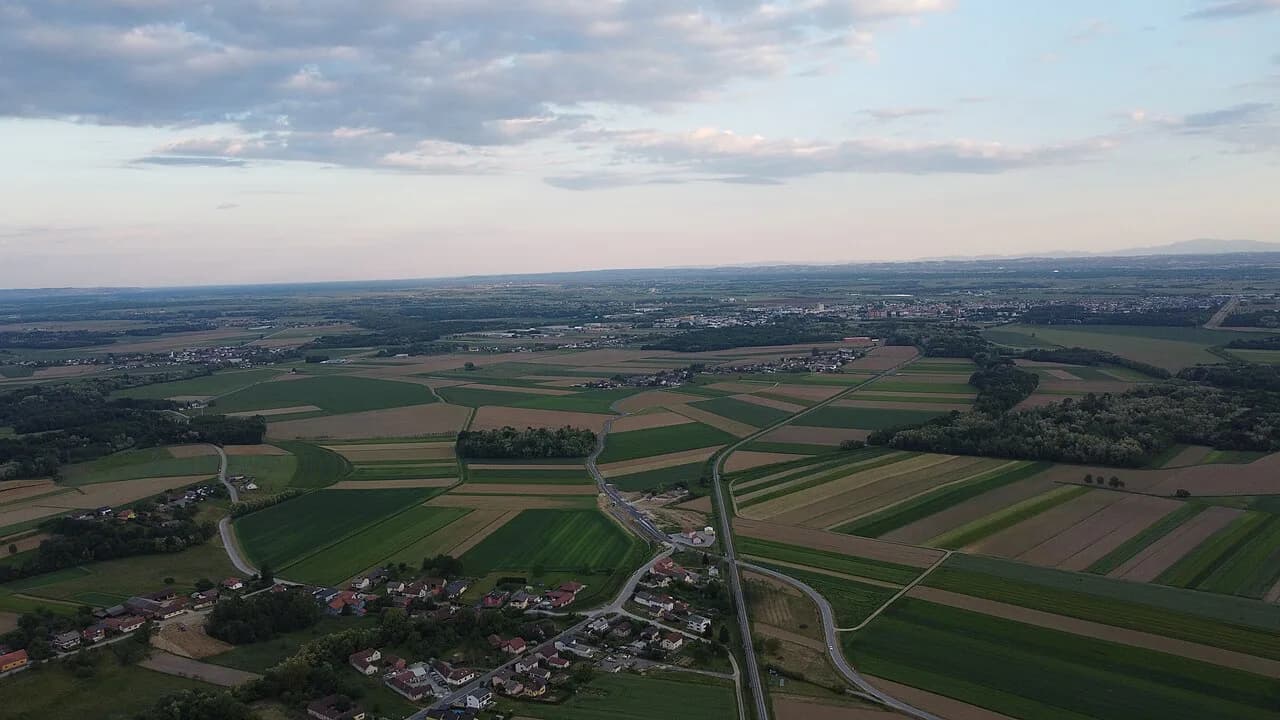
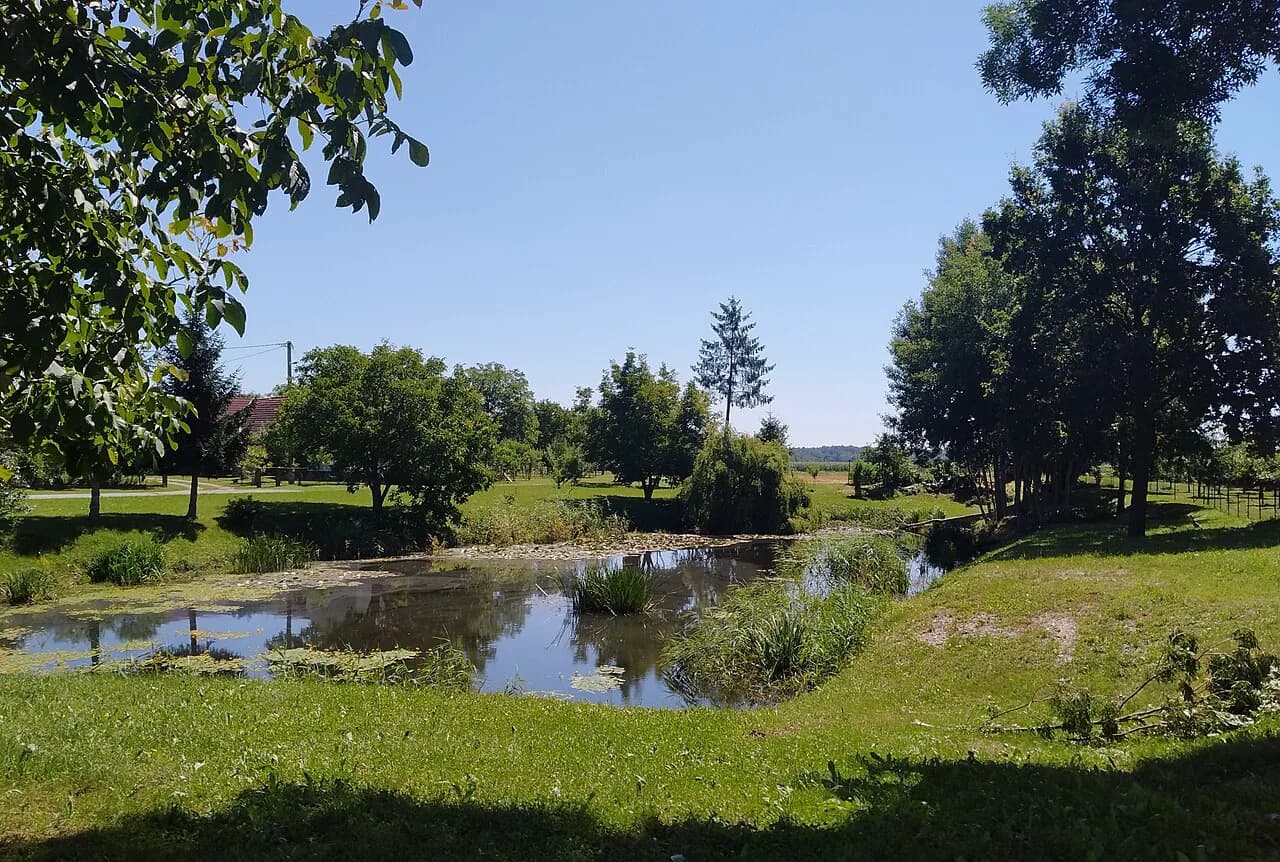
Prekmurje is the corner of Slovenia across the Mura River, a flat Pannonian landscape that rises into the hilly Goričko area in the north. Centuries of Hungarian rule left a sizeable Hungarian minority in the region and a local dialect that most other Slovenes find hard to follow, which is part of why the area feels distinct from the Alpine and coastal halves of the country.
The Mura has long been the dividing line. No bridge crossed the river until 1924, and even now the region sits off Slovenia's main routes, so it takes a deliberate decision to go. Treat that as the trade-off: fewer crowds and a slower pace in exchange for real driving time.
The mixed strip along the Hungarian border is narrow — in places a band of five to eight kilometers — which is why Hungarian signage, speech and food turn up in villages that look otherwise Slovenian.
How Prekmurje is laid out
Murska Sobota works as the practical base: it is the region's main town and the point from which the rest of Prekmurje is reached by road. From there, Lendava and the Hungarian border sit to the east, Bogojina and the Goričko villages to the north, and the Mura mills on the southern edge near Veržej and Ižakovci.
A sensible driving day runs Murska Sobota to Bogojina, north into Goričko for Bukovnica Lake, then east to Lendava for the late afternoon. Keep the mills for a separate half-day, since they sit on the opposite side of the region and the Veržej mill is technically in Prlekija, on the far bank of the Mura — a distinction locals care about.
The Plečnik church at Bogojina
Bogojina is the one stop worth building a route around. The village church is the work of Jože Plečnik, visible from a distance thanks to its white bell tower and the columns typical of his buildings. Step inside for the wooden ceiling, decorated with locally made pottery plates rather than painted panels.
Allow half an hour, more if the interior is open and you want to look at the ceramics closely. Pair it with the nearby Goričko villages rather than driving out and back for the church alone.
Lendava and the Vinarium tower
Lendava anchors the eastern end of the region and holds two separate draws. In town, the Institute for Culture and Promotion occupies a building by a Hungarian architect working in an organic style, with a roofline meant to echo the Lendava hills and pillars carrying mythological elements. It is a quick architectural stop rather than a long visit.
Above the town, in Lendavske Gorice, the Vinarium viewing tower gives a wide view over the hilly landscape below. Entry carries a fee, though no figure is given, so check the current rate at the ticket desk before committing.
The floating mills on the Mura
Two mills on the Mura explain the region better than any museum. At Veržej, across the river in Prlekija, a working mill still grinds flour: step in and the smell of freshly ground grain is immediate, and once your eyes adjust the wheels, belts and flour sacks come into view. You can buy flour on site.
Near Ižakovci, the preserved mill no longer operates but shows how these structures worked. They float because the Mura floods: a fixed building would be destroyed by rising water, while a floating mill rises with the river and settles back as it drops, keeping the mechanism usable. A wooden boat has carried cars and pedestrians across the river for a small sum, so check whether it is running before you plan on it.
Veržej itself is small, with a thermal spa complex nearby that includes outdoor thermal pools and a sauna center, and the water is certified as naturally healing. That makes the village a reasonable overnight alternative if you want the mills and the spa in one stop.
Goričko and Bukovnica Lake
Goričko is the hilly northern fringe, and Bukovnica Lake is its easiest walking stop, with trails around the water, quiet surroundings, and the odd claim of special energy points where visitors are said to stand for about fifteen minutes. Take the walk for the landscape; the rest is optional.
White storks patrol many Prekmurje villages, so keep an eye on rooftops and poles as you drive the back roads. The Goričko lanes are the part of the region that rewards slowing down, and a car is the only realistic way to link the villages.
Prekmurska gibanica
Prekmurska gibanica is the region's signature dessert and the reason many visitors remember the trip. It layers poppy seeds, walnuts, apples, raisins and cottage cheese between sheets of flaky dough, and it has been served on special occasions here for centuries. Order a slice at a gostilna rather than a café if you want the fuller version.
On 4 March 2010 the cake was granted Traditional Speciality Guaranteed status by the EU, which means anyone using the TSG label must follow a precise specification. On a menu, that label signals the protected recipe rather than a restaurant's own invention.
Other stops worth the detour
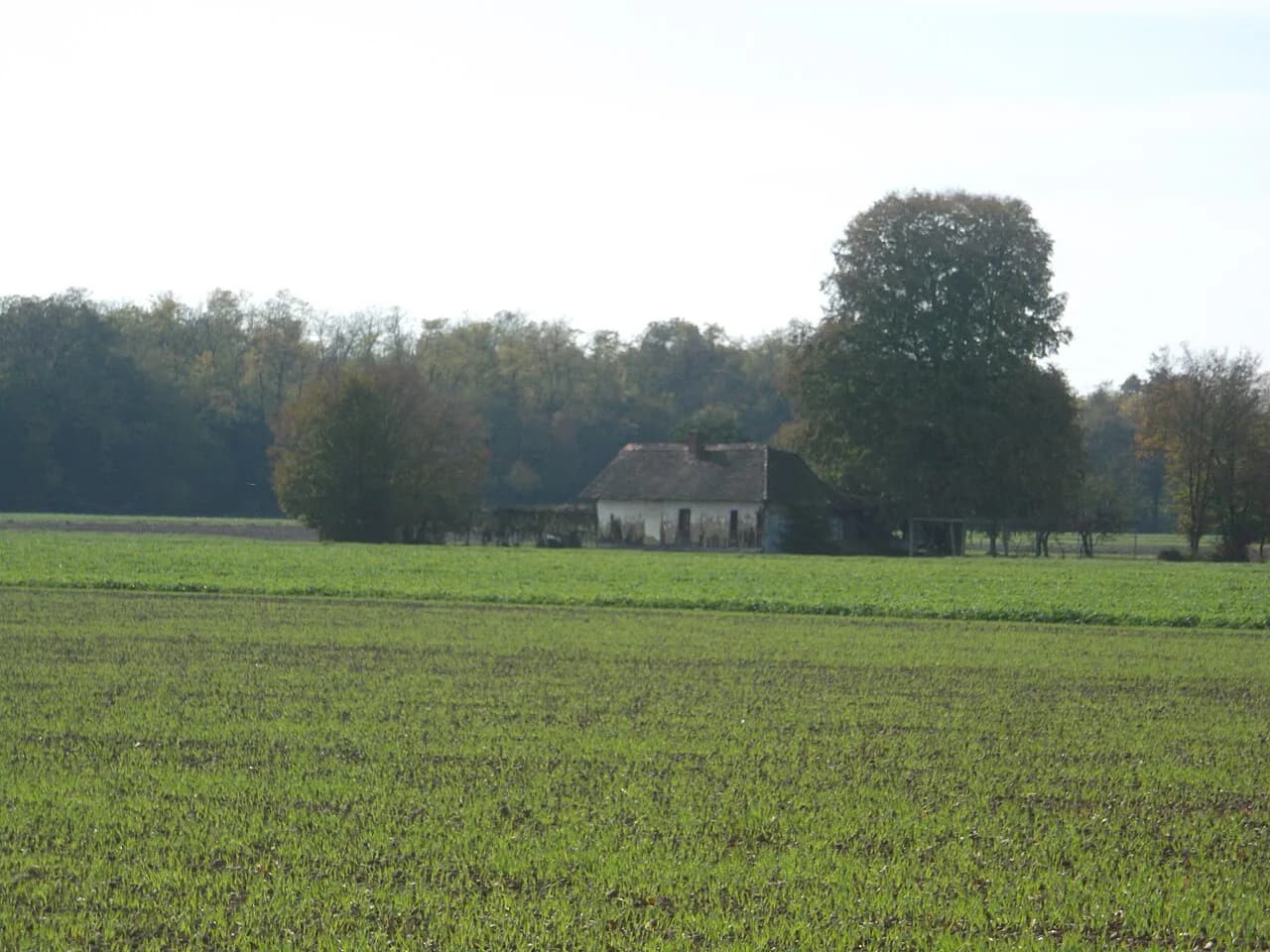
Turnišče, one of the bigger villages in the region, has a typical thatched Prekmurje house holding a museum of the local shoemaking trade, with old leather machines, tools and accessories on view. The surrounding area has forests, fields and several lakes, and fishing is a popular local pastime there.
Two churches round out the smaller stops. Pertoča holds a mosaic by the artist Ivan Rupnik and is a quick but worthwhile pause for anyone interested in modern church art; Odranci's church, designed by Janez Valentičič, an assistant of Plečnik, was finished only recently in the accounts and carries frescoes by Stane Kregar.
Getting around and how long to give it
A car is effectively required. The stops are spread from Lendava in the east to the Mura mills in the south and Goričko in the north, and the villages are linked by rural roads rather than a dense bus network you can plan a day around. Base yourself in Murska Sobota and drive out each morning.
Allow one full day for Bogojina, Goričko and Lendava, and a second for the mills, Turnišče and the smaller churches. Two days also gives room for a spa stop near Veržej and a proper lunch with gibanica.
Practical details shift by season, so confirm opening times for the churches, the mill at Veržej and the Vinarium tower before you set out.
Should Prekmurje be on your route?
Yes, if you have two days and a car to spare after Bled and Ljubljana. Prekmurje is not a place to squeeze in on the way to somewhere else: the drive is long, the stops are spread out, and the reward is a slower, flatter, distinctly Hungarian-influenced corner of Slovenia.
If your time is short, cut everything except Bogojina and the Veržej mill, and eat a slice of gibanica on the way. Otherwise, build the region a real day and add Goričko, Lendava and Turnišče to the loop.
Explore more Prekmurje guides
Sources
Notes for your Slovenia trip
Optional updates to our Slovenia place guides.
You might also like
Continue reading
More guides you'll find useful