Slovenian Cheese: Bohinjski Sir, Tolminc, Bovški Sir and Trnič
A plain guide to Slovenian cheese: Bohinjski sir, Tolminc, Bovški sir and Trnič, the alpine planinas where herders make them, and how they taste.
On this page
Slovenian cheese is mostly a mountain story, and the four names to learn are Bohinjski sir, Tolminc, Bovški sir and Trnič. Each belongs to a specific grazing area rather than to the country as a whole, so the cheese on your plate tells you which valley you are sitting in. This guide covers what each one is, how summer dairying on a planina works, and which Slovenian dishes to order next to a cheese board.
What Slovenian cheese means: summer dairying on alpine pastures
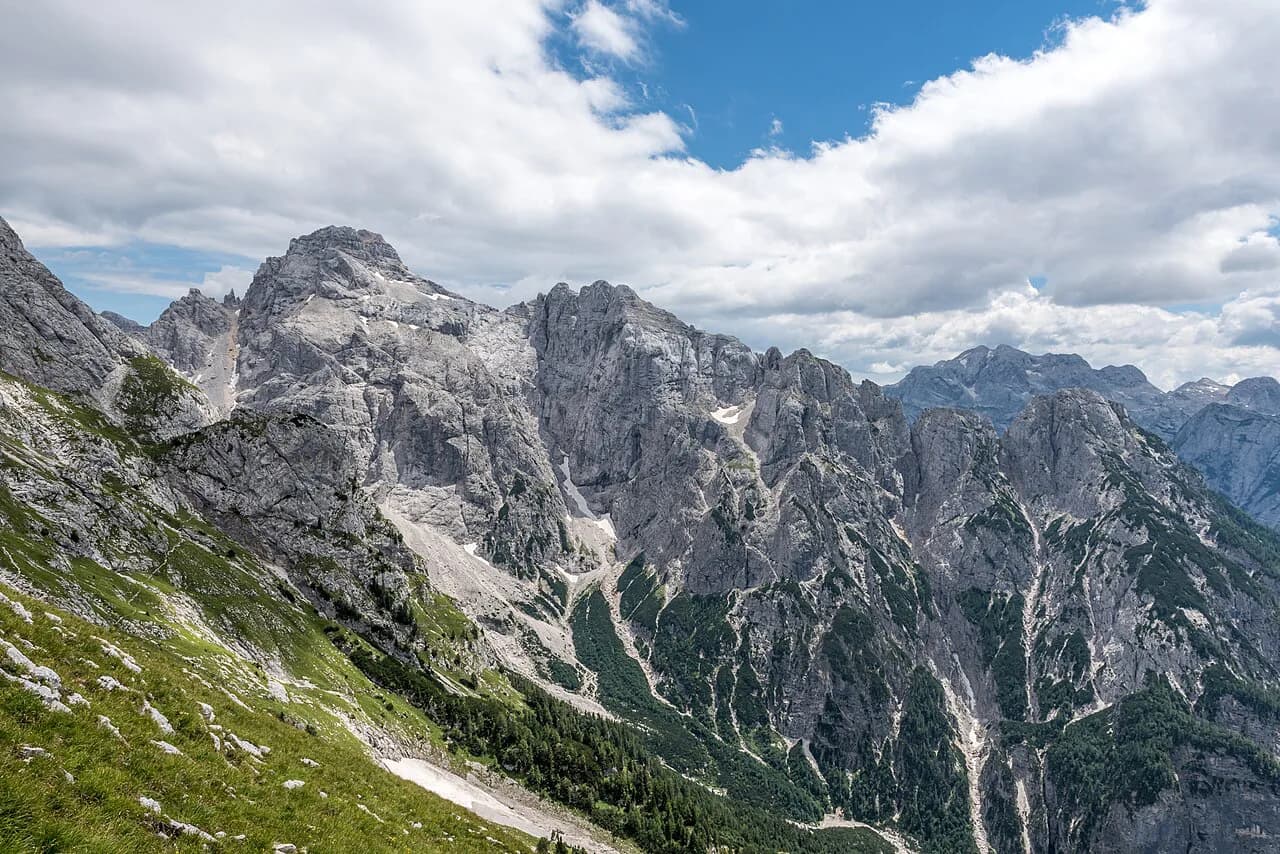
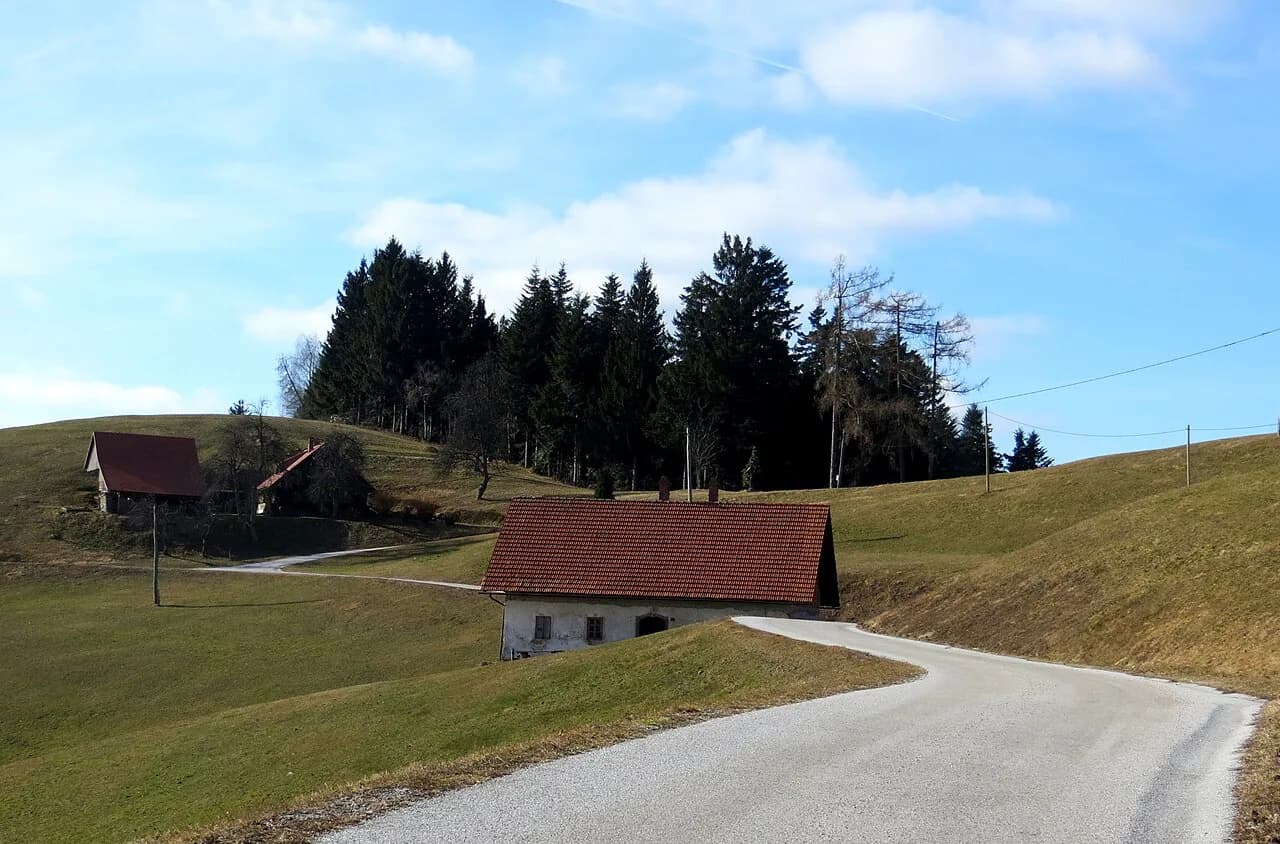
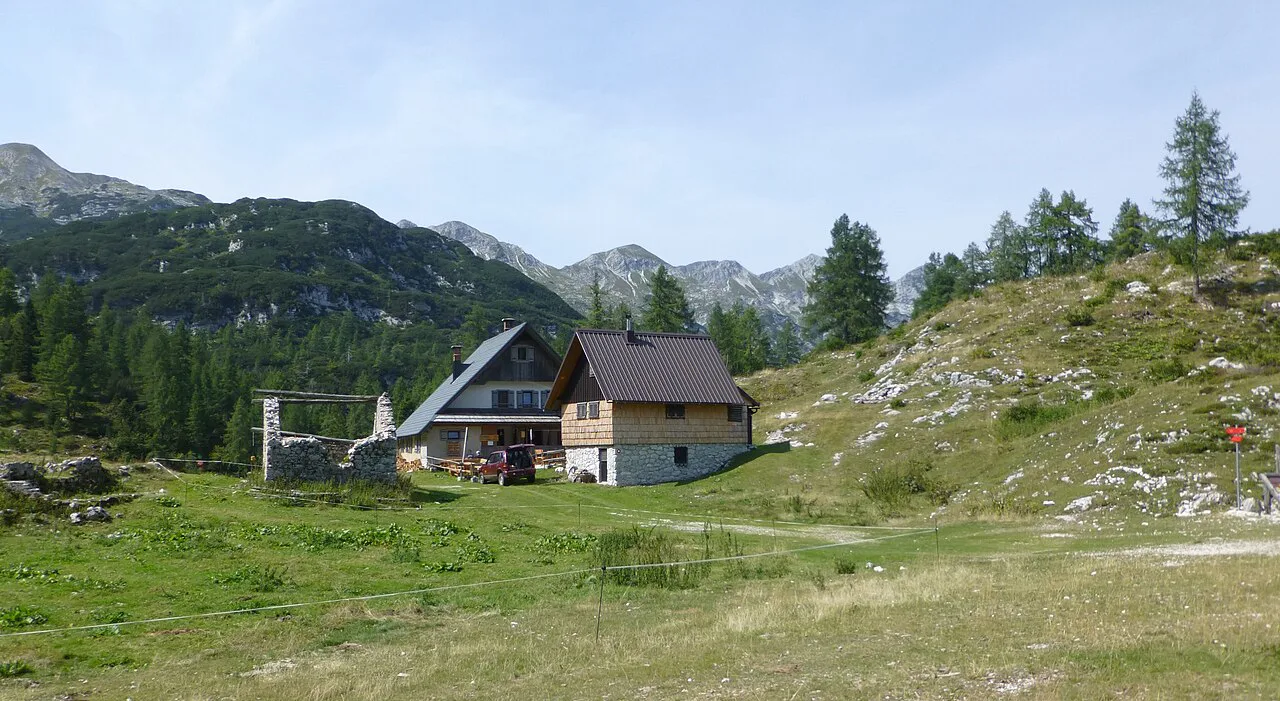
A planina is a cluster of buildings on high pasture where herders milk cows and make cheese during the summer grazing months. The arrangement is practical rather than romantic: the herd is too far from the valley to truck milk down daily, so the milk is weighed, poured into a copper vat and worked into cheese on the spot. That single constraint explains why the named Slovenian cheeses are tied to particular mountains and why they taste the way they do.
At Planina Krstenica in Bohinj, the herders worked with a pooled herd of 16 milking cows sent up from two valley villages, and the buildings belonged to families from those villages. Evening milk sat overnight in cool buckets, the cream was hand-skimmed in the morning, and that partially skimmed milk went back in with the warm morning milk to be heated over a fire under the vat. A starter of soured milk or store-bought yogurt set the vat, and the day's cheese followed.
Cows on these pastures are not all the same breed. Krstenica kept local Cika cattle alongside animals with Fleckvieh genetics, and the cows knew the milking shed routine well enough to walk to their own places. If you are building a food itinerary around the Julian Alps, this is the context that makes a cheese name on a menu readable: a place, a season, a herd and a creamery rather than a generic category.
Bohinjski sir: the hard cheese of the Bohinj area
Bohinjski sir is a hard cheese from the Bohinj area, first made in 1873 using Emmental technology. It has a dry golden rind and a straw-yellow paste. Because the make follows the Emmental model, expect a firm, sliceable wheel rather than a soft farm cheese, and expect the name to point you toward Bohinj rather than to any alpine pasture in the country.
The 1873 date is history, not a claim about what is on the counter today. Read the label for the producer and the area, and treat Bohinjski sir as the cheese to look for when your plans put you around Lake Bohinj rather than the coast. A dairy museum in the valley documents the region's dairying and transhumance, which is a sensible first stop if you want the background before you buy.
Tolminc and Bovški sir: named cheeses of the Soča valley and Slovene Littoral
Tolminc and Bovški sir are among the named cheeses of the Slovene Littoral, the western region that takes in the Soča valley and the hills above the coast. Bovški sir carries the name of Bovec, the town at the head of the Soča valley, while Tolminc points to Tolmin further down the river. Both are worth seeking out if your route runs through Kobarid, Bovec or Tolmin.
Nanoški sir is the third name in that Littoral group, tied to the Nanos plateau above the Vipava valley. When a menu or market stall lists all three together, you are looking at a western Slovenian selection rather than a nationwide one, which is a useful signal about where the food was sourced. Ask what is on the board before you commit to a plate.
Trnič: the shepherd's cheese of Velika planina and its neighbors
Trnič is a hard cheese made by shepherds on Velika planina, Mala planina and Gojška planina, worked from soured skimmed milk curd with cream and salt added. Shepherds have made it for centuries, which is why it turns up as a gift cheese as well as something to eat.
Velika planina stands above the Kamnik area of central Slovenia, a different range from the Julian Alps pastures behind Bohinj and Bovec, so plan your cheese hunting by mountain group rather than by distance on the map. Trnič rewards a detour if you are already heading toward Kamnik. Think of it as a keepsake cheese, sold in small wheels rather than cut by the kilo.
How a planina turns morning milk into cheese the same day
The daily rhythm on a working planina starts early, when the herders go out to find cows bedded down wherever they chose on open pasture. The herd walks itself down to the milking shed, each cow taking its usual place, and the milk goes into a tall bucket and then into the creamery to be weighed. There is no refrigeration of milk on site, and the milk is worked while it is still warm.
Not every planina still runs this way. Krstenica kept the traditional summer dairying system without tourist trappings while other planinas moved toward guesthouses and rentals, and the herders there were contracted from outside the region rather than being the village families who own the buildings. That distinction matters when you read about planinas in guidebooks: some are working dairies, others are restored hamlets used seasonally as weekend cabins.
What to eat with Slovenian cheese: štruklji, ajdovi žganci and Kranjska klobasa
Sirovi štruklji are rolled dumplings filled with a mixture of skuta curd cheese and sour cream, boiled and then cut into rounds and finished with buttered breadcrumbs. The dough is flour, water, eggs, oil and salt, rolled flat, spread with the cheese filling and rolled into a cylinder. They can serve as a starter, a side or a main course, and they are the dish travelers most often mistake for a cheese course when in fact the curd is an ingredient, not a named cheese.
For a plain, filling partner to a hard cheese, look for ajdovi žganci, a buckwheat porridge served hot and often finished with pork cracklings fried in lard. They appear across the country in regional versions and are eaten at any meal. If you want a wider map of what to order alongside, our guide to Slovenian food covers the staples and the dumpling family that štruklji belong to.
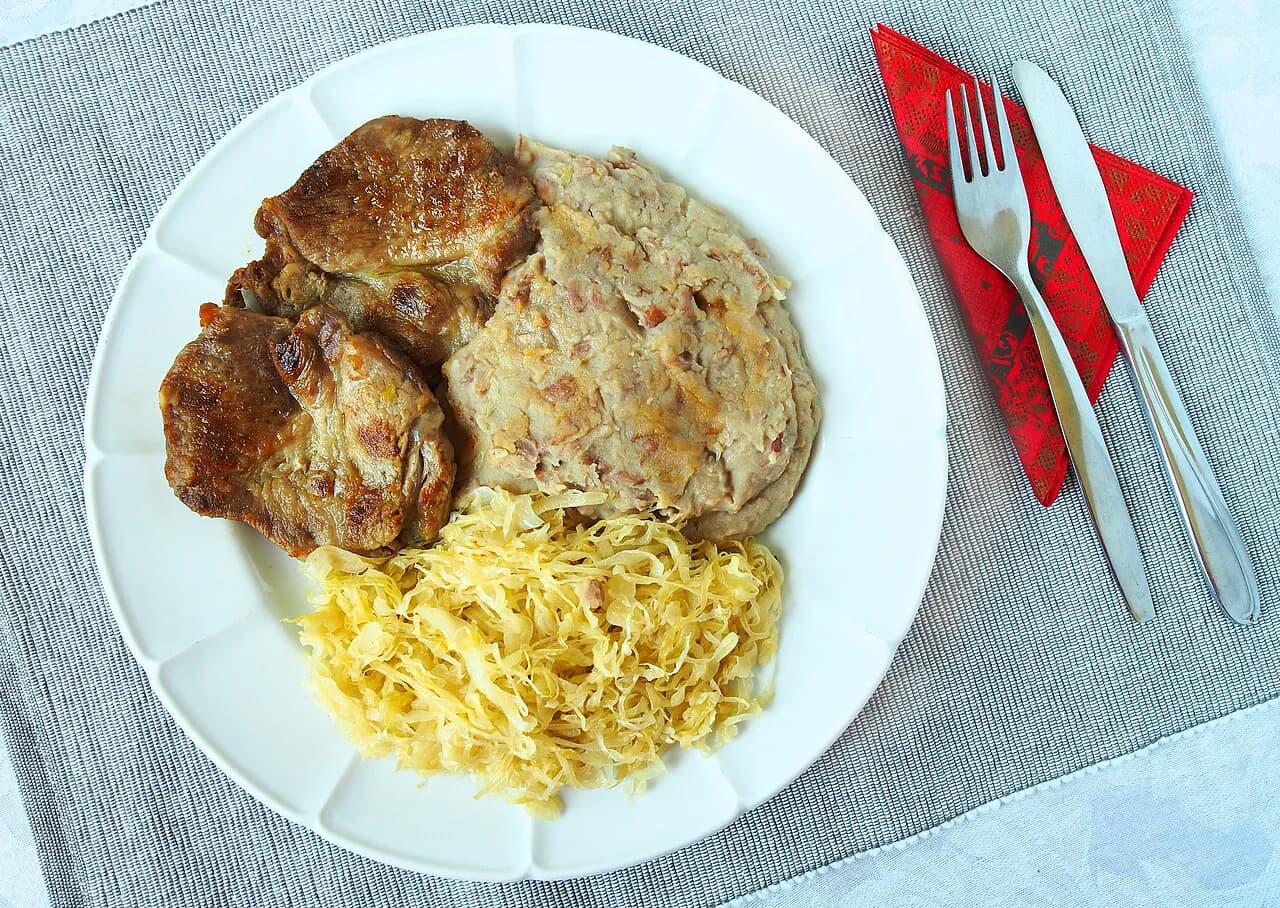
Kranjska klobasa is the smoked pork sausage of the Gorenjska region, made to a prescribed recipe and, since 2014, listed among the protected agricultural products of the European Union. It is warmed in hot water rather than fried and served with sour cabbage or turnip and grated horseradish, which makes it a natural companion to a plate of mountain cheese. Our notes on Kranjska klobasa explain what the protected name actually guarantees.
If you want the pairing list in one place, our Slovenian Dishes to Try covers the same table from the other direction, starting with the dishes and naming the cheese that goes with each. The Slovenian breakfast table is another route into the dairy case.
Buying and tasting: how to tell a hard alpine cheese from fresh curd
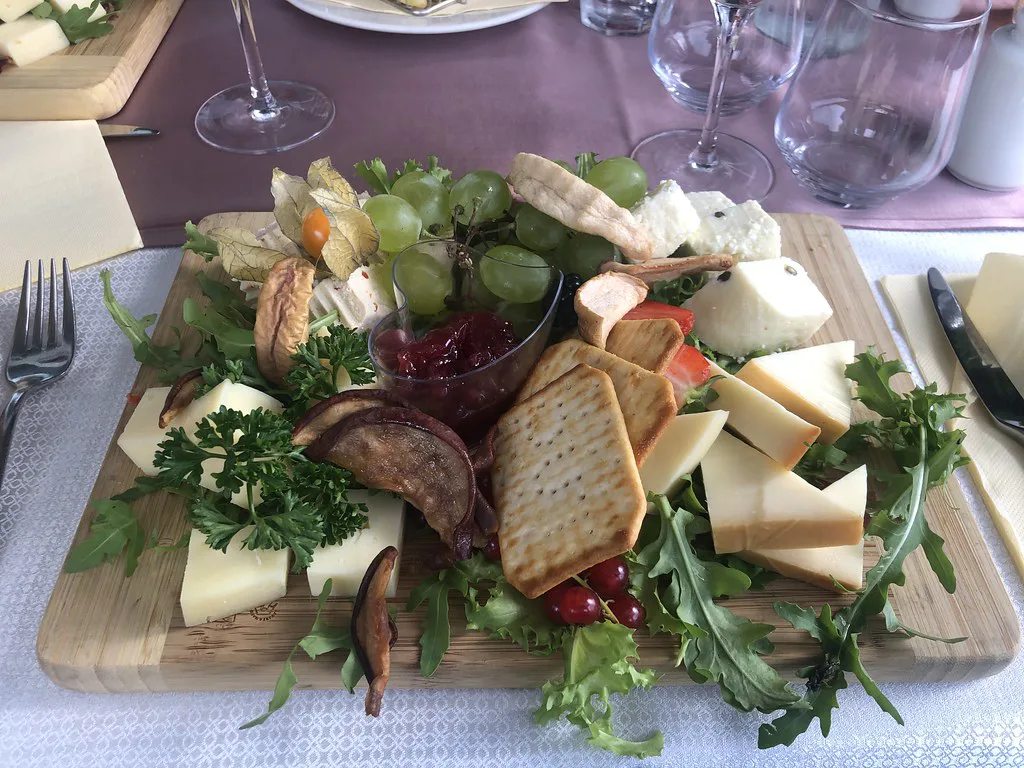
Four names cover most of what you will see labeled as Slovenian mountain cheese: Bohinjski sir, Tolminc, Bovški sir and Trnič, with Nanoški sir filling out the western group. All four are hard cheeses, which means they travel, keep and slice well. The soft, creamy material inside a štruklji is skuta, a fresh curd used as a filling, and it is a different product from any of the wheels.
Ask for the cheese by name rather than for cheese in general, because the name tells you the region and the style in one word. If the seller can name the planina, the dairy or the valley, you are closer to the alpine trade-off described above; if the answer is only the country, you are buying a category, not a place. Prices and where each cheese is sold change with season and shop, so check the label and ask at the counter rather than relying on a published list.
Pairing cheese with the rest of the Slovenian table
Order a mixed plate and you will often meet a cured ham alongside the cheese, and on the soup side ajdovi žganci and the wider dumpling repertoire fill out a Slovenian table. Our guide to Slovenian dishes covers those staples if you are assembling a week of eating.
Which cheese to hunt first on your route
Match the cheese to the mountain you are already driving through: Bohinjski sir around Lake Bohinj, Tolminc and Bovški sir in the Soča valley and the Slovene Littoral, and Trnič on the planinas above the Kamnik Alps. Buy by name, ask where it was made, and order štruklji with skuta as a separate dish rather than as a cheese substitute. That way the label on the wheel and the view out the window agree with each other.
Explore more Slovenia guides
Sources
Notes for your Slovenia trip
Optional updates to our Slovenia place guides.
You might also like
Continue reading
More guides you'll find useful