Slovenian Dishes: 14 Traditional Foods and What's on the Plate
A plain guide to Slovenian dishes, from štruklji and Idrijski žlikrofi to jota, ričet and prekmurska gibanica, with what each dish is and where it comes from.
On this page
The Slovenian dishes worth ordering first are štruklji, Idrijski žlikrofi, Kranjska klobasa, jota and prekmurska gibanica, because each one shows a different corner of the country on a single plate. This guide explains what those fourteen dishes are made of, where they come from and whether they land on the table as a starter, a main, a side or a dessert, so you can order with confidence rather than guesswork.
Slovenian cooking pulls from Alpine, Mediterranean and Balkan traditions, and the source guide treats that mix as the reason the menu changes so much from the Julian Alps to the coast. Cheese and pork dominate the mountain farm country, while seafood and Istrian pasta show up closer to the Adriatic.
What Slovenian cuisine is: Alpine, Mediterranean and Balkan influences on one menu
Mountain farm kitchens lean on cheese, pork, cream sauces, potatoes and onions, while resort areas blend those local traditions with Viennese pastries and Adriatic seafood. The result is a menu where braised beef in cream sits a page away from an octopus stew, and both feel local.
Slovenian regions have their own dishes rather than one national repertoire. The hills, plains and coastline each shape what lands on the plate, so a dish you love in the Alps may be absent on the Karst. Read the whole Slovenian food picture before you build a route around a single specialty.
Štruklji: rolled dumplings served savory or sweet
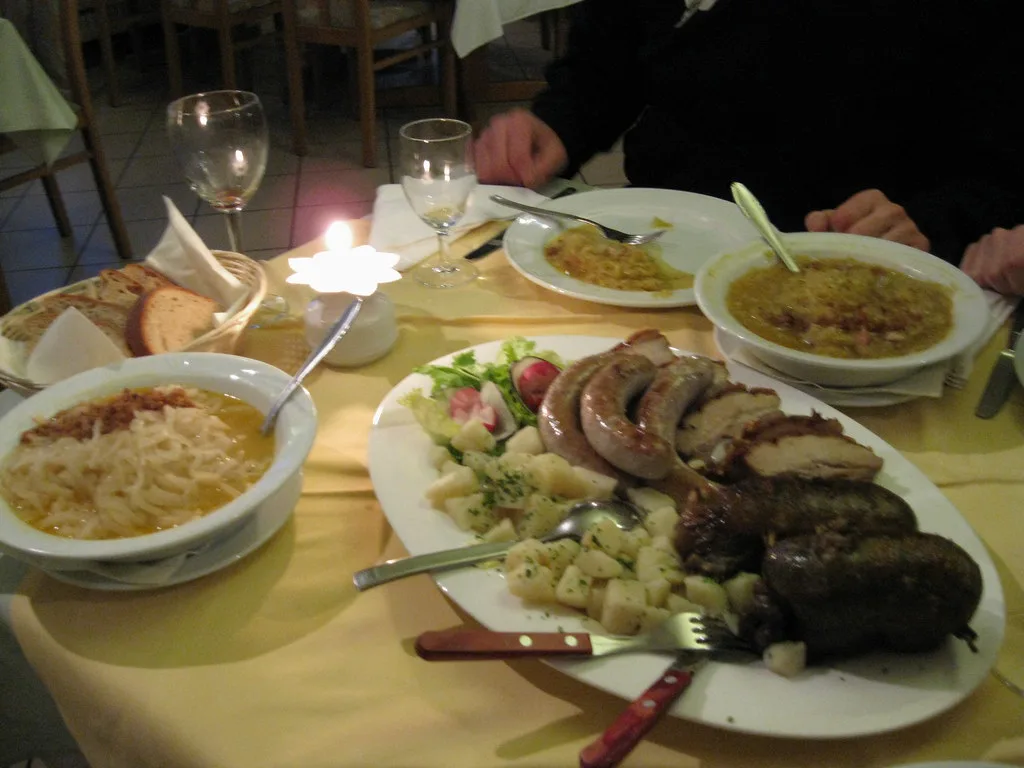
Štruklji are made by rolling a thin dough around a filling, cooking the log and cutting it into pieces the way a strudel is sliced. Savory versions often use farmer's cheese and vegetables, with sauteed bread crumbs scattered over the top; sweet ones fill the same dough with nuts, chocolate or herbs.
Because each family and each kitchen makes its own version, treat a menu description as an example rather than a fixed recipe. Seasonal fillings appear too, and one autumn visit turned up a squash version alongside the cheese classic. Order a savory portion as a side or a light main, and a sweet one as dessert.
Idrijski žlikrofi: small potato-filled dumplings, often with goulash
Idrijski žlikrofi are small boiled dumplings filled with potato, onion and lard, and menus often pair them with goulash. Their shape is part of the identity: they are pinched into a little hat rather than folded like a half-moon.
Do not confuse them with štruklji, which are rolled and sliced rather than individually formed. Žlikrofi make an easy order for a table that wants a shared starter, and they hold up as a main when the portion is generous. For the broader family of dumplings and dumpling-like dishes, the Slovenian food overview is the place to start.
Kranjska klobasa: the sausage, and how it is served
Kranjska klobasa is a pork sausage with a recipe traced in one account to the end of the 18th century, and it usually arrives with grated horseradish and Slovenian mustard. Treat it as a starter or as one part of a shared plate rather than a full dinner.
The sausage also appears as street food, which makes it the easiest Slovenian dish to try on a short stop. Look for it on a stand or a casual counter, and expect the horseradish to be sharper than the pale mound suggests. English menus sometimes call it Carniolan sausage.
Jota and Vipavska kisla juha: sour soups and stews to order
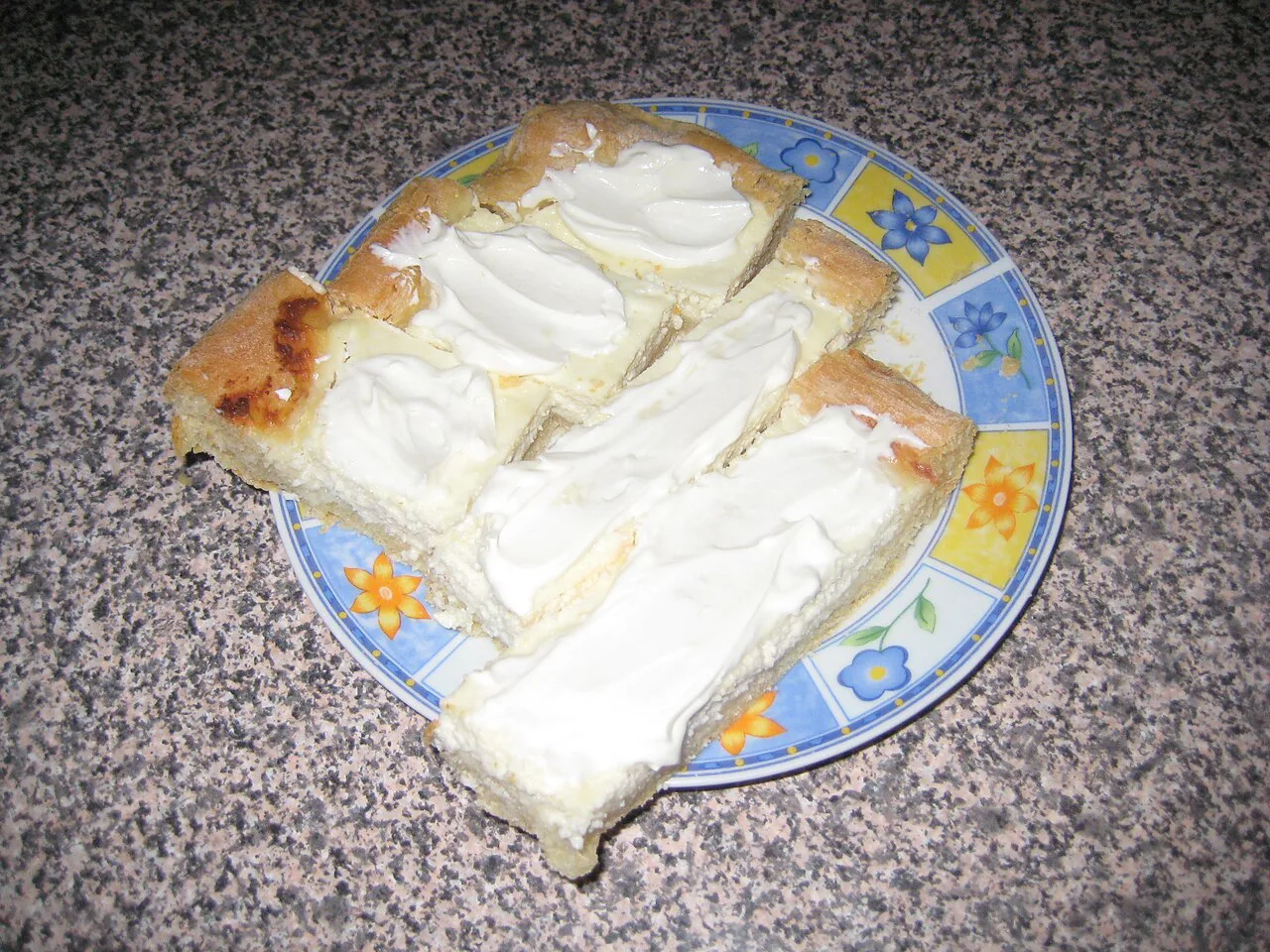
Jota is a thick sour soup-stew of beans, sauerkraut and potato, and it lands somewhere between a soup and a one-pot meal. Vipavska kisla juha is the Vipava valley's sour soup, built on the same sour note.
Order jota when you want a bowl that behaves like a main, especially on a cold day in the hills. The sour profile comes from fermented cabbage, so it is not a mild starter for a cautious eater. If you want the full context of Slovenian soups and stews, jota soup deserves its own look before you sit down.
Ričet, bograč and obara: the hearty one-pot dishes
Ričet is a hearty barley-based pot, bograč is a meat stew, and obara is a slow-cooked stew that turns up under several regional names. All three are spoon dishes served in deep bowls, and all three are filling enough that a table can share one alongside lighter plates.
For a US traveler used to a main plus two sides, these pots invert the structure: the stew is the center and bread or polenta is the accompaniment. Ask whether the portion is for one or for the table, since sizes vary by kitchen. Paired with sauerkraut or a simple salad, one pot feeds two comfortably.
Ajdovi žganci and matevž: buckwheat and bean sides
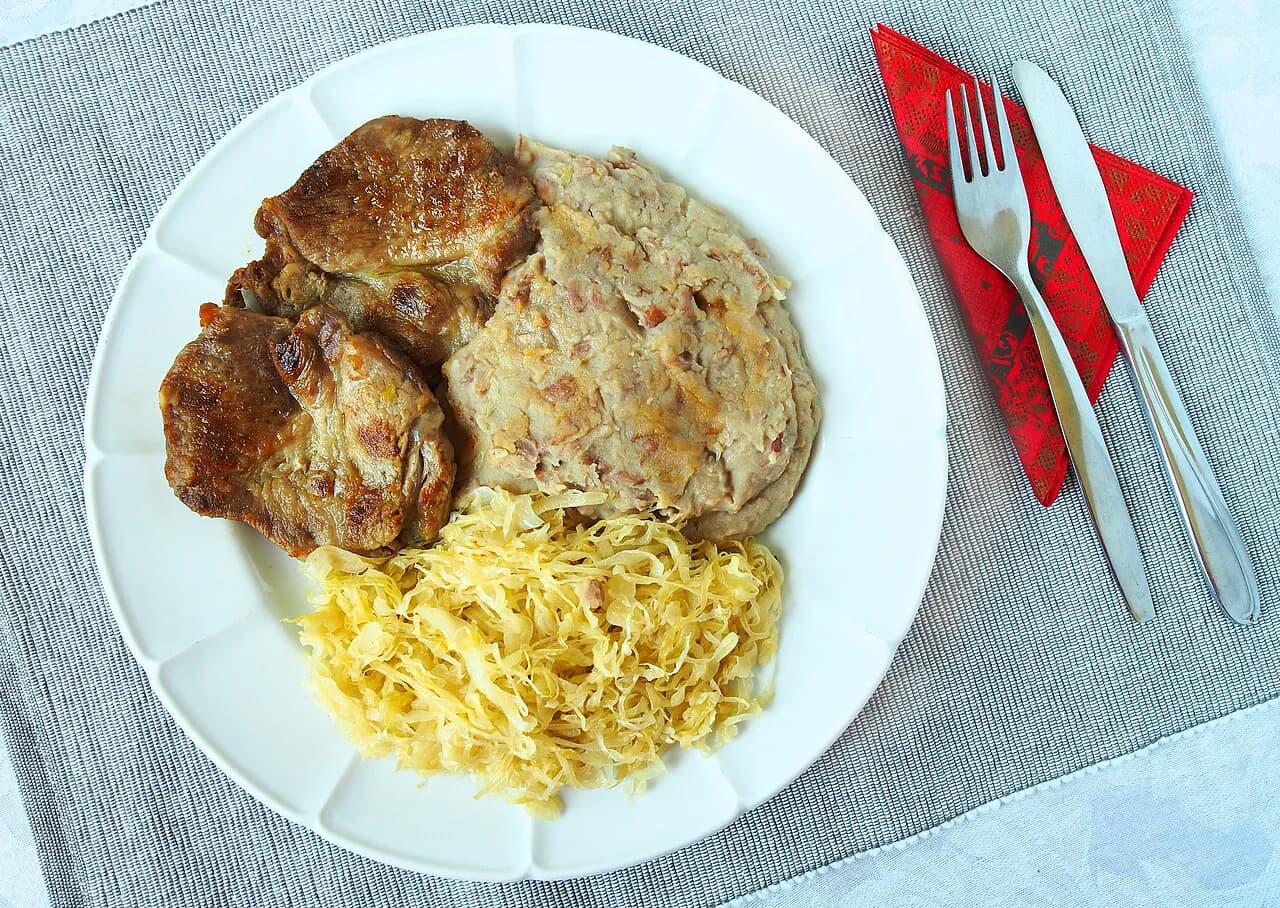
Ajdovi žganci are a buckwheat dish, often served with cracklings, and they work as a side under a stew or as a plain main with milk. Matevž is mashed beans with potato and pork cracklings, traditionally a poor household's dinner and now usually a side to sausage or roast meat.
Both are earthy and dense, so order one or the other rather than both in the same meal. They are also the most reliably meat-light choices on a mountain menu if the cracklings are left off, though you should ask rather than assume. The Slovenian food guide covers how these staples fit around the main dish.
Frika, polenta and fusi: simple staples from the west
Frika is a cooked mixture of potato, egg, butter and cheese, closer to a thick omelet than to a dumpling, and it is often served with polenta. Polenta itself is made from corn or barley flour and appears as both a side and a base for other dishes.
Fusi are egg-and-flour pasta from the Istrian side of the country, shaped like garganelli, and they turn up near Koper with butter and seasonal vegetables. Order frika as a light main in the west and fusi when you are close to the coast, where the Istrian kitchen takes over. Polenta is the safe companion for almost any stew on the menu.
Cheese to look for: Tolminc, mohant, bovški sir and Nanoški sir
Tolminc is a semi-hard cow's milk cheese from the Soča valley with a sweet-spicy taste, mohant is a soft cheese with an intense flavor, and bovški sir is a goat cheese from the Bovec area. Nanoški sir is a hard cow's milk cheese with small pea-sized holes.
Cheese boards often come with dried apples, raisins, walnuts or a drizzle of honey, so ask what the garnish is before you assume it is a dip. A plate of local cheese plus a glass of something local is a complete light lunch for two. For the wider selection, see the Slovenian cheese pages.
Kraški pršut and other cured meats
Kraški pršut is dry-cured ham made on the Karst plateau, and it is the cured meat you are most likely to see on a board with cheese and olives. Karst cured pork neck, kraški zašink, shows up in the same company.
Other protected cured products include zgornjesavinjski želodec from the Upper Savinja valley and šebreljski želodec from around Cerkno and Idrija. If a morning plate is what you are after, kraški pršut often appears at breakfast alongside bread and cheese.
Seafood and Soča river trout on the coast and in the valleys
On the Adriatic side, brodet is a fish stew and codfish dishes appear alongside it, while in the Soča valley the order turns to river trout. That split is a useful planning tool: seafood belongs to the coast, trout to the water inland.
Truffles from the forests of Slovenian Istria also find their way onto pasta and into cheese, so the coastal menu seasons differently from the mountain one. Order fish simply grilled if you want to taste the difference, and save the truffle dishes for the Istrian side of the trip. Neither is a specialty in the Alps.
Sweet dishes: potica, prekmurska gibanica and krofi
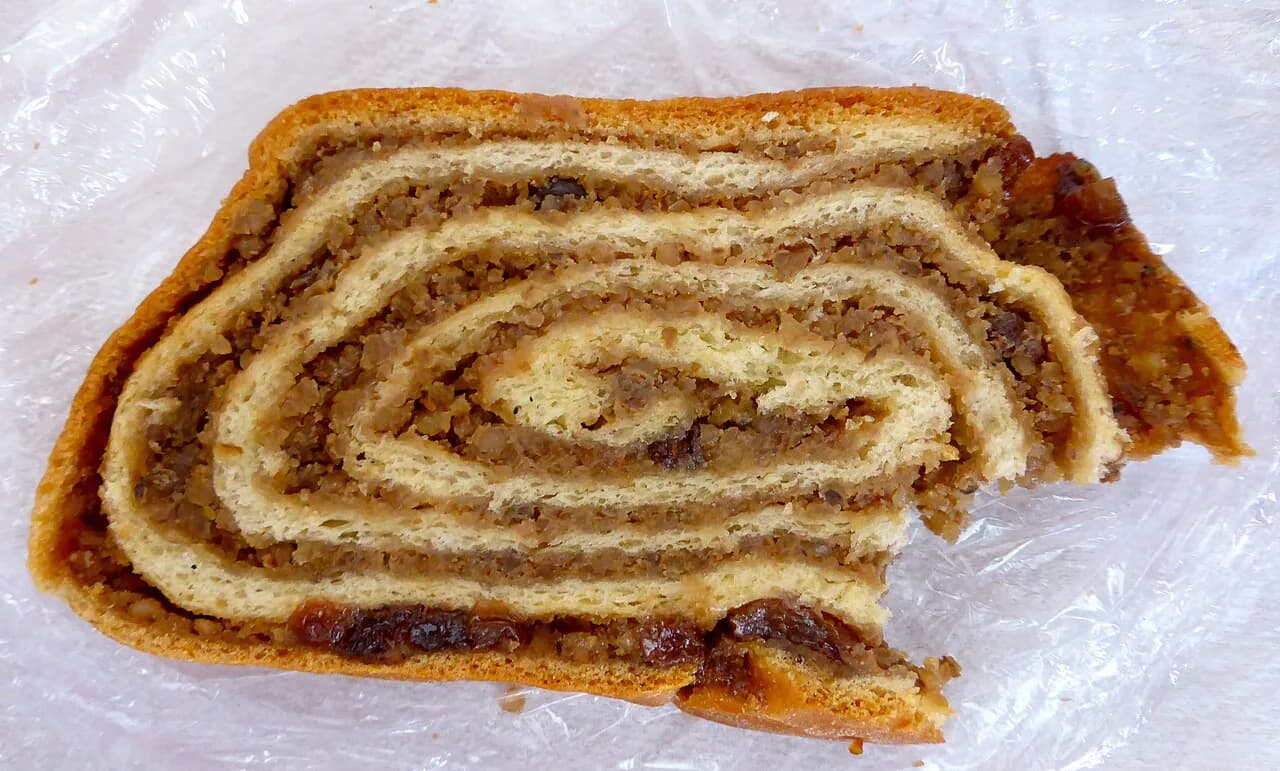
Potica is a rolled sweet bread with a nut filling, and it is the festive pastry most families have their own version of. Prekmurska gibanica is a layered pastry from Prekmurje with eight layers, filled with poppy seeds, walnuts, apples, raisins and ricotta cheese. Krofi are the filled doughnuts that round out the same dessert list.
These are heavier than they look, so one slice between two people is a reasonable first order. Potica often appears at breakfast or with coffee as well as on the dessert menu, which makes it the easiest sweet to try early in the day. Prekmurska gibanica is worth ordering at least once for the layers alone.
Bled cream cake (kremna rezina) and where it fits
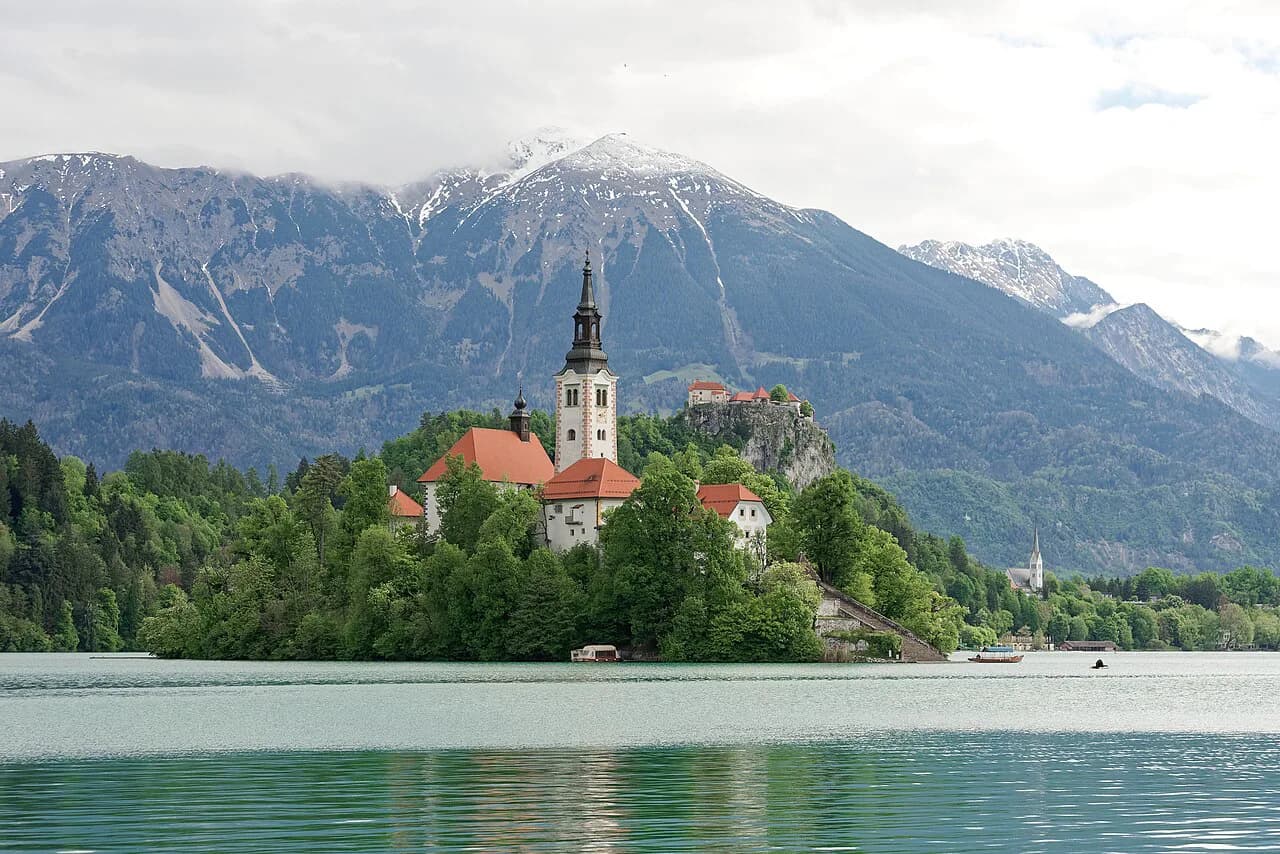
Kremna rezina, known in English as Bled cream cake, is a layered custard-and-cream square associated with Lake Bled. Order it with coffee in the afternoon, when the cake sits better than after a full meal. If you want a sit-down cake stop at the lake, the lake towns are where it makes most sense to slow down.
What to drink with Slovenian food: honey, pumpkin seed oil and local wine
Slovenian honey comes in regional types, including honey from the Kočevje forest and from the Karst, and it pairs with cheese or yogurt rather than with a main course. Pumpkin seed oil is drizzled over salads and cheese plates and appears in flavored versions of farmer's cheese.
At the table, the usual choices are local wine, beer or a small glass of grappa after the meal. If you are drinking wine, ask for something from the region you are eating in, and the kitchen will usually pour its nearest neighbor. Honey and pumpkin seed oil are also the two souvenirs that travel best in a suitcase.
How to order: portion sizes, shared plates and a typical Sunday lunch
Soup-and-main is the everyday structure, and a family Sunday lunch often follows soup with fried potatoes, steak and lettuce. For holidays, the soup may be beef noodle or creamy mushroom instead. That pattern tells you how to build an order: one soup, one main, and sides only if you are still hungry.
Many dishes here are dense, so a table of two can share a pot of ričet or obara and add a salad. Ask whether the štruklji are sweet or savory before ordering, since one word on the menu changes the course. If you are eating breakfast at the hotel, a cabbage or bean side at dinner is not an unusual pairing.
Which Slovenian dishes to order first
Start with štruklji and Idrijski žlikrofi to learn the dumpling side of the menu, then order jota or ričet for the one-pot side. Add a cheese board with Tolminc or mohant, finish with prekmurska gibanica or potica, and you have covered most of the country in three meals.
Match the rest of the list to your route: seafood and fusi on the coast, frika and polenta in the west, buckwheat and stews in the hills. Menus change with the season and the kitchen, so read the descriptions on the day rather than planning around one fixed plate.
Sources
Notes for your Slovenia trip
Optional updates to our Slovenia place guides.
You might also like
Continue reading
More guides you'll find useful